
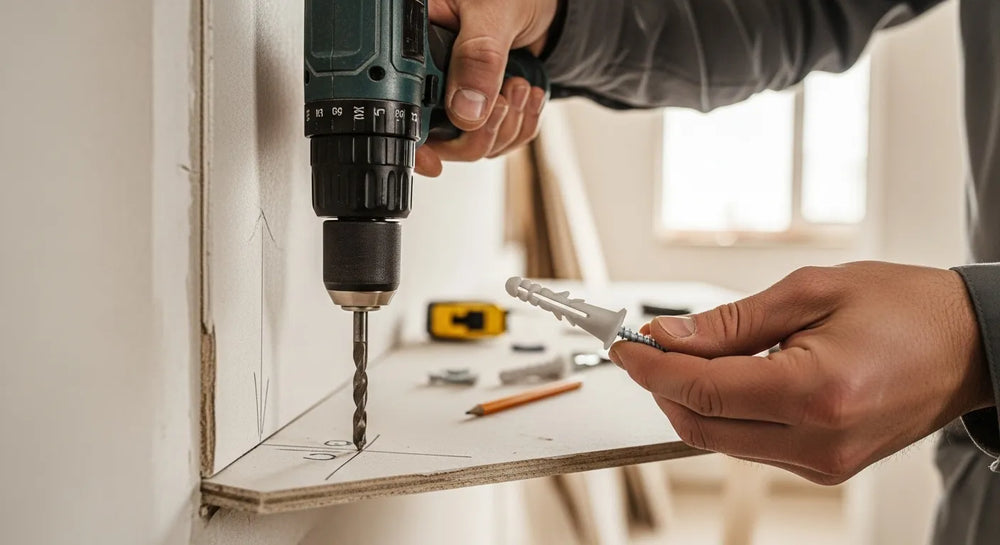
Selecting Screws for 5/8 Drywall: A Procurement Guide
Table of Contents
- Introduction
- The Unique Demands of 5/8-Inch Drywall
- Deconstructing the Drywall Screw: Anatomy for Optimal Performance
- Key Considerations for 5/8 Drywall Screw Selection
- Specific Recommendations: What Screws for 5/8 Drywall?
- The Impact of Screw Quality on Project Success and Total Cost of Ownership (TCO)
- Sourcing American-Made Drywall Screws for Reliability and Resilience
- Streamlining Procurement with Maden.co: Beyond Just Screws
- Installation Best Practices for 5/8 Drywall Screws
- Conclusion
- FAQ
Introduction
In the intricate world of construction and industrial maintenance, the seemingly minor decision of selecting the correct fastener can have monumental ripple effects, impacting everything from project timelines and structural integrity to long-term costs and regulatory compliance. Imagine a critical project delayed because a batch of drywall screws consistently strips out, or worse, a structural failure attributed to fasteners that couldn't adequately secure heavy-duty 5/8-inch drywall. For procurement managers, MRO buyers, and design engineers, these scenarios are not just hypothetical frustrations; they represent tangible risks to budgets, reputations, and safety. The challenge intensifies when sourcing high-quality, reliable components in a fragmented global marketplace.
This comprehensive guide aims to demystify the process of selecting the optimal screws for 5/8-inch drywall applications, moving beyond basic recommendations to delve into the nuanced factors that drive fastener performance and procurement success. We will explore the critical specifications—length, thread type, head design, and material—that ensure structural integrity and efficiency. Furthermore, we will illuminate the strategic advantages of prioritizing U.S.-manufactured fasteners, emphasizing quality control, supply chain resilience, and the broader economic impact. Our mission at Maden.co is to democratize access to American manufacturing, connecting industrial buyers with over 2.5 million American-made products. We believe that by providing clear, authoritative guidance and a reliable marketplace, we can empower businesses to make informed choices that bolster both their projects and the domestic industrial base. This post will detail not only what screws to choose but also why those choices are paramount for industrial excellence and how Maden.co serves as your strategic partner in this endeavor.
The Unique Demands of 5/8-Inch Drywall
Before diving into screw specifics, it's essential to understand why 5/8-inch drywall requires particular attention. This thickness isn't merely an arbitrary measurement; it signifies enhanced performance characteristics that necessitate robust fastening solutions.
Understanding Drywall Types and Their Implications
Drywall, also known as gypsum board or plasterboard, is a foundational material in modern construction. Its core is made of gypsum plaster, typically sandwiched between two sheets of heavy paper. The variations in drywall types are crucial:
- Standard Drywall: Typically 1/2-inch or 3/8-inch thick, used for general wall and ceiling applications where no special performance is required.
- 5/8-Inch Drywall (Type X or Fire-Rated): This is where 5/8-inch thickness predominantly comes into play. Type X drywall is specially formulated with non-combustible fibers embedded in the gypsum core, giving it superior fire resistance. It is mandated in many commercial buildings and residential structures for fire separation walls, shaft walls, and ceilings, offering a 1-hour or greater fire rating when properly installed.
- Moisture-Resistant (Green Board) and Mold-Resistant (Purple Board): These types are designed for high-humidity areas like bathrooms and kitchens. They often come in various thicknesses, including 5/8-inch, and require fasteners that can withstand potential corrosion.
- Sound-Reducing Drywall: Features a viscoelastic polymer layer between two gypsum boards to dampen sound transmission. This can add significant weight and rigidity, impacting screw choice.
The structural role of 5/8-inch drywall is paramount. Its increased thickness and density contribute to:
- Enhanced Fire Protection: Critical for meeting building codes and ensuring occupant safety. The integrity of the fastening system directly impacts the fire rating.
- Improved Sound Attenuation: A denser panel helps block sound, contributing to quieter interiors, especially in multi-family dwellings or commercial spaces.
- Greater Impact Resistance: The thicker gypsum core makes the wall more robust and less susceptible to damage from everyday wear and tear.
- Increased Weight: This is a significant factor. A standard 4x8 sheet of 5/8-inch drywall can weigh around 70 pounds, substantially more than its 1/2-inch counterpart. This added weight demands fasteners with superior holding power to prevent sagging or pull-through, particularly in ceiling applications.
For design engineers, understanding these characteristics means specifying fasteners that not only meet the immediate installation needs but also contribute to the long-term performance and safety of the structure. For procurement managers, it means sourcing screws that demonstrably meet these stringent requirements, mitigating risks associated with material failure or non-compliance.
Deconstructing the Drywall Screw: Anatomy for Optimal Performance
Choosing the right screw for 5/8-inch drywall isn't a one-size-fits-all decision. It requires a detailed understanding of a drywall screw's anatomy and how each component contributes to its function.
Materials and Coatings
The vast majority of drywall screws are made from hardened steel, typically carbon steel. This material provides the necessary strength and ductility to penetrate drywall and framing efficiently without snapping.
- Corrosion Resistance: Standard drywall screws often feature a black phosphate coating. This coating offers a degree of corrosion resistance and helps the screw blend in with the dark shadows behind the drywall, making it less visible through paint. However, for moisture-prone areas or exterior applications, zinc-plated or even stainless steel screws might be required for superior corrosion protection. For a procurement manager sourcing for a project in a high-humidity environment, specifying zinc-plated or galvanized screws, even for internal applications like a specialized cleanroom, is a critical detail to prevent premature failure and costly rework.
Head Types
The head of a drywall screw is designed for specific interaction with the drywall surface:
- Bugle Head: This is the most common and recommended head type for drywall screws. Its conical, flared shape acts like a countersink, allowing the screw head to sit flush or slightly recessed below the paper surface of the drywall without tearing the paper or creating excessive dimples. This ensures a smooth surface for finishing (taping and mudding).
- Pan Head/Wafer Head: These have a flat, broad underside. While sometimes used in specialty applications, they are generally not suitable for standard drywall installation as they sit proud of the surface and can tear the paper.
Drive Types
The drive type dictates the tool required for installation and affects cam-out (when the driver slips out of the screw head).
- Phillips Head: The most common drive type, easy to find drivers for. However, it is prone to cam-out, especially when using high-torque drivers.
- Square (Robertson) Head: Offers superior torque transfer and significantly reduces cam-out. Often preferred by professionals for efficiency and reduced fatigue.
- Torx (Star) Head: Provides the best cam-out resistance and torque transfer, making it ideal for high-volume or heavy-duty applications. Less common for standard drywall screws but gaining popularity.
Thread Types
The thread design is perhaps the most critical factor after length, determining how effectively the screw grips the framing material.
- Coarse Thread (W-type): Characterized by widely spaced, aggressive threads. These are specifically designed for optimal grip in wood studs. The coarse threads grab wood fibers securely, providing strong pull-out resistance. For a procurement manager seeking standard solutions for wood-framed construction, prioritizing coarse-thread screws is essential. You can find robust options like these 6 x 1-1/4" coarse thread drywall screws on Maden.co, offering reliable performance for wood framing.
- Fine Thread (S-type): Features more tightly spaced, finer threads. These are engineered to cut through and grip thin-gauge metal studs (typically 25-gauge to 20-gauge). The finer threads prevent stripping out the thin metal and provide a secure hold. For projects involving metal framing, fine-thread screws are non-negotiable. Explore options such as these 6 x 1" fine thread drywall screws to ensure optimal fastening in metal stud applications.
- Hi-Low Thread: A specialty thread design that combines high and low threads. Often used for fastening drywall to light-gauge steel or for attaching other materials to wood or metal. Not as common for primary drywall-to-framing attachment but useful in specific applications.
Length and Gauge/Diameter
- Length: This is arguably the most crucial dimension for 5/8-inch drywall. The screw must penetrate through the drywall and into the framing material by at least 5/8 of an inch, with many professionals recommending a full 3/4-inch embedment for maximum holding power. This means for a single layer of 5/8-inch drywall, a screw length of at least 1-1/4 inches is required (5/8 inch drywall + 5/8 inch embedment = 1-1/4 inches). Longer screws are necessary for multiple layers of drywall or if furring strips are used.
- Gauge/Diameter: Drywall screws typically come in gauges like #6, #7, or #8. A higher number indicates a larger diameter and generally a stronger screw. For 5/8-inch drywall, #6 or #8 screws are common, with #8 offering increased shear strength and holding power, which can be beneficial given the added weight of thicker drywall. For specific heavy-duty projects, where securing thicker drywall or multiple layers is paramount, considering a larger gauge and longer length like an 8 x 4" drywall screw can provide the enhanced stability and pull-out resistance required.
Key Considerations for 5/8 Drywall Screw Selection
Making an informed decision for 5/8-inch drywall screws requires a holistic view of the project, material specifics, and desired outcomes.
Length: The Golden Rule for 5/8 Drywall
As established, the rule of thumb is to ensure at least 5/8-inch (and ideally 3/4-inch) penetration into the framing material after passing through the drywall.
- Single Layer 5/8-inch Drywall: For this common scenario, a 1-1/4 inch (1-1/4") drywall screw is the minimum recommended length. This provides sufficient embedment into both wood and light-gauge metal studs.
- Double Layer 5/8-inch Drywall: If you're fastening two layers of 5/8-inch drywall (totaling 1-1/4 inches), you would need a screw that is at least 1-7/8 inches (1-7/8") long (1-1/4 inches drywall + 5/8 inch embedment).
- 5/8-inch Drywall over Furring Strips: Furring strips (typically 3/4-inch thick) require even longer screws. For a single layer of 5/8-inch drywall over 3/4-inch furring, a screw of at least 2 inches (2") would be necessary (5/8" drywall + 3/4" furring + 5/8" embedment).
Procurement managers must meticulously verify these length requirements against project specifications to avoid procurement errors that could lead to widespread installation issues.
Thread Type: Coarse vs. Fine for 5/8 Drywall
This is a fundamental choice determined by the framing material:
- For Wood Studs: Always select coarse-thread drywall screws. The aggressive threads bite deeply into the wood fibers, creating a strong mechanical lock. Using fine-thread screws in wood will result in inadequate holding power and potential pull-out.
- For Metal Studs: Always select fine-thread drywall screws. These threads are designed to create a secure, self-tapping connection with the thin gauge steel of metal studs, preventing the stripping that coarse threads often cause in metal. Using coarse-thread screws in metal studs can lead to stripped holes and loose drywall.
The choice of thread type is non-negotiable for secure fastening and proper structural performance.
Corrosion Resistance and Coatings
While black phosphate is standard for interior, non-wet drywall applications, a procurement manager must consider environmental factors:
- Moisture-Prone Areas: For bathrooms, kitchens, basements, or commercial spaces with high humidity, zinc-plated or galvanized screws are essential. These coatings provide enhanced protection against rust, which can compromise the screw's integrity and lead to unsightly stains on the drywall surface.
- Exterior Sheathing: If fastening exterior-grade gypsum sheathing, even more robust corrosion resistance (e.g., hot-dip galvanized or stainless steel) is required, often specified by building codes.
Head Design for a Flush Finish
The bugle head design is universal for drywall applications because it allows for proper countersinking without tearing the paper facing, which is vital for a smooth finish. Proper installation ensures the screw head is just below the surface, ready for mud and tape.
Drive System Efficiency
While Phillips is common, procurement professionals should consider the total cost of ownership (TCO) associated with efficiency and rework. A switch to Square (Robertson) or Torx (Star) drive systems can reduce cam-out, minimize stripped screw heads, and speed up installation, ultimately saving labor costs and reducing material waste. This is particularly relevant for large-scale projects where even small efficiencies multiply significantly.
Fire-Rated Applications (Type X Drywall)
When working with 5/8-inch Type X drywall for fire-rated assemblies, the type of fastener and its spacing are often specified by fire codes and engineering drawings. It's not just about the drywall's fire resistance; the fasteners must maintain their integrity under heat to keep the assembly intact for the required duration. Always consult relevant building codes and manufacturer specifications for fire-rated systems. The quality and consistency of U.S.-made fasteners, often certified to specific standards like DIN or NPT, play a crucial role in meeting these stringent compliance requirements.
Weight Bearing and Shear Strength
Given the heavier nature of 5/8-inch drywall, particularly on ceilings, the shear strength and pull-out resistance of the chosen screws are critical. Factors influencing this include:
- Screw Gauge: #8 screws generally offer better holding power than #6.
- Thread Engagement: Proper length and correct thread type for the framing material ensure maximum engagement.
- Framing Material Quality: The density and condition of wood studs, or the gauge of metal studs, directly impact fastener performance.
Specific Recommendations: What Screws for 5/8 Drywall?
To summarize and provide actionable recommendations, let's break down the choices based on common scenarios.
For Wood Studs: Coarse Thread Drywall Screws
For projects involving 5/8-inch drywall installed onto wood framing, the optimal choice is a coarse-thread drywall screw.
- Minimum Length: 1-1/4 inches. This length ensures sufficient penetration into the wood stud for secure fastening.
- Recommended Gauge: #6 or #8. While #6 is common, #8 offers enhanced strength for the heavier 5/8-inch drywall.
- Coating: Black phosphate for general interior use. Zinc-plated if moisture is a concern.
Example Scenario: A contractor is renovating an older home, upgrading walls with 5/8-inch fire-rated drywall for improved safety and soundproofing. The existing framing is traditional lumber. For this, a procurement manager would specify 6 x 1-1/4" coarse thread drywall screws to ensure robust engagement with the wood studs and compliance with the project's fire-rating requirements. Sourcing U.S.-made options ensures consistent quality and material traceability, critical for such applications.
For Metal Studs: Fine Thread Drywall Screws
When fastening 5/8-inch drywall to light-gauge metal studs (typically 25-gauge to 20-gauge), fine-thread screws are essential.
- Minimum Length: 1-1/4 inches.
- Recommended Gauge: #6 or #8. #8 provides better pull-out resistance for heavier drywall.
- Coating: Black phosphate is standard. Zinc-plated if environmental conditions require it.
Example Scenario: A commercial office building fit-out requires the installation of 5/8-inch drywall on interior partition walls framed with light-gauge steel studs. The design engineer explicitly calls for fasteners optimized for metal framing to prevent stripping and ensure the long-term stability of the walls. In this case, procurement would seek out 6 x 1" fine thread drywall screws, potentially in a 1-1/4 inch length for optimal embedment, to meet these specifications. Our marketplace specializes in connecting buyers with such precision-engineered, U.S.-made components.
Heavy-Duty or Specialty Applications
For scenarios requiring extra grip, securing multiple layers of drywall, or fastening to denser materials, specialized screws become necessary.
- Longer Lengths: When attaching two layers of 5/8-inch drywall (total 1-1/4 inches) to studs, you would need screws approximately 1-7/8 inches to 2 inches long. Similarly, if furring strips are involved, lengths up to 2-1/2 inches or more might be required.
- Larger Gauge: For particularly heavy installations, such as securing thicker soundproof drywall panels or multiple layers, a #8 gauge screw is preferable for its increased holding power. For procurement managers facing an unexpected equipment breakdown or needing to source components for a unique, capital-intensive installation, the ability to quickly find and finance a robust, U.S.-made fastener like an 8 x 4" drywall screw that offers superior length and gauge for demanding tasks is a game-changer. These longer, stronger screws can be crucial for projects demanding maximum pull-out resistance and shear strength.
The Impact of Screw Quality on Project Success and Total Cost of Ownership (TCO)
The temptation to opt for the cheapest fasteners can be strong, especially in cost-sensitive projects. However, for procurement professionals, understanding the TCO reveals that low-quality screws often represent a false economy. The tangible benefits of investing in high-quality, U.S.-made fasteners extend far beyond the unit price.
- Reduced Rework and Downtime: Inferior screws are prone to stripping heads, snapping during installation, or failing to seat properly. Each such failure requires time-consuming removal and replacement, leading to significant labor costs, project delays, and frustrating downtime. For an MRO buyer, unexpected failures due to cheap fasteners can halt critical operations, making the upfront savings negligible compared to the cost of lost productivity.
- Improved Structural Integrity and Safety: High-quality screws, manufactured to precise specifications, ensure secure attachment of drywall to framing. This is paramount for safety, especially with heavier 5/8-inch drywall in fire-rated or high-traffic areas. The peace of mind that comes from knowing fasteners will perform as expected is invaluable.
- Enhanced Compliance: Meeting building codes, fire ratings, and industry standards (like DIN or NPT) often hinges on the quality and performance of every component, including fasteners. U.S.-manufactured screws typically adhere to rigorous quality control processes and specifications, making compliance verification much simpler and more reliable. This transparency is a core value at Maden.co.
- Reduced Material Waste: Fewer stripped or broken screws mean less material waste, contributing to project sustainability and cost control.
- Faster, More Efficient Installation: Consistent quality translates to smoother driving, less cam-out, and quicker installation times, directly impacting labor efficiency.
For a procurement manager, evaluating the strategic business value of a fastener goes beyond its price tag. It encompasses its contribution to project deadlines, safety standards, regulatory adherence, and ultimately, the long-term durability and reputation of the construction.
Sourcing American-Made Drywall Screws for Reliability and Resilience
At Maden.co, our unwavering mission is to democratize access to American manufacturing. We believe that by connecting industrial buyers with a vast network of U.S. manufacturers, we not only provide superior products but also strengthen the domestic supply chain and foster economic growth. When it comes to something as fundamental as drywall screws, the choice to source American-made carries significant strategic advantages.
Benefits of U.S.-Made Fasteners
- Unrivaled Quality Control: American manufacturers operate under some of the most stringent quality standards in the world. This translates to fasteners with consistent dimensions, reliable material composition, and superior performance characteristics. For 5/8-inch drywall, this means fewer stripped heads, consistent seating, and unwavering holding power, directly addressing the pain points of rework and project delays. Our entire business model is built on this principle; you can learn more about our mission to champion American manufacturing here: About Us.
- Material Traceability and Compliance: Knowing the origin and composition of your fasteners is crucial for regulatory compliance and quality assurance. U.S. manufacturers provide transparent material sourcing, often adhering to specific industrial standards like DIN, NPT, or ASTM. This level of traceability is vital for projects requiring specific certifications or environmental standards.
- Enhanced Supply Chain Resilience: The past few years have highlighted the vulnerabilities of global supply chains. Sourcing from domestic manufacturers significantly reduces lead times, mitigates risks associated with international shipping delays, geopolitical instability, and tariffs. This localized approach ensures a more predictable and resilient procurement process, which is a cornerstone of our value proposition and a key aspect of our commitment to Supply Chain Transparency.
- Support for the Domestic Economy: Every American-made product purchased contributes to job creation, supports local communities, and drives innovation within the U.S. manufacturing sector. This aligns with our core value of American Manufacturing Pride and our vision to become the definitive platform that proves American-made components are as accessible and convenient as any global alternative.
- Industrial Excellence and Customer Empowerment: By offering a curated selection of over 2.5 million U.S.-made products from our network of 800+ verified manufacturers, Maden.co empowers procurement managers with unprecedented choice and confidence. This digital innovation fosters industrial excellence by making it easier to find and acquire the precise, high-quality components needed for any project.
Streamlining Procurement with Maden.co: Beyond Just Screws
Maden.co is more than just a marketplace; it's a strategic partner designed to transform your procurement process. We understand that finding the right fasteners—or any industrial component—can be a time-consuming and fragmented process. Our platform is built to eliminate that friction.
Imagine being a design engineer needing specific material certifications for a new prototype, or an MRO buyer facing an unexpected equipment breakdown, requiring a hard-to-find U.S.-made part. With Maden.co, you gain instant access to a vast, organized catalog of verified American-made products.
Our Unique Value Proposition:
- Vast, Verified Catalog: We connect you with over 2.5 million American-made products from our network of 800+ verified U.S. manufacturers. This extensive selection means you can find everything from standard drywall screws to highly specialized industrial components, all in one centralized location.
- Reduced Procurement Friction: Our intuitive platform simplifies the search, comparison, and purchasing process. You can quickly filter by specifications, certifications, and manufacturer, drastically cutting down the time spent sourcing.
- Strategic Sourcing for TCO: By consolidating your procurement of American-made goods, you gain better oversight, ensure compliance with critical industry standards, and ultimately improve your Total Cost of Ownership by reducing the risks associated with unreliable parts and extended lead times.
- Instant Financing at Checkout: We recognize that managing cash flow is paramount for businesses, especially when dealing with large-volume or capital-intensive purchases. A key differentiator on our platform is our "Instant Financing" option. This isn't merely a payment method; it's a strategic tool designed to empower procurement managers and business owners to optimize their capital. You can apply for Instant Financing directly at checkout to streamline your capital-intensive projects, allowing you to secure the necessary materials without straining immediate cash reserves. This flexibility enhances your purchasing power and project agility.
For businesses looking to build a more reliable and efficient procurement process, Maden.co stands as a testament to digital innovation driving American manufacturing revival. Our platform, from the vast product offerings to the strategic financing options, is built to serve your industrial needs. We are actively driving the manufacturing revival with our tagline: "America's manufacturing revival is here." To begin exploring a world of quality U.S.-made products, visit our homepage.
Are you a qualified U.S. manufacturer producing high-quality industrial components? We invite you to join our growing network. Register as a vendor and join the American manufacturing revival.
Installation Best Practices for 5/8 Drywall Screws
Even the best screws won't perform optimally if installed incorrectly. Adhering to best practices is essential for structural integrity and a professional finish.
- Use the Right Tools: A drywall screw gun or a drill with a clutch and a depth-setting nose cone is critical. These tools prevent over-driving, which can tear the drywall paper, and under-driving, which leaves screw heads proud.
- Proper Depth Setting: The screw head should be slightly recessed below the drywall surface, creating a small dimple. This dimple is then filled with joint compound, resulting in a smooth finish. The paper face of the drywall should not be broken, as this significantly reduces the screw's holding power.
- Correct Spacing: Standard spacing for walls is typically 8 inches on ceilings and 12-16 inches on walls. However, for 5/8-inch Type X drywall in fire-rated assemblies, the spacing can be more stringent, often 7 inches for ceilings and 12 inches for walls. Always refer to local building codes and manufacturer specifications.
- Avoid Angled Driving: Drive screws perpendicular to the drywall surface and into the center of the framing member. Angled screws reduce holding power and can miss the stud or joist entirely.
- Secure All Edges: Ensure all edges of the drywall panel are securely fastened to framing, including unsupported edges that may require blocking.
These practices, combined with high-quality, American-made fasteners, guarantee a durable and compliant installation. If you have specific sourcing questions or need assistance finding the perfect U.S.-made solution for your project, our team is ready to help; feel free to contact us directly.
Conclusion
Choosing the right screws for 5/8-inch drywall is far more than a simple selection; it's a strategic decision that underpins the success, safety, and longevity of any construction or maintenance project. From understanding the nuanced requirements of thicker, heavier, and often fire-rated drywall to meticulously matching screw length, thread type, and coating with specific framing materials and environmental conditions, every detail matters. The strategic value of high-quality, U.S.-made fasteners—evident in reduced rework, enhanced compliance, superior structural integrity, and resilient supply chains—far outweighs any perceived savings from lesser alternatives.
At Maden.co, we are committed to providing industrial buyers like you with unparalleled access to the finest American manufacturing has to offer. By leveraging our platform, you're not just procuring components; you're investing in reliability, transparency, and the resurgence of domestic industry. Our extensive catalog of over 2.5 million verified U.S.-made products, coupled with innovative features like Instant Financing at checkout, is designed to empower your procurement process, reduce friction, and improve your total cost of ownership. Explore our vast selection today and discover how Maden.co can be your essential partner in building more efficient, resilient, and successful operations. Leverage Instant Financing at checkout to manage your capital effectively and accelerate your projects with confidence.
FAQ
Q1: What is the absolute minimum screw length for a single layer of 5/8-inch drywall?
A1: For a single layer of 5/8-inch drywall, the absolute minimum screw length recommended is 1-1/4 inches. This length ensures at least 5/8 inch of penetration into the framing material, which is crucial for secure holding power. However, many professionals prefer 1-5/8 inch screws to guarantee a full 3/4 inch embedment into the framing.
Q2: Why can't I use coarse-thread screws with metal studs for 5/8-inch drywall?
A2: Coarse-thread screws are designed with widely spaced, aggressive threads that grip well into wood fibers. When used with thin-gauge metal studs, these aggressive threads tend to strip out the metal, creating an insecure and loose connection. Fine-thread screws, with their more tightly spaced threads, are specifically engineered to cut into and securely hold thin metal, preventing stripping and ensuring a strong attachment.
Q3: What are the benefits of using American-made drywall screws for my projects?
A3: Sourcing American-made drywall screws offers several key benefits, including superior quality control and consistent manufacturing standards, transparent material traceability for compliance, enhanced supply chain resilience by reducing dependence on international logistics, and support for the domestic economy. These factors collectively contribute to reduced rework, improved project reliability, and a better total cost of ownership.
Q4: Can I use Instant Financing for large orders of drywall screws or other industrial products on Maden.co?
A4: Yes, Maden.co offers an Instant Financing option during the checkout process, specifically designed to help businesses manage cash flow effectively and facilitate larger-volume or capital-intensive purchases. This strategic tool allows procurement managers and business owners to secure the necessary U.S.-made products, including substantial quantities of drywall screws, without immediately impacting their operational capital.


