
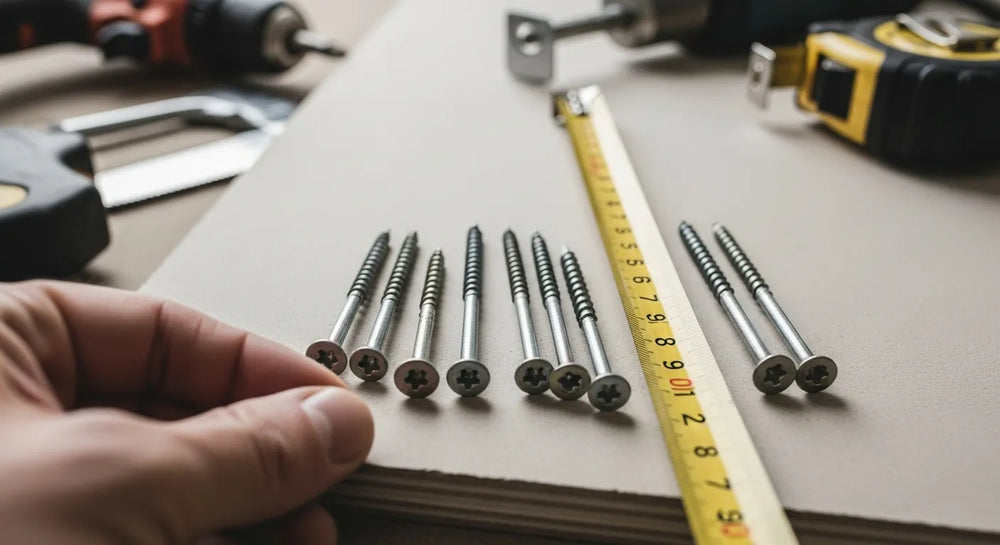
Selecting Screws for Metal Studs: Precision, Performance, and American-Made Quality
Table of Contents
- Introduction
- Understanding Metal Studs and Their Applications
- The Anatomy of a Screw for Metal Studs
- Key Factors in Screw Selection: Beyond Just Size
- Deciphering Screw Sizes: Diameter and Length
- Specific Screw Types for Metal Studs: A Deeper Dive
- Best Practices for Installation and Performance
- The Procurement Manager's Advantage: Sourcing American-Made Fasteners
- Streamlining Your Procurement: Digital Innovation and Strategic Financing
- Conclusion
- FAQ
Introduction
In the intricate world of construction and industrial fabrication, the seemingly simple act of fastening components to metal studs can be fraught with hidden complexities. A misguided screw choice can lead to stripped threads, compromised structural integrity, project delays, and ultimately, inflated costs. For a procurement manager under pressure to ensure compliant materials, a design engineer needing precise specifications for a new assembly, or an MRO buyer facing an unexpected equipment breakdown, understanding the nuances of fasteners for metal studs is not merely a technical detail – it's a critical operational imperative. This post will demystify the process, guiding you through the essential considerations for selecting the right screws for metal studs, covering everything from screw anatomy and material science to critical application distinctions and best installation practices. Our aim is to provide an authoritative resource that empowers you to make informed decisions, ensuring reliability and efficiency in your projects. We will underscore the profound value of sourcing high-quality, American-made components, highlighting how such choices not only enhance performance but also fortify your supply chain.
Understanding Metal Studs and Their Applications
Metal studs have become the backbone of modern construction and various industrial applications, offering advantages such as fire resistance, dimensional stability, and resistance to pests and rot. Unlike their wooden counterparts, metal studs, typically made from galvanized steel, require specific fastening solutions due to their material properties – primarily their thin gauge and high tensile strength.
Metal studs are generally categorized by their gauge, which refers to the thickness of the steel. Light-gauge studs, commonly 25-gauge or 20-gauge, are prevalent in interior non-load-bearing walls for residential and commercial drywall applications. Heavy-gauge studs, such as 18-gauge or 16-gauge, are used in load-bearing walls, structural framing, and more demanding industrial settings where robust support is essential.
The applications for metal studs are diverse:
- Drywall Installation: The most common use, requiring fasteners that sit flush and provide secure attachment without damaging the drywall paper.
- Framing: For interior walls, bulkheads, and soffits, creating the skeletal structure of a space.
- Ceiling Suspensions: Supporting acoustical ceilings and other overhead fixtures.
- Utility Attachments: Securing electrical boxes, conduit, plumbing lines, and HVAC ducts.
- Specialized Industrial Applications: Used in manufacturing facilities for partition walls, equipment enclosures, and structural reinforcements where stability and fire resistance are paramount.
The inherent challenges of fastening into metal studs include preventing stripping, ensuring adequate pull-out resistance, and achieving a secure connection that can withstand dynamic loads and vibrations. These challenges necessitate a precise understanding of screw characteristics and proper selection, which is exactly where the strategic sourcing of high-quality, American-made industrial fasteners from platforms like Maden.co becomes an undeniable advantage.
The Anatomy of a Screw for Metal Studs
Before delving into specific sizes and types, a foundational understanding of screw anatomy is crucial. Each component of a screw plays a vital role in its performance when fastening into metal studs.
Head Types
The screw head is critical for driving the fastener and providing the bearing surface against the material being attached.
- Pan Head: Features a slightly rounded top with flat sides, offering a broad bearing surface for secure clamping. Often used for attaching brackets, light fixtures, or general sheet metal work.
- Truss Head: Similar to a pan head but with a wider, lower profile. This larger diameter provides an even greater bearing surface, distributing pressure over a broader area and reducing the risk of crushing softer materials or pull-through. Ideal for attaching panels or materials where a lower profile is desired.
- Bugle Head: Distinguished by its conical underside that flares out. This design helps the screw sink flush into soft materials like drywall, preventing tearing of the paper facing. It is almost exclusively used for drywall applications.
- Hex Washer Head: Combines a hexagonal drive with an integrated washer, providing excellent torque transmission and a large bearing surface to prevent pull-through, often seen in heavier gauge applications or when attaching metal to metal.
Drive Types
The drive type dictates the tool required for installation and affects torque transfer and cam-out resistance.
- Phillips Drive: The most common drive, identifiable by its cross-shaped recess. While widely available, it can be prone to cam-out (the driver slipping out of the screw head) if not used with proper pressure and torque.
- Square (Robertson) Drive: A square-shaped recess offering superior torque transfer and significantly reduced cam-out compared to Phillips. Favored for its ease of use and reliability, especially in repetitive tasks. You'll find many high-quality industrial fasteners featuring this drive type on our marketplace. For example, our Steel Zinc Plated Type A Truss Square Drive Self-Tapping Sheet Metal Screw offers this reliable drive type for robust performance.
- Hex Drive: A six-sided recess that accepts a hex bit or wrench, providing excellent grip and high torque capabilities, commonly found on larger, heavy-duty screws.
- Torx (Star) Drive: A six-point star-shaped recess that virtually eliminates cam-out and allows for higher torque application. Increasingly popular in applications demanding precision and robust connections.
Thread Types
The thread design is paramount to how a screw engages with and secures itself in the metal stud.
- Fine-Thread: Features more threads per inch, providing greater holding power in thinner materials like light-gauge metal studs. This design increases the contact area with the stud material, reducing the likelihood of stripping out. Commonly used for drywall screws into metal studs.
- Coarse-Thread: Has fewer, more widely spaced threads. While not typically ideal for thin metal studs due to increased stripping risk, specific coarse thread designs, such as Hi-Lo, have unique advantages.
-
Self-Tapping Threads: These screws are designed to cut their own mating threads into the material as they are driven, eliminating the need for a pre-drilled pilot hole in many cases.
- Type A: Features a sharp point and coarse threads, suitable for fastening thin sheet metal to thicker metal or other substrates. Our Steel Zinc Plated Type A Pan Slot Drive Self-Tapping Sheet Metal Screw is an excellent example of a reliable, U.S.-made Type A self-tapping screw, suitable for numerous light-gauge metal applications.
- Hi-Lo Double Lead Thread: A specialized self-tapping thread design featuring alternating high and low threads. This unique profile provides superior pull-out resistance, reduced stripping, and faster engagement in a variety of materials, including light-gauge metals and plastics. For applications demanding maximum grip and minimal risk of material damage, consider a Hi-Lo Double Lead Thread Self-Tapping Sheet Metal Screw.
Points
The screw's point determines whether a pilot hole is required.
- Sharp Point: Requires a pre-drilled pilot hole for metal applications. These are common for general-purpose sheet metal screws but less so for direct fastening into studs.
- Self-Drilling (Tek) Point: Features a drill bit-like tip that drills its own pilot hole before the threads engage. This significantly speeds up installation and is ideal for fastening into metal studs of varying gauges. Tek screws are further classified by their point number (1 through 5), indicating their drilling capacity for different metal thicknesses.
Understanding these components allows for a more granular and effective selection process, moving beyond generic choices to fasteners specifically engineered for the demands of metal stud applications. This precision, coupled with the consistent quality of U.S.-manufactured parts, forms the bedrock of industrial excellence, a core value we champion at Maden.co.
Key Factors in Screw Selection: Beyond Just Size
Choosing the correct screw for metal studs involves more than just picking a length and diameter; it requires a holistic consideration of material science, application demands, and environmental factors.
Material Compatibility
The overwhelming majority of screws used for metal studs are made of steel, chosen for its strength and cost-effectiveness. However, the exact composition and protective coatings are critical:
- Steel Grade: Fasteners are typically manufactured from hardened carbon steel to ensure they are strong enough to cut into or drill through the stud without bending or breaking.
-
Corrosion Resistance: Metal studs are often galvanized (zinc-coated) to resist corrosion. The screws used should also offer adequate corrosion protection, especially in environments exposed to moisture or chemicals.
- Zinc Plating: A common and economical coating that provides good corrosion resistance for interior applications. Most standard self-tapping and self-drilling screws for metal studs feature a zinc-plated finish.
- Other Coatings: For exterior use or highly corrosive industrial environments, specialized coatings like mechanical galvanization, ceramic coatings, or stainless steel fasteners might be necessary. While steel screws are the norm, consulting industry standards is crucial for specific applications.
Load Requirements
The load a fastener must bear—both shear (forces parallel to the screw) and pull-out (forces perpendicular to the screw, attempting to extract it)—is a primary driver of selection.
- Shear Strength: Refers to the screw's ability to resist forces that try to cut it. A larger diameter screw generally has higher shear strength.
- Pull-Out Resistance: The force required to extract a screw from the material. This is influenced by thread design, thread engagement, and the thickness of the material. Fine threads and Hi-Lo threads, with their increased contact area, typically offer better pull-out resistance in thin materials.
Substrate Thickness
The gauge of the metal stud is paramount. A screw designed for light-gauge studs (e.g., 25-gauge) will likely strip out in heavier gauge material, while a screw too aggressive for light gauge might deform the stud. Self-drilling screws are often specified by their capacity to drill through certain total thicknesses of steel.
Component Thickness
The thickness of the material being attached to the stud also influences screw length and type. Whether it's thin drywall, a robust steel bracket, or a PVC pipe clamp, the screw must adequately penetrate the attached material and then securely engage with the stud.
Environmental Conditions
The operating environment directly impacts the longevity and performance of the fastener.
- Indoor vs. Outdoor: Outdoor applications demand superior corrosion resistance (e.g., hot-dip galvanized or stainless steel). Indoor applications, particularly in climate-controlled environments, may suffice with standard zinc-plated screws.
- Moisture and Chemicals: High humidity, condensation, or exposure to specific chemicals (e.g., in industrial processing plants) necessitate specialized corrosion-resistant materials or coatings to prevent premature failure.
- Vibration: In industrial machinery or structures prone to vibration, specialized locking features or thread designs may be required to prevent screws from loosening over time.
Compliance & Standards
Adherence to industry standards and building codes is non-negotiable.
- ASTM (American Society for Testing and Materials): Many fastener standards reference ASTM specifications for material composition, mechanical properties, and testing methods.
- AISI (American Iron and Steel Institute): Provides specifications for steel products, including those used in metal studs and fasteners.
- Building Codes: Local and national building codes dictate the types and sizes of fasteners permitted for specific applications, particularly in structural components. Ensuring compliance is not just about legality; it's about guaranteeing safety and structural integrity.
At Maden.co, we understand the critical importance of these factors. Our platform connects buyers with over 2.5 million American-made products, sourced from a network of 800+ verified U.S. manufacturers. This means procurement managers and engineers can access fasteners that meet stringent compliance standards and are manufactured with the quality and transparency that defines American craftsmanship. Our core values, including American Manufacturing Pride and Supply Chain Transparency, ensure that you can source with confidence.
Deciphering Screw Sizes: Diameter and Length
Once the type and material of the screw are determined, selecting the correct diameter (gauge) and length is the next critical step. These dimensions directly impact the strength of the connection and the ease of installation.
Diameter (Gauge)
Screw diameter, often referred to as gauge, is indicated by a number (e.g., #6, #8, #10, #12). As the number increases, so does the diameter of the screw.
- Impact on Strength: A larger diameter screw generally provides higher shear strength and greater pull-out resistance due to its increased cross-sectional area and thread engagement.
- Impact on Hole Size: While self-drilling screws create their own holes, the body diameter of the screw still dictates the size of the hole. An unnecessarily large diameter can weaken thin metal studs or cause deformation.
-
Common Gauges for Metal Studs:
- #6: Often used for very light-duty applications or when attaching very thin materials to light-gauge studs, such as certain drywall applications.
- #8: The most common and versatile gauge for attaching various materials to light to medium-gauge metal studs. This size offers a good balance of holding power and minimal risk of stud deformation. Our Steel Zinc Plated Type A Truss Square Drive Self-Tapping Sheet Metal Screw is a popular choice in this versatile #8 size.
- #10: Suitable for heavier attachments, medium-gauge studs, or applications requiring enhanced pull-out resistance. Often seen in self-drilling screws for framing or securing more substantial fixtures.
- #12 and Larger: Reserved for heavy-gauge studs, structural applications, or when attaching very thick components. These typically correspond to robust self-drilling screws.
Length
Determining the optimal screw length is crucial for achieving secure fastening without over-penetration or insufficient engagement.
- Rule of Thumb for Penetration: For metal studs, the screw should penetrate through the back side of the stud by at least 3-4 full threads. This ensures maximum thread engagement and pull-out resistance.
- Calculation: Total Screw Length = Thickness of Material Being Attached + Thickness of Metal Stud + Minimum Thread Engagement (typically 1/4" to 3/8").
-
Consequences of Incorrect Length:
- Too Short: Insufficient thread engagement, leading to weak connections, increased risk of pull-out, and stripping.
- Too Long: Risk of hitting wires, pipes, or other components behind the stud; also can create unnecessary protrusions that snag or require trimming.
Common Applications and Corresponding Screw Sizes
Let's apply these principles to typical scenarios:
-
Drywall to Light-Gauge Metal Studs:
- Type: Fine-thread bugle head drywall screws.
- Diameter: Primarily #6 or #8.
- Length: 1" to 1-5/8", depending on the drywall thickness (e.g., 1" for 1/2" drywall, 1-1/4" for 5/8" drywall). The goal is to penetrate the stud sufficiently without piercing through the back sheet metal excessively.
-
Attaching Light Fixtures, Brackets, or Thin Sheet Metal to Light-Gauge Metal Studs:
- Type: Self-tapping sheet metal screws (Type A or AB), often with pan or truss heads. Our Steel Zinc Plated Type A Pan Slot Drive Self-Tapping Sheet Metal Screw is ideal for these applications. For a wider bearing surface, consider the Steel Zinc Plated Type A Truss Square Drive Self-Tapping Sheet Metal Screw.
- Diameter: #8 or #10.
- Length: 1/2" to 1", chosen to secure the component and achieve adequate stud penetration.
-
Framing or Structural Attachments (Light to Medium Gauge Studs):
- Type: Self-drilling (Tek) screws, often with hex washer heads. The Tek point (e.g., #2 or #3) should match the stud gauge.
- Diameter: #8, #10, or #12.
- Length: Varies significantly based on the total thickness of the materials being fastened together.
-
Heavy Gauge Applications (e.g., 16-gauge studs or thicker):
- Type: Larger diameter self-drilling screws with higher Tek point numbers (e.g., #4 or #5), often hardened for superior drilling capacity.
- Diameter: #12 or 1/4".
- Length: Determined by combined material thickness and required penetration.
The ability to precisely match screw dimensions to the application is a hallmark of industrial excellence. Maden.co empowers procurement professionals and engineers to navigate this complexity by offering a vast, searchable catalog of U.S.-made fasteners, ensuring that the exact specifications you need are readily accessible. This attention to detail reduces procurement friction and supports robust, long-lasting assemblies.
Specific Screw Types for Metal Studs: A Deeper Dive
While we've touched on them, let's explore the critical differences and advantages of specific screw types optimized for metal studs.
Self-Tapping Screws
Self-tapping screws, as the name suggests, are designed to tap (cut) their own threads into a material as they are driven. This eliminates the need for a pre-drilled pilot hole in many lighter-gauge applications, though for thicker metals or to ensure precise alignment, a pilot hole may still be beneficial.
- How They Work: The sharp point of the screw initiates entry, and the specially formed threads cut into the material, creating a secure, threaded connection.
-
Types (A, B, AB):
- Type A: Features a gimlet (sharp) point and coarse threads. Ideal for fastening thin sheet metal to thicker metal, wood, or plastic. They require less torque to drive but are generally not self-drilling for metal studs. Our Steel Zinc Plated Type A Pan Slot Drive Self-Tapping Sheet Metal Screw is a prime example, providing reliable performance in a variety of light fastening applications.
- Type B: Has a blunt point with finer, spaced threads. Often used for fastening into softer metals, plastics, or non-ferrous materials.
- Type AB: Combines the sharp point of Type A with the finer threads of Type B, offering good all-around performance in many materials.
- Applications: Widely used for attaching light-gauge sheet metal, conduit clips, electrical boxes, or decorative trim to metal studs where pre-drilling a small pilot hole is acceptable or necessary for precision.
Self-Drilling Screws (Tek Screws)
Often referred to by the brand name "Tek screws," self-drilling screws are a game-changer for speed and efficiency when working with metal studs.
- Integrated Drill Bit: The key feature is their point, which functions like a drill bit. It drills a pilot hole, forms threads, and fastens the material in a single operation, eliminating the need for pre-drilling. This saves significant time and labor on site or in the factory.
-
Advantages:
- Speed: Dramatically reduces installation time.
- Efficiency: Fewer tools required.
- Accuracy: Reduces the risk of misaligned pilot holes.
-
Types (Points 1-5): The point number indicates the maximum thickness of steel the screw can effectively drill through.
- Point 1: For very thin metals (up to 0.035 inches).
- Point 2: Most common, suitable for light-gauge studs (up to 0.090 inches, or 14-gauge).
- Point 3: For medium-gauge metals (up to 0.125 inches, or 1/8 inch).
- Point 4: For heavier metals (up to 0.210 inches).
- Point 5: For structural steel (up to 0.250 inches, or 1/4 inch).
- Applications: Essential for framing with metal studs, attaching heavier components like structural brackets, securing metal panels, and any application where speed and robust fastening into metal are critical. For instance, in commercial construction, self-drilling screws are indispensable for rapidly assembling metal stud frameworks.
Hi-Lo Double Lead Thread Screws
The Hi-Lo thread design is a specialized form of self-tapping screw that offers enhanced performance in specific material combinations.
- Unique Thread Design: These screws feature two distinct thread leads: a high thread with a sharp angle and a low thread with a less acute angle. This creates a double lead, which means the screw advances faster with each rotation.
-
Advantages:
- Increased Pull-Out Resistance: The high and low threads create a larger surface area of engagement with the material, leading to superior holding power compared to conventional threads, particularly in thin-gauge metals and plastics.
- Reduced Stripping: The unique thread profile also reduces radial displacement, minimizing the risk of stripping the material during installation.
- Faster Engagement: The double-lead design allows for quicker material engagement, speeding up the fastening process.
- Applications: Highly versatile, Hi-Lo screws are excellent for fastening into light-gauge metal studs, as well as plastics, wood composites, and other soft materials where pull-out resistance is a primary concern. For a premium solution that minimizes stripping and maximizes grip, consider a Hi-Lo Double Lead Thread Self-Tapping Sheet Metal Screw.
Understanding these distinct screw types empowers procurement managers and engineers to specify the exact fastener for optimal performance, leading to greater project success and overall operational efficiency. At Maden.co, our commitment to Digital Innovation ensures that finding these specialized components, manufactured to American standards, is straightforward and efficient.
Best Practices for Installation and Performance
Even with the perfect screw selected, improper installation can compromise the integrity of the connection. Adhering to best practices is vital for maximizing fastener performance and ensuring long-term reliability.
- Proper Driver Bits: Always use the correct driver bit type (Phillips, Square, Hex, Torx) and size that precisely fits the screw head. A worn or ill-fitting bit can lead to cam-out, damaging the screw head and potentially the material. For square drive screws, such as our Steel Zinc Plated Type A Truss Square Drive Self-Tapping Sheet Metal Screw, the proper square bit ensures optimal torque transfer.
- Correct Torque Settings: Overtightening is a common culprit for stripped screw heads or damaged stud material. Use a drill/driver with adjustable clutch settings or a torque-controlled impact driver. The goal is to drive the screw until it is snug and the head is flush (or countersunk for bugle heads) without over-driving.
-
Pilot Holes (When Necessary):
- Self-Drilling Screws: Do not require pilot holes as they are designed to drill their own. Attempting to pre-drill for a self-drilling screw can lead to misalignment and weakened fastening.
- Self-Tapping Screws (without a drill point): For optimal results and to prevent stripping in thin metals, a small pilot hole (slightly smaller than the screw's major thread diameter) can be beneficial, especially for very precise applications or in situations where material integrity is critical.
-
Considering Edge Distance and Spacing:
- Edge Distance: Avoid fastening screws too close to the edge of the metal stud. Insufficient edge distance can cause the metal to deform or tear, compromising the connection's strength. Follow manufacturer recommendations or industry best practices, typically maintaining a distance of at least three times the screw diameter from the edge.
- Spacing: Proper spacing between fasteners is crucial for distributing loads evenly and preventing stress concentrations. Again, refer to project specifications or relevant building codes for guidance.
- Using the Right Tool Speed: For self-drilling screws, a high-speed drill (1,500-2,500 RPM) is typically recommended to allow the drill point to cut efficiently. For self-tapping screws, a lower speed with controlled pressure is often preferred to prevent stripping.
By adhering to these best practices, procurement managers can ensure that the high-quality, American-made fasteners they source are utilized to their full potential, contributing to robust and reliable construction and assembly outcomes. This focus on Industrial Excellence is not just about the product itself but also about the effective application of that product.
The Procurement Manager's Advantage: Sourcing American-Made Fasteners
In an increasingly unpredictable global market, the decision to source industrial fasteners and components from domestic manufacturers offers a compelling strategic advantage for procurement managers, MRO buyers, and design engineers. At Maden.co, we are not just a marketplace; we are a testament to America's manufacturing revival. Our mission is to democratize access to American manufacturing, connecting industrial buyers with over 2.5 million American-made products from our network of 800+ verified U.S. manufacturers.
Supply Chain Resilience
Reliance on distant global supply chains has exposed businesses to unprecedented vulnerabilities, from geopolitical tensions and trade disputes to natural disasters and shipping disruptions. Sourcing American-made fasteners dramatically shortens and simplifies the supply chain. This means:
- Reduced Lead Times: Faster delivery of critical components.
- Greater Reliability: Less exposure to international shipping delays and customs hurdles.
- Enhanced Agility: Quicker response to unexpected demands or changes in project specifications.
This resilience translates directly into fewer project delays, more predictable production schedules, and a stronger bottom line.
Quality and Compliance
American manufacturing is synonymous with high standards. When you source fasteners from verified U.S. manufacturers through Maden.co, you are investing in:
- Consistent Quality: Adherence to rigorous quality control processes, leading to fewer defects and superior product performance.
- Material Certifications: Guaranteed compliance with critical industry standards (e.g., ASTM, AISI, specific building codes) and often readily available material certifications, crucial for compliance and traceability.
- Precision Engineering: Components that meet exact specifications, ensuring optimal fit and function for critical applications. For example, knowing that a Hi-Lo Double Lead Thread Self-Tapping Sheet Metal Screw from our platform meets precise dimensional and performance criteria provides peace of mind.
Reduced Total Cost of Ownership (TCO)
While the upfront cost of American-made components might sometimes appear higher, the long-term TCO tells a different story. High-quality fasteners reduce:
- Labor Costs: Fewer installation errors, less rework, and faster assembly times.
- Maintenance Costs: Durable connections mean less frequent repairs or replacements.
- Warranty Claims: Reduced product failures contribute to stronger product reputations.
- Logistics Costs: Shorter shipping distances and fewer expedited freight charges.
By focusing on the strategic value of quality and reliability, businesses can achieve significant savings over the lifecycle of a project or product.
Ethical Sourcing and Sustainability
Choosing American-made also reflects a commitment to ethical business practices:
- Supporting Domestic Jobs: Investing in the American workforce and local economies.
- Environmental Responsibility: Often, U.S. manufacturing adheres to stricter environmental regulations, contributing to more sustainable practices.
- Transparency: Greater visibility into manufacturing processes and labor conditions.
At Maden.co, we stand by our core values of American Manufacturing Pride and Supply Chain Transparency. Our platform is designed to connect you with the very best of U.S. industrial output. For U.S. manufacturers, we invite you to be part of this movement: Register as a vendor and join the American manufacturing revival.
Streamlining Your Procurement: Digital Innovation and Strategic Financing
The complexities of sourcing industrial components, particularly hard-to-find fasteners, have historically been a bottleneck for many businesses. Maden.co addresses these challenges with a commitment to Digital Innovation and Customer Empowerment, transforming how procurement managers, MRO buyers, and design engineers connect with American manufacturers.
Ease of Finding Hard-to-Find Components
Our marketplace offers a comprehensive, searchable catalog of over 2.5 million American-made products. Whether you need a specific diameter of a Steel Zinc Plated Type A Pan Slot Drive Self-Tapping Sheet Metal Screw for a new production run or a specialized length of a Steel Zinc Plated Type A Truss Square Drive Self-Tapping Sheet Metal Screw for an urgent repair, our platform simplifies the search, significantly reducing the time and effort traditionally spent on sourcing. This direct access to a vast network of verified U.S. manufacturers minimizes procurement friction and speeds up project timelines.
Transparent Sourcing
We believe in full transparency throughout the procurement process. Our platform provides detailed product specifications, manufacturer information, and clear pricing (focused on strategic value rather than consumer-style pricing). This transparency, coupled with our rigorous verification process for all manufacturers, builds trust and ensures that you are making informed decisions about your purchases. Learn more about our mission to champion American manufacturing here.
Instant Financing: A Strategic Tool
A key differentiator for Maden.co is our "Instant Financing" option. We understand that large-volume purchases or capital-intensive projects require flexible financial solutions. This feature is not merely a payment method; it's a strategic tool designed to empower businesses to manage cash flow effectively, seize opportunities, and complete projects without capital constraints.
- Benefits for Procurement: Instant Financing allows you to make larger, more strategic purchases, locking in better bulk pricing and ensuring a consistent supply of critical components. It enables your business to maintain healthy cash reserves while still acquiring necessary inventory.
- Seamless Integration: The application for Instant Financing is seamlessly integrated into the checkout process, making it convenient and quick to apply. This streamlines the procurement cycle, allowing you to focus on project execution rather than navigating complex traditional financing avenues.
For businesses looking to optimize their capital expenditures and ensure the uninterrupted flow of American-made industrial supplies, leveraging Instant Financing at checkout is a powerful advantage. You can apply for Instant Financing at checkout to streamline your capital-intensive projects. If you have specific sourcing questions or need assistance navigating our platform's features, our team is ready to help. We are dedicated to providing the support and resources necessary for your success, reinforcing our commitment to Customer Empowerment.
Conclusion
The selection of appropriate screws for metal studs is far from a trivial decision. It is a nuanced process that directly impacts the structural integrity, efficiency, and long-term cost-effectiveness of your projects. From understanding the specific gauge of metal studs to deciphering the intricacies of screw head types, drive styles, and thread designs, every choice contributes to the overall success of an assembly or construction. Prioritizing American-made fasteners ensures not only superior quality and adherence to stringent standards but also fortifies your supply chain against global disruptions, ultimately reducing your total cost of ownership.
At Maden.co, we are more than a marketplace; we are your strategic partner in building a more reliable and efficient procurement process. We empower industrial buyers to confidently source the precise, high-quality, American-made components they need, fostering supply chain resilience and driving industrial excellence. Our vision, "America's manufacturing revival is here," is realized through every connection we facilitate between discerning buyers and our network of verified U.S. manufacturers.
We encourage you to explore our vast catalog of over 2.5 million American-made products. Discover the unparalleled quality and strategic advantages of sourcing domestically. For your next project, whether it involves critical fasteners like our Hi-Lo Double Lead Thread Self-Tapping Sheet Metal Screw or other essential industrial components, make the informed choice. Leverage the convenience of our platform and apply for Instant Financing at checkout to streamline your capital-intensive projects and keep America's industry moving forward.
FAQ
1. What's the difference between self-tapping and self-drilling screws for metal studs?
Self-tapping screws create their own threads in a pre-drilled or existing hole, while self-drilling screws have a drill-bit tip that drills its own pilot hole, taps threads, and fastens the material in a single operation. Self-drilling screws (often called Tek screws) are typically faster for metal-to-metal fastening as they eliminate the need for a separate drilling step, especially in thicker metal studs. Self-tapping screws without a drill point often require a pilot hole.
2. Can I use wood screws in metal studs?
No, it is strongly advised against using wood screws in metal studs. Wood screws are designed with coarse threads to grip wood fibers, and their points are not engineered to penetrate or tap into metal effectively. Using them in metal studs will likely result in stripped threads, insufficient holding power, and a compromised connection that is prone to failure. Always use screws specifically designed for metal applications, such as self-tapping or self-drilling sheet metal screws.
3. How do I prevent stripping screws when working with metal studs?
Preventing stripped screws involves several key practices:
- Correct Screw Type: Use screws designed for metal studs (self-tapping or self-drilling) with appropriate thread geometry for the stud gauge.
- Proper Driver Bit: Ensure the driver bit is the correct size and type for the screw head and is in good condition.
- Appropriate Speed & Pressure: For self-drilling screws, use a high-speed drill with firm, consistent pressure. For self-tapping, use controlled speed and pressure.
- Avoid Overtightening: Use a drill/driver with an adjustable clutch or torque control to prevent over-driving the screw, which can strip the threads in the stud.
- Pilot Holes (if applicable): For non-self-drilling screws, ensure the pilot hole is the correct size – slightly smaller than the screw's major thread diameter.
4. Why is zinc plating important for screws used in metal studs?
Zinc plating provides a protective layer on steel screws, significantly enhancing their corrosion resistance. Metal studs themselves are often galvanized (zinc-coated), so using zinc-plated screws creates a compatible protective system. This is particularly important for interior applications where some moisture or humidity might be present. Without zinc plating, plain steel screws would be highly susceptible to rust, which can weaken the fastener, stain surrounding materials, and compromise the integrity of the connection over time. For outdoor or highly corrosive environments, heavier-duty corrosion protection like mechanical galvanization or stainless steel might be required.


