
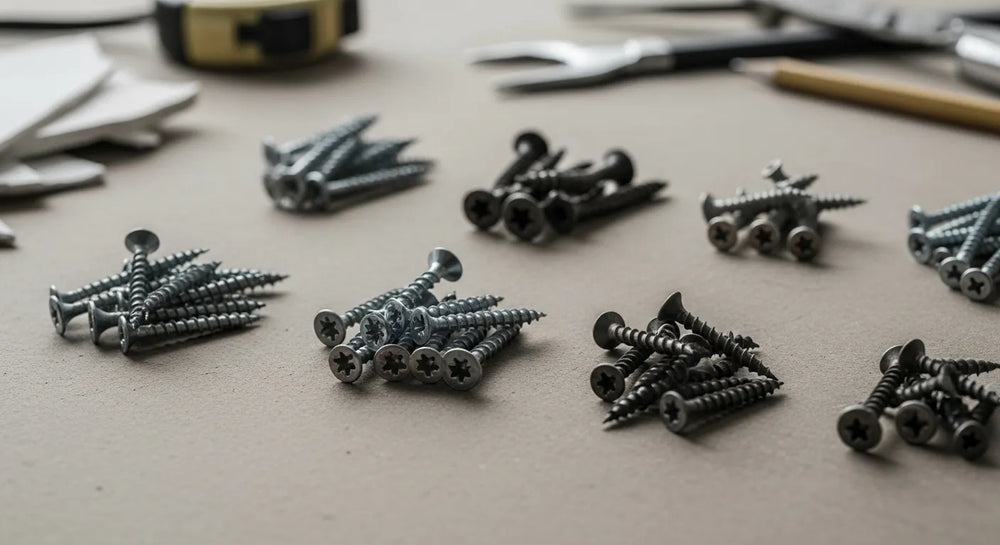
Selecting the Right Drill Bit for an #8 Wood Screw
Table of Contents
- Introduction
- Understanding Wood Screws: Basics of Size, Length, and Material
- Why Pilot Holes Are Critical: Preventing Splits and Enhancing Holding Power
- Determining the Right Drill Bit Size for an #8 Wood Screw
- Beyond the Pilot Hole: Essential Drilling Techniques
- Material Matters: Matching Screws and Bits to Application
- The Strategic Advantage of Sourcing U.S.-Made Components
- Optimizing Your Procurement Process with Maden.co
- Conclusion
- FAQ
Imagine a critical project delayed, not by a lack of skilled labor or complex machinery, but by a simple oversight: a stripped screw, a split piece of material, or a fastener that just won't seat properly. These seemingly minor issues, often stemming from an incorrectly sized pilot hole, ripple through procurement cycles, escalate MRO costs, and compromise the integrity of designed components. For procurement managers, design engineers, and MRO buyers, such setbacks translate into lost time, material waste, and eroded profitability. The meticulous selection of every component, down to the humble wood screw and its corresponding pilot hole, is paramount to industrial excellence and project success.
This comprehensive guide is dedicated to demystifying the precise requirements for drilling pilot holes for #8 wood screws. We will explore the critical factors influencing drill bit selection, from wood density and screw material to the desired finish and application environment. Our aim is to provide practical, authoritative insights that empower you to minimize errors, enhance component longevity, and streamline your operational workflows. By understanding the nuances of pilot hole drilling, you can ensure robust, reliable fastenings, safeguard valuable materials, and contribute directly to a more efficient and resilient supply chain. This deep dive into a foundational aspect of fastening technology underscores our commitment at Maden.co to fostering precision and quality across American manufacturing.
Introduction
In the demanding world of manufacturing, construction, and maintenance, precision is not just a preference; it is a prerequisite. The correct application of fasteners can dictate the structural integrity, longevity, and overall performance of components, machinery, and finished products. While often overlooked in favor of more complex engineering challenges, the seemingly straightforward task of driving a wood screw demands a foundational understanding of mechanics and material science. Without a properly sized pilot hole, even the highest quality U.S.-made screw can lead to material damage, compromised holding power, and costly rework. This guide will meticulously walk through the process of selecting the optimal drill bit for an #8 wood screw, ensuring that your projects are built on a foundation of precision and durability. We will delve into screw anatomy, wood characteristics, and the techniques necessary to achieve perfect fastening outcomes every time, reducing procurement friction and elevating industrial standards.
Understanding Wood Screws: Basics of Size, Length, and Material
Before we can select the right drill bit, it's essential to understand the characteristics of the #8 wood screw itself. Wood screws are specialized fasteners designed to create their own mating threads in wood, providing strong clamping force. Their design typically features a sharp point, a coarse thread that tapers down from the shank, and an unthreaded shank portion near the head.
Gauge (Number) System: Focus on #8
Wood screws are primarily categorized by their gauge number, which refers to the screw's shank diameter. The higher the gauge number, the larger the screw's diameter. Common gauges range from #0 (very small) to #24 (very large). An #8 wood screw is a very common and versatile size, widely used in various applications, from furniture assembly and cabinet making to light framing and general construction. Its moderate diameter provides good holding power without requiring excessive force to drive or causing significant material displacement.
The nominal major diameter of an #8 screw is approximately 0.164 inches (or roughly 5/32 inches). However, for pilot hole purposes, the critical dimensions are the minor diameter (also known as the root or core diameter – the diameter of the screw's shaft below the threads) and the major diameter (the diameter of the screw including the threads). These dimensions will guide our drill bit selection.
Length Measurement
The length of a wood screw is measured from the tip of the screw to the point where the head sits flush with the surface. For flat-head or oval-head screws, this is the top of the head. For round-head screws, it's the underside of the head. The length dictates how deep the screw penetrates the material, which in turn affects holding power. While length doesn't directly influence pilot hole diameter, it is crucial for determining pilot hole depth. A pilot hole must be slightly longer than the threaded portion of the screw to prevent hydraulic pressure buildup, which can split the wood, and to ensure the screw can seat fully.
Material Considerations
The material of the wood screw is another vital factor, impacting its strength, corrosion resistance, and suitability for specific environments. Common materials include:
- Steel: Often zinc-plated or black-oxide coated for some corrosion resistance. Strong and economical, ideal for interior applications where aesthetics are not paramount.
- Stainless Steel: Offers excellent corrosion resistance, making it suitable for outdoor, marine, or damp environments. Available in various grades (e.g., 18-8, 304, 316). While more costly, the enhanced durability often justifies the investment for long-term projects.
- Brass: Valued for its aesthetic appeal, especially in fine woodworking and decorative applications. Brass screws are softer than steel or stainless steel and are prone to stripping or breaking if not handled carefully, particularly when driving into hardwoods without a proper pilot hole. For elegant, low-stress applications, our Round Slot Drive Brass Wood Screw offers a traditional, refined finish that complements bespoke designs. Similarly, for flush finishes in cabinetry or architectural trim, the precision of our Flat Slot Drive Brass Wood Screw provides both functional integrity and aesthetic appeal.
- Silicon Bronze: A highly corrosion-resistant alloy, often used in marine applications or environments exposed to saltwater and harsh chemicals. It is stronger than brass but still requires careful piloting. Its superior resistance to environmental degradation makes it a prime choice for projects demanding extreme durability. Our Oval Slot Drive Silicon Bronze Wood Screw exemplifies the fusion of strength and corrosion resistance, ensuring longevity in the most challenging conditions.
The choice of screw material is critical for the application's success. Sourcing high-quality, U.S.-made screws ensures that these material properties meet stringent industrial specifications, a cornerstone of our mission at Maden.co.
Why Pilot Holes Are Critical: Preventing Splits and Enhancing Holding Power
The act of pre-drilling a pilot hole might seem like an extra step, but its importance cannot be overstated. This seemingly minor preparation step is a cornerstone of professional fastening, particularly when working with an #8 wood screw. It’s a proactive measure that prevents costly errors and significantly enhances the reliability and longevity of your fastened assemblies.
The Science Behind Pilot Holes
When a wood screw is driven into material without a pilot hole, the screw's threads forcibly displace wood fibers. This displacement creates immense pressure that can easily cause the wood to split, especially near edges, in thin stock, or in dense hardwoods. The screw acts as a wedge, forcing the fibers apart.
A pilot hole, however, creates an initial cavity that accommodates the screw's core (non-threaded) diameter, allowing the threads to engage cleanly with the surrounding wood fibers. This reduces the wedging action, mitigating the risk of splitting, while still allowing the threads to bite firmly into the material, creating a strong mechanical lock. The pilot hole essentially guides the screw, ensuring it drives straight and true, and reduces the torque required to drive it, which in turn prevents stripped screw heads or snapped shanks.
Benefits for Different Wood Types
The necessity and precise sizing of pilot holes vary significantly with the type of wood being used:
- Hardwoods (e.g., Oak, Maple, Cherry, Ash): These woods are dense and brittle. Driving a screw without a pilot hole almost guarantees splitting, especially with the considerable diameter of an #8 screw. Even with a pilot hole, hardwoods often require a slightly larger pilot hole than softwoods to prevent splitting and reduce driving resistance. For a procurement manager overseeing furniture manufacturing, ensuring the correct pilot hole for the chosen hardwood is as critical as sourcing the material itself to prevent rework and material loss.
- Softwoods (e.g., Pine, Cedar, Fir): While less prone to splitting than hardwoods, softwoods can still split, particularly when screws are driven near edges or end grain. A pilot hole is still highly recommended to prevent splitting, ensure consistent screw engagement, and achieve maximum holding power. For an MRO buyer dealing with unexpected equipment breakdowns, quickly finding the right fastener and drilling the proper pilot hole for a softwood assembly can mean the difference between minimal downtime and extended operational disruption.
- Engineered Woods (e.g., Plywood, MDF, Particle Board): These materials behave differently. Plywood, with its layered construction, is less prone to splitting along the grain but can delaminate if a screw is forced. MDF and particle board are dense but can crumble or strip easily if the pilot hole is too large or too small. A pilot hole is crucial for creating a clean entry point and ensuring the screw threads bite effectively without over-compressing or disintegrating the material.
The diligent use of pilot holes is a testament to industrial excellence and a cornerstone of proper fastening technique. It minimizes material waste, enhances structural integrity, and ultimately contributes to the quality and reliability of finished products—values deeply ingrained in our operations at Maden.co.
Determining the Right Drill Bit Size for an #8 Wood Screw
This is the core of our discussion. Selecting the correct drill bit size for an #8 wood screw is a balancing act. The pilot hole must be large enough to prevent splitting and make driving easier, yet small enough to allow the screw threads to bite firmly into the wood, ensuring maximum holding power.
The Golden Rule: Shank Diameter vs. Core Diameter
The fundamental principle for pilot hole sizing is to drill a hole that matches the minor diameter (or core diameter) of the screw for the threaded portion, and potentially a slightly larger hole that matches the major diameter (or shank diameter) for the unthreaded shank portion of the screw near the head.
- Minor Diameter (Root/Core Diameter): This is the diameter of the screw's shaft excluding the threads. This is the critical diameter for the pilot hole that the threads will engage with. If the pilot hole is too large here, the threads won't have enough material to bite into, leading to weak holding power. If it's too small, the screw will be very difficult to drive, and likely split the wood or strip the screw head.
- Major Diameter (Shank Diameter): This is the full diameter of the screw, including the threads. For screws with an unthreaded shank, it's the diameter of that smooth section. A slightly larger pilot hole for this portion allows the unthreaded part to pass through without binding, ensuring the screw pulls the two pieces of wood together effectively.
For an #8 wood screw, the typical major diameter (shank) is approximately 0.164 inches, and the minor diameter (core) can vary but is generally around 0.100 to 0.115 inches.
Pilot Hole Depth
The pilot hole depth should always be slightly deeper than the threaded portion of the screw that will penetrate the receiving material. This ensures that the screw's tip doesn't bottom out before the head is fully seated, preventing hydraulic lock or material splitting at the base of the hole. A good rule of thumb is to drill the pilot hole approximately 1/8 to 1/4 inch deeper than the screw's threaded length. Adjustable drill stops are invaluable tools for achieving consistent depth.
Drill Bit Types
While a standard twist drill bit is commonly used, other types offer advantages:
- Twist Drill Bits: The most common type, versatile for general-purpose drilling in wood. Ensure they are sharp and clean.
- Brad-Point Drill Bits: Feature a sharp, centered point and spurs on the outer edge, providing precise hole starting and clean, splinter-free holes in wood. Ideal for fine woodworking.
- Countersink Bits: Essential for creating a conical recess for flat-head or oval-head screws, allowing the screw head to sit flush or below the surface. Some countersink bits are designed to drill the pilot hole, countersink, and counterbore (for plugs) in one step, making them highly efficient for production environments.
Specific Recommendations for #8 Wood Screws
The exact drill bit size will depend most critically on the density of the wood you are using:
-
For Hardwoods (e.g., Oak, Maple, Cherry, Ash, Walnut):
- Pilot Hole for Threaded Portion (Minor Diameter): A 7/64" drill bit (0.1094 inches) is a widely recommended starting point for the threaded portion of an #8 wood screw in most hardwoods. This size allows the threads to engage firmly without causing excessive pressure.
- Pilot Hole for Unthreaded Shank (Major Diameter): If your #8 screw has a significant unthreaded shank, you might consider drilling the top portion of the hole with a 5/32" drill bit (0.1563 inches) to accommodate it. Often, a single pilot hole sized for the minor diameter is sufficient, but for very dense woods or critical applications, a two-step approach (smaller for threads, larger for shank) using a specialized counterbore/countersink bit can be ideal.
- Example Application: When working with high-quality hardwood cabinetry, using a precise pilot hole for screws like our Round Slot Drive Brass Wood Screw ensures a clean, splinter-free installation and prevents damage to expensive materials.
-
For Softwoods (e.g., Pine, Cedar, Fir, Poplar):
- Pilot Hole for Threaded Portion (Minor Diameter): A 3/32" drill bit (0.0938 inches) is often suitable for #8 wood screws in softer woods. This smaller size allows for maximum thread engagement and holding power in less dense material. Some may even opt for 1/8" (0.125 inches) if the wood is very soft to prevent over-tightening or stripping.
- Pilot Hole for Unthreaded Shank (Major Diameter): For softwoods, a separate shank clearance hole is less critical but still beneficial for ensuring the screw pulls pieces tightly together. A 5/32" bit could be used for the upper portion if desired.
- Example Application: For general construction with pine, our Flat Slot Drive Brass Wood Screw combines ease of driving with a traditional aesthetic, particularly when coupled with an accurately sized pilot hole to prevent splitting.
-
For Engineered Woods (e.g., Plywood, MDF, Particle Board):
- Pilot Hole: For these materials, it's often best to err on the side of a slightly larger pilot hole to prevent crumbling or stripping, typically a 7/64" or even 1/8" for an #8 screw, depending on the material's specific density and composition. Test on a scrap piece first.
- Example Application: Securing marine-grade plywood with a screw like our Oval Slot Drive Silicon Bronze Wood Screw necessitates a precise pilot hole to ensure the screw's threads grip the laminated layers effectively without causing delamination or stripping.
It is always advisable to perform a test drill on a scrap piece of the actual material you will be using. This allows you to fine-tune the drill bit size for your specific wood, ensuring optimal results before committing to your final assembly. This diligence is a hallmark of industrial excellence, a core value we champion at Maden.co.
Beyond the Pilot Hole: Essential Drilling Techniques
While selecting the correct drill bit size is paramount, the technique used to drill the pilot hole and drive the screw is equally important. Proper execution enhances the longevity of the fastener, the integrity of the material, and the overall quality of the assembly.
Speed and Pressure
- Drill Speed: For drilling pilot holes in wood, a moderate to high drill speed is generally recommended. Faster speeds help create cleaner holes, especially with sharp bits, and prevent the bit from binding. However, excessive speed, particularly with dull bits, can generate heat, scorch the wood, and dull the bit prematurely.
- Pressure: Apply consistent, firm, but not excessive, pressure. Let the drill bit do the work. Forcing the bit can cause it to wander, overheat, or break. As the bit exits the material, reduce pressure to prevent tear-out.
Clamping and Stability
Always secure your workpiece. Clamping the wood firmly prevents it from shifting during drilling, ensuring accurate hole placement and depth. For assemblies, clamp the two pieces together before drilling through both, ensuring perfect alignment. This prevents gaps and misalignment, critical in precision manufacturing where tolerances are tight.
Countersinking and Counterboring: Achieving Flush Finishes
Many applications require the screw head to sit flush with or below the surface of the material for aesthetic reasons, to prevent snagging, or to allow for subsequent finishing (e.g., wood plugs, filler).
- Countersinking: This involves creating a conical recess for flat-head or oval-head screws. A countersink bit, either a standalone tool or part of a multi-purpose pilot bit, is used to match the angle of the screw head. The goal is for the top surface of the screw head to be perfectly flush with the wood surface. For products requiring a smooth, unbroken surface, such as in fine furniture or architectural millwork, precision countersinking is indispensable. For applications requiring a seamless, flush finish, particularly with screws like our Flat Slot Drive Brass Wood Screw, a carefully countersunk hole is essential for both function and aesthetics.
- Counterboring: This creates a cylindrical recess large enough to accommodate the entire screw head, allowing it to sit below the surface. This is often done when a round-head screw is used and needs to be concealed with a wood plug, or when a particularly strong joint requires the screw head to be recessed deep within the material. After driving the screw, a wood plug, matched to the wood species and grain, can be glued into the counterbore, then sanded flush for a virtually invisible fastener. This technique is often used in high-end projects where fasteners need to be entirely hidden.
Lubrication and Waxing
For driving screws into particularly dense hardwoods, applying a small amount of wax (like paraffin wax or beeswax) or even a bar of soap to the screw threads can significantly reduce friction. This makes the screw easier to drive, reduces the risk of splitting the wood, and minimizes the chance of stripping the screw head or snapping the shank. This simple step can prolong tool life and ensure a cleaner, more efficient fastening process.
By mastering these techniques, procurement managers can ensure that the components they source, from specialty fasteners to raw materials, are utilized to their full potential, contributing to projects characterized by durability and precision.
Material Matters: Matching Screws and Bits to Application
The selection of fasteners and drilling tools is not a one-size-fits-all endeavor. The success of a project often hinges on the judicious matching of materials and methods to the specific application environment. This strategic approach extends beyond mere aesthetics, deeply influencing the functional longevity and maintenance requirements of any assembly.
Corrosion Resistance
For outdoor projects, marine applications, or environments with high humidity or exposure to chemicals, the corrosion resistance of fasteners is paramount.
- Brass: While aesthetically pleasing and popular in decorative applications, brass screws offer moderate corrosion resistance, typically suitable for interior use or sheltered outdoor environments where atmospheric moisture is not extreme. They are prone to tarnishing and can be susceptible to certain chemical exposures. When the design calls for a traditional look, our Round Slot Drive Brass Wood Screw provides both authenticity and reliability for appropriate environments.
- Silicon Bronze: This alloy stands out for its exceptional resistance to corrosion, particularly in saltwater and harsh outdoor conditions. It’s a preferred choice for boat building, dock construction, and exterior architectural elements where longevity and structural integrity in corrosive environments are non-negotiable. For outdoor or marine applications, where corrosion resistance is paramount, consider screws like our Oval Slot Drive Silicon Bronze Wood Screw, specifically designed for longevity and resilience against the elements.
- Stainless Steel: Offers excellent general corrosion resistance, making it a versatile choice for a wide range of outdoor and industrial applications. Different grades provide varying levels of resistance to specific chemicals or environments.
Matching the screw's material to its intended environment prevents premature failure, reduces MRO costs associated with replacement, and upholds the reputation for quality that businesses strive for.
Strength and Durability
The strength of a screw is a critical factor, especially when dealing with structural loads or high-stress applications. Steel screws (especially hardened steel) offer superior tensile strength compared to brass or even silicon bronze. However, even the strongest screw can fail if the pilot hole is improperly sized, leading to stripped threads in the wood or snapped shanks due to excessive driving torque.
Consider the dynamic stresses a fastener might experience. In machinery or vibrating structures, a well-seated, appropriately strong screw, complemented by a precise pilot hole, will resist loosening and maintain integrity far longer than one installed with shortcuts. This foresight in material selection and application technique directly impacts total cost of ownership (TCO), a key metric for any procurement professional.
Aesthetics
Beyond pure function, the visual appeal of fasteners can be a significant consideration in applications ranging from custom furniture to high-end architectural finishes. Brass and silicon bronze screws, with their distinct patinas, are often chosen for their traditional or nautical aesthetic. For these applications, not only must the screw material be correct, but the pilot hole and countersinking must be executed flawlessly to preserve the intended visual impact. For designs demanding a clean, unobtrusive finish, our Flat Slot Drive Brass Wood Screw exemplifies how precision manufacturing meets aesthetic excellence. The ability to source such specific, high-quality components from verified U.S. manufacturers is a strategic advantage.
The Strategic Advantage of Sourcing U.S.-Made Components
In an increasingly complex global marketplace, the decision to source U.S.-made components is more than a patriotic gesture; it is a strategic business imperative. For procurement managers, MRO buyers, and design engineers, choosing American-made products offers tangible benefits that directly impact supply chain resilience, quality assurance, and operational efficiency. At Maden.co, our mission is to democratize access to American manufacturing, connecting industrial buyers with an unparalleled network of verified U.S. manufacturers.
Supply Chain Resilience and Transparency
The past few years have highlighted the vulnerabilities of extended global supply chains. Sourcing domestically from platforms like Maden.co significantly reduces lead times, mitigates geopolitical risks, and provides unparalleled transparency into the manufacturing process. You gain direct access to information about origin, material composition, and ethical production practices. This transparency is a core value for us, enabling you to build a more predictable and robust supply chain. For a procurement manager under pressure to source a specific DIN 931 compliant hex cap screw, a design engineer needing specific material certifications for a new prototype, or an MRO buyer facing an unexpected equipment breakdown, the ability to quickly find and finance a verified, U.S.-made part is a game-changer. Our entire business model is built on this principle; you can learn more about our mission to champion American manufacturing here: About Us.
Quality and Compliance
U.S. manufacturing operates under some of the most stringent quality control standards in the world. This commitment to industrial excellence translates into components that consistently meet or exceed critical industry specifications (e.g., DIN, NPT, ANSI). When you source from Maden.co, you're not just buying a product; you're investing in reliability, precision, and adherence to benchmarks that ensure performance and safety. Our network of over 800+ verified U.S. manufacturers upholds these standards, ensuring that every product, from fasteners to complex machinery parts, contributes to the overall quality of your end product.
Supporting American Manufacturing
Every purchase of a U.S.-made product through Maden.co directly contributes to the American economy, fostering job creation, innovation, and technological advancement within our borders. Our tagline, "America's manufacturing revival is here," isn't just a statement; it's a testament to the collective effort of businesses choosing to invest in domestic production. This commitment strengthens the manufacturing base and ensures that critical industrial capabilities remain robust and accessible within the United States.
Digital Innovation & Customer Empowerment
Maden.co is more than just a marketplace; it's a platform built on digital innovation designed to empower our customers. We streamline the procurement process, offering intuitive search functionalities and detailed product specifications for over 2.5 million American-made products. This digital-first approach reduces procurement friction, saving valuable time and resources. Our commitment to customer empowerment means providing you with the tools and access necessary to make informed decisions quickly and efficiently, putting control back into your hands. If you have specific sourcing questions or need assistance navigating our extensive catalog, our expert team is ready to help: Contact Us.
Connecting Industrial Buyers with Verified Manufacturers
At the heart of Maden.co is a powerful network. We painstakingly verify every manufacturer on our platform, ensuring that when you search for a component, you are connecting directly with reputable, high-quality U.S. producers. This direct connection fosters greater trust, allows for more transparent communication, and ultimately leads to better sourcing outcomes. For U.S. manufacturers, our platform offers an unparalleled opportunity to reach a vast audience of industrial buyers. Are you a qualified U.S. manufacturer? Register as a vendor and join the American manufacturing revival: Vendor Registration.
Optimizing Your Procurement Process with Maden.co
The complexities of modern industrial procurement demand solutions that go beyond simple transactions. Maden.co is engineered to be a strategic partner, offering not just products, but a streamlined, value-driven pathway to elevate your entire procurement process.
Reducing Procurement Friction
Traditional procurement often involves fragmented sourcing, lengthy lead times, and opaque supply chains. Maden.co consolidates these challenges into a single, user-friendly platform. Our extensive catalog of over 2.5 million American-made products means you can quickly locate hard-to-find components and standard industrial supplies with unprecedented ease. This digital efficiency drastically reduces the time and effort typically spent on sourcing, allowing your team to focus on higher-value activities.
Access to 2.5M+ U.S.-Made Products
The sheer breadth and depth of our product offerings are unmatched in the U.S.-made marketplace. Whether you need a specific #8 wood screw variant, a specialized industrial component, or bulk MRO supplies, our platform connects you directly to a vast array of high-quality, American-manufactured goods. This comprehensive access ensures that you can fulfill diverse project requirements, from prototype development to large-scale production, all from verified domestic sources.
Instant Financing: A Strategic Tool
One of the significant differentiators that sets Maden.co apart is our "Instant Financing" option. We understand that large-volume purchases or unexpected equipment needs can strain cash flow. Instant Financing isn't merely a payment method; it's a strategic financial tool designed to empower procurement managers and business owners to manage capital effectively. By providing immediate access to funding for necessary purchases, it allows you to maintain project timelines, seize opportunities, and ensure operational continuity without delay. This feature removes financial hurdles, enabling you to make crucial investments in American-made excellence when it matters most. You can apply for Instant Financing at checkout to streamline your capital-intensive projects.
Partnering with Verified U.S. Manufacturers
Every product listed on Maden.co comes from a verified U.S. manufacturer. This means you are partnering directly with companies committed to American ingenuity, quality, and reliability. This direct relationship fosters trust, facilitates clear communication regarding specifications and certifications, and strengthens the domestic manufacturing ecosystem. For design engineers, this direct access can mean the difference between theoretical design and practical implementation, with confidence in the origin and quality of every component. For MRO buyers, it means quicker access to parts that meet precise standards, minimizing downtime and extending equipment lifespan.
Conclusion
The seemingly simple task of driving an #8 wood screw into timber belies a critical need for precision and informed decision-making. As we have explored, selecting the correct drill bit size, understanding wood characteristics, and employing proper drilling techniques are not mere suggestions but fundamental requirements for achieving durable, reliable, and aesthetically pleasing results. Mistakes in this foundational step can lead to costly material damage, compromised structural integrity, and significant project delays—challenges that resonate deeply with procurement managers, MRO buyers, and design engineers focused on efficiency and excellence.
By prioritizing the use of pilot holes and understanding the nuances of screw and wood interactions, you directly contribute to reducing total cost of ownership, enhancing supply chain resilience, and ensuring compliance with the highest industrial standards. This commitment to precision reflects the very values we uphold at Maden.co: American Manufacturing Pride, Industrial Excellence, and Customer Empowerment.
Maden.co stands as your definitive partner in this pursuit of quality. We champion America's manufacturing revival by offering unparalleled access to over 2.5 million U.S.-made products from a network of 800+ verified domestic manufacturers. Our platform is designed to eliminate procurement friction, provide transparent sourcing, and offer strategic tools like Instant Financing to empower your business. We connect you directly with the high-quality components you need, ensuring that every screw, every part, and every assembly meets your exacting standards.
Don't let preventable errors undermine your projects. Embrace precision, elevate your sourcing, and build with confidence. Explore our extensive catalog today to discover how Maden.co can transform your procurement process and empower your next project.
FAQ
Q1: Why is it so important to use a pilot hole for an #8 wood screw, especially in hardwoods?
A1: Using a pilot hole is crucial for an #8 wood screw, particularly in hardwoods, because it prevents the wood from splitting. Hardwoods are dense and less forgiving, meaning the screw's threads would forcibly displace too much material without a pre-drilled hole, acting like a wedge and causing splits. A pilot hole creates space for the screw's core, allowing threads to grip without excessive pressure, ensuring a strong, clean, and reliable fastening while preventing material damage or stripped screw heads.
Q2: What's the primary difference between selecting a drill bit for an #8 wood screw in hardwood versus softwood?
A2: The primary difference lies in the density of the wood. Hardwoods typically require a slightly larger pilot hole (e.g., 7/64") to prevent splitting due to their high density. Softwoods, being less dense, can accommodate a smaller pilot hole (e.g., 3/32") which allows for maximum thread engagement and holding power. Always aim for a pilot hole that matches the screw's minor (core) diameter, but adjust slightly larger for very dense materials.
Q3: Can I use a single drill bit for the pilot hole and for countersinking for an #8 flat-head wood screw?
A3: Yes, multi-purpose countersink drill bits are specifically designed to do just that. These specialized bits feature a combination design that drills the pilot hole to the correct depth, creates a shank clearance hole (if applicable), and forms the conical recess for the screw head to sit flush with the surface—all in a single operation. This significantly increases efficiency and consistency in applications requiring a professional finish, such as with our Flat Slot Drive Brass Wood Screw.
Q4: How does Maden.co help with sourcing the right fasteners like #8 wood screws for my industrial projects?
A4: Maden.co simplifies sourcing by offering a vast marketplace of over 2.5 million U.S.-made products from 800+ verified American manufacturers. For fasteners like #8 wood screws, we provide access to various materials (e.g., brass, silicon bronze) and head types, ensuring you find the precise component for your application. We prioritize supply chain transparency, quality assurance, and digital innovation to reduce procurement friction, and we offer Instant Financing at checkout to help manage cash flow for large or urgent orders.


