
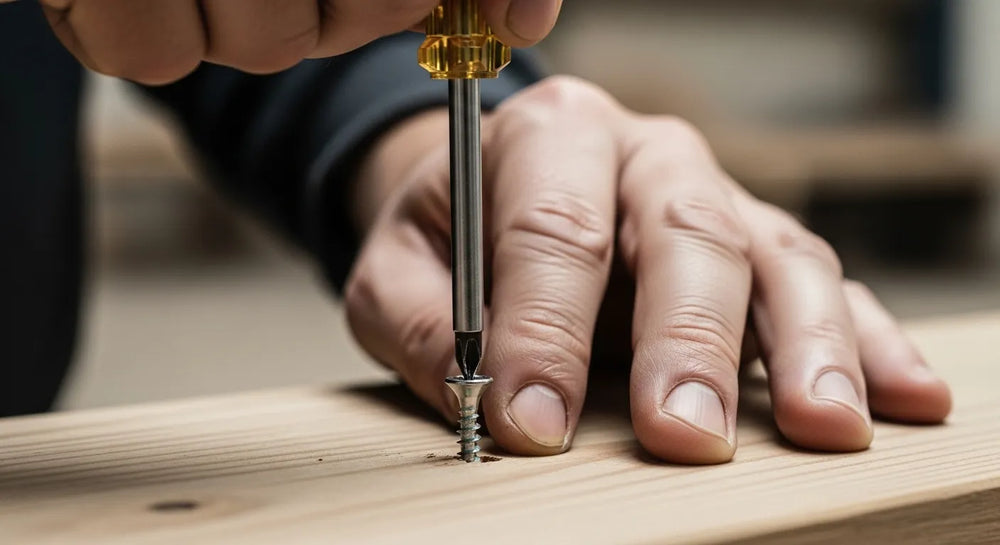
Stripped Screw Holes: Can Wood Filler Provide a Fix?
Table of Contents
- Introduction
- Understanding Stripped Screw Holes: Causes and Impact
- The Allure of Wood Filler: Why it's Considered
- Deep Dive: Can You Use Wood Filler for Stripped Screw Holes?
- Beyond Wood Filler: Superior Repair Methods for Stripped Screw Holes
- Preventative Measures: Avoiding Stripped Screw Holes in the First Place
- The Maden.co Advantage: Sourcing Quality U.S.-Made Fasteners and Components
- Streamlining Your Procurement: Instant Financing and Support
- Conclusion
- FAQ
A project brought to an unexpected halt by a stripped screw hole is a common frustration for anyone working with wood, from an MRO buyer troubleshooting equipment to a design engineer prototyping a new assembly. The seemingly small issue of a screw that no longer grips can cascade into significant delays, compromised structural integrity, or even complete project setbacks. When faced with this challenge, the immediate question often becomes: what's the quickest and most effective fix? For many, the readily available and seemingly versatile wood filler comes to mind. But can you truly use wood filler for stripped screw holes, and if so, when is it appropriate?
This post will delve deep into the common problem of stripped screw holes, exploring their causes and the various repair methods available. We will specifically examine the role of wood filler, dissecting its potential benefits and, more importantly, its significant limitations. Our aim is to provide clarity on when wood filler might offer a superficial, temporary solution versus when more robust, long-term repair strategies are essential. By understanding the nuances of different repair techniques and the importance of quality components, procurement managers, MRO buyers, and business owners can make informed decisions that ensure project longevity, structural integrity, and overall efficiency, ultimately reinforcing the value of sourcing reliable, American-made products from platforms like Maden.co.
Introduction
The whir of a power drill, a moment of satisfaction as a screw tightens, then—a sickening spin. The screw turns endlessly, failing to bite, leaving behind a stripped hole and a sinking feeling of frustration. This scenario is all too familiar in industrial settings, manufacturing plants, and even everyday repair work. A stripped screw hole can compromise the stability of a critical component, weaken a structural joint, or simply make it impossible to secure an assembly. For a procurement manager under pressure to maintain operational continuity, an MRO buyer facing an unexpected equipment breakdown, or a design engineer needing specific material certifications for a new prototype, the inability to properly secure a fastener can be a costly bottleneck.
In the pursuit of a quick fix, many turn to wood filler. It’s a common household staple, seemingly capable of repairing any imperfection in wood. But is it genuinely a viable solution for stripped screw holes, or merely a temporary patch that masks a deeper problem? This article will explore the root causes of stripped screw holes, evaluate the efficacy of using wood filler, and, crucially, present superior repair methods that offer lasting strength and reliability. We will also highlight the critical role of high-quality, U.S.-made fasteners in preventing these issues, emphasizing how Maden.co serves as a strategic partner in bolstering your procurement resilience and ensuring access to the industrial excellence you need.
Understanding Stripped Screw Holes: Causes and Impact
Before we can effectively repair a stripped screw hole, it's vital to understand why they occur in the first place. Stripped holes are not random occurrences; they are typically the result of specific interactions between the screw, the wood, and the installation process. Understanding these factors is the first step towards not only effective repair but also prevention.
Why Do Screw Holes Strip?
- Over-tightening: This is arguably the most common culprit. When a screw is tightened beyond the wood's capacity to hold the threads, the wood fibers around the screw shank are crushed and torn, losing their grip. Modern power drills with high torque settings make this particularly easy to do without proper clutch control.
- Repetitive Use and Wear: Components that are frequently assembled and disassembled, such as access panels or removable covers, are prone to stripped holes over time. Each removal and re-installation further wears down the wood fibers, eventually causing the hole to lose its integrity.
-
Incorrect Pilot Hole Size:
- Pilot hole too large: If the pilot hole is too wide, the screw threads have insufficient material to bite into, leading to immediate stripping or a very weak hold.
- Pilot hole too small: Conversely, a pilot hole that is too small can cause excessive friction and stress on the wood as the screw is driven. This can crack the wood, especially in hardwoods, or cause the screw to ream out the hole as it forces its way through, weakening the surrounding fibers.
- Material Fatigue and Degradation: Over time, wood can become brittle, especially if exposed to moisture, extreme temperatures, or UV radiation. Older, drier wood may simply not have the elasticity and strength to hold a screw thread securely. Particleboard and MDF (medium-density fiberboard) are particularly susceptible to stripping due to their composite nature and lower internal bond strength compared to solid wood.
- Poor Quality Fasteners: Screws with poorly formed threads, inconsistent dimensions, or made from materials that are too soft can contribute to stripping. Inferior fasteners may not create a clean thread channel, instead tearing the wood fibers as they are driven. This underscores the importance of sourcing reliable, high-quality, U.S.-made fasteners, which we proudly offer on Maden.co.
- Driving Screws at an Angle: If a screw is driven into wood at an angle, it creates uneven pressure on the wood fibers, making it more likely for the threads to strip on one side.
The Ripple Effect: Impact on Projects and Operations
The consequences of stripped screw holes extend far beyond the immediate frustration.
- Project Delays: Having to stop work to repair a stripped hole can throw off project timelines, leading to missed deadlines and increased labor costs.
- Compromised Structural Integrity: In applications where fasteners are critical for structural support, a stripped hole can severely weaken the assembly, posing safety risks or leading to premature failure of equipment or products.
- Aesthetic Damage: For finished goods or visible components, a poorly repaired stripped hole can detract significantly from the overall appearance and perceived quality.
- Increased Maintenance Costs: Repeated repairs or the need to replace entire components due to stripped holes can drive up MRO costs unnecessarily.
- Compliance Risks: In industries requiring adherence to specific standards (e.g., DIN, NPT), a compromised fastener point could lead to non-compliance, resulting in costly reworks or regulatory penalties.
Understanding these impacts highlights the necessity of not just any fix, but the right fix, and ideally, preventing the issue altogether by selecting the appropriate high-quality fasteners from the outset.
The Allure of Wood Filler: Why it's Considered
When a screw hole strips, the natural inclination is to look for the quickest, most accessible solution. Wood filler often comes to mind for several compelling reasons:
- Accessibility and Availability: Wood filler is a ubiquitous product, found in nearly every hardware store, home improvement center, and even many general merchandise stores. Its widespread availability makes it a go-to for immediate repairs.
- Ease of Use: Applying wood filler is generally straightforward. It's often a ready-to-use paste that can be spread, pushed into a hole, and then sanded smooth once dry. No special tools or extensive skills are typically required for basic application.
- Perceived Versatility: Many users see wood filler as a universal patching material for all types of wood damage – from small dents and cracks to gaps and, yes, even holes. This perception often leads to its consideration for stripped screw holes.
- Low Cost: Compared to specialized repair kits or more involved methods like doweling, a tub of wood filler is a relatively inexpensive purchase, appealing to those looking for a budget-friendly solution.
- Quick Drying Times: Many modern wood fillers boast relatively fast drying times, allowing projects to resume without excessive delays, at least superficially.
While these factors make wood filler an attractive initial option, it's crucial to distinguish between its suitability for cosmetic repairs and its performance in structural or load-bearing applications, such as holding a screw securely.
Deep Dive: Can You Use Wood Filler for Stripped Screw Holes?
The short answer to "can you use wood filler for stripped screw holes?" is yes, but with significant caveats. It's rarely the ideal, long-term solution, especially for anything beyond very light-duty or temporary applications.
The "Yes, But..." Scenario: When it Might Work
Wood filler might be considered in extremely specific, limited scenarios:
- Very Light-Duty Applications: If the screw is holding something purely decorative, like a small picture frame or a nameplate that will experience no stress or frequent movement, wood filler might provide enough material for the screw to bite.
- Temporary Fixes: In an absolute pinch, if a component needs to be secured for a very short duration before a proper repair can be made, wood filler could offer a transient hold.
- Cosmetic Repairs (Prior to Re-drilling): Sometimes, wood filler is used to "fill" a stripped hole, not to re-drive a screw into it, but to create a uniform surface that can then be sanded and re-drilled in a slightly different spot, or to prepare the area for a more robust repair method. However, this is more about surface preparation than a direct screw-holding fix.
Limitations and Downsides: Why It's Often Not Recommended
Despite its convenience, relying on wood filler for stripped screw holes presents several critical disadvantages:
- Lack of Structural Integrity: This is the most significant drawback. Standard wood fillers are designed to patch, not to bear loads or provide structural support. They are typically made from cellulose, plaster, or synthetic resins that, once cured, lack the interlocking fiber structure of natural wood. This means they have very poor shear strength and are brittle. When a screw is driven into cured wood filler, it often cracks or crumbles, failing to provide a secure grip.
- Shrinkage and Cracking: Many wood fillers, especially water-based varieties, shrink as they dry. This shrinkage can create gaps between the filler and the surrounding wood, further weakening the hold. Over time, or with environmental changes, fillers can also crack, causing the screw to loosen.
- Poor Fastener Retention: Even if a screw initially seems to grip in wood filler, the hold is typically weak and susceptible to stripping again with minimal torque or vibration. It cannot withstand the lateral forces or tensile loads that a properly anchored screw in solid wood can.
- Difficulty Re-driving Screws Precisely: Driving a screw into cured wood filler is difficult. It's often too hard or too brittle to allow the screw threads to cut a clean path. This can lead to the screw wandering, damaging the surrounding wood, or once again, just spinning freely.
- Incompatibility with Heavy Loads or Frequent Adjustments: Any application that requires a strong, reliable connection – such as hinges, cabinet hardware, structural joints, or components that need occasional adjustment – is entirely unsuitable for a wood filler repair.
- Not a Universal Solution for All Wood Types: While some epoxy-based fillers offer better adhesion and hardness, even these are compromises compared to dedicated wood repair techniques, especially when dealing with dense hardwoods or engineered wood products like plywood.
Types of Wood Fillers and Their Suitability
Not all wood fillers are created equal, but even the "best" wood filler for this application is still a compromise.
- Basic Latex/Water-Based Fillers: These are the most common and least suitable for stripped screw holes. They are primarily designed for cosmetic repairs, filling small nail holes, or minor imperfections. They lack the hardness and strength needed to hold a screw.
- Solvent-Based Wood Fillers: Often containing wood fibers and resins (like plastic wood), these are generally harder and more durable than water-based fillers. They offer a slightly better, but still weak, hold for screws in non-load-bearing applications. They also tend to have strong odors and require good ventilation.
- Epoxy-Based Wood Repair Compounds: These are two-part formulas that mix a resin and a hardener. Once cured, they are significantly harder, more durable, and more moisture-resistant than single-component fillers. While still not as good as solid wood for screw retention, an epoxy putty specifically designed for wood repair offers the best chance among "fillers" for a moderate hold in a stripped screw hole. However, even these are best used in conjunction with a larger diameter screw or for very specific, low-stress applications. They should not be confused with general-purpose wood fillers.
In essence, while wood filler can physically fill a stripped hole, its ability to reliably hold a screw is severely limited. For any application requiring strength, durability, or frequent access, superior repair methods are not just recommended, but essential.
Beyond Wood Filler: Superior Repair Methods for Stripped Screw Holes
For true reliability and longevity, especially in industrial or demanding applications, moving beyond basic wood filler is imperative. There are several proven methods that offer far superior results for repairing stripped screw holes, restoring or even exceeding the original holding power.
1. The Dowel Rod Method: The Gold Standard for Durability
This method is widely considered the most robust and permanent repair for stripped screw holes, effectively creating a new, solid wood substrate for the screw.
- Explanation: The technique involves drilling out the stripped hole to a larger, clean diameter, inserting a tightly fitting dowel rod (preferably hardwood, even for softwood projects), gluing it in place, allowing it to cure, and then re-drilling a new pilot hole directly into the dowel.
-
Benefits:
- Exceptional Strength: By replacing the damaged wood with a solid dowel, you restore the integrity of the screw-holding material.
- Permanent Solution: This is a repair that will last, often outperforming the original wood in strength, especially if a hardwood dowel is used.
- Versatility: Works for nearly all sizes of stripped holes and wood types.
-
Step-by-Step Guide:
- Drill Out: Select a drill bit that matches the diameter of a readily available dowel rod. Carefully drill out the stripped hole, ensuring the new hole is clean, straight, and deep enough to accommodate the dowel fully.
- Prepare Dowel: Cut a piece of dowel rod slightly longer than the depth of the drilled hole.
- Apply Glue: Apply a generous amount of high-quality wood glue (PVA or epoxy) to the dowel and inside the drilled hole.
- Insert Dowel: Tap the dowel into the hole until it is flush or slightly recessed.
- Cure Time: Allow the glue to cure completely according to the manufacturer's instructions. This is crucial for maximum strength.
- Trim and Sand: Once dry, trim any excess dowel flush with the surface using a chisel or flush-cut saw. Sand smooth.
- Re-drill Pilot Hole: Carefully measure and drill a new, correctly sized pilot hole into the center of the inserted dowel.
- Re-drive Screw: Drive your screw into the new pilot hole.
2. Wood Glue and Toothpicks/Wood Shavings: For Smaller Repairs
This is a simpler, quicker method suitable for smaller, less severely stripped holes or those under lighter loads.
- Explanation: The stripped hole is filled with wood slivers (like toothpicks, wooden matches, or small wood shavings) soaked in wood glue, effectively creating a composite material that the screw can then grip.
- Best for: Small screws, lightweight applications, minor stripping.
- Limitations: Not as strong or reliable as the dowel method for heavily loaded or frequently used connections.
-
How-to:
- Clean out the stripped hole.
- Apply wood glue generously into the hole.
- Insert several wooden toothpicks (or wood splinters) into the hole, pushing them down firmly to fill the void.
- Allow the glue to cure completely.
- Snap or cut off the protruding ends of the toothpicks.
- Re-drive the screw, which will now cut new threads into the glued wood/splinter matrix.
3. Threaded Inserts: For Machine Screws and Frequent Disassembly
For applications requiring exceptional strength, repeatable assembly, and the use of machine screws in wood, threaded inserts are the ultimate solution.
- Explanation: Threaded inserts are small, typically metal (though plastic versions exist), cylindrical components with external threads designed to grip into wood and internal threads designed to accept a machine screw.
-
Benefits:
- Extreme Strength: Provides a metal-on-metal connection, far superior to wood-on-metal for screw retention.
- Repeatable Assembly: Ideal for components that need to be frequently removed and reattached, as the threads in the insert won't strip like wood.
- Professional Finish: Offers a clean, factory-like appearance.
-
Types:
- E-Z Lok/Knurled Inserts: These are screwed or pressed into a pre-drilled hole in the wood.
- T-nuts: Driven in from the back side of the wood, with prongs that bite into the surface.
- Cross-dowel/Barrel Nuts: Used in conjunction with bolts, often for furniture assembly.
- When to Use: High-wear applications, furniture assembly, machinery components, and anywhere a robust, long-lasting threaded connection in wood is needed.
4. Epoxy Putty (Dedicated Wood Repair Kits): A Stronger Filler Alternative
While we've largely cautioned against general wood filler, specific two-part epoxy putties designed for wood repair are a distinct category and offer a much stronger "filling" solution than standard fillers.
- Explanation: These are moldable compounds that, when mixed, harden into an extremely durable, wood-like material. They can be drilled, sanded, and painted.
- Benefits: Much stronger and more durable than traditional wood filler, excellent moisture resistance, good adhesion.
- Distinction from Generic Wood Filler: These are professional-grade repair materials, not simple cosmetic fillers. They offer significantly better screw retention, though still not typically as strong as a solid dowel.
- How-to: Mix the two parts of the epoxy putty according to instructions. Pack it firmly into the stripped hole, ensuring no air voids. Allow it to cure fully (can take several hours). Once hardened, drill a pilot hole and re-drive the screw.
5. Changing Screw Size or Type: A Simple Option
Sometimes, the simplest solution is to adapt the fastener itself.
- Using a Larger Diameter Screw: If the hole is only slightly stripped, often a screw of the next larger diameter can find new, uncompromised wood fibers to grip. Always ensure the larger screw won't split the wood or cause structural issues.
- Using a Coarser Thread Screw: Screws with coarser, more aggressive threads can sometimes bite into slightly damaged wood better than fine-threaded screws.
-
Considering Specific U.S.-Made Fasteners for Optimal Grip: The quality and design of the fastener itself play a monumental role in preventing and, in some cases, mitigating stripped holes. For instance, specific wood screw designs offer superior grip.
- For a classic look and reliable hold in general woodworking, a high-quality Round Slot Drive Brass Wood Screw can be an excellent choice, known for its traditional aesthetic and good performance.
- When a flush finish is paramount, such as in cabinet installation or paneling, robust Flat Slot Drive Brass Wood Screws offer both secure fastening and a clean appearance.
- For outdoor applications, marine environments, or anywhere corrosion resistance is critical, choosing something like an Oval Slot Drive Silicon Bronze Wood Screw not only prevents corrosion but also ensures a durable, long-lasting connection that can withstand harsh conditions. These specialized fasteners are designed for optimal engagement and longevity, reducing the likelihood of future stripping.
Preventative Measures: Avoiding Stripped Screw Holes in the First Place
The best repair is the one you never have to make. Proactive measures and the use of quality components are paramount in preventing stripped screw holes, saving time, money, and frustration.
- Proper Pilot Hole Sizing: This is the single most critical preventative step. A pilot hole should be slightly smaller than the screw's root diameter (the solid core of the screw, not including the threads) to allow the threads to bite without excessive force or reaming. For hardwoods, a slightly larger pilot hole may be necessary to prevent splitting and reduce driving resistance. Always consult fastener manufacturer recommendations or use a pilot hole gauge.
-
Using the Correct Screw Type and Length for the Material:
- Wood Screws vs. Drywall Screws: Always use screws designed for wood when fastening into wood. Drywall screws are brittle and their threads are not optimized for wood.
- Length: The screw should be long enough to penetrate the receiving material adequately, but not so long that it pokes through or bottoms out prematurely, which can lead to over-tightening.
- Material: Consider the material of the screw. Harder screws are less likely to strip their own heads, and corrosion-resistant materials (like stainless steel or silicon bronze) are crucial for outdoor or marine environments.
-
Avoiding Over-tightening:
- Clutch Settings on Drills: Utilize the clutch setting on your drill/driver. Start with a lower setting and gradually increase it until the screw is snug, but not over-tightened. The clutch will slip when the desired torque is reached, preventing stripping.
- Hand Tightening: For delicate applications or the final turn, finish tightening by hand to get a feel for the screw's resistance.
- Pre-drilling Hardwoods: Always pre-drill when working with hardwoods like oak, maple, or cherry. Their dense grain makes them highly susceptible to splitting and makes driving screws difficult without a pilot hole.
- Lubrication: For very dense woods, applying a small amount of wax (like paraffin or a candle stub) or soap to the screw threads can reduce friction and make driving easier, lessening the chance of stripping the hole or breaking the screw.
- Considering Fastener Material and Coating for Durability: High-quality fasteners, manufactured to exacting standards, inherently offer better performance. Fasteners from Maden.co, for example, are sourced from verified U.S. manufacturers who adhere to stringent quality controls. Whether it's the precise threading of a brass wood screw, the robust construction of a silicon bronze fastener, or the specific grade of a steel component, investing in quality from the start pays dividends in the long run by significantly reducing failures and the need for repairs.
The Maden.co Advantage: Sourcing Quality U.S.-Made Fasteners and Components
At Maden.co, our mission is to democratize access to American manufacturing, ensuring that procurement managers, MRO buyers, and design engineers can easily find and acquire the highest quality components. The challenges of stripped screw holes, project delays, and compromised integrity underscore the critical importance of reliable sourcing. We achieve this by connecting industrial buyers with over 2.5 million American-made products from our network of 800+ verified U.S. manufacturers.
Our vision is to become the definitive platform that proves American-made components are as accessible and convenient as any global alternative, driving the manufacturing revival with our tagline: "America's manufacturing revival is here." When you choose Maden.co, you are not just making a purchase; you are making a strategic investment in:
- American Manufacturing Pride: We champion the craftsmanship and innovation of U.S. manufacturers, helping businesses strengthen their domestic supply chains. You can learn more about our commitment and values by visiting our About Us page.
- Supply Chain Transparency and Resilience: By sourcing from our network of verified U.S. manufacturers, you gain unparalleled transparency into your supply chain, reducing geopolitical risks, lead times, and ensuring consistent quality. This enhances your overall supply chain resilience, a crucial factor in today's dynamic global market.
- Industrial Excellence: Our platform is a gateway to products that meet the most demanding industry standards, ensuring compliance (e.g., DIN, NPT) and superior performance. Whether you need a specific type of wood screw, a high-strength bolt, or a custom-fabricated part, you can trust in the quality and precision of American manufacturing.
- Digital Innovation: We simplify the complex world of industrial procurement through an intuitive, user-friendly digital marketplace, drastically reducing procurement friction. This means less time spent searching and more time focused on your core operations.
- Customer Empowerment: We empower you with choice, information, and the tools to make the best sourcing decisions for your business. For instance, discovering a Round Slot Drive Brass Wood Screw that perfectly fits your project's aesthetic and functional requirements, or quickly locating Flat Slot Drive Brass Wood Screws for a crucial assembly, is made effortless. And for those specialized applications requiring superior corrosion resistance, locating an Oval Slot Drive Silicon Bronze Wood Screw for marine or outdoor use is just as straightforward.
The tangible benefits of sourcing through Maden.co include improving your Total Cost of Ownership (TCO) by reducing the hidden costs associated with low-quality, unreliable components and extended lead times. We are your strategic partner in building a more reliable and efficient procurement process, helping you find those hard-to-source, U.S.-made components quickly and efficiently.
Streamlining Your Procurement: Instant Financing and Support
Beyond our extensive catalog of high-quality, American-made products, Maden.co offers innovative solutions designed to streamline your procurement process and support your operational efficiency. A key differentiator is our Instant Financing option.
We understand that large-volume purchases or unexpected equipment needs can impact cash flow. Instant Financing is not just a payment method; it's a strategic tool for businesses. It allows procurement managers and business owners to manage capital flow effectively and make larger-volume purchases without immediate upfront capital expenditure. This flexibility is invaluable when stocking up on critical components or responding to urgent project requirements.
You can apply for Instant Financing directly at checkout to streamline your capital-intensive projects and maintain business continuity. It's another way we're committed to making American manufacturing accessible and convenient for every industrial buyer.
Are you a qualified U.S. manufacturer looking to expand your reach and connect with industrial buyers across the nation? We invite you to join our growing network. Register as a vendor and become a part of America's manufacturing revival.
If you have specific sourcing questions, or require assistance navigating our extensive catalog, our expert team is ready to help. Contact us and let us support your procurement needs. You can explore our vast range of products and discover the quality of American manufacturing by visiting Maden.co.
Conclusion
While the allure of a quick fix with wood filler for a stripped screw hole is understandable, our exploration reveals that it is, at best, a temporary solution for the lightest of duties. For any application requiring genuine strength, durability, or repeated use, wood filler simply lacks the structural integrity to provide a reliable and long-lasting repair. Relying on such inadequate fixes can lead to further frustration, project delays, and even safety concerns, ultimately undermining the integrity of your work or products.
Instead, robust methods like the dowel rod technique, the use of threaded inserts, or specialized epoxy putties offer vastly superior results, restoring the strength and longevity of your fastened connections. More importantly, prevention is always the best strategy. By understanding the causes of stripped screw holes and consistently employing best practices—such as using proper pilot hole sizes, avoiding over-tightening, and selecting the right fasteners for the job—you can significantly reduce the incidence of these frustrating setbacks.
This commitment to quality and reliability is at the core of Maden.co. We empower procurement professionals, MRO buyers, and design engineers to overcome sourcing challenges by providing unparalleled access to millions of high-quality, U.S.-made industrial components. By partnering with Maden.co, you are choosing a strategic ally dedicated to enhancing your supply chain resilience, ensuring industrial excellence, and democratizing access to American manufacturing. Don't compromise your projects with inadequate repairs or unreliable components. Explore the vast catalog of verified American-made products on Maden.co today, and leverage our Instant Financing option at checkout to ensure your operations never miss a beat. The future of American manufacturing is here, and it’s accessible through Maden.co.
FAQ
Q1: Is wood filler a permanent solution for stripped screw holes?
A1: No, wood filler is generally not a permanent or strong solution for stripped screw holes. It lacks the structural integrity and fibrous composition of real wood, making it prone to crumbling, cracking, or failing to hold a screw under even moderate stress. It's best reserved for cosmetic repairs or very light, non-load-bearing applications where the screw's holding power is not critical.
Q2: What is the most effective way to repair a severely stripped screw hole?
A2: The dowel rod method is widely considered the most effective and permanent repair for severely stripped screw holes. This involves drilling out the stripped hole to a larger, clean diameter, gluing a tightly fitting hardwood dowel into the hole, allowing it to cure completely, and then drilling a new, correctly sized pilot hole into the center of the dowel before re-driving the screw. This creates a new, solid wood base for the fastener.
Q3: Can I use a larger screw if the hole is stripped?
A3: Yes, using a larger diameter screw is a common and often effective solution for slightly stripped screw holes, provided the surrounding wood can accommodate the larger screw without splitting and the increased diameter doesn't interfere with the component being fastened. However, for severely stripped holes, or if the larger screw still feels loose, a more robust repair method like doweling or using a threaded insert is recommended.
Q4: How can I prevent screw holes from stripping in the first place?
A4: Preventing stripped screw holes involves several key practices: always use the correct pilot hole size for the screw and wood type; avoid over-tightening screws, especially with power drills (use a clutch setting); always pre-drill hardwoods; and select high-quality, appropriate fasteners for your application. Sourcing reliable, U.S.-made fasteners from verified manufacturers, like those found on Maden.co, can also significantly improve the integrity of your connections.


