
What Do You Need to Screw Into Concrete: A Pro Guide
Table of Contents
- Introduction
- Understanding the Substrate: Not All Concrete is Created Equal
- The Core of the Solution: The Anatomy of a Concrete Screw
- Selecting the Right Concrete Screw for Your Application
- The Essential Toolkit: Beyond Just the Screw
- The Installation Process: A Step-by-Step Professional Protocol
- Why Sourcing American-Made Concrete Screws Matters
- Streamlining Procurement: Financing and Finding Your Parts
- Conclusion
- Frequently Asked Questions (FAQ)
Introduction
Imagine this: a new, multi-ton CNC machine is being installed on your factory floor. Every hour it sits idle is an hour of lost production, costing your operation thousands. The final step is anchoring it securely to the concrete slab. But the fasteners provided by the overseas manufacturer are of questionable quality, and one snaps during installation. The project grinds to a halt. This scenario, all too common in the industrial world, highlights a fundamental truth: the smallest components can have the largest impact on project timelines, safety, and profitability. A simple screw is never just a screw when it’s responsible for securing critical assets.
This is precisely why understanding what you need to screw into concrete is not a trivial matter for procurement managers, MRO buyers, and design engineers. It's a strategic decision. Choosing the right fastener involves more than matching a size; it requires a deep understanding of the concrete substrate, load requirements, environmental factors, and the installation process itself. Getting it wrong leads to project delays, rework, equipment damage, and serious safety hazards. Getting it right ensures structural integrity, operational uptime, and long-term peace of mind.
This guide is designed to move beyond basic advice and provide a comprehensive, professional framework for selecting, sourcing, and installing concrete screws. We will explore the nuances of concrete as a material, dissect the anatomy of high-performance concrete screws, and outline a step-by-step protocol for flawless installation. Crucially, we will also examine the profound strategic benefits of building a resilient supply chain with verified, U.S.-made components. At Maden.co, we believe that access to high-quality, American-made industrial products is fundamental to operational excellence. Our mission is to prove that sourcing domestically is not just a patriotic choice, but the smartest business decision for ensuring reliability and reducing total cost of ownership.
Understanding the Substrate: Not All Concrete is Created Equal
Before a single screw is selected, a thorough assessment of the base material is paramount. Concrete is a complex, non-uniform material, and its specific properties directly influence the performance and reliability of any fastener installed within it. Assuming all concrete is the same is the first step toward potential failure.
Cured vs. Green Concrete: The Critical Difference
Concrete doesn't "dry"; it cures through a chemical reaction called hydration. This process can take a significant amount of time.
- Green Concrete: This refers to concrete that has been placed but has not yet reached its full design strength. Installing standard concrete screws into green concrete is a recipe for disaster. The material is too soft and will not provide the necessary friction for the screw's threads to achieve their specified holding power. The fastener will likely strip the hole or pull out under a minimal load.
- Cured Concrete: Most concrete is considered fully cured after 28 days, at which point it has typically reached or exceeded its specified compressive strength. This is the ideal state for installing mechanical anchors and screws. The hardened material allows the screw’s threads to cut effectively and create a secure, interlocking connection.
For any project, confirming the age and curing status of the concrete is a non-negotiable first step. Rushing this can compromise the entire installation.
Compressive Strength (PSI): What It Means for Fastening
Compressive strength, measured in pounds per square inch (PSI), indicates how much pressure the concrete can withstand before breaking. For industrial applications, concrete strength typically ranges from 3,000 PSI to over 6,000 PSI. This value has a direct correlation with the holding power of a concrete screw.
- Higher PSI Concrete: Harder, denser concrete provides a stronger base material for the screw's threads to bite into, resulting in higher pull-out and shear values. However, it is also more difficult to drill into, requiring more robust equipment and high-quality bits.
- Lower PSI Concrete: Softer concrete is easier to drill but offers less resistance, which can reduce the ultimate holding capacity of the fastener. In these situations, a longer screw with deeper embedment may be necessary to compensate and engage more of the base material.
Engineering specifications for the building or slab should provide the design PSI. If this information is unavailable, non-destructive testing may be required for critical anchoring applications.
Aggregate Content and Its Impact on Drilling
Concrete is a composite material made of cement, water, and aggregate (sand, gravel, crushed stone). The size and hardness of the aggregate can present a significant challenge during installation. Hitting a large, hard piece of aggregate like flint or quartz while drilling can cause the bit to wander, bind, or dull prematurely. This can result in an oversized or misshapen hole, which severely compromises the screw's performance.
Using a high-quality hammer drill or rotary hammer with a durable carbide-tipped bit is essential to power through aggregate without deviating from the intended path. This ensures the pilot hole remains precise, which is foundational to a secure installation.
The Core of the Solution: The Anatomy of a Concrete Screw
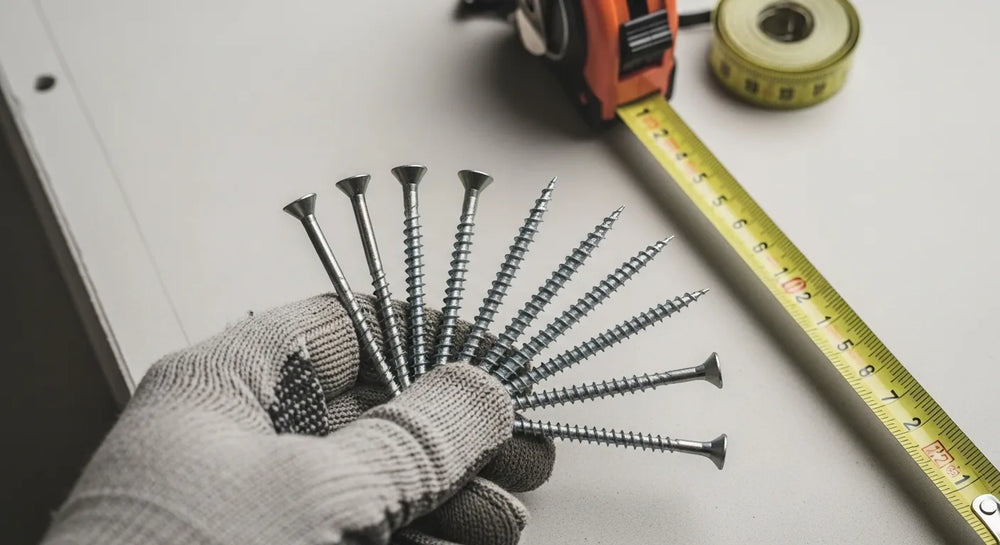
With a clear understanding of the concrete, we can now turn our attention to the fastener itself. Concrete screws, often referred to as masonry screws or self-tapping concrete anchors, are specifically engineered to tap their own threads into pre-drilled holes in concrete, brick, or block. Their design is a masterclass in industrial engineering, with each feature serving a distinct purpose.
Head Styles: Hex, Flat, and When to Use Them
The head of the screw determines how it is driven and how it sits on the surface of the anchored material.
- Hex Head: This is the most common style for industrial applications. The hexagonal shape allows for high torque application with a standard socket wrench, impact driver, or nut driver. This is crucial for achieving proper clamping force when securing heavy machinery, racking systems, or structural components. For robust, heavy-duty applications, a U.S.-made fastener like these Hex Head Concrete Screws 3/16 x 2.49 provides the strength and reliable installation characteristics needed for confidence in the field.
- Flat Head (Countersunk): When a flush, non-protruding finish is required, the flat head is the ideal choice. These screws are designed to sit level with or slightly below the surface of the material being fastened, making them perfect for installing door frames, window sills, electrical junction boxes, or any application where a snag-free surface is necessary. The Phillips drive is common for this style, allowing for controlled installation. For these applications, sourcing a quality countersunk screw, such as these 1/4 x 2-3/4 Flat Head Concrete Screws, ensures both a clean aesthetic and secure fastening.
Thread Design: High-Low vs. Serrated Threads
The magic of a concrete screw lies in its thread design, which is engineered to cut into masonry while efficiently clearing debris.
- High-Low Threads: This classic design features a high, sharp thread that cuts into the concrete, alternating with a lower thread that provides stability and helps to channel dust and debris out of the hole. This dual-action design reduces installation torque and increases pull-out resistance.
- Serrated Threads: Many modern, high-performance concrete screws feature serrations or cutting notches on the lead threads. These act like tiny saw teeth, aggressively cutting into the concrete and masonry. This reduces the friction and torque required to drive the screw, allowing for faster, easier installation, especially in high-PSI concrete.
Material and Coating: The First Line of Defense
The base material of the screw and its protective coating are critical for ensuring long-term performance, especially in demanding industrial environments.
- Carbon Steel: Most standard concrete screws are made from carbon steel, which is then heat-treated to achieve the necessary hardness for tapping into concrete. While strong, untreated carbon steel is highly susceptible to rust.
- Protective Coatings: To combat corrosion, these screws are coated with a protective layer. A standard zinc plating is suitable for dry, interior applications. However, for exterior use, high-moisture areas, or environments with chemical exposure, a more advanced coating is essential. A Ruspert ceramic coating, for example, offers significantly enhanced corrosion resistance, often capable of withstanding hundreds of hours of salt spray testing. When specifying fasteners for challenging conditions, a product like the Steel Blue Ruspert Ceramic Coating Flat Phillips® Drive Concrete Screw provides the advanced protection needed to prevent premature failure and ensure the longevity of the installation.
Selecting the Right Concrete Screw for Your Application
Choosing the correct screw is a methodical process driven by engineering requirements. A systematic approach ensures that all variables are considered, resulting in a safe and reliable connection.
Step 1: Defining Load Requirements (Shear vs. Tensile Strength)
Every fastening application exerts forces on the screw. Understanding these forces is the most critical step in selection.
- Tensile Load (Pull-Out): This is the force trying to pull the screw straight out of the hole. It's a key consideration for items mounted vertically on a wall, such as shelving or heavy conduit.
- Shear Load: This is the force acting perpendicular to the screw, trying to snap it sideways. It's the primary force on items mounted to a floor, like machine bases or support columns.
Manufacturers provide technical data sheets that specify the ultimate tensile and shear load capacities for their screws in different strength concretes and at various embedment depths. Always apply a safety factor to these ultimate loads—typically a factor of 4:1—to determine the allowable working load.
Key Takeaway: Never select a fastener based on a guess. Always consult the manufacturer's load tables and apply a conservative safety factor appropriate for the application. For critical or life-safety applications, a licensed engineer should perform the calculations.
Step 2: Environmental Considerations (Interior, Exterior, Chemical Exposure)
The operating environment will dictate the necessary material and coating.
- Dry Interior: For climate-controlled indoor environments, a standard zinc-plated carbon steel screw is generally sufficient.
- Damp or Exterior: For outdoor applications, garages, unheated warehouses, or areas exposed to moisture, a fastener with a high-performance coating like Ruspert, ceramic, or galvanized finish is required to prevent rust.
- Corrosive or Chemical Environments: In industrial plants, water treatment facilities, or coastal areas with salt spray, even robust coatings may not be enough. In these severe conditions, specifying screws made from stainless steel (typically Type 304 or 316) is often the only way to guarantee long-term integrity.
Step 3: Sizing the Screw – Diameter and Embedment Depth
The size of the screw directly impacts its strength.
- Diameter: Common diameters for concrete screws range from 3/16" to 3/4". A larger diameter screw generally provides higher load capacities. The choice of diameter should be based on the calculated load requirements and the size of the hole in the fixture being mounted.
- Embedment Depth: This is the depth the screw is installed into the concrete base material. Deeper embedment engages more of the concrete, leading to significantly higher pull-out resistance. The minimum embedment depth is typically 1", but for heavier loads, depths of 1-3/4" or more are common.
- Screw Length: To determine the required screw length, add the thickness of the material being fastened to the desired embedment depth.
Formula: Fixture Thickness + Minimum Embedment Depth = Minimum Screw Length
The Essential Toolkit: Beyond Just the Screw
The highest quality American-made screw will fail if installed with the wrong tools. Professional installation requires a specific set of equipment designed for working with masonry.
The Right Drill: Hammer Drill vs. Rotary Hammer
- Hammer Drill: This tool combines standard rotation with a rapid hammering action. It's suitable for drilling smaller diameter holes (typically up to 1/2") in brick, block, and lower-strength concrete.
- Rotary Hammer: For larger holes or drilling into high-PSI concrete, a rotary hammer is the superior choice. It uses a piston mechanism to create a much more powerful hammering action, making it faster and more effective at pulverizing concrete and aggregate.
The Correct Bit: Carbide-Tipped Masonry Bits
Always use a high-quality masonry drill bit with a carbide tip. The bit diameter must precisely match the specification for the screw being used. Using a bit that is even slightly too large will result in a loose fit and drastically reduced holding power. Conversely, a bit that is too small will make it impossible to drive the screw. The required bit size is always specified by the screw manufacturer.
Installation Tools: Impact Drivers and Torque Wrenches
An impact driver is the preferred tool for driving concrete screws. It delivers high torque in short bursts, which helps to seat the screw without over-torquing. For critical applications where a specific clamping force is required, a calibrated torque wrench should be used for final tightening to ensure it meets engineering specifications.
The Installation Process: A Step-by-Step Professional Protocol
Proper installation is a process of precision. Skipping any of these steps can compromise the integrity of the connection.
Step 1: Precision Drilling – Hole Diameter and Depth
Using the correct diameter bit, drill a pilot hole into the concrete. The hole must be drilled to a depth that is at least 1/2" deeper than the intended screw embedment. This extra space provides a reservoir for any remaining dust and debris to settle, ensuring the screw can be installed to its full depth without bottoming out.
Step 2: Hole Preparation – The Non-Negotiable Cleaning Step
This is the most frequently skipped and most critical step. After drilling, the hole is filled with fine concrete dust. If this dust is not removed, it will prevent the screw's threads from making full, solid contact with the base material, severely reducing its holding power by as much as 50%.
To properly clean the hole, use a wire brush to scrub the sides and then blow it out with compressed air or a hand pump. Repeat this process at least twice until no more dust emerges from the hole.
Step 3: Driving the Screw – Technique and Torque
Using an impact driver or drill, drive the screw through the fixture and into the pre-drilled, cleaned hole. Drive the screw until the head is seated firmly against the material being fastened. It is vital not to overtighten the screw. Overtightening can strip the threads cut into the concrete or, in the worst case, shear the head off the screw.
Step 4: Common Pitfalls and How to Avoid Them
- Wrong Bit Size: Always double-check the manufacturer's recommendation.
- Inadequate Hole Cleaning: This is the leading cause of fastener failure.
- Overtightening: Strips the threads and destroys the holding power. Use a torque wrench for critical connections.
- Edge and Spacing Distance: Installing screws too close to the edge of a concrete slab or too close to each other can cause the concrete to crack and spall. Adhere to manufacturer-recommended minimum edge and spacing distances.
Why Sourcing American-Made Concrete Screws Matters
In an era of unpredictable global supply chains, the decision of where to source components has become a critical element of business strategy. For a procurement manager under pressure to deliver on time, a design engineer needing reliable material certifications, or an MRO buyer facing an unexpected equipment breakdown, the ability to quickly find a verified, U.S.-made part is a game-changer.
The Maden.co Advantage: Supply Chain Resilience and Transparency
At Maden.co, our entire business model is built on the principle of strengthening American industry. We are committed to democratizing access to American manufacturing, connecting industrial buyers directly with over 2.5 million products from our network of 800+ verified U.S. manufacturers. This isn't just about patriotism; it's about building a more resilient, transparent, and reliable supply chain. When you source from our platform, you reduce lead times, mitigate the risk of geopolitical disruptions, and gain clear visibility into where your critical components are coming from. You can learn more about our mission to champion American manufacturing here.
Compliance and Certification: Peace of Mind for Critical Applications
Sourcing from verified U.S. manufacturers provides a level of quality assurance that is often difficult to obtain from overseas suppliers. American companies operate under stringent quality control standards (like DIN and NPT) and can readily provide the material certifications, load testing data, and technical specifications that engineers and compliance officers require. This Industrial Excellence is a core value, ensuring that the part you specify is the part you receive.
Total Cost of Ownership vs. Upfront Price
While an imported fastener might have a lower initial price, its true cost is often much higher. A single failure can lead to thousands of dollars in downtime, rework, and potential liability. A superior, American-made screw, backed by reliable data and a transparent supply chain, delivers a lower Total Cost of Ownership (TCO). It's an investment in reliability, safety, and operational continuity.
Streamlining Procurement: Financing and Finding Your Parts
We understand that the procurement process itself can be a source of friction. That's why we've built our platform around the principle of Customer Empowerment.
Overcoming Procurement Friction with a Centralized Marketplace
Searching through endless catalogs and vetting unknown suppliers is a drain on valuable time. Our platform provides a single, trusted source for millions of U.S.-made parts. With powerful search tools and detailed product specifications, you can find the exact component you need in minutes, not days, allowing you to focus on more strategic tasks.
Strategic Capital Management with Instant Financing
Large-scale projects or emergency repairs often require significant capital outlay for components. To help businesses manage cash flow effectively, we offer an Instant Financing option directly within our checkout process. This isn't just a payment method; it's a strategic tool that allows you to procure the materials you need for capital-intensive projects without delay, keeping your operations moving forward. You can apply for Instant Financing at checkout to streamline your next major purchase.
A Call for American Manufacturers
The American manufacturing revival is here, and it’s powered by the incredible network of manufacturers across the country. If you are a U.S. manufacturer producing quality industrial components, we invite you to join our mission. By partnering with us, you gain access to a nationwide audience of industrial buyers actively seeking American-made products. Register as a vendor and join the American manufacturing revival.
Conclusion
Selecting what you need to screw into concrete is a decision with far-reaching consequences for any industrial operation. It demands a professional approach that begins with a thorough analysis of the substrate, moves to a methodical selection of the right fastener based on load and environment, and concludes with a precise, by-the-book installation protocol. Each step is critical to ensuring the safety, durability, and reliability of the final assembly.
Beyond the technical specifics, this process highlights the strategic importance of your supply chain. By choosing to source high-quality, verified U.S.-made concrete screws, you are not only ensuring superior performance but also investing in a more resilient, transparent, and efficient procurement process. This choice reduces risk, lowers the total cost of ownership, and contributes to the strength of our domestic industrial base.
Don't let a small component create a big problem. Explore the extensive catalog on Maden.co to find the right American-made fasteners for your next project. Streamline your procurement, manage your cash flow with our Instant Financing option at checkout, and build with the confidence that comes from using the best components our country has to offer. If you have specific sourcing questions, our team is ready to help.
Frequently Asked Questions (FAQ)
1. Can I reuse concrete screws? Generally, it is not recommended to reuse concrete screws, especially in structural or critical applications. The process of driving a screw cuts threads into the concrete. When the screw is removed and reinserted, it may not engage the same threads with the same integrity, leading to a significant reduction in holding power. For maximum safety and reliability, always use a new screw for each installation.
2. What is the difference between a concrete screw and a wedge anchor? The primary difference is that concrete screws are removable, while wedge anchors are permanent expansion anchors. Concrete screws work by cutting their own threads into the concrete, creating a mechanical interlock. Wedge anchors are inserted into a hole and then expanded by tightening a nut, which forces a clip to wedge against the sides of the hole. Screws are ideal for temporary fixtures or applications that may need to be disassembled, while wedge anchors are used for permanent, heavy-duty structural connections.
3. How close to the edge of the concrete can I install a screw? The minimum distance from an unsupported edge varies by screw diameter and manufacturer, but a general rule of thumb is to maintain a distance of at least 10 times the anchor diameter. For example, a 1/4" diameter screw should be installed at least 2.5 inches from the edge. Installing a fastener too close to an edge can induce stress that leads to cracking or spalling of the concrete, causing a complete failure of the anchor point. Always consult the manufacturer's technical data for specific edge and spacing requirements.
4. Do I need a pilot hole for concrete screws? Yes, a properly sized pilot hole is absolutely essential for the installation of any concrete screw. The screw is designed to tap threads into this pre-drilled hole. Without a pilot hole, it is impossible to install the screw. It is critical to use the specific bit diameter recommended by the screw manufacturer to ensure the hole is not too large (which would prevent the threads from engaging) or too small (which would make installation impossible and could break the screw).


