
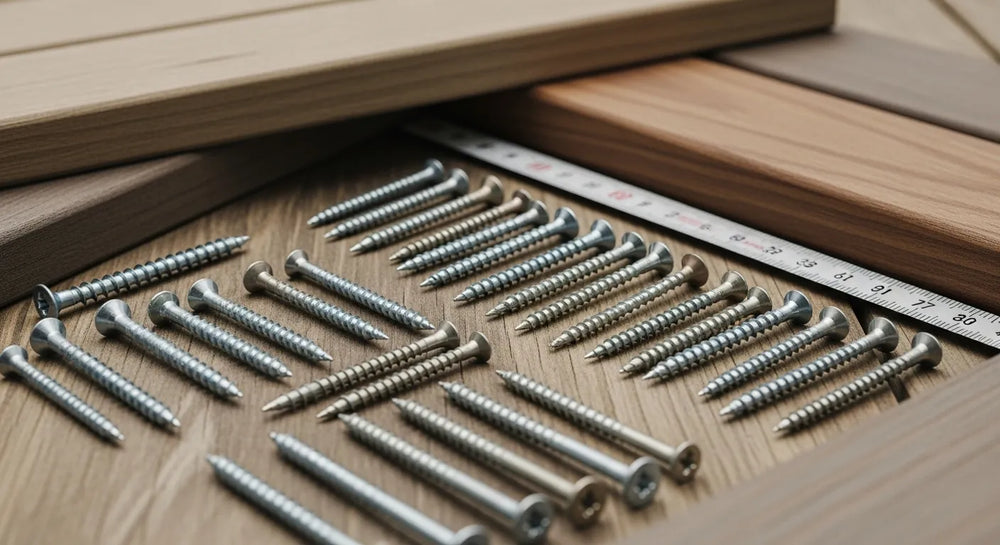
What Does a Wood Screw Look Like? A Deep Dive for Industrial Buyers
Table of Contents
- The Distinctive Anatomy of a Wood Screw
- What Truly Makes a Screw a "Wood Screw"? The Defining Characteristics
- Materials and Finishes: Beyond the Basic Look
- Sizing and Dimensions: Interpreting the Numbers Behind the Look
- The Practicality of American Manufacturing in Wood Screws
- Sourcing Wood Screws with Confidence on Maden.co
- Beyond the Look: The Business Value of the Right Wood Screw
- Conclusion
- Frequently Asked Questions
In the intricate world of manufacturing and construction, the smallest components often hold the greatest significance. Imagine a large-scale furniture production line halted because of a missing or incorrect fastener, or a crucial MRO repair delayed due to the inability to quickly identify and source a specific part. These scenarios underscore the critical importance of even seemingly simple components like the wood screw. For procurement managers, MRO buyers, and design engineers, accurately identifying and sourcing the right fastener isn't merely a transactional task—it's a strategic imperative that impacts project timelines, structural integrity, and ultimately, the bottom line.
This article delves into the precise characteristics that define a wood screw, exploring its distinct visual and functional anatomy. We will examine the various head types, drive styles, materials, and finishes that differentiate these essential fasteners, helping you understand not just what a wood screw looks like, but why it looks that way and how to specify the exact one for your needs. At Maden.co, we understand that precision in procurement is paramount, and our mission is to democratize access to American manufacturing, ensuring you can find and source the exact U.S.-made components, like these versatile wood screws, with unmatched efficiency. Our goal is to empower you with the knowledge to make informed decisions, streamline your procurement processes, and reinforce the backbone of American industry.
The Distinctive Anatomy of a Wood Screw
A wood screw is meticulously designed for a singular purpose: to create a strong, durable connection in wood materials. Unlike machine screws that require a pre-tapped hole or sheet metal screws designed for thin metal, the wood screw boasts a specific appearance that reflects its function. To truly understand what a wood screw looks like, we must break down its fundamental components.
Head and Drive: The Visible Interface
The very first thing you typically notice about a wood screw is its head and the drive type integrated within it. These elements are not just for aesthetics; they determine how the screw is installed and how it sits within or on the material.
Head Types: Shaping the Surface
The head of a wood screw can vary significantly in shape, each designed for a specific application:
- Flat Head (Countersunk): This is perhaps one of the most common and recognizable types. A flat head wood screw features a conical underside that tapers to a point, allowing it to sit flush with or slightly below the surface of the wood when fully driven. This creates a smooth, unencumbered finish, which is ideal for furniture, cabinetry, or any application where a protrusion would be undesirable or cause snagging. Visually, it presents a clean, uninterrupted surface. For robust applications requiring a flush finish, a flat slot drive brass wood screw offers both aesthetic appeal and durable performance, often sought after for its corrosion resistance.
- Round Head: In contrast, a round head wood screw has a domed or hemispherical top surface that remains proud of the wood when installed. This design is often chosen for its decorative appearance or when the screw needs to apply pressure over a wider area without countersinking. Its rounded profile is distinctly visible, standing out from the wood surface.
- Oval Head (Raised Countersunk): The oval head is a hybrid, combining aspects of both flat and round heads. It features a tapered underside like the flat head, allowing it to sit partially countersunk, but its top surface is slightly rounded or domed. This provides a finished, aesthetic look that is less obtrusive than a round head but still offers a decorative element that sits just above the surface. When requiring a fastener that merges subtle elegance with strength, an oval slot drive silicon bronze wood screw is an excellent choice, known for its superior resistance to harsh environments.
- Pan Head: While less common for traditional wood screws, pan heads have a slightly rounded, low-profile dome with vertical sides. They offer a good bearing surface without being overly intrusive and are sometimes used when a wide, flat bearing surface is needed without countersinking.
- Trim Head: These are very slender heads, often with a smaller diameter, designed for minimal visibility, particularly in trim or moulding applications where a tiny, almost invisible fastener is desired.
- Hex Head: A hexagonal head allows for installation with a wrench or socket, providing higher torque. While often associated with lag screws or structural fasteners, smaller hex heads can be found on heavy-duty wood screws.
Drive Types: The Engagement Point
The drive type refers to the recess or protrusion on the screw head that accepts a screwdriver or power tool bit. The appearance of the drive is critical for tool compatibility and efficient installation:
- Slotted Drive: One of the oldest and simplest designs, a slotted drive features a single straight slot across the head. Visually, it's unmistakable. While widely used, especially for traditional and decorative fasteners, it can be prone to "cam-out" (the screwdriver slipping out of the slot) if too much torque is applied. Many classic brass wood screws, such as a round slot drive brass wood screw, employ this drive type for historical accuracy and aesthetic consistency in fine woodworking.
- Phillips Drive: Recognized by its cross-shaped recess, the Phillips head offers improved resistance to cam-out compared to a slotted drive, especially when using power tools. Its self-centering nature makes it a popular choice for faster assembly.
- Square Drive (Robertson): Featuring a square-shaped recess, the square drive provides excellent torque transfer and virtually eliminates cam-out. It's highly favored in woodworking due to its secure grip.
- Torx Drive (Star Drive): This drive type has a six-point, star-shaped recess. Torx drives offer superior cam-out resistance and can handle very high torque levels, making them excellent for demanding applications and production environments.
- Combination Drives: Some screws feature a combination of drive types, such as a Phillips/Slotted recess, offering versatility in tooling.
The Shank: Unthreaded Versatility
Immediately below the head, a wood screw typically features a smooth, unthreaded portion known as the shank. This is a key visual differentiator from many other screw types.
- Tapered vs. Straight: Traditionally, wood screws have a slightly tapered shank, meaning it gradually narrows from the underside of the head towards the threaded portion. This taper aids in self-centering and helps to reduce wood splitting, especially when the screw is installed without a pilot hole. Modern wood screws, particularly those designed for power driving, often have a straight, uniform diameter shank below the head.
- Function of the Smooth Shank: The unthreaded shank plays a crucial role. When the screw is driven into wood, this smooth portion passes through the top piece of wood without threading into it. This allows the threads to draw the two pieces of wood tightly together, creating a strong clamping force. If the entire screw were threaded, it would tend to push the pieces apart or simply "screw into" the top piece rather than pulling it down.
The Threads: The Gripping Power
The threaded portion is arguably the most defining visual characteristic of a wood screw and the primary mechanism for its holding power.
- Coarse and Sharp Threads: Wood screws feature coarse, widely spaced threads with sharp edges. This appearance is crucial for their function: these aggressive threads are designed to cut into and grip the wood fibers without stripping them, providing a strong anchor. In contrast, machine screws have finer, more uniform threads for mating with pre-tapped holes or nuts, and sheet metal screws have finer threads designed to tap into thin metal.
- Tapered and Pointed Tip: A hallmark of the wood screw is its sharply pointed tip. This tapered point allows the screw to start easily into the wood, especially when a pilot hole is used. Some modern wood screws feature specialized self-tapping or cutting tips (like "Type 17" or "Gimlet" points) that look even more aggressive, often with a small flute or notch designed to cut a pilot hole as the screw is driven, further reducing splitting and eliminating the need for pre-drilling in some softer woods.
- Partial Threading: Most traditional wood screws are partially threaded, meaning the threads only extend partway up the shank, leaving the smooth shank near the head. This visual characteristic is vital for achieving the clamping action described earlier. However, some contemporary wood screws, especially those designed for structural applications or certain types of engineered wood, may be fully threaded.
What Truly Makes a Screw a "Wood Screw"? The Defining Characteristics
While we've detailed its individual parts, the combination of these features is what truly identifies a wood screw and sets it apart. It’s not just about what a wood screw looks like, but the integrated design that enables its specific function in wood.
- Designed for Wood Fibers: The coarse, sharp threads and often tapered body are engineered to grip wood fibers effectively without causing excessive damage or stripping. The pointed tip facilitates entry into fibrous material.
- Self-Tapping (in many cases): While pilot holes are often recommended, especially in hardwoods, the design of a wood screw allows it to tap its own threads into the wood as it is driven, distinguishing it from fasteners that require pre-threaded holes.
- Clamping Action: The combination of the smooth shank and the threaded portion creates a powerful clamping force, drawing two pieces of wood tightly together for a secure joint. This visual distinction is crucial for procurement, ensuring you select a fastener that provides true structural integrity rather than just attachment.
For a procurement manager under pressure to source a specific fastener, a design engineer needing material certifications for a new prototype, or an MRO buyer facing an unexpected equipment breakdown, the ability to quickly find and finance a verified, U.S.-made part is a game-changer. At Maden.co, we offer an expansive catalog of over 2.5 million American-made products from our network of 800+ verified U.S. manufacturers. Our platform ensures that the fasteners you procure meet rigorous industrial standards and consistently deliver the performance you expect.
Materials and Finishes: Beyond the Basic Look
The material a wood screw is made from and its finish significantly impact its appearance, performance, and suitability for various environments. Understanding these aspects is crucial for correct specification.
Common Materials and Their Appearance:
- Steel (Carbon Steel): The most common and economical material. Unfinished carbon steel wood screws have a dull gray or black appearance. They are strong but highly susceptible to rust and corrosion, making them unsuitable for outdoor or damp environments without a protective finish.
- Stainless Steel (e.g., 304, 316): Stainless steel wood screws have a bright, silvery, often slightly polished appearance. They are known for their excellent corrosion resistance, making them ideal for outdoor use, marine applications, or environments with high humidity. Types like 316 stainless steel offer even greater resistance to chlorides.
- Brass: Brass wood screws are easily identifiable by their distinctive golden-yellow hue. They are primarily chosen for their decorative appearance in fine woodworking, antique furniture, and architectural applications. While corrosion-resistant to some degree, brass is softer than steel and not suitable for high-stress applications. A classic example is a round slot drive brass wood screw, often seen in heritage restoration projects.
- Bronze / Silicon Bronze: Bronze wood screws, particularly silicon bronze, offer a rich, reddish-brown or coppery appearance. They provide superior corrosion resistance, especially in marine and saltwater environments, outperforming brass in strength and durability while retaining an attractive finish. For projects demanding both beauty and exceptional resilience against the elements, an oval slot drive silicon bronze wood screw is a premium choice.
Finishes and Coatings: Enhanced Aesthetics and Protection
Screws, especially steel ones, are often treated with finishes or coatings to enhance their appearance, improve corrosion resistance, or reduce friction during installation.
- Zinc Plated: These screws have a shiny, silvery-blue or yellow-gold appearance, depending on the passivation treatment (clear or yellow chromate). Zinc plating offers good, but not extreme, corrosion resistance for indoor or mildly damp conditions.
- Galvanized (Hot-Dipped Galvanized): HDG screws are characterized by a thick, dull gray, often somewhat lumpy appearance due to the hot-dipping process. This heavy zinc coating provides excellent corrosion resistance for outdoor and harsh environments, making them suitable for treated lumber.
- Black Oxide: A black oxide finish gives steel screws a matte black appearance. It offers minimal corrosion resistance but is often used for decorative purposes or in applications where a non-reflective finish is desired.
- Phosphate (Black Phosphate): Often used on drywall screws, black phosphate provides a dark gray to black finish that offers some corrosion resistance and allows for easier painting.
- Polymer/Ceramic Coatings: Modern screws increasingly feature advanced polymer or ceramic coatings, which can come in a variety of colors (green, brown, tan, gray) to match specific materials, and offer superior corrosion resistance and lubrication.
The selection of material and finish is a critical decision in procurement. The appearance of the screw—its color, sheen, and texture—provides immediate clues about its protective qualities and intended use. Sourcing through a platform like Maden.co ensures that the material and finish specifications you require are met with precision. Our commitment to Digital Innovation means providing detailed product information, empowering buyers to confidently select components that meet the highest standards of Industrial Excellence.
Sizing and Dimensions: Interpreting the Numbers Behind the Look
Beyond the obvious visual traits, the specific dimensions of a wood screw are integral to its identity and function. What a wood screw looks like is also defined by its size specifications, which determine its appropriate use.
- Gauge (Diameter): The gauge refers to the diameter of the screw's shank. It is typically expressed as a number (e.g., #6, #8, #10). A higher gauge number indicates a thicker screw. Visually, a #10 screw will appear noticeably thicker and more substantial than a #6 screw. The gauge affects the screw's shear strength and the size of the pilot hole required.
- Length: Measured from the point where the screw head would be flush with the surface (for flat or oval heads) or from the underside of the head (for round, pan, or hex heads) to the tip of the point. The length dictates the depth of penetration into the wood, influencing the strength of the joint.
- Thread Length: As mentioned, many traditional wood screws are partially threaded. The thread length specifies how much of the screw's total length is covered by threads. This is a critical visual and functional detail for optimal clamping.
- Head Diameter: The diameter of the screw head can vary independently of the shank gauge, affecting its bearing surface and how it interacts with the material.
Understanding these dimensional specifications, alongside the visual cues, is vital for precise procurement. We empower our customers by providing comprehensive product details, ensuring that when you search for a specific gauge, length, or thread type on Maden.co, you're presented with verified U.S.-made options that meet your exact requirements.
The Practicality of American Manufacturing in Wood Screws
For procurement professionals, the origin of a product carries substantial weight. When considering fasteners like wood screws, choosing American-made components offers distinct advantages that directly impact supply chain resilience, quality, and overall project success.
Why U.S.-Made Wood Screws Matter:
- Uncompromised Quality and Consistency: American manufacturers adhere to stringent quality control standards and often use higher-grade raw materials. This results in wood screws with consistent dimensions, reliable thread formation, and durable finishes. This consistency is crucial for high-volume production, where variations can lead to costly rework or structural failures. What a U.S.-made wood screw looks like is a testament to precision engineering, with clean threads, well-formed heads, and consistent coatings.
- Supply Chain Resilience and Transparency: Sourcing domestically reduces reliance on complex global supply chains that can be susceptible to geopolitical disruptions, shipping delays, or unforeseen tariffs. At Maden.co, our commitment to Supply Chain Transparency means we connect you directly with verified U.S. manufacturers. This direct line of sight reduces lead times, improves forecasting accuracy, and provides greater control over your inventory.
- Regulatory Compliance: American-made products are manufactured under U.S. labor laws and environmental regulations, ensuring ethical production practices. For projects requiring specific compliance (e.g., government contracts, certain building codes), choosing domestically sourced fasteners simplifies documentation and reduces compliance risks.
- Supporting the American Economy: Every U.S.-made screw purchased supports American jobs, innovation, and the manufacturing ecosystem. This aligns with our core value of American Manufacturing Pride and reinforces our vision to drive the "America's manufacturing revival is here."
- Responsive Customer Support: Working with U.S. manufacturers often means access to more responsive customer service and technical support, especially when dealing with custom specifications or troubleshooting.
Consider a relatable scenario: A procurement manager for a custom cabinetry company is under pressure to deliver high-end kitchen installations. They need not just any wood screw, but specific sizes and finishes—such as a durable flat slot drive brass wood screw for visible hardware, or a corrosion-resistant oval slot drive silicon bronze wood screw for outdoor applications. A delay in sourcing or receiving subpar fasteners could mean missed deadlines, compromised quality, and a damaged reputation. Sourcing these critical components from verified U.S. manufacturers through Maden.co mitigates these risks, ensuring consistent quality and predictable delivery.
Sourcing Wood Screws with Confidence on Maden.co
Identifying the ideal wood screw based on its appearance and specifications is only half the battle; efficiently procuring it is the other. Maden.co is designed to be your strategic partner in this process, connecting you directly with the vast network of American manufacturers producing the highest quality industrial components.
Our platform is engineered for Customer Empowerment, giving you unparalleled access and control:
- Vast, Verified Catalog: We are proud to offer access to over 2.5 million American-made products. Whether you need a standard flat head wood screw, a decorative round slot drive brass wood screw, or a specialized silicon bronze fastener, our extensive network of 800+ verified U.S. manufacturers ensures you can find precisely what you need. Our sophisticated search capabilities allow you to filter by material, finish, head type, drive type, gauge, and length, making it simple to pinpoint the exact item whose appearance and specifications match your requirements.
- Streamlined Procurement: We drastically reduce procurement friction. No more sifting through unreliable suppliers or navigating complex international logistics. With Maden.co, you connect directly with American suppliers, simplifying RFQs, order placement, and tracking. This efficiency translates directly into saved time and reduced operational costs, improving your Total Cost of Ownership (TCO).
- Instant Financing for Strategic Purchases: We understand that large-volume purchases or capital-intensive projects require flexible financial solutions. That's why we offer Instant Financing options during the checkout process. This strategic tool empowers procurement managers and business owners to manage cash flow effectively, allowing you to acquire the necessary components without upfront capital strain. You can apply for Instant Financing at checkout to streamline your capital-intensive projects, ensuring your operations never miss a beat.
- Commitment to American Manufacturing: Our entire business model is built on the principle of supporting and strengthening the American industrial base. You can learn more about our mission to champion American manufacturing here: About Us. By choosing Maden.co, you are not just making a purchase; you are investing in the resilience and innovation of U.S. industry, aligning with our vision for Industrial Excellence.
Are you a U.S. manufacturer producing high-quality wood screws or other industrial fasteners? We invite you to join our growing network. Register as a vendor and join the American manufacturing revival: Vendor Registration.
Beyond the Look: The Business Value of the Right Wood Screw
While understanding what a wood screw looks like is fundamental for identification, the true value lies in how that appearance translates into performance and business outcomes. The right wood screw, correctly specified and reliably sourced, offers profound benefits:
- Enhanced Project Integrity and Longevity: A correctly chosen wood screw ensures a robust, long-lasting joint, preventing failures that can lead to costly repairs, recalls, or reputation damage. This includes matching the screw's material and finish to the environmental conditions to prevent premature corrosion.
- Improved Efficiency and Reduced Waste: When you know exactly what a wood screw looks like and what its specifications are, you reduce trial and error during assembly. This minimizes material waste, saves labor time, and keeps production lines moving smoothly.
- Compliance with Industry Standards: Many industrial projects require adherence to specific material and fastener standards. Sourcing through Maden.co, where manufacturers are verified and product details are transparent, ensures compliance with critical industry standards.
- Aesthetic Appeal: For applications like furniture, cabinetry, or architectural elements, the appearance of the screw—its head type, material, and finish—contributes significantly to the overall aesthetic quality of the finished product. The visible part of the screw needs to look right.
Ultimately, partnering with Maden.co means more than just purchasing parts; it means building a more reliable and efficient procurement process. We are dedicated to providing the resources and platform necessary for you to confidently source the highest quality American-made wood screws and countless other industrial components. If you have specific sourcing questions or need assistance navigating our extensive catalog, our expert team is ready to help: Contact Us.
Conclusion
Understanding what a wood screw looks like is far more than a simple visual exercise; it's a foundational skill for anyone involved in procurement, design, or manufacturing. From the distinctive head types and drive styles to the coarse threads, tapered shank, and pointed tip, each visual characteristic serves a specific function in creating durable wood joints. The material and finish further dictate its appearance and suitability for diverse environments, from decorative indoor applications to rugged outdoor use.
For American businesses, the ability to accurately identify and source these critical fasteners from trusted domestic manufacturers is paramount for ensuring product quality, streamlining operations, and bolstering supply chain resilience. Maden.co stands as America's premier B2B marketplace, committed to democratizing access to U.S.-made excellence. We empower procurement managers, MRO buyers, and design engineers to effortlessly connect with over 800 verified American manufacturers and navigate a catalog of more than 2.5 million products.
When your projects demand precision, quality, and reliability—when the structural integrity of your product hinges on the right fastener—turn to Maden.co. Explore our comprehensive selection of U.S.-made wood screws today. Leverage our Instant Financing option at checkout to manage your capital effectively and ensure your projects proceed without interruption. The future of American manufacturing is here, and we invite you to be a part of it by visiting Maden.co and discovering the difference true industrial excellence makes.
Frequently Asked Questions
Q1: What is the primary visual difference between a wood screw and a machine screw?
A1: The most noticeable visual difference lies in the threads and tip. Wood screws feature coarse, widely spaced threads designed to grip wood fibers and typically have a sharp, pointed tip for easy entry. Machine screws, in contrast, have finer, more uniform threads that are designed to mate with pre-tapped holes or nuts, and they usually have a blunt end without a sharp point.
Q2: Why do some wood screws have a smooth shank near the head?
A2: The smooth, unthreaded shank on many traditional wood screws is a critical visual and functional feature. It allows the screw to pass through the top piece of wood without threading into it, enabling the threaded portion to pull the two pieces of wood tightly together. This creates a strong clamping force that secures the joint, which would not be achieved if the entire screw were threaded.
Q3: How does the head type of a wood screw affect its appearance and application?
A3: The head type significantly affects both the appearance and how the screw functions within a project. For example, a flat head (countersunk) wood screw will sit flush with the wood surface for a clean, unobtrusive look, ideal for furniture. A round head, however, will remain visible above the surface, sometimes chosen for decorative purposes or when a broader bearing surface is desired. An oval head offers a compromise, being partially countersunk but with a slightly decorative raised dome. Each looks distinctly different and serves specific aesthetic and structural purposes.
Q4: Can I find specialized wood screws, like those made from silicon bronze, on Maden.co?
A4: Yes, Maden.co offers a wide variety of specialized wood screws from verified U.S. manufacturers. For example, we feature fasteners like the oval slot drive silicon bronze wood screw, which is ideal for marine or outdoor applications due to its superior corrosion resistance and distinct reddish-brown appearance. Our extensive catalog and detailed product filters allow you to easily locate components with specific materials, finishes, and designs to meet your precise project requirements.


