
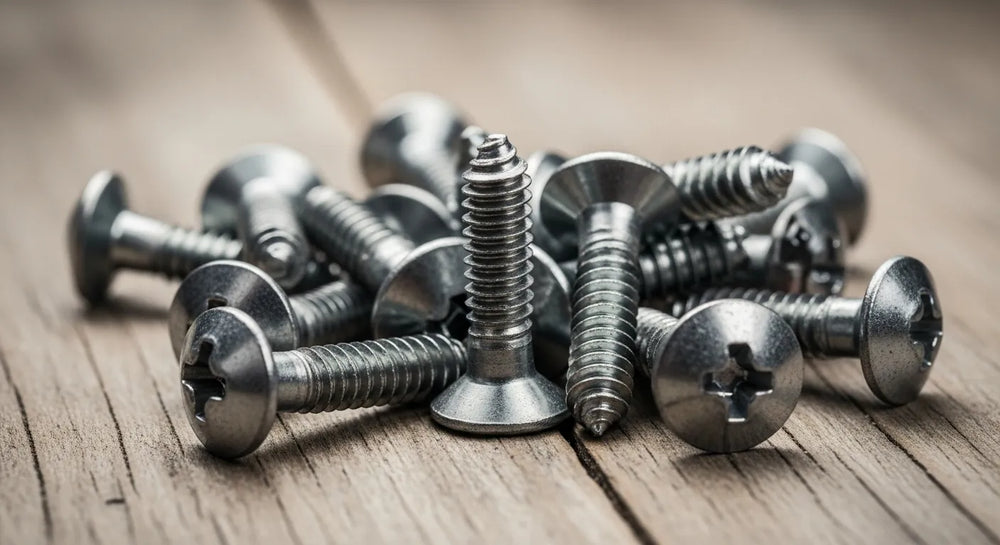
What is a Self-Tapping Screw for Metal?
Table of Contents
- Introduction
- Understanding Self-Tapping Screws: The Basics
- The Anatomy of a Self-Tapping Screw
- Types of Self-Tapping Screws for Metal Applications
- Material and Coatings: Ensuring Durability and Performance
- Selecting the Right Self-Tapping Screw for Your Metal Application
- The Strategic Advantage of Sourcing U.S.-Made Self-Tapping Screws
- Streamlining Procurement: How Maden.co Simplifies Sourcing
- Conclusion
- Frequently Asked Questions (FAQ)
Introduction
In the intricate world of manufacturing and industrial operations, efficiency is paramount. Every second saved, every error avoided, and every material optimized contributes to a stronger bottom line. Consider a scenario where a production line grinds to a halt because a simple fastening component requires an extra, time-consuming step—pre-drilling. This seemingly minor detail can accumulate into significant delays, increased labor costs, and project overruns. For procurement managers, MRO buyers, and design engineers, identifying solutions that streamline assembly without compromising integrity is a constant challenge. This is precisely where the self-tapping screw for metal emerges as an indispensable innovation.
This post will delve deep into the mechanics, types, applications, and strategic advantages of self-tapping screws for metal, providing a comprehensive guide for those seeking to enhance their fastening processes. We will explore the critical distinctions that define these versatile components, examine their material compositions and coatings, and offer practical advice for selecting the optimal screw for your specific metal application. Furthermore, we will highlight the strategic benefits of sourcing these crucial components from domestic manufacturers, emphasizing how platforms like Maden.co are democratizing access to high-quality, U.S.-made products to drive America's manufacturing revival. Our goal is to equip you with the knowledge to make informed procurement decisions, reduce operational friction, and strengthen your supply chain with reliable, American-made fasteners.
Understanding Self-Tapping Screws: The Basics
At its core, a self-tapping screw is designed with a unique thread that allows it to tap its own mating thread as it is driven into a material. Unlike traditional machine screws, which require a pre-tapped hole, self-tapping screws eliminate this preparatory step, saving significant time and labor in assembly. While various types exist for plastics, wood, and other substrates, our focus here is exclusively on their application in metal.
The fundamental principle behind a self-tapping screw for metal lies in its engineered point and thread geometry. As the screw rotates, its sharp tip or specialized cutting/forming features penetrate the metal substrate. The helical thread then progressively forms or cuts a matching thread within the material, creating a secure and often highly resistant joint. This ingenious design not only speeds up assembly but also often results in a tighter, more vibration-resistant connection compared to using a pre-tapped hole with a traditional machine screw, where tolerances might lead to a looser fit.
The advantages are clear and immediate for industrial buyers and engineers. The reduction in the number of required tools and steps on an assembly line translates directly into lower manufacturing costs and increased throughput. For maintenance and repair operations, the ability to quickly secure a component without the need for additional tapping tools means faster repairs and reduced downtime. This efficiency extends across a multitude of industries, from automotive and aerospace to electronics and construction, making the self-tapping screw a ubiquitous yet often underestimated hero of modern assembly.
Key Advantages for Metal Applications
The use of self-tapping screws in metal offers several compelling benefits that resonate deeply with efficiency-driven procurement strategies:
- Reduced Assembly Time and Labor Costs: Eliminating the pre-drilling and tapping steps streamlines the assembly process, allowing for faster production cycles and requiring less specialized labor.
- Enhanced Joint Strength and Vibration Resistance: By forming or cutting its own thread, the screw often achieves a tighter, more intimate fit with the parent material, leading to superior pull-out and shear strength, and better resistance to vibrational loosening.
- Simplified Tooling Requirements: Fewer tools are needed on the assembly line, reducing capital expenditure on specialized tapping equipment and simplifying inventory management for MRO teams.
- Improved Design Flexibility: Engineers can design with fewer constraints regarding pre-tapped holes, potentially leading to lighter or more compact designs.
- Cost-Effectiveness: The combined savings in labor, time, and tooling often result in a lower total cost per assembled unit, making self-tapping screws an economical choice for high-volume production.
- Error Reduction: The simplified process reduces the potential for cross-threading or misalignment errors that can occur during manual tapping operations.
The Anatomy of a Self-Tapping Screw
To fully appreciate the capabilities and proper selection of self-tapping screws for metal, it’s essential to understand their various design elements. Each feature, from the head to the point, plays a critical role in its function and suitability for specific applications.
Head Types
The head of a self-tapping screw determines how it sits on the surface of the material, its drive mechanism, and its aesthetic appeal.
- Pan Head: A slightly rounded, low-profile head with a flat bearing surface. It’s one of the most common types due to its versatility and good bearing area, suitable for a wide range of applications where minimal protrusion is acceptable. Our Steel Zinc Plated Type A Pan Slot Drive Self-Tapping Sheet Metal Screw is a prime example of a robust, general-purpose fastener ideal for many metal sheet applications.
- Truss Head: Wider and lower-profile than a pan head, offering a larger bearing surface. This can be beneficial for securing thin materials, where it helps prevent pull-through. For applications requiring a broad contact area and a secure hold, consider options like our Steel Zinc Plated Type A Truss Square Drive Self-Tapping Sheet Metal Screw.
- Hex Head: Features a hexagonal shape, allowing for greater torque application with a wrench or hex driver. Often used in heavier-duty applications where maximum clamping force is required.
- Flat Head (Countersunk): Designed to sit flush or below the surface of the material, providing a smooth finish. Requires a countersunk hole. Ideal for aesthetic applications or where a snag-free surface is critical.
- Oval Head: Similar to a flat head but with a slightly rounded top surface. Offers a decorative finish while still being countersunk.
- Button Head: A domed, low-profile head with a wider bearing surface than a pan head, offering a clean, finished appearance.
Drive Types
The drive type dictates the tool used to install the screw and influences the torque that can be applied without cam-out (when the driver slips out of the screw head).
- Phillips Drive: The most common drive type, easy to find tools for, but susceptible to cam-out at higher torques.
- Slotted Drive: A simple, single slot. While versatile, it offers the least resistance to cam-out and is generally not recommended for high-torque applications. The Steel Zinc Plated Type A Pan Slot Drive Self-Tapping Sheet Metal Screw showcases this drive type, often used in less critical, lighter-duty applications.
- Square (Robertson) Drive: Features a square recess, offering excellent resistance to cam-out and allowing for high torque. Popular in many industrial and construction applications, including products like our Steel Zinc Plated Type A Truss Square Drive Self-Tapping Sheet Metal Screw, which combines a secure drive with a broad truss head.
- Torx (Star) Drive: A six-point star recess that provides superior torque transfer and virtually eliminates cam-out. Ideal for applications requiring very high torque or where frequent removal and re-installation are expected.
- Hex Drive: A hexagonal recess, similar to a hex head, but for internal driving. Offers good torque control.
Thread and Point Types: The Core of Self-Tapping Performance
The true genius of a self-tapping screw lies in its thread and point design, which dictate its ability to penetrate and form/cut threads in metal.
Thread Types (for Metal)
- Type A: Features coarse, widely spaced threads with a gimlet point (sharp, conical). Primarily for thin sheet metal, plastics, and other soft materials where a quick, aggressive bite is needed. Requires a pilot hole.
- Type AB: Combines the coarse threads of Type A with a finer pitch closer to Type B, typically with a gimlet point. Offers better thread engagement in harder materials or when a slightly larger pilot hole is used. This is a very common general-purpose choice for sheet metal.
- Type B: Finer, more tightly spaced threads than Type A, often with a blunt point. Suitable for heavier gauge sheet metal, non-ferrous castings, and plastics. Requires a pilot hole.
- Hi-Lo Threads: A specialized thread design featuring alternating high and low threads. The high thread provides strong engagement, while the low thread assists in easier tapping and reduces material displacement. This design is particularly effective in thinner metals, often found in our Hi-Lo Double Lead Thread Self-Tapping Sheet Metal Screw, which offers superior grip and reduced radial stress in demanding applications.
Point Types (for Metal)
- Gimlet Point (Sharp Point): A very sharp, conical point designed for fast penetration, especially in softer metals or pre-drilled holes. Found on Type A and AB screws.
- Blunt Point: A less sharp point, requiring a pilot hole, but ideal for heavier gauge metals where thread formation is more critical than initial piercing. Found on Type B and C screws.
-
Thread-Forming Points (Type C, D, F, G, T): These screws displace material rather than removing it. As they are driven, they cold-form the material to create a mating thread, which can result in a very strong, vibration-resistant joint. These generally require a pilot hole.
- Type C: A coarse thread with a blunt, conical point, often with a relieved shank. Suitable for heavy gauge sheet metal and die castings.
- Type D (or T, BT): Features a single cutting flute and a blunt point. It removes a small amount of material, reducing driving torque, making it suitable for harder metals or where material stress needs to be minimized.
- Type F: A machine screw thread with a blunt, tapered point and multiple cutting edges and chip cavities. Excellent for heavy gauge sheet metal, aluminum castings, and plastics, as it cuts a clean thread and minimizes stress.
- Type 17: A specialized cutting point often used for wood, but some variations exist for specific metal applications, resembling a drill point with a cutting flute.
- Thread-Cutting Points (similar to above, often with specific flutes): These points actually remove material (create chips) as they form the thread, much like a tap. This reduces driving torque and stress on the workpiece, making them suitable for brittle or harder materials.
- Self-Drilling Points (Tek Screws): The most advanced type for metal. These screws feature a drill bit-like point that can drill its own pilot hole, tap its own threads, and fasten the material in a single operation. This dramatically speeds up assembly, eliminating the need for pre-drilling. The length of the drill point must be greater than the combined thickness of the materials being fastened.
Understanding these intricate details of head, drive, thread, and point types is crucial for selecting the correct self-tapping screw, ensuring optimal performance, and preventing potential failures in your metal assemblies.
Types of Self-Tapping Screws for Metal Applications
While all self-tapping screws eliminate the need for pre-tapping, their specific designs lead to distinct categories, each optimized for different metal thicknesses, hardnesses, and application requirements.
Thread-Forming Self-Tapping Screws
These screws displace the material rather than removing it. As the screw is driven, it pushes aside the metal to create internal threads, resulting in a joint with excellent resistance to pull-out and vibration. They generally require a pre-drilled pilot hole.
- Type A, AB, B: As discussed, these are common for thinner sheet metals. Type A with its coarse threads offers quick engagement in softer metals, while Type AB provides a more secure hold with its varied pitch. Our Steel Zinc Plated Type A Pan Slot Drive Self-Tapping Sheet Metal Screw is a testament to the utility of Type A designs for general sheet metal fastening. The Steel Zinc Plated Type A Truss Square Drive Self-Tapping Sheet Metal Screw further exemplifies Type A's adaptability with a different head and drive combination.
- Hi-Lo Screws: These represent an advanced form of thread-forming, specifically designed to improve thread engagement in thin metal and plastic by reducing the amount of material displacement required. The alternating high and low threads improve stripping resistance and often reduce driving torque. For such specialized requirements, the Hi-Lo Double Lead Thread Self-Tapping Sheet Metal Screw offers a superior solution, particularly in applications where thin gauge metal requires a robust, secure connection.
Thread-Cutting Self-Tapping Screws
Designed with specialized flutes or cutting edges near the point, these screws actually cut a small amount of material from the parent component as they are driven. This creates a cleaner, less stressed thread, making them ideal for harder or more brittle metals, or where driving torque needs to be minimized. They also typically require a pilot hole.
- Type F, G, D, T: These are common designations for thread-cutting screws. Type F, for instance, has a machine screw thread with multiple cutting edges and chip cavities, making it suitable for heavy gauge sheet metal, aluminum castings, and certain non-ferrous metals. The cutting action reduces radial stress, which is crucial for preventing cracking in brittle materials or distortion in thin, high-strength alloys.
Self-Drilling Screws (Tek Screws)
These are arguably the most efficient self-tapping screws for metal. Featuring a drill bit-like point, they perform three functions in a single operation: drilling, tapping, and fastening. This dramatically reduces assembly time and the need for separate tools.
- Drill Point Design: The drill point's length and flute design are critical. The point must be long enough to completely drill through the top material (and any intermediate materials) before the thread-forming part of the screw engages, ensuring a clean thread is formed in the bottom material.
- Applications: Widely used in construction (e.g., attaching metal siding to steel frames), HVAC, and automotive industries for fastening metal to metal without pre-drilling.
The choice between these types hinges on the specific metal, its thickness, the required joint strength, and the overall efficiency goals of the assembly process. Understanding these distinctions allows procurement managers to specify precisely the right component, minimizing waste and maximizing performance.
Material and Coatings: Ensuring Durability and Performance
The longevity, strength, and environmental suitability of a self-tapping screw for metal are heavily influenced by its base material and any applied coatings. Specifying these characteristics correctly is vital for performance and compliance.
Common Materials
- Carbon Steel: The most common material due to its strength, availability, and cost-effectiveness. Often heat-treated to achieve the necessary hardness for tapping into metal.
- Stainless Steel (e.g., 302, 304, 316): Offers excellent corrosion resistance, especially in humid or chemically aggressive environments. Type 316 provides superior resistance to chlorides and salts, making it ideal for marine or coastal applications. Stainless steel screws are generally softer than hardened carbon steel, so specific designs (like certain thread-cutting types) are used to ensure proper thread formation without stripping.
- Brass: A softer, non-magnetic, and corrosion-resistant material, primarily used for aesthetic purposes or in applications where electrical conductivity or specific thermal properties are required. Less common for structural metal fastening due to lower strength.
- Aluminum: Lightweight and corrosion-resistant. Less common for screws themselves, but sometimes used in specialized self-tapping designs for very soft aluminum substrates.
Essential Coatings and Finishes
Coatings serve multiple purposes, from enhancing corrosion resistance and improving lubricity during installation to providing specific aesthetic finishes.
- Zinc Plated: One of the most common coatings. A thin layer of zinc provides basic corrosion resistance in dry, indoor environments. It also offers a bright, aesthetically pleasing finish. Many standard self-tapping screws, such as our Steel Zinc Plated Type A Pan Slot Drive Self-Tapping Sheet Metal Screw and Steel Zinc Plated Type A Truss Square Drive Self-Tapping Sheet Metal Screw, utilize zinc plating for general applications.
- Black Oxide: Provides a decorative black finish and very mild corrosion resistance. Often used for aesthetic purposes in interior applications or where light reflection needs to be minimized.
- Phosphate Coatings (e.g., Zinc Phosphate, Manganese Phosphate): Offers improved corrosion resistance, especially when combined with oil, and excellent adhesion for paints and other topcoats. Also provides lubricity during installation.
- Hot-Dip Galvanized: A thicker zinc coating applied by dipping the screw into molten zinc. Provides superior corrosion resistance for outdoor and harsh environments, but the thick coating can affect thread fit, requiring slightly oversized nuts or tapped holes for machine screws, though less of an issue for self-tapping into pre-drilled holes.
- Ceramic or Polymer Coatings: Specialized coatings offering enhanced corrosion resistance, lubricity, and often color-coding. Examples include PTFE coatings for low friction or ceramic-polymer blends for extreme environmental protection.
- Chromate Conversion Coatings: Applied over zinc plating to further enhance corrosion resistance and provide varying colors (clear, yellow, black).
- Mechanical Galvanized: A process where zinc powder and other chemicals are tumbled with the fasteners, resulting in a consistent, non-electrolytic zinc coating, offering good corrosion protection without hydrogen embrittlement risks.
When making material and coating selections, procurement managers must consider:
- Environmental Conditions: Exposure to moisture, chemicals, salt spray, or extreme temperatures.
- Required Service Life: How long the fastener needs to perform without degradation.
- Dissimilar Metal Contact: Preventing galvanic corrosion when different metals are in contact.
- Aesthetics: The desired visual appearance of the finished product.
- Regulatory Compliance: Adherence to standards like RoHS (Restriction of Hazardous Substances) or REACH (Registration, Evaluation, Authorisation and Restriction of Chemicals), which dictate permissible substances in materials and coatings.
By carefully matching materials and coatings to the application's demands, engineers and buyers can ensure that self-tapping screws provide reliable, long-lasting performance, ultimately contributing to the overall quality and safety of the final product.
Selecting the Right Self-Tapping Screw for Your Metal Application
Choosing the optimal self-tapping screw is a critical decision that impacts assembly efficiency, product reliability, and overall cost. A thoughtful approach considers several factors to ensure the fastener performs as intended.
Key Considerations for Selection:
-
Metal Type and Thickness:
- Substrate Hardness: Softer metals like aluminum or thin-gauge steel might perform well with thread-forming screws (Type A, AB, Hi-Lo). Harder steels, stainless steels, or cast metals often benefit from thread-cutting (Type F, T) or self-drilling screws to minimize driving torque and prevent thread damage.
- Gauge/Thickness: Thin sheet metal generally works best with coarse-threaded screws like Type A or Hi-Lo designs, which provide quick engagement. Thicker metals might require screws with finer threads or self-drilling points designed for deeper penetration. The length of a self-drilling screw's drill point must always exceed the total material thickness.
-
Pilot Hole Requirements (if applicable):
- For most thread-forming and thread-cutting screws, a pilot hole is necessary. The correct pilot hole size is crucial; too small, and the screw might break or strip; too large, and the joint won't be secure. Manufacturers provide specific pilot hole diameter recommendations for their screws and target materials. Self-drilling screws eliminate this step entirely.
-
Joint Design and Performance Criteria:
- Shear Strength: The screw's ability to resist forces parallel to the joint.
- Pull-Out Strength: The screw's ability to resist forces perpendicular to the joint, pulling it out of the material.
- Vibration Resistance: How well the joint maintains its integrity under dynamic loads. Thread-forming screws often create a very tight fit, offering good vibration resistance.
- Clamping Force: The force exerted by the screw to hold components together. Head and drive types play a role here.
-
Environmental Conditions:
- Corrosion: Will the screw be exposed to moisture, chemicals, salt, or extreme temperatures? This directly influences the choice of material (e.g., stainless steel) and coating (e.g., hot-dip galvanized, specialized polymer coatings).
- Temperature: Extreme temperatures can affect material properties, including ductility and strength.
-
Assembly Process and Tooling:
- Assembly Speed: For high-volume production, self-drilling screws offer unparalleled speed.
- Available Tools: Does your team have the appropriate drivers and torque-controlled tools for the chosen screw type?
- Access: The accessibility of the fastening location might influence head and drive type.
-
Aesthetics:
- Does the screw need to be flush, low-profile, or have a specific finish? Flat heads, oval heads, or button heads provide different visual outcomes. Zinc plating offers a bright finish, while black oxide provides a darker look.
For a procurement manager under pressure to source a specific screw compliant with industry standards like DIN or ISO, or a design engineer needing specific material certifications for a new prototype, the ability to quickly find and verify a U.S.-made part is a game-changer. Similarly, an MRO buyer facing an unexpected equipment breakdown needs reliable, readily available components to minimize downtime. Maden.co understands these challenges and offers solutions to simplify this complex selection process.
The Strategic Advantage of Sourcing U.S.-Made Self-Tapping Screws
In today's dynamic global economy, relying solely on international supply chains can introduce significant vulnerabilities, from extended lead times and unpredictable shipping costs to quality inconsistencies and geopolitical risks. Sourcing U.S.-made self-tapping screws and other industrial components offers a robust strategic advantage for American businesses. At Maden.co, our mission is to democratize access to American manufacturing, connecting industrial buyers with an extensive network of verified U.S. manufacturers.
Strengthening Supply Chain Resilience
Choosing domestically produced fasteners inherently builds a more resilient supply chain. Shorter distances mean:
- Reduced Lead Times: Faster delivery of critical components, minimizing production delays and improving time-to-market for new products.
- Lower Transportation Costs: Less reliance on international shipping and its associated fuel surcharges, tariffs, and unpredictable logistical challenges.
- Greater Agility: The ability to respond quickly to unexpected demand fluctuations or supply disruptions without being at the mercy of global shipping bottlenecks.
- Mitigated Risk: Less exposure to geopolitical tensions, trade disputes, and natural disasters that can disrupt international logistics.
Uncompromising Quality and Consistent Standards
U.S. manufacturing is synonymous with stringent quality control and adherence to established industry standards. When you source American-made, you benefit from:
- Higher Quality Assurance: American manufacturers typically operate under rigorous quality management systems (e.g., ISO 9001), ensuring consistent material properties, precise dimensions, and reliable performance.
- Compliance with Critical Standards: Components are more likely to meet critical specifications like DIN, ANSI, ASME, or ASTM, providing peace of mind for engineers and ensuring regulatory compliance.
- Traceability: Enhanced traceability of materials and manufacturing processes, which is crucial for industries with strict safety and performance requirements.
- Reduced Total Cost of Ownership (TCO): While the upfront cost might sometimes be perceived as higher, the superior quality, reduced failure rates, less rework, and longer lifespan of U.S.-made components often result in a lower TCO over the product's lifetime.
Supporting American Manufacturing and Innovation
Every purchase of a U.S.-made product directly contributes to the American economy, fostering job creation, driving technological innovation, and strengthening our industrial base. This commitment aligns with Maden.co's core values of American Manufacturing Pride and Industrial Excellence. Our vision is to become the definitive platform that proves American-made components are as accessible and convenient as any global alternative, driving the manufacturing revival with our tagline: "America's manufacturing revival is here." We believe in the strength and ingenuity of American manufacturers, and our platform is built to connect their exceptional products with the buyers who need them. You can learn more about our mission to champion American manufacturing here.
Ensuring Regulatory and Ethical Compliance
For many government contractors and specific industries, compliance with acts like the Buy American Act or Trade Agreements Act (TAA) is mandatory. Sourcing domestically simplifies compliance, reduces legal risks, and demonstrates a commitment to ethical procurement practices. Furthermore, U.S. manufacturers typically adhere to higher labor standards and environmental regulations, contributing to more responsible and sustainable supply chains.
By prioritizing American-made fasteners, businesses not only fortify their own operations but also invest in the collective strength and future of U.S. industry. This strategic choice transcends mere transactional buying; it becomes a partnership in building a more reliable, efficient, and ethical procurement process.
Streamlining Procurement: How Maden.co Simplifies Sourcing
The process of sourcing industrial components, particularly specialized fasteners like self-tapping screws for metal, can often be fragmented and time-consuming. Procurement managers frequently navigate numerous vendors, struggle with inconsistent data, and face challenges in verifying supplier credentials. Maden.co was built to address these pain points, transforming the way industrial buyers connect with American manufacturing. Our platform, Maden.co, serves as America's premier B2B marketplace for U.S.-manufactured products, simplifying procurement and empowering buyers.
A Vast and Verified Network
At Maden.co, we offer unparalleled access to over 2.5 million American-made products from our network of 800+ verified U.S. manufacturers. This extensive catalog means that whether you're searching for standard Steel Zinc Plated Type A Pan Slot Drive Self-Tapping Sheet Metal Screw or a specialized Hi-Lo Double Lead Thread Self-Tapping Sheet Metal Screw with unique specifications, you're likely to find it quickly and reliably. Our commitment to Supply Chain Transparency ensures that every product listed comes from a verified U.S. manufacturer, providing confidence in origin and quality.
Reducing Procurement Friction
Our platform is designed with Industrial Excellence and Customer Empowerment in mind, focusing on ease of use and efficiency:
- Intuitive Search and Filtering: Advanced search capabilities allow you to quickly narrow down options by material, coating, head type, drive type, length, diameter, and more, saving invaluable time that would otherwise be spent sifting through countless supplier catalogs.
- Consolidated Sourcing: Instead of managing relationships with dozens of individual suppliers, Maden.co provides a single, streamlined platform for discovering and purchasing from a wide array of American manufacturers. This reduces administrative overhead and simplifies vendor management.
- Transparent Product Information: Detailed product specifications, material data sheets, and compliance certifications are readily available, enabling design engineers and buyers to make informed decisions with confidence. For example, specific details on our Steel Zinc Plated Type A Truss Square Drive Self-Tapping Sheet Metal Screw are transparently displayed to aid your selection.
Instant Financing for Enhanced Cash Flow
A key differentiator for businesses, especially when managing capital-intensive projects or large-volume purchases, is our "Instant Financing" option. Understanding that managing cash flow is paramount for procurement managers and business owners, we provide a strategic tool to facilitate seamless transactions. This isn't just a payment method; it’s a way to ensure that critical projects aren't delayed due to immediate budget constraints. You can apply for Instant Financing directly at checkout, offering flexibility and empowering you to make larger, more strategic purchases when needed, without tying up immediate capital.
Partnering for American Manufacturing Revival
Maden.co is more than just a marketplace; it's a commitment to the vitality of American industry. By connecting buyers with U.S. manufacturers, we actively contribute to a stronger domestic supply chain and foster a robust ecosystem for innovation and growth. We invite qualified U.S. manufacturers to join this movement. Are you a U.S. manufacturer? Register as a vendor and join the American manufacturing revival. This commitment to Digital Innovation underpins our entire platform, making the complex world of industrial procurement simpler, faster, and more reliable. If you have specific sourcing questions or need assistance, our team is ready to help; feel free to contact our expert team.
Conclusion
The self-tapping screw for metal, in its myriad forms, is a testament to ingenious engineering, offering unparalleled efficiency and reliability in fastening applications across industries. From thread-forming to self-drilling varieties, and from corrosion-resistant coatings to specialized head and drive types, selecting the right fastener is critical for optimizing performance, reducing assembly time, and ensuring the longevity of your products.
Beyond the technical specifications, the strategic decision to source American-made self-tapping screws through platforms like Maden.co offers profound advantages. It's about building supply chain resilience, guaranteeing consistent quality, reducing your Total Cost of Ownership, and actively contributing to the revitalization of U.S. manufacturing. We are proud to be at the forefront of this movement, connecting buyers with the precision and excellence that American manufacturing provides.
Don't let complex sourcing challenges hinder your operations. Explore the vast catalog of verified, U.S.-made self-tapping screws and other industrial components available on Maden.co today. Streamline your procurement process, enhance your supply chain's reliability, and leverage the convenience of our Instant Financing option at checkout to empower your capital-intensive projects. Your journey towards a more efficient and resilient operation begins with Maden.co, where America's manufacturing revival is truly here.
Frequently Asked Questions (FAQ)
Q1: What is the main difference between a self-tapping screw and a self-drilling screw for metal?
A1: The main difference lies in their point design and function. A self-tapping screw, in its basic form, requires a pre-drilled pilot hole before it can tap its own threads into the metal. A self-drilling screw (often called a Tek screw) features a drill bit-like point that can drill its own pilot hole, tap its own threads, and fasten the material in a single, continuous operation, eliminating the need for pre-drilling.
Q2: How do I choose the correct self-tapping screw for a specific metal application?
A2: Choosing the correct self-tapping screw involves considering several factors: the type and thickness of the metal (harder metals may require thread-cutting or self-drilling screws), the required joint strength (pull-out and shear), environmental conditions (corrosion resistance needs), the desired head and drive type, and assembly efficiency goals. Consulting manufacturer specifications for pilot hole sizes and material compatibility is also crucial.
Q3: What are the benefits of using a Hi-Lo double lead thread self-tapping screw?
A3: Hi-Lo double lead thread self-tapping screws feature alternating high and low threads. This design offers several benefits, especially in thinner metals: easier thread formation with reduced driving torque, increased resistance to stripping and pull-out, and reduced radial stress on the material. The high thread provides strong engagement, while the low thread helps facilitate easier installation.
Q4: Why should I consider sourcing U.S.-made self-tapping screws through Maden.co?
A4: Sourcing U.S.-made self-tapping screws through Maden.co offers significant strategic advantages. These include enhanced supply chain resilience with shorter lead times, guaranteed quality and adherence to strict American manufacturing standards, reduced Total Cost of Ownership through durable and reliable components, and support for the domestic economy. Maden.co also provides a streamlined procurement platform, connecting you with over 2.5 million U.S.-made products from verified manufacturers, alongside convenient features like Instant Financing at checkout.


