
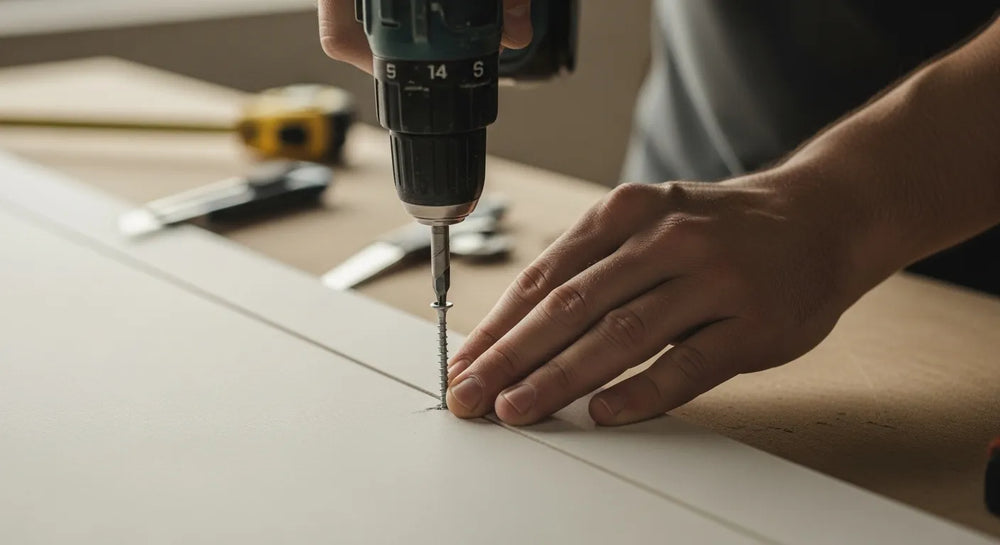
What Screws to Use with Drywall Anchors
Table of Contents
- Introduction
- The Foundation: Understanding the Anchor and Screw as a System
- A Professional's Guide to Drywall Anchor Types
- The Decisive Factor: How to Match Screws to Anchors
- Beyond the Fit: Material Science and Strategic Sourcing
- Conclusion: From Component to Competitive Advantage
- Frequently Asked Questions (FAQ)
Introduction
Imagine this scenario: a critical piece of safety equipment—a fire extinguisher or an AED station—comes loose from a wall in your facility. The cause isn't a major structural failure, but something far more common and insidious: the slow, inevitable pullout of a screw from a mismatched or improperly installed drywall anchor. This small component failure can lead to significant safety risks, operational downtime, and costly rework. For Maintenance, Repair, and Operations (MRO) managers and procurement professionals, what seems like a trivial hardware choice is, in fact, a critical decision impacting safety, compliance, and the bottom line.
The humble drywall anchor and its corresponding screw form a foundational fastening system used in virtually every commercial, industrial, and institutional building. Yet, the precise science of pairing them correctly is often overlooked, leading to widespread failures. This isn't just about hanging a picture; it's about securely mounting control panels, conduit, data racks, shelving, and signage that are essential to daily operations. The wrong choice doesn't just mean a loose fixture; it means a potential cascade of problems.
This article will serve as a definitive resource for industrial buyers on selecting the correct screws for various drywall anchors. We will move beyond basic DIY advice and delve into the technical specifications, material considerations, and load-bearing principles that professionals must understand. We will explore the different types of anchors available, the critical relationship between screw diameter, length, and thread type, and how sourcing high-quality, American-made components can significantly improve the Total Cost of Ownership (TCO) and bolster your supply chain. Our goal is to empower you with the knowledge to make precise, reliable fastening choices that ensure the long-term integrity and safety of your facilities.
The Foundation: Understanding the Anchor and Screw as a System
Before we can specify the right screw, we must reframe our thinking. A drywall anchor and a screw are not two independent components; they are two halves of an engineered fastening system. The performance of one is entirely dependent on the other. When they are correctly matched, they work in concert to distribute a load across a wider area of the brittle gypsum panel. When they are mismatched, the system is compromised from the moment of installation.
The Role of the Drywall Anchor
The anchor’s primary job is to create a secure mounting point in a hollow material that cannot support the threads of a screw on its own. It accomplishes this through a few key mechanical principles:
- Expansion: The most common principle, where the anchor’s body expands outward as the screw is driven in. This creates friction against the inside of the drywall, holding it firmly in place. Simple plastic anchors, like a durable Ribbed Plastic Anchor, are excellent examples of this mechanism in action, ideal for light-duty static loads.
- Bracing/Clamping: More robust anchors, like toggle bolts or molly bolts, feature wings or legs that expand behind the drywall. As the screw is tightened, these wings are pulled snug against the back of the wallboard, creating a much stronger clamping force that can support heavier loads.
- Self-Threading: Some anchors are designed to thread directly into the drywall itself, cutting their own threads into the gypsum and paper. These are often used for medium-duty applications and offer a significant speed advantage during installation.
The Role of the Screw
The screw serves two purposes in this system. First, it is the component that actuates the anchor, causing it to expand or clamp as intended. Second, it is the component that bears the load of the item being fastened. The screw’s characteristics—its diameter, length, and thread pattern—are the variables that determine whether the anchor will perform to its full potential. An incorrectly sized screw can either fail to expand the anchor sufficiently, resulting in poor holding power, or it can split the anchor, rendering it completely useless.
This systemic relationship is at the core of our mission at Maden.co. We connect industrial buyers with a vast catalog of over 2.5 million American-made products because we understand that system integrity starts with component quality. By sourcing from our network of over 800 verified U.S. manufacturers, you are not just buying a part; you are investing in a reliable system built on a foundation of industrial excellence and supply chain transparency.
A Professional's Guide to Drywall Anchor Types
The market is filled with a variety of drywall anchor designs, each suited for different load capacities and installation requirements. Understanding the primary categories is the first step toward making an informed choice for your facility's needs.
Expansion Anchors (Plastic/Nylon)
These are the most common type of anchor, often used for light to medium-duty applications like mounting signage, smoke detectors, or small control boxes.
- How They Work: A pilot hole is drilled, the anchor is tapped into place, and as a screw is driven in, the anchor’s split fins expand and press against the gypsum.
- Key Considerations: Quality matters immensely. Lower-grade plastic can become brittle over time, while high-quality nylon offers better flexibility and longevity. For general-purpose, reliable fastening, a product like the U.S.-made Medium Duty Nylon Wall Anchor #8 for Drywall provides consistent performance for a wide range of MRO tasks. They are designed to accept a specific range of screw sizes, typically #6 to #10, making them a versatile staple for any maintenance department.
Self-Drilling Anchors (Zip-Its)
For projects where installation speed is a critical factor, self-drilling anchors are an invaluable asset. They are particularly popular for repetitive tasks like installing conduit clips or mounting lightweight data hardware.
- How They Work: These anchors feature a sharp, drill-like tip that allows them to be driven directly into the drywall with a screwdriver or drill, eliminating the need for a pilot hole. The wide, aggressive threads cut into the gypsum, providing a secure hold.
- Key Considerations: While convenient, their holding power is dependent on the integrity of the drywall itself. They are best suited for medium-duty loads. A robust nylon variant, such as the Medium Duty Nylon Wall Anchor #6 Self-Drilling Zip-It®, offers the speed of a self-drilling design with the added durability of nylon construction, making it a superior choice for professional environments over cheaper, more brittle metal versions.
Hollow-Wall Anchors (Molly Bolts & Toggle Bolts)
When you need to support significant weight—such as shelving, grab bars, or heavy equipment—expansion anchors are insufficient. This is where hollow-wall anchors, which create a strong brace on the back side of the drywall, are required.
- Molly Bolts: These are metal sleeve-type anchors. As the screw is tightened, the sleeve collapses and expands, forming legs that grip the back of the drywall. They offer excellent holding power and have the advantage of allowing the screw to be removed and reinserted without losing the anchor in the wall.
- Toggle Bolts: These provide the highest load capacity. A spring-loaded set of wings is folded, inserted through a hole in the drywall, and then springs open inside the hollow cavity. Tightening the bolt pulls the wings tight against the wall. Their main disadvantage is that if the bolt is fully removed, the toggle mechanism falls into the wall cavity.
For any procurement manager or engineer specifying fasteners for a project, understanding the load requirements first is paramount. Only then can you select the appropriate anchor type that guarantees a secure and lasting installation.
The Decisive Factor: How to Match Screws to Anchors
Once you have selected the appropriate anchor for the application, the success of the installation hinges on selecting the perfect screw. This is a process guided by three critical parameters: diameter, length, and thread profile.
1. Screw Diameter: The Rule of Proper Expansion
The screw's diameter is the most important variable. It must be large enough to fully expand the anchor’s fins or legs to create maximum friction and holding power. However, it cannot be so large that it damages or splits the anchor body during installation.
- General Guideline: Most plastic and nylon anchors will specify a recommended screw size range directly on the packaging or technical data sheet. For example, a common #8-10 anchor is designed to work with screws designated as #8 or #10 in diameter. Using a #6 screw will result in a loose fit and poor expansion, while trying to force a #12 screw will likely split the plastic.
- Practical Application: When ordering in bulk for MRO stock, it's efficient to standardize. For instance, pairing a large purchase of the Medium Duty Nylon Wall Anchor #8 with an equivalent stock of #8 pan head screws ensures that your maintenance teams always have the correctly matched components on hand, eliminating guesswork and potential failures.
2. Screw Length: The Formula for a Secure Bite
The screw must be long enough to pass entirely through the object you are mounting, the drywall itself, and then fully engage the entire length of the anchor to cause proper expansion.
The Professional’s Formula for Screw Length: Minimum Screw Length = (Thickness of Fixture) + (Thickness of Drywall) + (Length of Anchor)
Let's break this down with a practical example:
- You are mounting a control box bracket that is 1/4 inch thick.
- You are mounting it to standard 1/2 inch drywall.
- You are using an anchor that is 1 inch long.
Minimum Screw Length = 0.25" + 0.5" + 1.0" = 1.75 inches
Using a screw shorter than this will mean it cannot fully expand the anchor, drastically reducing its holding power. It is always better to err on the side of a slightly longer screw, as long as there is sufficient hollow space behind the drywall to accommodate the extra length.
3. Screw Thread Profile and Head Style
- Thread Type: For nearly all plastic and nylon drywall anchors, you should use screws with coarse threads. The wider-spaced threads provide a much better grip on the softer material of the anchor body. Fine-threaded screws, designed for metal, can strip the inside of a plastic anchor easily.
-
Head Style: The choice of screw head depends on the application.
- Pan Head or Round Head: These are the most common choices. The flat bottom of the head sits flush against the surface of the mounted object, distributing the clamping force evenly.
- Flat Head (Countersunk): These are used when you need a flush finish, with the screw head sitting level with or below the surface of the mounted item. This requires a countersunk hole in the fixture itself.
By systematically addressing these three factors—diameter, length, and thread/head style—you can transition from "good enough" fastening to precise, engineered installations that reflect a commitment to industrial excellence.
Beyond the Fit: Material Science and Strategic Sourcing
For professionals, the conversation doesn't end with size and shape. Environmental conditions, long-term durability, and supply chain reliability are equally important considerations that directly impact TCO and operational readiness.
Material Compatibility and Corrosion
In industrial settings, especially in areas with high humidity, chemical exposure, or fluctuating temperatures, material choice is critical. Galvanic corrosion can occur when dissimilar metals are in contact in the presence of an electrolyte (like moisture). While less of a concern for indoor drywall applications than in outdoor or marine environments, it's still a principle worth understanding. Using high-quality, coated steel screws is generally sufficient for most indoor applications. For more demanding environments, specifying stainless steel screws and compatible anchors may be necessary.
Understanding Load Ratings and Safety Factors
Every anchor has a manufacturer-specified load rating for both tensile load (pull-out force) and shear load (downward force). It is crucial to understand that these ratings are typically for the ultimate failure point under ideal laboratory conditions.
Professional Best Practice: Always apply a safety factor to any published load rating. A standard safety factor for static loads is 4:1. This means if an anchor is rated to hold 80 pounds, you should not trust it to hold more than 20 pounds in a real-world application. This accounts for variations in drywall quality, installation imperfections, and potential dynamic loads.
This conservative approach is a hallmark of industrial safety and is a core value we champion. We believe that empowering our customers starts with providing access to components whose specifications can be trusted. You can learn more about our mission to champion American manufacturing here and see how it translates into a more reliable procurement process for your business.
The Strategic Advantage of a Verified Domestic Supply Chain
The challenge for many procurement managers is not just knowing what fastener system to use, but finding a consistent and reliable source for it. Sourcing from disparate, unvetted suppliers introduces risks of counterfeit materials, inconsistent quality, and supply chain disruptions.
This is the problem we are built to solve. Maden.co is America's premier B2B marketplace, designed to democratize access to American manufacturing. For a procurement manager under pressure to source a specific component, a design engineer needing material certifications for a new prototype, or an MRO buyer facing an unexpected equipment breakdown, the ability to quickly find and finance a verified, U.S.-made part is a game-changer. Our platform provides a single point of access to a vast catalog of industrial components, reducing procurement friction and ensuring you receive exactly what you specified.
If you are a U.S. manufacturer producing high-quality fasteners, anchors, or other industrial components, we invite you to join the movement. Register as a vendor and join the American manufacturing revival, connecting your products with thousands of industrial buyers across the country.
Conclusion: From Component to Competitive Advantage
Choosing the right screw for a drywall anchor is more than a simple maintenance task; it's a reflection of a company's commitment to quality, safety, and operational efficiency. We've established that the anchor and screw must be treated as an integrated system. Success depends on a methodical approach: selecting the correct anchor type for the load, then precisely matching the screw's diameter to ensure proper expansion, its length to ensure full engagement, and its thread type to ensure a secure grip.
By adhering to these principles and applying appropriate safety factors, you can create fastenings that are not just adequate, but robust and reliable for the long term. This disciplined approach minimizes the risk of failure, reduces the need for rework, and ultimately lowers the Total Cost of Ownership for your facility.
At Maden.co, we are dedicated to making this process seamless. We believe that American-made components should be as accessible and convenient as any global alternative. Our platform is your strategic partner in building a more resilient, transparent, and efficient procurement process. Explore our extensive catalog of fasteners and industrial components to find the verified, U.S.-made products your business needs to thrive. For larger or capital-intensive projects, you can apply for Instant Financing at checkout to streamline your purchasing and manage cash flow effectively. If you have specific sourcing questions or need help finding a particular component, our team is ready to help.
Frequently Asked Questions (FAQ)
1. Can I reuse a drywall anchor after removing the screw? For professional and industrial applications, it is strongly advised not to reuse a drywall anchor. The initial installation process permanently alters the anchor's shape to create its holding power. Removing the screw and then reinserting it (or a new one) will not achieve the same level of expansion or security, leading to a significantly reduced load capacity and a high risk of failure.
2. What is the main advantage of a self-drilling anchor over a standard expansion anchor? The primary advantage of a self-drilling anchor, like the Zip-It® style, is installation speed and efficiency. It combines the drilling and anchor installation steps into one, saving significant labor time, especially on projects with many fastening points. However, standard expansion anchors, when installed correctly with a properly sized pilot hole, can sometimes offer a more precise fit and higher holding power for certain light-duty applications.
3. How do I find the official weight capacity of a specific anchor? The most reliable source for an anchor's load capacity is the manufacturer's technical data sheet (TDS). This document provides detailed information on shear and tensile strength, typically tested in various thicknesses of drywall. Always remember to apply a safety factor (commonly 4:1 for static loads) to these published "ultimate" load values to determine a safe working load.
4. Why is sourcing U.S.-made fasteners and anchors important for a business? Sourcing American-made components through a verified marketplace like Maden.co offers several strategic business advantages. It ensures a higher level of quality control and material traceability, reducing the risk of failures from substandard materials. It also builds a more resilient supply chain by shortening lead times and reducing dependency on overseas shipping. Finally, it supports the domestic industrial base, contributing to a stronger national economy.


