
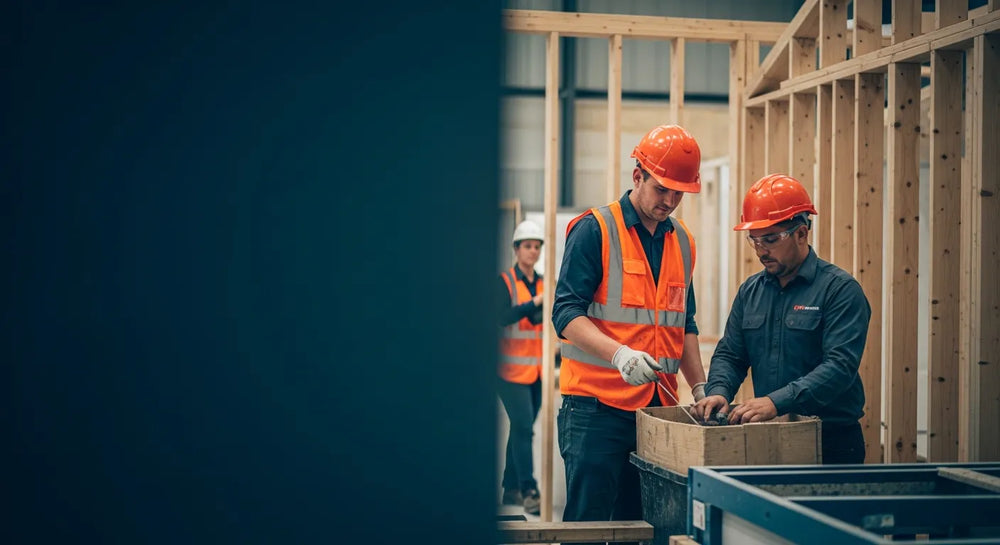
Average Cost to Build a 2 Bedroom House
Table of Contents
- Introduction
- Understanding the National Average and Regional Variables
- The Hard Costs: Materials and Labor
- Sourcing American-Made Materials for Quality Control
- The Procurement Liquidity Challenge
- Breaking Down Soft Costs: Permits, Design, and Engineering
- Mechanical, Electrical, and Plumbing (MEP) Considerations
- CapEx Strategy: Bonus Depreciation and Asset Acquisition
- Site Preparation and Foundation Requirements
- Exterior Enclosure: Roofing, Siding, and Fenestration
- Interior Finishes and MRO Strategy
- Why Sourcing Locally Strengthens Your Supply Chain
- Strategic Procurement for Long-Term Success
- Summary of Costs and Considerations
- Conclusion
- FAQ
Introduction
When a regional developer discovers that their primary lumber supplier has extended lead times by six weeks, or a project manager finds that the cost of electrical components has spiked by 15% overnight, the projected budget for a residential build can quickly spiral out of control. For many business owners and procurement professionals, understanding the average cost to build a 2 bedroom house is not just about a final number—it is about the granular management of a complex supply chain and the strategic deployment of capital. In the current economic climate, where traditional bank credit is tightening and domestic manufacturing is reclaiming its rightful place at the center of the industry, managing these costs requires a shift from passive purchasing to strategic sourcing.
The purpose of this article is to provide an authoritative breakdown of the expenses associated with constructing a two-bedroom residence, focusing on the intersection of material costs, labor trends, and procurement efficiencies. We will explore how land acquisition, site preparation, and the selection of verified American-made materials influence the total cost of ownership (TCO). Furthermore, we will examine how modern financial tools can eliminate the "time-to-terms" friction that often stalls industrial and residential projects alike. By the conclusion of this analysis, you will understand how to leverage Maden.co to secure high-quality components while optimizing your cash conversion cycle. At Maden.co, our mission is to democratize access to American manufacturing, ensuring that every procurement manager has the tools necessary to build a resilient, U.S.-based supply chain.
Understanding the National Average and Regional Variables
Estimating the average cost to build a 2 bedroom house requires a nuanced look at both hard and soft costs. Nationally, the cost typically ranges from $150,000 to $350,000, but these figures are highly sensitive to square footage, material quality, and geographic location. A standard 1,000-square-foot home may lean toward the lower end of that spectrum, whereas a custom-designed 1,400-square-foot home with premium finishes can easily exceed it.
Geographic variability remains the most significant driver of cost fluctuations. In the Midwest or Southeast, labor rates and land prices may allow for a lower total expenditure. Conversely, in the Pacific Northwest or the Northeast, stringent building codes, higher permit fees, and increased labor demand can drive costs up by 20% to 40%. For a procurement officer, this means that "average" is merely a baseline. Real efficiency is found in sourcing materials that meet local standards—such as specific R-values for insulation or wind-load ratings for roofing—without incurring the exorbitant shipping costs associated with international freight.
We believe that transparency in the supply chain is paramount. When you browse all categories on our platform, you are viewing products that are manufactured in the U.S., which helps stabilize the volatility often seen in the global market. Reducing the distance between the manufacturer and the job site is one of the most effective ways to mitigate the rising costs of fuel and logistics.
The Hard Costs: Materials and Labor
Hard costs generally account for 60% to 70% of the total build budget. This category includes everything from the concrete in the foundation to the shingles on the roof.
Material Selection and TCO
Materials alone usually represent about 40% of the total build cost. For a 2 bedroom house, this includes:
- Lumber and Framing: Often the most volatile expense, framing includes studs, trusses, and sheathing.
- Foundation Materials: Poured concrete or cinder blocks, reinforced with rebar.
- Exterior Finishes: Siding (vinyl, fiber cement, or brick) and roofing materials.
- Interior Components: Drywall, flooring, cabinetry, and countertops.
Focusing on the Total Cost of Ownership (TCO) is critical here. While imported fixtures might have a lower initial price point, the long-term cost of maintenance and the risk of non-standard parts can be high. Sourcing American-made components ensures that replacement parts are readily available and that the products adhere to rigorous U.S. quality standards.
Labor Dynamics
Labor typically accounts for 30% to 40% of the build cost. In the current market, the shortage of skilled tradespeople—electricians, plumbers, and HVAC technicians—has driven wages higher. This makes schedule adherence vital. Every day a project is delayed because a procurement manager is waiting for a credit approval is a day that labor costs continue to accrue without progress.
To help businesses manage these financial demands, we offer Maden Pay, which provides embedded financing at the point of transaction. This allows you to secure the materials you need to keep your crews working, without the typical 30-day wait for traditional bank credit.
Sourcing American-Made Materials for Quality Control
At Maden.co, we are driving the manufacturing revival with our tagline: "The U.S. Manufacturing Revival Is Here." For a builder, this means more than just patriotism; it means practical business advantages. When you source U.S.-manufactured products, you are ensuring compliance with critical industry standards, such as NPT (National Pipe Thread) for plumbing or specific ASTM standards for structural steel.
For example, a contractor installing a water heater in a 2 bedroom house needs assurance that the fittings will match the existing plumbing without requiring expensive adapters or custom machining. By partnering with verified U.S. manufacturers through about us, we help eliminate the compatibility issues that often plague projects using international components. This level of supply chain transparency is a cornerstone of our commitment to industrial excellence.
The Procurement Liquidity Challenge
One of the most significant hurdles in the construction industry is the structural liquidity challenge. Many small-to-medium manufacturers and construction firms operate on net-30 to net-90 cycles. However, as traditional bank credit continues to tighten, the gap between paying for materials and receiving payment for the finished work can create a dangerous cash flow squeeze.
In traditional procurement, obtaining net terms from a new supplier is a cumbersome process. It often involves weeks of onboarding, extensive credit applications, and manual negotiations. We call this "time-to-terms" friction. If a facility manager’s HVAC unit fails during a build, waiting three weeks for a credit line to be established is an unacceptable risk to the project timeline.
We have solved this by embedding credit directly into the marketplace. With Maden Pay, buyers can receive instant eligibility decisions—often in under 60 seconds—via a soft credit check. This allows for credit lines ranging from $5,000 to over $250,000 for qualified businesses, providing the capacity needed to fund an entire material list for a 2 bedroom house in a single transaction. You can check eligibility today to see how this can transform your purchasing power. Please note that approvals, limits, and terms depend on business eligibility.
Breaking Down Soft Costs: Permits, Design, and Engineering
Soft costs are the "invisible" expenses that can add $20,000 to $50,000 or more to the average cost to build a 2 bedroom house. These include:
- Architectural and Design Fees: Even a standard plan often requires modification to meet local site conditions.
- Permitting and Impact Fees: These vary wildly by municipality. Some cities charge thousands of dollars in "impact fees" to support local infrastructure.
- Engineering: Soil tests, structural engineering for foundations, and civil engineering for drainage.
- Insurance: Builder’s risk insurance is essential to protect the investment during construction.
While these costs don't result in physical materials, they are mandatory for a legal and safe build. Managing these requires early-stage capital. Having a revolving credit line through a platform like ours allows a business to cover these upfront costs without depleting their primary operating cash.
Mechanical, Electrical, and Plumbing (MEP) Considerations
The MEP systems are the "circulatory system" of the home and represent a substantial portion of the interior hard costs. For a 2 bedroom house, you can expect the following:
Plumbing Systems
Plumbing includes the rough-in (pipes and drains) and the finish (faucets, toilets, and water heaters). Sourcing high-quality valves and fittings is crucial to prevent long-term maintenance issues. We recommend checking for specific thread standards and material certifications to ensure longevity.
Electrical Systems
A standard 2 bedroom home usually requires a 200-amp service panel, wiring, outlets, and lighting fixtures. With the push toward electrification and smart home technology, the complexity—and cost—of electrical procurement is increasing. Using a single marketplace for these components reduces shipping friction and ensures consistent quality.
HVAC Systems
Heating, ventilation, and air conditioning are among the most expensive single-ticket items in a build. A high-efficiency heat pump or furnace is an investment in the home’s future operating costs. For businesses looking to scale their operations, being able to purchase multiple units on net-60 or net-90 terms can be the difference between taking on one project or three. If you are a manufacturer of these systems, we encourage you to join our network through our vendor registration page to reach a broader audience of professional buyers.
CapEx Strategy: Bonus Depreciation and Asset Acquisition
For business owners building a 2 bedroom house as a rental property or a corporate housing unit, the timing of the build and the procurement of equipment can have significant tax implications. One powerful strategy is the use of 100% bonus depreciation.
Under current tax laws, businesses may be able to deduct a significant portion of the cost of certain assets—such as heavy machinery used in construction or specific building components—in the first year they are placed in service, rather than depreciating them over several years. This can drastically improve the after-tax ROI of a construction project.
Important Disclaimer: Tax laws are complex and subject to change. Always consult with a qualified tax professional or CPA to understand how bonus depreciation and Section 179 deductions apply to your specific business situation and assets.
By using Maden Pay to finance these purchases, you can align your cash outflows with your tax benefits, maximizing the efficiency of your capital.
Site Preparation and Foundation Requirements
Before the first stud is nailed, the ground must be prepared. This phase is often where "hidden" costs emerge. The average cost to build a 2 bedroom house can jump significantly if the soil is unstable or if the lot requires extensive clearing and grading.
- Clearing and Excavation: Removing trees, rocks, and debris.
- Grading: Ensuring water flows away from the structure.
- Foundation: For a 2 bedroom home, a slab-on-grade foundation is typically the most cost-effective. However, in colder climates, a crawl space or full basement may be required to get below the frost line.
The equipment used in this phase—excavators, compactors, and concrete forms—represents a high CapEx. For construction firms, purchasing this equipment or the necessary MRO supplies through a platform that understands industrial excellence is vital. We are not just a catalog; we are a strategic partner in building a resilient, U.S.-based supply chain.
Exterior Enclosure: Roofing, Siding, and Fenestration
The "envelope" of the house protects the interior and contributes significantly to energy efficiency.
Windows and Doors (Fenestration)
In a 2 bedroom house, there are typically 6 to 10 windows and at least 2 exterior doors. Choosing double-pane, Argon-filled windows made in the U.S. ensures better thermal performance and easier warranty claims compared to generic imports.
Siding and Trim
The choice of siding—whether it is traditional wood, modern fiber cement, or durable vinyl—impacts both the aesthetic and the maintenance schedule. Sourcing these materials through Maden.co allows you to compare different U.S. manufacturers to find the best balance of cost and durability.
Roofing
A standard asphalt shingle roof is the most common choice for residential builds due to its balance of cost and lifespan. However, metal roofing is gaining popularity for its longevity and sustainability. Regardless of the material, ensuring that the fasteners and underlayment meet high industrial standards is key to a leak-free home.
Interior Finishes and MRO Strategy
As the build nears completion, the focus shifts to interior finishes. This is often where "scope creep" occurs, as buyers are tempted by high-end flooring or custom cabinetry.
- Flooring: Options range from luxury vinyl plank (LVP) to solid hardwood.
- Drywall and Paint: Labor-intensive but essential for a finished look.
- Cabinetry and Countertops: Kitchens and bathrooms are the most expensive rooms to finish.
For property managers or developers, a consistent MRO (Maintenance, Repair, and Operations) strategy is essential. By using the same U.S.-made fixtures across multiple units, you can simplify future repairs and reduce the need to stock a wide variety of replacement parts. If you have questions about sourcing specific finishes in bulk, you can always contact us for personalized support.
Why Sourcing Locally Strengthens Your Supply Chain
The recent years have highlighted the fragility of global supply chains. Relying on overseas manufacturers means being vulnerable to port strikes, international trade disputes, and massive shipping delays. When you source through the Maden.co homepage, you are investing in a more reliable and predictable model.
Sourcing locally provides:
- Reduced Lead Times: Products don't have to cross an ocean to reach your job site.
- Quality Assurance: U.S. manufacturing is synonymous with high standards and rigorous testing.
- Economic Impact: Every dollar spent on American-made products supports local jobs and strengthens the domestic industrial base.
- Environmental Benefits: Shorter shipping distances result in a lower carbon footprint for your construction project.
We are committed to providing the digital innovation necessary to make local sourcing as easy as—or easier than—global procurement. Our platform is designed to reduce procurement friction, allowing you to focus on building rather than paperwork.
Strategic Procurement for Long-Term Success
To successfully manage the average cost to build a 2 bedroom house, a procurement manager must be more than just a buyer; they must be a strategist. This involves:
- Consolidating Vendors: Reducing the number of suppliers to simplify accounting and logistics.
- Leveraging Data: Using marketplace insights to understand price trends and availability.
- Optimizing Financing: Using tools like Maden Pay to maintain liquidity and take advantage of bulk purchasing discounts.
When you check eligibility, you are taking a step toward a more sophisticated financial approach to construction. The ability to deploy capital quickly allows you to lock in material prices before they rise, protecting your profit margins and ensuring your project remains on budget.
Summary of Costs and Considerations
To recap, the average cost to build a 2 bedroom house is a composite of various factors:
- Land and Site Prep: $20,000 - $100,000+
- Plans and Permits: $5,000 - $15,000
- Foundation: $10,000 - $25,000
- Framing: $20,000 - $50,000
- Exterior Shell (Roofing, Siding, Windows): $30,000 - $60,000
- MEP Systems: $25,000 - $45,000
- Interior Finishes: $30,000 - $70,000
These ranges are broad because every project is unique. However, by focusing on U.S.-made materials and efficient financing, you can stay on the lower end of the "stress" spectrum, if not the price spectrum.
Conclusion
Building a two-bedroom home is a significant undertaking that demands precise coordination between designers, contractors, and procurement professionals. While the average cost to build a 2 bedroom house is influenced by market forces beyond any one person's control, the strategies used to source materials and manage cash flow are well within your reach. By prioritizing American-made products, you ensure quality and support the ongoing U.S. manufacturing revival.
At Maden.co, we are proud to be your strategic partner in this journey. We provide the platform, the products, and the financing solutions needed to build a resilient and efficient supply chain. Whether you are a business owner looking to add housing for your workforce or a developer scaling a new community, our marketplace is designed to meet your needs.
We invite you to explore our extensive catalog and experience the benefits of a modern, digitized procurement process. Don't let traditional credit delays or supply chain gaps hold your project back. Check eligibility for Maden Pay today and take control of your construction costs. The future of American building is here, and we are ready to help you lead it.
FAQ
1. What is the biggest hidden cost when building a 2 bedroom house? Site preparation and utility hookups are often the most underestimated expenses. Factors like rocky soil, the need for a septic system versus city sewer, or the distance from the nearest power pole can add tens of thousands of dollars to the budget before the foundation is even poured.
2. How does Maden Pay differ from a traditional construction loan? Traditional construction loans often involve lengthy approval processes, inspections, and "draws" that can delay payments to vendors. Maden Pay is an embedded financing solution that works like a revolving credit line at the point of sale. It offers instant eligibility decisions and net 30/60/90 terms, allowing you to purchase materials immediately and maintain project momentum.
3. Can I use bonus depreciation for residential construction? If the house is used for business purposes—such as a rental property, corporate housing, or a home office—you may be eligible for bonus depreciation on certain components of the build (like appliances, flooring, or land improvements). However, you must consult with a tax professional to ensure compliance with current IRS regulations.
4. Why should I prioritize U.S.-made materials for my build? Sourcing U.S.-made materials reduces the risk of supply chain disruptions, ensures compliance with domestic building codes (like NPT and ASTM standards), and supports the American economy. Additionally, shorter shipping distances often lead to lower logistics costs and a smaller environmental impact.


