
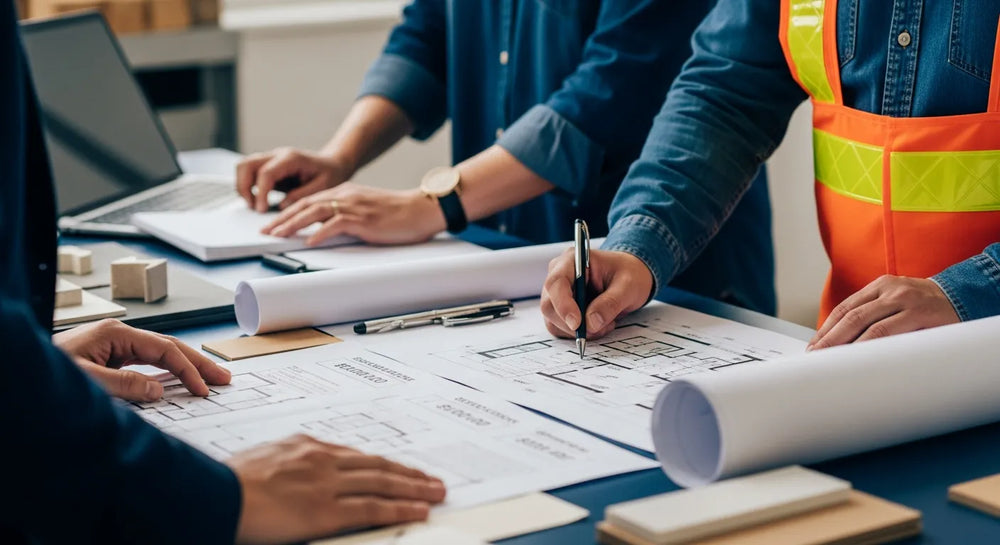
Cost to Build a Small House in Peoria, Arizona
Table of Contents
- Introduction
- The 2026 Economic Landscape in Peoria, Arizona
- Breaking Down Construction Costs by Category
- The Liquidity Challenge in Arizona Construction
- Time-to-Terms: The Friction Traditional Builders Ignore
- Leveraging 100% Bonus Depreciation and CapEx Timing
- Sourcing American-Made Materials for Arizona Resilience
- Navigating Peoria’s Permitting and Regulatory Environment
- Estimating Total Cost of Ownership (TCO)
- Strategic Financing as an Operational Tool
- Sourcing for the Future: The Maden.co Advantage
- Detailed Cost Breakdown Table (2026 Estimates)
- The Role of Supply Chain Transparency
- Overcoming the "American Made" Cost Myth
- Conclusion
- FAQ
Introduction
Imagine a construction foreman standing on a dry, dusty lot in Peoria, Arizona. The foundation is poured, the framing crew is scheduled for Monday, but the specialized electrical conduits and HVAC components are stuck in a procurement bottleneck. In the traditional building model, that foreman—or the procurement manager overseeing the project—would be forced to wait three to four weeks for a local distributor to verify credit terms, or worse, be forced to pay 100% upfront, draining the project’s liquid capital before a single wall is raised. This "liquidity friction" is the silent killer of small-scale residential and commercial development.
At Maden.co, we recognize that the cost to build a small house in Peoria, Arizona, is not just a calculation of lumber and nails; it is a calculation of time, capital efficiency, and supply chain reliability. As America’s premier B2B marketplace for U.S.-manufactured products, our mission is to democratize access to the materials necessary to fuel the American manufacturing revival. Whether you are a professional developer building a cluster of Accessory Dwelling Units (ADUs) or a business owner constructing on-site employee housing, understanding the 2026 cost landscape in Maricopa County is essential for maintaining a healthy bottom line.
In this guide, we will break down the hard and soft costs associated with small-home construction in the current Peoria market. We will explore how "time-to-terms" friction impacts your Total Cost of Ownership (TCO) and how strategic financing through Maden Pay can accelerate your project timeline from months to weeks. By sourcing through our marketplace, you are not just buying parts; you are partnering in a resilient, U.S.-based supply chain that prioritizes industrial excellence.
The 2026 Economic Landscape in Peoria, Arizona
Peoria has transitioned from a quiet suburb into a significant industrial and residential hub. As of 2026, the influx of high-tech manufacturing and semiconductor support facilities in the North Valley has driven land prices and labor costs to new heights. For those looking to build a small house—typically defined as a dwelling under 1,250 square feet—the economic variables have shifted significantly since the early 2020s.
Land Acquisition and Site Preparation
In Peoria, the cost of land is highly dependent on its proximity to the Vistancia area or the revitalized downtown core. In 2026, a standard residential lot suitable for a small home ranges from $95,000 to $160,000. However, the desert terrain presents unique "hard costs." Site preparation in Arizona often involves dealing with caliche—a sedimentary rock-like layer that requires heavy machinery to penetrate for utility lines and foundations.
Professional builders must also account for:
- Grading and Clearing: $5,000 – $12,000.
- Utility Connections: $10,000 – $20,000 (water, sewer, and electrical hookups).
- Impact Fees: The City of Peoria mandates development impact fees to fund infrastructure, which can add $15,000 or more to a single-family residential permit.
Labor Market Dynamics
Arizona’s labor market remains tight in 2026. Skilled trades—plumbers, electricians, and HVAC technicians—are in high demand due to the massive commercial projects in the region. For a small house build, labor typically accounts for 40% to 50% of the total budget. This makes efficiency in procurement even more critical; every day a crew sits idle waiting for materials is a day of burned capital.
Breaking Down Construction Costs by Category
To accurately estimate the cost to build a small house in Peoria, Arizona, we must categorize expenses into structural, mechanical, and finishing costs. By focusing on U.S.-manufactured materials, builders can often avoid the volatility of international shipping and ensure compliance with domestic standards.
Structural Shell and Framing
The "bones" of the house remain the largest material expense. While lumber prices have stabilized compared to the volatility of previous years, the push for sustainable and resilient housing has increased the use of cold-formed steel and Insulated Concrete Forms (ICF).
- Lumber and Framing: $25,000 – $40,000 for a 1,000 sq. ft. home.
- Roofing: $8,000 – $15,000 (standard asphalt shingles vs. concrete tile, which is more common in Arizona for heat resistance).
- Siding and Exterior: $10,000 – $18,000.
Mechanical, Electrical, and Plumbing (MEP)
In the harsh Arizona climate, the HVAC system is the heart of the home. We recommend sourcing high-efficiency units that meet the latest energy standards. When sourcing NPT (National Pipe Thread) fittings for plumbing or DIN-standard components for specialized electrical panels, browsing our catalog ensures you are getting verified American quality.
- HVAC System: $8,000 – $12,000 (including ductwork and 16+ SEER2 units).
- Plumbing: $10,000 – $15,000.
- Electrical: $8,000 – $13,000 (including panel upgrades for EV charging, which is now standard in Peoria).
Interior Finishes
For a small home, finishes are where costs can vary most. A "builder grade" finish will keep the project near the $200 per square foot mark, while luxury finishes can push it well over $350.
- Flooring: $5,000 – $10,000 (luxury vinyl plank or tile).
- Kitchen and Bath: $15,000 – $30,000.
The Liquidity Challenge in Arizona Construction
One of the greatest hurdles for builders in Peoria is the structural liquidity challenge. Traditional American manufacturing and supply cycles often operate on net-30 to net-90 payment terms. However, obtaining these terms from traditional banks or local supply houses is an archaic process.
Many small-to-mid-sized developers are forced into a "cash-and-carry" cycle. They pay for materials upfront, but they don't see a return on that investment until the home is sold or leased. This creates a massive gap in cash flow. Traditional bank credit is tightening in 2026, making it harder for builders to secure the working capital needed to bridge these gaps.
We believe that building a home shouldn't be stalled by paperwork. This is why we have integrated financing directly into the procurement process. You can check eligibility for instant credit lines that allow you to keep your project moving while preserving your cash for labor and unexpected site costs.
Time-to-Terms: The Friction Traditional Builders Ignore
In the traditional procurement world, the "time-to-terms" friction is a hidden cost. When a builder identifies a new supplier for specialized Peoria-compliant windows or high-efficiency water heaters, the onboarding process is grueling. It involves:
- Submitting a formal credit application.
- Providing three years of tax returns and bank statements.
- Waiting for a manual review by a credit manager (often taking 7–14 business days).
- Negotiating terms that are often unfavorable for first-time buyers.
By the time the terms are approved, the material prices may have shifted, or the lead times may have extended. At Maden.co, we have eliminated this friction. Our system allows for instant eligibility decisions—often in under 60 seconds—via a soft credit check that does not impact your score.
By using Maden Pay, a single approval works across our entire marketplace. You don't need to renegotiate terms for every new supplier. Whether you are buying lumber from a mill in Oregon or electrical components from a factory in Ohio, your terms remain consistent and accessible.
Note: Approvals, limits, and terms depend on business eligibility.
Leveraging 100% Bonus Depreciation and CapEx Timing
For business owners and developers building small homes as part of a commercial enterprise—such as a rental portfolio or employee housing—tax strategy is a vital component of the TCO.
In 2026, many businesses are looking to maximize their capital expenditure (CapEx) through bonus depreciation. Under current regulations, certain assets within a small home (such as appliances, specialized HVAC systems, and even some modular components) may qualify for 100% bonus depreciation in the year they are placed in service.
This strategy allows you to deduct the full cost of these assets immediately, rather than depreciating them over several decades. When you source through Maden.co, you can use Maden Pay to acquire these assets at the end of the fiscal year, securing the tax benefit while spreading the payments over net-60 or net-90 terms.
Disclaimer: We are not tax professionals. Always consult your tax professional to understand how bonus depreciation and Section 179 deductions apply to your specific business and construction project.
Sourcing American-Made Materials for Arizona Resilience
The desert environment of Peoria, Arizona, is unforgiving. High UV exposure, extreme heat, and monsoon-season flooding require materials that meet rigorous industrial standards. We believe that the U.S. manufacturing revival is the key to building homes that last.
When you source American-made products, you are ensuring:
- Compliance: Materials designed to meet U.S. building codes (ICC) and plumbing standards (ASTM/NPT).
- Quality Control: Domestic manufacturers are held to higher environmental and safety standards than many overseas counterparts.
- Transparency: You know exactly where your steel, wood, and glass are coming from.
For manufacturers based in the Southwest, we invite you to join our network. By completing our vendor registration, you can connect with builders specifically looking for Arizona-compatible materials, reducing shipping costs and carbon footprints.
Navigating Peoria’s Permitting and Regulatory Environment
Building a small house in Peoria requires a clear understanding of the Maricopa County and City of Peoria regulatory frameworks. In 2026, the city has streamlined some processes for ADUs to address the housing shortage, but the requirements remain strict.
Zoning and ADU Regulations
If you are building a small home on an existing residential lot, you must comply with Peoria's "Accessory Dwelling Unit" ordinance. This typically includes:
- Size Limits: Often restricted to a percentage of the main dwelling’s square footage.
- Setbacks: Specific distances from property lines to ensure fire safety.
- Design Standards: The city often requires the small home to aesthetically match the primary residence.
Building Permits
The permit process in Peoria involves several stages:
- Pre-application meeting: Discussing the site plan with city planners.
- Plan Review: Submitting structural, mechanical, and site drainage plans.
- Inspections: Multiple on-site inspections for foundation, framing, MEP, and final occupancy.
Delays in inspections can be costly. This is why having a reliable supply chain is paramount. If an inspector fails a component because it doesn't meet a specific NPT or DIN standard, you need to be able to source a replacement immediately. Contacting us for sourcing assistance can help you find those hard-to-reach, American-made certified parts.
Estimating Total Cost of Ownership (TCO)
When calculating the cost to build a small house in Peoria, Arizona, many people stop at the "sticker price" of construction. However, the Total Cost of Ownership includes the long-term expenses of operating and maintaining the home in the desert.
Energy Efficiency and Insulation
In Peoria, your largest ongoing cost will be cooling. Investing in U.S.-made high-R-value insulation and Low-E windows can reduce monthly utility bills by 30% or more. While these materials have a higher initial cost, their impact on TCO over a 10-year period is massive.
Maintenance and MRO
Maintenance, Repair, and Operations (MRO) is a concept typically reserved for industrial plants, but it applies perfectly to property management. Using standardized, high-quality American parts means that when a repair is needed five years from now, the replacement parts will be readily available. This avoids the "obsolescence trap" of cheap, imported fixtures that have no domestic support.
Strategic Financing as an Operational Tool
We do not view financing as a "loan" or a sign of financial weakness. Instead, we frame Maden Pay as a strategic operational tool.
Consider a scenario where a Peoria contractor is building three small homes simultaneously. The capital required to purchase the electrical switchgear and plumbing manifolds for all three sites at once is significant. By using a credit line—typically ranging from $5,000 to over $250,000 for qualified businesses—the contractor can:
- Lock in Volume Pricing: Buy materials for all three houses at once to get a better rate.
- Maintain Velocity: Keep crews working on all sites without waiting for the next draw from a construction loan.
- Align Cash Cycles: Match the payment for materials with the milestones of the construction draws.
To see how much purchasing power your business can unlock, you can check eligibility today. Our net 30, 60, and 90-day options are designed specifically to align with the unique cash conversion cycles of the B2B construction world.
Sourcing for the Future: The Maden.co Advantage
At Maden.co, we are more than just a catalog; we are a strategic partner in your building journey. Our commitment to the U.S. manufacturing revival means we are constantly vetting new American manufacturers to bring you the best in industrial excellence.
When you source the materials for your Peoria project through us, you are benefiting from:
- Supply Chain Transparency: Know the origin of your materials.
- Digital Innovation: An easy-to-use platform that simplifies complex procurement.
- Industrial Expertise: We speak the language of MRO, DIN, NPT, and CapEx.
To learn more about our commitment to bringing manufacturing back to the forefront of the American economy, visit our About Us page.
Detailed Cost Breakdown Table (2026 Estimates)
| Category | Estimated Cost (Low) | Estimated Cost (High) |
|---|---|---|
| Land & Site Prep | $110,000 | $190,000 |
| Foundation & Concrete | $12,000 | $20,000 |
| Framing & Shell | $30,000 | $55,000 |
| MEP (Mechanical, Elec, Plumb) | $26,000 | $40,000 |
| Interior Finishes | $20,000 | $50,000 |
| Permits & Impact Fees | $15,000 | $25,000 |
| Total Estimated Project Cost | $213,000 | $380,000+ |
Note: These figures are estimates for a 1,000 sq. ft. small house in Peoria, AZ in 2026. Costs may vary based on specific site conditions and material choices.
The Role of Supply Chain Transparency
In the residential construction sector, transparency is often overlooked. Builders often don't know the secondary or tertiary sources of their materials. This lack of visibility leads to "supply chain shocks" when a foreign factory closes or a shipping lane is blocked.
By focusing on U.S.-manufactured products, we provide a level of transparency that is essential for risk management. When you know that your HVAC units are manufactured in Tennessee and your windows are fabricated in Pennsylvania, you can plan your Peoria build with confidence. You are no longer at the mercy of global geopolitical shifts. This transparency is at the core of our mission.
Overcoming the "American Made" Cost Myth
A common misconception is that sourcing American-made materials is prohibitively expensive. However, when you factor in the Total Cost of Ownership, the narrative shifts.
- Reduced Shipping Costs: Domestic freight is often more predictable and cheaper than trans-oceanic shipping.
- Lower Defect Rates: U.S. manufacturing quality control reduces the "re-work" costs on a job site.
- Faster Lead Times: Getting materials from a neighboring state is faster than waiting for a container ship.
When you use Maden Pay to manage the cash flow, the perceived "premium" of American quality becomes an easily managed operational expense that pays dividends in house longevity and buyer satisfaction.
Conclusion
The cost to build a small house in Peoria, Arizona, in 2026 reflects a dynamic and growing market. While land and labor remain significant investments, the way you manage your procurement and financing can be the difference between a profitable project and a financial drain. By acknowledging the liquidity challenges of the manufacturing cycle and utilizing tools like embedded financing, you can bypass the traditional friction of "time-to-terms."
At Maden.co, we are proud to support the builders, engineers, and procurement managers who are driving the manufacturing revival. We provide the platform to source millions of verified American-made products, ensuring that your Peoria project is built with the highest standards of industrial excellence. We are not just a marketplace; we are the infrastructure for a resilient, U.S.-based supply chain.
We invite you to browse all categories of our catalog to find the materials you need for your next build. Whether you are looking for structural components, high-efficiency mechanical systems, or specialized MRO supplies, Maden.co is your strategic partner. Ready to accelerate your project? Check eligibility for Maden Pay and experience the speed of modern B2B procurement.
FAQ
1. What is the average price per square foot for a small home in Peoria, AZ in 2026?
As of 2026, builders should budget between $200 and $350 per square foot for a small home in Peoria. This range accounts for the high demand for skilled labor in Maricopa County and the current costs of high-quality, American-made materials. The lower end represents standard finishes, while the higher end reflects premium finishes and high-efficiency MEP systems.
2. How does Maden Pay help with construction cash flow?
Maden Pay addresses the "liquidity challenge" by providing embedded financing at the point of purchase. Instead of paying 100% upfront for materials like HVAC units or framing steel, qualified businesses can access net 30, 60, or 90-day terms. This allows you to keep the project moving while waiting for construction draws or final payments, significantly reducing the "time-to-terms" friction found in traditional supply houses.
3. Are there specific Arizona standards I should look for when sourcing materials?
Yes. Given the extreme heat in Peoria, you should prioritize materials with high thermal resistance. Look for HVAC units with a high SEER2 rating and windows with low U-factors and Solar Heat Gain Coefficients (SHGC). Sourcing through Maden.co ensures you have access to U.S.-manufactured products that meet or exceed ASTM and ICC standards relevant to the desert southwest.
4. Can I use bonus depreciation for my building materials in 2026?
In many cases, yes. If you are building for a business purpose (such as a rental property or commercial facility), certain components of the build may qualify for 100% bonus depreciation in 2026. This allows you to deduct the cost of these assets immediately. However, tax laws are complex, and you should always consult your tax professional to confirm eligibility for your specific project.


