
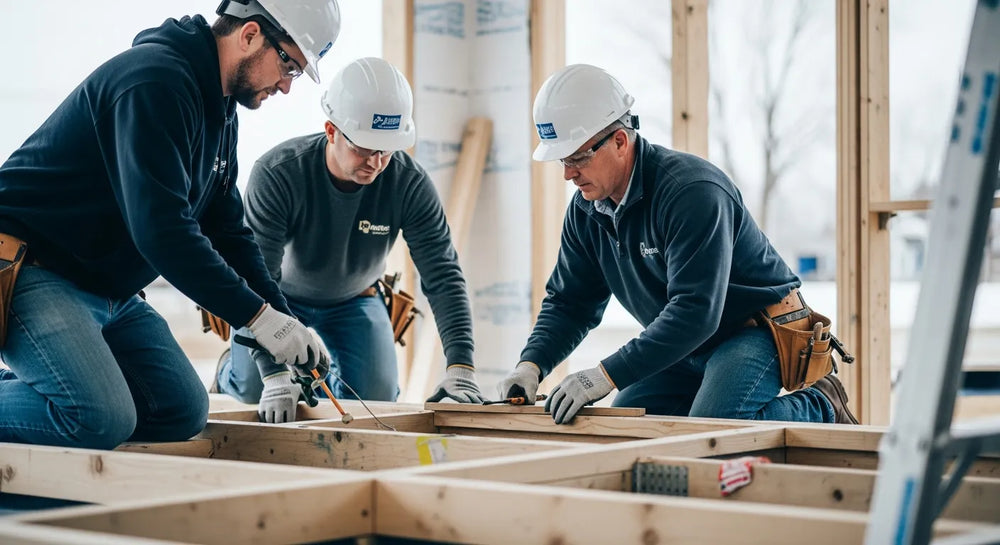
Average Cost to Build a House in New Hampshire
Table of Contents
- Introduction
- The Economic Landscape of New Hampshire Construction
- Breaking Down the Cost Components
- The Liquidity Challenge and the "Time-to-Terms" Friction
- Leveraging Maden Pay for Cash Conversion Cycles
- Tax Strategies: CapEx and Bonus Depreciation
- Why American-Made Matters in the Granite State
- Regional Variations in New Hampshire Construction Costs
- Practical Sourcing Scenarios
- Building for the Future: Sustainability and Innovation
- Total Cost of Ownership (TCO) vs. Initial Purchase Price
- Strategic Partner in Your Construction Journey
- Conclusion
- Frequently Asked Questions (FAQ)
Introduction
For a residential developer in the Seacoast region or a business owner looking to construct a custom owner-occupied facility in the White Mountains, the difference between a project that remains on schedule and one that stalls indefinitely often comes down to a single factor: procurement liquidity. Imagine a scenario where a site supervisor realizes a critical shipment of NPT-compliant plumbing manifolds or structural fasteners is delayed by six weeks because a traditional credit application is still sitting on a desk at a local bank. In the high-stakes world of New Hampshire construction, where the building season is constrained by harsh winters and "mud season," these bottlenecks do more than just delay a move-in date; they erode the total cost of ownership and jeopardize the financial viability of the entire build.
The average cost to build a house in New Hampshire is a moving target, influenced by fluctuating material prices, a competitive labor market, and the logistical complexities of the "Granite State." At Maden.co, we recognize that understanding these costs is only half the battle. The other half is securing the supply chain and financing required to execute the vision. Our mission is to democratize access to American manufacturing, ensuring that every component of your build—from the foundational rebar to the final HVAC installation—is sourced from reliable, high-quality U.S. manufacturers.
In this comprehensive analysis, we will break down the variables that constitute the average cost to build a house in New Hampshire, including land acquisition, site preparation, labor, and materials. More importantly, we will examine how strategic procurement and embedded financing can mitigate the "liquidity challenge" that often plagues the construction industry. The U.S. Manufacturing Revival Is Here, and it provides the blueprint for building resilient, high-value properties with efficiency and pride.
The Economic Landscape of New Hampshire Construction
Building in New Hampshire offers a unique set of rewards and challenges. As of 2024, the average cost to build a house in New Hampshire typically ranges from $200 to $400 per square foot for standard construction, with high-end custom homes easily exceeding $500 per square foot. For a 2,000-square-foot home, this puts the base construction cost between $400,000 and $800,000, excluding the cost of land.
Several macroeconomic factors contribute to these figures. The state’s proximity to major metropolitan hubs like Boston drives demand for housing, while its rugged geography increases the complexity of site work. Furthermore, the construction industry in New Hampshire is currently navigating a period of significant transformation. We are seeing a shift away from over-reliance on international "just-in-time" supply chains toward a more robust, domestic-focused model.
At Maden.co, we believe that building with American-made products is not just a matter of national pride; it is a strategic business decision. By sourcing through our marketplace, builders gain access to millions of verified American-made products that meet stringent domestic standards, reducing the risks associated with international shipping delays and inconsistent quality. This focus on industrial excellence ensures that the investment you make in your New Hampshire property is protected by the longevity of high-quality components.
Breaking Down the Cost Components
To accurately estimate the average cost to build a house in New Hampshire, one must look at the specific stages of development. Each stage carries its own set of procurement needs and financial considerations.
Land Acquisition and Site Preparation
New Hampshire’s nickname, the "Granite State," is not just a poetic descriptor; it is a literal reality for builders. Site preparation often involves blasting through ledge or managing complex drainage on sloped terrains.
- Land Costs: Prices vary wildly from $50,000 for a rural interior lot to over $500,000 for prime Seacoast or lakeside acreage.
- Excavation and Septic: Because much of New Hampshire lacks municipal sewer access, a private septic system is a standard requirement, typically costing between $15,000 and $30,000 depending on soil conditions.
- Permitting: Local zoning and building permits can range from a few hundred to several thousand dollars, with additional costs for environmental impact studies in protected areas.
Framing and Exterior Shell
The cost of lumber and structural steel remains one of the most volatile segments of the construction budget. Sourcing these materials from domestic mills ensures a level of predictability in both pricing and lead times.
- Lumber: For a standard 2,000-square-foot home, framing materials can range from $35,000 to $60,000.
- Roofing and Siding: High-quality, American-made roofing systems are essential in a state that sees significant snow loads. Investing in superior materials upfront reduces long-term maintenance costs.
Mechanical, Electrical, and Plumbing (MEP)
This is where technical specifications and compliance are paramount. Whether you are installing a high-efficiency heat pump or a complex electrical grid, the components must meet U.S. standards.
- HVAC: New Hampshire’s climate requires robust heating and cooling. A modern HVAC system can cost between $15,000 and $25,000.
- Electrical: Wiring a new home typically costs between $8,000 and $15,000, depending on the complexity of the smart home integrations.
- Plumbing: Sourcing NPT-standard pipes and fittings is crucial for compatibility and ease of installation.
For developers managing these phases, the "liquidity challenge" is real. Traditional procurement often involves net-30 to net-90 payment cycles that don't always align with the immediate needs of a job site. This is why we developed Maden Pay, an embedded financing solution designed to bridge the gap. Instead of waiting weeks for traditional credit approval, builders can access the capital they need to keep their MEP contractors working without delay.
The Liquidity Challenge and the "Time-to-Terms" Friction
One of the most significant barriers to maintaining a steady pace in New Hampshire construction is the friction inherent in traditional procurement. In a typical scenario, a builder needs to order $50,000 worth of electrical components from a new supplier. In the traditional model, this requires:
- Submitting a credit application.
- Waiting for a credit manager to review financial statements.
- Negotiating net terms over several weeks.
- Finally placing the order once the "onboarding" process is complete.
This "time-to-terms" friction can stall a project for a month or more, leading to increased carry costs and labor inefficiencies. We recognize that in the modern industrial landscape, speed is a competitive advantage. Our platform eliminates this bottleneck by embedding credit directly at the point of transaction.
Through Maden Pay, business buyers can receive instant eligibility decisions—often in under 60 seconds—via a soft credit check that does not impact their credit score. This allows a project manager to secure the materials they need precisely when they need them, with credit lines commonly ranging from $5,000 to over $250,000 for qualified businesses. You can check eligibility today to see how this purchasing power can be integrated into your next New Hampshire build. Please note: approvals, limits, and terms depend on business eligibility.
Leveraging Maden Pay for Cash Conversion Cycles
The construction of a house in New Hampshire is a long-term asset acquisition, but the operational costs are short-term and immediate. Aligning your cash conversion cycle is critical for business health. Traditional bank credit is tightening, making it harder for small to medium-sized construction firms to maintain the liquidity necessary for large projects.
Maden Pay offers Net 30, 60, and 90-day options that are specifically designed to align with B2B cash flow cycles. By utilizing these terms, a builder can purchase high-value items—such as a custom-engineered HVAC system or a massive order of American-made windows—and pay for them as the project progresses toward its next draw or milestone. This flexibility turns financing from a burden into a strategic operational tool.
Furthermore, a single approval through our system works across our entire marketplace. You don't need to renegotiate terms every time you find a new U.S.-based manufacturer on our site. This streamlined approach allows you to browse all categories of industrial and construction supplies with the confidence that your financing is already in place.
Tax Strategies: CapEx and Bonus Depreciation
When calculating the average cost to build a house in New Hampshire, it is also important to consider the tax implications, especially for those building for business purposes (such as rental properties or mixed-use developments).
A key strategy for asset acquisition is 100% bonus depreciation. This allows businesses to deduct the full cost of qualifying equipment and certain building components in the year they are placed in service, rather than depreciating them over several years. This can significantly reduce the net cost of the build by providing an immediate tax benefit.
Important Disclaimer: Tax laws are complex and subject to change. You should always consult with a qualified tax professional to understand how bonus depreciation and other incentives apply to your specific situation and to ensure compliance with current IRS regulations.
By timing your capital expenditures (CapEx) effectively and sourcing your components through a marketplace like ours, you can maximize your year-end tax position while contributing to the growth of American manufacturing. We are committed to supply chain transparency, ensuring that you have the documentation necessary to support your tax and compliance filings.
Why American-Made Matters in the Granite State
The average cost to build a house in New Hampshire is influenced by the durability of the materials chosen. New Hampshire’s environment is demanding. From the salt air of Portsmouth to the sub-zero temperatures of Coos County, building materials are subjected to extreme stress.
Sourcing U.S.-made products through About Us means investing in items that are engineered for performance and longevity. American manufacturers often adhere to higher quality control standards and use superior raw materials compared to many low-cost international alternatives.
- Structural Integrity: U.S. steel and lumber are graded with rigorous oversight.
- Compliance: Products sourced through our platform are verified to meet industry standards such as DIN and NPT, ensuring that they will integrate seamlessly with existing infrastructure and pass local inspections.
- Resilience: A domestic supply chain is less susceptible to the geopolitical shocks and shipping lane closures that have plagued global trade in recent years.
We are not just a catalog; we are a strategic partner in building a resilient, U.S.-based supply chain. For the manufacturers reading this, we invite you to join our network and showcase your products to a dedicated audience of industrial buyers through our vendor registration portal.
Regional Variations in New Hampshire Construction Costs
While we have discussed the average cost to build a house in New Hampshire, it is vital to acknowledge the regional nuances that can shift the budget by 20% or more.
The Seacoast (Portsmouth, Rye, Hampton)
This is the most expensive region in the state. High land values and strict architectural guidelines in historic districts drive up costs. Expect to pay at the higher end of the $300-$500 per square foot range here. Procurement efficiency is critical here because site space is often limited, requiring precise delivery scheduling of materials.
The Merrimack Valley (Manchester, Nashua, Concord)
This region offers a balance of accessibility and availability. While labor is competitive, the proximity to major transit corridors can slightly reduce shipping costs for heavy industrial components. Many of the state’s commercial builders are headquartered here, creating a robust ecosystem for professional sourcing.
The Lakes Region and White Mountains
Building in central and northern New Hampshire involves higher logistical costs. Shipping materials to remote sites requires careful planning. Additionally, the building window is shorter due to earlier snowfall. In these regions, the speed of Maden Pay is particularly valuable, as any delay in material arrival could push a project into the following calendar year.
Practical Sourcing Scenarios
To understand the value of a streamlined supply chain, consider these relatable procurement scenarios faced by New Hampshire builders:
Scenario 1: The Failed Component A facility manager at a new residential complex in Derry discovers that a primary water pump has failed during the final stages of the build. Waiting three weeks for a credit approval from a new distributor isn't an option when tenants are scheduled to move in. By using Maden.co, the manager can find an American-made replacement, check eligibility for instant financing, and have the part shipped immediately. The project stays on track, and the "time-to-terms" friction is eliminated.
Scenario 2: The Bulk Order Volatility A developer in Lebanon needs to lock in the pricing for a massive order of electrical switchgear to avoid an upcoming price hike. However, their current cash is tied up in site work for another project. By leveraging the Net-90 options available through our financing solutions, they can secure the current price, take delivery of the equipment, and defer the primary payment until their next funding round is released. This strategic use of credit improves their Total Cost of Ownership (TCO) by avoiding inflation and ensuring the project isn't stalled by material shortages.
Building for the Future: Sustainability and Innovation
As New Hampshire updates its building codes to emphasize energy efficiency, the cost of specialized components is becoming a larger part of the average cost to build a house in New Hampshire. Modern homes in the state are increasingly utilizing:
- Advanced vapor barriers and insulation systems.
- High-efficiency heat pump water heaters.
- Triple-pane windows designed for cold climates.
- Smart grid-ready electrical panels.
Many of these innovative products are being manufactured right here in the United States. Digital innovation in the procurement process allows builders to find these specialized items without the traditional "hunt and peck" method of searching through dozens of disparate catalogs. Our platform brings these manufacturers together, providing a one-stop shop for the modern, high-performance builder.
Total Cost of Ownership (TCO) vs. Initial Purchase Price
In our experience at Maden.co, the most successful builders in New Hampshire look beyond the initial invoice. They focus on the Total Cost of Ownership. While a cheaper, imported faucet or electrical breaker might save a few dollars today, the cost of a failure—including labor to replace it, potential water damage, or fire risk—is astronomical.
By choosing verified American-made products, you are investing in:
- Reduced Downtime: High-quality parts fail less often.
- Simplified Maintenance: Domestic parts are easier to source and replace years down the line.
- Enhanced Property Value: Using premium, U.S.-manufactured components is a selling point for discerning buyers in the New Hampshire market.
Our commitment to supply chain transparency means you know exactly where your products are coming from and what standards they meet. This clarity is essential for managing the long-term costs of any construction project.
Strategic Partner in Your Construction Journey
Whether you are a procurement manager for a large-scale development firm or a design engineer specifying components for a custom residential project, Maden.co is your strategic partner. We understand the unique demands of the New Hampshire market and the critical importance of a domestic supply chain.
Our platform is designed to reduce procurement friction at every turn. From the ease of discovering new U.S. manufacturers to the speed of our embedded financing, every feature is built to support the U.S. Manufacturing Revival. We are here to help you build not just a house, but a resilient and efficient business.
If you have specific sourcing needs or questions about how we can support your next project in the Granite State, we encourage you to Contact Us today. Our team of industrial experts is ready to help you navigate the complexities of modern procurement.
Conclusion
The average cost to build a house in New Hampshire is a multifaceted figure that reflects the state’s geography, labor market, and the quality of materials used. While the financial investment is significant, it can be managed and optimized through strategic sourcing and innovative financing. By focusing on American-made products, builders can ensure superior quality, maintain compliance with essential standards, and support the domestic manufacturing base that is the backbone of our economy.
The "liquidity challenge" and "time-to-terms" friction no longer have to be the primary bottlenecks in your construction timeline. With tools like Maden Pay, you can access the credit you need in seconds, allowing you to focus on what you do best: building the future of New Hampshire.
We invite you to explore our extensive catalog and see for yourself why the U.S. Manufacturing Revival Is Here. Register as a buyer, check eligibility for our financing options, and take the first step toward a more efficient, resilient, and proudly American supply chain.
Frequently Asked Questions (FAQ)
1. How does the cost per square foot in New Hampshire compare to neighboring states?
New Hampshire generally sits in the middle of the New England cost spectrum. While it is more expensive than parts of Maine or Vermont due to higher land demand and labor costs in the southern tier, it remains significantly more affordable than the Greater Boston area in Massachusetts. However, the lack of a state sales tax can provide a slight advantage when purchasing building materials locally, though many builders choose to source nationally through platforms like Maden.co to ensure access to a wider range of U.S.-made industrial components.
2. What is the biggest "hidden cost" when building in the Granite State?
The most common hidden cost is site preparation related to geology. Excavating for a foundation or installing a septic system can quickly double in price if the contractor hits significant granite ledge that requires blasting. It is always advisable to include a 10% to 15% contingency fund in your budget specifically for "below-ground" surprises. Utilizing flexible financing can help manage these unexpected spikes in expenditure without halting the rest of the project.
3. How does Maden Pay differ from a traditional construction loan?
A traditional construction loan is usually tied to the real estate and involves a lengthy appraisal and draw process. In contrast, Maden Pay is an operational financing tool for purchasing the materials and equipment needed for the build. It provides instant credit decisions and net terms (30, 60, or 90 days) directly at the point of sale. This allows you to manage your day-to-day procurement liquidity independently of your long-term mortgage or construction loan draws.
4. Why should I prioritize U.S.-manufactured products for my New Hampshire build?
Prioritizing U.S.-manufactured products ensures that your components are built to domestic technical standards (like NPT for plumbing or UL for electrical), which simplifies the inspection process with local New Hampshire building officials. Furthermore, domestic sourcing significantly reduces the risk of long-lead-time delays associated with international shipping, helping you stay on schedule during the state's limited construction season. Finally, it supports the U.S. Manufacturing Revival, strengthening the domestic economy.


