
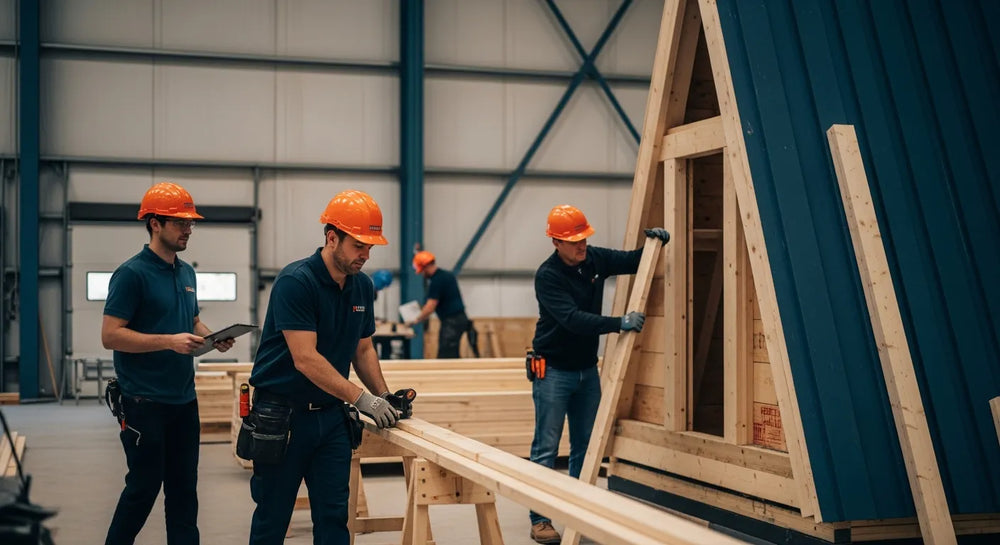
Breaking Down the Cost to Build Small A Frame House Kits
Table of Contents
- Introduction
- The Economic Appeal of the A-Frame Structure
- Site Preparation and Foundation Costs
- Sourcing Structural Materials: The Framing Factor
- The Exterior Envelope: Roofing and Glazing
- Interior Systems and MRO Requirements
- Overcoming the "Time-to-Terms" Friction
- CapEx Strategy: 100% Bonus Depreciation
- The Role of U.S. Manufacturing in Resilient Supply Chains
- Practical Procurement Scenario: The Multi-Unit Developer
- Breaking Down the Cost Estimates
- Labor Challenges and Specialized Framing
- The Long-Term Value of Quality Components
- Sustainable Building and Energy Efficiency
- Managing the Liquidity Challenge in Construction
- Why Maden.co is Your Strategic Partner
- Conclusion
- FAQ
Introduction
Imagine a developer tasked with launching a new eco-resort featuring ten micro-units, only to find their project stalled because a regional supplier requires a 50% deposit upfront and a three-week wait for credit approval. In the commercial construction and hospitality sectors, these procurement bottlenecks are more than mere inconveniences; they are direct threats to project viability and cash flow. For many business owners and procurement managers, understanding the cost to build small a frame house units is only the first step. The real challenge lies in sourcing high-quality materials, managing the supply chain, and securing the liquidity needed to keep the project moving without traditional banking delays.
In this comprehensive analysis, we will explore the financial landscape of A-frame construction, from raw material procurement to specialized labor requirements. We will break down the specific cost drivers—such as site preparation, structural framing, and high-efficiency glazing—while illustrating how a streamlined procurement process can significantly lower the Total Cost of Ownership (TCO). Furthermore, we will examine how modern financial tools can solve the "time-to-terms" friction that often plagues industrial projects. Our goal is to provide a roadmap for building resilient, U.S.-based supply chains that support the growing demand for these iconic structures. At Maden.co, we believe that the U.S. manufacturing revival is here, and it begins with empowering builders with the tools and transparency they need to succeed.
The Economic Appeal of the A-Frame Structure
The A-frame has transitioned from a mid-century architectural trend to a staple of modern industrial and hospitality design. Its steep roofline, which doubles as the exterior walls, offers a unique blend of aesthetic appeal and structural simplicity. From a B2B perspective, these structures are increasingly popular as short-term rental units, remote worker studios, and auxiliary office spaces. However, the perceived simplicity of the design can be deceptive when calculating the actual cost to build small a frame house models at scale.
One of the primary economic advantages is the reduction in vertical wall framing. By eliminating standard side walls, builders can often reduce the volume of certain traditional framing materials. However, this is frequently offset by the need for longer, higher-grade rafters and specialized roofing materials that can withstand the steep pitch. For a procurement manager, this means the sourcing focus shifts from standard 2x4 studs to engineered wood products and high-performance metal roofing systems, many of which are best sourced from verified U.S. manufacturers to ensure compliance with local building codes and load requirements.
Site Preparation and Foundation Costs
Before a single rafter is raised, the groundwork must be laid, and this is where many project budgets begin to deviate from initial estimates. Site preparation for a small A-frame house involves more than just clearing land; it requires a strategic assessment of soil stability, drainage, and utility access.
Excavation and Grading
For a business developing a multi-unit site, excavation costs can vary wildly based on geography. Professional grading ensures that water is diverted away from the structure, a critical factor for A-frames where the "roof-to-ground" design can lead to significant runoff. On average, site prep for a small unit can range from $1,500 to $5,000, depending on the complexity of the terrain.
Foundation Options: Piers vs. Slabs
A-frames are versatile regarding foundations, but the choice significantly impacts the total cost to build small a frame house units.
- Concrete Slab: A traditional slab-on-grade foundation is durable and provides an excellent thermal mass. However, it requires extensive formwork and concrete volume, often costing between $5,000 and $10,000 for a small footprint.
- Pier and Beam: This is a popular choice for A-frames, especially on sloped terrain. It uses less concrete and allows the structure to "hover" above the ground, which can be an aesthetic plus for hospitality brands. Pier foundations are generally more cost-effective, but they require careful insulation of the under-floor plumbing to prevent freezing in colder climates.
Sourcing Structural Materials: The Framing Factor
The core of the A-frame’s cost is its structural skeleton. Unlike a standard box-shaped house, the A-frame relies on a series of large, triangular trusses. To ensure long-term durability, we recommend sourcing high-grade lumber or engineered wood products.
Lumber Quality and Pricing
The "A" shape requires long-span rafters, often 20 feet or more. These are typically sourced as 2x10 or 2x12 members, or increasingly, as I-joists or LVL (Laminated Veneer Lumber). While engineered wood is more expensive than dimensional lumber, it offers superior straightness and load-bearing capacity, which reduces labor time during the framing phase.
When managing procurement for a fleet of units, the liquidity challenge often arises. Traditional lumber yards may operate on net-30 terms, but obtaining those terms can involve weeks of credit checks and paperwork. This is where Maden Pay provides a strategic advantage. By offering embedded financing at the point of transaction, we allow buyers to secure their structural materials immediately, ensuring that framing crews aren't left waiting on a credit approval.
Sheathing and Subflooring
Once the ribs of the house are up, sheathing (typically OSB or plywood) is applied. Because the roof of an A-frame is so expansive, the amount of sheathing required is higher than in a traditional home of the same square footage. This increases both material costs and the labor required for installation.
The Exterior Envelope: Roofing and Glazing
In an A-frame, the roof is the house. This makes the choice of roofing material the most critical decision in the entire project, both for cost and for the building’s thermal performance.
High-Performance Metal Roofing
Metal roofing is the gold standard for A-frames. It is durable, fire-resistant, and sheds snow effectively—a key requirement for the mountain environments where these structures are often built. While the upfront cost of metal is higher than asphalt shingles, the Total Cost of Ownership is lower due to its 50+ year lifespan. For a small A-frame, roofing materials and professional installation can range from $8,000 to $15,000.
The Importance of Windows and Natural Light
A-frames are known for their massive glass facades. These aren't just windows; they are structural components that must withstand wind loads and provide adequate insulation. Sourcing high-efficiency, double or triple-pane glazing is essential. We encourage builders to explore our Browse All Categories section to find U.S.-manufactured window systems that meet modern energy standards. Large custom-shaped windows for the gables can easily cost $5,000 to $10,000, significantly impacting the cost to build small a frame house kits.
Interior Systems and MRO Requirements
Once the shell is complete, the focus shifts to the internal systems: plumbing, electrical, and HVAC. For a B2B operator, these systems must be designed for ease of maintenance (MRO) and long-term reliability.
HVAC and Thermal Management
The high ceilings of an A-frame create a unique heating and cooling challenge. Heat naturally rises to the peak, leaving the living area cold. To mitigate this, many builders install mini-split heat pumps, which are efficient and provide localized climate control. Additionally, high-R-value spray foam insulation is often the preferred choice for the thin "walls" of an A-frame to maximize interior space while maintaining thermal efficiency.
Plumbing and Electrical
In small-scale A-frames, plumbing is often consolidated into a single "wet wall" to reduce costs. Electrical runs can be tricky due to the lack of traditional wall cavities, often requiring creative solutions like exposed conduit or running wires through the floor and up through the cabinetry.
Overcoming the "Time-to-Terms" Friction
One of the most significant hidden costs in construction isn't the price of lumber or labor—it’s the cost of time. In traditional procurement, getting net terms requires a grueling process of supplier onboarding, credit applications, and manual negotiations. For a facility manager or a small developer, waiting three weeks for a credit line to open can push a project into a different season, increasing weather-related risks and carrying costs.
At Maden.co, we have eliminated this friction. Our mission is to democratize access to American manufacturing by streamlining the financial side of procurement. Through Maden Pay, we provide instant eligibility decisions via a soft credit check, often in under 60 seconds. This allows a business to Check eligibility and immediately access credit lines ranging from $5,000 to over $250,000 (subject to business eligibility). This speed transforms procurement from a bureaucratic hurdle into a strategic tool, allowing you to align your purchasing with your cash conversion cycle.
CapEx Strategy: 100% Bonus Depreciation
For business owners building small A-frame houses as part of a commercial venture—such as a hospitality group or a corporate retreat center—there are significant tax advantages to consider. Under current tax laws, 100% bonus depreciation may allow businesses to deduct a large portion (or the entirety, depending on the year and specific asset classification) of the cost of qualifying equipment and certain property improvements in the first year they are placed in service.
This can be a game-changer for the cost to build small a frame house projects, as it front-loads the tax benefits and improves immediate cash flow. However, tax laws are complex and subject to change; we strongly advise that you consult with your tax professional to determine how bonus depreciation applies to your specific capital expenditures. By combining these tax strategies with the flexible financing found at Maden Pay, businesses can maximize their ROI and accelerate their growth.
The Role of U.S. Manufacturing in Resilient Supply Chains
Sourcing your A-frame components from domestic manufacturers isn't just a matter of pride; it’s a strategic decision to ensure supply chain transparency and quality control. When you source through Maden.co, you are connecting with millions of verified American-made products. This reduces the risks associated with international shipping delays, fluctuating tariffs, and varying quality standards.
We are proud to be a strategic partner in the manufacturing revival. By choosing U.S.-made steel for your roofing, U.S.-milled lumber for your frame, and U.S.-manufactured fixtures for your interiors, you are investing in a resilient ecosystem. We encourage manufacturers who share these values to visit our Vendor Registration page and join our marketplace. Together, we are proving that industrial excellence and digital innovation can go hand-in-hand.
Practical Procurement Scenario: The Multi-Unit Developer
Consider a developer, "Eco-Stays LLC," planning to build five A-frame units. In a traditional scenario, they would need to:
- Apply for a construction loan at a bank (4-8 weeks).
- Set up accounts with a lumber yard, a roofing supplier, and a window manufacturer (2 weeks each).
- Pay large deposits to each, depleting their cash reserves before the first nail is driven.
Using the Maden.co platform, Eco-Stays LLC can:
- Check eligibility for Maden Pay in minutes.
- Source the majority of their materials from verified U.S. manufacturers in one place.
- Utilize Net 60 or Net 90 terms to align their payments with the completion of the project and the start of rental income.
This shift from traditional financing to embedded, point-of-sale credit is what allows modern businesses to scale faster and with less risk.
Breaking Down the Cost Estimates
While every project is unique, we can establish a baseline for the cost to build small a frame house units (approximately 500-700 square feet) using mid-range materials.
Estimated Cost Table
| Category | Estimated Cost Range (USD) | Key Considerations |
|---|---|---|
| Site Prep & Foundation | $7,000 – $15,000 | Soil quality, slope, and concrete prices. |
| Framing & Lumber | $15,000 – $25,000 | Engineered wood vs. dimensional lumber. |
| Roofing (Metal) | $8,000 – $18,000 | Pitch of the roof and specialized labor. |
| Windows & Doors | $6,000 – $12,000 | Custom gable windows are a high-cost item. |
| Insulation & Drywall | $5,000 – $10,000 | Spray foam is recommended for R-value. |
| Plumbing & Electrical | $8,000 – $15,000 | Licensed labor and fixture quality. |
| Interior Finishes | $10,000 – $20,000 | Flooring, cabinets, and appliances. |
| Permits & Soft Costs | $3,000 – $7,000 | Local regulations and architectural fees. |
| TOTAL ESTIMATED COST | $62,000 – $122,000 | Excludes land acquisition. |
Note: These are estimates for professional-grade construction. DIY efforts may reduce labor costs but often increase the project timeline and sourcing complexity.
Labor Challenges and Specialized Framing
The geometry of an A-frame requires a framing crew that understands non-standard angles. "Cutting the birdsmouth" on a 60-degree rafter is not the same as framing a standard 4/12 pitch roof. Because of this, labor costs for an A-frame can sometimes be 10-20% higher than for a traditional cabin.
Furthermore, safety equipment—such as specialized scaffolding and fall protection—is mandatory given the height and steepness of the structure. For a procurement manager, ensuring that the crew has the necessary MRO supplies and safety gear is just as important as sourcing the lumber itself. We provide a central hub for these essential supplies, ensuring your project meets OSHA standards while staying on schedule.
The Long-Term Value of Quality Components
In the B2B world, the initial purchase price is only one part of the equation. The real metric of success is the life-cycle cost. A cheap roof might save $3,000 today, but if it requires maintenance every five years, it becomes a liability. By sourcing through our marketplace, you gain access to products designed for industrial-grade durability.
Our commitment to Supply Chain Transparency means you know exactly where your materials are coming from. This is vital for maintaining brand standards, especially for hospitality franchises where consistency across locations is paramount. If you have specific sourcing requirements or need help finding a particular U.S.-based manufacturer, our team is always available via our Contact Us page.
Sustainable Building and Energy Efficiency
Many businesses are now prioritizing sustainability as a core value. The A-frame, with its relatively small footprint and potential for high-performance insulation, fits well into a green building strategy.
- Solar Readiness: The large, steep roof surfaces are often ideal for solar panel installation, provided the house is oriented correctly toward the sun.
- Recycled Materials: Sourcing steel roofing with high recycled content or reclaimed wood for interior accents can further enhance the eco-friendly profile of the build.
- Efficiency Standards: By utilizing high-performance windows and HVAC systems sourced from our Browse All Categories list, you can ensure your A-frame meets or exceeds LEED or Energy Star requirements.
Managing the Liquidity Challenge in Construction
Construction is a capital-intensive industry. The "liquidity challenge" we often discuss at Maden.co refers to the gap between when a business must pay for materials and when they actually realize revenue from the project. Traditional bank credit is tightening, and for many small-to-mid-sized manufacturers and builders, this creates a significant growth ceiling.
Embedded financing solves this by making capital available exactly when it's needed—at the point of sale. This is not about taking on unnecessary debt; it's about strategic operational efficiency. By utilizing terms like Net 60, a builder can complete the shell of the A-frame before the first payment for the lumber is even due. This preserves cash for labor and unexpected site issues, providing a safety net that traditional procurement simply cannot offer.
Why Maden.co is Your Strategic Partner
We are not just a marketplace; we are a platform built for the future of American industry. Our values—American Manufacturing Pride, Digital Innovation, and Industrial Excellence—drive every feature of our site. When you calculate the cost to build small a frame house units, you aren't just looking at a spreadsheet; you're looking at a supply chain.
We help you optimize that supply chain by:
- Reducing Procurement Friction: One platform, millions of products, and embedded financing.
- Ensuring Compliance: Sourcing from verified U.S. manufacturers who adhere to rigorous standards.
- Improving TCO: High-quality materials and efficient financing reduce the long-term cost of your assets.
The U.S. Manufacturing Revival Is Here, and we are proud to provide the digital infrastructure that makes it possible. Whether you are building a single retreat or a fifty-unit development, our platform is designed to support your growth.
Conclusion
Building a small A-frame house is a strategic investment that requires a deep understanding of both architectural nuances and procurement realities. While the cost to build small a frame house units can vary based on materials and site conditions, the key to a successful project lies in controlling the variables you can—starting with your supply chain and your financing.
By sourcing high-quality, U.S.-manufactured components and utilizing modern tools like Maden Pay to overcome "time-to-terms" friction, businesses can build faster, more efficiently, and with greater financial resilience. We invite you to explore the Maden.co marketplace, discover the breadth of American-made industrial supplies, and take the first step toward streamlining your next project.
Ready to secure the materials for your next build without the wait? Check eligibility for Maden Pay today and experience the future of B2B procurement. (Note: Approvals, limits, and terms depend on business eligibility.)
FAQ
1. What is the average square foot cost to build a small A-frame house?
On average, the cost to build a small A-frame house ranges from $150 to $300 per square foot for a professionally built structure. This variance is largely driven by the quality of interior finishes, the complexity of the glass facade, and the regional cost of specialized framing labor. B2B buyers can often achieve better economies of scale by sourcing materials in bulk through a centralized marketplace.
2. Can I use Maden Pay for all the materials needed for an A-frame project?
Yes, for qualified businesses, Maden Pay can be used across the entire Maden.co marketplace. This includes structural lumber, metal roofing, high-performance windows, HVAC systems, and MRO supplies. This "single approval" system eliminates the need to negotiate separate credit terms with multiple vendors, significantly reducing procurement friction. Check eligibility to see your available credit line.
3. How does an A-frame's design impact its thermal efficiency and long-term costs?
The A-frame's high ceilings can lead to heat stratification, where warm air stays at the peak. To maintain efficiency and lower long-term utility costs, it is critical to use high-R-value insulation (like spray foam) and efficient HVAC solutions like mini-splits. While the initial cost of these high-performance systems is higher, they contribute to a lower Total Cost of Ownership (TCO) by reducing monthly operating expenses.
4. Is it cheaper to buy an A-frame kit or build from scratch?
Kits can provide a predictable baseline for the cost to build small a frame house units because the structural components are pre-cut and engineered. However, kits often do not include the foundation, utilities, or interior finishes. Building from scratch allows for more customization but requires more intensive architectural and engineering oversight. Regardless of the route chosen, sourcing individual components from verified U.S. manufacturers via Maden.co ensures you are getting the best industrial-grade quality.


