
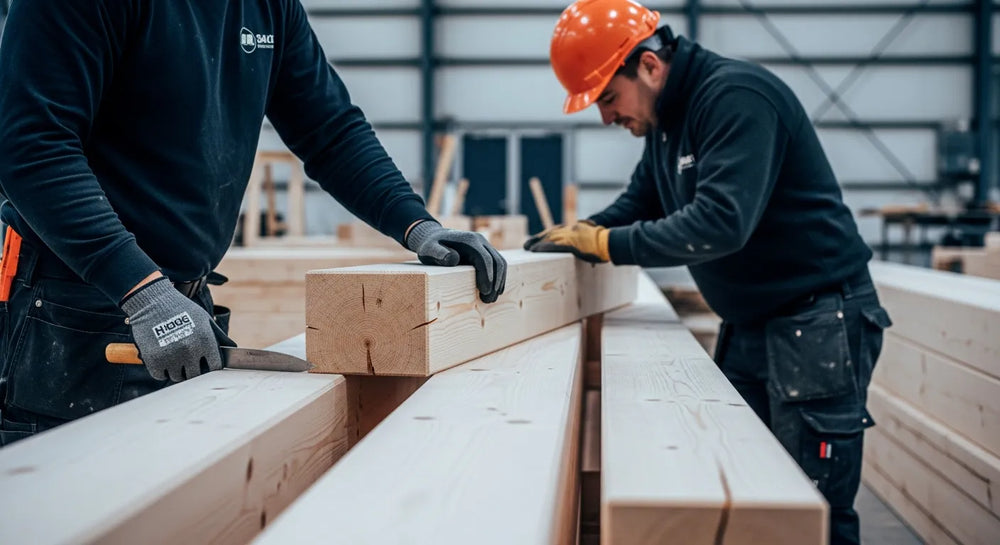
Cost of Building a Log House: Commercial Sourcing Guide
Table of Contents
- Introduction
- Understanding the Market for American-Made Log Structures
- Primary Cost Drivers in Log House Construction
- The Hidden Costs: Hardware, Sealants, and MRO
- Solving the "Time-to-Terms" Friction in Procurement
- Tax Advantages and CapEx Timing
- The Resilience of a U.S.-Based Supply Chain
- Step-by-Step Procurement Strategy for Log Projects
- Real-World Scenario: The Resort Expansion
- Technical Specifications and Building Codes
- Conclusion
Introduction
For a commercial property developer looking to capitalize on the soaring demand for luxury eco-retreats, or a state park procurement officer tasked with replacing aging administrative facilities, the "cost of building a log house" is not merely a number on a quote—it is a complex equation involving material volatility, labor specialized in timber framing, and the logistical hurdles of the domestic supply chain. When a project timeline is tethered to the delivery of thousands of linear feet of precision-milled Eastern White Pine, a two-week delay in credit approval from a traditional lumber yard isn't just an inconvenience; it is a bottleneck that can push construction into a winter season, potentially ballooning costs by 20% or more.
At Maden.co, we recognize that the industrial and commercial building sectors require more than just a list of materials. They require a strategic partnership that addresses the structural liquidity challenges inherent in American manufacturing and construction. Our mission is to democratize access to these critical resources, connecting professional buyers with the verified American-made products necessary to bring large-scale timber projects to life. We believe that "The U.S. Manufacturing Revival Is Here," and it is built on a foundation of supply chain transparency and digital innovation.
This article provides a comprehensive analysis of the cost of building a log house from a professional procurement and B2B perspective. We will break down the variables of material selection, examine the hidden costs of specialized hardware and MRO (Maintenance, Repair, and Operations) supplies, and explore how modern financing solutions can eliminate the friction that historically plagues the "time-to-terms" cycle. By the end of this guide, procurement managers and developers will have a clear roadmap for optimizing Total Cost of Ownership (TCO) while leveraging American-made excellence.
Understanding the Market for American-Made Log Structures
The decision to build with logs in a commercial or B2B context is often driven by the unique value proposition of wood as a renewable, carbon-sequestering building material. However, the cost of building a log house is heavily influenced by the provenance of the timber. Sourcing from domestic mills is not just a matter of "American Manufacturing Pride"; it is a strategic decision to mitigate the risks associated with international shipping, fluctuating tariffs, and varying quality standards.
When we look at the industrial landscape, we see a shift toward vertically integrated supply chains. Large-scale log home manufacturers in the United States often manage everything from the harvest to the precision milling of the logs. For a business buyer, this integration offers a level of supply chain transparency that is difficult to find in traditional stick-frame construction. We are committed to fostering this industrial excellence by providing a platform where these verified manufacturers can connect directly with the professionals who need their expertise.
The liquidity challenge in this sector is real. Manufacturers often require significant down payments to secure timber stands and begin the milling process. Meanwhile, buyers are navigating their own cash conversion cycles. This gap is where many projects stall. Understanding the nuances of these costs—and the tools available to finance them—is essential for any project manager or business owner.
Primary Cost Drivers in Log House Construction
The cost of building a log house generally falls into several key categories: materials (the log package), design and engineering, specialized labor, and the finishing components that turn a shell into a functional facility.
Timber Species and Grade
The species of wood selected is the single most significant factor in the material cost. In the United States, the most common commercial choices include:
- Eastern White Pine: Highly popular due to its stability, ease of milling, and relatively lower cost. It offers a balance of durability and affordability that makes it a staple for many American mills.
- Western Red Cedar: Known for its natural resistance to decay and insects. While it carries a premium price tag—often 30% to 50% more than pine—its longevity and low maintenance requirements can lower the TCO over the building's lifespan.
- Douglas Fir: Valued for its structural strength and striking grain patterns. It is frequently used in heavy timber or post-and-beam applications where large spans are required.
Each species comes with different grading standards. For commercial projects, ensuring that logs are graded by an agency like the Timber Products Inspection (TPI) or the Log and Timber Homes Council is non-negotiable for building code compliance.
Milling Styles and Complexity
How the logs are processed also dictates the price point.
- Milled (Machine-Cut) Logs: These are passed through a planer or molder to create uniform shapes (D-log, round-on-round, or square). This industrial approach allows for faster assembly on-site, significantly reducing labor costs.
- Hand-Crafted Logs: These retain the natural taper and character of the tree. They require skilled artisans to hand-peel and scribe each log to fit the one below it. While aesthetically superior for high-end resorts, the labor cost for hand-crafted structures can be double that of milled kits.
Precision Engineering and Pre-Cut Kits
For a facility manager, the value of a "pre-cut" log kit cannot be overstated. These kits are engineered using CAD/CAM technology, where every log is numbered and cut to the exact length required, including notches for corners and openings for windows and doors. While the upfront cost of building a log house using a pre-cut kit might be higher than buying "random length" logs, the reduction in on-site waste and the speed of the "dry-in" phase make it the more efficient choice for B2B applications.
The Hidden Costs: Hardware, Sealants, and MRO
Beyond the logs themselves, the cost of building a log house includes a wide array of specialized industrial supplies. Many buyers underestimate the quantity and quality of fasteners and sealants required to ensure the structural integrity and thermal performance of the building.
Industrial Fasteners and Structural Integrity
Log houses require specialized heavy-duty screws, often ranging from 8 to 18 inches in length. Using standard construction screws is a recipe for structural failure as logs "settle" over time. Sourcing American-made, high-strength fasteners that meet NPT or DIN standards ensures that the building can withstand the natural movement of the wood without compromising safety.
Thermal Efficiency and Chinking
The thermal mass of a log wall is excellent, but its efficiency depends on the seal between the courses. "Chinking"—a flexible sealant that looks like old-fashioned mortar—is essential for many styles of log homes. The cost of premium, industrial-grade chinking and backer rods must be factored into the procurement budget. These materials must be applied correctly to prevent air infiltration, which is a major factor in the long-term operational costs of the facility.
Maintenance, Repair, and Operations (MRO)
The "cost of building" should always be viewed through the lens of the "cost of owning." Log structures require periodic maintenance, including specialized stains that protect against UV damage and moisture, as well as borate treatments to prevent pest infestation. When planning a commercial project, procurement managers should browse all categories of industrial supplies to ensure they are sourcing high-quality maintenance products that will extend the life of their investment.
Solving the "Time-to-Terms" Friction in Procurement
One of the most significant barriers to efficiency in the construction of log houses is the traditional credit application process. In the B2B world, getting net terms from a new supplier often involves a manual, paper-heavy process. You submit trade references, wait for a credit manager to review your history, and hope for an approval within two to three weeks.
For a contractor who needs to order a specialized batch of structural timber today to keep a crew working, this delay is unacceptable. At Maden.co, we have reimagined this process. By integrating Maden Pay, we offer embedded financing that provides instant eligibility decisions—often in under 60 seconds—via a soft credit check that does not impact your credit score.
This speed transforms procurement from a hurdle into a strategic advantage. Instead of waiting weeks to onboard a new vendor, a buyer can check eligibility and immediately access a credit line, often ranging from $5,000 to over $250,000. (Note: Approvals, limits, and terms depend on business eligibility.)
This "checkout-based" financing means that the single approval you receive works across the entire marketplace. Whether you are buying the logs from one vendor and the industrial fasteners from another, your terms are already set. This liquidity allows businesses to manage their cash flow more effectively, aligning their payment schedules (Net 30, 60, or 90) with their own project milestones.
Tax Advantages and CapEx Timing
When calculating the cost of building a log house for business use—such as a rental property, a corporate office, or a manufacturing facility—it is vital to consider the tax implications.
100% Bonus Depreciation
Under current tax laws (specifically the evolution of the Tax Cuts and Jobs Act), businesses may be eligible for bonus depreciation on certain types of property. While the rules surrounding real property (buildings) are different from personal property (equipment), many of the components of a log house or the equipment used to maintain it may qualify for accelerated depreciation.
For instance, if the log house serves a specific industrial or commercial function, or if you are purchasing heavy machinery for the site's operation, 100% bonus depreciation can be a powerful tool for asset acquisition, allowing you to deduct the full cost of the asset in the first year it is placed in service. This significantly lowers the "after-tax" cost of the project.
Disclaimer: Tax laws are subject to change and vary by jurisdiction. You must consult your tax professional to determine how depreciation applies to your specific business situation and assets.
Strategic CapEx Planning
By leveraging Maden Pay to finance these capital expenditures, businesses can optimize their balance sheets. You can acquire the necessary assets to grow your operations while preserving your liquid cash for payroll, marketing, or other operational needs. The ability to stagger payments through net terms while potentially claiming significant tax deductions creates a favorable environment for growth.
The Resilience of a U.S.-Based Supply Chain
The recent years have highlighted the fragility of global supply chains. For those in the construction and manufacturing sectors, the cost of building a log house became a moving target as shipping containers were stuck at ports and international lumber prices skyrocketed.
By focusing on American-made products, Maden.co helps businesses build resilience. When you source a log kit from a mill in Pennsylvania or Montana, you are not just supporting the local economy; you are reducing the number of failure points in your supply chain. You are gaining transparency into where your timber was harvested and how it was treated.
We invite U.S.-based manufacturers of log home components, hardware, and industrial supplies to join our mission. By completing our vendor registration, you can become part of a marketplace dedicated to the revival of American manufacturing, reaching a national audience of professional buyers who value quality and reliability.
Step-by-Step Procurement Strategy for Log Projects
To manage the cost of building a log house effectively, procurement teams should follow a structured approach that prioritizes value over the lowest initial bid.
1. Define the Scope and Specification
The biggest source of "scope creep" in log construction is a lack of technical specificity. Are the logs to be air-dried or kiln-dried? What is the moisture content (MC) requirement? (Kiln-dried logs with an MC of 15-19% are generally more expensive but offer much less shrinkage and settling). Defining these specs early prevents expensive change orders.
2. Evaluate Total Cost of Ownership (TCO)
A cheaper log species might save $10,000 upfront but cost $30,000 more in maintenance and heating over twenty years. Use a TCO model to evaluate the procurement of logs, windows, and insulation. High-performance sealants and American-made windows might have a higher purchase price, but their impact on the building’s energy envelope is a critical factor in long-term cost management.
3. Streamline Vendor Onboarding
Instead of managing twenty different invoices and credit terms, look for ways to centralize purchasing. By using a marketplace like Maden.co, you can consolidate your sourcing for everything from the heavy structural timbers to the MRO supplies needed for the finishing stages.
4. Leverage Embedded Financing
Don't let a temporary cash flow gap stall your project. Use Maden Pay to secure the materials you need when they are available. In a market where timber prices can fluctuate weekly, the ability to lock in a price and pay over time is a powerful hedge against inflation. If you are ready to see how your business qualifies, you can check eligibility today with no risk to your credit score.
Real-World Scenario: The Resort Expansion
Consider a resort manager in the Pacific Northwest planning to add five new guest cabins. The traditional procurement route involves:
- Sourcing a log provider and waiting 14 days for credit approval.
- Sourcing specialized fasteners from an industrial supplier and paying 100% upfront because they are a new customer.
- Sourcing HVAC and plumbing components from a third vendor.
By the time the credit is approved and the cash is cleared, the mill's production slot has been taken by another client, pushing the cabins' completion date into the next fiscal year.
Contrast this with the Maden.co approach:
- The manager identifies the necessary log packages and industrial supplies on our marketplace.
- They use Maden Pay to get an instant credit line that covers all three vendors.
- The orders are placed simultaneously, securing the production slot and ensuring that the cabins are ready for the peak summer season.
The "time-to-terms" friction is eliminated, and the resort's liquidity is preserved for seasonal hiring and marketing.
Technical Specifications and Building Codes
The cost of building a log house is also influenced by local building codes, which are becoming increasingly stringent regarding energy efficiency.
Log Wall R-Values
While wood has a lower R-value per inch compared to fiberglass insulation, its thermal mass allows it to store heat and release it slowly. Many jurisdictions now require "log home calculators" to prove compliance with the International Energy Conservation Code (IECC). Investing in thicker logs (e.g., 8-inch or 10-inch diameter) may be necessary to meet these codes in colder climates, which will increase the material cost but decrease the long-term utility expenses.
Settlement and Joinery
Logs are a living material; they shrink and settle. A professionally engineered log house must include "settlement systems," such as screw jacks under vertical posts and slip-joints around windows and doors. The hardware for these systems is a specialized industrial requirement. Sourcing high-quality, American-made settlement hardware is essential to prevent structural damage that could cost tens of thousands of dollars to repair in the future.
Conclusion
The cost of building a log house is a multifaceted calculation that requires a deep understanding of material science, supply chain dynamics, and strategic finance. For the B2B buyer, the goal is not just to build a structure, but to create a high-performing asset that delivers a strong return on investment.
By focusing on American-made materials, businesses can ensure higher quality, better transparency, and a more resilient procurement process. We are proud to be at the forefront of this movement, providing the digital tools and financial solutions necessary to drive the manufacturing revival. From our vast catalog of industrial products to our innovative financing options, we are here to support your most ambitious projects.
We encourage you to explore the possibilities of your next build. Contact us for assistance with sourcing specific American-made components or to learn more about how our platform can streamline your procurement. Together, we can build a more resilient, efficient, and American-made future.
Frequently Asked Questions
1. How does the cost of building a log house compare to traditional stick-frame construction? On average, a custom log home can cost 15% to 30% more than a standard stick-frame home of the same size. This premium is due to the higher cost of quality timber compared to 2x4 framing, the need for specialized labor, and the logistics of transporting heavy logs. However, for commercial use, the durability and aesthetic appeal often justify the higher initial investment.
2. What are the main benefits of using Maden Pay for construction materials? Maden Pay eliminates the traditional "time-to-terms" delay. Instead of waiting weeks for a credit application to be processed by a single vendor, buyers get an instant eligibility decision that can be used across the entire Maden.co marketplace. This allows for better cash flow management with Net 30, 60, or 90 options and ensures that project timelines aren't stalled by procurement friction.
3. Is it possible to use 100% bonus depreciation for a log structure? 100% bonus depreciation generally applies to tangible personal property and certain "qualified improvement property." While the main structure of a building is typically depreciated over a longer period (27.5 or 39 years), many components, equipment, and improvements associated with a commercial log project may qualify for accelerated depreciation. Always consult your tax professional to understand the current laws and how they apply to your specific project.
4. Why is "Made in USA" important for log house procurement? Sourcing American-made logs and components ensures that materials meet domestic quality and grading standards (such as TPI). It also significantly reduces supply chain risks associated with international shipping and tariffs. Furthermore, supporting U.S. mills and manufacturers contributes to the domestic industrial revival and ensures that technical support and replacement parts are more easily accessible.
Ready to streamline your industrial procurement and take advantage of the U.S. manufacturing revival? Check eligibility for Maden Pay today and gain the purchasing power your business needs to grow. Approvals, limits, and terms depend on business eligibility.


