
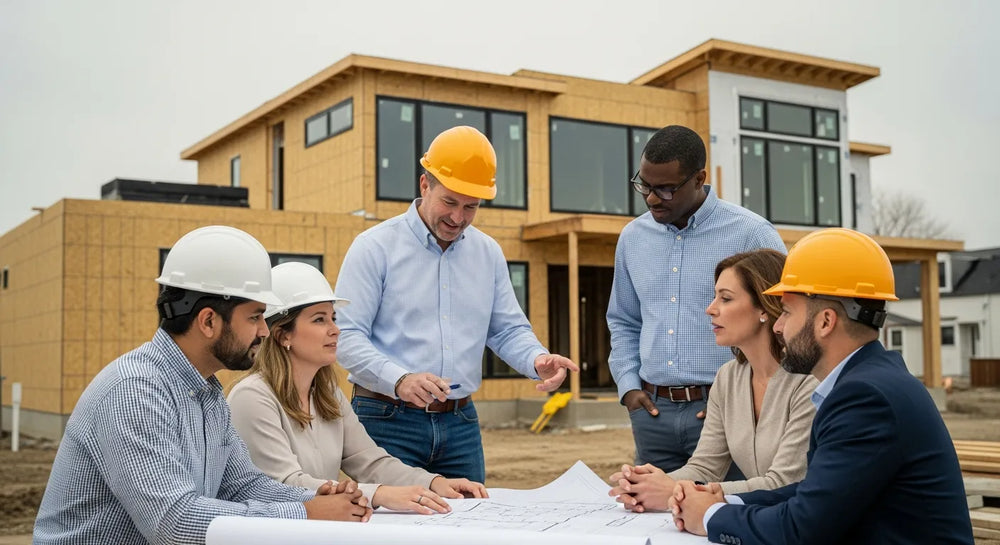
Strategic Breakdown of the Cost to Build a House in Buffalo NY in 2026
Table of Contents
- Introduction
- The 2026 Buffalo Residential Construction Landscape
- Breaking Down the Hard Cost to Build a House in Buffalo NY
- Soft Costs and Regulatory Requirements in Erie County
- The Industrial Supply Chain: Sourcing U.S.-Made Materials
- Overcoming the Liquidity Challenge in Construction Procurement
- Time-to-Terms: Why Traditional Construction Financing Fails
- Capital Expenditures and 100% Bonus Depreciation in 2026
- Maximizing Efficiency with Maden Pay
- Conclusion
- Frequently Asked Questions (FAQ)
Introduction
Imagine a commercial developer in Western New York who has secured a prime lot in the Elmwood Village or a revitalized patch of the Buffalo waterfront. The blueprints are finalized, the crews are scheduled, and the ground-thaw of early spring 2026 is finally here. However, as the first orders for structural steel and foundation rebar are placed, the project grinds to a halt. The supplier requires a net-30 credit application that takes three weeks to process, or an upfront cash payment that drains the project’s immediate liquidity. In the construction world, where "time is money" is not a cliché but a line item, these procurement bottlenecks are the silent killers of profitability.
The cost to build a house in Buffalo NY has undergone significant shifts as we move through 2026. While the region remains one of the more affordable metropolitan areas in the Northeast, the interplay of local labor markets, specialized weather-resistant materials, and the evolving industrial supply chain has created a complex pricing environment. For procurement managers, residential developers, and MRO buyers, understanding these costs is only half the battle; the other half is managing the cash conversion cycle that allows these projects to move from foundation to finishing without a hitch.
In this comprehensive analysis, we will break down the current cost structures for Buffalo-based residential construction, from hard material costs to the soft costs of compliance and permitting. We will also explore how strategic sourcing through Maden.co—America’s premier B2B marketplace—and modern financing tools like Maden Pay are helping Western New York businesses bypass traditional procurement friction. Our goal is to provide you with a roadmap for building resiliently and efficiently in the 2026 market.
The 2026 Buffalo Residential Construction Landscape
Buffalo’s construction sector in 2026 is defined by a "Manufacturing Revival" that has rippled through the local economy. As industrial capacity expands across the Great Lakes region, the demand for housing has remained robust, pushing the cost to build a house in Buffalo NY to new levels.
Current estimates for a mid-range custom home in Buffalo now range between $180 and $260 per square foot, depending on the complexity of the site and the quality of finishes. For a standard 2,000-square-foot home, this puts the base construction cost between $360,000 and $520,000, excluding land acquisition and major site preparation.
Several factors are driving these 2026 figures:
- Climate-Specific Requirements: Buffalo’s unique position at the edge of Lake Erie requires specific engineering for snow loads and high-performance insulation (R-60 in ceilings and R-21 in walls) to meet modern New York State energy codes.
- Labor Market Tightness: With several large-scale industrial projects competing for the same pool of skilled tradespeople—electricians, plumbers, and HVAC technicians—labor costs now account for nearly 40% to 45% of the total project budget.
- Material Price Stabilization: While the extreme volatility of the early 2020s has subsided, 2026 has seen a steady 3-5% increase in U.S.-manufactured steel and concrete products, driven by domestic infrastructure investments.
At Maden.co, we understand that these rising costs require a more strategic approach to procurement. By connecting buyers with millions of verified American-made products, we help developers ensure that every dollar spent supports the domestic supply chain while meeting the rigorous Industrial Excellence standards required for New York construction.
Breaking Down the Hard Cost to Build a House in Buffalo NY
Hard costs represent the tangible assets and materials that remain on-site once the project is completed. In Buffalo, these costs are heavily influenced by the need for winterization and structural integrity against the elements.
Site Work and Foundation
The cost of the foundation in Buffalo is often higher than in southern climates due to the frost line. Foundations must be dug at least 42 inches deep to prevent frost heave.
- Excavation: For a standard basement, expect to pay between $10,000 and $18,000.
- Concrete and Footings: In 2026, the cost of poured concrete foundations has risen due to fuel surcharges and environmental compliance in cement production. A full basement for a 2,000-square-foot home can range from $35,000 to $50,000.
- Drainage: Given Buffalo's heavy precipitation, high-quality perimeter drains and sump pump systems are non-negotiable. Sourcing high-grade PVC and drainage tiles that meet ASTM standards is essential for long-term structural health.
Framing and Exterior Shell
Framing remains the most significant material expense. In 2026, many Buffalo developers are pivoting toward advanced framing techniques that allow for more insulation.
- Lumber and Steel: A standard stick-built frame for a medium-sized home will cost between $45,000 and $70,000.
- Roofing: With Lake Erie’s wind speeds, architectural shingles with high-wind ratings or standing-seam metal roofs are preferred. Metal roofing, while higher in initial cost, offers a lower Total Cost of Ownership (TCO) over the building's life.
- Windows and Doors: Energy Star-rated, triple-pane windows are becoming the standard in Buffalo. Sourcing these from U.S. manufacturers ensures they are designed for Northeast thermal cycles.
Mechanical, Electrical, and Plumbing (MEP)
The MEP phase is where technical specifications and compliance are paramount.
- HVAC: In 2026, the shift toward high-efficiency heat pumps, often supplemented by gas furnaces for extreme cold snaps, is the norm. A full system installation typically costs between $15,000 and $25,000.
- Plumbing: Using PEX tubing and high-quality copper for supply lines, a standard 2.5-bath home will cost approximately $12,000 to $18,000 in materials and labor. It is critical to ensure all fittings meet NPT (National Pipe Thread) standards to avoid procurement errors.
- Electrical: With the increase in smart home technology and EV charging requirements, 200-amp service is now the minimum. Expect costs in the $15,000 range for a complete rough-in and trim-out.
To manage these extensive hard costs, many businesses are turning to Maden Pay to spread out their material expenditures, ensuring that a large lumber order doesn't deplete the cash reserves needed for the next phase of the project.
Soft Costs and Regulatory Requirements in Erie County
Soft costs are the intangible expenses that are just as vital as the bricks and mortar. In the City of Buffalo and surrounding suburbs like Amherst or Orchard Park, these costs can represent 15% to 20% of the total budget.
Architectural and Engineering Fees
Designing for the Buffalo climate requires specialized knowledge of snow load calculations and thermal bridging. Most architects in the region charge between 8% and 12% of the total construction cost. For a $400,000 build, this means $32,000 to $48,000 in professional fees.
Permitting and Inspections
Buffalo’s "Green Code" is one of the more progressive zoning codes in the country, emphasizing walkability and environmental sustainability.
- Building Permits: Based on the value of the construction, permits in Erie County can cost anywhere from $2,000 to $5,000.
- Impact Fees: Some suburbs charge impact fees to support local infrastructure (sewers, schools, and roads), which can add several thousand dollars to the pre-construction phase.
Financing Costs and Interest
The "liquidity challenge" is most visible here. Traditional construction loans often come with complex draw schedules and high interest rates. In 2026, the time it takes to get approved for these loans can cause developers to miss out on optimal building windows. By using the Maden.co marketplace, buyers can check eligibility for embedded financing that operates much faster than a traditional bank, allowing for immediate material acquisition.
The Industrial Supply Chain: Sourcing U.S.-Made Materials
At Maden.co, our mission is to democratize access to American manufacturing. When calculating the cost to build a house in Buffalo NY, the origin of your materials matters more than ever. In 2026, supply chain transparency is a strategic advantage.
Why U.S. Manufacturing Matters for Buffalo
- Lead Time Reliability: Sourcing from a manufacturer in Ohio or Pennsylvania for a Buffalo project reduces the risk of port delays or international shipping bottlenecks.
- Standards Compliance: U.S.-made products are built to meet or exceed American standards (ANSI, ASTM, UL). This reduces the risk of failed inspections and costly retrofits.
- Economic Impact: Every dollar spent on American-made construction materials contributes to the manufacturing revival we are seeing in 2026. This strengthens the local economy, which in turn supports the housing market you are building for.
We encourage developers and contractors to browse all categories on our platform to find verified U.S. manufacturers for everything from structural fasteners to high-end finishing hardware. By centralizing procurement through a single marketplace, businesses can reduce administrative overhead and streamline their vendor management.
If you are a manufacturer of building materials based in the United States, we invite you to join our platform. By completing our vendor registration, you can reach a national audience of industrial buyers who are specifically looking for American-made quality.
Overcoming the Liquidity Challenge in Construction Procurement
One of the most significant hurdles in managing the cost to build a house in Buffalo NY is not the price of the materials themselves, but the cash flow required to secure them. This is the structural liquidity challenge of U.S. manufacturing and construction.
Most small-to-medium-sized contractors operate on tight margins. They may be waiting for a 60-day payout from a client, yet they need to pay their suppliers immediately to keep the project moving. Traditional bank credit has become increasingly difficult to access in 2026, as lenders tighten their criteria and demand extensive collateral.
This creates a "credit gap" where businesses have the work and the demand, but not the fluid capital to execute. This is why we have integrated Maden Pay directly into our marketplace. Instead of relying on a local bank’s slow approval process, businesses can access credit lines ranging from $5,000 to over $250,000 for qualified applicants.
This capacity allows a Buffalo-based construction firm to:
- Purchase a full season’s worth of roofing materials at today’s prices, hedging against inflation.
- Secure high-demand items like electrical transformers or specialized HVAC units that may have long lead times.
- Maintain a healthy balance sheet by choosing payment terms (Net 30, 60, or 90) that align with their own cash conversion cycles.
Disclaimer: Approvals, limits, and terms depend on business eligibility.
Time-to-Terms: Why Traditional Construction Financing Fails
In traditional procurement, the concept of "time-to-terms" is a major friction point. If you find a new supplier for custom steel beams in Buffalo, you usually have to undergo a manual onboarding process. This involves:
- Filling out a multi-page credit application.
- Providing three to five trade references.
- Waiting for the supplier’s credit department to verify your history.
- Negotiating the specific terms (which might only be Net 15 for new customers).
This process can take two to three weeks. In 2026, where a two-week delay can push a foundation pour into a period of lake-effect snow, this is unacceptable.
We have eliminated this friction. On Maden.co, a single approval works across our entire marketplace. Once you check eligibility and are approved for a credit line, you can use those terms with any vendor on the platform instantly. There is no need to renegotiate or reapply. This digital innovation ensures that your procurement speed matches the speed of your project’s needs.
Capital Expenditures and 100% Bonus Depreciation in 2026
For business owners and developers building residential properties as part of a commercial portfolio (such as rental units or mixed-use developments), the tax implications of CapEx (Capital Expenditure) timing are critical.
In 2026, the tax code continues to provide incentives for industrial and business-related investments. One such strategy is 100% Bonus Depreciation. This allows businesses to deduct the full cost of eligible personal property assets (such as machinery, equipment, and certain building components) in the first year they are placed in service, rather than depreciating them over several years.
How this impacts the cost to build a house in Buffalo NY:
- Equipment Acquisition: If you are purchasing heavy machinery, specialized construction tools, or permanent building systems (like advanced security or HVAC systems for a multi-family project), bonus depreciation can significantly lower your tax liability for the 2026 fiscal year.
- Cost Segregation: Developers often use cost segregation studies to identify components of a residential building that qualify for shorter depreciation cycles or bonus depreciation.
Disclaimer: Maden.co does not provide tax advice. You should always consult with a qualified tax professional to understand how 100% bonus depreciation and other tax strategies apply to your specific business situation and asset acquisition.
By using Maden Pay to finance these large CapEx purchases, you can preserve your cash while still taking full advantage of these significant tax benefits. It is a strategic move that aligns your financing, your procurement, and your tax planning into a single, cohesive strategy.
Maximizing Efficiency with Maden Pay
We designed Maden Pay to be more than just a payment option; it is a strategic operational tool for the American manufacturing and construction sectors. As you navigate the costs of building in Buffalo, the efficiency of your payments can be the difference between a project that is over budget and one that is profitable.
Speed and Accessibility
Decisions are made in real-time. In many cases, you can receive an eligibility decision in under 60 seconds via a soft credit check that does not impact your credit score. This allows you to make procurement decisions on the fly, whether you are at the office or on a job site in North Buffalo.
Alignment with Business Cycles
The Net 30/60/90 options are specifically designed to align with B2B cash conversion cycles. For a Buffalo builder, this means you can buy materials in May, complete the installation in June, and pay for the materials in July or August after the client has paid the milestone invoice. This reduces the need for expensive bridge loans or high-interest credit cards.
Streamlined Management
Instead of managing dozens of different invoices and payment dates from different suppliers, Maden Pay provides a centralized dashboard. You can track your spending, manage your terms, and ensure that your supply chain is always funded. This level of transparency is at the core of our values at Maden.co.
To learn more about how we are supporting the industrial excellence of Western New York, you can visit our About Us page or contact us directly for assistance with large-scale sourcing.
Conclusion
The cost to build a house in Buffalo NY in 2026 is a reflection of both the challenges and the opportunities of the current American economy. While material costs and labor demands have reached new heights, the tools available to manage these expenses have also evolved. Success in the Western New York construction market requires more than just a deep understanding of R-values and zoning codes; it requires a sophisticated approach to the supply chain and a commitment to domestic manufacturing.
At Maden.co, we are proud to be a strategic partner in this journey. By providing a marketplace that prioritizes transparency, innovation, and U.S.-based production, we are helping to drive the manufacturing revival. Whether you are a procurement manager sourcing NPT-compliant valves or a developer looking to finance a multi-unit project, we provide the platform and the financing to make it happen.
We invite you to explore the millions of verified products available on our site and experience the difference that embedded financing can make for your business. The U.S. Manufacturing Revival is here, and it is being built one project at a time in cities like Buffalo.
Ready to streamline your construction procurement?
- Browse our catalog for American-made building materials.
- Check your eligibility for Maden Pay today.
- Join the movement by registering as a verified vendor.
Frequently Asked Questions (FAQ)
1. What is the average cost per square foot to build a house in Buffalo NY in 2026?
In 2026, the average cost ranges from $180 to $260 per square foot for a standard to mid-range custom home. This variation depends on factors such as the specific neighborhood, the complexity of the architectural design, and the current market rates for skilled labor in Erie County. High-end luxury builds can exceed $350 per square foot.
2. How does Maden Pay help with construction material costs?
Maden Pay provides embedded financing at the point of transaction, allowing businesses to secure material orders immediately while choosing extended payment terms (Net 30, 60, or 90). This helps contractors manage the "liquidity challenge" by aligning their material expenses with their client payment schedules, without the long wait times of traditional bank credit approvals.
3. Are there specific building code requirements in Buffalo that affect cost?
Yes, Buffalo's climate requires adherence to strict New York State Energy Research and Development Authority (NYSERDA) standards and the Buffalo Green Code. This includes high-performance insulation requirements, specific snow load ratings for roofs, and deep foundations (at least 42 inches) to get below the frost line, all of which contribute to the hard costs of construction.
4. Can I use Maden Pay for all suppliers on the Maden.co marketplace?
Yes. One of the primary benefits of Maden Pay is that once you are approved for a credit line, it is universal across the entire Maden.co marketplace. You do not need to apply for credit individually with different manufacturers or vendors, which significantly reduces "time-to-terms" and streamlines your procurement process. (Disclaimer: Approvals, limits, and terms depend on business eligibility.)


