
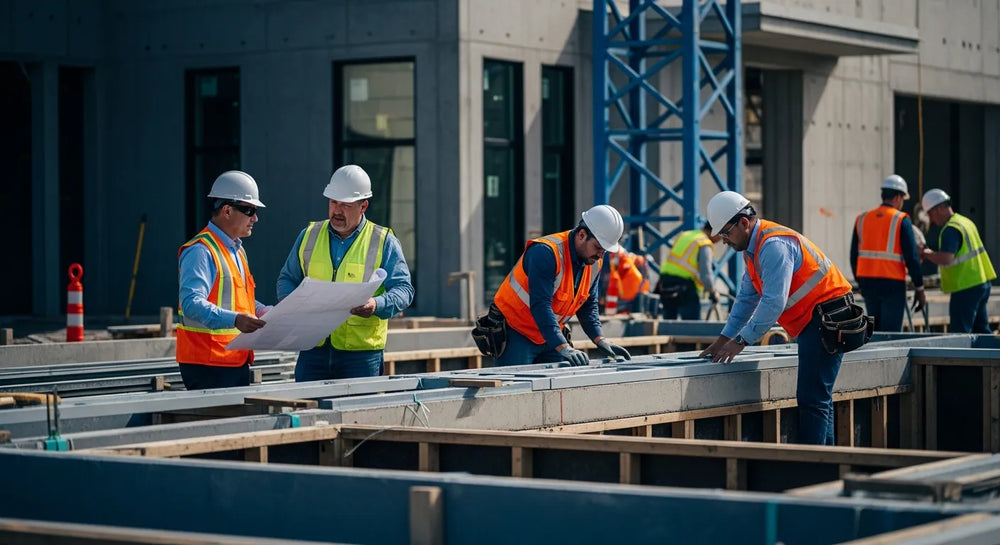
Cost to Build a House in San Diego County in 2026
Table of Contents
- Introduction
- The San Diego Landscape in 2026
- Soft Costs: The Regulatory Burden
- Hard Costs: Materials and the Industrial Supply Chain
- The Liquidity Challenge in Construction Procurement
- Strategic CapEx and Bonus Depreciation in 2026
- Labor Costs and the San Diego Market
- Site Preparation and Land Costs
- The Cost of Sustainability: Title 24 and Beyond
- Estimating Your 2026 Project Budget
- Why American-Made Matters in 2026
- Overcoming Procurement Friction with Digital Innovation
- Practical Scenario: The Emergency Component Failure
- The Future of Residential Construction in San Diego
- Conclusion
- FAQ
Introduction
A developer managing a medium-density residential project in North County San Diego faces a sudden shortage of specialized structural fasteners required for seismic compliance. In the high-stakes environment of 2026, waiting three weeks for a traditional credit application to clear with a new supplier isn't just an inconvenience—it’s a project-halting bottleneck that burns thousands of dollars in daily overhead. This scenario is increasingly common as the San Diego housing market demands faster turnaround times despite complex regulatory hurdles. Understanding the cost to build a house in San Diego County requires more than just looking at a spreadsheet of material prices; it requires a deep dive into the logistics of the modern supply chain, the speed of procurement, and the strategic use of industrial financing.
In this analysis, we will break down the evolving cost structures of San Diego residential construction in 2026, covering everything from land acquisition and permit fees to the hard costs of American-made materials. We will explore how "time-to-terms" friction traditionally slows down procurement and how we are solving this liquidity challenge at Maden.co. By the end of this guide, you will have a comprehensive understanding of the financial landscape for building in America’s Finest City and how to leverage digital innovation to build a more resilient, U.S.-based supply chain. Our mission at Maden.co is to democratize access to American manufacturing, ensuring that whether you are a procurement manager or a general contractor, you have the tools to navigate the U.S. manufacturing revival.
The San Diego Landscape in 2026
San Diego County remains one of the most desirable—and expensive—regions in the United States for residential development. In 2026, the cost to build a house in San Diego County typically ranges from $350 to $650 per square foot for standard builds, while custom luxury homes can easily exceed $900 per square foot. These figures encompass the entirety of the project, but the distribution of these costs has shifted significantly over the last few years due to updated building codes, labor availability, and the rising value of domestic manufacturing.
At Maden.co, we believe that supply chain transparency is the foundation of any successful construction project. When you source materials through our marketplace, you are not just buying parts; you are partnering with verified U.S. manufacturers who understand the specific needs of the American market. This is critical in San Diego, where California’s stringent Title 24 energy standards and seismic requirements necessitate high-spec components that are often best produced domestically to ensure quality and compliance.
Soft Costs: The Regulatory Burden
Before a single shovel hits the dirt, a significant portion of your budget is consumed by soft costs. In San Diego County, these include architecture and engineering fees, environmental impact reports, and some of the highest permit and impact fees in the nation.
Permitting and Entitlements
San Diego’s permitting process is notoriously rigorous. Depending on whether your project is within the City of San Diego or the unincorporated areas of the County, permit fees can range from $30,000 to over $70,000 for a single-family home. These include:
- Plan Check Fees: Costs associated with the review of architectural and structural plans.
- Impact Fees: Charges for fire services, parks, and regional transportation, which have seen steady increases into 2026.
- VMT Mitigation: California’s Vehicle Miles Traveled (VMT) regulations require developers to pay fees or implement measures to reduce the traffic impact of new developments.
Engineering and Design
Building on San Diego’s varied topography—from coastal bluffs to inland canyons—requires specialized geotechnical engineering. Soil stability tests and drainage plans are mandatory. We often see procurement managers for larger development firms sourcing specialized testing equipment or site safety supplies. By utilizing Maden Pay, these firms can manage the cash flow for these early-stage expenses without exhausting their primary construction loans. (Disclaimer: Approvals, limits, and terms for Maden Pay depend on business eligibility.)
Hard Costs: Materials and the Industrial Supply Chain
Hard costs represent the physical construction of the home. In 2026, the volatility of global shipping has reinforced the value of the "U.S. Manufacturing Revival." Sourcing domestically is no longer just a matter of pride; it is a strategic decision to reduce lead times and ensure material consistency.
Foundation and Framing
Concrete and steel prices in Southern California are influenced by local production capacity and environmental regulations on cement kilns. For framing, while lumber remains a primary material, many 2026 builds are incorporating light-gauge steel framing for fire resistance, especially in San Diego's wildland-urban interface (WUI) zones.
Systems and MRO
The mechanical, electrical, and plumbing (MEP) systems are where quality and compliance are non-negotiable.
- Electrical: With the push toward full electrification in California, the demand for high-capacity panels and EV charging infrastructure has surged.
- HVAC: High-efficiency heat pump systems are the standard in 2026, requiring specialized components often sourced through industrial B2B channels.
For MRO buyers managing large-scale residential portfolios or multi-unit developments, the ability to browse all categories of industrial supplies in one place is invaluable. Whether it is industrial-grade piping or electrical conduits, sourcing through a verified marketplace ensures that the products meet the necessary American standards (such as NPT or ASTM).
The Liquidity Challenge in Construction Procurement
One of the most significant hurdles in the cost to build a house in San Diego County is not just the price of the materials, but the liquidity required to acquire them. Traditional U.S. manufacturing and construction supply chains operate on archaic cycles. Small-to-mid-sized manufacturers often require net-30 to net-90 payment cycles, while traditional banks have tightened credit for the construction sector.
This creates a "liquidity gap." A contractor might have the contract and the crew, but they lack the immediate cash to buy $150,000 worth of American-made HVAC units and electrical switchgear needed next week. In the past, this meant a weeks-long scramble to establish credit with a new distributor.
Solving "Time-to-Terms" Friction
At Maden.co, we recognized that the "time-to-terms" friction was a major barrier to the manufacturing revival. Traditional procurement requires endless credit applications, financial statements, and manual negotiations for every new supplier. We have eliminated this by embedding credit directly into the point of purchase.
With Maden Pay, buyers can check eligibility in under 60 seconds via a soft credit check. This doesn't just provide a loan; it provides a strategic operational tool. For a developer in San Diego, this means being able to secure a $100,000 credit line to purchase American-made roofing materials or structural steel instantly, rather than waiting for a bank to review their 2025 tax returns. (Disclaimer: Approvals, limits, and terms depend on business eligibility.)
Strategic CapEx and Bonus Depreciation in 2026
For business owners and developers, the timing of material and asset acquisition is critical for tax strategy. In 2026, the 100% bonus depreciation remains a powerful tool for those investing in qualifying business property. This allows businesses to deduct the full cost of eligible assets in the first year they are placed in service, rather than depreciating them over several years.
When you are looking at the cost to build a house in San Diego County, consider the heavy equipment and long-term assets needed for the project. Sourcing American-made machinery or industrial tools through Maden.co can align with these tax incentives. However, tax laws are complex and subject to change; you should always consult your tax professional to understand how bonus depreciation applies to your specific business situation and assets.
By strategically timing your purchases and using financing solutions like Maden Pay, you can optimize your cash conversion cycle. This alignment of net 30/60/90 options with your project milestones ensures that your capital is working as hard as your crew on the ground.
Labor Costs and the San Diego Market
Labor is the second largest component of the cost to build a house in San Diego County. In 2026, the shortage of skilled trades—electricians, plumbers, and carpenters—has driven wages higher. In San Diego, the cost of living also necessitates higher compensation for workers.
The Efficiency Paradox
As labor costs rise, the "efficiency paradox" becomes clear: it is often cheaper to buy higher-quality, precision-engineered American products that reduce installation time than to buy cheap imports that require on-site modification. For example, prefabricated structural components manufactured in a U.S. facility can be installed 30% faster than traditional stick-framing. This reduces the total labor hours billed to the project, ultimately lowering the Total Cost of Ownership (TCO).
We encourage U.S. manufacturers of these innovative building components to join our mission by completing a vendor registration. By connecting these manufacturers directly with San Diego developers, we are helping to build a more efficient, high-tech construction ecosystem.
Site Preparation and Land Costs
San Diego's geography is spectacular, but it presents unique challenges for site preparation. Grading a hilly lot in La Jolla or dealing with the rocky terrain of East County can add $50,000 to $150,000 to your budget before the foundation is even poured.
Excavation and Infrastructure
Heavy machinery and specialized industrial tools are required for San Diego site prep.
- Erosion Control: With strict California environmental laws, erosion control during the grading phase is a major expense.
- Utility Hookups: Connecting to San Diego Gas & Electric (SDG&E) and local water districts involves significant connection fees and infrastructure costs.
For procurement managers overseeing these phases, managing multiple vendors for pipes, pumps, and safety gear can be a logistical nightmare. Maden.co simplifies this by providing a single marketplace for all industrial needs. Instead of negotiating terms with five different vendors for site prep materials, a single approval for Maden Pay works across the entire marketplace. This reduces administrative friction and allows your team to focus on the build, not the paperwork. (Disclaimer: Approvals, limits, and terms depend on business eligibility.)
The Cost of Sustainability: Title 24 and Beyond
In 2026, San Diego is at the forefront of sustainable building. California’s Title 24 Energy Code is more stringent than ever, requiring:
- Solar Readiness: All new homes must have solar panels or be part of a community solar program.
- Battery Storage: Increasing incentives and requirements for home battery systems (like those manufactured in the U.S.) are impacting initial costs.
- High-Performance Envelopes: Advanced insulation and high-efficiency windows are mandatory.
While these requirements increase the initial cost to build a house in San Diego County, they significantly reduce the long-term operational costs. At Maden.co, we specialize in connecting buyers with the high-tech, American-made components needed to meet these green standards. From energy-efficient lighting to smart grid-compatible electrical panels, our catalog is designed for the future of the American home.
Estimating Your 2026 Project Budget
To provide a practical look at the numbers, let’s consider a standard 2,500-square-foot single-family home in a suburban San Diego neighborhood like Carmel Valley or Oceanside.
Budget Breakdown (Estimated)
- Land Acquisition: $300,000 - $600,000 (Highly variable).
- Soft Costs (Design, Permits, Fees): $80,000 - $120,000.
- Site Prep and Foundation: $70,000 - $100,000.
- Framing and Exterior Shell: $150,000 - $250,000.
- MEP Systems (Mechanical, Electrical, Plumbing): $80,000 - $130,000.
- Interior Finishes: $150,000 - $300,000.
- Landscaping and External: $40,000 - $80,000.
Total Estimated Construction Cost (excluding land): $570,000 - $980,000.
These figures illustrate why industrial financing is so critical. A $200,000 gap in material funding can derail the entire timeline. By using the capacity of Maden Pay—which commonly ranges from $5,000 to $250,000+ for qualified businesses—developers can smooth out these cash flow humps and keep the project moving. You can check eligibility today to see how we can support your next San Diego development. (Disclaimer: Approvals, limits, and terms depend on business eligibility.)
Why American-Made Matters in 2026
The U.S. manufacturing revival is not just a slogan; it is a response to the fragility of global supply chains. When you build a house in San Diego County, you are building in a region that values quality and resilience. By sourcing American-made products, you benefit from:
- Quality Assurance: U.S. manufacturing standards are among the highest in the world, ensuring that your MEP systems and structural components will last for decades.
- Transparency: Knowing exactly where your materials come from and the labor conditions under which they were produced is a core value at Maden.co.
- Speed: Domestic shipping is faster and more reliable than international freight, which is crucial for maintaining tight construction schedules.
- Economic Impact: Every dollar spent on American-made building materials supports local jobs and strengthens the national economy.
We are proud to be a strategic partner in building a resilient, U.S.-based supply chain. Our platform is more than just a place to buy; it is a hub for industrial excellence.
Overcoming Procurement Friction with Digital Innovation
Traditional construction procurement is plagued by manual processes. Purchase orders sent via PDF, credit checks that take weeks, and a lack of real-time inventory tracking lead to unnecessary costs. Maden.co uses digital innovation to solve these problems.
Our marketplace allows you to find everything from industrial valves to safety equipment in a single, streamlined interface. But the real innovation is in the financial layer. We’ve integrated financing into the checkout process. This means that when a procurement manager finds the specific American-made fasteners or electrical components they need, they can select "Net Terms" at checkout.
This level of efficiency is what sets modern developers apart. In the competitive San Diego market, the ability to move faster than the competition—to secure materials while others are still waiting for credit approval—is a massive competitive advantage.
Practical Scenario: The Emergency Component Failure
Consider a general contractor working on a custom home in Rancho Santa Fe. During the final stages of the electrical installation, a custom-spec American-made transformer is damaged. Replacing it is a high-priority, high-cost item. Using traditional channels, the contractor would have to wait for a quote, submit a credit application to a new distributor, and wait for terms to be granted.
With Maden.co, the contractor can:
- Search the marketplace for a verified U.S. manufacturer of the transformer.
- See the transparent price and lead time.
- Use their existing Maden Pay credit line to purchase the item immediately with net-60 terms.
- Have the component shipped and arriving on-site in a fraction of the time.
This is the power of the Maden.co ecosystem. We don’t just list products; we provide the financial and logistical infrastructure to get them to your job site when you need them.
The Future of Residential Construction in San Diego
As we look further into 2026 and beyond, the cost to build a house in San Diego County will continue to be influenced by technology and policy. We expect to see:
- Increased Use of Industrialized Construction: More components of the home will be manufactured in factories and assembled on-site.
- Higher Integration of Smart Systems: Homes will become more like industrial machines, with complex sensors and automation systems.
- Greater Focus on Lifecycle Costs: Buyers and developers will look past the initial "cost per square foot" and focus on the Total Cost of Ownership, including energy and maintenance.
At Maden.co, we are committed to being at the center of this evolution. We are here to support the architects, engineers, and builders who are shaping the future of San Diego. If you are a U.S. manufacturer looking to reach this dynamic market, we invite you to register as a vendor and join our marketplace.
Conclusion
Building in San Diego County in 2026 is a complex undertaking that requires a sophisticated approach to procurement and financing. While the costs are high, the opportunities for those who leverage the U.S. manufacturing revival are significant. By focusing on supply chain transparency, utilizing American-made materials, and embracing digital financing solutions like Maden Pay, you can reduce project friction and build with confidence.
The liquidity challenge and "time-to-terms" delays of the past no longer need to dictate your construction timeline. We are dedicated to providing the industrial excellence and strategic partnership you need to succeed in America’s Finest City. We encourage you to contact us for sourcing support or to learn more about how we can streamline your supply chain.
Explore our vast catalog of verified American-made products today and see how Maden.co is driving the manufacturing revival. The future of U.S. construction is here, and it is more resilient, efficient, and accessible than ever before.
FAQ
1. What is the average cost to build a house in San Diego County in 2026?
In 2026, the average construction cost for a standard single-family home in San Diego County ranges from $350 to $650 per square foot. This includes hard costs like materials and labor, as well as soft costs like permits and design fees. Luxury custom homes or those built on challenging terrain can exceed $900 per square foot. These estimates do not include the cost of land acquisition.
2. How can Maden Pay help with construction costs?
Maden Pay is an embedded financing solution that allows businesses to access net 30, 60, or 90-day payment terms instantly at checkout. For San Diego developers, this provides the liquidity needed to purchase large quantities of American-made materials without the "time-to-terms" friction of traditional credit applications. It offers credit lines from $5,000 to over $250,000 for qualified businesses, allowing you to align your material payments with your project’s cash flow.
3. Why should I prioritize American-made materials for my San Diego build?
Prioritizing American-made materials ensures compliance with strict California building codes, such as Title 24 and seismic requirements. Additionally, domestic sourcing reduces lead times, provides greater supply chain transparency, and supports the U.S. manufacturing revival. Sourcing through Maden.co ensures you are purchasing from verified manufacturers who meet high industrial excellence standards.
4. Can I deduct the cost of construction equipment or materials using bonus depreciation?
In 2026, many businesses can still utilize 100% bonus depreciation to deduct the full cost of qualifying assets in the year they are placed in service. This can include certain industrial tools, machinery, and property used in the construction process. Because tax regulations are specific and complex, you must consult your tax professional to determine how these incentives apply to your specific purchases and business structure.


