
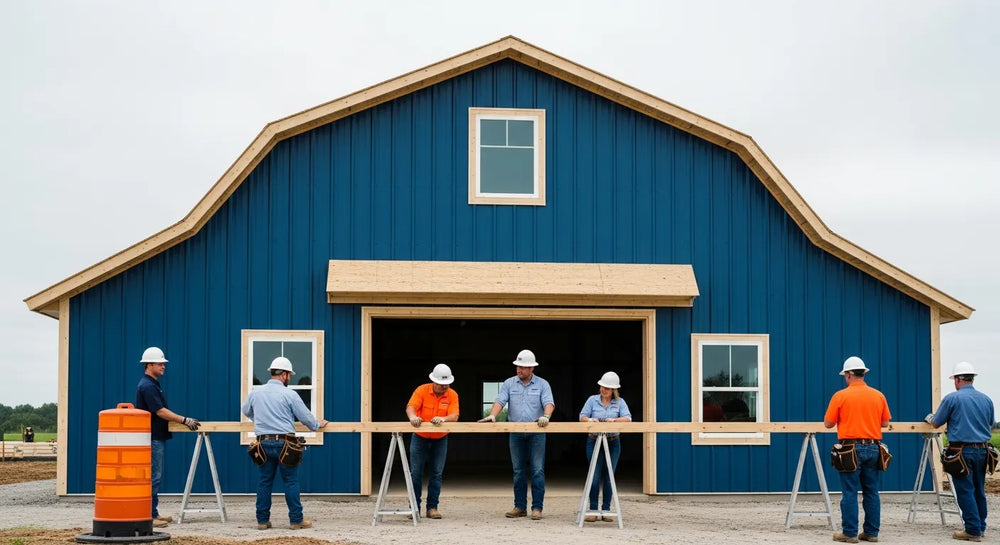
Cost to Build Barndominium vs House: Financial Comparison
Table of Contents
- Introduction
- Defining the Modern Barndominium and Traditional House
- Detailed Breakdown: Cost to Build Barndominium vs House
- The Time-to-Terms Friction in Construction Procurement
- Strategic Operational Tools: Maden Pay for CapEx
- Tax Advantages: 100% Bonus Depreciation and CapEx Timing
- Sourcing American-Made: The Maden.co Advantage
- Practical Procurement Scenario: The Facility Expansion
- Analyzing the Total Cost of Ownership (TCO)
- Building a Resilient, U.S.-Based Supply Chain
- Conclusion
- FAQ
Introduction
When a facility manager faces an urgent expansion requirement or a business owner needs to pivot their operational footprint, the speed of procurement is often the difference between growth and stagnation. Consider the scenario of a regional distribution center that suddenly requires a multi-purpose administrative and storage facility to accommodate a 40% surge in local demand. In a traditional construction environment, securing the necessary materials and labor while navigating the "time-to-terms" friction of vendor credit applications can delay a project by months before the first shovel even hits the ground. This bottleneck is often compounded by the rising costs of traditional building materials and the tightening of commercial bank credit.
The purpose of this guide is to provide a comprehensive, data-driven comparison of the cost to build barndominium vs house structures, specifically through the lens of industrial efficiency and strategic capital allocation. We will explore the structural differences, material requirements, and the financial tools available to streamline the procurement process. At Maden.co, we believe that the U.S. manufacturing revival is here, and our mission is to democratize access to the high-quality, American-made components necessary to bring these projects to life. By the end of this article, you will understand how to evaluate these building options and how to utilize embedded financing to bypass traditional procurement hurdles, ensuring your business remains agile in a competitive market.
Defining the Modern Barndominium and Traditional House
To accurately compare costs, we must first define what we are building. A barndominium, or "barndo," is typically a steel-framed structure that combines living or office space with a large open area for workshops, storage, or manufacturing. These buildings often utilize pre-engineered metal building (PEMB) kits or cold-formed steel frames, which offer superior durability and a faster construction timeline compared to traditional wood-frame houses.
A traditional house, or stick-built home, relies on a wooden skeleton. While wood remains a standard in residential construction, it often lacks the clear-span capabilities and structural integrity required for industrial or heavy-duty commercial applications. In a B2B context, the barndominium is often the preferred choice for those who need a hybrid space—where administrative excellence meets industrial utility.
At Maden.co, we are not just a catalog; we are a strategic partner in building a resilient, U.S.-based supply chain. Whether you are sourcing structural steel, specialized fasteners, or industrial HVAC systems, our platform connects you with millions of verified American-made products designed to meet rigorous standards like NPT and DIN.
Detailed Breakdown: Cost to Build Barndominium vs House
The financial landscape of construction is shifting. While historical data often suggested that barndominiums were significantly cheaper than traditional houses, the gap has narrowed as demand for steel has fluctuated and the "luxury" barndominium trend has pushed finishings to higher price points. However, for a business-focused build, the barndominium still offers distinct cost-of-ownership advantages.
Material Sourcing and Price Volatility
Traditional houses are heavily dependent on lumber, which is susceptible to significant price swings and supply chain disruptions. In contrast, barndominiums leverage the strength of American steel. By sourcing through Maden.co, buyers can find competitive pricing on American-manufactured steel components, reducing the risk associated with international trade volatility.
- Foundation Costs: Both structures require a concrete slab. However, because a barndominium’s shell is significantly lighter than a multi-story traditional home, the foundation requirements can sometimes be less complex, though heavy machinery usage in a barndo might require a thickened slab.
- The Shell: This is where the barndominium often wins on cost. A pre-engineered metal shell can be erected in a fraction of the time it takes to frame a traditional house. Labor costs are reduced because the components are manufactured off-site to exact specifications.
- Exterior Finishings: Traditional homes require siding, roofing, and painting. Barndominiums use durable metal panels that serve as both the structure and the finish, often coming with 30-to-50-year warranties.
Interior Build-Out and MRO Considerations
The interior "cost per square foot" is where many projects find parity. If you are finishing a barndominium with high-end office suites, industrial kitchens, or advanced climate control, the costs will mirror those of a traditional building. However, from an MRO (Maintenance, Repair, and Operations) perspective, the barndominium is built for longevity. Metal structures are resistant to rot, termites, and mold, leading to a lower Total Cost of Ownership (TCO) over the building's lifecycle.
The Time-to-Terms Friction in Construction Procurement
In the world of industrial procurement, time is more than just money—it is opportunity. Traditional procurement cycles are plagued by "time-to-terms" friction. When a procurement manager needs to source $150,000 worth of steel framing and insulation, they are typically met with a grueling onboarding process. This often involves:
- Submitting extensive credit applications.
- Waiting 2-3 weeks for a credit department to review financial statements.
- Negotiating net terms with a new vendor.
- Dealing with rigid credit limits that don't scale with project needs.
This delay is a structural liquidity challenge that many American manufacturers and buyers face. While traditional bank credit is tightening, the need for immediate asset acquisition remains high. To solve this, we have integrated Maden Pay directly into our marketplace. This embedded financing solution removes the friction of supplier-specific credit applications.
Instead of waiting weeks, businesses can check eligibility and receive a decision in as little as 60 seconds via a soft credit check. This allows a project manager to secure the materials needed for a barndominium build immediately, ensuring that labor schedules are maintained and the project remains on track. Approvals, limits, and terms depend on business eligibility, but this single approval works across our entire marketplace, eliminating the need to renegotiate terms for every new supplier.
Strategic Operational Tools: Maden Pay for CapEx
Financing a construction project shouldn't be a hurdle to growth. We frame Maden Pay not as a simple loan, but as a strategic operational tool designed to align with B2B cash conversion cycles.
Speed and Capacity
When building a barndominium, the initial outlay for the shell and foundation can be substantial. Maden Pay offers credit lines commonly ranging from $5,000 to $250,000+ for qualified businesses. This capacity allows a company to preserve its primary bank lines for payroll and R&D while utilizing marketplace credit for specific CapEx projects.
Net Term Alignment
Construction projects often operate on a "draw" schedule or a cycle where the value of the asset isn't realized until completion. Our financing options include Net 30, 60, and 90-day terms. This alignment allows a business to procure materials today, complete the installation, and pay for the supplies once the new facility is operational and generating value.
For those looking to optimize their purchasing power, you can check eligibility now to see how your business can scale its procurement capabilities.
Tax Advantages: 100% Bonus Depreciation and CapEx Timing
One of the most significant advantages of choosing a barndominium for a business application—such as a warehouse, office, or manufacturing floor—is the potential for tax optimization. Under current tax laws, businesses may be able to leverage 100% bonus depreciation for certain aspects of their construction and equipment acquisition.
Bonus depreciation allows businesses to immediately deduct a large percentage of the purchase price of eligible assets, rather than depreciating them over several years. This can significantly reduce the net cost of the project in the first year. For instance, if you are purchasing industrial shelving, specialized HVAC systems, or certain structural components for your barndominium through Maden.co, these may qualify as short-lived assets.
Disclaimer: Tax laws are complex and subject to change. You must always consult your tax professional to determine how bonus depreciation and other tax strategies apply to your specific business situation and building project.
By timing your CapEx spending effectively and utilizing the financing available through Maden Pay, you can maximize your tax benefits while maintaining the liquidity needed for daily operations. This is part of our commitment to industrial excellence and helping American businesses thrive.
Sourcing American-Made: The Maden.co Advantage
When comparing the cost to build barndominium vs house, one must consider the origin of the materials. At Maden.co, we are dedicated to driving the manufacturing revival. Sourcing American-made products is not just about national pride; it is about supply chain transparency and quality assurance.
When you browse all categories on our platform, you are looking at products that adhere to strict U.S. quality standards. For a building project, this means:
- Fasteners and Hardware: Ensuring that every bolt and screw meets industrial grade specifications to prevent structural failure.
- Electrical and Plumbing: Sourcing components that are readily compliant with local building codes, reducing the risk of inspection delays.
- HVAC and Insulation: Accessing the latest in energy-efficient American technology to lower the long-term operational costs of your facility.
Our mission is to ensure that every procurement manager has the tools they need to build a resilient, U.S.-based supply chain. By choosing American-made, you reduce the risks associated with long-lead times from overseas and the potential for receiving sub-standard materials. We invite you to learn more about us and our vision for the future of industrial supply.
Practical Procurement Scenario: The Facility Expansion
To illustrate the value of this approach, let's look at a practical procurement scenario. Imagine an MRO buyer at a fabrication plant that needs to build a 5,000-square-foot barndominium to house a new CNC department.
If the buyer chooses a traditional house-style construction, they might face a 6-month timeline and have to manage a dozen different vendors for lumber, drywall, and roofing—each requiring their own credit application. The administrative burden alone could cost the company thousands in man-hours.
Instead, the buyer visits Maden.co. They source a complete steel shell, specialized insulation, and the necessary electrical components from verified U.S. manufacturers. By using Maden Pay, they get instant approval for the entire $180,000 purchase. The materials arrive on a coordinated schedule. Because the barndominium uses a pre-engineered frame, the shell is up in two weeks. The company is able to install its CNC machines months ahead of schedule, capturing new market share that would have been lost during a traditional build.
This scenario highlights why we focus on reducing procurement friction. Our platform is designed for the professional who needs solutions, not hurdles. If you are a manufacturer interested in joining our marketplace to reach buyers like this, we encourage you to visit our vendor registration page.
Analyzing the Total Cost of Ownership (TCO)
The initial cost to build is only one part of the equation. A strategic buyer must look at the TCO.
- Energy Efficiency: Barndominiums, when properly insulated with high-grade American-made spray foam or mineral wool, can be incredibly energy efficient. The large, open volume allows for efficient air circulation, and the metal roof reflects a significant portion of solar heat.
- Insurance Costs: Many insurance providers offer lower premiums for steel-framed buildings due to their fire resistance and ability to withstand extreme weather conditions like hail or high winds.
- Maintenance: A traditional wood house requires periodic painting and is susceptible to wood rot. A metal barndominium requires almost no exterior maintenance for decades. This allows your MRO team to focus on preventative maintenance for your production equipment rather than fixing the building itself.
At Maden.co, we provide the technical language and specs needed for accuracy—whether you’re looking for specific DIN-rated components or NPT-threaded fittings—to ensure your build meets the highest standards of industrial excellence.
Building a Resilient, U.S.-Based Supply Chain
The decision between a barndominium and a house is ultimately a strategic one. For those in the industrial sector, the barndominium offers a level of versatility and speed that traditional construction simply cannot match. By focusing on U.S. manufacturing, we ensure that the components used in these builds are of the highest quality and that the economic benefits of the project stay within our borders.
We are more than a marketplace; we are a partner in your growth. Our commitment to supply chain transparency means you know exactly where your products are coming from. Our commitment to digital innovation means you have the financial tools to act when opportunity strikes. If you have any questions about sourcing for your next project, do not hesitate to contact us.
Conclusion
The cost to build barndominium vs house structures involves more than a simple square-footage calculation. It requires an analysis of speed, structural integrity, long-term maintenance, and the strategic use of capital. Barndominiums offer a compelling path for American businesses to expand their footprint quickly and durably, especially when paired with high-quality American-made materials.
By utilizing Maden.co, you gain access to a massive catalog of verified products and the revolutionary financing power of Maden Pay. We empower you to bypass the traditional "time-to-terms" friction, allowing you to focus on what matters most: growing your business and supporting the American manufacturing revival. We invite you to explore our marketplace today, check your eligibility for net terms, and take the first step toward a more resilient and efficient supply chain. The U.S. manufacturing revival is here—let’s build it together.
FAQ
1. Is a barndominium really cheaper to build than a traditional house? In many cases, yes. The primary savings come from the reduced labor time required to erect the steel shell and the lower long-term maintenance costs. However, if the interior finishings are identical in quality to a luxury home, the price per square foot for the interior will be similar. The true value lies in the speed of construction and the durability of the structure.
2. How does Maden Pay help with construction costs? Maden Pay provides embedded financing at the point of purchase, offering Net 30, 60, or 90-day terms. This allows businesses to secure up to $250,000+ in credit instantly (for qualified buyers), enabling them to purchase building materials without waiting weeks for traditional bank approvals or vendor credit checks.
3. Can I use American-made materials for my entire project? Absolutely. At Maden.co, our mission is to provide access to millions of verified American-made products. From the structural steel frame to the smallest electrical components and fasteners, we prioritize domestic manufacturing to ensure quality, transparency, and support for the U.S. economy.
4. What are the tax benefits of building a barndominium for my business? Businesses may be able to take advantage of 100% bonus depreciation on certain assets within the construction project, such as equipment, specialized HVAC, and other short-lived property. This can provide significant upfront tax relief. However, you should always consult with a tax professional to understand the specific implications for your business.
Ready to start your project? Browse all categories to source your materials or check eligibility for Maden Pay today. (Approvals, limits, and terms depend on business eligibility.)


