
Estimating the Cost to Build a House in Mississippi
Table of Contents
- Introduction
- The Current Landscape of Mississippi Construction
- Estimating Cost Per Square Foot
- Breaking Down "Hard Costs": Materials and Sourcing
- The Liquidity Challenge: Navigating the Cash Gap
- Time-to-Terms: Modernizing Construction Procurement
- Strategic Asset Acquisition and Bonus Depreciation
- Labor Trends in the Magnolia State
- Soft Costs: Permits, Fees, and Planning
- Regional Variations: Jackson, the Delta, and the Coast
- Building for Resilience: Sourcing U.S.-Made Components
- Sourcing Strategy: Beyond the Local Retailer
- Vendor Opportunities in the Mississippi Market
- Scaling Your Portfolio with Maden Pay
- Final Procurement Checklist for Mississippi Builders
- Conclusion
- FAQ
Introduction
For a residential developer overseeing a ten-unit subdivision in the Mississippi Delta, a fourteen-day delay in sourcing structural steel or HVAC components isn't just a scheduling inconvenience—it’s a catastrophic drain on capital. In a high-interest environment where the "liquidity challenge" defines the survival of small-to-mid-sized construction firms, the ability to move from procurement to installation without the friction of traditional bank-led credit approvals is the ultimate competitive advantage. Mississippi remains one of the most affordable states in the nation for residential construction, yet the total cost to build a house in Mississippi is increasingly dictated not just by the price of lumber or labor, but by the efficiency of the supply chain and the speed of financing.
This article provides a comprehensive analysis of the current financial and logistical landscape for home building in the Magnolia State. We will explore the granular breakdown of "hard" and "soft" costs, the impact of regional economic shifts from Jackson to the Gulf Coast, and the strategic importance of sourcing U.S.-manufactured materials to mitigate global supply chain volatility. At Maden.co, our mission is to democratize access to American manufacturing, ensuring that builders have a direct line to the products they need to fuel the American manufacturing revival. By the end of this guide, procurement managers and business owners will understand how to optimize their Total Cost of Ownership (TCO) by leveraging embedded financing tools like Maden Pay to eliminate the "time-to-terms" friction that historically stalls southern construction projects.
The Current Landscape of Mississippi Construction
Mississippi consistently ranks as a top-tier location for cost-effective building. Lower land prices, a competitive labor market, and a regulatory environment that is generally favorable to development contribute to an attractive bottom line. However, the raw cost to build a house in Mississippi has seen a steady climb over the last thirty-six months. Inflationary pressures on commodities like copper and resin, coupled with the increasing complexity of modern building codes, mean that a "standard" build now requires more sophisticated procurement planning than ever before.
In the B2B space, we view construction through the lens of industrial excellence. Building a home is essentially an assembly of thousands of manufactured components—from the foundation bolts to the smart thermostats. When we look at the Maden.co marketplace, we see a vast ecosystem of American-made products that are critical to this assembly. Ensuring transparency in the supply chain for these components is the first step in controlling the final cost of the build.
Estimating Cost Per Square Foot
The average cost to build a house in Mississippi typically ranges from $115 to $165 per square foot for a standard, mid-range home. For high-end custom builds or projects in high-demand areas like Oxford or the Gulf Coast, these figures can easily exceed $200 per square foot.
To put this into perspective:
- Budget/Starter Home: $110 - $130 per square foot.
- Standard Suburban Home: $135 - $160 per square foot.
- Custom Luxury Home: $180 - $250+ per square foot.
These figures represent the "vertical" construction costs—the materials and labor required to go from a vacant lot to a finished structure. However, a procurement-minded business owner knows that the true cost includes the financing carry, the lead times for specialized components, and the potential for "hidden" costs related to site preparation in Mississippi’s unique geography.
Breaking Down "Hard Costs": Materials and Sourcing
Hard costs usually account for 60% to 70% of the total budget. In Mississippi, the volatility of material pricing remains the greatest risk to a fixed-price contract. Sourcing through Maden.co allows buyers to bypass many of the markups found in traditional distribution tiers by connecting directly with U.S. manufacturers.
Lumber and Framing
While Mississippi is a major timber producer, the cost of finished dimensional lumber is subject to national market fluctuations. Framing a 2,000-square-foot home can cost between $25,000 and $45,000 depending on the complexity of the design. By prioritizing American-made lumber and engineered wood products, builders ensure higher quality standards and more predictable delivery schedules.
Roofing and Exterior
Mississippi's climate—characterized by high humidity and the threat of severe storms—demands high-performance roofing materials. Asphalt shingles remain the standard, but metal roofing is gaining traction for its longevity and energy efficiency. Sourcing these from verified domestic manufacturers ensures compliance with wind-load ratings and local building codes.
Foundation and Concrete
The soil in Mississippi, particularly the "expansive clay" found in the central part of the state, requires specific engineering. Whether you are pouring a reinforced slab-on-grade or constructing a crawlspace, the cost of concrete and rebar has risen significantly. Efficient procurement of these raw materials is vital to keeping the early stages of a project on budget.
The Liquidity Challenge: Navigating the Cash Gap
One of the most significant hurdles when calculating the cost to build a house in Mississippi is the structural liquidity challenge inherent in the construction industry. Most contractors and developers operate on a draw system, where funds are released only after specific milestones are met. However, materials must often be purchased and paid for weeks or months in advance.
Traditional bank credit for small construction firms has tightened. Getting net-30 or net-60 terms from a new supplier often requires a multi-week onboarding process involving exhaustive credit applications and financial disclosures. This "time-to-terms" friction can cause a project to grind to a halt while waiting for credit approval.
We solve this at Maden.co by embedding financing directly at the point of sale. Through Maden Pay, buyers can access net terms instantly, allowing them to secure materials today and align their payments with their construction draw cycles. This effectively bridges the cash conversion cycle, ensuring that liquidity remains fluid throughout the duration of the build.
Time-to-Terms: Modernizing Construction Procurement
In a traditional procurement environment, a buyer might find a high-quality U.S. manufacturer for electrical panels or plumbing fixtures, only to find that establishing a credit line takes twenty days. In the context of building a home, twenty days of downtime can cost thousands in lost labor productivity.
Maden.co eliminates this barrier. With a single approval, a business can purchase from any manufacturer in our marketplace. This "one-to-many" credit model means you don't have to renegotiate terms every time you add a new supplier to your roster. For qualified businesses, credit lines can range from $5,000 to over $250,000, providing the necessary capacity for even large-scale residential developments.
If you are currently planning a build or managing a fleet of projects, you can Check eligibility for Maden Pay in under sixty seconds via a soft credit check that does not impact your credit score. Please note: Approvals, limits, and terms depend on business eligibility.
Strategic Asset Acquisition and Bonus Depreciation
For business owners and developers, building a home in Mississippi is often a Capital Expenditure (CapEx). Under current tax laws, businesses may be able to take advantage of 100% bonus depreciation for certain components of the build, such as equipment, machinery, or specialized building systems, provided they are placed in service during the tax year.
This can significantly reduce the net cost to build a house in Mississippi by providing a massive first-year tax deduction. However, the rules regarding bonus depreciation are complex and subject to "phase-down" schedules in the coming years. You should always consult your tax professional to understand how these incentives apply to your specific project and business structure.
By timing your purchases through a platform like Maden.co, you can ensure that critical assets are ordered, delivered, and "placed in service" to meet year-end tax deadlines, all while using Maden Pay to preserve your working capital.
Labor Trends in the Magnolia State
Labor typically accounts for 30% to 40% of the cost to build a house in Mississippi. While Mississippi generally has lower labor costs than the national average, there is a significant shortage of skilled tradespeople, including electricians, plumbers, and HVAC technicians.
The cost of labor varies significantly by region:
- The Mississippi Gulf Coast: Competition with commercial and industrial projects can drive residential labor rates higher.
- The Jackson Metro Area: A steady supply of subcontractors keeps rates competitive but increases the importance of reliable scheduling.
- North Mississippi (Oxford/Desoto County): High growth in these areas has led to a premium on quality labor.
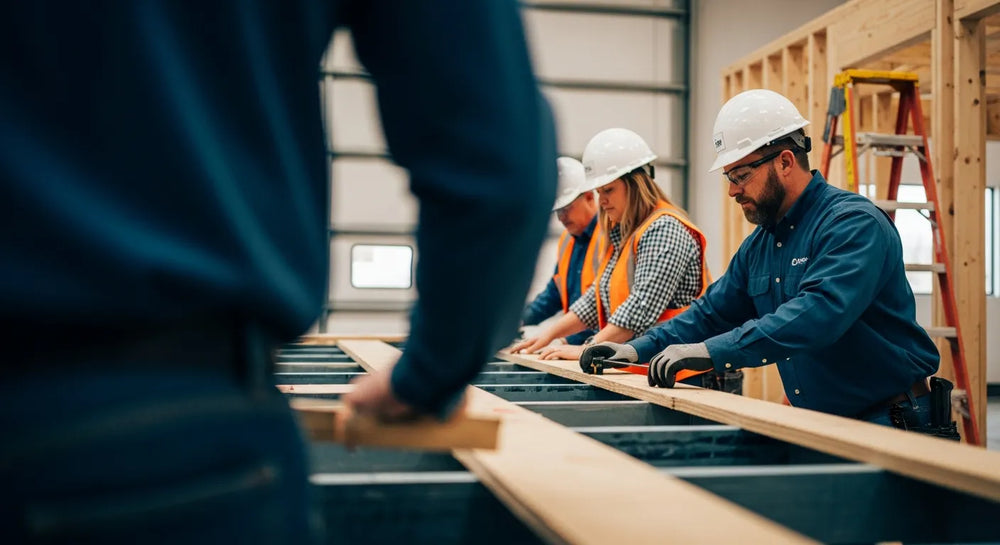
To mitigate labor costs, many builders are turning to "off-site construction" components—such as pre-fabricated trusses and wall panels—which are manufactured in controlled environments. Sourcing these components from U.S. manufacturers reduces on-site labor hours and minimizes the impact of weather-related delays.
Soft Costs: Permits, Fees, and Planning
Before the first shovel hits the ground, "soft costs" can consume 5% to 15% of the total budget. These include:
- Architectural and Engineering Fees: $2,000 to $10,000 for standard plans; more for custom designs.
- Building Permits: Varies by municipality but generally ranges from $500 to $3,000 in Mississippi.
- Impact Fees: Some growing Mississippi counties charge impact fees to fund infrastructure.
- Land Surveys and Soil Testing: Essential in Mississippi to account for potential soil movement.
A strategic partner in building a resilient supply chain knows that soft costs can be managed through better digital innovation. Using Maden.co to Browse all categories of building products early in the design phase allows architects and engineers to specify verified, American-made products that are actually in stock, preventing costly redesigns later.
Regional Variations: Jackson, the Delta, and the Coast
The cost to build a house in Mississippi is not uniform. Geography dictates both the price of land and the specific requirements of the structure.
The Gulf Coast (Hancock, Harrison, Jackson Counties)
Building on the coast requires adherence to strict V-Zone or A-Zone elevation requirements and wind-resistant building codes. This adds significant cost to the foundation and the building envelope. However, the long-term value and rental demand in these areas often justify the higher initial investment.
Central Mississippi (Hinds, Madison, Rankin Counties)
The Jackson metro area offers a balance of affordability and amenities. However, the expansive Yazoo clay soil means that foundation costs are often higher here than in other parts of the state. Builders must invest more in soil stabilization or post-tensioned slabs.
The Mississippi Delta
In the Delta, land is often the least expensive component of the build. However, sourcing specialized materials can be more challenging due to the distance from major distribution hubs. This is where the digital innovation of a marketplace like Maden.co shines, providing Delta-based builders with the same access to premium U.S. manufacturers as those in urban centers.
Building for Resilience: Sourcing U.S.-Made Components
The U.S. manufacturing revival is here, and it is being felt in the residential construction sector. When you choose to source American-made products, you are not just making a patriotic choice; you are making a strategic business decision to prioritize transparency and quality.
At Maden.co, we are committed to About Us values of industrial excellence and supply chain transparency. A house built with U.S.-manufactured windows, doors, and mechanical systems is a house built to last. Furthermore, domestic sourcing reduces the "carbon footprint" of the build and supports local jobs right here in the Southeast.
Sourcing Strategy: Beyond the Local Retailer
Many builders in Mississippi fall into the trap of sourcing exclusively from local big-box retailers. While convenient for a single box of nails, this approach often leads to higher unit costs and limited selection for major systems.
A professional procurement strategy involves:
- Direct-to-Manufacturer Sourcing: Reducing the number of "middlemen" to lower the Total Cost of Ownership.
- Standardization: Using common specs for plumbing and electrical components across multiple projects to leverage bulk pricing.
- Digital Procurement: Using tools like Maden.co to compare specifications and lead times from multiple verified vendors in one place.
By moving procurement to a digital-first model, Mississippi builders can compete with much larger national firms on price and efficiency.
Vendor Opportunities in the Mississippi Market
Mississippi is home to numerous manufacturers of building products—from lighting fixtures to cabinetry. We encourage these local businesses to join our platform. By completing a Vendor Registration, Mississippi manufacturers can reach a national audience of buyers who are specifically looking for high-quality, American-made products. This circular economy—building Mississippi homes with Mississippi-made products—is at the heart of our mission.
Scaling Your Portfolio with Maden Pay
For real estate investors and developers looking to scale, the bottleneck is rarely "finding the next deal"—it’s financing the materials for the current one. When you Check eligibility for a line of credit through our platform, you gain the ability to act quickly when opportunities arise.
Imagine a scenario where a bulk shipment of roofing materials becomes available at a significant discount. A builder without immediate liquidity might miss the opportunity. A builder using Maden Pay can secure the inventory instantly, use net-90 terms to pay for it, and realize a much higher margin on the final build. Approvals, limits, and terms depend on business eligibility.
Final Procurement Checklist for Mississippi Builders
To optimize the cost to build a house in Mississippi, follow this strategic checklist:
- Soil Analysis: Conduct a thorough soil test early to avoid foundation surprises.
- Source Domestically: Minimize lead-time risk by selecting U.S.-made structural components.
- Leverage Technology: Use digital marketplaces to compare TCO across different brands.
- Financial Planning: Secure your credit lines before the project begins to avoid "time-to-terms" delays.
- Climate Readiness: Specify materials that can withstand Mississippi’s heat, humidity, and storm risk.
If you have specific questions about sourcing or how to integrate our financing solutions into your workflow, please Contact Us. Our team is dedicated to helping you build a more resilient, U.S.-based supply chain.
Conclusion
The cost to build a house in Mississippi remains a compelling story of affordability and opportunity. However, in an era of supply chain complexity, the builders who succeed are those who treat procurement as a strategic function rather than a clerical one. By understanding the granular costs of materials and labor, acknowledging the regional nuances of the Magnolia State, and utilizing modern financing tools like Maden Pay, you can protect your margins and deliver high-quality homes.
We believe that every nail, beam, and wire in an American home should represent the best of American industry. We invite you to explore our catalog and join us in driving the U.S. manufacturing revival. Whether you are a small business owner building your first spec home or a procurement manager for a large-scale development firm, Maden.co is your partner in industrial excellence.
FAQ
1. What is the average total cost to build a 2,000-square-foot house in Mississippi? For a standard 2,000-square-foot home with mid-range finishes, you can expect a total cost of approximately $270,000 to $330,000, excluding the price of land. This range accounts for current material costs, labor in the region, and typical permitting fees. However, this figure can vary based on local soil conditions and the complexity of the architectural design.
2. Why is financing material purchases through Maden Pay better than using a traditional bank loan? Traditional bank loans often involve lengthy application processes, collateral requirements, and a "time-to-terms" delay that can stall construction projects. Maden Pay provides embedded financing with instant eligibility decisions, allowing you to secure net terms (30, 60, or 90 days) directly at the point of purchase. This aligns your expenses with your cash flow and construction draws more effectively than a static bank line.
3. Are there specific building codes in Mississippi that increase construction costs? Mississippi does not have a single statewide building code for all residential structures, but most municipalities adopt the International Residential Code (IRC). In coastal counties, additional wind-speed requirements and elevation mandates (FEMA flood maps) can add 10% to 20% to the cost of the building envelope and foundation compared to inland regions.
4. How can I save money on materials without sacrificing quality? The most effective way to save on materials is to optimize your supply chain by sourcing directly from U.S. manufacturers. By using a marketplace like Maden.co, you reduce the "liquidity challenge" and bypass unnecessary distribution markups. Additionally, choosing standardized, American-made components reduces the risk of long-lead-time delays and ensures that replacement parts for maintenance and operations (MRO) are easily accessible in the future.


