
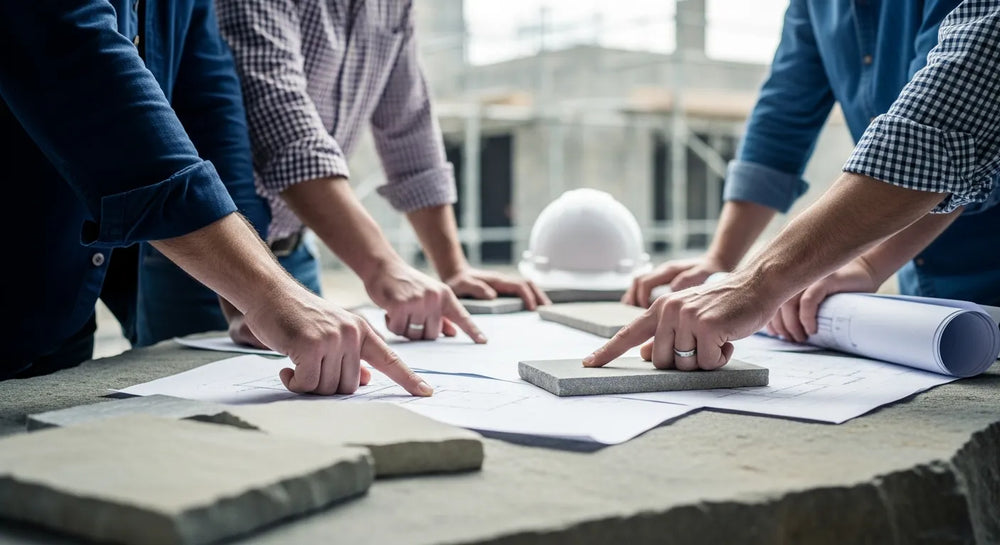
Estimating the Total Cost to Build a Stone House
Table of Contents
- Introduction
- The Structural Value of Stone Construction
- Breaking Down Material Costs
- Labor: The Cost of Craftsmanship
- The Liquidity Challenge in Stone Procurement
- CapEx Timing and 100% Bonus Depreciation
- Supply Chain Transparency and the U.S. Manufacturing Revival
- Estimating the Total Project Cost: A Practical Scenario
- Strategic Sourcing and Compliance
- Why Time-to-Terms Matters in Construction
- The Resilience of American Stone
- FAQs
- Conclusion
Introduction
Imagine a commercial developer who has just secured a contract for a flagship corporate headquarters designed with a timeless, full-bed stone exterior. The project is prestigious, the timeline is aggressive, and the architectural specifications are uncompromising. However, as the procurement manager begins the sourcing process, they hit a familiar wall: the local quarry requires a 50% deposit upfront, the specialized masonry saws needed for the site won't arrive for six weeks, and the business’s traditional line of credit is already tied up in other projects. This "liquidity crunch" is the silent killer of ambitious American construction projects.
Understanding how much would it cost to build a stone house—or a stone-clad commercial facility—requires looking far beyond the price per ton of granite or limestone. It involves a deep dive into material sourcing, specialized labor, logistical complexities, and, most importantly, the financial structures that allow these projects to move from blueprint to reality. At Maden.co, our mission is to democratize access to American manufacturing and industrial supplies, ensuring that when you decide to build with the permanence of stone, the procurement process is as solid as the material itself.
This guide will provide a comprehensive breakdown of the costs associated with stone construction, from raw material extraction to the final mortar joint. We will explore the differences between natural and manufactured stone, the impact of regional sourcing on your bottom line, and how modern financial tools like Maden Pay can eliminate the "time-to-terms" friction that often stalls large-scale builds. The U.S. Manufacturing Revival Is Here, and it is built on a foundation of transparent pricing, resilient supply chains, and accessible capital.
The Structural Value of Stone Construction
Stone is perhaps the oldest building material known to man, yet it remains one of the most misunderstood in terms of modern B2B procurement. When a business owner or procurement officer asks about the cost of building with stone, they are often weighing the high initial capital expenditure (CapEx) against the significantly lower life-cycle costs and Maintenance, Repair, and Operations (MRO) requirements.
Durability and Lifecycle ROI
A stone structure is an investment in longevity. Unlike wood-frame or even some metal-clad buildings, stone is naturally resistant to fire, pests, and extreme weather. For industrial and commercial applications, this translates to lower insurance premiums and a dramatic reduction in long-term maintenance costs. When calculating the Total Cost of Ownership (TCO), stone often emerges as a superior choice for facilities intended to remain in a corporate portfolio for decades.
Thermal Mass and Energy Efficiency
Stone possesses high thermal mass, meaning it can store heat and release it slowly. In many American climates, this provides a natural "flywheel effect" for HVAC systems, reducing the energy load required to maintain stable internal temperatures. While the upfront cost to build a stone house or facility is higher, the operational savings contribute to a more resilient business model.
Breaking Down Material Costs
The most significant variable in the cost of stone construction is the material itself. Stone is heavy, expensive to extract, and requires specialized handling.
Natural Full-Bed Stone
Full-bed stone refers to stone that is 3 to 5 inches thick and acts as a structural or semi-structural component of the wall.
- Cost Range: $25 to $80 per square foot for the material alone.
- Variations: Granite and marble sit at the higher end of the spectrum due to their hardness and the difficulty of quarrying. Limestone and sandstone are generally more affordable but may require more frequent sealing in certain environments.
Stone Veneer (Thin Stone)
For many modern commercial projects, natural thin stone veneer is the preferred choice. It offers the aesthetic and durability of real stone but is cut to a thickness of approximately 1 inch, significantly reducing weight and shipping costs.
- Cost Range: $10 to $25 per square foot.
- Logistical Advantage: Because it is lighter, more square footage can be transported per truckload, reducing the carbon footprint and freight costs. You can browse all categories on our marketplace to find the masonry ties and substrates required for veneer installation.
Manufactured (Cultured) Stone
Manufactured stone is a concrete-based product molded to look like natural stone. While it lacks the infinite variety of natural stone, it offers extreme consistency in color and shape, which can speed up installation.
- Cost Range: $6 to $12 per square foot.
- Trade-offs: It does not have the same lifespan as natural stone and may fade over decades of UV exposure.
Labor: The Cost of Craftsmanship
You cannot discuss the cost of stone construction without addressing the scarcity of skilled labor. Masonry is a craft that requires years of apprenticeship. For a procurement manager, securing a reliable masonry crew is often more difficult than securing the stone itself.
Specialized Masonry Rates
Labor typically accounts for 50% to 60% of the total project cost. A master mason may charge $70 to $110 per hour, depending on the region and the complexity of the stonework (e.g., dry-stack vs. mortared, intricate archways vs. straight walls).
Equipment and MRO for Masonry
A stone build requires more than just masons; it requires heavy equipment. This includes:
- Scaffolding and Hoists: Moving tons of stone vertically requires OSHA-compliant scaffolding systems.
- Diamond-Tipped Saws: Cutting granite or hard limestone requires high-end industrial saws that need frequent blade replacements—a key MRO consideration.
- Mortar Mixers and Silos: For large-scale projects, on-site mortar production is necessary to maintain consistency.
We understand that managing these vendor relationships is complex. At Maden.co, we simplify this by connecting you with verified U.S. manufacturers of the tools and materials you need to keep your job site running.
The Liquidity Challenge in Stone Procurement
One of the greatest hurdles in American manufacturing and construction is the structural liquidity challenge. Natural stone quarries often operate on tight margins and require significant cash flow to maintain heavy excavation equipment. Consequently, they often demand payment terms that are at odds with the cash conversion cycles of construction firms or MRO buyers.
When a procurement officer identifies a quarry that can provide the specific Indiana Limestone needed for a project, they are often met with a "Net-0" or "Deposit-on-Order" requirement. For a project where the stone cost might exceed $250,000, this creates a massive dent in working capital.
Traditional bank credit is tightening, and the "time-to-terms" friction—the weeks spent on credit applications and background checks—can lead to project delays. If the stone isn't ordered today, the quarry slot is lost, and the project timeline shifts by months.
Solving Friction with Embedded Financing
This is where Maden Pay transforms the procurement landscape. Instead of navigating the bureaucracy of a traditional bank for a bridge loan or waiting for a supplier to manually vet your creditworthiness, Maden.co embeds financing directly into the transaction.
Through our platform, qualified businesses can access credit lines typically ranging from $5,000 to over $250,000. This allows a procurement manager to:
- Secure the material immediately: Order the stone as soon as the project is greenlit.
- Align payments with milestones: Choose Net 30, 60, or 90-day terms that match when the client or developer will be releasing funds.
- Reduce administrative overhead: A single approval on the Maden.co platform works across all vendors, from the stone quarry to the tool manufacturer.
If you are ready to stabilize your project’s cash flow, you can check eligibility for Maden Pay in less than 60 seconds. Approvals, limits, and terms depend on business eligibility.
CapEx Timing and 100% Bonus Depreciation
For business owners building a stone facility or a "stone house" as part of a corporate retreat or mixed-use development, the timing of the build can have significant tax implications.
Under current U.S. tax law, businesses may be eligible for 100% bonus depreciation on qualified assets. This allows a company to deduct the full cost of certain capital expenditures in the first year they are placed in service, rather than depreciating them over several decades. While the "structure" of a building often follows a longer depreciation schedule, many of the components required to build it—such as heavy machinery, specialized tools, and even certain modular stone elements—may qualify for accelerated depreciation.
This makes the end of the fiscal year a critical time for procurement. By utilizing Maden Pay to acquire these assets before year-end, businesses can maximize their tax advantages while preserving their cash reserves.
Disclaimer: Tax laws are subject to change and vary by jurisdiction. Always consult your tax professional or CPA before making significant capital expenditure decisions.
Supply Chain Transparency and the U.S. Manufacturing Revival
The true cost of building with stone is also influenced by the resilience of your supply chain. In recent years, many buyers looked to overseas markets for "cheap" stone. However, when you factor in ocean freight, port delays, and the lack of quality oversight, the "cheap" stone often becomes the most expensive component of the build.
At Maden.co, we believe that The U.S. Manufacturing Revival Is Here. Sourcing stone from American quarries—such as those in Vermont, Georgia, or Indiana—offers several strategic advantages:
- Reduced Lead Times: No waiting for containers to clear customs.
- Quality Standards: U.S. stone is graded according to rigorous standards, ensuring structural integrity.
- Economic Impact: Every dollar spent on American-made stone supports local jobs and strengthens our domestic industrial base.
We are not just a catalog; we are a strategic partner. If you are a manufacturer of stone products or masonry tools, we invite you to join our movement by completing our vendor registration. We are building a transparent marketplace where American excellence is the standard, not the exception.
Estimating the Total Project Cost: A Practical Scenario
To understand the full scope of how much would it cost to build a stone house or facility, let's look at a practical procurement scenario for a 3,000-square-foot commercial building with a natural stone exterior.
Phase 1: Preparation and Footings
Stone is significantly heavier than siding or brick. This requires wider and deeper concrete footings.
- Estimated Cost: $15,000 - $25,000 extra for structural reinforcement.
Phase 2: Material Sourcing
Assuming 4,000 square feet of wall area (accounting for waste and corners) using a high-quality domestic granite.
- Material Cost: $35 per sq ft = $140,000.
- Shipping/Logistics: $10,000 - $15,000 (depending on distance from the quarry).
Phase 3: Labor and Installation
A crew of four masons and two laborers working for approximately 12 weeks.
- Labor Cost: $160,000 - $200,000.
- Consumables (Mortar, Ties, Blades): $8,000.
Phase 4: Financing and Carrying Costs
In a traditional model, the business would be out-of-pocket for nearly $400,000 before the building is even dried in. By using Maden Pay, the company can defer these payments, effectively reducing their cost of capital and keeping their internal lines of credit open for operational emergencies.
Total Estimated Cost: $333,000 to $400,000 for the stone portion of the project. While this represents a premium over other materials, the asset value and durability often justify the spend for institutional and long-term owners.
Strategic Sourcing and Compliance
When procurement managers source materials for a stone project, they must also ensure compliance with industry standards. Whether it's the specific PSI (pounds per square inch) of the mortar or the ASTM standards for the stone's absorption rate, documentation is key.
At Maden.co, we prioritize Supply Chain Transparency. We work with our vendors to ensure that specifications are clear and that the products you receive meet the requirements of your design engineers. If you have specific technical questions about a product or need help sourcing a rare material, our team is ready to assist. You can reach out to us directly through our contact page for personalized sourcing support.
Why Time-to-Terms Matters in Construction
In the fast-moving world of industrial MRO and construction, "Time-to-Terms" is a critical metric. In traditional procurement, getting net terms from a new supplier is a grueling process:
- Onboarding: The supplier sends a multi-page credit application.
- References: You provide three trade references; the supplier waits for them to call back.
- Approval: A credit manager reviews your financials—this can take 5 to 10 business days.
By the time you are approved, the specific lot of stone you wanted might be sold to someone else. Maden.co eliminates this bottleneck. Because our financing is embedded at the point of transaction, the "Time-to-Terms" is reduced from weeks to seconds. You can check eligibility instantly, giving you the purchasing power to act when the market is right. This speed is a competitive advantage for any business looking to grow in a high-interest-rate environment.
The Resilience of American Stone
Choosing to build with stone is a statement of permanence. It signals that a business is here to stay, rooted in its community and built on a foundation of quality. This mirrors our philosophy at Maden.co. We believe that the American manufacturing sector is the backbone of the global economy, and our goal is to provide the digital innovation and industrial excellence needed to keep it thriving.
By connecting industrial buyers with millions of verified American-made products—from the heavy equipment used in quarries to the fine chisels used by masons—we are facilitating a more resilient, U.S.-based supply chain. We invite you to learn more about us and our commitment to the American Manufacturing Pride that drives everything we do.
FAQs
1. How much does natural stone cost per square foot compared to manufactured stone?
Natural full-bed stone typically costs between $25 and $80 per square foot for materials, while natural thin veneer ranges from $10 to $25. In contrast, manufactured (cultured) stone is much more budget-friendly, generally costing between $6 and $12 per square foot. However, the labor costs for installing natural stone are usually higher due to the weight and the need for specialized cutting and fitting.
2. What are the hidden costs of building a stone house or facility?
The most common hidden costs include the structural reinforcement of the foundation (stone is heavy and requires wider footings), specialized scaffolding for high walls, and the high cost of freight. Additionally, because stone is a natural product, there is often a 10-15% waste factor that must be accounted for during the procurement phase.
3. Can I finance the purchase of stone and masonry tools through Maden.co?
Yes. Through Maden Pay, qualified business buyers can access flexible payment terms (Net 30/60/90) for their purchases. This allows you to manage your cash flow effectively by aligning your material costs with your project milestones. Approvals, limits, and terms depend on business eligibility.
4. Is American-quarried stone more expensive than imported stone?
While the initial price per ton of imported stone may appear lower, American-quarried stone often has a lower Total Cost of Ownership (TCO). Domestic sourcing eliminates expensive ocean freight, customs duties, and the risk of long-term project delays. Furthermore, sourcing locally ensures that the stone is geologically suited for the American climate, reducing future maintenance costs.
Conclusion
Building with stone is a complex, high-stakes endeavor that requires meticulous planning and a deep understanding of both material and financial costs. From the raw aesthetics of granite to the structural necessity of reinforced footings, every detail impacts the final price tag. However, for the procurement manager or business owner focused on long-term value, the durability and energy efficiency of stone make it an unparalleled choice.
The key to a successful stone project lies in overcoming the traditional hurdles of procurement: high upfront costs, slow credit approvals, and fragmented supply chains. By leveraging the Maden.co marketplace, you gain access to a streamlined ecosystem designed for the modern industrial buyer. Whether you are seeking the best U.S.-made masonry tools or looking to solve your liquidity challenges with Maden Pay, we are here to ensure your project stands the test of time.
We encourage you to browse all categories of our American-made inventory today and take the first step toward a more resilient and efficient supply chain. The U.S. Manufacturing Revival Is Here—let's build it together, one stone at a time.


