
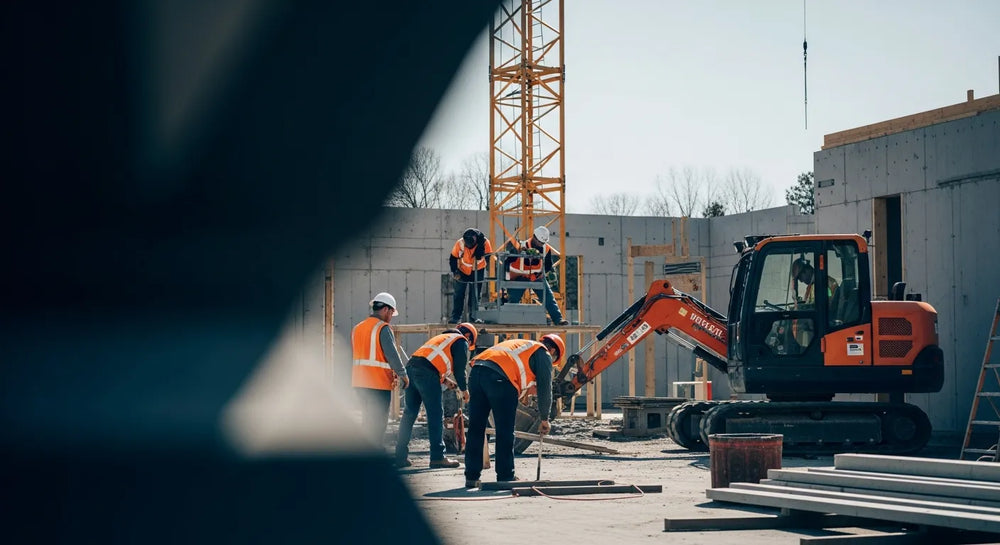
Factors Affecting the Cost to Build a House in GA
Table of Contents
- Introduction
- The Current Landscape of Georgia Construction
- Breaking Down the Cost to Build a House in GA: Material Inputs
- Labor Market Dynamics in the Peach State
- Land Acquisition and Site Preparation Costs
- The Impact of Permitting and Regulations
- Procurement Efficiency and the Liquidity Challenge
- Solving the Time-to-Terms Friction in Construction
- Maximizing CapEx: Bonus Depreciation and Tax Strategy
- Leveraging American-Made Quality for Georgia Projects
- Maden Pay: Strategic Financing for Large-Scale Builds
- Streamlining the Supply Chain with Maden.co
- Detailed Cost Categories for Georgia Home Building
- The Strategic Importance of Net Terms in Construction
- Conclusion
- FAQ
Introduction
When a developer or a large-scale project manager prepares to break ground in Georgia, the initial budget often feels like a moving target. In an environment where lumber prices can swing 20% in a single quarter and specialized labor remains in high demand, the "time-to-terms" on essential materials becomes more than a logistical hurdle—it becomes a financial bottleneck. For a procurement manager overseeing a residential development or a business owner building a custom facility, waiting weeks for credit approval from multiple disparate vendors isn't just an inconvenience; it is a direct threat to the project’s internal rate of return (IRR).
The purpose of this guide is to provide a comprehensive analysis of the factors influencing the cost to build a house in GA, specifically from the perspective of industrial procurement and supply chain management. We will explore the breakdown of material costs, the nuances of the Georgia labor market, and the critical role that financing plays in maintaining project momentum. At Maden.co, we believe that the strength of American construction lies in its supply chain resilience. By aligning procurement efficiency with rapid, embedded financing, developers can navigate the complexities of the Georgia market with greater agility and lower total cost of ownership (TCO). This article will demonstrate how strategic sourcing and modernized financial tools are essential for turning a blueprint into a finished structure without falling victim to cash flow friction.
The Current Landscape of Georgia Construction
Georgia has become a focal point for both residential and commercial expansion, driven by a favorable business climate and a growing population. However, the cost to build a house in GA is heavily influenced by the state’s diverse geography—ranging from the high-density urban requirements of Atlanta to the coastal considerations of Savannah and the rural expanses of the Blue Ridge foothills.
For the B2B buyer, this means that sourcing cannot be a one-size-fits-all approach. A project in North Georgia may face higher site preparation costs due to rocky terrain, while a build in the Coastal Plain requires specific materials rated for high humidity and potential hurricane-force winds. Understanding these regional variations is the first step in accurate budgeting. We are witnessing a shift where "just-in-time" delivery is being replaced by "just-in-case" inventory management, as savvy builders look to secure American-made materials early to avoid international shipping delays. This is where our mission at Maden.co comes into play: we are dedicated to democratizing access to American manufacturing, ensuring that Georgia builders have a direct line to the high-quality, domestically produced components they need to stay on schedule.
Breaking Down the Cost to Build a House in GA: Material Inputs
Material costs typically represent 40% to 50% of the total cost to build a house in GA. In the current market, these costs are subject to extreme volatility. To manage this, procurement professionals must look beyond the sticker price and evaluate the long-term value and reliability of their suppliers.
Lumber and Framing
Lumber remains the most significant material expense for most residential builds. While national averages provide a baseline, local availability in Georgia—a state with a massive forestry industry—can sometimes offer a slight advantage. However, high-grade structural timber and engineered wood products are often sourced through complex distribution networks. For a procurement officer, the challenge is not just finding the wood, but finding a supplier who can provide consistent quality and reliable delivery timelines.
HVAC and Mechanical Systems
Georgia’s climate demands high-efficiency HVAC systems. From heat pumps to complex ductwork, the mechanical phase of construction is a major cost driver. Sourcing these systems from verified U.S. manufacturers ensures that replacement parts and technical support are readily available, which is a key component of reducing the TCO. When you browse all categories on our platform, you find that prioritizing domestic mechanical components often leads to fewer maintenance headaches down the road.
Electrical and Plumbing
The cost of copper and PVC continues to fluctuate, impacting the bottom line of every Georgia build. For a facility manager or developer, the goal is to standardize these components across multiple units to gain economies of scale. However, traditional procurement often requires setting up separate accounts with electrical wholesalers and plumbing supply houses, each with their own credit application process. This redundancy is a primary driver of procurement friction.
Labor Market Dynamics in the Peach State
Labor constitutes roughly 30% to 40% of the build cost. Georgia’s labor market is currently characterized by a shortage of skilled tradespeople, particularly electricians, plumbers, and HVAC technicians. This shortage drives up wages and extends project timelines.
In an environment where labor is scarce, the efficiency of your material supply chain becomes even more critical. If a framing crew is on-site but the lumber hasn't arrived because of a credit hold or a shipping delay, the developer is still paying for that crew’s time. This "hidden" cost of procurement inefficiency can add thousands of dollars to the cost to build a house in GA. By utilizing a streamlined marketplace, builders can ensure that materials arrive exactly when the labor is ready to install them, maximizing the productivity of every hour spent on-site.
Land Acquisition and Site Preparation Costs
You cannot calculate the cost to build a house in GA without accounting for the land and the work required to make it buildable. Land prices vary wildly:
- Urban Atlanta: High cost per acre, often requiring complex demolition or remediation.
- Suburban Hubs (Alpharetta, Marietta): Competitive pricing with high demand.
- Rural Georgia: Lower land costs, but potentially higher costs for utility extension and septic installation.
Site preparation—grading, excavation, and foundation work—is often where "budget creep" begins. Unexpected soil conditions or drainage issues can quickly escalate costs. For B2B buyers, having a reliable source for industrial-grade geotextiles, drainage pipes, and foundation reinforcement materials is essential for keeping these early-stage costs under control.
The Impact of Permitting and Regulations
Each municipality in Georgia has its own set of codes, impact fees, and permitting timelines. In some high-growth counties, the cost of permits and "impact fees" (intended to fund infrastructure like schools and roads) can add $10,000 to $30,000 to the total cost of a single-family home.
Navigating these regulations requires a strategic partner who understands the importance of compliance. When sourcing materials, ensuring they meet specific industry standards—such as NPT (National Pipe Thread) or specific DIN standards—is vital for passing inspections on the first try. A failed inspection due to substandard, non-compliant imported parts is a costly mistake that delays the entire project.
Procurement Efficiency and the Liquidity Challenge
One of the most significant, yet often overlooked, factors in the cost to build a house in GA is the structural liquidity challenge facing the construction industry. Most U.S. manufacturers and regional distributors operate on net-30 to net-90 payment cycles. However, as traditional bank credit tightens, many builders and contractors find their growth capped by their available cash flow.
This liquidity gap creates a "time-to-terms" friction. In a traditional setting, if a builder needs to source from a new manufacturer of high-end American fixtures, they must go through a weeks-long onboarding process:
- Submitting a credit application.
- Waiting for trade references to be checked.
- Negotiating terms and credit limits.
- Waiting for internal approval.
In the middle of a construction project, three weeks of waiting is an eternity. This friction often forces procurement managers to stick with existing, potentially less efficient suppliers simply because they already have terms established. This stifles innovation and prevents builders from optimizing their supply chain.
Solving the Time-to-Terms Friction in Construction
At Maden.co, we recognized that the "U.S. Manufacturing Revival Is Here," but it won't reach its full potential until we fix the way industrial goods are bought and sold. Our solution is to embed financing directly into the point of transaction. This eliminates the need for repeated credit applications and allows builders to access the capital they need instantly.
By using Maden Pay, our embedded financing solution, builders can bypass the traditional onboarding lag. This isn't just a convenience; it’s a strategic operational tool. When you can secure terms in under 60 seconds, you can pivot your procurement strategy in real-time based on material availability and project needs.
The Benefits of Strategic Financing
- Speed: Instant eligibility decisions mean you can order critical components the moment they are needed.
- Capacity: We provide credit lines, often ranging from $5,000 to over $250,000 for qualified businesses, allowing for the bulk purchase of materials when prices are favorable.
- Alignment: With Net 30, 60, and 90-day options, you can align your material payments with your construction draws or cash conversion cycles.
- Efficiency: A single approval on the Maden.co platform works across our entire marketplace. You don't need to renegotiate terms for every new supplier of American-made goods.
Disclaimer: Approvals, limits, and terms depend on business eligibility.
To see how these terms can fit into your next project’s budget, you can check eligibility today.
Maximizing CapEx: Bonus Depreciation and Tax Strategy
For business owners and developers building residential properties as part of a portfolio, the timing of capital expenditures (CapEx) is a vital part of the financial puzzle. One powerful tool in the American tax code is bonus depreciation.
Bonus depreciation allows businesses to immediately deduct a large percentage of the purchase price of eligible assets, such as heavy machinery, specialized HVAC systems, or industrial equipment used in the construction process, rather than depreciating them over several years. While the rules surrounding 100% bonus depreciation have begun to phase down under current legislation, it remains a critical strategy for asset acquisition and tax planning.
By purchasing high-value, American-made equipment through Maden.co and utilizing Maden Pay to manage the cash flow, businesses can optimize their balance sheets and reinvest those tax savings back into their Georgia projects.
Note: Tax laws are subject to change. Always consult with a qualified tax professional to understand how bonus depreciation applies to your specific business and assets.
Leveraging American-Made Quality for Georgia Projects
Choosing American-made products is more than a matter of pride; it’s a strategic business decision that directly impacts the cost to build a house in GA. When you source domestically, you are often looking at:
- Reduced Lead Times: Products don't have to spend weeks on a container ship or stuck in a congested port.
- Superior Standards: U.S. manufacturing is synonymous with high quality and strict adherence to safety and performance standards.
- Transparency: Knowing exactly where your materials come from helps in meeting sustainability goals and ensuring ethical supply chain practices.
Our platform is built to connect you with these verified manufacturers. If you are a producer of high-quality construction materials or industrial components in the U.S., we invite you to join our network through our vendor registration page. We are committed to providing the digital innovation necessary to bring American excellence to every job site in Georgia and beyond.
Maden Pay: Strategic Financing for Large-Scale Builds
The financial infrastructure of a project is just as important as the physical foundation. For a developer managing the cost to build a house in GA, maintaining liquidity is the difference between a project that finishes on time and one that stalls due to lack of funds.
Maden Pay provides a "single-click" financing experience. Instead of managing dozens of separate invoices and payment terms, you can consolidate your procurement through our marketplace. This level of transparency allows for much more accurate project accounting. When you check eligibility, you are opening the door to a more resilient way of doing business.
Imagine a scenario where a mid-build change order requires an immediate injection of $50,000 in additional electrical components. Under traditional terms, that order might be delayed by credit limit reviews. With our embedded financing, the procurement manager can approve the purchase instantly, keeping the electricians working and the project on schedule.
Streamlining the Supply Chain with Maden.co
We are not just a catalog; we are a strategic partner in building a resilient, U.S.-based supply chain. Our goal is to reduce the friction that has historically made U.S. manufacturing difficult to access for smaller and mid-sized buyers.
By integrating digital innovation with industrial excellence, we provide:
- A Unified Marketplace: Everything from MRO supplies to structural components in one place.
- Supply Chain Transparency: Detailed information on manufacturers and product specifications.
- Procurement Support: If you have questions about sourcing specific items for your Georgia project, our team is ready to help through our contact page.
The "U.S. Manufacturing Revival" is not a distant goal; it is happening right now on job sites across Georgia. By choosing to source American-made products through Maden.co, you are contributing to a stronger domestic economy while simultaneously improving your project's bottom line through better quality and more efficient financing.
Detailed Cost Categories for Georgia Home Building
To provide a more granular look at the cost to build a house in GA, let's break down the typical expenses associated with a standard 2,500-square-foot residential build.
1. The Shell (Foundation, Framing, Roofing)
This is where the bulk of the initial investment goes.
- Foundation: Expect to pay between $10,000 and $25,000 depending on whether you choose a slab, crawl space, or full basement.
- Framing: This is the most volatile category. A 2,500 sq. ft. home can require $30,000 to $60,000 in lumber and labor.
- Roofing: High-quality asphalt shingles or metal roofing for a standard home can range from $8,000 to $20,000.
2. Exterior Finishes
In Georgia, the choice of exterior is often dictated by local HOA rules or regional aesthetics.
- Siding: Fiber cement (like James Hardie) is popular in GA for its durability and fire resistance. Costs range from $12,000 to $20,000.
- Windows and Doors: Energy-efficient, U.S.-made windows are an essential investment for the Georgia heat. Budget $10,000 to $25,000.
3. Systems (MEP - Mechanical, Electrical, Plumbing)
- HVAC: A dual-zone system for a 2,500 sq. ft. house typically costs between $12,000 and $18,000.
- Plumbing: Including the water heater and fixtures, budget $12,000 to $20,000.
- Electrical: Including wiring, panels, and basic fixtures, budget $10,000 to $15,000.
4. Interior Finishes
This is the most variable category, as it depends entirely on the level of luxury.
- Drywall and Paint: $15,000 to $25,000.
- Flooring: $10,000 to $30,000 (Hardwood vs. LVP vs. Carpet).
- Cabinetry and Countertops: $20,000 to $50,000+.
By understanding these benchmarks, procurement managers can better use tools like Maden Pay to schedule their material purchases. If you know a $50,000 cabinetry order is coming up in 60 days, you can ensure your credit line is ready, allowing you to lock in pricing and delivery slots.
The Strategic Importance of Net Terms in Construction
In the B2B world, cash is king, but credit is the engine of growth. The cost to build a house in GA is significantly impacted by the "cost of capital." When a builder has to pay cash upfront for materials, they are essentially providing an interest-free loan to their suppliers, which ties up capital that could be used for other projects.
Net terms (30, 60, or 90 days) shift that burden. They allow the builder to receive the materials, install them, and perhaps even receive a draw payment from their lender before the material invoice is due. This alignment of cash inflows and outflows is the hallmark of a sophisticated procurement strategy. Maden.co’s ability to offer these terms across a massive variety of American-made products gives our users a distinct competitive advantage in the Georgia market.
Conclusion
The cost to build a house in GA is influenced by a complex interplay of land prices, labor availability, material costs, and regulatory requirements. However, the most successful developers and procurement managers are those who look beyond these surface-level costs and focus on the efficiency of their entire supply chain.
By prioritizing American-made products, you ensure quality and reduce the risks associated with international shipping. By utilizing digital marketplaces like Maden.co, you reduce the administrative burden of sourcing. And most importantly, by leveraging embedded financing through Maden Pay, you eliminate the "time-to-terms" friction that so often stalls construction projects.
The U.S. manufacturing revival is providing Georgia builders with the tools they need to build faster, smarter, and more resiliently. We invite you to explore our full catalog of products and experience a new standard in industrial procurement. Whether you are building a single custom home or a large-scale residential development, our mission is to provide the products and the financing to help you succeed.
Ready to streamline your next project? Apply for Maden Pay today and take control of your construction cash flow.
FAQ
1. What is the average cost per square foot to build a house in Georgia? While prices vary significantly by region and finish level, the average cost to build a house in GA typically ranges from $120 to $200 per square foot for standard construction. High-end custom homes in metro Atlanta can easily exceed $300 per square foot. These figures exclude the cost of land acquisition.
2. How long does the procurement process typically take on Maden.co? Unlike traditional procurement, which can take weeks for credit onboarding, Maden.co offers a streamlined experience. With Maden Pay, eligibility decisions are often made in under 60 seconds. Once approved, you can purchase from any verified U.S. manufacturer on our platform with net terms, drastically reducing your project's lead times.
3. Can I use Maden Pay for all types of construction materials? Yes, Maden Pay is designed to be a versatile operational tool. It can be used across our entire marketplace, which includes everything from structural steel and lumber to HVAC systems, electrical components, and MRO supplies. This allows you to consolidate your financing under one umbrella rather than managing separate terms with multiple vendors.
4. Why should I prioritize American-made materials for my Georgia build? Sourcing American-made products helps mitigate the risks of global supply chain disruptions, ensures higher quality control, and supports the domestic economy. Furthermore, domestic products are built to U.S. standards (like NPT or UL), which simplifies the permitting and inspection process in Georgia municipalities. Maden.co makes finding these verified U.S. manufacturers easier than ever.


