
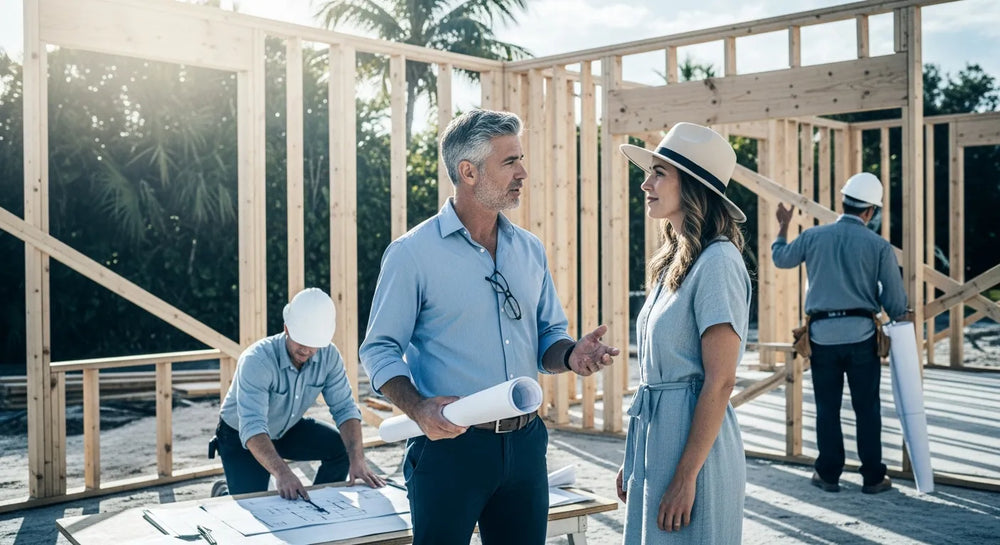
Florida House Construction Costs: 2,000 Sq Ft Guide
Table of Contents
- Introduction
- The Florida Construction Landscape: Regional Drivers of Cost
- Breaking Down the Cost to Build a 2,000 Sq Ft House in Florida
- The Materials Crisis: Why Sourcing American-Made Matters
- The True Cost of Procurement Friction
- Bridging the Liquidity Gap: "Time-to-Terms" vs. Embedded Financing
- Maximizing Your Investment: CapEx and Bonus Depreciation
- Step-by-Step Construction Phases and Costs
- Navigating Labor Shortages and Supply Chain Transparency
- Sustainable Building in Florida’s Climate
- Why Maden.co is Your Strategic Partner
- Conclusion
Introduction
Imagine a residential developer in Central Florida who has just secured a contract for a mid-sized housing development, only to find that their primary supplier of structural steel and impact-rated windows has extended lead times by twelve weeks. For a procurement manager responsible for keeping a 2,000-square-foot residential project on schedule, this delay doesn't just represent a calendar shift; it represents a catastrophic drain on liquidity and a potential breach of contract. In the current economic climate, the cost to build a 2,000 sq ft house in Florida is influenced as much by supply chain agility and financing speed as it is by the price of raw lumber or concrete.
At Maden.co, our mission is to democratize access to American manufacturing, ensuring that builders and business owners have the resources they need to navigate these complexities. This guide provides a deep dive into the financial and operational realities of constructing a 2,000-square-foot home in the Sunshine State. we will analyze the breakdown of hard and soft costs, the impact of regional building codes, and how strategic procurement through a U.S.-based marketplace can mitigate the "time-to-terms" friction that often stalls industrial and residential growth.
The U.S. Manufacturing Revival Is Here, and it is reshaping how we approach construction CapEx. By the end of this article, you will understand not only the current price per square foot in the Florida market but also how to leverage embedded financing and domestic sourcing to build a more resilient and profitable supply chain.
The Florida Construction Landscape: Regional Drivers of Cost
Building in Florida presents a unique set of challenges and opportunities. Unlike many other regions, Florida’s topography and climate necessitate specific engineering standards that directly influence the cost to build a 2,000 sq ft house in Florida. From the High-Velocity Hurricane Zones (HVHZ) of Miami-Dade to the sandy soils of the Panhandle, where you build is just as important as what you build.
The Impact of the Florida Building Code (FBC)
The Florida Building Code is among the most stringent in the United States. Following the devastation of Hurricane Andrew, the state implemented rigorous standards for wind load, impact resistance, and structural integrity. For a 2,000-square-foot home, this means that costs are weighted heavily toward "the envelope"—the exterior shell of the building.
- Impact Windows and Doors: In many coastal counties, impact-rated glass is mandatory. For a standard 2,000 sq ft layout, this can add $15,000 to $25,000 compared to non-impact alternatives.
- Roofing Ties and Straps: Hurricane straps and specialized roof-to-wall connections are required to ensure the structure remains intact during high-wind events.
- Concrete Block Construction (CMU): While wood-frame construction is common elsewhere, concrete block is the standard in Florida due to its resistance to termites, rot, and wind. This material choice typically commands a premium but offers long-term durability and lower insurance premiums.
Regional Cost Variations
The cost of labor and land varies significantly across the state. In metropolitan hubs like Miami, Fort Lauderdale, and Tampa, labor shortages and high demand can drive the cost per square foot toward the $250–$350 range for mid-grade finishes. Conversely, in more rural areas or North Florida, builders might achieve costs closer to $160–$210 per square foot. When calculating the cost to build a 2,000 sq ft house in Florida, a business owner must account for these regional multipliers.
Breaking Down the Cost to Build a 2,000 Sq Ft House in Florida
To provide a clear picture for procurement managers and developers, we must break down the project into its constituent parts. For a 2,000-square-foot home, the total investment typically ranges from $320,000 to $500,000, excluding land costs.
Pre-Construction and Soft Costs
Before the first shovel hits the ground, significant capital is deployed for planning and permitting.
- Impact Fees: Florida is known for high municipal impact fees, which are intended to fund the infrastructure needed for new residents. Depending on the county, these fees can range from $5,000 to $30,000.
- Engineering and Architecture: Professional fees for a 2,000 sq ft home usually run between 8% and 12% of the total build cost.
- Permitting: State and local permits can take months to clear, creating a "soft cost" of capital that many builders fail to factor into their ROI calculations.
Site Preparation and Foundation
Florida’s high water table often requires specialized site prep.
- Fill Dirt and Grading: Many lots require significant hauling of fill dirt to elevate the finished floor above the flood plain.
- Slab-on-Grade Foundation: Most Florida homes utilize a monolithic slab. For a 2,000 sq ft footprint, the cost of concrete, rebar, and vapor barriers has risen steadily. Sourcing these components through a verified U.S. network ensures quality and adherence to ASTM standards.
Framing and Exterior Finishes
This is where the structure takes shape and where the most significant material costs reside.
- CMU Walls: The cost of concrete masonry units (CMU) and the specialized labor to lay them are primary drivers of the shell cost.
- Stucco and Paint: The standard Florida exterior requires high-quality stucco application and elastomeric paints to prevent moisture intrusion.
- Roofing Systems: Whether choosing asphalt shingles, clay tiles, or standing-seam metal, the roofing system must meet strict uplift ratings.
Interior Mechanical, Electrical, and Plumbing (MEP)
For a 2,000 sq ft home, the MEP systems represent a significant technical investment.
- HVAC Systems: Florida’s humidity requires high-efficiency SEER2-rated systems with advanced dehumidification capabilities.
- Plumbing: The use of PEX piping has become standard, but the cost of fixtures and water heating systems (often tankless) can vary widely based on sourcing.
- Electrical: From panel boards to LED lighting arrays, the electrical package must be robust enough to handle the cooling loads of a subtropical climate.
The Materials Crisis: Why Sourcing American-Made Matters
One of the most significant variables in the cost to build a 2,000 sq ft house in Florida today is the volatility of the global supply chain. When a project relies on imported sub-components, it is vulnerable to port delays, geopolitical shifts, and quality inconsistencies. At Maden.co, we believe that building a resilient supply chain starts with domestic manufacturing.
By sourcing through a marketplace dedicated to U.S.-made products, procurement managers can reduce lead times and ensure that every component—from the HVAC ductwork to the kitchen cabinetry—meets rigorous American standards. This transparency is not just about "buying American"; it is a strategic move to lower the Total Cost of Ownership (TCO).
Strategic Insight: A 5% savings on a bulk material order from an overseas supplier is often wiped out by a three-week delay in delivery. If a framing crew is sitting idle at $4,000 a day in labor costs, the "cheaper" imported material becomes the most expensive line item on the balance sheet.
For manufacturers looking to reach these builders, our vendor registration process provides a direct gateway to a motivated B2B audience. We are committed to connecting industrial buyers with the millions of verified American-made products that drive our manufacturing revival.
The True Cost of Procurement Friction
Traditional procurement is often bogged down by administrative hurdles. For a business owner trying to manage the cost to build a 2,000 sq ft house in Florida, the "friction" of onboarding new suppliers can be a silent profit-killer.
Consider a scenario where an electrical contractor needs to source a specific high-capacity transformer for a custom residential build. In a traditional setting, that contractor would need to find a supplier, submit a credit application, wait 10 to 14 days for a background check, and negotiate net terms. During those two weeks, the project stalls, and the cost of capital continues to tick.
At Maden.co, we address this head-on. Our platform is designed to eliminate the friction that holds back American businesses. Instead of individual credit applications for every new vendor, we offer a centralized ecosystem. To see how we can streamline your next project, you can Browse All Categories and see the breadth of our U.S.-made industrial and construction catalog.
Bridging the Liquidity Gap: "Time-to-Terms" vs. Embedded Financing
One of the most critical challenges facing the U.S. manufacturing and construction sectors is the liquidity gap. Small to mid-sized manufacturers and builders often operate on net-30 to net-90 cycles. However, as traditional bank credit tightens, the ability to secure the necessary working capital to purchase materials upfront has become a major bottleneck.
This is the "time-to-terms" problem. In the old way of doing business, getting net terms was a reward for a long-standing relationship. In the modern era, businesses need those terms at the point of transaction to maintain velocity.
The Solution: Maden Pay
We have integrated a strategic operational tool directly into our marketplace: Maden Pay. This is not just a payment method; it is a financing solution designed for the realities of B2B cash conversion cycles.
- Speed: Unlike a bank loan that takes weeks, Maden Pay provides instant eligibility decisions, often in under 60 seconds.
- Capacity: We offer credit lines typically ranging from $5,000 to $250,000+ for qualified businesses, providing the purchasing power needed to handle the bulk of a 2,000 sq ft home's material costs.
- Alignment: With Net 30, 60, and 90-day options, you can align your material outflows with your construction draw schedule.
By using Maden Pay, a builder can secure the materials for a foundation or a roof today and pay for them after the next inspection milestone is cleared. This flexibility is essential for maintaining a healthy cash flow and managing the overall cost to build a 2,000 sq ft house in Florida.
If you are ready to see how your business qualifies, you can Check eligibility immediately. (Note: Approvals, limits, and terms are dependent on business eligibility and a soft credit check).
Maximizing Your Investment: CapEx and Bonus Depreciation
For business owners and investors building residential properties as part of a portfolio or employee housing initiative, understanding tax strategy is as important as understanding material costs.
100% Bonus Depreciation
Under current tax laws, businesses may be eligible for 100% bonus depreciation on certain qualified assets. This allows a business to deduct a significant portion (or the entirety) of the cost of eligible equipment and property improvements in the first year they are placed in service.
When building a 2,000 sq ft house, this could apply to specialized HVAC systems, security equipment, or heavy machinery purchased for the build. Utilizing this strategy can drastically reduce your tax liability for the year, effectively lowering the net cost of the project.
Disclaimer: Tax laws are subject to change and vary by jurisdiction. You must consult with a qualified tax professional or CPA to determine how bonus depreciation applies to your specific business situation.
By timing your CapEx (Capital Expenditure) with these tax incentives, you can reinvest that saved capital back into your next project, creating a virtuous cycle of growth. This is a key part of the "Industrial Excellence" we champion at Maden.co.
Step-by-Step Construction Phases and Costs
To help you budget effectively, let’s look at the approximate costs for each phase of a 2,000 sq ft house in Florida. These figures represent a mid-range build with quality American-made materials.
Phase 1: Site Work and Foundation ($35,000 - $55,000)
- Clearing and Grubbing: Removing vegetation and debris.
- Excavation: Digging for footings and utilities.
- Concrete Pour: Footers, stem walls (if applicable), and the 4-inch reinforced slab.
Phase 2: Framing and Shell ($80,000 - $120,000)
- Block Work: Setting the CMU walls and pouring the tie-beams.
- Roof Trusses: Engineered wood trusses designed for Florida wind loads.
- Sheathing and Windows: Installing the "lid" and the impact-rated openings.
Phase 3: Exterior Finishes ($30,000 - $50,000)
- Roofing Material: Shingle, tile, or metal.
- Stucco/Siding: External protective layer.
- Exterior Doors and Garage Doors: Must be wind-load rated.
Phase 4: Rough-In Mechanicals ($40,000 - $65,000)
- Plumbing: Under-slab and in-wall piping.
- HVAC: Ductwork installation and air handler placement.
- Electrical: Wiring, boxes, and main panel installation.
Phase 5: Interior Finishes ($80,000 - $140,000)
- Drywall: Hanging, taping, and texturing.
- Flooring: Tile or luxury vinyl plank (LVP) are popular in Florida for moisture resistance.
- Cabinetry and Countertops: The heart of the home, where material quality is most visible.
- Painting and Trim: Final aesthetic touches.
Phase 6: Landscaping and Final Touches ($15,000 - $30,000)
- Sod and Irrigation: Essential for Florida's heat.
- Driveway: Concrete or pavers.
- Final Inspections: Clearing the Certificate of Occupancy (CO).
For a procurement manager, seeing these phases laid out highlights the need for a streamlined purchasing process. Using Check eligibility to secure a line of credit allows you to move through these phases without the typical delays associated with traditional financing.
Navigating Labor Shortages and Supply Chain Transparency
One of the "hidden" factors in the cost to build a 2,000 sq ft house in Florida is the labor market. Florida has seen a massive influx of residents, creating a surge in demand that often outstrips the available pool of skilled tradespeople.
When labor is scarce, efficiency becomes your most valuable asset. If a plumber arrives on-site but the American-made fixtures they were supposed to install are missing because of a "shipping error" from a generic retailer, you are still paying for that plumber’s time.
This is where Supply Chain Transparency comes into play. By partnering with a dedicated B2B marketplace like Maden.co, you gain better visibility into lead times and shipping status. We aren't just a catalog; we are a strategic partner in building a resilient, U.S.-based supply chain. If you have questions about sourcing specific components or need assistance with a large-scale procurement order, you can always Contact Us for expert support.
Sustainable Building in Florida’s Climate
The cost to build a 2,000 sq ft house in Florida is also being shaped by a shift toward sustainability and energy efficiency. While these features may increase the initial CapEx, they significantly lower the TCO by reducing monthly utility bills and insurance premiums.
- Cool Roofs: Using materials that reflect more sunlight and absorb less heat can reduce cooling costs by up to 15%.
- Spray Foam Insulation: While more expensive than fiberglass batts, spray foam provides a superior thermal envelope, which is critical in the Florida heat.
- Smart Home Systems: Integrated energy management systems are becoming standard in new 2,000 sq ft builds, allowing owners to monitor and reduce energy consumption in real-time.
By sourcing these high-tech, American-made components through Maden.co, you ensure that your project is not only built to last but also built to perform in one of the most demanding climates in the country.
Why Maden.co is Your Strategic Partner
Building in the modern economy requires more than just a blueprint; it requires a financial and logistical strategy. We built Maden.co to be the platform that empowers American businesses to build faster, smarter, and with greater confidence.
Our Commitment to Quality
Every product on our marketplace is part of our commitment to Industrial Excellence. We focus on verified U.S. manufacturers because we know that quality and reliability are the cornerstones of successful construction and manufacturing. When you buy from us, you are supporting the U.S. Manufacturing Revival.
Financial Empowerment
The liquidity challenge is real, but it shouldn't be a barrier to your growth. Through our financing options, we provide the tools you need to manage your cash conversion cycle effectively. Whether you are a small business owner building your first commercial space or a seasoned developer managing a residential tract, our platform scales with you.
Conclusion
The cost to build a 2,000 sq ft house in Florida is a multifaceted calculation that involves more than just market rates for labor and materials. It requires a deep understanding of regional building codes, a proactive approach to supply chain management, and the use of modern financial tools to maintain liquidity.
By focusing on U.S.-made products and leveraging the power of embedded financing, you can navigate the complexities of the Florida market while contributing to the broader manufacturing revival. Whether you are managing the procurement for a single home or a hundred, the principles of transparency, efficiency, and domestic sourcing remain the same.
At Maden.co, we are proud to be your partner in this journey. We invite you to explore our marketplace, utilize our financing solutions, and join us in building a stronger, more resilient American economy.
Frequently Asked Questions
1. What is the average price per square foot to build in Florida in 2024? The average cost generally ranges from $160 to $250 per square foot for standard builds. However, in high-demand areas like Miami or for custom luxury homes, this figure can easily exceed $300 to $400 per square foot. These costs are heavily influenced by the rigorous requirements of the Florida Building Code and the current price of essential materials like concrete and impact-rated glass.
2. How long does it take to secure financing through Maden Pay? Unlike traditional bank loans that can take weeks of paperwork and underwriting, Maden Pay provides instant eligibility decisions. Most businesses receive a decision in under 60 seconds through a soft credit check that does not impact their credit score. This speed allows procurement managers to secure materials immediately, keeping projects on schedule.
3. Why is concrete block construction more common than wood frame in Florida? Concrete Masonry Units (CMU) are the standard in Florida primarily due to their superior performance in high-wind events and their resistance to the state’s high humidity and termite activity. While wood frame can be less expensive initially, concrete block construction often results in lower insurance premiums and higher resale value, making it a more cost-effective choice for the home's total life cycle.
4. How does sourcing American-made products help reduce the total cost of construction? While some imported materials may have a lower initial price tag, they often carry hidden costs such as long lead times, shipping delays, and lower quality control. Sourcing American-made products through Maden.co provides greater supply chain transparency and reliability. Reducing the "time-to-terms" friction and ensuring on-time delivery prevents costly labor delays, ultimately lowering the Total Cost of Ownership (TCO) for the project.


