
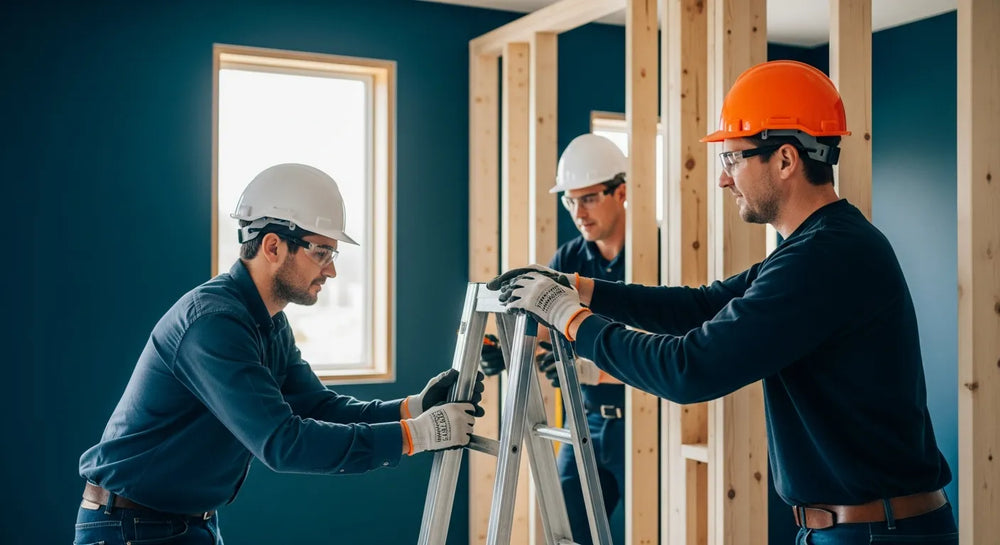
Industrial Costs to Build a Wall in a House
Table of Contents
- Introduction
- Understanding the Primary Cost Drivers
- Technical Specifications and Material Breakdown
- The Liquidity Challenge in Industrial Construction
- Financing Your Project with Maden Pay
- CapEx Timing and 100% Bonus Depreciation
- Hidden Costs and Contingency Planning
- Sourcing American-Made Materials
- Practical Scenario: The Facility Manager's Dilemma
- Comparing Wood vs. Steel Studs in Wall Construction
- Improving Total Cost of Ownership (TCO)
- Navigating the Procurement Process
- Conclusion
- Frequently Asked Questions (FAQ)
Introduction
Imagine a scenario where your facility’s production line is expanding, and you suddenly need to partition a new climate-controlled quality control room within your existing footprint. Or perhaps, as a property developer managing a portfolio of residential conversions, you find that a sudden shift in material lead times is threatening your completion deadline. In the world of industrial procurement and commercial renovations, the question of the cost to build a wall in a house or professional facility is never just about the price of a few 2x4s and some gypsum board. It is a complex calculation involving material volatility, labor availability, and, most importantly, the speed of capital deployment.
At Maden.co, we understand that for procurement managers and business owners, time is the most expensive line item on any balance sheet. Waiting weeks for a traditional bank to approve a line of credit for basic tenant improvements or facility modifications can stall growth and result in missed opportunities. Our mission is to democratize access to American manufacturing, ensuring that when you need to scale, the materials and the financing are ready when you are. The U.S. Manufacturing Revival Is Here, and it is built on a foundation of supply chain transparency and industrial excellence.
In this comprehensive analysis, we will break down the true cost to build a wall in a house or commercial space. We will examine the raw material requirements, the nuances of skilled labor, the impact of local building codes, and the strategic financing tools that allow businesses to bypass traditional procurement friction. By the end of this guide, you will have a clear understanding of how to budget for your next project and how to leverage Maden Pay to transform a slow capital expenditure into an agile operational advantage.
Understanding the Primary Cost Drivers
When estimating the cost to build a wall in a house or industrial facility, the budget typically splits into three major categories: materials, labor, and finishing. For a standard interior non-load-bearing wall, costs can range significantly depending on the region and the specific requirements of the space.
Material Selection: Beyond the Basics
The choice of materials is the first lever in determining your total cost of ownership (TCO). While residential projects often default to wood framing, commercial and industrial environments frequently require steel studs for fire rating and structural stability.
- Framing Materials: Standard kiln-dried lumber is the traditional choice, but prices are subject to heavy market fluctuations. Cold-formed steel (CFS) framing offers a straighter, termite-proof, and fire-resistant alternative that is often preferred in modern B2B procurement cycles due to its predictable dimensions and durability.
- Drywall and Sheathing: Standard 1/2-inch gypsum board is common, but for industrial applications, you may require Type X fire-rated drywall or moisture-resistant boards. These specialized materials increase the per-square-foot cost but are essential for regulatory compliance.
- Insulation: Whether for thermal retention or sound attenuation (STC ratings), the type of insulation—fiberglass batts, mineral wool, or spray foam—will impact the final quote.
Labor and Specialized Trades
Labor often accounts for 50% to 70% of the total cost to build a wall in a house or office. In a tightening labor market, finding verified contractors who can execute to industrial standards is a significant hurdle. A simple partition wall might only require a carpenter and a drywall finisher, but if that wall contains electrical outlets, data ports, or plumbing lines, the complexity and cost escalate rapidly.
We advocate for partnering with verified U.S. manufacturers and suppliers to ensure that the materials arriving on-site meet the rigorous standards required by professional tradespeople, thereby reducing the "re-work" that often plagues projects using substandard imported goods.
Technical Specifications and Material Breakdown
To accurately calculate the cost to build a wall in a house, one must look at the granular details of the bill of materials (BOM). For a standard 10-foot long, 8-foot high wall, the following components are typically required:
Framing Components
- Studs: Placed every 16 or 24 inches on center. A 10-foot wall will require approximately 9 to 11 studs, plus top and bottom plates.
- Fasteners: Structural screws or galvanized nails. In industrial settings, high-load fasteners are often required to meet seismic or wind-load codes.
- Adhesives: Subfloor or construction adhesives to prevent "stud slap" and improve the rigidity of the assembly.
The Gypsum Assembly
Drywall is sold in 4x8 or 4x12 foot sheets. For our hypothetical 80-square-foot wall (one side), you would need at least three sheets, doubling that for both sides. However, procurement managers should always factor in a 10-15% waste factor for cuts and corners.
When you browse all categories on our marketplace, you can find a wide array of American-made construction materials that adhere to ASTM (American Society for Testing and Materials) standards. Using domestic materials isn't just a point of pride; it’s a strategy for ensuring that every sheet of drywall and every steel stud has a traceable origin and consistent quality.
Finishing and Trim
The cost of finishing—taping, mudding, sanding, and painting—is often underestimated. This phase is labor-intensive and requires multiple "dry times" between coats of joint compound. In a professional environment, the level of finish (Level 1 through Level 5) will dictate the final price. A Level 5 finish, which involves a skim coat over the entire surface for a perfectly smooth appearance under critical lighting, can double the labor cost compared to a standard Level 3 or 4 finish.
The Liquidity Challenge in Industrial Construction
A major hurdle in modern U.S. manufacturing and facility management is the structural liquidity challenge. Small to mid-sized manufacturers and contractors often operate on net-30 to net-90 payment cycles. However, as traditional bank credit continues to tighten, the ability to front the capital for materials and labor becomes a bottleneck.
For a facility manager whose expansion depends on getting walls up and machines running, waiting three to four weeks for a traditional bank loan or a new credit line from a local lumber yard is not a viable option. This "time-to-terms" friction is where many projects fail before the first nail is driven.
At Maden.co, we solve this by embedding financing directly into the procurement process. Through Maden Pay, businesses can access the capital they need to cover the cost to build a wall in a house or facility without the traditional delays. This allows for a more resilient, U.S.-based supply chain where liquidity moves as fast as the project requires.
Strategic Insight: By using embedded financing, you align your cash conversion cycle with your project timeline. Instead of depleting your cash reserves on Day 1, you can utilize net-30, 60, or 90-day terms to keep your operational capital working elsewhere.
Financing Your Project with Maden Pay
We believe that purchasing power should be instantaneous. When you are ready to buy the steel studs, insulation, and specialized industrial coatings for your project, you shouldn't be bogged down by paperwork.
How Embedded Financing Works
Maden Pay is designed as a strategic operational tool, not just a line of credit. Here is how it differentiates itself from traditional procurement methods:
- Speed of Execution: You can check eligibility and receive a decision in as little as 60 seconds. This is achieved via a soft credit check that does not impact your primary credit score.
- Substantial Capacity: For qualified businesses, credit lines can range from $5,000 to over $250,000. This is often more than enough to cover significant facility renovations or a large-scale wall construction project.
- Unified Approval: Once approved, your credit line works across the entire Maden.co marketplace. You don't need to renegotiate terms with every individual vendor of drywall, fasteners, or paint.
Disclaimer: Approvals, credit limits, and specific terms are subject to business eligibility and underwriting criteria.
By reducing the friction of "time-to-terms," we empower business owners to make decisions based on project needs rather than temporary cash flow constraints. If you are a manufacturer looking to expand your reach, you can also join our ecosystem through vendor registration to offer these same seamless terms to your own B2B customers.
CapEx Timing and 100% Bonus Depreciation
When calculating the cost to build a wall in a house or business facility, it is essential to consider the tax implications of capital expenditures (CapEx). Under current tax laws, certain improvements to non-residential real property may qualify for significant tax advantages.
Maximizing Your Investment
One of the most powerful tools for a business looking to renovate is 100% bonus depreciation. This allows businesses to deduct the full cost of qualifying assets (which can include certain partitions and internal wall systems) in the year they are placed in service, rather than depreciating them over several decades.
- Strategic Timing: If you are nearing the end of your fiscal year and need to offset taxable income, initiating a wall construction project and purchasing materials through Maden Pay can be a double win. You preserve your cash and gain a significant tax deduction.
- Qualifying Improvements: Not all walls qualify for the fastest depreciation schedules. Permanent structural walls are treated differently than demountable partitions or specialized industrial dividers.
Always consult your tax professional or a qualified CPA to understand how bonus depreciation applies to your specific project and to ensure compliance with the latest IRS regulations.
Hidden Costs and Contingency Planning
The quoted cost to build a wall in a house is rarely the final price paid. In the industrial sector, "surprises" behind existing walls or under floor slabs can quickly inflate a budget.
Electrical and Mechanical Rerouting
In many cases, building a new wall means moving what was already there. If you are intersecting an existing run of conduit, HVAC ducting, or fire suppression sprinklers, the cost of the wall itself may be eclipsed by the cost of the mechanical, electrical, and plumbing (MEP) adjustments.
- Industrial Tip: Always perform a thermal imaging scan or use ground-penetrating radar (GPR) if you are anchoring into a concrete slab to avoid hitting post-tension cables or radiant heat lines.
Permitting and Compliance
Building a wall in a professional environment often requires a building permit, which involves submitting architectural drawings and paying municipal fees. These costs can add hundreds or thousands of dollars to the project. Furthermore, if the wall changes the egress path or occupancy load of a room, you may be required to add additional emergency lighting or exit signage.
Sourcing American-Made Materials
The "revival" we speak of at Maden.co isn't just a slogan; it is a commitment to quality and transparency. When you are calculating the cost to build a wall in a house or facility, the origin of your materials matters for several reasons:
- Lead Time Reliability: Sourcing from U.S. manufacturers reduces the risk of port delays and international shipping volatility. When your crew is on-site, "out of stock" is the most expensive phrase in the English language.
- Standards Adherence: American-made steel and gypsum products are manufactured to strict domestic standards, ensuring that fire ratings and structural capacities are exactly what they claim to be.
- Environmental Impact: Shorter supply chains mean a lower carbon footprint for your construction project.
We encourage you to contact us if you have specific sourcing requirements for large-scale projects. Our team is dedicated to helping you find the right U.S.-based partners to keep your project on track and under budget.
Practical Scenario: The Facility Manager's Dilemma
Consider a facility manager, Sarah, who needs to build a 50-foot dividing wall to separate a new sensitive laboratory space from the main warehouse floor.
- The Traditional Route: Sarah gets a quote for $15,000 in materials and $20,000 in labor. She applies for a credit line at a traditional supplier. The supplier requires two years of audited financials and takes three weeks to process the application. Meanwhile, the laboratory equipment arrives and sits in crates, costing the company $1,000 a day in lost productivity.
- The Maden.co Route: Sarah logs onto Maden.co, selects her American-made steel studs, specialized laboratory-grade wallboard, and high-performance insulation. She uses Maden Pay to check eligibility and is approved for a $40,000 line of credit in minutes. The materials are ordered immediately, and the wall is completed before the lab equipment even clears the shipping dock.
In this scenario, the "cost" of the wall wasn't just the $35,000 in direct expenses; it was the avoided cost of three weeks of downtime. This is the power of strategic procurement and embedded financing.
Comparing Wood vs. Steel Studs in Wall Construction
A frequent question regarding the cost to build a wall in a house or commercial unit is whether to use wood or steel. The answer depends on the application, but for most B2B and industrial buyers, steel is increasingly the winner.
Wood Stud Framing
- Pros: Generally lower material cost in certain regions; easy for all carpenters to work with; easy to attach heavy shelving or equipment to.
- Cons: Susceptible to rot, mold, and termites; can warp or twist over time; combustible material (may require expensive fire-retardant treatment).
Steel Stud Framing
- Pros: Perfectly straight and dimensionally stable; non-combustible; lighter to transport; typically includes pre-punched holes for electrical wiring.
- Cons: Higher initial material cost; requires specialized fasteners; requires more care when hanging heavy industrial equipment (requires "blocking").
By choosing the right material for the specific environment, you can lower the long-term maintenance costs, which is a critical component of the Total Cost of Ownership.
Improving Total Cost of Ownership (TCO)
When you look at the cost to build a wall in a house, don't just look at the invoice for the drywall. Look at the TCO over 10 to 15 years.
- Energy Efficiency: Investing in higher-quality insulation now can save thousands in HVAC costs over the life of the wall.
- Durability: In high-traffic industrial areas, using impact-resistant drywall or adding a diamond-plate wainscoting can prevent the need for constant repairs caused by forklift or pallet jack strikes.
- Flexibility: Using track-and-stud systems allows for easier modifications in the future compared to permanent masonry or heavy timber construction.
Our platform is built to help you find these high-performance materials quickly. We are not just a catalog; we are your strategic partner in building a resilient, U.S.-based supply chain that values quality and longevity over the "cheap and fast" mentality of globalized commodity markets.
Navigating the Procurement Process
Streamlining the procurement of construction materials requires a shift in mindset from "buying things" to "managing assets." This involves:
- Consolidating Vendors: Instead of managing twenty different invoices from twenty different local suppliers, use a centralized marketplace.
- Leveraging Terms: Use Maden Pay to maintain your liquidity while the project is in the "non-revenue generating" phase of construction.
- Verifying Origin: Ensure your project meets any "Buy American" requirements for government contracts or corporate sustainability goals by sourcing through verified domestic manufacturers.
Conclusion
The cost to build a wall in a house or an industrial facility is a variable figure influenced by material choices, labor markets, and the speed of financing. While the physical components—the studs, the drywall, and the paint—are the visible parts of the project, the invisible components of procurement efficiency and capital liquidity are what truly determine the project's success.
At Maden.co, we are proud to support the American manufacturing revival by providing the tools businesses need to build, expand, and thrive. Whether you are partitioning a small office or redesigning a massive warehouse, we offer the supply chain transparency and industrial excellence required for the modern economy.
Don't let traditional procurement friction hold back your next project. Explore our extensive catalog, connect with verified U.S. manufacturers, and take control of your project timelines.
Ready to start your project?
- Browse our categories for American-made building materials.
- Check your eligibility for Maden Pay in under 60 seconds.
- Secure the financing you need to grow your business today with Maden Pay.
Frequently Asked Questions (FAQ)
1. What is the average cost to build a wall in a house or office per linear foot?
The average cost typically ranges from $50 to $150 per linear foot, including labor and materials. However, this price can fluctuate based on the height of the ceiling, the type of studs used (wood vs. steel), the level of finish, and whether electrical or plumbing work is required. For industrial spaces with high ceilings, the cost can be significantly higher due to the need for scaffolding and specialized framing.
2. Can I use Maden Pay to finance both materials and labor costs?
Maden Pay is primarily designed for the purchase of products and materials through our marketplace. However, by using Maden Pay to secure net-30, 60, or 90-day terms on your material costs, you can free up your existing cash reserves to pay your labor force and contractors directly. This strategic use of capital helps you manage your cash conversion cycle more effectively during the construction process.
3. How does the "time-to-terms" at Maden.co compare to traditional suppliers?
Traditional suppliers often require a lengthy onboarding process, including credit applications that can take days or even weeks to process. At Maden.co, we have eliminated this friction. You can check eligibility for a credit line of $5k to $250k+ in about 60 seconds with a soft credit check. This allows you to go from planning to purchasing almost instantly.
4. Are the materials on Maden.co compliant with U.S. building codes?
Yes. We prioritize supply chain transparency and connect industrial buyers with verified American manufacturers. Most products listed on our platform meet or exceed relevant U.S. standards, such as ASTM for drywall and steel or NPT for plumbing components. Sourcing domestically through us ensures that you are receiving high-quality materials that are designed to meet the rigorous safety and performance codes required for American construction.


