
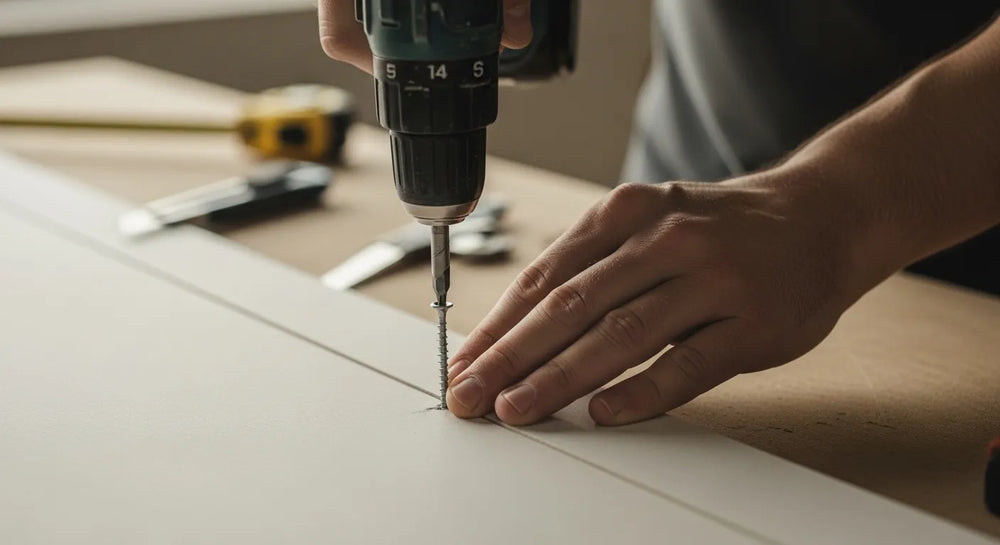
#10 Sheet Metal Screw Pilot Hole Size Guide
Table of Contents
- Introduction
- The Critical Role of Pilot Holes in Sheet Metal Applications
- Factors Influencing Pilot Hole Size for #10 Sheet Metal Screws
- The Science Behind the Numbers: Determining the Optimal Pilot Hole Diameter
- Precision Procurement: Sourcing the Right #10 Sheet Metal Screws with Maden.co
- Best Practices for Drilling Pilot Holes
- Beyond the Drill Bit: The Broader Impact of Smart Procurement
- Conclusion
- Frequently Asked Questions (FAQ)
Introduction
In the intricate world of manufacturing and MRO, a seemingly minor detail—like the correct pilot hole size for a fastener—can often be the silent determinant between a robust, lasting assembly and a project plagued by failures. For procurement managers, design engineers, and MRO buyers, the frustration of stripped screws, distorted materials, or compromised joint integrity due to an improperly sized pilot hole is a familiar, costly setback. It underscores a larger truth: precision in every component, no matter how small, is paramount to industrial excellence.
This extensive guide aims to demystify the process of determining the optimal pilot hole size for a #10 sheet metal screw. We will delve into the fundamental mechanics of how these fasteners interact with various materials, explore the critical factors influencing pilot hole selection, and provide practical, data-driven recommendations. Beyond the technical specifics, we will highlight how sourcing high-quality, American-made fasteners from verified manufacturers, like those available through Maden.co, plays an indispensable role in ensuring consistent performance, enhancing supply chain resilience, and ultimately, driving project success. Our thesis is clear: mastering pilot hole sizing is not just about drilling a hole; it’s about safeguarding structural integrity, optimizing operational efficiency, and making informed procurement decisions that champion American manufacturing pride.
The Critical Role of Pilot Holes in Sheet Metal Applications
The practice of pre-drilling pilot holes before driving screws into sheet metal is not merely a suggestion; it is a fundamental requirement for achieving reliable, durable, and structurally sound fastening. Overlooking this crucial step, or executing it incorrectly, can lead to a cascade of problems that impact project timelines, material costs, and overall product quality.
At its core, a pilot hole serves multiple vital functions. Firstly, it acts as a guide for the screw, ensuring that it penetrates the material accurately and consistently, preventing wandering or misalignment that can mar surfaces or compromise aesthetics. Secondly, and perhaps most importantly, it prepares the material to receive the screw's threads. Sheet metal, by nature, is often thin and can be prone to deformation, tearing, or splitting if a screw is driven directly without adequate preparation. A pilot hole reduces the localized stress on the material, allowing the screw's threads to form or cut cleanly without causing structural damage. This ensures proper thread engagement, which is the cornerstone of a strong, long-lasting connection.
The consequences of failing to use an appropriate pilot hole size are significant and varied. If the pilot hole is too small, the screw will encounter excessive resistance during insertion. This can lead to the screw stripping its head, breaking off, or galling the threads—all outcomes that require costly rework, material replacement, and project delays. Furthermore, an undersized pilot hole can create undue stress in the sheet metal itself, causing it to buckle, crack, or "mushroom" around the fastening point, thereby weakening the joint and compromising the material's integrity. For a design engineer developing a new prototype, such failures can necessitate extensive redesigns and material testing, pushing back critical development phases.
Conversely, a pilot hole that is too large presents an equally detrimental set of issues. When the pilot hole is oversized, the screw's threads will not have enough material to properly engage and create a secure grip. This results in a loose connection, significantly reduced pull-out strength, and a joint that is highly susceptible to vibration, fatigue, and premature failure. In applications where structural integrity is paramount, such as in automotive chassis, HVAC systems, or industrial machinery, an oversized pilot hole can lead to catastrophic component dislodgement. For MRO buyers responsible for equipment uptime, a weak fastener means recurring maintenance, unplanned downtime, and increased operational costs.
Therefore, achieving the "goldilocks" principle—selecting a pilot hole size that is "just right"—is not a matter of convenience but a critical engineering and procurement imperative. It ensures that the screw drives smoothly, the threads engage fully, the material remains undamaged, and the assembled components meet their intended performance specifications. This precision is a hallmark of industrial excellence, a core value we champion at Maden.co, where every product is selected to meet the highest standards of quality and reliability.
Understanding the #10 Sheet Metal Screw
To precisely determine the correct pilot hole, one must first deeply understand the fastener itself. The "#10" in "#10 sheet metal screw" is a standard designation that refers to the screw's major diameter—the largest diameter of its threads. In the Unified Screw Thread Standard, a #10 screw typically has a major diameter of approximately 0.190 inches (or 4.826 millimeters). This is a crucial starting point, as the pilot hole must always be smaller than this major diameter to allow the screw's threads to cut or form into the material effectively.
Beyond its size designation, sheet metal screws are characterized by their thread design, which dictates how they interact with the material and, consequently, the optimal pilot hole. Most sheet metal screws are "self-tapping," meaning they create their own mating threads in the material as they are driven. However, there are variations within self-tapping screws:
-
Thread-Cutting Screws: These screws feature a sharp, often notched or fluted, tip designed to cut threads into the material. They typically require a pre-drilled pilot hole to facilitate this cutting action and prevent material distortion. Examples include Type A, Type AB, and Type B threads.
- For a versatile and widely used solution, consider the robust Steel Zinc Plated Type A Pan Slot Drive Self-Tapping Sheet Metal Screw, perfect for general sheet metal assembly where a broad surface area under the head is beneficial.
- When enhanced torque transmission and a secure drive are critical, the Steel Zinc Plated Type A Truss Square Drive Self-Tapping Sheet Metal Screw offers superior performance, especially in production environments where stripping driver bits can lead to significant delays.
- Thread-Forming Screws: While also self-tapping, these screws typically have a more blunt, tapered tip that forms (rather than cuts) threads by displacing the material. They are often used in softer metals or plastics and may sometimes feature a drill point, making them "self-drilling, self-tapping" fasteners that eliminate the need for a separate pilot hole in many applications. However, even with these, a pilot hole might still be beneficial for very thick or hard materials, or for extremely precise placement.
-
Hi-Lo Threads: These screws feature a unique double-lead thread design with alternating high and low threads. This design enhances thread engagement in softer, less dense materials like plastics, particle board, and sometimes very thin gauge sheet metal, offering superior pull-out strength and reduced stripping.
- For specialized applications in softer substrates where maximum grip is essential, investigate the advanced capabilities of the Hi-Lo Double Lead Thread Self-Tapping Sheet Metal Screw, which leverages its unique thread geometry for enhanced performance.
Beyond thread design, the material and finish of the screw are also vital considerations. Most #10 sheet metal screws are made from hardened steel, often with a zinc plating for corrosion resistance, making them suitable for a wide range of indoor and moderately corrosive outdoor environments. For more aggressive environments, stainless steel options might be preferred, though their material hardness can influence pilot hole requirements.
At Maden.co, we understand that these nuances matter. Our platform provides access to a comprehensive catalog of U.S.-manufactured fasteners, each with detailed specifications, ensuring that procurement managers, MRO buyers, and design engineers can select the precise screw type, material, and finish required for their specific application. This meticulous attention to detail is part of our commitment to industrial excellence and supply chain transparency.
Factors Influencing Pilot Hole Size for #10 Sheet Metal Screws
Determining the exact pilot hole size for a #10 sheet metal screw is not a one-size-fits-all calculation. It's a nuanced process influenced by a dynamic interplay of factors, primarily the characteristics of the material being joined and the specific design of the screw itself. Understanding these variables is critical to optimizing joint performance and preventing costly errors.
Material Thickness and Type
The nature of the material into which the screw is driven is arguably the most significant factor. Different materials react differently to thread formation, and their thickness dictates the amount of material available for thread engagement.
-
Material Hardness:
- Softer Materials (e.g., thin gauge aluminum, copper, some plastics): These materials offer less resistance to thread formation. A pilot hole closer to the smaller end of the recommended range for a #10 screw is typically used to maximize thread engagement and prevent stripping. Too large a hole in soft material will immediately lead to a loose fit.
- Harder Materials (e.g., heavy gauge steel, stainless steel, some composites): These materials provide significant resistance. An undersized pilot hole can lead to excessive torque requirements, screw breakage, or premature dulling of the screw's threads. For harder materials, a pilot hole closer to the larger end of the recommended range is often necessary to ease screw insertion, reduce stress on the screw, and prevent material cracking or distortion.
-
Material Thickness (Gauge):
- Thin Gauge Sheet Metal (e.g., 24-28 gauge steel, thin aluminum): In very thin materials, there is less thread engagement area. A smaller pilot hole is essential to ensure maximum material contact for the screw threads. However, care must be taken to avoid over-tightening, which can strip the material or cause it to dimple.
- Thicker Gauge Sheet Metal (e.g., 16-22 gauge steel, thicker aluminum): As the material thickness increases, more threads can engage. A slightly larger pilot hole can be used without significantly compromising pull-out strength, as there is more material for the threads to grip. This also helps reduce driving torque and stress on the screw.
-
Specific Material Considerations:
- Mild Steel/Galvanized Steel: Generally forgiving, but pilot hole size still needs to respect thickness and hardness.
- Stainless Steel: Significantly harder than mild steel. Requires precise pilot hole sizing, often towards the larger end of the range, and sometimes requires specialized drill bits to prevent work hardening of the material.
- Aluminum: Softer than steel but can be brittle in certain alloys. Pilot hole sizing usually favors the smaller side for strength, but considerations for galling (material sticking to the screw threads) may lead to slightly larger holes or lubrication.
- Plastics: Highly variable. Thermoplastics (e.g., PVC, HDPE) may require pilot holes that account for material flow and heat generation during screw insertion. Thermosets (e.g., fiberglass) are more rigid and may behave more like hard metals. Hi-Lo thread screws are often specifically designed for optimal performance in various plastics due to their superior thread engagement.
Screw Type and Thread Design
As discussed, the screw's design plays a direct role in how it creates its own threads, which in turn informs pilot hole requirements.
- Self-Tapping (Thread-Cutting) Screws (Type A, AB, B): These screws rely on the pilot hole to initiate the thread-cutting process. The pilot hole needs to be small enough to allow the screw's cutting flutes to engage and remove material, but large enough to prevent the screw from binding or stripping. The root (minor) diameter of the screw is the primary reference.
- Self-Drilling Screws: These fasteners have a drill-bit-like tip that creates its own hole as it's driven. For most standard sheet metal applications, they eliminate the need for a separate pilot hole. However, if joining very thick or extremely hard materials, a pre-drill may still be recommended to reduce drilling time or prevent bit breakage, especially if the screw's drill point is not robust enough for the material thickness.
- Hi-Lo Threads: With their distinct thread geometry, Hi-Lo Double Lead Thread Self-Tapping Sheet Metal Screw are optimized for greater thread engagement in softer or low-density materials. While their design enhances grip, the recommended pilot hole size often aligns with standard self-tapping screws but may be slightly larger in very soft materials to prevent material displacement from becoming excessive.
The Science Behind the Numbers: Determining the Optimal Pilot Hole Diameter
The ultimate goal in selecting a pilot hole for a #10 sheet metal screw is to achieve the best balance between ease of driving, maximum pull-out strength, and prevention of material damage. This balance is typically found when the pilot hole diameter is slightly smaller than or equal to the minor diameter (also known as the root diameter) of the screw. The minor diameter is the diameter of the screw shank at the base of the threads. It is distinct from the major diameter, which is the largest diameter of the threads, measured from crest to crest.
General Guidelines for #10 Sheet Metal Screws
A standard #10 sheet metal screw (with a major diameter of approximately 0.190 inches or 4.826 mm) will typically have a minor diameter ranging from about 0.130 to 0.150 inches (3.3 to 3.8 mm), depending on the specific thread type (e.g., Type A, AB, B) and manufacturer.
Given this, the pilot hole size for a #10 sheet metal screw will generally fall within this minor diameter range, or slightly below it, to ensure robust thread formation. The specific choice within this range is then fine-tuned based on the material considerations discussed previously.
Conversion to Practical Drill Bit Sizes
Drill bits are commonly measured in fractional inches, numbered sizes, or letter sizes in the U.S. industrial market. Converting the theoretical optimal diameter into an available drill bit size is a practical necessity.
Here's a breakdown of common drill bit sizes that fall within the recommended range for a #10 sheet metal screw, along with their decimal equivalents:
-
Fractional Drill Bit Sizes:
- 9/64" (0.1406 inches): This is a very common and often ideal starting point for many #10 sheet metal screw applications, especially in medium-gauge steel or aluminum. It provides a good balance between thread engagement and ease of driving.
- 5/32" (0.15625 inches): Slightly larger, this size is often preferred for thicker or harder materials where reducing driving torque and preventing screw breakage is paramount. It allows for easier thread formation but may slightly reduce pull-out strength in very thin or soft materials compared to a 9/64" hole.
-
Numbered Drill Bit Sizes:
- #30 (0.1285 inches): This is on the smaller side and might be suitable for very thin, soft materials where maximum thread engagement is critical. However, it can lead to high driving torque and potential screw breakage in tougher materials.
- #29 (0.1360 inches): A popular choice, this size offers a good balance for many standard sheet metal applications, particularly for Type A or AB threads in common gauges. It's often interchangeable with 9/64" for practical purposes, depending on specific material.
- #28 (0.1470 inches): This size is closer to 5/32" and is excellent for harder or thicker materials, or when using screws with coarser threads.
Recommended Pilot Hole Ranges Based on Material:
To provide a more actionable guide, let's consolidate recommendations based on material properties:
-
For Softer, Thinner Materials (e.g., 24-28 gauge mild steel, thin aluminum, softer plastics):
- Recommended Drill Bit: 9/64" (0.1406") or #29 (0.136")
- Rationale: Maximize thread engagement in materials with lower resistance to deformation. These sizes provide a snug fit, ensuring the screw forms strong threads without stripping the material. For Hi-Lo screws in plastics, starting with 9/64" and testing is prudent.
-
For Medium Hardness/Thickness Materials (e.g., 18-22 gauge mild steel, thicker aluminum):
- Recommended Drill Bit: 9/64" (0.1406") or #28 (0.147")
- Rationale: These sizes balance strong thread engagement with reduced driving torque. The slightly larger #28 might be preferred for the thicker end of this range or for materials that are slightly tougher.
-
For Harder, Thicker Materials (e.g., 14-16 gauge mild steel, stainless steel, structural aluminum):
- Recommended Drill Bit: 5/32" (0.15625") or #28 (0.147")
- Rationale: In these demanding applications, the priority shifts slightly towards reducing stress on the screw and the material during driving. A larger pilot hole facilitates easier entry and thread formation, minimizing the risk of screw breakage, stripping, or material distortion. For stainless steel, ensuring the drill bit is sharp and appropriate for the material is equally critical.
Crucial Best Practice: Always Test on Scrap Material! Despite these guidelines, the variability in specific material compositions, finishes, and screw manufacturing tolerances means that testing is invaluable. Always perform a test on a piece of scrap material that is identical in type and thickness to your actual workpiece. This allows you to observe:
- Ease of screw insertion.
- Feel of thread engagement (not too loose, not too tight).
- Absence of material distortion or cracking.
- The integrity of the screw head (no stripping).
This hands-on validation ensures that your chosen pilot hole size is truly optimal for your unique application.
Precision Procurement: Sourcing the Right #10 Sheet Metal Screws with Maden.co
Understanding the intricate details of pilot hole sizing is only half the battle; the other half lies in sourcing the right #10 sheet metal screws—fasteners that consistently meet demanding specifications and perform reliably. This is where Maden.co offers an unparalleled advantage for procurement managers, MRO buyers, and design engineers.
The Maden.co Advantage: Connecting You to American Manufacturing Excellence
At Maden.co, our mission is to democratize access to American manufacturing, making it easier than ever for industrial buyers to connect with the robust capabilities of U.S. manufacturers. We recognize that in today's complex supply chain landscape, reliable sourcing of high-quality components is paramount. That's why we've built a vast network of over 800+ verified U.S. manufacturers, offering access to more than 2.5 million American-made products, including a comprehensive range of #10 sheet metal screws.
Quality Assurance and Consistent Specifications
When dealing with fasteners, consistency is key. A screw that deviates even slightly from its specified dimensions or material composition can entirely throw off pilot hole calculations and compromise joint integrity. By sourcing through Maden.co, you gain access to products manufactured under stringent U.S. quality control standards. This translates to:
- Consistent Dimensions: Ensuring that the major and minor diameters of your #10 screws are uniform across batches, allowing for predictable pilot hole performance.
- Reliable Material Certifications: Knowing that the material composition (e.g., steel grade, plating thickness) meets industry standards and your project requirements, critical for compliance and longevity.
- Superior Thread Quality: U.S.-made screws are known for their precision-formed or cut threads, which engage more effectively and reduce the risk of stripping, regardless of the pilot hole size.
Enhancing Supply Chain Resilience and Transparency
The past few years have underscored the fragility of global supply chains. Sourcing American-made fasteners through Maden.co directly addresses these vulnerabilities. Our platform provides:
- Reduced Lead Times: Shorter shipping distances and streamlined logistics from U.S. manufacturers mean faster delivery and reduced project delays.
- Mitigated Geopolitical Risks: Less reliance on international shipping and fewer customs complexities contribute to a more stable and predictable supply chain.
- Unparalleled Transparency: With Maden.co, you know exactly where your products are coming from, fostering trust and accountability. Our entire business model is built on this principle; you can learn more about our mission to champion American manufacturing here: About Us.
Navigating Our Platform: Finding Your Perfect #10 Screw
For a procurement manager under pressure to source a specific DIN 931 compliant hex cap screw, a design engineer needing specific material certifications for a new prototype, or an MRO buyer facing an unexpected equipment breakdown, the ability to quickly find and finance a verified, U.S.-made part is a game-changer. Our intuitive platform allows you to search, filter, and compare #10 sheet metal screws based on critical criteria such as:
- Drive Type: Phillips, square (Robertson), slotted, hex, Torx.
- Head Style: Pan head, truss head, flat head, hex washer head.
- Material and Finish: Steel (zinc plated, black oxide), stainless steel.
- Thread Type: Type A, Type AB, Type B, Hi-Lo, etc.
Let's look at some examples of the precise, U.S.-made #10 sheet metal screws available on our platform that exemplify the quality and variety we offer:
- For general-purpose fastening in a wide array of sheet metal applications, where a reliable slot drive is preferred, explore the detailed specifications of the Steel Zinc Plated Type A Pan Slot Drive Self-Tapping Sheet Metal Screw. This screw type is a workhorse in many industries, providing excellent thread engagement with the correct pilot hole.
- When your project demands a fastener with enhanced torque transmission and reduced cam-out during installation, especially in demanding production environments, consider the Steel Zinc Plated Type A Truss Square Drive Self-Tapping Sheet Metal Screw. Its truss head offers a larger bearing surface, ideal for thin materials.
- For specialized applications involving softer materials like plastics, composites, or very thin gauge metals, where superior pull-out strength and reduced stripping are critical, the advanced thread design of the Hi-Lo Double Lead Thread Self-Tapping Sheet Metal Screw offers unmatched performance, ensuring a secure and lasting connection with optimized pilot hole sizing.
Instant Financing: Empowering Your Procurement Strategy
We understand that large volume orders of critical components can place a strain on capital. To further empower businesses and streamline capital-intensive projects, Maden.co offers an "Instant Financing" option. This isn't just a payment method; it's a strategic tool designed to help procurement managers and business owners manage cash flow effectively and make larger-volume purchases without delay. You can apply for Instant Financing directly at checkout, transforming how you acquire essential U.S.-made components. This feature ensures that the availability of funds doesn't hinder your access to the quality American manufacturing you need to maintain peak operational efficiency and drive your projects forward.
Best Practices for Drilling Pilot Holes
Executing the pilot hole correctly is as important as selecting the right size. Adhering to best practices ensures optimal results, protects your materials, and prolongs the life of your tools.
- Safety First: Always prioritize safety. Wear appropriate Personal Protective Equipment (PPE), including safety glasses, gloves, and hearing protection. Ensure your workpiece is securely clamped to prevent movement during drilling, which can lead to injury or imprecise holes.
-
Choosing the Right Drill Bit:
- Material: High-Speed Steel (HSS) drill bits are suitable for most common sheet metals. For harder materials like stainless steel, consider cobalt drill bits, which offer superior heat resistance and durability. Carbide-tipped bits are also an option for very tough materials.
- Sharpness: A dull drill bit will generate excessive heat, cause material distortion, and result in an oversized, uneven hole. Always use a sharp drill bit. Keep an eye on the swarf (metal shavings); long, curly swarf indicates a sharp bit cutting cleanly, while powdery swarf suggests a dull bit or insufficient pressure.
-
Drilling Technique:
- Speed: For metals, lower drill speeds are generally recommended. High speeds generate too much heat, dulling the bit and potentially work-hardening the material. Adjust speed based on material hardness: slower for harder metals, slightly faster for softer ones.
- Pressure: Apply firm, consistent pressure. Too little pressure will cause the bit to "skate" or rub, generating heat without cutting. Too much pressure can cause the bit to bind or break. Let the drill bit do the work.
- Lubrication: For drilling into metals, especially thicker gauges or harder materials like stainless steel, a cutting fluid or lubricant is highly recommended. It cools the drill bit, reduces friction, prolongs bit life, and helps produce a cleaner hole.
- Perpendicularity: Ensure the drill is held perpendicular to the workpiece surface. Angled drilling can lead to oval holes, uneven thread engagement, and a weaker connection.
- Deburring: After drilling, a burr (a raised edge of metal) often forms around the hole. This burr can prevent components from sitting flush, interfere with thread engagement, or even pose a safety hazard. Deburr the hole using a larger drill bit (spinning it by hand), a deburring tool, or a file to create a clean, flat surface.
- Depth Control: For blind holes (not through the material), ensure the pilot hole is drilled to the correct depth, allowing full thread engagement without bottoming out the screw. For through-holes, ensure the drill bit fully penetrates without excessively plunging into underlying surfaces.
- Testing: As previously emphasized, always perform a test drill and screw insertion on a scrap piece of the identical material and thickness before proceeding with your final assembly. This proactive step can save significant time and resources.
Beyond the Drill Bit: The Broader Impact of Smart Procurement
The choice of a pilot hole size for a #10 sheet metal screw, while seemingly minor, ripples through the entire project lifecycle, influencing everything from immediate assembly efficiency to the long-term total cost of ownership (TCO) of the end product. Smart procurement, powered by platforms like Maden.co, amplifies these positive impacts by ensuring that every component, including your #10 sheet metal screws, contributes to overall success.
Optimizing Total Cost of Ownership (TCO)
Focusing solely on the upfront cost of fasteners can be a significant misstep. High-quality, precisely manufactured screws, when used with the correct pilot hole, drastically reduce the TCO by:
- Minimizing Rework: Fewer stripped screws, broken fasteners, or damaged materials mean less time spent on repairs and re-assemblies.
- Reducing Warranty Claims: Robust, reliable connections translate to more durable products, leading to fewer field failures and warranty issues.
- Decreasing Downtime: In MRO scenarios, having a reliable supply of high-quality fasteners and the knowledge to install them correctly minimizes equipment downtime, directly impacting productivity and profitability.
By investing in quality American-made fasteners through Maden.co, businesses are making a strategic choice that pays dividends far beyond the initial purchase price.
Ensuring Compliance and Standards Adherence
Many industries operate under strict regulatory and quality standards (e.g., ISO, ASTM, DIN). The fasteners used must often meet specific material, dimension, and performance criteria. Sourcing from verified U.S. manufacturers on Maden.co provides:
- Assured Material Specifications: Confidence that fasteners conform to required alloys, hardness, and platings.
- Traceability: The ability to trace components back to their origin, crucial for auditing and quality control.
- Compliance with Industry Standards: Many of our manufacturers rigorously adhere to domestic and international standards, offering the necessary certifications.
This level of transparency and quality control is a core tenet of our platform, directly supporting your compliance efforts.
Bolstering Supply Chain Transparency and Sustainability
In an era of increasing demand for ethical and sustainable practices, understanding the provenance of your components is vital. Maden.co fosters supply chain transparency by:
- Highlighting American Origin: Every product on our platform is proudly U.S.-made, ensuring adherence to American labor and environmental standards.
- Reducing Environmental Footprint: Shorter supply chains from domestic sourcing contribute to a lower carbon footprint compared to international alternatives.
Customer Empowerment and Industrial Excellence
At Maden.co, our commitment extends beyond simply listing products. We empower procurement professionals and engineers by providing them with:
- Authoritative Resources: Guides like this blog post offer valuable technical insights.
- User-Friendly Tools: Our platform's advanced search and filtering capabilities simplify complex sourcing challenges.
- Dedicated Support: Our team is ready to assist with specific sourcing questions, ensuring you find exactly what you need. If you have specific sourcing questions, our team is ready to help: Contact Us.
Our vision is to become the definitive platform that proves American-made components are as accessible and convenient as any global alternative. Through digital innovation, supply chain transparency, and unwavering focus on industrial excellence, we are actively driving the manufacturing revival. Every informed decision, from pilot hole size to fastener selection, contributes to this larger movement, underscoring our tagline: "America's manufacturing revival is here."
Conclusion
The precision required in determining the correct pilot hole size for a #10 sheet metal screw is a testament to the intricate details that underpin successful industrial and manufacturing projects. It is a critical step that directly impacts the strength, longevity, and cost-efficiency of any assembly. From understanding the minor diameter of the screw to carefully considering the material's hardness and thickness, every factor plays a role in achieving that perfect balance between secure thread engagement and ease of installation.
However, even the most meticulous planning for pilot holes can only be fully realized when paired with high-quality, consistently manufactured fasteners. This is where Maden.co stands as your indispensable partner. We are committed to democratizing access to America's manufacturing prowess, offering an expansive catalog of over 2.5 million American-made products from 800+ verified U.S. manufacturers. Our platform ensures that procurement managers, MRO buyers, and design engineers can confidently source #10 sheet metal screws—like the Steel Zinc Plated Type A Pan Slot Drive Self-Tapping Sheet Metal Screw, the Steel Zinc Plated Type A Truss Square Drive Self-Tapping Sheet Metal Screw, or the specialized Hi-Lo Double Lead Thread Self-Tapping Sheet Metal Screw—that meet the highest standards of quality, bolster supply chain resilience, and proudly contribute to American Manufacturing Pride.
Don't let guesswork compromise your projects or inflate your costs. Elevate your procurement strategy and secure the reliable, U.S.-made fasteners you need. We invite you to explore the vast selection of industrial components available on our platform and discover the strategic advantage of sourcing through Maden.co. You can apply for Instant Financing at checkout to streamline your capital-intensive projects, ensuring that vital components are always within reach.
America's manufacturing revival is here, and your precise procurement decisions are driving it. Discover how Maden.co can transform your sourcing process today at Maden.co.
Are you a qualified U.S. manufacturer looking to expand your reach and connect with industrial buyers across the nation? Partner with us and join the American manufacturing revival by registering as a vendor: Register as a vendor.
Frequently Asked Questions (FAQ)
Q1: Why can't I just use the same pilot hole for all sheet metal screws of the same size?
A1: The optimal pilot hole size for a #10 sheet metal screw is not universal, even for screws of the same nominal size. It primarily depends on the specific type and thickness of the material you are fastening into, as well as the screw's thread design (e.g., Type A, Hi-Lo). Softer or thinner materials typically require a smaller pilot hole to ensure maximum thread engagement and prevent stripping, while harder or thicker materials need a slightly larger hole to reduce driving torque and prevent screw breakage or material distortion. Always test on scrap material for best results.
Q2: What happens if my pilot hole is too small for a #10 sheet metal screw?
A2: If the pilot hole for a #10 sheet metal screw is too small, the screw will encounter excessive resistance during insertion. This can lead to several problems: the screw head may strip, the screw itself might break, the material could crack or distort around the hole, or the threads might gall (cold weld) to the material, making removal difficult. All these issues lead to wasted time, materials, and compromised joint integrity.
Q3: What is the benefit of sourcing #10 sheet metal screws from Maden.co?
A3: Sourcing #10 sheet metal screws from Maden.co offers several key benefits. We provide access to a vast network of over 800+ verified U.S. manufacturers, ensuring you receive high-quality, American-made products with consistent specifications and reliable material certifications. This enhances supply chain resilience by reducing lead times and mitigating geopolitical risks. Our platform also supports American manufacturing pride and offers detailed product specifications, making it easier for procurement professionals to find the precise components they need to ensure industrial excellence and customer empowerment.
Q4: How does Maden.co's Instant Financing help with procurement?
A4: Maden.co's Instant Financing feature is designed as a strategic tool to empower businesses. It allows procurement managers and business owners to manage cash flow effectively and make larger-volume purchases of essential components without immediate capital outlay. This flexibility helps maintain operational efficiency, ensures access to critical U.S.-made supplies, and supports continuous project momentum. You can apply for Instant Financing conveniently during the checkout process on our platform.


