
Anchor Embedment Depth: How Far into Concrete Should Anchors Go?
Table of Contents
- Introduction
- The Foundational Role of Concrete Anchors in Industrial Applications
- Unpacking "Embedment Depth": Beyond the Surface
- Key Factors Determining How Far into Concrete Anchors Should Go
- Industry Standards and Best Practices: Your Guiding Principles
- Deep Dive into Anchor-Specific Embedment Guidelines
- The Criticality of Proper Installation: Beyond Just Depth
- Sourcing Excellence: Why U.S.-Made Anchors Matter for Critical Applications
- Simplifying Procurement for Complex Needs with Maden.co
- Conclusion
- FAQ
Introduction
Imagine the unseen forces at play beneath a seemingly stable concrete surface – the critical loads, the silent reliance on perfectly installed anchors, and the potential for catastrophic failure if even one detail is overlooked. In industrial settings, the integrity of a concrete anchoring system isn't just about fastening; it's about safeguarding machinery, ensuring structural stability, and ultimately, protecting lives and investments. The question of "how far into concrete should anchors go?" isn't a trivial one; it’s a foundational inquiry into structural engineering and material science that directly impacts the safety and longevity of your operations.
This post will demystify the complex world of concrete anchor embedment, guiding procurement managers, MRO buyers, and design engineers through the critical factors that determine optimal anchor depth. We'll explore various anchor types, delve into the science of concrete interaction, and highlight the industry standards that govern these crucial installations. Our goal is to provide a comprehensive resource that not only answers the technical questions but also underscores the immense value of sourcing high-quality, verified U.S.-made components. Understanding these principles ensures operational safety, minimizes costly rework, and fortifies your supply chain with robust, reliable connections. Ultimately, precise anchor embedment is non-negotiable for safety, performance, and long-term asset reliability, and sourcing the right U.S.-made components is paramount.
The Foundational Role of Concrete Anchors in Industrial Applications
Concrete anchors are far more than simple fasteners; they are integral structural components that transfer critical loads from attached elements into the concrete substrate. Across diverse industrial sectors, these anchors provide the steadfast connections essential for everything from heavy machinery mounting to the installation of safety barriers, racking systems, and architectural facades. Without properly selected and installed anchors, the reliability of an entire system is compromised, leading to potential equipment malfunction, structural collapse, or even personal injury.
For a manufacturing plant, anchors might secure heavy stamping presses, conveyor systems, or robotic cells, where vibration and dynamic loads are constant factors. In warehousing, they hold towering storage racks that bear immense static loads. Even in routine facility maintenance, anchors are crucial for attaching utility lines, HVAC units, or critical safety equipment. The consequences of anchor failure extend beyond mere inconvenience; they can result in significant operational downtime, expensive repairs, regulatory penalties, and, most importantly, a threat to personnel safety. Therefore, understanding the nuances of anchor selection and embedment is not just a best practice; it is a fundamental requirement for industrial excellence.
Unpacking "Embedment Depth": Beyond the Surface
When discussing how far into concrete an anchor should go, we are primarily referring to its "effective embedment depth," often denoted as h_ef. This term describes the depth to which the anchor effectively engages with the concrete to resist applied loads. It is a critical measurement that differs significantly from the total drill hole depth, which is typically slightly deeper to accommodate dust and debris, ensuring the anchor can reach its effective depth without bottoming out prematurely.
Understanding the distinction between various depth-related terms is crucial for accurate specification and installation:
- Effective Embedment Depth (h_ef): This is the depth from the concrete surface to the deepest point where the anchor's load-transfer mechanism engages the concrete. For a wedge anchor, it's the depth of the expansion cone. For a chemical anchor, it's the bonded length within the hole. This is the primary value used in engineering calculations for anchor capacity.
- Minimum Embedment Depth: Every anchor type and size has a manufacturer-specified minimum embedment depth required to achieve its published load capacities. Installing an anchor shallower than this minimum will severely reduce its strength and reliability, leading to unpredictable performance and potential failure under design loads.
- Critical Embedment Depth: This theoretical depth is where the failure mode shifts from concrete breakout (a cone of concrete pulling out) to anchor steel failure (the anchor shank breaking). Anchors installed deeper than the critical embedment depth are less likely to fail due to concrete breakout, assuming adequate concrete strength. While most applications don't require anchors to be installed at or beyond critical embedment, understanding this concept helps engineers optimize design for high-load applications and ensure redundancy in safety factors.
The appropriate embedment depth is not arbitrary; it is the result of rigorous engineering principles, testing, and compliance with industry standards. It directly influences the anchor's ability to resist tension (pull-out) and shear (sideways) forces, dictating the load-carrying capacity and overall safety of the fastening. Incorrect embedment depth, whether too shallow or excessively deep without purpose, can compromise the entire fastening system, making this a paramount consideration for any industrial project.
Key Factors Determining How Far into Concrete Anchors Should Go
The precise answer to "how far into concrete should anchors go?" is multi-faceted, depending on a confluence of interacting factors. A thorough understanding of these elements is essential for ensuring the longevity and safety of any anchoring system.
Anchor Type and Design
Different anchor designs utilize varying mechanisms to achieve their hold, which directly influences their optimal embedment depth.
-
Mechanical Anchors: These rely on friction, keying, or a combination of both.
- Wedge Anchors: Expand at the base, pressing against the sides of the drilled hole. Their effective embedment is tied to the length of the expansion mechanism. Typically, deeper embedment increases their pull-out strength, as it creates a larger concrete breakout cone.
- Sleeve Anchors: Consist of a bolt and an expandable sleeve. As the bolt is tightened, the cone-shaped nut draws into the sleeve, expanding it against the hole walls. Embedment depth relates to the sleeve's length.
- Drop-in Anchors: Set flush with the concrete surface, these are internally threaded anchors where a setting tool expands the anchor internally. The embedment depth is critical for the expansion cone to properly form and engage. For applications requiring robust, reliable connections, a quality component such as the BN Products 3/8 Inch Inside Thread Sanko Drop-In Concrete Anchor exemplifies the precision needed in these designs.
- Undercut Anchors: Mechanically create an interlock with the concrete by carving out an inverse cone or bulb at the bottom of the hole. This positive mechanical interlock provides superior performance, especially in tension, often requiring specific drilling and setting tools. Their embedment is determined by the depth required for the undercutting action.
- Chemical Anchors (Adhesive Anchors): These anchors consist of a threaded rod or rebar bonded into a drilled hole with a specialized epoxy or resin. Their strength comes from the chemical bond between the adhesive, the anchor element, and the concrete. They are highly versatile regarding embedment depth, often achieving greater load capacities at shallower depths compared to mechanical anchors, or exceptionally high loads with deeper embedment. The embedment length directly correlates with the bond area and thus the load capacity.
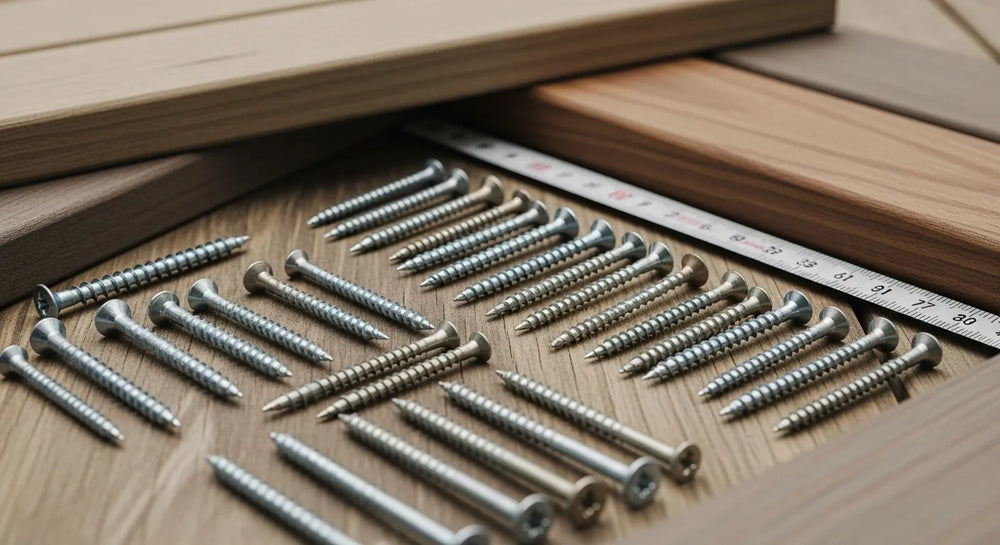
- Concrete Screw Anchors: These self-tapping anchors cut their own threads into the concrete as they are driven. Their embedment is determined by the length of the threaded portion designed to engage the concrete. They offer high performance and often allow for closer edge and spacing distances.
Concrete Strength and Composition
The quality and properties of the concrete itself are paramount.
- Compressive Strength (psi): Stronger concrete (higher PSI) can resist greater forces, allowing anchors to achieve higher load capacities at specified embedment depths. Weaker concrete will require deeper embedment or different anchor types to achieve equivalent capacities.
- Lightweight vs. Normal Weight Concrete: Lightweight concrete typically has lower compressive and tensile strengths, often requiring reduced anchor capacities or deeper embedment compared to normal weight concrete.
- Cracked vs. Uncracked Concrete Conditions: This is a critical distinction. Concrete in a building or structure is rarely truly "uncracked" due to shrinkage, thermal stresses, and imposed loads. Anchors designed for cracked concrete are tested and qualified to maintain their load capacity even when tensile stresses induce cracks that propagate through the anchor's effective embedment zone. This often necessitates deeper embedment or specialized anchor designs to ensure reliability under real-world conditions. Always assume cracked concrete conditions for safety unless a qualified engineer explicitly confirms uncracked conditions.
Load Type and Magnitude
Anchors must be designed to withstand the specific forces they will encounter.
- Tension Loads (Pull-out): Forces acting perpendicular to the concrete surface, trying to pull the anchor out. Embedment depth is crucial for resisting tension.
- Shear Loads (Lateral): Forces acting parallel to the concrete surface, trying to slide or cut the anchor. While embedment depth plays a role, anchor diameter and the strength of the anchor material are often more critical for shear resistance.
- Combined Loads: Most real-world applications involve both tension and shear, requiring complex engineering calculations to ensure the anchor system can handle the combined stresses.
- Static vs. Dynamic/Fatigue Loads: Static loads are constant. Dynamic or fatigue loads involve repeated cycles of loading and unloading (e.g., vibrating machinery). Dynamic loads can progressively weaken the concrete around an anchor over time, requiring conservative design and potentially deeper embedment or chemical anchoring solutions.
Edge Distance and Spacing
These geometric considerations are vital to prevent premature concrete failure.
- Edge Distance: The distance from the center of an anchor to the nearest free edge of the concrete element. If an anchor is too close to an edge, the concrete breakout cone can intersect the edge, reducing the effective volume of concrete resisting the load and significantly lowering the anchor's capacity. Minimum edge distances are specified by manufacturers and building codes.
- Spacing: The distance between the centers of adjacent anchors. If anchors are too close together, their individual concrete breakout cones can overlap, leading to a "group effect" where the combined capacity is less than the sum of their individual capacities. Minimum spacing is also critical for maintaining individual anchor performance.
Rebar and Obstructions
The presence of reinforcing steel (rebar) within the concrete poses significant challenges.
- Avoiding Rebar Hits: Drilling into rebar can damage the drill bit, compromise the rebar's structural integrity, and prevent proper anchor installation. Advanced methods like rebar scanning are essential before drilling, especially when deep embedment is required.
- Impact on Drilling and Anchor Performance: If an anchor must be installed near or through rebar, specific design considerations and specialized drilling techniques might be necessary, potentially affecting the permissible embedment depth or anchor type.
Environmental Conditions
The surrounding environment can impact anchor performance over time.
- Temperature and Moisture: Extreme temperatures or continuous exposure to moisture can affect the long-term performance of some anchors, particularly chemical adhesives.
- Chemical Exposure: Industrial environments may expose anchors to corrosive chemicals. In such cases, anchors made from stainless steel or other corrosion-resistant materials are essential, and their longevity will also factor into the overall integrity of the fastening system.
For a procurement manager under pressure to source a specific anchor with certified pull-out values, or an MRO buyer needing a reliable replacement for heavy machinery, these interwoven factors demand careful consideration. It’s not just about finding a part; it's about finding the right part that meets these rigorous performance requirements, which is precisely where the value of a platform like Maden.co, with its network of verified U.S. manufacturers, becomes indispensable.
Industry Standards and Best Practices: Your Guiding Principles
Navigating the complexities of anchor embedment requires adherence to established industry standards and best practices. These guidelines ensure that anchor installations meet critical safety and performance criteria, providing a framework for design, selection, and installation that minimizes risk and maximizes reliability.
ACI 318 (Building Code Requirements for Structural Concrete)
The American Concrete Institute (ACI) 318 is the definitive standard for concrete design and construction in the United States. Chapter 17 of ACI 318, "Anchoring to Concrete," is the gold standard for specifying anchor design and installation. It provides comprehensive methodologies for calculating the load capacity of various anchor types under different conditions, including cracked and uncracked concrete, seismic loads, and fire resistance. Engineers routinely refer to ACI 318 to determine the required embedment depth, edge distances, and spacing for anchors to safely resist specified tension and shear loads. Compliance with ACI 318 is not merely a recommendation; it is often a legal requirement for most construction and industrial projects.
IBC (International Building Code)
The International Building Code (IBC) is widely adopted across the United States as a model building code. It frequently references ACI 318 for concrete anchoring provisions. Therefore, meeting IBC requirements for anchoring often means adhering to the principles and calculations outlined in ACI 318. The IBC emphasizes safety, structural integrity, and performance, ensuring that anchor systems are robust enough to withstand the expected demands of their operational environment, including natural disasters.
Manufacturer Specifications: The Primary Source for Specific Anchor Embedment
While ACI 318 and IBC provide the overarching framework, the primary source for specific embedment depths, load capacities, and installation instructions for any given anchor is always the manufacturer's technical data. Each anchor is designed, tested, and rated for specific applications and conditions. Manufacturers provide detailed data sheets that include:
- Minimum and Maximum Embedment Depths: These define the permissible range for optimal performance.
- Load Tables: Showing tension and shear capacities for various embedment depths and concrete strengths.
- Edge Distance and Spacing Requirements: Critical for preventing concrete breakout.
- Installation Instructions: Specific drilling diameters, hole cleaning procedures, and torque requirements.
Ignoring manufacturer specifications is a significant risk that can lead to anchor failure, even if general industry standards are followed. At Maden.co, we emphasize connecting buyers with verified U.S. manufacturers who stand behind their products with transparent, accessible technical data. This commitment to Supply Chain Transparency ensures that procurement managers and engineers have direct access to the precise specifications needed for compliant and safe installations.
Safety Factors: Why Engineering Judgment is Crucial
Even with rigorous standards and manufacturer data, safety factors are an indispensable part of anchor design. These factors are applied to calculated load capacities to account for uncertainties in material properties, installation variability, long-term environmental effects, and unforeseen loads. An experienced engineer's judgment is critical in:
- Selecting appropriate safety factors: These can vary based on the criticality of the application, the type of load (static, dynamic, seismic), and the potential consequences of failure.
- Interpreting test data: Understanding how an anchor performs under various conditions.
- Addressing unique site conditions: Factors not explicitly covered by standard tables, such as irregular concrete, proximity to other utilities, or specific corrosive environments.
In industrial settings, where machinery vibrates, temperatures fluctuate, and structural integrity is paramount, leveraging the expertise of design engineers who understand these standards is crucial. And for those engineers and procurement teams, quick and reliable access to U.S.-made anchors that explicitly meet these standards, available through platforms like Maden.co, significantly streamlines the design and procurement process, bolstering Industrial Excellence.
Deep Dive into Anchor-Specific Embedment Guidelines
While general principles apply, the precise embedment guidelines vary significantly by anchor type. Understanding these specifics is vital for selecting the right anchor and ensuring its effective performance.
Wedge Anchors
Wedge anchors are post-installed mechanical expansion anchors known for their high strength and versatility. They consist of a threaded stud, an expansion clip (wedge), a nut, and a washer. Once drilled, the anchor is hammered into the hole. When the nut is tightened, the wedge is pulled upwards, expanding the clip against the concrete walls.
- Principle: Friction and mechanical interlock created by expansion.
- Typical Depths: Manufacturer specifications are paramount, but general guidelines often recommend an embedment depth of at least 10-12 times the anchor diameter for optimal performance in uncracked concrete, and often deeper for cracked concrete applications. For example, a 1/2-inch diameter wedge anchor might require a minimum effective embedment of 5-6 inches. Deeper embedment generally increases pull-out strength up to the point of critical embedment.
- Uses: Securing structural steel, heavy machinery, racking, and other high-load applications.
Sleeve Anchors
Sleeve anchors are versatile, light-to-medium duty mechanical anchors. They consist of a threaded bolt, a metal sleeve, a washer, and a nut. As the nut is tightened, a conical expansion plug at the bottom of the bolt pulls into the sleeve, forcing it to expand against the sides of the drilled hole.
- Principle: Friction and expansion against the hole.
- Typical Depths: Embedment is determined by the length of the sleeve. They are often available in various lengths to accommodate different fixture thicknesses and desired embedment depths. A common rule of thumb is at least 4-8 times the anchor diameter, but always follow the manufacturer's specific data for the sleeve length chosen.
- Uses: Attaching lighter fixtures, railings, shelving, and electrical components.
Drop-In Anchors
Drop-in anchors are internally threaded, pre-set anchors designed for flush mounting in concrete. They require a setting tool to expand them after insertion into the drilled hole. This expansion creates a positive interlock within the concrete.
- Principle: Internal mechanical expansion creating a keying action.
- Typical Depths: The required embedment for a drop-in anchor is fixed by its design and the length of its internal expander. It's crucial that the anchor is fully seated and the setting tool properly engages to ensure complete expansion. For instance, a quality component like the BN Products 3/8 Inch Inside Thread Sanko Drop-In Concrete Anchor will have a specific, non-negotiable embedment depth to ensure optimal performance and load capacity. This depth typically corresponds to the full length of the anchor sleeve.
- Uses: Overhead applications for threaded rod (e.g., hanging conduit, pipe supports, suspended ceilings), as well as general purpose fastening where a flush surface is desired.
Concrete Screw Anchors
Concrete screw anchors are self-tapping anchors that cut their own threads into the concrete as they are driven into a pre-drilled pilot hole. They are increasingly popular due to their ease of installation, high performance, and often allow for reusability in certain situations (though typically not recommended for critical structural applications after removal).
- Principle: Threading into the concrete creates a mechanical interlock.
- Typical Depths: Embedment depth is typically determined by the length of the threaded portion of the screw designed to engage the concrete. Manufacturers will specify minimum and maximum embedment depths, which often correlate with different load capacities. For robust applications, longer screws will generally provide higher pull-out resistance.
- Uses: Versatile for many applications from light to heavy duty, including bracing, temporary fixings, and permanent installations where speed and ease are important.
Chemical Anchors (Adhesive Anchors)
Chemical anchors involve injecting a resin or epoxy into a drilled hole, into which a threaded rod or rebar is then inserted. The adhesive cures, bonding the anchor element to the concrete.
- Principle: Chemical adhesion and mechanical interlock with the roughness of the hole.
- Typical Depths: These anchors offer the most flexibility in terms of embedment depth. Deeper embedment significantly increases the bond area and thus the load capacity, often making them the preferred choice for very heavy loads, seismic applications, or situations requiring high resistance to dynamic loads. Engineers can specify the embedment depth based on the required load, concrete strength, and environmental conditions.
- Uses: Structural connections, rebar doweling, seismic applications, heavy machinery, and critical safety installations.
It is paramount to always consult the specific manufacturer's technical data for the exact anchor being used, as variations exist even within the same anchor type. This meticulous attention to detail is why sourcing from verified U.S. manufacturers, accessible through platforms like Maden.co, is crucial for industrial buyers who demand precision and reliability.
The Criticality of Proper Installation: Beyond Just Depth
Even with the correct anchor type and specified embedment depth, installation errors can negate all careful planning, leading to compromised load capacity and potential failure. Proper installation is an art and a science, demanding precision and adherence to manufacturer guidelines at every step.
Drilling the Hole
The foundation of any good anchor installation is a perfectly drilled hole.
- Diameter Accuracy: The drill bit diameter must precisely match the manufacturer's specification. A hole that is too small prevents proper anchor insertion or expansion; one that is too large reduces the anchor's grip and load capacity.
- Depth Accuracy: The hole must be drilled to the exact specified depth. For mechanical anchors, this usually means slightly deeper than the effective embedment to allow for dust accumulation. For chemical anchors, it's the depth of the intended bond.
- Perpendicularity: The hole must be drilled perpendicular to the concrete surface. An angled hole can lead to uneven stress distribution, reduced embedment, and premature failure.
- Tooling: Use a rotary hammer drill with the correct carbide-tipped bit for efficient and accurate drilling in concrete. For specialized applications or extremely hard concrete, diamond core drilling may be required.
Hole Cleaning
This step is arguably the most overlooked and yet one of the most critical, particularly for expansion and chemical anchors.
- Absolute Necessity: Dust and debris left in the drilled hole can prevent mechanical anchors from expanding fully or chemical adhesives from bonding properly to the concrete.
- Procedure: After drilling, the hole must be thoroughly cleaned using a stiff wire brush and then blown out with compressed air (oil-free). This process should be repeated several times until no dust is visible. For critical chemical anchor applications, a vacuum system is often specified for superior dust removal.
Setting the Anchor
The final mechanical engagement or chemical bonding of the anchor.
- Correct Tools: For mechanical anchors, specialized setting tools are often required to ensure proper expansion. For example, installing expansion anchors precisely often requires specific chucks. For concrete anchor shear connectors, having the right tool is essential for proper engagement. You can find robust solutions like a 1-Headed Concrete Anchor Shear Connector Chuck or a complete Concrete Anchor Shear Connector Chuck Set on Maden.co, ensuring your team has the exact tools for a secure installation.
- Proper Expansion/Curing: For mechanical anchors, this means ensuring the expansion mechanism is fully engaged without overtightening or stripping. For chemical anchors, it involves careful mixing of components (if applicable), proper injection without voids, and allowing sufficient curing time as specified by the manufacturer, which is dependent on temperature and humidity.
Torqueing (Mechanical Anchors)
For most mechanical expansion anchors, applying the correct torque is vital.
- Manufacturer-Specified Torque Values: These values are determined through rigorous testing to optimize expansion and engagement without overstressing the anchor or the concrete.
- Consequences of Incorrect Torque: Undertorquing results in insufficient expansion and reduced load capacity. Overtorquing can lead to anchor steel failure, concrete spalling, or micro-cracking around the anchor, compromising its long-term performance. Use a calibrated torque wrench for accurate application.
Inspection and Quality Control
Even after installation, vigilance is key.
- Visual Inspection: Check for proper seating, absence of damage, and correct expansion (where visible).
- Load Testing: For critical or uncertain applications, on-site proof load testing may be required to verify anchor capacity.
- Documentation: Maintain detailed records of anchor type, size, embedment depth, installation date, and installer for future reference and compliance.
Maden.co understands that the best American-made products require meticulous installation. Our commitment to Industrial Excellence extends to empowering buyers with the knowledge and access to components that facilitate proper installation, ensuring the highest standards of safety and performance for critical infrastructure.
Sourcing Excellence: Why U.S.-Made Anchors Matter for Critical Applications
In the complex world of industrial procurement, the choice of where and how to source components profoundly impacts project outcomes, operational longevity, and bottom-line costs. When it comes to concrete anchors—critical components for structural integrity—the decision to prioritize U.S.-made products offers distinct, strategic advantages that extend far beyond simple price comparisons.
Compliance with Stringent Industry Standards
U.S.-manufactured anchors are designed, tested, and certified to meet the highest and most rigorous standards in the world, including ACI 318, IBC, and various ASTM specifications. This ensures:
- Guaranteed Performance: Products are engineered for specific load capacities and concrete conditions (e.g., cracked concrete), providing reliable performance data.
- Regulatory Adherence: Compliance simplifies project approvals and reduces the risk of costly rework or legal liabilities due to non-conforming materials.
- Transparent Documentation: Verified manufacturers provide comprehensive technical data, including material certifications, test reports, and detailed installation instructions, which are crucial for design engineers and quality assurance teams.
Uncompromising Quality and Reliability
American manufacturing is synonymous with precision engineering, superior materials, and stringent quality control. This commitment to quality in U.S.-made anchors translates to:
- Consistent Material Properties: Anchors manufactured in the U.S. typically use high-grade steel and other materials, ensuring consistent strength, ductility, and corrosion resistance.
- Reduced Defect Rates: Robust quality assurance processes minimize manufacturing defects, leading to a lower failure rate during installation and throughout the anchor's service life.
- Long-Term Durability: High-quality American-made anchors are built to withstand the demands of industrial environments, contributing to greater asset reliability and reduced maintenance cycles.
Enhanced Supply Chain Resilience
Recent global events have underscored the vulnerabilities inherent in extended, fragmented supply chains. Sourcing U.S.-made anchors provides significant advantages in terms of resilience:
- Mitigated Geopolitical Risks: Reduces reliance on international shipping and avoids delays caused by global trade disruptions, tariffs, or political instability.
- Faster Lead Times: Shorter shipping distances and streamlined logistics translate to quicker delivery, which is vital for time-sensitive projects or urgent MRO needs.
- Improved Agility: The ability to respond more rapidly to unexpected demand spikes or changes in project requirements.
Optimizing Total Cost of Ownership (TCO)
While the initial purchase price might seem higher, the TCO of U.S.-made anchors is often significantly lower when considering the broader economic picture:
- Reduced Failures and Rework: High-quality components and reliable performance minimize the risk of anchor failures, costly replacements, and associated labor.
- Extended Service Life: Durable anchors contribute to the longevity of the entire fastened system, deferring major capital expenditures.
- Operational Continuity: Reliable anchoring systems prevent equipment downtime, safeguarding productivity and profitability.
- Fewer Hidden Costs: Avoidance of expensive quality inspections, expedited shipping fees for non-conforming parts, and potential legal fees from structural failures.
Maden.co's Pivotal Role: Democratizing Access to American Manufacturing
At Maden.co, our mission is to democratize access to American manufacturing, making it as accessible and convenient as any global alternative. We achieve this by connecting industrial buyers – from procurement managers to design engineers and MRO buyers – with over 2.5 million American-made products from our network of 800+ verified U.S. manufacturers.
- American Manufacturing Pride: We champion the quality, innovation, and reliability inherent in American-made products. Our platform is a testament to the fact that "America's manufacturing revival is here."
- Digital Innovation: We leverage technology to create a seamless, efficient B2B marketplace, reducing procurement friction and connecting buyers directly to a vast catalog of hard-to-find, U.S.-made components.
- Supply Chain Transparency: We provide clear visibility into product specifications, manufacturer details, and certifications, empowering buyers to make informed decisions with confidence.
- Industrial Excellence: Our platform is dedicated to supporting the highest standards in industrial operations by providing access to components that meet rigorous performance criteria.
- Customer Empowerment: We put the buyer in control, offering comprehensive search tools, detailed product information, and strategic financial options to streamline their procurement process.
We believe that every qualified U.S. manufacturer deserves a direct path to market. Are you a U.S. manufacturer looking to expand your reach and contribute to the American manufacturing revival? We invite you to register as a vendor and join our growing network.
By choosing Maden.co, buyers are not just purchasing anchors; they are investing in certainty, resilience, and the strategic advantages that only U.S.-made quality can deliver. You can learn more about our mission to champion American manufacturing here.
Simplifying Procurement for Complex Needs with Maden.co
For procurement managers facing tight deadlines, design engineers needing precise material certifications, or MRO buyers dealing with unexpected equipment breakdowns, the sourcing process for critical components like concrete anchors can be fraught with challenges. The complexity of determining "how far into concrete should anchors go" directly translates into the need for accurate, verified products and reliable suppliers. Maden.co is purpose-built to address these very challenges.
We understand that sourcing a specialized anchor isn't just about finding any anchor; it's about finding the exact American-made anchor that meets stringent compliance requirements (e.g., ACI 318, DIN, NPT), specific material certifications, and the load-bearing capacities vital for safety and performance. The traditional sourcing methods often involve navigating fragmented supply chains, vetting multiple suppliers, and deciphering ambiguous product data, all of which consume valuable time and introduce significant risk.
Maden.co revolutionizes this process by offering:
- Verified Manufacturers and Products: Our network comprises over 800+ verified U.S. manufacturers, ensuring that every product listed, including critical concrete anchors, meets the highest quality and compliance standards. This eliminates the uncertainty often associated with sourcing from unknown origins.
- Comprehensive Product Data: We provide detailed specifications, technical data sheets, and where applicable, material certifications directly on our platform, allowing design engineers to quickly find components that align with their precise requirements.
- Reduced Procurement Friction: Our intuitive platform simplifies the search and selection process, saving procurement managers invaluable time and reducing the administrative burden. For a procurement manager under pressure to source a specific anchor with certified pull-out values, or an MRO buyer needing a reliable replacement for heavy machinery, the ability to quickly find and finance a verified, U.S.-made part is a game-changer.
- Strategic Financial Tools: We recognize that large-volume purchases or capital-intensive projects require flexible financial solutions. That's why we offer Instant Financing directly at checkout. This strategic tool allows businesses to manage cash flow effectively, make larger and more timely purchases, and ensure that critical projects are not delayed due to payment cycles. It's not just a payment method; it's a strategic enabler for efficient and responsive procurement.
By partnering with Maden.co, businesses gain a strategic ally in building a more reliable, efficient, and resilient procurement process. We equip you with the tools and access to the highest quality American-made products, ensuring that when you ask "how far into concrete should anchors go," you also have the confidence to procure the best solution for the job. If you have specific sourcing questions, our team is ready to help; you can always contact us here.
Conclusion
Understanding "how far into concrete should anchors go" is a cornerstone of safe and reliable industrial operations. It’s a technical inquiry with profound implications for structural integrity, operational efficiency, and long-term asset value. We've explored the intricate interplay of anchor types, concrete characteristics, load dynamics, and environmental factors, all governed by rigorous industry standards like ACI 318 and IBC. Furthermore, we’ve highlighted the absolute criticality of meticulous installation, from precise drilling and thorough hole cleaning to correct torque application.
In an era where supply chain resilience and uncompromising quality are more vital than ever, the strategic choice to source U.S.-made anchors offers unparalleled advantages. These products guarantee adherence to stringent standards, superior reliability, and a fortified supply chain that protects against disruptions and hidden costs. At Maden.co, we are committed to making these superior American-made components easily accessible to every procurement manager, MRO buyer, and design engineer.
Our platform stands as a testament to the American manufacturing revival, providing transparent access to over 2.5 million products from 800+ verified U.S. manufacturers. We empower you to secure the high-performance anchors and related tools necessary for optimal embedment and unwavering structural integrity. Don't compromise on safety, quality, or efficiency. Explore the extensive catalog of U.S.-made anchors and industrial components on Maden.co today. For capital-intensive projects or larger volume purchases, remember that you can apply for Instant Financing directly at checkout to streamline your procurement and maintain robust cash flow. Partner with Maden.co, and build with confidence.
FAQ
Q1: What is the most critical factor in determining anchor embedment depth?
A1: The most critical factor is the anchor manufacturer's specific technical data, which incorporates comprehensive testing and design principles to meet industry standards like ACI 318. While concrete strength, load type, and edge distance are vital considerations, the manufacturer's specified minimum and optimal embedment depths, along with their installation instructions, are paramount for ensuring the anchor performs to its rated capacity.
Q2: Why is "cracked concrete" a significant consideration for anchor embedment?
A2: Concrete is frequently in a "cracked" state due to drying shrinkage, thermal stresses, or applied loads, even before an anchor is installed. Cracks can propagate through the anchor's effective embedment zone, significantly reducing its load-carrying capacity if the anchor is not specifically designed and tested for cracked concrete conditions. Anchors qualified for cracked concrete often require deeper embedment or have specialized designs to ensure reliable performance under these common real-world conditions, providing an essential safety margin.
Q3: Can I reuse a concrete anchor once it has been removed?
A3: Generally, mechanical concrete anchors (like wedge or sleeve anchors) are designed for single-use applications. Their expansion mechanisms can be permanently deformed or weakened upon removal, compromising their ability to achieve their rated load capacity if reinstalled. While some concrete screw anchors may appear reusable, it is highly recommended to never reuse anchors in critical structural or safety-related applications. Always consult the manufacturer's guidelines, and when in doubt, use a new anchor to ensure optimal performance and safety.
Q4: How does Maden.co help ensure I get the right anchor for my embedment needs?
A4: Maden.co connects you directly with over 800+ verified U.S. manufacturers, providing access to more than 2.5 million American-made products. Our platform offers comprehensive product data, including detailed specifications, technical data sheets, and certifications directly from the manufacturer. This allows procurement managers and design engineers to easily find anchors with the precise embedment depths, load capacities, and material properties required for compliant and safe installations, ensuring Supply Chain Transparency and Industrial Excellence.


