
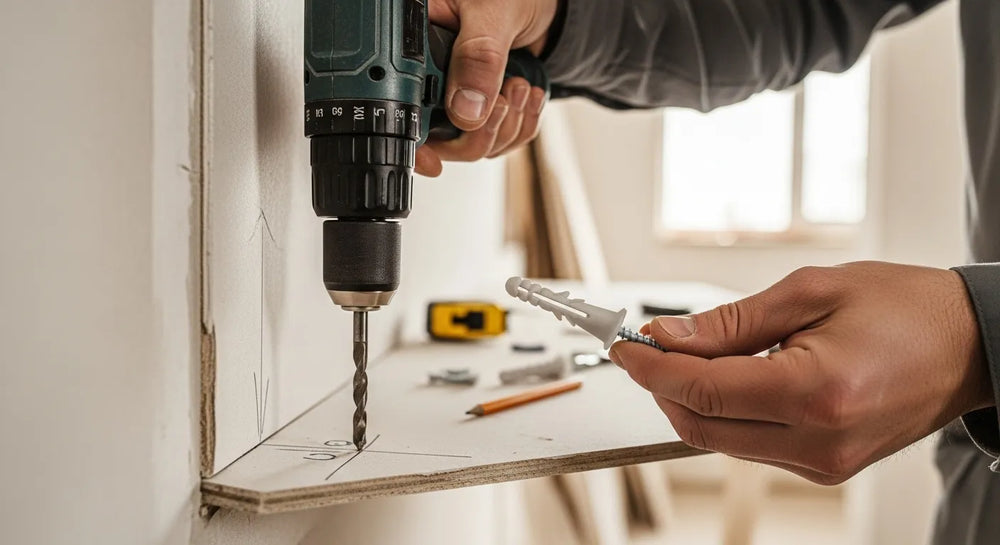
Anchoring a 4x4 to Concrete: Industrial Best Practices
Table of Contents
- Introduction
- Understanding the Importance of Secure Anchoring
- Key Considerations Before You Start
- Choosing the Right Anchoring Method for Your 4x4
- Step-by-Step Guide: Anchoring a 4x4 to Concrete
- Optimizing Your Procurement Strategy with U.S.-Made Components
- Why Partner with Maden.co for Your Industrial Sourcing Needs
- Conclusion
- FAQ
Introduction
In the demanding world of industrial construction, facility maintenance, and custom fabrication, the integrity of every structural connection is paramount. A seemingly simple task, like anchoring a 4x4 post to a concrete foundation, can underpin the safety, stability, and longevity of critical infrastructure—from machinery mounts and racking systems to outdoor structures and protective barriers. For procurement managers, MRO buyers, and design engineers, understanding the nuances of such foundational tasks isn't merely about mechanics; it's about ensuring compliance, mitigating risk, and optimizing the total cost of ownership (TCO). A poorly anchored post can lead to costly structural failures, safety hazards, and operational disruptions. This comprehensive guide will delve into the critical considerations, proven methods, and strategic sourcing insights required to securely anchor a 4x4 to concrete, ensuring industrial excellence and robust performance in every application. We will explore various anchoring techniques, discuss material selection, and highlight how leveraging verified U.S.-made products can enhance project reliability and streamline your procurement processes.
Understanding the Importance of Secure Anchoring
The seemingly straightforward act of fastening a wooden post to a concrete base carries significant implications in industrial settings. From supporting heavy machinery to creating protective barriers or foundational frameworks, the stability of a 4x4 anchored to concrete is often critical to operational safety and structural integrity.
Why Secure Anchoring Matters for Industrial Applications
In an industrial environment, anchors are rarely decorative; they are functional components subjected to various stresses:
- Dynamic Loads: Equipment vibration, machinery movement, or even environmental factors like wind can exert considerable dynamic loads on anchored posts.
- Static Loads: The inherent weight of the structure or equipment supported by the 4x4 creates constant static pressure that must be securely managed.
- Shear and Tension Forces: Depending on the application, anchors may face forces attempting to pull them out (tension) or push them sideways (shear), requiring robust solutions.
For a procurement manager under pressure to source a specific DIN 931 compliant hex cap screw, a design engineer needing specific material certifications for a new prototype, or an MRO buyer facing an unexpected equipment breakdown, the ability to quickly find and finance a verified, U.S.-made part is a game-changer. Just as critical is the reliability of the anchors themselves, which prevent failures that could lead to extensive downtime, repair costs, or even injury.
Common Scenarios Requiring 4x4 Anchoring
Anchoring 4x4 posts to concrete is a ubiquitous requirement across various industrial and commercial projects:
- Fencing and Barrier Systems: Securing perimeter fences, safety barriers around hazardous areas, or guide posts.
- Deck and Structure Supports: Providing foundational support for elevated walkways, equipment platforms, or loading dock extensions.
- Equipment Mounting: Creating stable bases for machinery, control panels, or storage racks where direct concrete mounting isn't feasible.
- Formwork and Temporary Structures: While often temporary, these require strong, reliable anchoring during construction phases.
- Signage and Bollards: Anchoring critical industrial signage or protective bollards for impact resistance.
The Risks of Improper Anchoring
The repercussions of inadequate anchoring extend far beyond minor inconvenience. They encompass:
- Structural Failure: A compromised anchor can lead to the collapse of the supported structure, causing extensive damage and potential loss of valuable assets.
- Safety Hazards: Unstable posts pose serious risks to personnel, leading to accidents, injuries, or worse. This is particularly critical in high-traffic or hazardous industrial zones.
- Regulatory Non-Compliance: Many industrial applications are governed by strict building codes and safety regulations. Failing to meet these standards due to poor anchoring can result in fines, project delays, or legal liabilities.
- Increased Maintenance and Repair Costs: Continuously repairing or reinforcing poorly anchored structures drains resources, time, and budget that could be allocated to more productive endeavors.
- Operational Downtime: Any failure requiring repairs will inevitably lead to downtime, impacting productivity and profitability—a critical concern for any MRO buyer.
Understanding these risks underscores the importance of a meticulous approach to selecting and installing anchoring solutions. At Maden.co, we emphasize Supply Chain Transparency and Industrial Excellence, ensuring that the components you source meet the highest standards, thereby mitigating these very risks.
Key Considerations Before You Start
Before drilling a single hole, a thorough assessment of several critical factors is essential. These considerations will guide your choice of anchoring method and ensure the long-term success of your installation.
Assessing the Concrete Foundation
The condition and type of concrete are fundamental to effective anchoring.
- Concrete Strength: New concrete typically offers higher compressive strength than older, weathered concrete. The strength directly impacts an anchor's pull-out and shear capacities. Check blueprints or conduct tests if the concrete's age and mix are unknown.
- Cracks and Damage: Avoid anchoring into damaged, spalled, or heavily cracked concrete. These areas have compromised integrity and will not provide a reliable hold.
- Reinforcement (Rebar): Drilling into rebar can damage your drill bit, weaken the rebar, and potentially compromise the concrete's structural integrity. Utilize rebar scanners to locate embedded reinforcement before drilling.
- Concrete Type: Standard concrete, lightweight concrete, or post-tensioned slabs all have different characteristics that influence anchor performance. Post-tensioned slabs, in particular, require expert assessment to avoid severe structural damage.
Environmental Factors and Material Selection
The operational environment significantly dictates the choice of materials for both the anchor and any associated fasteners.
- Moisture and Chemical Exposure: In outdoor or industrial environments with high humidity, exposure to water, or corrosive chemicals, galvanized or stainless steel anchors (e.g., 304 or 316 stainless steel) are imperative to prevent corrosion and premature failure. Carbon steel anchors, if used, must be adequately protected.
- Temperature Fluctuations: Extreme temperature swings can affect the performance of some chemical anchors and the expansion/contraction of metal components.
- Vibration: Applications with constant vibration (e.g., near heavy machinery) may necessitate specialized vibration-resistant anchors or chemical anchoring systems.
- Load Type: Is the load primarily static, dynamic, or subject to impact? This will influence the required anchor strength and embedment depth.
Load Requirements and Structural Integrity
Understanding the forces the anchored 4x4 will encounter is crucial for selecting an appropriate anchor and ensuring the overall structural integrity.
- Weight of the Supported Structure: Calculate the dead load (fixed weight) and live load (variable weight, e.g., personnel, equipment contents) that the 4x4 will bear.
- Wind and Seismic Loads: For outdoor structures or those in seismically active zones, these forces must be calculated by an engineer and factored into anchor selection.
- Shear and Tension: Determine if the primary forces will be trying to pull the anchor out (tension) or slide it sideways (shear). Many anchors are optimized for one type of force more than the other, or they may be rated for combined forces.
- Factor of Safety: Always apply an appropriate factor of safety, often specified by building codes or engineering standards, to calculated loads to ensure anchors can withstand unexpected stresses.
Compliance and Standards
Adhering to industry standards and local building codes is non-negotiable for industrial installations.
- ICC-ES (International Code Council Evaluation Service): Many high-performance anchors carry an ICC-ES evaluation report, indicating they have been tested and comply with specific building code requirements (e.g., AC193 for mechanical anchors, AC308 for post-installed anchors in cracked and uncracked concrete).
- Manufacturer Specifications: Always follow the anchor manufacturer's recommended installation procedures, load tables, and material compatibility guidelines. Deviating from these can void warranties and compromise performance.
- Local Building Codes: Consult local authorities to ensure your chosen anchoring method and materials meet all regional building codes and safety regulations. This is particularly important for commercial and industrial structures where inspections are common.
- Material Certifications: For critical applications, ensure that anchors and associated fasteners come with material certifications, verifying their composition and mechanical properties. This level of Supply Chain Transparency is a core value at Maden.co, connecting you with verified U.S. manufacturers who stand behind their products.
By meticulously evaluating these considerations, you lay the groundwork for a secure, compliant, and durable anchoring solution.
Choosing the Right Anchoring Method for Your 4x4
Selecting the appropriate anchoring method is pivotal to the success and longevity of your 4x4 installation. The choice depends heavily on the load requirements, environmental conditions, and the specifics of the concrete substrate. Broadly, anchoring systems can be categorized into mechanical and chemical methods, with some specialized options for heavy-duty applications.
Mechanical Anchors: Strength and Reliability
Mechanical anchors function by creating friction or a positive interlock within the drilled hole in the concrete. They are generally fast to install and provide immediate load-bearing capacity.
Wedge Anchors
Wedge anchors are among the most common and versatile mechanical anchors. They consist of a threaded rod with an expansion clip at one end and a nut and washer at the other.
- How they work: As the nut is tightened, the tapered end of the anchor pulls the expansion clip against the sidewalls of the drilled hole, creating a powerful friction-based grip.
- Best for: Heavy-duty applications in solid concrete, offering high shear and tensile strengths.
- Pros: Easy to install, immediate load, widely available.
- Cons: Not ideal for cracked concrete, may require precise hole diameter, can sometimes induce stress in concrete.
Sleeve Anchors
Sleeve anchors are similar to wedge anchors but use a pre-assembled sleeve that expands as the nut is tightened.
- How they work: The threaded bolt pulls a cone-shaped nut into the expanding sleeve, which then presses against the concrete.
- Best for: Light to medium-duty applications in concrete, brick, or block. More forgiving than wedge anchors for slightly oversized holes.
- Pros: Versatile for various masonry materials, easy to install.
- Cons: Lower load capacity than wedge anchors, less suitable for heavy dynamic loads.
Drop-In Anchors
BN Products 3/8-inch Inside Thread Sanko Drop-In Concrete Anchors are female-threaded anchors designed for flush mounting into concrete, allowing for subsequent bolt insertion.
- How they work: After drilling a hole, the drop-in anchor is inserted flush with the concrete surface. A setting tool is then used to drive an internal plug downwards, expanding the anchor's body against the hole walls. A threaded rod or bolt can then be screwed into the anchor.
- Best for: Applications where a flush mount is desired, or when you need to remove and re-attach the fixture multiple times. Suitable for light to medium loads.
- Pros: Flush finish, allows for easy fixture removal and re-attachment, quick installation.
- Cons: Requires a specific setting tool, not suitable for very heavy dynamic loads unless oversized.
- Strategic Sourcing: For projects requiring such specific, reliable components, exploring our comprehensive catalog on Maden.co offers distinct advantages. Our platform ensures Digital Innovation by simplifying the search for precise, high-quality American-made industrial components.
Chemical Anchors: High Performance and Versatility
Chemical anchors (also known as adhesive anchors or epoxy anchors) utilize a resin to create a strong bond between the anchor rod and the concrete. They offer superior performance in many challenging conditions.
Epoxy-Based Systems
Epoxy resins provide excellent bond strength and resistance to chemicals and moisture.
- How they work: A two-part epoxy resin is injected into a drilled hole (after cleaning), and a threaded rod or rebar is inserted. The epoxy cures, forming a molecular bond with both the concrete and the anchor element.
- Best for: Heavy-duty applications, cracked concrete, seismic zones, and corrosive environments.
- Pros: Very high load capacities (often exceeding mechanical anchors), excellent chemical resistance, ideal for cracked concrete, creates a watertight seal.
- Cons: Longer cure times, requires careful mixing and application, temperature sensitive during installation.
Acrylic-Based Systems
Acrylic resins are faster-curing than epoxies, making them suitable for projects with tighter deadlines.
- How they work: Similar to epoxy, but with a different chemical composition allowing for quicker curing.
- Best for: Medium to heavy-duty applications where fast cure times are critical.
- Pros: Faster cure times, good bond strength, often more tolerant of damp conditions than some epoxies.
- Cons: Slightly lower ultimate strength and chemical resistance compared to high-grade epoxies.
Hybrid Systems
Vinylester or polyester resins combine properties of both epoxy and acrylic, often balancing cure time with strength and versatility.
- How they work: These resins offer a blend of good bond strength, moderate cure times, and decent chemical resistance.
- Best for: General-purpose, heavy-duty applications, often a good balance of performance and ease of use.
- Pros: Good all-around performance, versatile.
- Cons: Performance varies widely by specific formulation.
Post-Installed Anchors vs. Cast-In-Place Anchors
While this guide focuses on anchoring to existing concrete (post-installed), it's worth noting the distinction:
- Post-Installed Anchors: Installed into hardened concrete (as discussed above). Offers flexibility in placement.
- Cast-In-Place Anchors: Embedded directly into wet concrete during the pouring phase. Offers ultimate strength but requires precise pre-planning. While highly robust, they lack the flexibility of post-installed methods if adjustments are needed after the pour.
Specialty Anchors for Heavy-Duty Applications
For applications requiring exceptional strength or specific structural connections, specialized anchors are available. These often go beyond simply anchoring a 4x4 to a flat surface.
- Shear Connectors: These are critical in composite construction, for example, to tie concrete slabs to steel beams, or in situations where extreme shear forces are expected. They are designed to transfer lateral forces efficiently. A 1-Headed Concrete Anchor Shear Connector Chuck is a specialized tool used in conjunction with a stud welding machine to weld headed shear connectors to steel beams or plates. This system allows for the creation of incredibly strong, permanent connections that are integral to composite structures. For applications requiring consistent, high-volume work with these robust fasteners, a Concrete Anchor Shear Connector Chuck Set ensures you have the right tools for various stud diameters, enhancing efficiency and consistency on large-scale projects.
- Anchor Bolts with Base Plates: For very heavy structures, a steel base plate is often bolted to the concrete using multiple robust anchor bolts (mechanical or chemical), and the 4x4 post is then fastened to this plate. This distributes the load more effectively.
The decision among these methods should always be informed by engineering calculations, manufacturer recommendations, and local building codes. On Maden.co, we empower procurement professionals by providing access to a vast network of over 800+ verified U.S. manufacturers, ensuring you can find the specific, high-quality anchoring solutions needed for even the most demanding applications. Are you a qualified U.S. manufacturer? Register as a vendor and join the American manufacturing revival.
Step-by-Step Guide: Anchoring a 4x4 to Concrete
Once you've selected your anchoring method, following a precise installation process is crucial for ensuring the anchor's full performance and the long-term stability of your 4x4 post. This general guide covers common steps, but always refer to the specific manufacturer's instructions for your chosen anchors.
Tools and Materials Required
Before starting, gather all necessary tools and materials to ensure a smooth and efficient process.
- Safety Gear: Safety glasses, gloves, dust mask, hearing protection.
- Hammer Drill: Essential for drilling into concrete. Ensure it has a hammer function.
- Concrete Drill Bits: Carbide-tipped bits, sized precisely to your anchor's diameter. (Crucial for proper anchor expansion/bonding).
- Measuring Tape and Pencil/Marker: For accurate layout.
- Level: To ensure the 4x4 is plumb.
- Impact Wrench or Torque Wrench: For tightening mechanical anchors to specified torque.
- Brush and Vacuum/Compressed Air: For cleaning drilled holes (critical for chemical anchors).
- Caulking Gun (for chemical anchors): Heavy-duty gun for dispensing resin.
- Anchor-Specific Setting Tool (for drop-in anchors).
- Concrete Anchors: Your chosen mechanical or chemical anchors.
- Post Base/Bracket: A steel bracket designed to connect the 4x4 to the concrete. Available in various designs (e.g., standoff, flush).
- Fasteners for Post Base: Appropriate bolts or screws to secure the 4x4 into the post base.
- Lumber: The 4x4 post itself.
- Wood Preservative/Sealant: Recommended for any cut ends or surfaces that will be exposed to moisture, especially where the wood meets the post base.
Preparation: Safety First and Site Assessment
- Safety First: Always wear appropriate personal protective equipment (PPE). Concrete dust can be harmful if inhaled, and drilling creates noise and potential flying debris.
- Marking the Location: Precisely determine where the 4x4 post will be located. Use a measuring tape and marker to mark the exact center point or the footprint of your post base on the concrete.
- Layout for Post Base: Position your chosen post base on the marked location. Use its pre-drilled holes as a template to mark the exact locations for your anchor holes. Double-check these marks for accuracy.
- Check for Obstructions: Before drilling, use a rebar scanner or consult blueprints to ensure no rebar, conduit, or utility lines are present beneath your marked drill points. Drilling into these can cause significant issues.
- Clean the Area: Ensure the concrete surface is clean and free of debris, dust, or standing water.
Drilling the Pilot Holes: Precision is Key
- Select the Correct Drill Bit: Use a carbide-tipped hammer drill bit that precisely matches the diameter specified by your anchor manufacturer. Using an incorrect size will compromise anchor performance.
- Set Drill Depth: Many hammer drills have a depth gauge. Set the drilling depth according to the anchor manufacturer's specifications. This is crucial for achieving full embedment.
- Drill Perpendicularly: Hold the hammer drill firmly and ensure the bit is perpendicular to the concrete surface. Apply consistent, steady pressure. Allow the hammer action of the drill to do the work. Avoid rocking the drill, which can create an oversized or irregular hole.
-
Clean the Holes: This step is critical, especially for chemical anchors, but also beneficial for mechanical anchors.
- Blow out dust: Use compressed air or a hand pump to blow out concrete dust from the hole.
- Brush: Use a wire brush (sized for the hole) to scrub the inside walls.
- Blow out again: Repeat the blowing step until the hole is completely free of dust. This ensures proper expansion for mechanical anchors and optimal bonding for chemical anchors.
Anchor Installation: Method-Specific Techniques
Installing Mechanical Anchors (e.g., Wedge Anchors, Sleeve Anchors)
- Insert the Anchor: Carefully insert the mechanical anchor into the cleaned, pre-drilled hole. For wedge anchors, the threaded end typically faces up. For sleeve anchors, the assembly is inserted.
- Position the Post Base: Place the post base over the anchors, aligning the holes.
- Tighten the Nut: Using a wrench or impact driver, gradually tighten the nut(s) on the anchor. For wedge anchors, you'll feel resistance as the expansion clip engages. For sleeve anchors, the sleeve will expand.
- Torque to Specification: It is crucial to tighten mechanical anchors to the manufacturer's specified torque settings using a torque wrench. Overtightening can damage the concrete or the anchor; undertightening will result in insufficient holding power.
Installing Chemical Anchors (e.g., Epoxy, Acrylic, Vinylester)
- Prepare the Resin: Load the chemical anchor cartridge into a heavy-duty caulking gun. Dispense a small amount onto a scrap surface until the mixed resin flows uniformly (ensure the two components are thoroughly blended).
- Inject Resin: Starting from the bottom of the cleaned hole, slowly inject the resin. Fill the hole approximately 2/3 full, allowing the anchor rod to displace the excess.
- Insert Anchor Rod/Bolt: Slowly twist the threaded rod or bolt into the resin-filled hole until it reaches the bottom or the specified embedment depth. Ensure complete coverage of the rod with resin.
- Cure Time: Do not apply any load to the anchor until the resin has fully cured. Refer to the manufacturer's technical data sheet for specific cure times, which vary based on temperature.
- Attach Post Base: Once cured, attach the post base over the protruding anchor rod(s) and secure with washers and nuts, tightening to the manufacturer's recommended torque.
For specific high-strength requirements, such as those involving composite construction, tools like the 1-Headed Concrete Anchor Shear Connector Chuck and the Concrete Anchor Shear Connector Chuck Set are essential for welding shear connectors to steel, ensuring an unyielding bond between structural elements. This level of specialized tooling and material sourcing is readily available through our marketplace.
Securing the 4x4 Post
- Insert 4x4: Place the 4x4 post into the post base.
- Level and Plumb: Use a level to ensure the post is perfectly plumb (vertically straight) in both directions.
- Fasten to Base: Secure the 4x4 to the post base using appropriate fasteners (e.g., structural screws, bolts) as recommended by the post base manufacturer. These typically pass through pre-drilled holes in the base and into the wood.
- Apply Wood Protection (Optional but Recommended): For outdoor applications or areas exposed to moisture, apply a wood preservative or sealant to the base of the 4x4 where it meets the metal post base. This helps prevent rot.
Post-Installation Inspection and Curing
- Verify Torque: For mechanical anchors, re-check the torque after a few days or after initial loading to ensure no loosening has occurred.
- Visual Inspection: Regularly inspect all anchors for signs of corrosion, loosening, or distress, especially in dynamic environments.
- Curing for Chemical Anchors: Strict adherence to curing times is crucial. Premature loading will compromise the anchor's integrity and rated capacity.
By meticulously following these steps and prioritizing quality components, you ensure a secure and durable installation, a testament to Industrial Excellence in every project.
Optimizing Your Procurement Strategy with U.S.-Made Components
In an increasingly complex global marketplace, sourcing reliable, high-quality industrial components can be a significant challenge. However, by strategically prioritizing U.S.-made products, procurement managers, MRO buyers, and design engineers can unlock substantial benefits that extend far beyond the unit price. Maden.co is at the forefront of this shift, committed to driving America's manufacturing revival.
The Maden.co Advantage: Access to Verified American Manufacturing
At Maden.co, our mission is to democratize access to American manufacturing. We achieve this by connecting industrial buyers with over 2.5 million American-made products from our network of 800+ verified U.S. manufacturers. Our vision is to become the definitive platform that proves American-made components are as accessible and convenient as any global alternative.
Supply Chain Resilience and Transparency
Sourcing from verified U.S. manufacturers directly enhances your supply chain resilience.
- Reduced Lead Times: Shorter geographical distances mean faster delivery, reducing project delays and enhancing responsiveness to unexpected demands.
- Mitigated Geopolitical Risks: Less reliance on international logistics and geopolitical stability ensures a more predictable supply.
- Enhanced Visibility: Direct relationships with U.S. manufacturers facilitate greater Supply Chain Transparency, allowing for better tracking and communication.
- Quality Assurance and Compliance: U.S. manufacturers operate under stringent quality control standards and often adhere to critical industry regulations (e.g., DIN, NPT, specific ASTM or ANSI standards) by default. This reduces the risk of receiving substandard or non-compliant parts. When sourcing through Maden.co, you're partnering with manufacturers who uphold these rigorous benchmarks, ensuring the integrity of your projects, from simple anchors to complex machinery parts.
Reducing Procurement Friction
Our platform is designed to simplify and streamline the procurement process.
- Vast Catalog: With millions of products, finding even hard-to-source components is significantly easier, saving valuable time previously spent sifting through multiple vendors.
- Verified Manufacturers: We pre-qualify our network, giving you confidence in the reliability and authenticity of every product listed.
- Simplified Ordering: Our digital-first approach means less paperwork and more efficient transactions, reducing administrative overhead. This embodies our commitment to Digital Innovation.
Strategic Sourcing for Anchoring Solutions
When it comes to crucial elements like concrete anchors, strategic sourcing via Maden.co offers tangible advantages:
- Precision and Compatibility: Easily locate anchors that meet exact specifications for material, load capacity, and environmental resistance, ensuring perfect compatibility with your structural designs. For example, finding the precise BN Products 3/8-inch Inside Thread Sanko Drop-In Concrete Anchor is straightforward.
- Quality You Can Trust: Our focus on American manufacturing pride ensures you receive anchors built to last, reducing the likelihood of premature failure and the associated costs of repair or replacement. For critical applications like structural connections, sourcing specialized tools such as the 1-Headed Concrete Anchor Shear Connector Chuck or a Concrete Anchor Shear Connector Chuck Set from our verified suppliers guarantees performance and reliability.
- Supporting the Economy: Every purchase of an American-made product directly contributes to the strength of the domestic manufacturing sector, fulfilling our commitment that "America's manufacturing revival is here."
The Value of "Instant Financing" for Project Scalability
Understanding that industrial projects often involve significant capital outlay, Maden.co offers a key differentiator: Instant Financing. This isn't merely a payment option; it's a strategic tool designed to empower businesses.
- Effective Cash Flow Management: Instant Financing allows procurement managers and business owners to acquire necessary components without immediate upfront capital expenditure, preserving working capital for other operational needs.
- Facilitating Larger-Volume Purchases: For extensive projects or bulk orders of anchors and fasteners, Instant Financing enables businesses to make larger purchases when needed, potentially benefiting from economies of scale and securing critical inventory.
- Expedited Project Timelines: By removing financial roadblocks, projects can proceed without delay, ensuring timelines are met and operational efficiency is maintained. You can apply for Instant Financing at checkout to streamline your capital-intensive projects, ensuring that vital components are never out of reach.
This innovative approach underscores our commitment to Customer Empowerment, providing the tools and flexibility needed for businesses to thrive.
Why Partner with Maden.co for Your Industrial Sourcing Needs
The successful anchoring of a 4x4 to concrete, like countless other industrial tasks, relies fundamentally on the quality of components and the efficiency of your procurement process. At Maden.co, we are more than just a marketplace; we are a strategic partner dedicated to elevating your operations through unparalleled access to American manufacturing excellence.
Our Mission: Democratizing Access to American Manufacturing
Our core mission is clear: to make American manufacturing accessible to every industrial buyer. We believe that securing high-quality, U.S.-made components should not be a challenge but a streamlined, transparent process. By connecting procurement managers, MRO buyers, and design engineers with a vast network of verified American manufacturers, we are actively fostering a robust domestic supply chain. This approach directly supports our vision to become the definitive platform that proves American-made components are as accessible and convenient as any global alternative.
Core Values in Action
Our operations are guided by a set of core values that ensure we deliver exceptional value to our customers:
- American Manufacturing Pride: We champion the quality, innovation, and reliability synonymous with U.S.-made products. Every product on our platform contributes to the strength and resilience of the American industrial base.
- Digital Innovation: Our user-friendly platform leverages technology to simplify complex procurement processes, offering intuitive search, seamless ordering, and valuable financing options.
- Supply Chain Transparency: We prioritize clear, verifiable information about our manufacturers and products, fostering trust and predictability in your supply chain. Learn more about our mission to champion American manufacturing here: About Us.
- Industrial Excellence: We are committed to upholding the highest standards of quality and performance in every product listed, ensuring that your projects benefit from durable, compliant, and reliable components.
- Customer Empowerment: We equip you with the tools, resources, and financing options needed to make informed decisions and execute projects efficiently.
How We Support Design Engineers, MRO Buyers, and Procurement Managers
We understand the unique demands of industrial procurement:
- For Design Engineers: Access to precise specifications and certified materials ensures that your designs are built with components that meet the exact performance requirements, from the most basic fastener to the most complex 1-Headed Concrete Anchor Shear Connector Chuck or Concrete Anchor Shear Connector Chuck Set.
- For MRO Buyers: Rapid access to a vast inventory of maintenance, repair, and operational parts minimizes downtime and keeps facilities running smoothly.
- For Procurement Managers: Streamlined sourcing, transparent pricing, and robust financing options simplify budget management and reduce procurement friction, leading to a lower Total Cost of Ownership.
We are dedicated to being your reliable partner in building more resilient, efficient, and cost-effective procurement processes.
Conclusion
Successfully anchoring a 4x4 to concrete is more than a construction task; it's a foundational step in ensuring the safety, stability, and longevity of critical industrial infrastructure. By meticulously considering the concrete substrate, environmental factors, load requirements, and applicable compliance standards, and by choosing the right mechanical or chemical anchoring method, industrial professionals can guarantee robust and reliable installations. The insights provided, from proper hole cleaning to adhering to manufacturer torque specifications, are crucial for avoiding costly failures and ensuring peak performance.
In an era where supply chain resilience and quality assurance are paramount, partnering with a reliable source for U.S.-made components is a strategic imperative. At Maden.co, we simplify this process, offering unparalleled access to millions of American-made products from verified manufacturers. We stand as a testament to the fact that "America's manufacturing revival is here," providing the precision, quality, and transparency your projects demand. Whether you're sourcing a standard BN Products 3/8-inch Inside Thread Sanko Drop-In Concrete Anchor or specialized tools for heavy-duty connections, our platform is designed to empower your procurement decisions.
Don't let procurement challenges impede your progress. Explore the vast catalog of American-made industrial components on Maden.co today. Streamline your sourcing, enhance your supply chain resilience, and ensure industrial excellence in every project. Remember, you can apply for Instant Financing at checkout to streamline your capital-intensive projects, ensuring that vital components are never out of reach. If you have specific sourcing questions or need assistance, our team is ready to help; simply Contact Us.
FAQ
Q1: What is the most important factor when choosing an anchor for a 4x4 post to concrete?
A1: The most important factor is understanding the type and magnitude of the load the 4x4 will bear (tension, shear, dynamic, static) and matching it with the appropriate anchor's rated capacity and the condition of the concrete. Environmental factors like moisture and chemicals also heavily influence material selection (e.g., stainless steel for corrosion resistance).
Q2: Can I use regular wood screws or nails to attach a 4x4 directly to concrete?
A2: No, you should never use regular wood screws or nails to attach wood directly to concrete. These fasteners are not designed to penetrate or hold securely in concrete and will quickly fail. Specialized concrete anchors and post bases are essential to ensure a strong, durable, and safe connection.
Q3: How do I know if my concrete is strong enough for anchoring?
A3: For non-critical applications, a visual inspection for cracks or deterioration can be a start. However, for structural or heavy-load applications, you should consult blueprints for the concrete mix design or have a professional conduct a concrete strength test (e.g., core sampling). Always avoid anchoring into visibly damaged or heavily cracked concrete.
Q4: What is the benefit of using a post base/bracket instead of directly embedding the 4x4 into concrete?
A4: Using a post base/bracket provides several key benefits: it elevates the wood off the concrete, preventing direct contact with moisture which can lead to rot; it allows for a more secure mechanical or chemical anchoring connection to the concrete; and it provides adjustability and a cleaner, more professional finish. Direct embedment of wood in concrete is generally not recommended due to accelerated rot and compromised structural integrity over time.


