
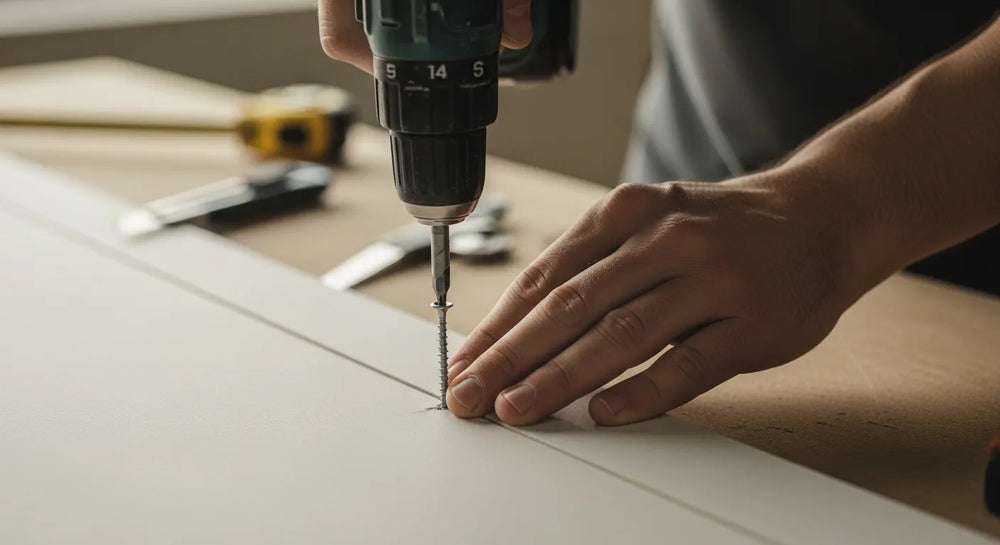
Angling Screws in Wood for Enhanced Strength
Table of Contents
- Why Angling Screws Matters: Beyond Basic Fastening
- Fundamental Principles of Screw Angling in Wood
- Key Techniques for Angling Screws
- Choosing the Right Screws for Angled Applications
- Essential Tools and Accessories for Angled Screws
- Best Practices for Precision and Durability
- Overcoming Common Challenges
- The Maden.co Advantage: Sourcing American-Made Fasteners for Critical Projects
- Conclusion
- FAQ
In the realm of construction, woodworking, and industrial assembly, the integrity of a joint is paramount. Whether you're a procurement manager overseeing a large-scale fabrication project, a design engineer specifying fasteners for a new product, or an MRO buyer tackling an urgent repair, the seemingly simple act of driving a screw into wood carries significant implications for structural stability and longevity. A poorly secured joint can lead to catastrophic failure, project delays, and costly rework. Yet, many professionals overlook a fundamental technique that can dramatically improve fastening strength and durability: angling screws in wood.
Consider a scenario where a critical structural component, perhaps a brace in a heavy-duty industrial pallet or a frame in a bespoke piece of machinery, relies on the sheer strength of its fastened joints. Driving screws straight in often creates a connection that is primarily dependent on the pull-out resistance of the screw and the integrity of the wood fibers directly along the screw's axis. When lateral forces or racking pressures are introduced, a straight-driven screw can struggle, potentially leading to loosening or failure. This is where the strategic angling of screws becomes not just an advantage, but a necessity, transforming a basic connection into a robust, load-bearing joint.
At Maden.co, we understand that every component, every fastener, and every technique contributes to the overall success and safety of your projects. Our mission is to democratize access to American manufacturing, ensuring that industrial buyers like you have immediate access to the highest quality U.S.-made products. We believe that understanding and implementing best practices in fastening, such as proper screw angling, is crucial for leveraging the full potential of these superior components. This comprehensive guide will delve into the principles, techniques, and best practices for angling screws in wood, equipping you with the knowledge to create stronger, more reliable joints in all your applications. We will explore various methods, discuss the critical role of screw selection, highlight essential tools, and address common challenges, all with the goal of enhancing your operational efficiency and the structural integrity of your projects.
Why Angling Screws Matters: Beyond Basic Fastening
The decision to angle screws is far from an arbitrary one; it's a strategic engineering choice with profound implications for the performance and longevity of wood joints. While a straight-driven screw provides adequate holding power for many applications, especially where loads are primarily axial (pull-out) or light, the true test of a joint often comes under more complex stresses.
Understanding the Forces at Play in Wood Joints
Wood is an anisotropic material, meaning its properties vary depending on the direction of force relative to its grain. This characteristic profoundly influences how fasteners interact with it. When a screw is driven perpendicular to the wood surface, its holding power is primarily derived from the friction created by the threads gripping the wood fibers. This resistance is strong against direct pull-out, but less effective against forces that try to shear the screw or rack the joint.
- Shear Strength: This refers to the resistance to forces acting parallel to the surface of the screw, attempting to cut or break it. A straight screw relies on the screw's inherent shear strength and the wood's resistance to compression around the screw shank.
- Pull-Out Resistance: This is the force required to pull the screw straight out of the wood. It depends on the screw's thread design, length, and the density of the wood.
- Racking Forces: These are twisting or parallelogram-like forces that try to deform a rectangular joint into a rhombus. Think of a wobbly table leg or a gate that sags. Straight screws, particularly when driven through thinner stock, offer limited resistance to racking.
The Limitations of Straight Screws in Certain Applications
For joints subjected to significant shear, racking, or bending forces, relying solely on straight-driven screws can be problematic. The wood fibers around the screw become stressed in a concentrated area, potentially leading to localized crushing or splitting under load. Furthermore, if the load direction changes or oscillates, the constant stress can cause the wood fibers to fatigue, leading to screw loosening over time.
Angling screws fundamentally changes this dynamic. By driving screws at an angle, you engage more wood fibers across a larger surface area, distributing the load more effectively. This creates a mechanical lock that resists forces from multiple directions, significantly enhancing:
- Increased Withdrawal Resistance: An angled screw has a longer path of wood fibers engaging its threads, making it harder to pull out.
- Enhanced Shear Strength: The screw is better positioned to resist forces that try to slide one piece of wood past another.
- Superior Racking Resistance: Crucially, angled screws create a triangular bracing effect within the joint, dramatically improving its resistance to racking and ensuring the joint remains rigid under stress. This is particularly vital in applications like cabinet construction, framing, and furniture assembly where stability is critical.
For a procurement manager under pressure to source robust fasteners for structural components, a design engineer needing specific material certifications for a new prototype, or an MRO buyer facing an unexpected equipment breakdown, understanding the mechanical advantages of angled screws is a game-changer. It means specifying the right U.S.-made fastener and ensuring it's installed in a way that maximizes its inherent strength, leading to more resilient and long-lasting assemblies.
Fundamental Principles of Screw Angling in Wood
Before diving into specific techniques, it's essential to grasp the underlying principles that govern effective screw angling in wood. Adhering to these fundamentals will ensure that your angled joints are not only strong but also durable and free from common issues like splitting.
Grain Direction and Its Impact
Wood's grain direction is perhaps the most critical factor to consider when driving screws, especially at an angle.
- Driving Across the Grain: When a screw is driven perpendicular or nearly perpendicular to the grain (e.g., into the face or edge of a board), the screw threads primarily grip the long, strong wood fibers. This provides excellent holding power.
-
Driving Into the End Grain: Driving a screw into the end grain of a piece of wood (parallel to the fibers) offers significantly weaker holding power. The screw threads have fewer long fibers to grip, essentially pushing the fibers apart rather than compressing them. This is why end-grain joints are notoriously weak.
- Implication for Angling: The goal of angling screws is often to avoid relying on end-grain fastening and instead drive screws into the stronger cross-grain of the connecting piece. For example, in a corner joint, angling a screw from one board into the face of the other maximizes grain engagement.
Screw Type Selection: Thread, Head, and Material
The choice of screw is just as important as the angle at which it's driven. Different screw types are engineered for specific applications and wood characteristics.
-
Thread Type:
- Coarse Threads: Ideal for softwoods and particleboard, providing a strong grip in less dense material.
- Fine Threads: Better suited for hardwoods, creating a cleaner hole and reducing the risk of splitting in dense wood.
-
Head Type: The head type determines how the screw sits in the material and its aesthetic finish.
- Flat Head (Countersunk): Designed to sit flush or below the surface for a smooth finish. Requires a countersink. For precise applications, you can find a Flat Slot Drive Brass Wood Screw that exemplifies U.S.-made quality.
- Round Head: Sits proud of the surface, offering a finished look and often used where the screw head is part of the design or needs to be removed frequently. A Round Slot Drive Brass Wood Screw offers robust performance and classic aesthetics.
- Oval Head (Countersunk with Decorative Dome): A hybrid, partly countersunk with a slightly domed top, combining a clean look with some decorative appeal. Our selection includes an Oval Slot Drive Silicon Bronze Wood Screw, providing superior corrosion resistance and strength.
- Pan Head/Washer Head: Large bearing surface, ideal for securing thin materials without pulling through, often used in cabinetry or where maximum clamping force is needed.
-
Material:
- Brass/Bronze: Excellent corrosion resistance, aesthetic appeal, often used in marine or decorative applications. Softer metals, so pilot holes are crucial.
- Steel: Strong and widely available. Can be plain (interior use), zinc-plated (some moisture resistance), or coated (exterior use, e.g., ceramic-coated deck screws).
- Stainless Steel: Superior corrosion resistance, essential for outdoor projects, marine environments, or applications exposed to chemicals.
- Length and Gauge: Choose a screw long enough to penetrate well into the receiving piece (typically 1.5 to 2 times the thickness of the first piece) but not so long that it pokes through. The gauge (diameter) should be appropriate for the load and wood type. Thicker screws offer greater shear strength.
Pilot Hole Necessity
Regardless of the screw type or angle, always pre-drill a pilot hole, especially when angling screws. This is a non-negotiable step that prevents wood splitting, reduces driving torque, and ensures the screw follows the intended path.
- Pilot Hole Diameter: The pilot hole should be slightly smaller than the core diameter of the screw (the shank, not including the threads) in the receiving piece. For the piece the screw passes through, the hole should be slightly larger than the screw's major diameter (including threads) to allow it to slip freely and prevent "jacking," where the screw pushes the two pieces apart instead of pulling them together.
- Angled Pilot Holes: When angling a screw, the pilot hole must also be drilled at the same angle. This requires precision and, in many cases, the use of a jig.
By meticulously selecting the right U.S.-made screws from a vast catalog of over 2.5 million products on Maden.co and rigorously applying the principle of pre-drilling, you ensure a foundation of industrial excellence and reliability for your angled joints.
Key Techniques for Angling Screws
Mastering the art of angling screws involves a few distinct techniques, each suited for different applications and offering specific advantages. Understanding these methods will allow you to select the most appropriate approach for your project, ensuring maximum strength and a professional finish.
Pocket Hole Joinery
Pocket hole joinery is arguably the most popular and versatile method for angling screws, widely adopted in cabinetmaking, furniture building, and general carpentry due to its speed, strength, and concealed fasteners.
- Description of Technique: This method involves drilling a shallow hole at a precise, steep angle (typically 15 degrees) into one workpiece, creating a "pocket." A self-tapping screw (often specially designed with a large washer head) is then driven through this pocket and into the adjacent workpiece. The large washer head seats firmly at the bottom of the pocket, creating a strong mechanical connection that pulls the joint tightly together.
- Tools (Jigs): Specialized pocket hole jigs (e.g., Kreg Jig) are essential for this technique. These jigs guide a stepped drill bit to create the perfect pilot hole and countersink simultaneously.
-
Advantages:
- Exceptional Strength: Pocket holes create a robust, rigid joint highly resistant to racking and shear forces.
- Concealed Fasteners: Once plugged or filled, the screws are hidden, leaving a clean exterior finish.
- Speed and Efficiency: Jigs make the process very fast and repeatable, ideal for production environments.
- Ease of Use: Relatively easy for even novice woodworkers to master.
- Versatility: Can be used for corner joints, T-joints, edge-to-edge glue-ups, and more.
-
Applications:
- Face Frames: Attaching face frames to cabinet carcasses.
- Cabinetry: Assembling cabinet boxes, shelving, and drawers.
- Tabletops: Edge-joining boards for tabletops without visible fasteners.
- Furniture Construction: Assembling chairs, tables, and bed frames.
- Industrial Enclosures: Creating rigid panels and frames for equipment housing.
- Material Considerations: Pocket holes work well in most woods, but care must be taken with very thin stock or delicate veneers. Using the correct screw length for the material thickness is crucial to prevent blow-out or insufficient grip.
Toe-Nailing / Skew Driving
Toe-nailing, also known as skew driving, is a traditional and highly effective method for joining two pieces of wood, particularly when you can't access the joint directly from the face or need to add strength without visible fasteners on the main surface.
- Description: This technique involves driving a screw (or nail) at an angle through the end or edge of one board into the face or edge of an adjacent board. Unlike pocket holes, there isn't a pre-drilled pocket; the angle is typically determined freehand or with a simple guide. The screw enters at an angle of roughly 30-60 degrees.
-
When to Use:
- Framing: A staple in rough carpentry for securing studs to plates, or joining rafters and joists.
- Temporary Joints: Excellent for holding pieces together while glue dries or while installing more permanent fasteners.
- Difficult Angles/Tight Spaces: When jigs are impractical, toe-nailing offers flexibility.
- Reinforcement: Adding extra stability to existing joints.
-
Tips for Success:
- Always Pre-drill: This cannot be overemphasized for toe-nailing. The aggressive angle makes splitting highly probable without a pilot hole. The pilot hole should also be angled.
- Start the Screw Away from the Edge: Begin driving the screw about a third of the way in from the edge of the first board. This allows the screw to angle towards the center of the receiving board, minimizing the risk of splitting the edges of either piece.
- Control the Angle: Aim for a consistent angle. Practice on scrap wood. A block of wood cut at the desired angle can serve as a makeshift guide.
- Use the Right Screw Length: The screw needs to penetrate deeply enough into the second piece to achieve good holding power without protruding.
- Clamping is Crucial: Clamp the pieces firmly together before driving. The angled force of the screw can cause the boards to shift.
-
Avoiding Common Mistakes:
- Splitting: The most common issue. Prevent by pre-drilling and using appropriate screw gauge for wood density.
- Inconsistent Angle: Leads to weaker joints. Practice and use guides.
- Screw Protruding: Measure carefully and use correct length screws.
Compound Angle Driving
Compound angle driving is a more advanced technique typically reserved for complex joinery, intricate furniture, or specialized industrial applications where aesthetics and unique structural demands converge.
- Description: This involves driving a screw at an angle that deviates from two axes simultaneously. For instance, a screw might be angled both horizontally and vertically, creating a three-dimensional angle. This could be necessary when joining mitered pieces or when fastening components that meet at non-standard angles.
- Precision and Measurement: Compound angles require extreme precision. Using digital angle finders, protractors, and careful layout is critical. Mistakes here are often compounded, leading to misaligned or weak joints.
-
Tools for Accuracy:
- Bevel Gauges/Angle Finders: For transferring and setting precise angles.
- Drill Press Vise with Angling Capability: Can be invaluable for creating perfectly angled pilot holes, especially when working with smaller components that can be clamped securely.
- Custom Jigs: For highly repetitive or critical compound angle fastenings, fabricating a custom jig is often the most reliable approach to ensure consistency.
Reinforcement Angling
Sometimes, the goal isn't to create a primary joint with angled screws, but to reinforce an existing joint (e.g., a glued joint, a dowel joint, or a mortise and tenon) or to add hidden support.
- Adding Strength to Existing Joints: Angled screws can be strategically placed to supplement other joinery methods, providing extra pull-out and racking resistance. For example, after gluing and clamping a frame, driving a few discreetly angled screws can ensure long-term stability.
- Hidden Fastening: In some cases, angled screws can be driven from the underside or inside of a component to secure it without any visible fasteners on the exterior surface. This is particularly useful in high-end furniture or fixtures where aesthetics are paramount.
The ability to access a wide range of U.S.-made fasteners, like the various brass and silicon bronze wood screws available through Maden.co, empowers procurement managers and engineers to implement these techniques with confidence. Our platform connects you to over 800+ verified U.S. manufacturers, ensuring you have the right components for even the most demanding angled fastening requirements. We believe that America's manufacturing revival is here, driven by platforms that prioritize quality and access.
Choosing the Right Screws for Angled Applications
The success of any angled screw joint hinges significantly on selecting the appropriate screw. With Maden.co's extensive catalog of U.S.-made products, you have access to a vast array of fasteners engineered for specific demands. Understanding the characteristics of different screws will enable you to make informed decisions that enhance the integrity and longevity of your projects.
Material Considerations
The environment and expected load dictate the screw material.
-
Brass and Silicon Bronze: These alloys are prized for their excellent corrosion resistance, making them ideal for marine environments, outdoor projects, or applications where moisture is present. They also offer an attractive aesthetic, often chosen for exposed fasteners in fine woodworking or decorative elements. However, they are softer than steel, necessitating careful pilot hole drilling and controlled driving to prevent stripping or shearing.
- For a classic, robust solution, consider the Round Slot Drive Brass Wood Screw, perfect for applications needing both strength and visual appeal.
- For superior corrosion resistance with a touch of elegance, the Oval Slot Drive Silicon Bronze Wood Screw offers exceptional durability in harsh conditions.
-
Steel: The most common screw material, offering high tensile and shear strength.
- Plain Steel: Suitable for interior, dry applications.
- Zinc-Plated Steel: Offers basic corrosion protection, good for interior or mildly damp environments.
- Coated Steel: Exterior-grade coatings (e.g., ceramic or polymer coatings) provide significant corrosion resistance for outdoor decks, fences, and general exterior construction.
- Stainless Steel: Provides superior corrosion resistance, crucial for applications exposed to water, chemicals, or extreme weather, such as marine structures, outdoor furniture, or chemical processing equipment. While more expensive, the longevity and reliability often justify the cost for critical components.
Head Type
The head type affects both the clamping force and the finish.
- Flat Head (Countersunk): Designed to sit flush with or slightly below the surface of the wood. This requires a countersink bit to create a tapered recess. It provides a smooth, unobstructed surface. Our Flat Slot Drive Brass Wood Screw is an excellent choice for a clean, flush finish in high-quality projects.
- Round Head: Sits proud of the surface. Often used when a decorative appearance is desired, or when the screw needs to be easily accessed or removed. Provides a strong clamping force on the surface.
- Oval Head: A hybrid, featuring a countersunk base with a decorative, slightly domed top. Offers a refined aesthetic while providing a decent clamping surface.
- Pan Head / Washer Head: Features a flat bottom and a slightly domed top. The large bearing surface of a washer head is excellent for maximizing clamping force and preventing pull-through, especially with softer woods or when securing thin materials.
Drive Type
The drive type dictates the type of driver bit required and impacts stripping resistance.
- Slot Drive: A traditional drive, common in many brass and decorative screws. Requires a flathead screwdriver. Can be prone to cam-out (slipping out) if not careful.
- Phillips Drive: The most common drive, identifiable by its cross-shaped recess. Generally good, but can still cam-out under high torque.
- Square (Robertson) Drive: Excellent resistance to cam-out, allowing for easier, one-handed driving. Popular in woodworking and cabinetry.
- Torx (Star) Drive: Offers the best cam-out resistance, allowing for very high torque transmission. Increasingly popular for deck screws and structural fasteners.
Thread Type and Length/Gauge
-
Thread Type:
- Coarse Threads: Ideal for softwoods, engineered wood products (plywood, MDF), and particleboard, as they create a strong grip without excessive splitting.
- Fine Threads: Preferred for hardwoods, as they displace less material and reduce the risk of splitting in dense woods, while still providing ample holding power.
- Full vs. Partial Thread: Partially threaded screws are generally better for drawing two pieces of wood together tightly, as the unthreaded shank in the top piece allows the threads in the bottom piece to pull the top piece down. Fully threaded screws provide maximum grip along their entire length, suitable for thin materials or when maximum pull-out resistance is needed in a single piece.
-
Length and Gauge:
- Length: A general rule of thumb is that the screw should penetrate into the receiving piece by at least 1 to 1.5 times the thickness of the piece being fastened. For critical structural joints, aiming for 2/3 of the screw's total length to be embedded in the receiving piece is a good target.
- Gauge: Thicker screws (larger gauge numbers) offer greater shear strength and pull-out resistance but require larger pilot holes, increasing the risk of splitting. Select a gauge appropriate for the wood density and expected load.
Sourcing the right screws through Maden.co means partnering with verified U.S. manufacturers who adhere to stringent quality standards. This ensures that whether you're specifying a Round Slot Drive Brass Wood Screw for a custom fixture, a Flat Slot Drive Brass Wood Screw for a flush finish, or an Oval Slot Drive Silicon Bronze Wood Screw for marine use, you're getting a product that meets your exact technical and performance requirements, directly contributing to Industrial Excellence.
Essential Tools and Accessories for Angled Screws
Implementing angled screw techniques effectively requires more than just screws and a drill. The right tools and accessories enhance precision, prevent errors, and ensure the longevity of your joints. Investing in quality tools is an investment in the quality of your work.
Drills and Drivers
- Cordless Drills: Offer portability and versatility. Look for models with adjustable clutch settings to prevent over-driving and stripping screws. Impact drivers are excellent for driving screws quickly but require practice to control depth, especially with softer woods or smaller screws.
- Corded Drills: Provide consistent power and are ideal for repetitive tasks or very hard woods where sustained torque is needed.
Drill Bits
- Pilot Hole Bits: Essential for all angled screw applications. Brad-point bits are excellent for wood as they create a clean, accurate hole without wandering.
- Countersink Bits: Crucial for flat-head and oval-head screws, allowing the head to sit flush or properly seat within the wood. Combination drill/countersink bits are highly efficient, drilling the pilot hole and countersink in one step.
- Stepped Drill Bits (for Pocket Holes): Specifically designed for pocket hole jigs, these bits drill a pilot hole for the screw shank and a larger hole for the screw head simultaneously.
Pocket Hole Jigs
- Fixed Angle Jigs: Most common, these jigs have pre-set angles (typically 15 degrees) and guides for various material thicknesses. They ensure repeatable and accurate pocket holes.
- Adjustable Jigs: Some higher-end jigs allow for adjustable angles and depths, offering greater versatility for specialized applications.
Clamping Systems
- Face Clamps: Indispensable for pocket hole joinery, these clamps hold the workpieces flush while the screws are driven, preventing movement and ensuring a tight joint.
- Bar Clamps / F-Clamps: Essential for general woodworking, holding pieces together during toe-nailing or when assembling larger structures with angled screws.
- Corner Clamps: Useful for holding mitered or butt joints at a perfect 90-degree angle while you drive angled screws.
Measurement Tools
- Bevel Gauges: For accurately transferring and setting angles from plans or existing components, particularly useful for custom or compound angles.
- Protractors: For measuring and marking precise angles on your workpieces before drilling.
- Combination Squares / Rulers: For accurate layout and ensuring proper screw placement.
Specialty Accessories
- Depth Collars: Used with drill bits to ensure consistent pilot hole depth, preventing over-drilling or insufficient penetration.
- Screw Driving Bits: Ensure you have the correct drive bits (Phillips, Torx, Square, Slot) that precisely match your chosen screws to prevent cam-out and stripped heads.
By leveraging these tools alongside the high-quality, U.S.-made fasteners available on Maden.co, you can ensure that your angled screw applications achieve optimal strength, precision, and a professional finish. This approach not only improves the output of your projects but also streamlines your procurement process, offering supply chain transparency and customer empowerment.
Best Practices for Precision and Durability
Achieving robust, long-lasting joints with angled screws goes beyond simply using the right tools and techniques. Adhering to a set of best practices ensures precision, prevents common pitfalls, and maximizes the durability of your work.
Always Pre-Drill
This is the golden rule for driving screws into wood, especially at an angle. Pre-drilling prevents:
- Splitting: The primary risk when driving screws into wood, particularly near edges or in hardwoods. The pilot hole relieves the stress caused by the screw's displacement of wood fibers.
- Screw Breakage/Stripping: Reduces the torque required to drive the screw, minimizing the chances of shearing the screw head or stripping the drive recess.
- Wandering Screws: Guides the screw along its intended path, ensuring accuracy and consistent joint alignment.
Countersinking for a Flush Finish
For flat-head and oval-head screws, countersinking is crucial.
- Aesthetics: Ensures the screw head sits flush or slightly below the surface, providing a clean, professional appearance.
- Functionality: Prevents the screw head from catching on other components or creating an uneven surface, which can be critical in precision assemblies.
- Stress Distribution: A properly countersunk screw head distributes clamping force more evenly around the screw, reducing localized stress on the wood.
Controlling Depth
Proper screw depth is vital for joint strength and aesthetics.
- Too Shallow: Insufficient holding power, especially for pull-out resistance.
- Too Deep (Over-driving): Can strip the wood fibers, weakening the joint, or cause the screw to blow through the other side of the workpiece. It also risks stripping the screw head.
- Solutions: Use drills with clutch settings, depth collars on drill bits, or specialized jigs (like pocket hole jigs) that automatically set depth.
Wood Type Considerations
Different wood types require different approaches.
- Hardwoods (e.g., Oak, Maple, Hickory): Require larger pilot holes to prevent splitting and reduce driving resistance. Fine-threaded screws are often preferred. Go slowly and apply steady pressure.
- Softwoods (e.g., Pine, Fir, Cedar): More forgiving but still benefit from pilot holes, especially near edges. Coarse-threaded screws generally provide excellent grip. Be careful not to over-tighten, as softwoods can strip easily.
- Engineered Wood Products (Plywood, MDF, Particleboard): These materials often require specific screw types (e.g., coarser threads for MDF) and careful pilot hole sizing to prevent delamination or crumbling. Pocket holes work exceptionally well in these materials.
Preventing Splitting
Beyond pre-drilling, several tactics can help prevent splitting:
- Wax or Lubricant: Applying a small amount of wax or soap to the screw threads can reduce friction and make driving smoother, especially in hardwoods.
- Stagger Screws: When multiple screws are used in a line, stagger their placement slightly to avoid creating a single plane of weakness in the wood.
- Avoid Edges: Position screws a sufficient distance from the edges and ends of boards to prevent splitting.
- Clamp Firmly: Clamping pieces together tightly before driving screws can help hold wood fibers in place and reduce the tendency to split.
Environmental Factors
- Moisture Content: Wood expands and contracts with changes in humidity. For outdoor projects or environments with fluctuating moisture, use stainless steel or coated screws to resist corrosion. Account for potential wood movement in your joint design.
- Temperature Extremes: In applications exposed to extreme temperature changes, choose fasteners that can withstand thermal expansion and contraction without losing integrity.
By meticulously following these best practices, and by sourcing the highest quality U.S.-made fasteners from Maden.co, you empower your projects with unmatched structural integrity. We connect you with verified U.S. manufacturers who understand the nuances of industrial excellence, ensuring that every component contributes to a resilient and reliable end product. This approach aligns with our core values of American Manufacturing Pride and Industrial Excellence, driving America's manufacturing revival forward.
Overcoming Common Challenges
Even with the best preparation, challenges can arise when working with angled screws in wood. Knowing how to troubleshoot and prevent these common issues can save time, materials, and frustration.
Stripping Screws
- Problem: The screw head's drive recess becomes rounded or damaged, making it impossible to drive or remove the screw.
-
Prevention:
- Use the correct driver bit: Ensure the bit perfectly fits the screw head.
- Apply consistent downward pressure: Especially important with Phillips or slot drives to prevent cam-out.
- Use a drill with a clutch: Set the clutch to disengage before the screw is fully driven, preventing over-tightening.
- Pilot holes: Reduce the torque required, minimizing stripping risk.
- Lubrication: Wax or soap on threads can ease driving.
- Solution (if stripped): For slightly stripped heads, try a manual screwdriver, a larger driver bit, or a screw extractor tool. For severely stripped heads, cutting a new slot with a Dremel, drilling out the head, or clamping with locking pliers might be necessary.
Splitting Wood
- Problem: The wood cracks or splits as the screw is driven, especially near edges or in hardwoods.
-
Prevention:
- Always pre-drill: The most critical step.
- Correct pilot hole size: Larger pilot holes for hardwoods and larger screws.
- Avoid driving too close to edges or ends: Maintain sufficient distance.
- Stagger screws: If using multiple screws in a line.
- Use appropriate screw type: Finer threads for hardwoods, coarser for softwoods.
- Clamp wood firmly: Reduces stress during driving.
- Solution (if split): For minor splits, wood glue and clamps can often repair the damage. For severe splits, the piece might need to be replaced. Consider repositioning the screw after repair.
Inaccurate Angles
- Problem: The screw doesn't follow the intended angle, resulting in a weak or misaligned joint, or potentially poking through the wrong side.
-
Prevention:
- Use jigs: Pocket hole jigs are invaluable for precision. For toe-nailing, use a guide block or mark your angles carefully.
- Pilot holes: Guide the screw. Ensure the pilot hole itself is drilled at the correct angle.
- Start slowly: Begin driving the screw at a low speed, ensuring it catches properly before increasing RPM.
- Steady hand and setup: Ensure your workpiece is stable and your drill is held firmly.
- Solution: Remove the screw, fill the incorrect pilot hole with a dowel and glue, let it cure, and then re-drill.
Achieving Flush Finishes
- Problem: Screw heads sit proud of the surface when they should be flush, impacting aesthetics or functionality.
-
Prevention:
- Countersink correctly: Use a countersink bit that matches the angle of your screw head.
- Control depth: Use a depth collar or a drill with a clutch to prevent over-driving (which can blow out the wood around the countersink) or under-driving.
- Test on scrap wood: Practice your countersinking and driving depth on a scrap piece of the same material.
- Solution: If the screw is slightly proud, use a countersink bit by hand or with a low-speed drill to deepen the recess. If the screw is too deep, you may need to remove it and replace it with a slightly longer screw or fill the hole.
By understanding these common challenges and implementing preventative measures, you can dramatically improve the success rate of your angled screw applications. Sourcing quality, consistent fasteners from Maden.co, where every product is from a verified U.S. manufacturer, further minimizes variables and allows you to focus on the precision of your technique, ensuring compliance with critical industry standards and enhancing supply chain resilience.
The Maden.co Advantage: Sourcing American-Made Fasteners for Critical Projects
In an increasingly complex global supply chain, the reliability and provenance of components have become paramount for procurement managers, MRO buyers, and design engineers. When it comes to critical applications involving angled screws in wood, selecting the right fastener from a trusted source isn't just a preference; it's a strategic imperative. This is where Maden.co stands as America's premier B2B marketplace for U.S.-manufactured products, offering a distinct advantage.
At Maden.co, our mission is clear: to democratize access to American manufacturing. We achieve this by seamlessly connecting industrial buyers with an unparalleled network of over 800+ verified U.S. manufacturers. This curated ecosystem allows us to offer an extensive catalog of over 2.5 million American-made products, including the specialized fasteners required for robust angled wood joints. Whether you need specific brass wood screws for a decorative but structural piece, or silicon bronze fasteners for unparalleled corrosion resistance in a challenging environment, our platform ensures you find it.
Our vision is to become the definitive platform that proves American-made components are as accessible and convenient as any global alternative. We believe that "America's manufacturing revival is here," and we're driving it by upholding core values that directly benefit your operations:
- American Manufacturing Pride: Every product on Maden.co is proudly made in the U.S.A., ensuring superior quality, adherence to rigorous standards, and supporting domestic industries.
- Digital Innovation: Our user-friendly platform streamlines the procurement process, making it easier than ever to discover, compare, and purchase industrial components from trusted U.S. suppliers. Our efficient search filters and detailed product specifications reduce procurement friction.
- Supply Chain Transparency: We offer unparalleled transparency, providing clear information about manufacturers and product origins. This helps you ensure compliance with critical industry standards (e.g., DIN, NPT) and fosters trust in your supply chain.
- Industrial Excellence: By connecting you with top-tier U.S. manufacturers, we facilitate access to components engineered for demanding industrial environments, improving your Total Cost of Ownership (TCO) through durability and reduced downtime.
- Customer Empowerment: We put you, the buyer, in control. With comprehensive product data, verified supplier information, and innovative purchasing tools, you are empowered to make informed decisions that benefit your business. Learn more about our commitment to these values and our mission by visiting our About Us page.
Sourcing through Maden.co means more than just buying parts; it means building a more reliable and efficient procurement process. For a design engineer needing specific material certifications for a new prototype, or an MRO buyer needing to quickly source a verified, U.S.-made part to prevent project delays, the ability to find and finance is a game-changer. Our platform significantly enhances your supply chain resilience by reducing reliance on volatile international markets and ensuring consistent access to high-quality components.
A key differentiator that further streamlines capital-intensive projects is our Instant Financing option. This feature is not just a payment method; it's a strategic tool designed to help procurement managers and business owners manage cash flow effectively and make larger-volume purchases without immediate capital strain. You can apply for Instant Financing at checkout, making it easier to acquire the necessary components for even your most ambitious projects without compromising on quality or timeliness.
If you are a qualified U.S. manufacturer, we invite you to be part of this transformative movement. Register as a vendor and join the American manufacturing revival to connect with thousands of industrial buyers seeking your high-quality products.
By choosing Maden.co, you are not only securing the highest quality U.S.-made fasteners for your critical angled wood joints, but you are also actively participating in the revitalization of American manufacturing, ensuring stability, quality, and innovation for generations to come. Explore our vast catalog today and experience the future of industrial procurement at Maden.co.
Conclusion
The art and science of angling screws in wood represent a critical skill set for anyone involved in construction, manufacturing, or maintenance. By moving beyond straight-driven fasteners and embracing techniques like pocket hole joinery, toe-nailing, and precise compound angle driving, you can dramatically enhance the strength, stability, and longevity of your wood joints. We've explored the fundamental principles of grain direction and pilot holes, delved into the specifics of various screw types—from the Round Slot Drive Brass Wood Screw to the Flat Slot Drive Brass Wood Screw and the Oval Slot Drive Silicon Bronze Wood Screw—and highlighted the essential tools and best practices that ensure precision and prevent common pitfalls.
Ultimately, the integrity of your projects hinges on the quality of your components and the expertise applied during assembly. In an industrial landscape that demands unwavering reliability and efficiency, every decision, down to the angle of a screw, contributes to the overall success of your operations. The ability to source the right U.S.-made fastener, engineered for specific demands, and apply it with meticulous care, is a testament to industrial excellence.
Don't let inadequate fastening compromise your projects or erode your hard-earned reputation. Empower your work with superior American-made fasteners and the knowledge to apply them effectively. We encourage you to explore the extensive catalog of over 2.5 million American-made products available on Maden.co. Discover the quality, precision, and reliability that only U.S. manufacturers can provide. For those capital-intensive projects, remember you can apply for Instant Financing at checkout to streamline your purchases and manage cash flow effectively. Visit Maden.co today and build with confidence—because America's manufacturing revival is here, and it's built on strength, quality, and innovation.
FAQ
Q1: What is the main benefit of angling screws instead of driving them straight?
Angling screws significantly increases the strength and rigidity of a wood joint, particularly against racking and shear forces. By engaging more wood fibers across a larger surface area, angled screws create a stronger mechanical lock, enhancing pull-out resistance and preventing the joint from loosening or failing under stress, especially compared to relying solely on end-grain fastening.
Q2: Is it always necessary to pre-drill pilot holes when angling screws?
Yes, it is always necessary to pre-drill pilot holes when angling screws. Driving a screw at an angle creates increased stress on the wood fibers, making it highly susceptible to splitting, especially near edges or in hardwoods. A properly sized and angled pilot hole guides the screw, prevents splitting, reduces driving torque, and ensures the screw follows the intended path for a strong, reliable connection.
Q3: What is pocket hole joinery, and when should I use it?
Pocket hole joinery is a technique that involves drilling a shallow, angled hole (a "pocket") into one workpiece, through which a screw is driven into an adjacent piece. It's ideal for creating strong, concealed joints quickly and efficiently. You should use it for applications like cabinet face frames, assembling cabinet boxes, joining tabletops, and general furniture construction where speed, strength, and hidden fasteners are desired.
Q4: How do I choose the right screw material for angled applications?
The right screw material depends on the application's environment and aesthetic needs. For indoor, dry projects, basic steel screws are often sufficient. For outdoor or marine environments, stainless steel or silicon bronze screws (like the Oval Slot Drive Silicon Bronze Wood Screw found on Maden.co) offer superior corrosion resistance. Brass screws, such as the Round Slot Drive Brass Wood Screw, combine corrosion resistance with a decorative finish, suitable for exposed fasteners in fine woodworking.


