
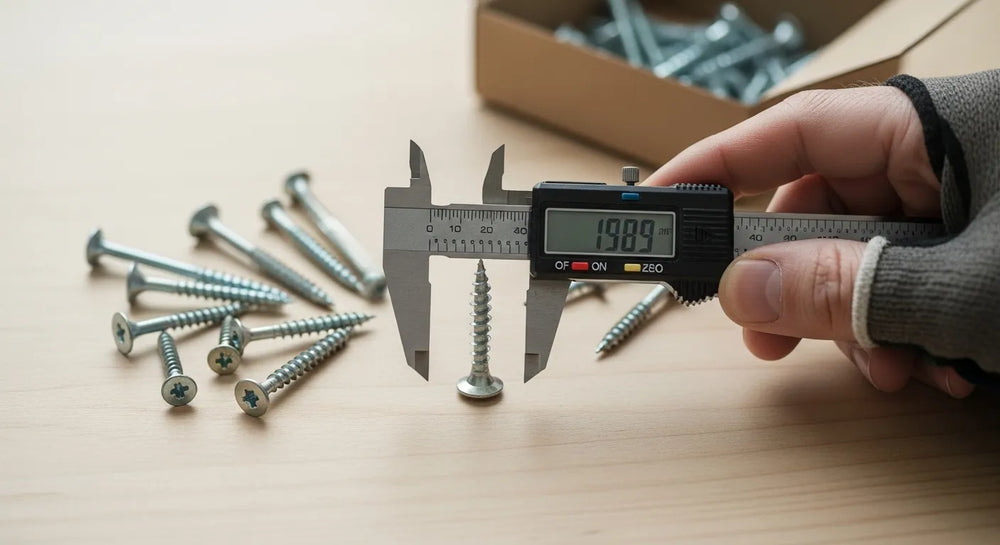
Precision Fastening: Driving Screws into Wood with a Screwdriver
Table of Contents
- The Fundamental Role of Screwdrivers and Screws in Wood
- Understanding Wood Screws: Types and Their Applications
- The Art and Science of Using a Screwdriver for Wood
- Optimizing Fastening for Durability and Performance
- The Strategic Advantage of Sourcing American-Made Wood Fasteners
- Maden.co: Your Partner in Precision Procurement
- Conclusion
- Frequently Asked Questions (FAQ)
On the surface, driving a screw into wood appears to be one of the most fundamental tasks in construction and assembly. It's an action performed billions of times daily across countless industries, from intricate furniture manufacturing to heavy-duty structural framing and critical MRO repairs. Yet, beneath this seemingly simple act lies a complex interplay of material science, tool mechanics, and application-specific requirements that, if overlooked, can lead to compromised integrity, costly rework, and project delays. For procurement managers, MRO buyers, and design engineers, the seemingly straightforward question of "can you screw into wood with a screwdriver" quickly expands into considerations of fastener selection, optimal tooling, and the strategic value of high-quality, reliable components.
This comprehensive guide will delve into the nuances of fastening into wood, exploring the critical factors that dictate success in industrial environments. We will uncover the diverse world of wood screws, from their materials and head types to their drive mechanisms, and dissect the art and science of using both manual and powered screwdrivers effectively. Our discussion will extend beyond basic technique, emphasizing the importance of precise preparation, preventing common pitfalls, and ensuring long-term durability. Crucially, we will highlight how strategic sourcing of American-made wood fasteners can significantly enhance supply chain resilience, ensure compliance, and reduce the total cost of ownership for your projects. By the end of this article, you'll possess an authoritative understanding of optimizing wood fastening processes, reinforced by the confidence that comes from partnering with verified U.S. manufacturers.
The Fundamental Role of Screwdrivers and Screws in Wood
The pairing of a screw and a screwdriver is a cornerstone of mechanical assembly, offering a secure, robust, and often reversible fastening method. In industrial contexts, this partnership takes on heightened importance, underpinning everything from the stability of crating for sensitive equipment to the structural integrity of custom wood components in machinery, and the reliable installation of fixtures in facilities maintenance. Understanding the symbiotic relationship between the fastener and the driving tool is the first step toward achieving superior results.
Why Wood Fastening Matters in Industrial Applications
While many industrial applications lean on metal-to-metal connections, wood remains an indispensable material for a variety of critical functions. It is used in:
- Packaging and Crating: Protecting high-value goods during transit often involves custom wooden crates and pallets, where secure fastening prevents damage and ensures stability.
- Fixture and Jig Construction: Manufacturing processes frequently rely on precisely built wooden fixtures and jigs to hold components during assembly, requiring reliable, repeatable fastening.
- Facility Maintenance and MRO: From shelving units and workbenches to interior framing and temporary structures, wood is a common material for repairs, upgrades, and operational support.
- Specialized Machinery Components: In certain industries, wood or wood composites may be specified for non-conductive properties, vibration dampening, or aesthetic considerations, demanding tailored fastening solutions.
- Prototyping and Model Making: Before full-scale production, engineers often build prototypes from wood to test designs, where easy assembly and disassembly with screws are invaluable.
In each of these scenarios, the failure of a single screw can cascade into significant issues—structural collapse, product damage, operational downtime, or even safety hazards. This elevates the seemingly simple act of driving a screw into a task requiring precision, the right tools, and the highest quality fasteners.
Beyond the DIY: Industrial-Grade Wood Fasteners
The wood screws found in a hardware store for a home project often differ significantly from those required in industrial settings. Industrial-grade wood fasteners are engineered for specific performance criteria, including:
- Material Strength and Composition: Beyond basic steel, industrial applications might demand corrosion-resistant materials like brass or silicon bronze for specific environmental exposures, or hardened steel for extreme load bearing.
- Precision Manufacturing: Consistent dimensions, thread profiles, and head geometries are critical for reliable performance, especially in automated or high-volume assembly.
- Compliance with Standards: Adherence to industry standards ensures interchangeability, reliability, and safety.
- Specialized Coatings: Coatings might be applied for enhanced corrosion resistance, reduced friction during driving, or aesthetic integration.
For a procurement manager under pressure to source a specific component for a manufacturing line, a design engineer needing specific material certifications for a new prototype, or an MRO buyer facing an unexpected equipment breakdown, the ability to quickly find and finance a verified, U.S.-made part is a game-changer. At Maden.co, we understand these intricate demands, offering a vast catalog of industrial-grade fasteners designed for these exact challenges.
Understanding Wood Screws: Types and Their Applications
The term "wood screw" encompasses a wide family of fasteners, each designed with specific characteristics to optimize performance in various wood types and applications. Selecting the correct screw is paramount to achieving a strong, durable, and reliable connection.
Materials: Brass, Silicon Bronze, Steel, and Beyond
The material of a wood screw directly impacts its strength, corrosion resistance, and suitability for different environments.
- Steel: The most common material, often carbon steel, which can be hardened for greater strength. Steel screws are frequently coated (e.g., zinc-plated, galvanized, phosphated) to improve corrosion resistance. They are excellent for general-purpose indoor use where high strength is required.
- Brass: Valued for its aesthetic appeal, corrosion resistance (especially in decorative applications), and relatively soft nature which allows for easy removal without damaging the wood. Brass screws are often used in fine woodworking, marine applications, and historical restorations. For a classic, durable fastening solution, consider our Round Slot Drive Brass Wood Screw, ideal for applications requiring both strength and visual appeal. Similarly, our Flat Slot Drive Brass Wood Screw offers a flush finish perfect for delicate projects.
- Silicon Bronze: An alloy offering superior corrosion resistance, particularly in saltwater or highly corrosive environments. Silicon bronze screws are slightly stronger than brass and are a preferred choice for marine construction, boat building, and outdoor architectural elements where longevity and resistance to harsh weather are critical. For projects demanding extreme durability against environmental factors, our Oval Slot Drive Silicon Bronze Wood Screw provides excellent performance and resistance.
- Stainless Steel: Offers excellent corrosion resistance, making it ideal for outdoor applications, marine environments, and situations where exposure to moisture or chemicals is a concern. Available in various grades (e.g., 304, 316), with 316 offering superior resistance.
- Specialty Alloys: For extreme conditions, such as high temperatures or specific chemical exposures, specialized alloys may be employed, though less common for direct wood fastening.
Head Types: Ensuring Proper Seating and Finish
The head of a screw serves multiple functions: providing a surface for the screwdriver bit, distributing clamping force, and determining the final aesthetic or functional finish.
- Flat Head (Countersunk): Designed to sink flush with or slightly below the surface of the wood, creating a smooth finish. This requires a pilot hole and often a countersink bit to create a conical recess for the head. Our Flat Slot Drive Brass Wood Screw exemplifies this for precision applications.
- Round Head: Sits above the surface, offering a decorative look and sometimes a slightly larger bearing surface. Often used when the screw head is intended to be visible or when a specific aesthetic is desired. Our Round Slot Drive Brass Wood Screw provides a distinctive profile ideal for such uses.
- Oval Head: A hybrid of flat and round heads, featuring a rounded top with a countersunk underside. This allows for a partially recessed, decorative finish. The Oval Slot Drive Silicon Bronze Wood Screw is a prime example, combining aesthetics with strong fastening.
- Pan Head: A slightly rounded, low-profile head with a flat underside, designed to sit on the surface without countersinking. Offers a good bearing surface.
- Hex Head: Typically found on larger screws (often called lag screws or lag bolts), providing a large surface for a wrench or socket driver to apply significant torque.
- Trim Head: Smaller than standard flat heads, designed for minimal visibility in trim work.
Drive Types: Matching the Bit to the Fastener
The drive type dictates which screwdriver bit is required. Using the wrong bit is a primary cause of stripped heads and compromised fasteners.
- Slotted Drive: One of the oldest and simplest drive types, featuring a single slot. While common, it can be prone to cam-out (the driver slipping out of the slot) and is less efficient for power driving. However, for precision, especially with softer materials like brass, they are still prevalent.
- Phillips Drive: The familiar cross-head design, intended to reduce cam-out compared to slotted drives. Different sizes exist (e.g., #0, #1, #2, #3).
- Pozidriv Drive: An improved version of Phillips, with additional slots that reduce cam-out further and allow for greater torque transmission.
- Square Drive (Robertson): Offers excellent cam-out resistance and allows for easy one-handed driving. Popular in woodworking and construction.
- Torx Drive (Star Drive): Features a six-point star pattern, providing superior torque transmission and virtually eliminating cam-out. Increasingly popular for high-performance applications.
- Hex Drive: A six-sided recess, common in machine screws and self-tapping screws for metal, but also found in some specialized wood fasteners.
Thread Types: Engaging the Wood Effectively
The threads of a wood screw are designed to cut into the wood, creating a strong grip.
- Coarse Threads: Most common for wood screws, these threads are wide and aggressive, designed to create a strong purchase in wood fibers.
- Fine Threads: Less common for direct wood fastening, but sometimes seen in specialty screws for dense hardwoods or where fine adjustment is needed.
- Self-Tapping/Self-Drilling: Some screws have specialized tips that eliminate the need for a pilot hole, acting like a drill bit to create their own hole as they are driven. These are highly efficient in appropriate applications.
Choosing the right combination of material, head type, and drive type is a fundamental decision for any project. At Maden.co, we empower procurement managers and design engineers to explore an extensive selection of these specialized components, connecting them directly with U.S. manufacturers who prioritize industrial excellence. Our platform, Maden.co, democratizes access to a vast network of American-made products, ensuring you find the exact fastener you need.
The Art and Science of Using a Screwdriver for Wood
Even with the perfect screw, successful fastening hinges on the correct use of a screwdriver. This involves more than just turning a handle; it demands thoughtful selection, proper technique, and an understanding of the material you're working with.
Selecting the Right Screwdriver Bit
The critical first step is matching the screwdriver bit precisely to the screw's drive type and size.
- Size Matters: A bit that is too small will strip the screw head or cam out, while a bit that is too large won't seat properly and can damage the fastener or the surrounding wood. Always ensure a snug fit.
- Condition of the Bit: Worn, damaged, or rounded-off bits are a primary cause of stripped screw heads. Inspect bits regularly and replace them as needed. High-quality bits, often made from hardened steel, will last longer.
- Manual vs. Power Tool Bits: Bits designed for impact drivers are typically tougher and often have a torsion zone designed to absorb impact forces, extending their life.
Manual vs. Powered Screwdrivers: When to Use Which
Both manual and powered screwdrivers have their place in industrial operations.
-
Manual Screwdrivers:
- Precision: Offer superior control for delicate tasks, fine adjustments, and when working with softer materials like brass or in tight spaces where power tools might overtighten or damage the fastener.
- Feel: Provide tactile feedback, allowing the user to sense resistance and prevent overtightening or stripping.
- Quiet Operation: Essential in environments where noise is a concern.
- Independence from Power: Useful in remote locations or where power access is limited.
- Application: Ideal for installing decorative Round Slot Drive Brass Wood Screw into cabinetry, or carefully fastening an Oval Slot Drive Silicon Bronze Wood Screw into a marine component.
-
Powered Screwdrivers (Drills/Impact Drivers):
- Speed and Efficiency: Drastically reduce installation time for large volumes of screws.
- Power: Can drive larger or longer screws with significantly less effort.
- Torque Control: Many modern power drills and impact drivers feature adjustable clutch settings or torque limiting, which can prevent overtightening and stripping, especially crucial in high-volume assembly.
- Application: Essential for rapidly assembling large wooden crates, securing structural framing, or installing numerous Flat Slot Drive Brass Wood Screw into production jigs.
When using power tools, selecting the correct speed setting is also important. Slower speeds offer more control, especially at the start of driving, while higher speeds can be used once the screw has engaged.
Preparing the Wood: Pilot Holes and Countersinking
Proper wood preparation is non-negotiable for successful fastening.
-
Pilot Holes: The single most critical step when driving screws into wood. A pilot hole is a pre-drilled hole that guides the screw and prevents the wood from splitting, especially near edges or in hardwoods.
- Diameter: The pilot hole diameter should match the shank (the smooth part) of the screw, not the threads. This allows the threads to grip the wood effectively without causing excessive pressure that leads to splitting. For hardwoods, the pilot hole may need to be slightly larger than for softwoods.
- Depth: The pilot hole should be as deep as the screw's threaded length to ensure full engagement and prevent the screw from bottoming out prematurely.
- Countersinking: For flat, oval, or trim head screws, countersinking creates a conical recess for the screw head to sit flush with or below the surface. This is essential for a clean finish and to prevent the screw head from snagging or creating an uneven surface. A dedicated countersink bit or a larger drill bit (used carefully) can achieve this. For professional results with screws like our Flat Slot Drive Brass Wood Screw, proper countersinking is key.
Technique: Applying Pressure, Speed, and Angle
Even with the right tools and preparation, technique makes a significant difference.
- Start Straight: Ensure the screw is perfectly perpendicular to the wood surface when you begin driving. This prevents the screw from veering off course, reducing stress on the wood and the fastener.
- Apply Consistent Downward Pressure: Especially when using a power drill or impact driver, maintaining firm downward pressure keeps the bit engaged with the screw head, minimizing cam-out and stripping. This is particularly important at the beginning to prevent the bit from jumping.
- Controlled Speed: For power tools, start slowly to allow the screw to seat, then increase speed once the threads begin to grip. Slow down again as the screw approaches its final depth to avoid overtightening or damaging the wood surface. For manual screwdrivers, a steady, deliberate turn is best.
- Stop When Flush (or Slightly Below): For most applications, drive the screw until its head is flush with the surface or, if countersunk, slightly below. Overtightening can strip the threads in the wood, weaken the joint, or cause the screw head to break.
Common Pitfalls and How to Avoid Them
Even experienced professionals encounter challenges. Knowing how to prevent and address them is crucial.
-
Stripped Screw Heads: Caused by using the wrong bit, a worn bit, insufficient downward pressure, or excessive torque.
- Prevention: Use the correct, well-fitting bit; apply firm downward pressure; use a drill with a clutch or torque control; replace worn bits.
- Solution: If stripped, try a screw extractor, a larger bit hammered into the head for a new grip, or cut a new slot with a Dremel tool for a slotted screwdriver.
-
Stripped Wood Threads (Screw Spins): Occurs when the screw is overtightened, the pilot hole is too large, or the wood is soft/damaged.
- Prevention: Use the correct pilot hole size; avoid overtightening; pre-drill properly.
- Solution: Remove the screw, plug the hole with wood glue and a dowel or wood filler, and redrill a new pilot hole once dry. A slightly larger diameter or longer screw might also provide a new grip.
-
Split Wood: Often happens near edges, in dense hardwoods, or when a pilot hole is not used or is too small.
- Prevention: Always use an appropriately sized pilot hole; pre-drill deeper near edges; consider clamp assistance during driving.
- Solution: Repair with wood glue and clamps if the split is minor. For significant splits, replacement of the wood piece may be necessary.
-
Broken Screws: Caused by excessive torque, a dull screw tip, or using too small a screw for the application.
- Prevention: Use high-quality screws appropriate for the load; ensure pilot holes are correctly sized; avoid excessive force.
- Solution: Extract the remaining shaft with pliers, a screw extractor, or carefully drill it out.
Understanding these pitfalls and implementing preventative measures ensures not only successful fastening but also the long-term integrity of your industrial projects. This level of detail in technique and prevention reflects the industrial excellence we value at Maden.co, aligning with our commitment to providing robust solutions.
Optimizing Fastening for Durability and Performance
Beyond the immediate act of driving a screw, ensuring long-term durability and optimal performance in industrial environments requires considering a broader range of factors. These considerations are vital for procurement managers and design engineers selecting components that will withstand the test of time and operational stress.
Considering Environmental Factors: Moisture, Temperature, and Chemicals
The operational environment significantly dictates the type of fastener required.
- Moisture and Humidity: High humidity or direct exposure to water necessitates corrosion-resistant materials. Steel screws, even plated ones, can eventually rust, staining the wood and compromising the joint. This is where materials like stainless steel, galvanized steel, or more specialized options like our Oval Slot Drive Silicon Bronze Wood Screw shine.
- Temperature Fluctuations: Extreme temperature changes can cause wood to expand and contract, potentially loosening screws or causing stress. The coefficient of thermal expansion of the screw material should ideally be compatible with the wood, though wood's inherent flexibility often mitigates this.
- Chemical Exposure: In industrial settings, fasteners may be exposed to acids, bases, or other corrosive chemicals. Selecting materials highly resistant to these specific agents is critical to prevent degradation and joint failure.
Material Compatibility and Corrosion Resistance
The interaction between the screw material and the wood, especially when treated wood is involved, is crucial.
- Treated Lumber: Modern pressure-treated lumber (e.g., ACQ - Alkaline Copper Quaternary) contains chemicals that are highly corrosive to standard steel and even some grades of stainless steel. For these applications, hot-dipped galvanized, stainless steel (305 or 316), or silicon bronze fasteners are often mandatory to prevent premature corrosion. Using the wrong fastener can lead to rapid degradation and structural failure.
- Dissimilar Metals: Avoid direct contact between dissimilar metals (e.g., brass and steel) in corrosive environments, as this can lead to galvanic corrosion. Where unavoidable, use insulating washers or coatings.
Load Bearing and Structural Integrity
The design of a joint and the selection of fasteners must account for the anticipated loads.
- Shear Strength: The ability of the screw to resist forces parallel to its axis.
- Pull-Out Resistance: The ability of the screw's threads to resist being pulled directly out of the wood. This is primarily determined by thread depth, screw diameter, and the density of the wood.
- Screw Length and Diameter: Longer, thicker screws provide greater pull-out resistance and shear strength. The screw should ideally penetrate at least two-thirds into the receiving piece of wood for optimal strength, and often 1.5 to 2 times the thickness of the piece being fastened.
- Wood Density: Denser woods (hardwoods) offer better screw retention and allow for greater load bearing, but also require more careful pre-drilling to prevent splitting. Softer woods (softwoods) are easier to drive into but offer less pull-out resistance.
Engineers must calculate these factors carefully to ensure that the chosen fasteners can safely support the intended loads throughout the operational lifespan of the assembly. This meticulous approach to fastener selection underscores the importance of choosing high-quality, verified components from trusted sources.
Adherence to Standards
In industrial procurement, adherence to national and international standards is not just a recommendation—it's often a strict requirement. While less common for basic wood screws than for machine screws or structural bolts, ensuring that fasteners meet relevant material composition or manufacturing process standards can still be critical. For instance, specific applications might require certifications related to environmental impact, fire resistance, or load capacity. We understand the importance of compliance; our platform connects you with manufacturers dedicated to industrial excellence and product transparency. You can learn more about our commitment to these principles by visiting our About Us page.
The Strategic Advantage of Sourcing American-Made Wood Fasteners
In an increasingly complex global supply chain, the choice of where to source industrial fasteners—even seemingly simple wood screws—has profound implications for a business's operational resilience, quality control, and economic impact. At Maden.co, we champion the strategic advantage of American manufacturing.
Supply Chain Resilience and Transparency
Recent global events have underscored the fragility of extended supply chains. Relying on overseas manufacturers for critical components can expose businesses to:
- Geopolitical Instability: Trade disputes, tariffs, and international conflicts can disrupt shipping and increase costs unpredictably.
- Logistical Delays: Port congestion, customs issues, and longer transit times can lead to significant project delays and increased inventory holding costs.
- Lack of Visibility: Tracing the origin and manufacturing conditions of parts from distant suppliers can be challenging, hindering accountability.
By sourcing American-made fasteners through Maden.co, procurement managers gain unparalleled supply chain transparency. They know exactly where their products come from, reducing lead times, mitigating risks, and building a more robust and predictable supply chain. Our mission is to democratize access to American manufacturing, connecting industrial buyers with over 2.5 million American-made products from our network of 800+ verified U.S. manufacturers.
Quality Assurance and Compliance
American manufacturers operate under stringent quality control standards and often adhere to specific U.S. industry regulations. This translates to:
- Consistent Quality: Products manufactured in the U.S. are known for their consistent quality, dimensional accuracy, and adherence to specifications. This reduces the likelihood of receiving defective parts, which can derail production schedules and compromise product integrity.
- Easier Auditing: Manufacturers in our network are verified, making it simpler for buyers to perform audits or request detailed documentation regarding material certifications and manufacturing processes.
- Reliable Performance: Knowing that your fasteners meet the highest standards means greater confidence in the durability and safety of your finished products or repairs.
For critical applications where failure is not an option, the peace of mind offered by U.S.-made quality is invaluable. This is why we are dedicated to proving that American-made components are as accessible and convenient as any global alternative, driving the manufacturing revival with our tagline: "America's manufacturing revival is here."
Supporting the American Manufacturing Revival
Beyond the immediate operational benefits, choosing American-made products contributes to a larger economic ecosystem. It supports local jobs, fosters innovation, and strengthens the industrial base of the United States. This aligns with our core values of American Manufacturing Pride and Industrial Excellence. When you purchase through Maden.co, you're not just buying a product; you're investing in the future of American industry.
Accessing a Vast Catalog of Specialized Components
Finding the exact, highly specialized fastener for a unique application can often be a procurement manager's biggest headache. Our platform simplifies this challenge:
- Diverse Inventory: Maden.co offers an unparalleled selection of American-made industrial fasteners, from standard brass and silicon bronze wood screws to highly specialized alloys and custom-engineered solutions. Whether you need a Round Slot Drive Brass Wood Screw for a heritage restoration, a Flat Slot Drive Brass Wood Screw for a new industrial fixture, or an Oval Slot Drive Silicon Bronze Wood Screw for a marine-grade construction project, our platform provides direct access.
- Hard-to-Find Parts: Our extensive network significantly increases the likelihood of finding specialized or less common parts that might be difficult to source quickly elsewhere.
- Direct Manufacturer Connection: We connect buyers directly with verified U.S. manufacturers, streamlining communication and allowing for easier customization requests or technical inquiries.
Are you a qualified U.S. manufacturer looking to expand your reach and contribute to the American manufacturing revival? We invite you to Register as a vendor and join our growing network, empowering more businesses with access to your high-quality products.
Maden.co: Your Partner in Precision Procurement
At Maden.co, our vision extends beyond simply providing a marketplace. We aim to be a strategic partner for businesses, empowering procurement managers, MRO buyers, and design engineers to optimize their processes and secure the highest quality American-made components with unprecedented ease.
Democratizing Access to American Manufacturing
Our entire business model is built on the principle of making American manufacturing accessible. We leverage digital innovation to bridge the gap between U.S. manufacturers and industrial buyers, proving that convenience and domestic sourcing are not mutually exclusive. With a powerful search functionality and detailed product listings, finding specific items like a particular size of Flat Slot Drive Brass Wood Screw is straightforward and efficient. This digital-first approach aligns with our core value of Digital Innovation, ensuring a seamless experience for our customers.
Instant Financing for Streamlined Projects
Recognizing that industrial procurement often involves significant capital outlay, we offer a key differentiator: Instant Financing. This feature is not merely a payment method; it's a strategic tool designed to empower businesses to manage cash flow effectively and make larger-volume purchases without delay. For a procurement manager overseeing a capital-intensive project or an MRO buyer needing to quickly restock critical supplies, the ability to secure necessary components immediately, while managing payment terms, is invaluable. You can apply for Instant Financing at checkout to streamline your capital-intensive projects, ensuring that vital parts are never out of reach due to immediate budget constraints. This focus on Customer Empowerment is central to our offerings.
Verified Manufacturers and Product Diversity
Every manufacturer in the Maden.co network undergoes a thorough verification process, ensuring they are truly U.S.-based and adhere to stringent quality standards. This commitment to Supply Chain Transparency provides buyers with confidence in every purchase. Whether you are looking for common industrial supplies or highly specialized fasteners like an Oval Slot Drive Silicon Bronze Wood Screw for a niche application, our platform’s diversity ensures you’ll find it from a trusted American source. Our commitment to American Manufacturing Pride means we stand by the quality and integrity of every product listed on our platform.
If you have specific sourcing questions, or need assistance navigating our extensive catalog, our expert team is ready to help. You can easily reach out to us through our Contact Us page.
Conclusion
The act of driving a screw into wood, while seemingly elementary, demands a sophisticated understanding of fasteners, tools, and techniques, especially within the rigorous context of industrial applications. From selecting the appropriate material and head type—be it a Round Slot Drive Brass Wood Screw for aesthetic durability or an Oval Slot Drive Silicon Bronze Wood Screw for extreme corrosion resistance—to mastering pilot hole precision and preventing common errors, every detail contributes to the strength, longevity, and overall success of your projects.
The strategic choice to source American-made industrial fasteners elevates these operational considerations with significant benefits: enhanced supply chain resilience, unwavering quality assurance, and a tangible contribution to the revival of domestic manufacturing. For procurement managers, MRO buyers, and design engineers, this isn't just about procuring parts; it's about making informed decisions that safeguard project timelines, optimize total cost of ownership, and uphold the integrity of your work.
We invite you to experience the transformative power of a streamlined, transparent, and domestically focused procurement process. Explore the vast catalog of American-made industrial products on Maden.co today, where you can find everything from standard components to highly specialized fasteners. Empower your projects with precision, reliability, and the unwavering quality of American manufacturing. And remember, for those capital-intensive projects or urgent bulk purchases, our Instant Financing option is available at checkout to provide the flexibility and immediate access you need.
Frequently Asked Questions (FAQ)
Q1: Why is using a pilot hole so important when screwing into wood, especially in industrial applications?
A1: A pilot hole is crucial for several reasons in industrial wood fastening. Firstly, it prevents the wood from splitting, which is particularly vital for hardwoods, near edges, or in materials where structural integrity is paramount. Splitting can compromise the joint's strength and necessitate costly rework. Secondly, a pilot hole guides the screw, ensuring it drives straight and precisely, which is essential for accurate assembly of fixtures, jigs, or critical components. Lastly, it reduces the torque required to drive the screw, minimizing the risk of stripping the screw head or wearing out screwdriver bits, thus maintaining efficiency in high-volume operations.
Q2: How do I choose the right type of wood screw for outdoor or marine industrial projects?
A2: For outdoor or marine industrial projects, corrosion resistance is the primary concern. Standard steel screws, even zinc-plated, will eventually rust, leading to joint failure and wood staining. The best choices are:
- Stainless Steel (304 or 316 grade): Offers excellent general corrosion resistance. 316 grade is superior for saltwater environments due to its molybdenum content.
- Silicon Bronze: Highly resistant to saltwater and other harsh chemicals, often preferred in boat building and historical marine applications for its strength and longevity, as exemplified by our Oval Slot Drive Silicon Bronze Wood Screw.
- Hot-Dipped Galvanized Steel: Provides a thick zinc coating for good corrosion resistance, especially suitable for pressure-treated lumber that can be corrosive to other metals. Always check compatibility with treated lumber specifications.
Q3: What are the benefits of using an American-made wood screw compared to an imported one for industrial procurement?
A3: Sourcing American-made wood screws through platforms like Maden.co offers significant strategic advantages for industrial procurement. These include enhanced supply chain resilience, as domestic sourcing reduces exposure to geopolitical risks, logistical delays, and unpredictable global disruptions. You benefit from superior quality assurance and consistency, as U.S. manufacturers adhere to stringent quality control standards and regulations. This means fewer defective parts and more reliable performance, which translates to reduced downtime and lower total cost of ownership. Additionally, it supports the American economy, fosters innovation, and provides greater transparency regarding manufacturing processes and material certifications.
Q4: When should I consider using Maden.co's Instant Financing for my procurement needs?
A4: Maden.co's Instant Financing is a valuable strategic tool for businesses in several scenarios. It's particularly useful when:
- Managing Cash Flow: Allows you to acquire critical components immediately without impacting immediate working capital.
- Large-Volume Purchases: Facilitates making larger orders to benefit from bulk pricing or to meet significant project demands.
- Urgent Project Requirements: Ensures you can acquire necessary parts without delay, preventing project stagnation or operational downtime.
- Capital-Intensive Projects: Provides the financial flexibility to invest in high-quality, specialized components without an upfront lump sum.
You can apply for Instant Financing directly at checkout, making the process seamless and efficient for your business's capital-intensive or time-sensitive procurement needs.


