
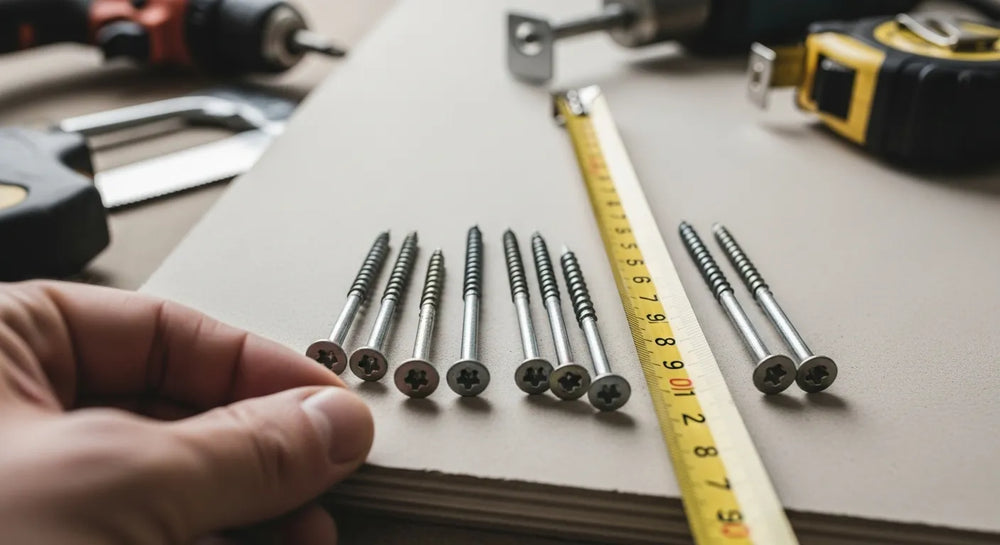
Can Wood Screws Be Used for Drywall? Understanding Fastener Selection for Lasting Quality
Table of Contents
- Introduction
- The Drywall Paradox: Why Specialized Fasteners Are Essential
- Dissecting the Drywall Screw: Engineered for Precision
- Unpacking the Wood Screw: Designed for Density
- The Critical Differences: Why Wood Screws Fail in Drywall Applications
- The Consequences of Misguided Fastening: Why You Shouldn't Use Wood Screws for Drywall
- The Broader Impact: Strategic Fastener Selection in Industrial Procurement
- Maden.co: Your Strategic Partner in Sourcing American-Made Excellence
- Conclusion
- FAQ: Fasteners for Drywall and Beyond
Introduction
In the intricate world of construction, MRO, and manufacturing, the seemingly minor decision of selecting the right fastener can have monumental impacts on a project's integrity, longevity, and even its compliance. Imagine a meticulously planned industrial renovation, brought to a standstill or compromised months later, simply because the wrong type of screw was chosen for a critical application. This scenario is far from hypothetical; it's a common pitfall that procurement managers, MRO buyers, and design engineers must navigate daily. The question "can wood screws be used for drywall?" might appear straightforward on the surface, but it unlocks a deeper conversation about material science, engineering principles, and the strategic value of precise sourcing.
This post will delve into the fundamental differences between wood screws and drywall screws, dissecting their unique designs, materials, and intended applications. We will explore why using the incorrect fastener can lead to significant structural and aesthetic issues, ultimately impacting project timelines and budgets. Beyond the immediate technicalities, we’ll expand on the broader implications for industrial procurement, emphasizing how selecting the right American-made components from verified manufacturers not only ensures compliance and performance but also strengthens supply chain resilience. Our aim is to provide an authoritative guide that empowers industrial professionals to make informed decisions, ensuring every project stands on a foundation of quality and precision.
The Drywall Paradox: Why Specialized Fasteners Are Essential
Drywall, also known as plasterboard or gypsum board, is a ubiquitous building material found in virtually every modern interior. It consists of a gypsum plaster core pressed between two sheets of heavy paper. While incredibly versatile for creating smooth, paintable surfaces, its inherent brittle nature and the relatively delicate paper facing present unique challenges for fastening. Unlike wood, which offers a dense, fibrous structure for threads to grip, gypsum is softer and more prone to crumbling under pressure. The paper facing, while providing initial tensile strength, can easily tear or deform if improperly handled.
Understanding these characteristics is the first step toward appreciating why specialized fasteners are not merely a recommendation but a necessity for drywall installation. The goal of a drywall screw is to firmly secure the board to studs (whether wood or metal) without damaging the gypsum core or tearing the paper surface. It must provide sufficient holding power to prevent "screw pops"—where the screw head pushes through the paint and mud layers—and ensure the longevity of the installation. This delicate balance requires a screw specifically engineered for the task, a standard that conventional wood screws simply cannot meet.
Dissecting the Drywall Screw: Engineered for Precision
Drywall screws are purpose-built fasteners, meticulously designed to meet the specific demands of attaching gypsum board. Their construction reflects a careful consideration of the material they fasten and the substrates they connect to. At Maden.co, we understand the critical role these specialized fasteners play in quality construction, which is why we connect buyers with a vast selection of American-made options.
Key Characteristics of Drywall Screws:
- Material and Coating: Drywall screws are typically made from hardened steel, which provides the necessary strength to drive through gypsum and into studs without bending or breaking. They are commonly coated with a black phosphate or sometimes a galvanized finish for corrosion resistance, especially important in environments where moisture might be a factor. This hardening process makes them strong, yet also slightly brittle, a trade-off managed by their specific design.
- Head Design: The Bugle Head Advantage: One of the most distinctive features of a drywall screw is its bugle head. This conical, trumpet-like shape is crucial because it feathers into the drywall paper without tearing it. As the screw is driven, the bugle head creates a slight dimple in the gypsum board, allowing the screw head to sit flush with or slightly below the surface. This flush finish is essential for easy mudding and taping, creating a smooth surface for paint. Traditional flat-head wood screws, with their sharp undersides, would invariably tear the paper, compromising the hold and creating unsightly damage.
-
Thread Type and Pitch: Drywall screws come with different thread patterns optimized for the type of stud they are fastening into:
- Coarse-Thread Drywall Screws: These are designed for fastening drywall to wood studs. The coarser, widely spaced threads provide excellent grip in the softer wood fibers, pulling the board tight against the stud. For a reliable coarse thread option, you can explore detailed specifications for U.S.-Made 6x1-1/4 Coarse Thread Drywall Screws available on our platform.
- Fine-Thread Drywall Screws: Also known as metal stud screws, these feature finer, more closely spaced threads. They are engineered to tap into and hold firmly within light-gauge metal studs without stripping out. This precision is vital for secure installations in commercial and residential structures utilizing metal framing. You can find high-quality American-made 6x1 Fine-Thread Drywall Screws that meet these exact specifications within our extensive catalog.
- Hi-Low Thread Drywall Screws: Some specialized drywall screws feature a "hi-low" thread pattern, combining two different thread heights. This design is excellent for achieving superior grip in various materials, offering versatility for different stud types or repair work.
- Point Type: Most drywall screws feature a sharp, self-tapping point that allows for quick penetration into the drywall and stud without requiring a pre-drilled pilot hole. This saves significant time in installation.
- Shank Diameter and Length: Drywall screws typically have a relatively slender shank, which minimizes the displacement of gypsum material as they penetrate. Lengths vary, but common sizes range from 1-1/4 inches to 2 inches, depending on the thickness of the drywall and whether multiple layers are being fastened. For a versatile and commonly used size, consider our 8x4 Drywall Screws which are ideal for a range of projects.
The rigorous engineering behind each aspect of the drywall screw ensures not only ease of installation but, more importantly, a secure, lasting hold that withstands the test of time and everyday stresses. This commitment to industrial excellence and product integrity is a core value we uphold at Maden.co.
Unpacking the Wood Screw: Designed for Density
Wood screws are fundamental fasteners, but their design is fundamentally different from drywall screws, tailored specifically for the unique properties of wood. They are engineered to draw two pieces of wood tightly together, creating a strong mechanical bond within the fibrous material.
Defining Features of Wood Screws:
- Material Diversity: While many wood screws are steel, they are often available in a wider array of materials such as brass, bronze, or stainless steel, chosen for their aesthetic qualities, corrosion resistance, or specific strength profiles. Unlike the brittle hardness of drywall screws, wood screws tend to be more ductile, meaning they can bend slightly rather than snapping, which is advantageous when dealing with the varied densities of wood.
-
Head Styles and Undercut: Wood screws come with a variety of head types including flat, round, and pan heads.
- Flat Head: Designed to be countersunk flush or slightly below the surface of the wood. The underside of a flat head screw often has a sharp taper, intended to cut into the wood fibers and pull the head below the surface.
- Round Head and Pan Head: These sit proud of the surface and are used when a decorative finish or maximum clamping force is desired without countersinking. The undersides of these heads are typically flat or slightly convex. None of these designs are optimized to feather into the delicate paper of drywall without tearing.
- Tapered Shank and Coarse Threads: A defining characteristic of many traditional wood screws is their tapered shank. The unthreaded portion closest to the head is often wider than the fully threaded portion, and the threads themselves are coarse and deeply cut. This design is optimized to create its own pilot hole in wood as it's driven, compressing the wood fibers to form a powerful grip. The threads are designed to spiral into the wood, forming a tight, secure connection.
- Point Configuration: Wood screws usually feature a sharp point to facilitate initial penetration into wood. Some have specialized cutting points (like type 17) to reduce splitting in harder woods.
- Holding Mechanism: The threads of a wood screw are designed to embed deeply into the wood fibers, creating a strong pull-out resistance. When properly driven, they create a compression zone in the wood, effectively clamping the fastened materials together.
While exceptionally effective for their intended purpose, these design elements—particularly the head shape and thread profile—render wood screws unsuitable for the delicate and specific requirements of drywall installation.
The Critical Differences: Why Wood Screws Fail in Drywall Applications
The comparison between wood screws and drywall screws isn't a matter of superiority, but of specialization. Each is excellent for its intended purpose, but their designs are not interchangeable, especially when considering the unique properties of drywall. Using a wood screw for drywall is akin to using a hammer to drive a delicate finishing nail; it might work, but the results will be suboptimal, and the potential for damage is high.
Head Design: A Tale of Two Surfaces
- Wood Screw Heads (Flat, Round, Pan): These heads are designed to either countersink aggressively into wood, sit proud, or distribute pressure over a wood surface. The sharp underside of a flat-head wood screw will inevitably tear the paper facing of the drywall, creating an unsightly crater that is difficult to mud over smoothly. Round or pan heads will simply sit on the surface, offering little to no flush finish and creating an uneven wall.
- Drywall Screw Heads (Bugle): The bugle head is engineered to gently compress the drywall paper, forming a neat dimple without tearing. This crucial feature allows the screw to sit perfectly flush or slightly below the surface, preparing it for seamless finishing with joint compound.
Thread Design and Holding Power: Grip vs. Crumble
- Wood Screw Threads: Their typically coarser, often tapered threads are designed to aggressively cut into and compress wood fibers, creating a powerful grip within a dense, fibrous medium. When used in drywall, these threads struggle to find purchase in the brittle gypsum. Instead of gripping, they tend to pulverize the gypsum, creating a larger hole than necessary and significantly reducing the screw's holding power. This leads to what's known as "strip-out," where the screw spins freely without securing the board.
- Drywall Screw Threads (Coarse/Fine): These threads are specifically designed to either bite efficiently into wood studs (coarse thread) or self-tap into metal studs (fine thread), while simultaneously being optimized for minimal damage to the surrounding gypsum. Their consistent diameter and pitch provide a reliable, stable hold within the drywall and the underlying stud.
Material Hardness and Brittleness: Strength vs. Flexibility
- Wood Screws: Generally made from a more ductile steel, allowing them to flex rather than snap when driven into dense or knotty wood. While this flexibility is an advantage in wood, it means they are not as rigid or as sharp as drywall screws, making them less efficient at penetrating drywall and more prone to bending during installation if encountering resistance.
- Drywall Screws: Made from hardened steel, making them strong and resistant to stripping, particularly when driving into dense materials. This hardness also makes them more brittle. If over-torqued, a drywall screw is more likely to snap than a wood screw, but this characteristic is part of its design for precise depth setting.
Corrosion Resistance: Long-Term Durability
- Wood Screws: Available in various materials, some with excellent inherent corrosion resistance (e.g., stainless steel, brass).
- Drywall Screws: Typically phosphate coated for basic corrosion resistance, especially important as they often reside within wall cavities where moisture levels can fluctuate. While not always intended for outdoor exposure, their coating is standard for interior applications to prevent rust bleed-through.
The nuances in these designs underscore a fundamental truth in engineering and procurement: using the right tool for the job isn't just about efficiency; it's about structural integrity, compliance, and long-term performance.
The Consequences of Misguided Fastening: Why You Shouldn't Use Wood Screws for Drywall
Ignoring the specialized design of drywall screws and opting for wood screws might seem like a minor shortcut in the short term, but the repercussions can be significant and costly. For procurement managers and project leads, understanding these potential pitfalls is crucial for mitigating risks and ensuring project success.
1. Compromised Structural Integrity and Holding Power
The primary function of a screw is to hold materials together securely. When wood screws are used in drywall, their threads cannot properly grip the brittle gypsum. Instead of creating a firm anchor, they pulverize the material, creating an oversized, unstable hole. This significantly reduces the screw's pull-out resistance, meaning the drywall board is not adequately secured to the studs.
- Weakened Fastening: The drywall will be loosely attached, prone to movement.
- Screw Pops: This is perhaps the most common and frustrating issue. As the building settles, or due to environmental factors like humidity changes, the poorly secured drywall can shift. This movement causes the screw heads to push through the layers of joint compound and paint, creating unsightly "screw pops" that require extensive, expensive repairs.
- Increased Risk of Delamination or Sagging: Over time, especially in ceilings or large wall sections, the lack of sufficient holding power can lead to the drywall delaminating from the studs or sagging, posing a safety hazard and necessitating complete replacement.
2. Aesthetic Disasters and Rework Expenses
The bugle head of a drywall screw is engineered for a reason: to create a smooth, recessed dimple. Wood screws, with their flat, round, or pan heads, will invariably tear the paper facing of the drywall.
- Torn Paper and Uneven Surfaces: The sharp underside of a flat-head wood screw will rip the paper, creating ragged, visible damage that is incredibly difficult to conceal with joint compound. Round or pan heads will simply protrude, making a flush finish impossible.
- Tedious and Costly Finishing: Attempting to achieve a smooth finish over damaged drywall or protruding screw heads will require excessive amounts of joint compound, multiple layers, and extensive sanding. This adds significant labor time and material costs, directly impacting the project budget and timeline.
- Subpar Appearance: Even with diligent repair, the finished surface may still show imperfections, compromising the aesthetic quality of the entire project. This can lead to client dissatisfaction and reputation damage for contractors and builders.
3. Non-Compliance with Building Codes and Standards
Building codes are in place for safety and structural integrity. They often specify the types of fasteners required for various applications, including drywall installation. Using fasteners that are not designed for drywall can lead to a project failing inspection.
- Legal and Safety Implications: Non-compliant fastening can result in hefty fines, mandatory rework, and even legal liabilities if failures occur. For procurement managers, sourcing compliant materials is not just good practice; it's a fundamental responsibility.
- Warranty Voidance: Manufacturers of drywall and related building materials may void warranties if improper fasteners are used, leaving your organization responsible for any failures.
4. Increased Project Costs and Delays
While a wood screw might seem cheaper upfront, the long-term costs associated with its misuse in drywall far outweigh any initial savings.
- Rework and Labor: Fixing screw pops, torn paper, or sagging drywall means additional labor hours, material costs (more joint compound, paint), and potential delays in project completion.
- Material Waste: Damaged drywall sheets may need to be replaced, leading to material waste.
- Reputational Damage: Projects delayed or marred by avoidable quality issues can severely impact a business's reputation and future opportunities.
In essence, using wood screws for drywall is a false economy. It introduces unnecessary risks, compromises quality, and ultimately costs more in time, money, and reputation than the small savings it might initially promise. This reinforces our core value of Industrial Excellence, emphasizing that selecting the correct, high-quality, and often American-made component is a strategic investment in every project’s success.
The Broader Impact: Strategic Fastener Selection in Industrial Procurement
The "wood screw vs. drywall screw" dilemma is a microcosm of a much larger principle in industrial procurement: the critical importance of precise fastener selection across all applications. Whether it's a specific DIN 931 compliant hex cap screw for heavy machinery, a design engineer needing specific material certifications for a new prototype, or an MRO buyer facing an unexpected equipment breakdown requiring immediate replacement, the ability to quickly find and procure the exact, verified component is a game-changer. This extends far beyond drywall to every bolt, nut, and screw in your inventory.
At Maden.co, we recognize that procurement is not merely about purchasing; it's about strategic sourcing that drives efficiency, resilience, and total cost of ownership (TCO). Our mission is to democratize access to American manufacturing, connecting industrial buyers with over 2.5 million American-made products from our network of 800+ verified U.S. manufacturers. Our vision is to become the definitive platform that proves American-made components are as accessible and convenient as any global alternative, driving the manufacturing revival with our tagline: "America's manufacturing revival is here."
Elevating Procurement Through Maden.co:
- Improving Total Cost of Ownership (TCO): While the upfront cost of a specific, high-quality fastener might be marginally higher than a generic alternative, the long-term savings are substantial. Correct fasteners prevent rework, reduce maintenance, extend equipment lifespan, and avoid costly downtime or structural failures. Sourcing through Maden.co ensures you get the right part the first time, from a verified U.S. manufacturer. This reduces the hidden costs associated with improper parts, such as installation failures, warranty claims, and project delays.
- Ensuring Compliance and Quality: Many industrial applications require strict adherence to industry standards (e.g., DIN, NPT, ASTM). Sourcing through our platform means access to products from verified U.S. manufacturers who understand and meet these stringent requirements. This not only ensures your projects are compliant but also guarantees the quality and performance you expect. Our commitment to American Manufacturing Pride means we connect you with products made to the highest standards.
- Enhancing Supply Chain Resilience: Reliance on single-source, overseas suppliers can introduce significant vulnerabilities into your supply chain. By sourcing American-made products through Maden.co, you mitigate risks associated with geopolitical instability, shipping delays, and fluctuating international logistics. This commitment to Supply Chain Transparency empowers you to build a more robust and responsive procurement strategy.
- Reducing Procurement Friction: Hunting for specialized fasteners, comparing specifications, and verifying manufacturers can be a time-consuming and frustrating process. Maden.co streamlines this with an intuitive digital platform offering a vast, searchable catalog of U.S.-made industrial components. This Digital Innovation translates directly into time saved for procurement teams. Our comprehensive platform ensures that the parts you need are not only American-made but also easily discoverable and available.
- Partnering with Verified U.S. Manufacturers: Our network consists exclusively of verified American manufacturers, guaranteeing traceability, quality control, and ethical production practices. This aligns with our core value of Customer Empowerment, providing you with the confidence that you are investing in reliable products and supporting the domestic economy. Are you a qualified U.S. manufacturer interested in expanding your reach? We invite you to register as a vendor and join the American manufacturing revival to connect with a thriving network of industrial buyers.
From the simplest drywall screw to complex machined components, the principles remain the same: precision, quality, and reliability are paramount. At Maden.co, our entire business model is built on this principle; you can learn more about our mission to champion American manufacturing here.
Maden.co: Your Strategic Partner in Sourcing American-Made Excellence
In the fast-paced world of industrial procurement, having a reliable partner that understands the nuances of material specifications and supply chain dynamics is invaluable. Maden.co is precisely that partner, built on the foundations of American Manufacturing Pride and Industrial Excellence. We believe that securing the right, high-quality U.S.-made components should be seamless, efficient, and transparent.
Consider these practical scenarios where Maden.co provides critical solutions:
- For a procurement manager overseeing a large-scale commercial build-out, the need for consistent quality and timely delivery of fasteners is non-negotiable. Sourcing U.S.-Made 6x1-1/4 Coarse Thread Drywall Screws for wood studs, or American-made 6x1 Fine-Thread Drywall Screws for metal framing, from our verified network ensures compliance and prevents costly project delays caused by inferior imported alternatives. The assurance of sourcing American-made products means knowing you’re getting consistent quality and supporting domestic industry.
- For a design engineer specifying fasteners for an innovative modular construction project, material certifications and precise dimensions are paramount. They need to trust that the components will perform exactly as engineered. Finding specific, high-performance fasteners, like our versatile 8x4 Drywall Screws, on our platform offers the necessary technical details and confidence in their U.S.-made origin. Our platform provides the transparency needed to make informed design choices that stand up to rigorous performance standards.
- For an MRO buyer facing an urgent repair in an operational facility, time is of the essence. An unexpected equipment breakdown requires immediate access to specific parts to minimize downtime. The ability to quickly locate a verified, U.S.-made replacement part from our extensive catalog—and even manage the purchase with strategic financing options—is critical for maintaining operational continuity.
Beyond simply offering products, we provide solutions that empower businesses. Our instant financing option is a strategic tool for businesses, allowing procurement managers and business owners to manage cash flow effectively and make larger-volume purchases without tying up immediate capital. This feature is available during the checkout process, making it easy to apply for Instant Financing at checkout to streamline your capital-intensive projects. This commitment to Digital Innovation and Customer Empowerment means we are constantly seeking ways to make your procurement process more efficient and financially flexible.
We invite you to explore the breadth of American manufacturing excellence available on Maden.co. Whether you're seeking general industrial supplies, specific MRO components, or fasteners for a critical construction project, our platform is designed to connect you with the highest quality U.S.-made products. If you have specific sourcing questions or need assistance navigating our catalog, our expert team is ready to help; please don't hesitate to contact us directly.
Conclusion
The seemingly simple question of whether "can wood screws be used for drywall" unravels a complex tapestry of engineering design, material science, and strategic procurement. The unequivocal answer is no; wood screws are fundamentally ill-suited for drywall applications due to their divergent design principles, leading to compromised structural integrity, unsightly aesthetic flaws, and costly project delays. The lesson here extends far beyond drywall: selecting the correct fastener—one purpose-built for its intended application and manufactured to rigorous standards—is paramount for the safety, durability, and compliance of any project.
At Maden.co, we stand as America's premier B2B marketplace, dedicated to connecting industrial buyers with the definitive American-made products they need. Our extensive catalog of over 2.5 million items from 800+ verified U.S. manufacturers embodies our core values of American Manufacturing Pride, Digital Innovation, Supply Chain Transparency, Industrial Excellence, and Customer Empowerment. We are committed to proving that American-made components are not only superior in quality but also conveniently accessible, driving the manufacturing revival from our shores.
Don't let incorrect fastener selection jeopardize your projects or inflate your costs. Elevate your procurement strategy today. We encourage you to explore the vast array of specialized, U.S.-made fasteners and industrial components available through our platform. Begin your journey toward enhanced efficiency, reliability, and cost-effectiveness by visiting Maden.co and discovering the unparalleled quality of American manufacturing. Remember, you can apply for Instant Financing at checkout to streamline your capital-intensive projects, ensuring your business has the resources it needs to thrive.
FAQ: Fasteners for Drywall and Beyond
Q1: What happens if I accidentally use wood screws for drywall?
A1: Using wood screws for drywall will lead to several problems. The sharp, tapered head of a wood screw will tear the delicate paper facing of the drywall, creating an uneven surface that is difficult to finish smoothly. More critically, the threads of a wood screw are designed to grip dense wood fibers, not the brittle gypsum core. This results in poor holding power, making the drywall susceptible to "screw pops" (where the screw head pushes through the finished surface) and potential sagging or detachment over time. You will likely face costly rework and compromised structural integrity.
Q2: Are there any situations where wood screws are acceptable for drywall?
A2: Generally, no. Wood screws are not designed for direct fastening of drywall. While a wood screw might be used to attach a piece of wood trim over drywall, or to secure a wooden block behind drywall (e.g., for mounting a TV), it should never be used to fasten the gypsum board itself to the studs. For securing drywall, always use screws specifically designed for drywall application.
Q3: How do I know I'm buying the right drywall screws for my project?
A3: To ensure you're buying the correct drywall screws, consider the type of studs you're attaching to. For wood studs, opt for coarse-thread drywall screws. For metal studs, choose fine-thread drywall screws. Always look for screws with a bugle head, as this design prevents paper tearing and allows for a flush finish. Check the length to ensure it penetrates the stud adequately (typically 1-1/4 inches for 1/2-inch drywall). At Maden.co, we provide detailed specifications for all our U.S.-made fasteners, allowing you to confidently select the right product for your specific application, such as our 6x1-1/4 Coarse Thread Drywall Screws or 6x1 Fine-Thread Drywall Screws.
Q4: Why should I choose U.S.-made fasteners from Maden.co?
A4: Choosing U.S.-made fasteners from Maden.co offers several strategic advantages for industrial buyers. Firstly, it ensures superior quality and consistent manufacturing standards, reducing the risk of product failure and rework. All our products come from verified American manufacturers, guaranteeing transparency in the supply chain and supporting domestic industry. Secondly, it enhances your supply chain resilience by reducing reliance on potentially unstable international logistics. Finally, by utilizing our platform, you gain access to a vast catalog of specialized, compliant products, including options like 8x4 Drywall Screws, along with convenient features like Instant Financing at checkout to manage your capital effectively. We are committed to Industrial Excellence and Customer Empowerment, providing you with reliable products that contribute to your project's long-term success.


