
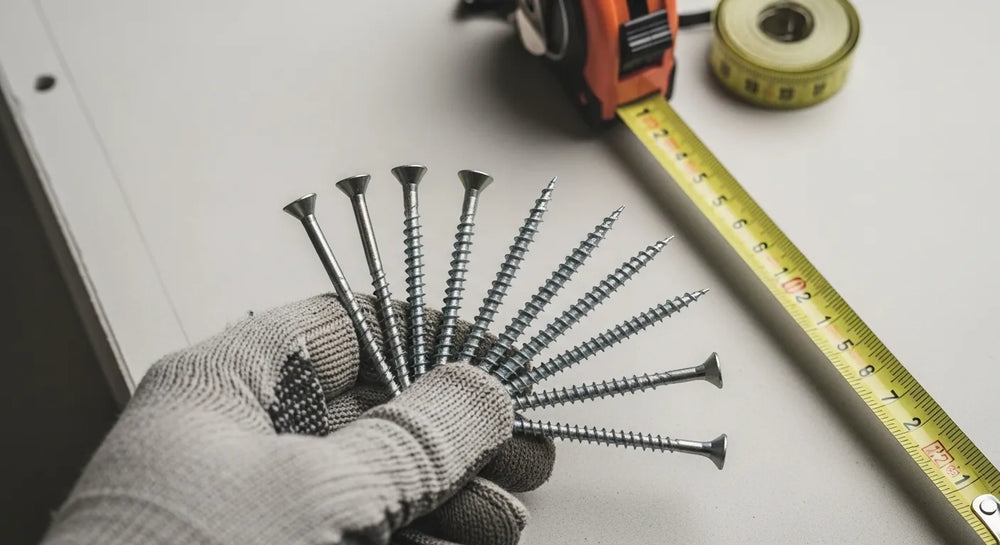
Can You Drill a Screw Into Concrete? Here's How
Table of Contents
- Introduction
- Why Regular Screws are the Wrong Tool for the Job
- The Engineered Solution: Understanding Concrete Screws
- The Definitive Guide: How to Install a Concrete Screw Correctly
- The Strategic Advantage of Sourcing U.S.-Made Fasteners
- Conclusion: Fasten with Confidence and Purpose
- Frequently Asked Questions (FAQ)
Introduction
A project manager stands on a job site, staring at a steel bracket lying on the floor next to a pockmarked concrete wall. The deadline is tomorrow. The bracket, which was supposed to support a critical piece of equipment, pulled clean out of the wall because the installation team used standard wood screws, creating a costly delay and a serious safety hazard. This scenario is all too common, stemming from a fundamental misunderstanding of how to properly fasten materials to masonry. The question isn't just academic; it's a practical challenge faced daily by MRO buyers, facility managers, and design engineers across the country.
The simple answer to, "Can you drill a screw into concrete?" is a definitive yes, but with a critical caveat: you cannot use just any screw. Attempting to drive a standard wood or machine screw into concrete is a recipe for failure. The material properties of concrete—a hard, brittle, aggregate-based substance—require a specialized fastener designed to securely anchor into it without crumbling the surrounding material.
This article is your authoritative guide to doing it right. We will move beyond the simple "yes" and delve into the essential details that ensure a strong, reliable, and permanent connection. We'll explore the science behind why specific concrete screws work, the different types available for various applications, the precise tools you'll need, and a meticulous step-by-step installation process. Our goal is to empower you with the knowledge to execute this task with professional confidence, backed by the reliability of American-made components sourced through our platform at Maden.co. By understanding the correct methodology, you can prevent project delays, enhance safety, and improve the overall Total Cost of Ownership (TCO) for your operations.
Why Regular Screws are the Wrong Tool for the Job
To appreciate the solution, one must first understand the problem. A fastener’s success depends on its interaction with the base material. The fundamental principles that make a wood screw effective in lumber are precisely what cause it to fail in concrete.
The Physics of Fastening
- In Wood: A wood screw works by displacing and compressing wood fibers. Its sharp threads act like a wedge, cutting into the fibrous material and creating a tight grip as the fibers push back. The wood's elasticity is key to this holding power.
- In Metal: A machine screw or bolt threads into a precisely tapped hole. The holding power comes from the perfect mechanical interlock between the male threads of the screw and the female threads of the hole, with minimal material displacement.
- In Concrete: Concrete has no fibers to grip and is not elastic. It's a composition of cement, sand, and aggregate (stone). When you try to force a standard screw into it, there's nothing for the threads to bite into. The screw will either spin uselessly, unable to advance, or it will fracture the brittle concrete around it, creating a "spalled" or crumbled hole with zero holding power.
A standard screw relies on forming a bond with its host material. In concrete, it can only displace dust and fine aggregate, resulting in a connection that can be pulled out by hand. This isn't just an inconvenience; for a procurement manager sourcing components for a commercial build or an MRO buyer repairing essential machinery, a failed fastener represents a significant operational and financial risk.
The Engineered Solution: Understanding Concrete Screws
The inadequacies of standard screws led to the development of specialized masonry fasteners. The most direct, efficient, and widely used of these is the concrete screw, often known by the popular brand name Tapcon®. These are not just stronger screws; they are precision-engineered systems designed to work in harmony with the unique properties of concrete, brick, and block.
What Makes a Concrete Screw Different?
A concrete screw is designed to tap its own threads directly into a pre-drilled pilot hole in the masonry. Key features include:
- Hardened Steel Construction: They are made from high-strength, heat-treated carbon or stainless steel to withstand the high torque required for installation and to cut threads into the abrasive concrete without being damaged.
- Specialized Thread Design: Unlike the uniform threads on a standard screw, concrete screws often feature a patented alternating "hi-lo" or serrated thread pattern. This design allows the high threads to cut into the concrete while the lower threads provide stability and help clear away debris, creating a secure mechanical interlock deep within the base material.
- Corrosion-Resistant Coatings: Concrete can be a damp, alkaline environment. To ensure longevity, these screws are protected with advanced coatings. While basic zinc plating offers minimal protection, superior options like ceramic coatings provide exceptional resistance to rust and corrosion, making them suitable for demanding indoor and outdoor applications. For example, a high-performance Steel Blue Ruspert Ceramic Coating Flat Phillips® Drive Concrete Screw offers over 1,000 hours of salt spray resistance, ensuring long-term reliability in harsh conditions.
Choosing the Right Concrete Screw for Your Application
Selecting the correct screw goes beyond just length and diameter. The head style and material are critical considerations for performance and aesthetics.
- Hex Head: This is the most common style for industrial and construction applications. The external hex head allows for high installation torque using a standard socket wrench or impact driver, making it ideal for fastening heavy items like machinery mounts, steel ledgers, and racking systems. A versatile fastener like these U.S.-Made Hex Head Concrete Screws 3/16 x 1-1/4 is a staple for any MRO professional's toolkit due to its strength and ease of installation.
- Flat Head (Countersunk): When a flush or recessed finish is required, a flat head screw is the answer. These are perfect for applications like installing door frames, window bucks, furring strips, or electrical boxes where a protruding head would be an obstruction or aesthetically displeasing. The countersunk design allows the head to sit level with or slightly below the surface of the material being fastened. For these applications, a quality 1/4 x 2-3/4 Flat Head Concrete Screw ensures a clean, professional finish without compromising holding power.
For a design engineer specifying fasteners for a new product assembly or an architect detailing a finish, the ability to choose the right head style is paramount. Sourcing these varied components from a single, reliable platform simplifies the procurement process and ensures consistency across a project.
The Definitive Guide: How to Install a Concrete Screw Correctly
Proper installation is not just a recommendation; it is a requirement for achieving the screw's rated load capacity. Skipping or rushing any of these steps, especially cleaning the pilot hole, can reduce holding power by over 50%.
Step 1: Safety and Tool Preparation
Before you begin, ensure you have the right personal protective equipment (PPE) and tools. Safety is non-negotiable when working with concrete.
Essential PPE:
- Safety Glasses: To protect your eyes from concrete dust and shards.
- Dust Mask: A NIOSH-approved respirator (N95 or better) is critical to avoid inhaling crystalline silica dust, a known carcinogen.
- Gloves: To protect your hands from abrasion and impact.
Essential Tools:
- Hammer Drill: This is the correct tool for the job. A standard drill lacks the percussion action needed to efficiently drill into concrete. A hammer drill combines rotation with a rapid hammering action to pulverize the masonry as it drills.
- Carbide-Tipped Masonry Drill Bit: You must use a bit specifically designed for concrete. These bits have a very hard carbide tip brazed to the steel shank. Crucially, the bit must be the exact diameter specified by the screw manufacturer. This information is typically printed on the screw's packaging.
- Impact Driver or Drill/Driver: To drive the screw into the pilot hole. An impact driver is often preferred for its ability to deliver high torque in short bursts.
- Wire Brush and Compressed Air/Shop Vacuum: For cleaning the pilot hole. This is the most overlooked but most critical step.
- Tape Measure and Marker: For precise hole placement.
Step 2: Mark Your Location and Determine Drill Depth
Use your tape measure and marker to accurately mark the location for your fastener. When planning placement, adhere to these general rules to prevent concrete blowout or cracking:
- Minimum Edge Distance: Keep the fastener at least 10 anchor diameters away from any unsupported edge of the concrete slab. For a 1/4" screw, this is 2.5 inches.
- Minimum Spacing: Maintain at least 10 anchor diameters of spacing between fasteners to ensure each screw has a full cone of concrete to engage with for maximum holding power.
Next, determine the required drilling depth. The pilot hole must always be deeper than the screw's intended embedment length.
Pro Tip: A good rule of thumb is to drill the hole at least 1/2" to 1" deeper than the length of the screw that will be embedded in the concrete. This creates a space for dust and debris to collect at the bottom of the hole, preventing the screw from bottoming out before it's fully seated.
To ensure consistent depth, measure the required length on your drill bit and wrap a piece of masking tape around it to act as a visual depth stop.
Step 3: Drill the Pilot Hole
With your PPE on, insert the correct-sized carbide-tipped bit into your hammer drill. Ensure the drill is set to the "hammer" function. Hold the drill perpendicular to the concrete surface and begin drilling at a medium speed, applying steady, firm pressure. Do not force the drill; let the tool do the work. Once you reach your tape marker, withdraw the bit while it's still spinning to help clear some of the initial dust.
Step 4: Clean the Hole (The Non-Negotiable Step)
This is the step that separates professional results from amateur failures. The fine silica dust created during drilling, if left in the hole, will act as a lubricant and prevent the screw's threads from properly engaging with the solid concrete. This dramatically compromises the fastener's pull-out and shear strength.
The proper cleaning method is a multi-step process:
- Blow: Use compressed air, a hand-pump blower, or a shop vacuum to remove the bulk of the loose dust from the hole.
- Brush: Insert a wire brush that matches the hole's diameter. Vigorously scrub the sides of the hole to dislodge any packed-in dust and debris.
- Blow Again: Use compressed air or a vacuum one final time to remove all remaining particles.
A properly cleaned hole should be completely free of any visible dust. For a procurement manager concerned with project compliance and safety standards, mandating this step in installation protocols is essential.
Step 5: Drive the Concrete Screw
Set your impact driver or drill to a low speed and clutch setting to start. Position the tip of the concrete screw into the clean pilot hole and begin driving it slowly and steadily. The screw should drive in smoothly with consistent resistance as it cuts its threads.
Crucial Warning: Avoid over-tightening the screw. This is the second most common installation error. The immense torque from an impact driver can easily strip the threads the screw has just cut into the concrete. Once stripped, the connection is compromised and cannot be fixed. The only solution is to abandon the hole and drill a new one. Drive the screw until the head is seated firmly against the material you are fastening, and then stop. If using a hex head screw, it's often best practice to finish the last quarter-turn by hand with a socket wrench to feel when it is perfectly snug.
The Strategic Advantage of Sourcing U.S.-Made Fasteners
In an industrial setting, a fastener is more than just a piece of hardware; it's a critical component in a larger system where failure is not an option. This is where the source of your components becomes a strategic business decision. At Maden.co, our entire mission is built on the principle of strengthening American industry by making it easier for businesses to procure high-quality, U.S.-manufactured products. You can learn more about our mission to champion American manufacturing here.
Our commitment is rooted in several core values that directly benefit your operations:
- Industrial Excellence and Supply Chain Transparency: When you source a concrete screw from our network of over 800 verified U.S. manufacturers, you gain access to a level of quality control and material traceability that is often absent in complex global supply chains. You can be confident that the steel is properly hardened and the coatings meet exact specifications, reducing the risk of premature failure and costly rework.
- Customer Empowerment: We empower procurement managers and engineers by providing a platform with over 2.5 million American-made products. This eliminates the friction of sourcing hard-to-find components and helps you build a more resilient, reliable, and domestic supply chain. This is a tangible step toward mitigating the risks of global disruptions and long lead times.
- American Manufacturing Pride: By choosing to source domestically, you are investing in our nation's industrial base. This supports local economies and fosters innovation right here at home. We believe America's manufacturing revival is here, and every purchase of a U.S.-made component is a part of that movement. If you are a U.S. manufacturer producing quality industrial components, we invite you to join us. Register as a vendor and become part of the American manufacturing revival.
For large-scale projects or significant MRO stock-ups, managing cash flow is a key consideration. To support your procurement needs, we offer a strategic tool to help you acquire the necessary components without disrupting your capital budget. You can apply for Instant Financing at checkout to streamline your capital-intensive projects, making it easier to invest in the quality American-made products your operations depend on.
Conclusion: Fasten with Confidence and Purpose
The ability to securely fasten a screw into concrete is a fundamental skill, but executing it with professional precision requires the right knowledge, the right tools, and, most importantly, the right components. The answer to our initial question is a clear and confident "yes," provided you reject the notion of using a standard screw and embrace the engineered solution of a dedicated concrete fastener.
By following the detailed process—from selecting the correct head style and coating for your application to meticulously drilling and cleaning the pilot hole—you ensure a connection that is safe, strong, and durable. This diligence transforms a simple task into a mark of professional quality.
Don't let fastener uncertainty or supply chain vulnerabilities become the weak link in your projects. Take control of your procurement process by investing in the reliability and quality of American-made components. Explore our extensive catalog of U.S.-made concrete screws and other industrial supplies on Maden.co today. Secure your projects with confidence, and remember to leverage our Instant Financing option at checkout to manage your purchasing power effectively. If you have specific sourcing questions or need assistance with a large order, our team is ready to help; please contact us for dedicated support.
Frequently Asked Questions (FAQ)
1. What is the difference between a hammer drill and an impact driver for this job? A hammer drill is essential for drilling the pilot hole. It combines rotation with a rapid hammering action to pulverize concrete. An impact driver is used for driving the screw. It delivers high rotational torque in short bursts, which is ideal for setting the screw without needing to apply significant downward pressure. You need a hammer drill to make the hole, but an impact driver or a standard drill/driver can be used to install the screw.
2. Can I reuse a concrete screw? It is strongly recommended not to reuse concrete screws. The process of driving the screw into concrete causes significant wear on the sharp, thread-cutting edges. A used screw will have dulled threads, which will not cut into the concrete as effectively on a second installation. This results in significantly reduced holding power and a much higher risk of failure. Always use a new screw for each new anchor point.
3. How do I know what size drill bit to use for my concrete screw? The screw manufacturer will always specify the exact diameter of the ANSI-compliant carbide-tipped masonry bit required. This information is typically printed directly on the product's box or packaging. For example, a 1/4" diameter concrete screw almost always requires a 3/16" diameter pilot hole. Using any other size will compromise the connection; a smaller hole will prevent the screw from being installed, and a larger hole will result in no holding power.
4. What should I do if I hit rebar while drilling? Stop drilling immediately. Hitting steel rebar will feel like you've hit a wall, and you'll make no further progress. Forcing the drill will only destroy your masonry bit. Do not attempt to drill through the rebar. The only solution is to abandon that hole and move your anchor point at least a few inches away to try again. Hitting rebar is common in reinforced concrete, so it's wise to have a contingency plan for fastener placement.


