
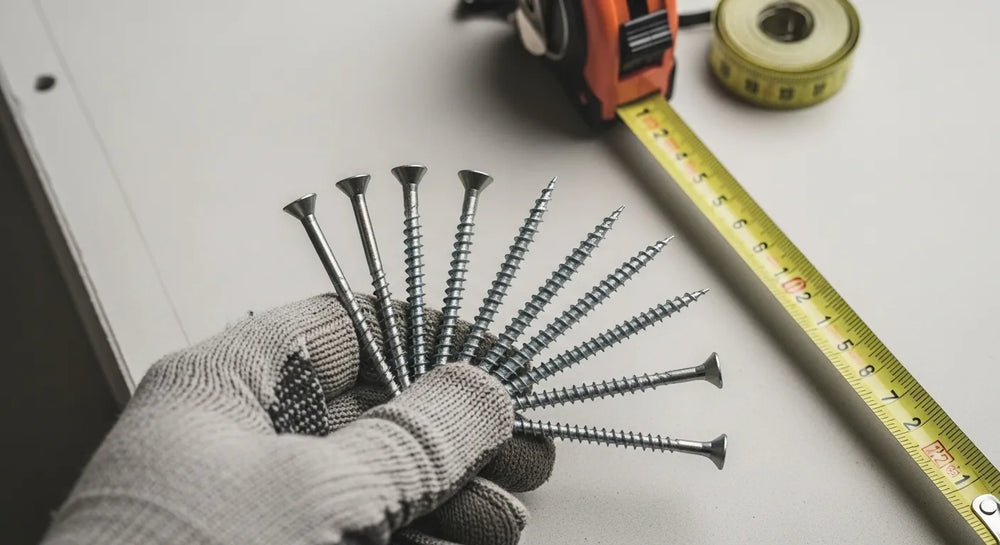
How to Drill in Concrete Screws: A Step-by-Step Guide
Table of Contents
- Introduction
- Understanding Concrete Screw Technology
- Pre-Installation: Your Blueprint for Success
- The Step-by-Step Installation Process
- Sourcing and Strategy: The Maden.co Advantage
- Conclusion
- Frequently Asked Questions
Introduction
A single failed fastener can halt a multi-million dollar construction project, trigger a costly production line stoppage, or compromise the safety of an entire installation. For procurement managers, MRO buyers, and engineers, the stakes are incredibly high. The simple concrete screw, a cornerstone of modern construction and industrial installation, is often taken for granted until it fails. This failure is rarely due to the fastener itself, but almost always due to improper installation. The challenge isn't just about applying force; it's a precise process where technique, tools, and the quality of the component converge to create an unbreakable bond.
This guide moves beyond a basic overview. We will deconstruct the entire process of installing concrete screws, from initial selection to final torque. We will cover the critical nuances that separate a temporary fix from a permanent, high-strength solution: selecting the ideal screw type and coating for your environment, pairing it with the correct ANSI-spec drill bit, executing a flawless drilling and cleaning procedure, and understanding the common pitfalls that lead to stripped threads and compromised load capacities.
Our goal is to empower you with the technical knowledge and practical steps needed to ensure every concrete screw you install performs exactly as engineered. By mastering this process, you enhance not only the physical integrity of your projects but also the operational efficiency and resilience of your supply chain, ensuring you have the right, high-quality American-made components when you need them most.
Understanding Concrete Screw Technology
Before turning a single screw, it’s essential to understand why this specific type of fastener is so widely trusted in industrial and commercial settings. Unlike expansion anchors that rely on friction and outward pressure, a concrete screw functions more like a tap, cutting its own precise threads directly into the concrete, block, or brick. This direct mechanical interlock is what gives it superior and more predictable holding power.
Key Advantages Over Traditional Anchors
For decades, wedge anchors and sleeve anchors were the standard. However, they come with inherent limitations that concrete screws overcome:
- Removability: Once an expansion anchor is set, it's permanent. Concrete screws can be removed, making them ideal for temporary installations like bracing, scaffolding, or machinery placement that may need to be adjusted later.
- Reduced Stress on Base Material: The high expansion forces of traditional anchors can crack or damage concrete, especially when installed close to an edge or near another anchor. Concrete screws exert far less stress, allowing for installation in tighter spaces without compromising the integrity of the base material.
- Speed and Simplicity: The installation process is streamlined: drill a hole, clean it, and drive the screw. This eliminates the extra steps of hammering in an anchor body and tightening a nut, significantly reducing labor time and cost on large-scale projects.
- Reliable Performance: The direct threading action provides a consistent and verifiable hold, which is crucial for engineers specifying load-bearing connections. This reliability starts with sourcing from trusted suppliers. On platforms like Maden.co, every component comes from a verified U.S. manufacturer, ensuring material traceability and adherence to strict quality standards.
This shift toward concrete screw technology reflects a broader industry demand for efficiency, precision, and reliability—principles that are at the heart of our mission to champion American manufacturing.
Pre-Installation: Your Blueprint for Success
The most common installation failures happen before the drill is even turned on. Meticulous preparation is the single most important factor in achieving the screw’s maximum engineered load capacity. This phase involves two critical components: selecting the correct fastener and assembling the right tools.
Choosing the Right Concrete Screw
With thousands of variations available, selecting the optimal screw can seem daunting. The decision should be driven by the specific demands of the application, including the load requirements, environmental conditions, and the nature of the object being fastened.
Diameter and Length
- Diameter: The diameter of the screw (commonly 3/16", 1/4", 3/8", 1/2") is directly related to its shear and tensile strength. A larger diameter provides greater holding power. Your choice should be based on the engineer's specifications or the weight and stress requirements of the fixture.
-
Length: To determine the correct length, you must know the thickness of the material you are fastening (the fixture) and the required minimum embedment depth into the concrete.
Formula: Screw Length ≥ Fixture Thickness + Minimum Embedment Depth The minimum embedment is specified by the manufacturer and is crucial for safety and performance. Always aim for a screw that meets or exceeds this calculation. Never "bottom out" the screw in the hole; the hole must be deeper than the screw's embedment.
Head Style
The head style dictates how the screw sits against the fixture and what tools are needed for installation.
- Hex Head: This is the most common style, featuring a built-in washer for a large clamping surface area. It allows for high installation torque using a standard socket wrench or impact driver, making it perfect for heavy-duty applications like racking, machinery, and structural connections. For a versatile, high-strength option, the American-made Hex Head Concrete Screws 3/16" x 1-3/4" are an industry standard for MRO and construction applications.
- Flat Head (Countersunk): When a flush, snag-free finish is required, a flat head screw is the ideal choice. The head is designed to sit level with or slightly below the surface of the fixture. This is common for installing door frames, window tracks, and architectural elements. Securing these fixtures properly requires a fastener like the 1/4" x 2-3/4" Flat Head Concrete Screws, which provides a clean aesthetic without sacrificing holding power.
Material and Coating
The environment where the screw will be installed is a primary factor in choosing the right material and protective coating.
- Carbon Steel: Most standard concrete screws are made from carbon steel and then heat-treated for hardness. They are typically coated for corrosion resistance.
- Protective Coatings: The coating is the screw’s first line of defense against moisture and chemicals. A standard zinc plating is suitable for dry, indoor environments. However, for exterior applications or areas exposed to moisture, chemicals, or salt, a superior coating is non-negotiable. The Steel Blue Ruspert Ceramic Coating Flat Phillips® Drive Concrete Screw is a prime example of advanced fastener technology. This multi-layer ceramic coating provides exceptional corrosion resistance, often outlasting galvanized coatings by a significant margin, making it a critical component for long-term installations in challenging industrial environments.
Sourcing fasteners with clear material and coating specifications is a core tenet of supply chain transparency. At Maden.co, we empower buyers by providing detailed product data directly from our network of over 800 verified U.S. manufacturers, eliminating guesswork and ensuring you get a component that meets your project’s exact environmental and performance demands.
Gathering the Essential Tools
Using the wrong tools is just as detrimental as choosing the wrong screw. Here is the essential toolkit for a professional installation:
- Rotary Hammer or Hammer Drill: A standard drill will not work on concrete. A hammer drill provides a hammering action along with rotation, suitable for smaller diameter screws in block or soft concrete. For dense, cured concrete and larger diameter screws, a rotary hammer with its piston-driven mechanism is far more efficient and effective.
- Carbide-Tipped Masonry Drill Bits: Only use drill bits specifically designed for concrete. The bit must be tipped with tungsten carbide to withstand the abrasive material. Crucially, use an ANSI-compliant drill bit. These bits are manufactured to tight tolerances, ensuring the pilot hole is the exact diameter required for the screw to properly tap its threads. Using a worn or out-of-spec bit will result in a poor fit and drastically reduced holding power.
- Hole Cleaning Equipment: This is a non-negotiable step. You will need a stiff nylon or wire brush to scrub the inside of the hole and a source of compressed air, a hand pump, or an industrial vacuum to remove all the dust and debris.
- Impact Driver or Torque Wrench: An impact driver is the fastest way to install concrete screws. However, for applications where a specific torque value is required by an engineer, a calibrated torque wrench must be used to prevent over-tightening.
- Personal Protective Equipment (PPE): Always wear ANSI-rated safety glasses or goggles, gloves to protect from abrasion, and hearing protection, especially when using a rotary hammer indoors.
The Step-by-Step Installation Process
With the correct screw selected and the proper tools at hand, you can now proceed with the installation. Follow these steps methodically for a perfect result every time.
Step 1: Mark Your Location
Use a pencil or marker to precisely mark the spot where the hole will be drilled. Ensure that your mark accounts for the placement of the fixture and adheres to the minimum edge and spacing distance requirements specified by the screw manufacturer.
Step 2: Select the Correct Drill Bit Diameter
This is a point of no return. Using the wrong size bit will ruin the installation. The correct drill bit diameter will always be slightly smaller than the nominal diameter of the screw. For example, a 1/4" concrete screw typically requires a 3/16" pilot hole.
Golden Rule: Always use the bit diameter specified by the manufacturer for the exact screw you are installing. This information is typically printed on the screw’s packaging or available on the product data sheet.
Step 3: Set the Drilling Depth
The pilot hole must be deeper than the screw's intended embedment. This extra space allows any remaining fine dust to settle at the bottom of the hole without preventing the screw from reaching its full depth. A good rule of thumb is to drill the hole at least 1/2" to 1" deeper than the screw will penetrate the concrete. Use the depth stop on your drill or wrap a piece of tape around the drill bit to serve as a visual depth gauge.
Step 4: Drill the Pilot Hole
Hold the drill perpendicular (at a 90-degree angle) to the concrete surface. Start drilling slowly to create a small divot that will prevent the bit from "walking" or wandering. Once the bit is set, increase the speed and apply steady, firm pressure. Let the tool do the work; do not force it. If you hit rebar (you’ll feel the drill stop making progress and may see metal shavings), stop immediately. Do not attempt to drill through it. Move your anchor location at least a few inches away and drill a new hole.
Step 5: Clean the Hole Thoroughly
This is the most frequently skipped and most critical step for achieving maximum holding strength. The fine dust created during drilling, if left in the hole, will interfere with the screw's ability to cut clean, deep threads. This compromises the mechanical interlock and can reduce the fastener’s load capacity by over 50%.
The correct procedure involves a sequence of blowing and brushing:
- Blow: Use compressed air, a manual blower, or a vacuum to remove the initial loose dust from the hole.
- Brush: Insert a wire or nylon brush that matches the hole diameter. Scrub the sides of the hole vigorously to dislodge any packed-in dust particles.
- Blow Again: Blow the hole out one final time to remove all the loosened debris. A properly cleaned hole will be visibly free of dust.
Step 6: Drive the Screw
Position your fixture over the clean pilot hole. Insert the tip of the concrete screw and start driving it with your impact driver or wrench. Drive the screw steadily until the head is seated firmly against the fixture.
Be extremely cautious not to over-torque the screw. If you continue to drive the screw after it is snug, you risk stripping the threads you just created in the concrete or, in a worst-case scenario, snapping the screw head. With an impact driver, you will hear the tool's hammering action change in pitch as the screw tightens. Stop immediately at this point.
Sourcing and Strategy: The Maden.co Advantage
For a procurement manager under pressure to source a specific fastener for a critical repair, a design engineer needing material certifications for a new prototype, or an MRO buyer facing an unexpected equipment breakdown, the ability to quickly find and finance a verified, U.S.-made part is a game-changer. This is where mastering the installation process intersects with building a resilient and efficient supply chain.
Our entire business model is built on the principle of Industrial Excellence. We believe that providing access to superior, domestically produced components is fundamental to the success of American businesses. You can learn more about our mission to champion American manufacturing here. By connecting buyers with over 2.5 million products from our network, we reduce procurement friction and eliminate the uncertainty that comes with fragmented, unreliable supply chains.
The quality of a fastener is determined long before it reaches your job site. It's forged in the accountability and craftsmanship of its maker. That's why we partner exclusively with U.S. manufacturers. This commitment not only supports our national industrial base but also provides you with the assurance of quality that is essential for critical applications. If you are a U.S. manufacturer who shares these values, we invite you to join our mission. Register as a vendor and join the American manufacturing revival.
We also understand that managing cash flow is as critical as managing projects. For large-scale procurements or capital-intensive projects, our Instant Financing option provides the flexibility you need to acquire the necessary materials without disrupting your budget. You can apply for Instant Financing at checkout to streamline your purchasing process. If you have specific sourcing questions or need help finding a hard-to-source component, our team is ready to help.
Conclusion
Properly installing a concrete screw is a testament to the idea that in industry, precision matters. It’s a process that demands respect for the materials, the tools, and the technique. By following the steps outlined in this guide—from the careful selection of a high-quality, American-made screw to the final, precise turn of the driver—you are not just fastening an object. You are ensuring safety, creating lasting value, and contributing to the integrity of your project.
The strength of any structure comes down to its weakest link. Don’t let that be a poorly installed fastener. Take the time to do it right, and build your projects on a foundation of quality and reliability.
Explore our extensive catalog of U.S.-made concrete screws and other industrial components on Maden.co. Equip your team with the best materials our country has to offer and streamline your procurement by taking advantage of Instant Financing at checkout.
Frequently Asked Questions
1. Can I reuse concrete screws?
It is strongly advised not to reuse concrete screws in load-bearing or critical applications. The initial installation process involves the screw cutting its own threads into the concrete. When the screw is removed and reinserted, the new threads may not align perfectly with the old ones, and the base material may be compromised, leading to a significant reduction in holding power and an unpredictable connection.
2. What is the difference between a hammer drill and a rotary hammer?
A hammer drill uses two ribbed discs that click past each other to create a hammering action. It's best suited for drilling smaller diameter holes (under 1/2") in softer masonry like brick or block. A rotary hammer uses a piston mechanism driven by a crankshaft to generate a much more powerful hammering force. It is the preferred tool for drilling into dense, cured concrete and for larger diameter holes, as it is significantly faster and more efficient.
3. How do I know what size drill bit to use for a concrete screw?
Always refer to the manufacturer's technical specifications for the specific screw you are using. The required bit size is almost always printed on the box or included in the product's online data sheet. As a general rule, the ANSI-spec carbide bit will be smaller than the screw's nominal diameter (e.g., a 1/4" screw often uses a 3/16" bit, and a 3/8" screw often uses a 5/16" bit), but you should never rely on a rule of thumb for a critical installation.
4. Why is cleaning the drilled hole so important?
Cleaning the hole is a non-negotiable step because the dust and debris generated during drilling act as a barrier between the screw's threads and the raw concrete. If left in the hole, this dust prevents the screw from cutting clean, deep threads, leading to a shallow and weak mechanical interlock. This can reduce the fastener's ultimate load capacity by more than half, creating a serious safety risk. The "blow-brush-blow" method ensures maximum thread engagement and holding power.


