
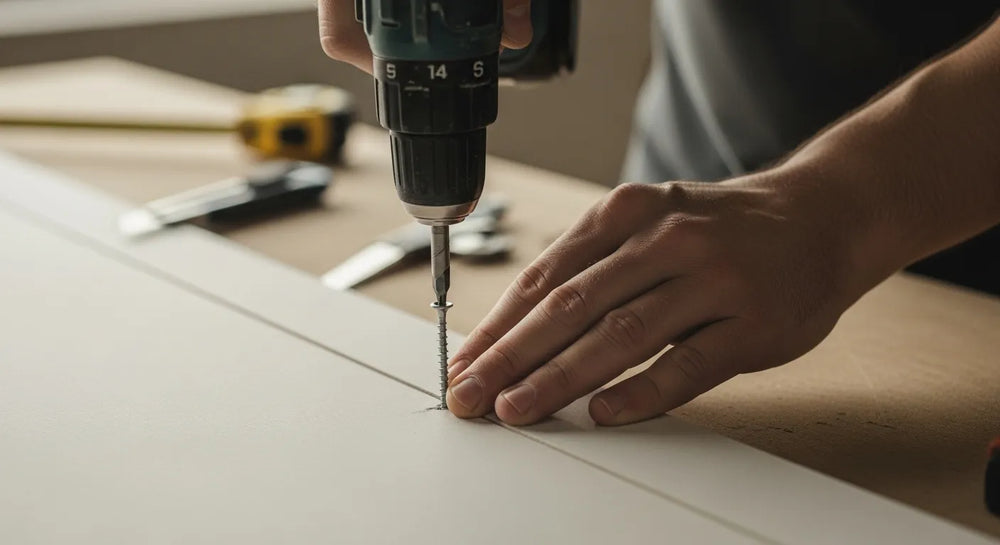
Can You Screw Into Metal Studs? Best Practices & Fasteners
Table of Contents
- Introduction
- Understanding Metal Studs: Composition and Characteristics
- The "Can You Screw Into Metal Studs?" Question: A Resounding Yes, With Caveats
- Types of Fasteners for Metal Studs: A Deep Dive
- Material and Coating Considerations
- Best Practices for Fastening into Metal Studs
- Common Mistakes and How to Avoid Them
- Sourcing American-Made Fasteners: The Maden.co Advantage
- Strategic Procurement and Maden.co's Instant Financing
- For Manufacturers: Partnering with Maden.co
- Conclusion
- Frequently Asked Questions (FAQs)
Introduction
Imagine a critical industrial project halted, not by a major component failure, but by a seemingly minor detail: a fastener that won't hold, or worse, damages the underlying structure. In the world of commercial construction, MRO (Maintenance, Repair, and Operations), and specialized fabrication, working with metal studs is a common yet often underestimated challenge. Unlike their wood counterparts, metal studs demand a precise understanding of material science, fastener mechanics, and installation techniques to ensure structural integrity and long-term reliability. For a procurement manager tasked with sourcing the right components, a design engineer specifying mounting solutions, or an MRO buyer needing a robust repair, the question "can you screw into metal studs?" isn't just about feasibility—it's about compliance, durability, and ultimately, project success.
This post will demystify the process of fastening into metal studs, exploring the essential fastener types, critical material considerations, and best practices to avoid common pitfalls. We will delve into how to select the optimal screws for various applications, focusing on the features that distinguish a reliable connection from a compromised one. Furthermore, we'll highlight how strategic sourcing of American-made, high-quality components can significantly enhance project outcomes, streamline procurement, and build resilience within your supply chain. Our goal is to equip you with the knowledge to approach metal stud applications with confidence, ensuring every connection is as strong and reliable as the American manufacturing that underpins it.
Understanding Metal Studs: Composition and Characteristics
Metal studs are ubiquitous in modern construction, prized for their strength-to-weight ratio, fire resistance, and resistance to pests and rot—advantages that wood framing simply cannot match in certain environments. Primarily made from galvanized steel, these studs vary significantly in gauge, or thickness, which is a critical factor when selecting fasteners.
Gauge and Thickness: A Critical Consideration
The gauge of a metal stud refers to the thickness of the steel sheet from which it is formed. A lower gauge number indicates a thicker, stronger stud. For instance, a 20-gauge stud is thinner and less robust than a 16-gauge stud. This distinction is paramount because the fastener's ability to create a secure thread in the stud largely depends on the stud's material thickness. Understanding these specifications is vital for any design engineer or procurement manager ensuring compliance with project requirements.
- Light-Gauge Studs (typically 25-gauge to 20-gauge): These studs are commonly used for non-load-bearing interior walls, ceiling grids, and curtain wall infills. They are lighter and easier to cut but require fasteners specifically designed to bite into thinner material without stripping the threads. Common thicknesses range from approximately 0.018 inches (25-gauge) to 0.033 inches (20-gauge).
- Heavy-Gauge or Structural Studs (typically 18-gauge to 12-gauge): Employed in load-bearing applications, exterior walls, and areas requiring greater structural integrity, such as shear walls or header framing. Fastening into these requires screws with more aggressive drilling or tapping capabilities to penetrate the thicker steel effectively. These can range from 0.043 inches (18-gauge) up to 0.108 inches (12-gauge) or thicker for specialized applications.
The galvanized coating on most metal studs provides essential corrosion resistance, typically applied as a hot-dip zinc coating conforming to ASTM A653 standards. This protective layer is a critical consideration for the fastener's own protective finish to prevent galvanic corrosion where dissimilar metals interact, especially in exposed or high-humidity environments. Ensuring fastener compatibility with the stud's galvanization is a fundamental aspect of Industrial Excellence.
Challenges of Fastening into Metal
Fastening into metal studs presents a unique set of challenges compared to working with wood:
- Material Hardness: Steel is significantly harder and more resilient than wood. This necessitates specialized drill points and robust thread designs on fasteners that can effectively cut or form threads without deforming the stud or failing themselves.
- Stripping Risk: Without proper technique or the correct fastener, it's remarkably easy to strip the threads in the thinner metal stud material or to cam-out and strip the fastener head itself. This compromises the connection, wastes materials, and consumes valuable project time.
- Burr Formation: The act of drilling or tapping into metal can create sharp burrs around the hole. While some fasteners are designed to minimize this, excessive burr formation can affect the flushness of the fastener head or even compromise the integrity of the connection point.
- Corrosion: The interface between the fastener and the stud is a prime location for corrosion if material compatibility and coatings are not properly considered. This is particularly true in damp, humid, or outdoor environments where moisture can accelerate electrochemical reactions, leading to premature failure and potentially compromising structural integrity.
The "Can You Screw Into Metal Studs?" Question: A Resounding Yes, With Caveats
The short answer is unequivocally yes, you absolutely can screw into metal studs. However, the success and longevity of that connection hinge entirely on employing the correct fasteners, tools, and techniques. It's not merely a matter of whether it's possible, but how to execute it correctly, efficiently, and reliably to ensure the integrity of your construction or repair project. For businesses aiming for Industrial Excellence, this distinction is paramount.
Why it's Different from Wood Studs
The fundamental difference lies in the material's properties and behavior under stress. Wood is fibrous, porous, and relatively forgiving; a wood screw displaces material and creates a holding force primarily through friction and the interlocking of wood fibers. Metal, being ductile yet hard and non-porous, requires a fundamentally different approach. A metal fastener must either drill its own pilot hole, meticulously cut its own threads, or perform both actions simultaneously, all while resisting deformation of the stud or stripping the newly formed threads. The precision required in fastener selection and installation technique is significantly higher when working with metal compared to wood. This necessitates a strategic procurement approach, focusing on specialized, high-performance components.
The Right Tools: Essential Equipment
Having the correct power tools and accessories is as crucial as selecting the right fastener. Using inappropriate tools can undermine even the best fastener choice, leading to inefficient work, material damage, and potential project delays.
- Impact Drivers vs. Drills: While a standard drill can certainly drive screws into light-gauge metal, an impact driver is often the preferred choice for its superior efficiency and reduced risk of cam-out. Impact drivers deliver rotational force in short, powerful bursts (tangential impacts), which helps to drive screws quickly and effectively, especially self-drilling screws, while minimizing the risk of the bit slipping out of the screw head. They excel at maintaining torque without binding.
- Clutches and Torque Settings: For standard drills, an adjustable clutch is an invaluable feature. It allows the operator to set a specific torque limit, which is critical for preventing over-tightening. Over-tightening can strip the threads in the thinner metal stud material or even sheer the screw head, rendering the connection useless. Impact drivers often rely on the user's control and feel, but some advanced models offer electronic torque settings or modes specifically for fastening, ensuring precise control over the driving force.
- Magnetic Bit Holders: These small but incredibly useful accessories are essential for holding screws securely on the driver bit. A magnetic bit holder prevents screws from dropping, particularly in overhead or awkward positions, and helps maintain a straight driving angle. This minimizes the risk of crooked entry, which can lead to damaged threads or cam-out.
- High-Quality Driver Bits: Always use hardened, high-quality driver bits that precisely fit the screw head. Worn, dull, or ill-fitting bits are a primary cause of cam-out, stripping screw heads, and ultimately, project frustration. Investing in durable bits that match your fastener drive type (e.g., Phillips #2, Square #2, Torx T25) is a small cost that yields significant returns in efficiency and quality.
Types of Fasteners for Metal Studs: A Deep Dive
Selecting the right fastener is the most critical decision when working with metal studs. The market offers several specialized options, each engineered for optimal performance in metal, tailored to different applications, stud gauges, and desired levels of security.
Self-Drilling Screws (Tek Screws)
Perhaps the most common and efficient choice for metal stud applications, self-drilling screws, often referred to by the brand name "Tek screws," are ingeniously engineered to drill their own pilot hole and tap their own threads in a single, continuous operation. This eliminates the time-consuming step of pre-drilling in many scenarios, significantly accelerating installation and reducing labor costs.
Drill Point Considerations
The "Tek" number or similar designation associated with these screws indicates the size and style of the drill point, which dictates the thickness of metal they can effectively penetrate and tap:
- #1 Point: Designed for very light gauge sheet metal, typically up to 0.036 inches thick. These are suitable for attaching trim or very thin cladding.
- #2 Point: This is the most common and versatile drill point, suitable for general fastening into light-gauge studs, typically up to 0.100 inches (approximately 14-gauge). It's ideal for attaching drywall to metal studs.
- #3 Point: Engineered for heavier gauges of metal, capable of penetrating up to 0.210 inches (approximately 7-gauge). These offer faster penetration into thicker materials.
- #4 Point: Designed for structural steel and heavier-gauge applications, capable of drilling through up to 0.250 inches (approximately 1/4 inch) of metal.
- #5 Point: The heaviest duty drill point, capable of drilling through very thick steel, up to 0.500 inches (approximately 1/2 inch). These are typically found in demanding industrial structural applications.
The flutes on the drill point are essential for clearing chips, which are the metal shavings generated during the drilling process. Adequate chip clearance prevents binding of the screw, allows for smooth penetration, and helps prevent the drill point from overheating and dulling prematurely. Without proper chip evacuation, the screw can seize, leading to breakage or an incomplete connection.
Self-Tapping Screws
While self-drilling screws perform both drilling and tapping, self-tapping screws require a pre-drilled pilot hole (unless the metal is exceedingly thin, allowing the screw to simply push through). Their primary function is to cut or form their own mating threads into the material once the pilot hole has been created. These are an excellent choice for applications where precise pilot hole creation is preferred, or when working with slightly thicker metals where a self-drilling point might struggle to achieve a clean hole. They are often favored for their superior thread engagement in certain applications.
Type A, Type AB, Type B
These classifications refer to the thread pattern and point style, influencing their application and the necessity of a pilot hole:
- Type A: Features a sharp, gimlet point and coarse threads. It's designed primarily for light sheet metal, resin plastics, and other relatively soft materials. A pilot hole is generally required in metal, and its coarse threads offer good pull-out resistance in thinner materials. An example can be found in a Steel Zinc Plated Type A Pan Slot Drive Self-Tapping Sheet Metal Screw, offering a traditional slot drive for versatility.
- Type AB: Combines the sharp point of Type A with finer threads, similar to Type B. This hybrid design offers improved vibration resistance and a stronger grip in thin materials, often providing better engagement and less material displacement than Type A.
- Type B: Characterized by a blunt point and finer threads. This makes it suitable for a broader range of materials, including heavier gauges of sheet metal, non-ferrous castings, and certain plastics. A pilot hole is almost always required for Type B screws in metal, as the blunt point cannot penetrate without one. An example is the Steel Zinc Plated Type A Truss Square Drive Self-Tapping Sheet Metal Screw, providing a robust square drive for enhanced torque transfer.
Hi-Lo Threads
A particularly effective and increasingly popular design for self-tapping into metal studs, especially where the material thickness might be inconsistent or where a very secure grip is needed, is the Hi-Lo double lead thread screw. These innovative fasteners feature two distinct sets of threads—one high and sharp, the other low and blunter—which alternate around the screw shank. This design offers several significant advantages for demanding applications:
- Improved Engagement: The sharper, high threads provide an initial, easier cutting action, significantly reducing the driving torque required for installation. Simultaneously, the blunter, low threads increase the surface area contact between the fastener and the stud material, leading to superior thread engagement and significantly enhancing pull-out resistance.
- Reduced Stripping: The dual thread pattern inherently minimizes the risk of stripping, particularly in thinner gauges of metal or materials that are otherwise prone to thread damage during installation. This leads to more reliable connections and fewer wasted fasteners.
- Faster Installation: The lower driving torque required means that these screws can often be installed more quickly and efficiently, reducing labor time on projects.
For procurement managers and design engineers seeking robust and efficient fastening solutions that offer superior pull-out resistance and reduce installation time, a key item to consider is the Hi-Lo Double Lead Thread Self-Tapping Sheet Metal Screw. These U.S.-made fasteners exemplify advanced engineering, providing excellent grip and reduced cam-out, proving invaluable for demanding applications in commercial construction and industrial fabrication. Their design makes them a top choice for ensuring the long-term stability and integrity of attachments to metal studs.
Other Fasteners
While self-drilling and self-tapping screws are primary for direct, structural fastening to metal studs, other solutions exist for heavier loads or specific types of attachments:
- Toggle Bolts and Anchors: For securing heavier items to metal stud walls (e.g., shelving, cabinets, televisions, heavy machinery components), specialized toggle bolts or hollow-wall anchors designed specifically for metal studs are often necessary. These fasteners typically require drilling a larger pilot hole first, through which the anchor mechanism is inserted. Once tightened, they expand behind the stud to create a secure, load-distributing grip, often relying on the strength of the drywall itself or distributing load across the stud's face.
- Rivet Nuts (Rivnuts): For creating robust, machine-threaded attachment points in thin metal studs or panels, rivet nuts can be an excellent solution. These are inserted into a pre-drilled hole and then deformed (riveted) in place, providing internal threads that allow machine screws to be repeatedly threaded in and out. This is ideal for removable panels, access covers, or components that require frequent maintenance or adjustment.
Material and Coating Considerations
The fastener's material composition and its surface coating are just as important as its physical design. These factors significantly influence corrosion resistance, strength, and the overall longevity of the connection, directly impacting the Total Cost of Ownership (TCO) over a project's lifecycle.
Galvanization, Zinc Plating, Black Phosphate
- Galvanization: As mentioned, many metal studs are pre-galvanized, meaning they have a protective zinc coating applied during manufacturing (e.g., hot-dip galvanized per ASTM A653). This coating acts as a sacrificial layer, corroding before the underlying steel substrate and providing excellent protection against rust.
- Zinc Plating: A very common and cost-effective coating for fasteners, providing good corrosion resistance in dry, indoor environments. It offers a bright, aesthetically pleasing finish. It’s crucial that zinc-plated fasteners are used with galvanized studs to minimize the risk of galvanic corrosion, where the dissimilar metals (zinc coating on stud and fastener) create a minor electrical current in the presence of an electrolyte (moisture), leading to accelerated corrosion of the less noble metal. Both the Steel Zinc Plated Type A Pan Slot Drive Self-Tapping Sheet Metal Screw and the Steel Zinc Plated Type A Truss Square Drive Self-Tapping Sheet Metal Screw are excellent examples of U.S.-made fasteners featuring this protective coating.
- Black Phosphate: This is a chemical conversion coating that provides mild corrosion resistance and is often used for indoor applications where the fastener might be painted over. It creates a dull, non-reflective finish and offers some lubricity during installation.
- Ceramic Coatings: Advanced ceramic coatings offer superior corrosion resistance, often outperforming zinc plating in salt spray tests. They are typically thicker and provide excellent barrier protection, suitable for outdoor or moderately corrosive environments.
- Stainless Steel: For highly corrosive environments (e.g., outdoor exposure, marine applications, chemical processing plants, food service facilities), stainless steel fasteners (commonly 304 or 316 grades) are the superior choice. Their inherent corrosion resistance is unmatched by most coatings. While more expensive, their longevity can drastically reduce maintenance and replacement costs, contributing to a lower TCO. However, stainless steel screws are generally softer than hardened carbon steel screws and require specific driving techniques and potentially lower RPMs to avoid stripping or cold welding (galling).
Corrosion Resistance and Environment
Matching the fastener's corrosion resistance to the anticipated environment is paramount. Using an inadequately protected fastener in a damp, humid, or outdoor setting will lead to premature rust, weakening the connection and potentially compromising the structural integrity of the entire installation. Consideration of specific industry standards and local building codes for different environmental exposures is crucial. For instance, fasteners used in coastal regions will require significantly higher corrosion resistance than those used in a dry, interior office build-out.
Material Hardness and Tensile Strength
The fastener's material must be harder than the stud material to effectively cut or form threads. Self-drilling screws, in particular, are typically manufactured from hardened carbon steel that has been heat-treated to achieve the necessary hardness for drilling and tapping. The tensile strength of the screw, which indicates its resistance to breaking under tension, is also a critical specification. Choosing fasteners with appropriate material properties and tensile strength ensures they can withstand both the dynamic forces of the installation process and the static or dynamic loads they are intended to support over their service life. This detail is often overlooked but is fundamental to long-term reliability.
Best Practices for Fastening into Metal Studs
Beyond selecting the right fastener, proper installation technique is paramount to achieving a secure, durable, and lasting connection. Adhering to these best practices will minimize errors, enhance efficiency, and ensure the structural integrity of your projects.
Pilot Holes: Sizing and Necessity
The strategic use and correct sizing of pilot holes are foundational to successful fastening into metal studs, especially for self-tapping screws.
- Correct Sizing: The pilot hole diameter is crucial. It must be slightly smaller than the major thread diameter of the screw to allow the threads to bite firmly into the metal and create a strong hold. However, it must also be large enough to prevent excessive friction, binding, and undue driving torque, which could lead to screw breakage or stripping. Always consult fastener specifications or industry guides for recommended pilot hole sizes, which are often provided in charts based on screw diameter and material thickness.
- Pre-Drilling (When Necessary): While self-drilling screws inherently eliminate the need for a separate pilot hole, self-tapping screws (especially Type B) almost always require one. Furthermore, for very thick gauges of metal stud (e.g., 14-gauge or heavier), even self-drilling screws may benefit from a pre-drilled pilot hole if the drill point struggles to penetrate. Using a high-speed steel (HSS) or cobalt drill bit is essential for precision and to reduce strain on both the fastener and the power tool.
Proper Driving Technique
The manner in which a screw is driven is as important as the screw itself. Incorrect technique can compromise the connection, regardless of fastener quality.
- Consistent Pressure: Apply firm, consistent pressure directly in line with the screw. This is critical to prevent the driver bit from camming out of the screw head, which can strip the head or damage the threads being formed. Maintain a steady hand and keep the driver perpendicular to the stud surface.
- Appropriate Speed: For self-drilling screws, begin at a moderate speed to allow the drill point to engage and cleanly penetrate the metal. Once the point has drilled through and the threads begin to engage, you can increase the speed to drive the screw home. Avoid excessive speed that can generate frictional heat, dull the drill point, burn off protective coatings, or lead to premature stripping.
- Stop When Engaged: This is perhaps one of the most common mistakes: over-tightening. Once the screw head makes firm, flush contact with the surface of the material being fastened or the stud, stop driving immediately. Continuing to drive past this point will strip the newly formed threads in the metal stud, effectively rendering the hole useless and compromising the connection's pull-out strength.
Avoiding Stripping and Cam-Out
These two issues are primary sources of frustration and rework in metal stud applications. Proactive measures are key.
- Correct Bit and Fit: Always use the correct driver bit (e.g., Phillips, Square, Torx) that fits snugly and precisely into the screw head. A worn, damaged, or incorrect bit significantly increases the risk of cam-out. High-quality bits retain their shape and grip longer.
- Cam-Out Prevention: While Phillips drives are common, square drive (like that found on the Steel Zinc Plated Type A Truss Square Drive Self-Tapping Sheet Metal Screw) and Torx drives inherently offer superior cam-out resistance. Their design allows for more positive engagement and higher torque transfer, making them ideal for high-volume assembly or demanding applications where precise driving is critical.
- Lubrication (Sparingly): In some stubborn cases with thicker metal or particularly hard alloys, a tiny amount of cutting oil or specialized lubricant on the screw tip can aid penetration and reduce friction, making driving smoother. However, use sparingly to avoid reducing friction too much, which could also lead to over-tightening or reduced holding power.
Load Bearing Considerations
Always factor in the load the fastener connection needs to support. This requires a clear understanding of engineering principles and adherence to design specifications.
- Shear vs. Pull-Out Strength: Fasteners have distinct strengths in shear (resistance to forces parallel to the axis of the screw, tending to cut it) and pull-out (resistance to forces perpendicular to the stud surface, tending to extract the screw). Typically, pull-out strength is lower and often the more critical factor in metal stud applications, especially when attaching items to the face of a stud.
- Multiple Fasteners: For heavier loads or larger attached components, it is always advisable to use multiple fasteners. This strategy distributes the weight and stress over a larger area, reducing the load on any single point and significantly enhancing the overall stability and safety of the attachment.
- Backing Plates/Blocking: For very heavy items or dynamic loads, relying solely on fasteners into thin-gauge metal studs might be insufficient. Consider installing a steel backing plate or solid wood blocking between studs (securely fastened to the studs) to provide a more substantial and robust anchoring surface. This spreads the load across a greater area of the stud and potentially engages multiple studs, dramatically increasing load-bearing capacity.
Common Mistakes and How to Avoid Them
Even seasoned professionals can make mistakes when fastening into metal studs. Recognizing these common errors is the first step to preventing them, saving time, material, and ensuring project integrity.
- Using the Wrong Fastener Type: This is perhaps the most fundamental and frequent error. Attempting to use wood screws, standard drywall screws (which are designed for wood studs behind drywall), or even general-purpose machine screws in metal studs is a recipe for failure. Their thread patterns, points, and material hardness are simply not designed to penetrate or hold securely in steel. This inevitably leads to stripped holes, broken screws, unreliable connections, and significant rework. Always choose self-drilling or self-tapping screws specifically engineered for metal applications.
- Ignoring Stud Gauge: Underestimating the stud gauge or failing to verify it before selecting fasteners can lead to considerable frustration. Using a fastener with an inadequate drill point (e.g., a #2 Tek screw on a 14-gauge structural stud) will result in the screw's drill point dulling or breaking before penetration, or the threads failing to engage properly. Conversely, using an overly aggressive drill point on very thin gauge metal can cause excessive deformation or "blow out." Always verify the stud gauge and match it precisely to the appropriate fastener drill point and thread design.
- Over-tightening: This is a prevalent issue that can instantly compromise a connection. Driving a screw too far past the point of firm engagement into a metal stud will strip the threads it just created, effectively rendering the hole useless. This also deforms the stud material, weakening it at the connection point. Implement strict control: stop driving as soon as the screw head is flush and engaged with the surface. Using impact drivers with precise control or drills with adjustable clutches can significantly mitigate this risk.
- Incorrect Pilot Hole Sizing: For self-tapping screws, precise pilot hole sizing is critical. A pilot hole that is too small will make driving exceedingly difficult, increase driving torque, and dramatically raise the risk of breaking the screw, stripping the screw head, or stripping the pilot hole. Conversely, a pilot hole that is too large will prevent the screw threads from properly engaging, leading to a weak connection with poor pull-out resistance and easy stripping. Always refer to manufacturer specifications for recommended pilot hole diameters for specific screw types and material thicknesses.
- Using Worn or Incorrect Driver Bits: A cammed-out screw head isn't just an annoyance; it means the fastener is not properly seated, and the connection is compromised from the start. Worn or ill-fitting driver bits are a primary culprit. They cannot transfer torque efficiently and tend to slip out of the screw head under pressure. Always use high-quality, unworn driver bits that precisely match the fastener's drive type and size. Replace bits proactively when they show signs of wear.
Sourcing American-Made Fasteners: The Maden.co Advantage
In today's complex global supply chain landscape, the ability to reliably source high-quality industrial components is more critical than ever. For fasteners used in metal stud applications, where precision, strength, and compliance are paramount, choosing American-made products offers distinct advantages that translate directly into business value. At Maden.co, our mission is to democratize access to American manufacturing, ensuring that procurement managers, design engineers, and MRO buyers can easily connect with the unparalleled quality and reliability of U.S.-made products.
Why American Manufacturing Matters
- Supply Chain Resilience: Sourcing domestically significantly shortens and simplifies supply chains, reducing lead times and mitigating risks associated with international shipping delays, geopolitical instability, and fluctuating import regulations. This means your projects stay on schedule, and unexpected equipment breakdowns can be addressed swiftly, bolstering your operational resilience.
- Uncompromising Quality and Compliance: American manufacturers adhere to stringent quality control standards and often surpass international specifications (e.g., ASTM, SAE, DIN, NPT). This ensures that fasteners meet critical industry standards and performance benchmarks, providing peace of mind for engineers and buyers alike. Every product on our platform comes from a verified U.S. manufacturer, upholding our core value of Industrial Excellence.
- Transparency and Traceability: With American-made products, there's inherently greater transparency regarding material sourcing, manufacturing processes, and labor practices. This fosters trust, enables businesses to meet increasingly strict compliance requirements, and provides a clear chain of custody—all aligning with our commitment to Supply Chain Transparency.
- Driving the Manufacturing Revival: By choosing U.S.-made products, businesses directly contribute to the growth and innovation of the American industrial base, strengthening our national economy and fostering technological advancement. This conscious decision actively supports jobs, innovation, and technological leadership—a cornerstone of our "America's manufacturing revival is here" tagline.
Democratizing Access and Reducing Procurement Friction
Finding the exact U.S.-made fastener you need, especially specialized items like particular gauge self-drilling screws or unique thread forms, can often be a time-consuming and fragmented process involving multiple vendors and extensive research. Maden.co addresses this by connecting industrial buyers with over 2.5 million American-made products from our network of 800+ verified U.S. manufacturers. This vast, curated catalog transforms the sourcing process, making it as convenient and accessible as any global alternative.
Our platform is meticulously designed to streamline your procurement process, drastically reducing the friction often associated with B2B sourcing. Whether you're a design engineer needing specific material certifications for a new prototype, a procurement manager under pressure to source a specific DIN 931 compliant hex cap screw, or an MRO buyer facing an unexpected equipment breakdown, the ability to quickly find and finance a verified, U.S.-made part is a game-changer. This ease of access and efficiency is a direct reflection of our value of Digital Innovation, leveraging cutting-edge technology to empower our customers and simplify complex industrial sourcing challenges.
We believe that American Manufacturing Pride isn't just about patriotism; it's about a steadfast commitment to quality, reliability, and innovation that translates into tangible business outcomes. Our entire business model is built on this principle; you can learn more about our mission to champion American manufacturing here. We invite you to explore the vast catalog of U.S.-made industrial components available on our marketplace, where every product contributes to building a stronger, more resilient supply chain and reinforces our dedication to Customer Empowerment.
Strategic Procurement and Maden.co's Instant Financing
Beyond the inherent quality of the products themselves, the financial mechanisms supporting procurement play a crucial role in overall project success and operational efficiency. Large-scale industrial projects or unexpected MRO needs often require significant capital outlay upfront for materials, which can strain a business's cash flow and impact strategic investment capabilities. This is precisely where strategic financing becomes a powerful and indispensable tool.
Maden.co understands these unique financial challenges faced by industrial buyers. As a key differentiator, we offer Instant Financing directly at checkout. This isn't merely a convenient payment option; it's a strategic resource meticulously designed to empower procurement managers and business owners to optimize their capital management and facilitate smoother, larger-scale operations.
Managing Cash Flow for Large Orders
Instant Financing allows businesses to defer payment for larger volume purchases, freeing up immediate capital for other critical operational expenses, unforeseen exigencies, or strategic investments. For projects requiring substantial quantities of specialized fasteners—such as thousands of Hi-Lo Double Lead Thread Self-Tapping Sheet Metal Screws for a new commercial construction phase, or a significant order of Steel Zinc Plated Type A Truss Square Drive Self-Tapping Sheet Metal Screws for a manufacturing assembly line—Instant Financing can be instrumental. It ensures that critical materials are acquired and delivered without disrupting short-term liquidity, maintaining momentum and avoiding costly delays.
By leveraging this integrated financial feature, businesses can:
- Optimize Working Capital: Preserve more cash on hand for day-to-day operations, payroll, or emergent needs, ensuring financial flexibility.
- Seize Opportunities: Make timely, large-volume purchases to secure better pricing, take advantage of bulk discounts, or ensure product availability, even when immediate funds are temporarily allocated elsewhere. This agility can translate into significant cost savings over the life of a project.
- Improve Total Cost of Ownership (TCO): While seemingly just a payment method, effective cash flow management ultimately contributes to a lower TCO. By enabling more efficient project execution, reducing the risk of project delays due to material acquisition hurdles, and allowing for strategic bulk purchasing, Instant Financing helps optimize overall project costs and returns.
Our Instant Financing option is seamlessly integrated into the checkout process, making it simple and quick for qualified businesses to apply. This means you can proceed with your capital-intensive projects with confidence, knowing that your material acquisition is supported by flexible financial solutions tailored specifically for the industrial sector, embodying our commitment to Customer Empowerment and Digital Innovation.
For Manufacturers: Partnering with Maden.co
The vision of Maden.co extends beyond just serving buyers; it's about nurturing and expanding the entire American manufacturing ecosystem. We are committed to becoming the definitive platform that proves American-made components are not only superior in quality but also as accessible and convenient as any global alternative. This includes empowering the very manufacturers who form the backbone of our nation's industrial strength, resonating with our core value of American Manufacturing Pride.
If you are a qualified U.S. manufacturer producing industrial components, Maden.co offers an unparalleled opportunity to expand your market reach, streamline your sales processes, and contribute significantly to the resurgence of American industry. By joining our verified network, you gain immediate access to a broad and active base of serious industrial buyers—procurement managers, MRO buyers, and design engineers—who are actively seeking American-made products.
Benefits of Joining Our Network
- Expanded Market Access: Showcase your meticulously crafted products to a nationwide audience of industrial buyers. Our platform significantly broadens your potential customer base, reaching those actively searching for reliable, U.S.-made components.
- Streamlined Sales: Leverage our digitally innovative platform to simplify and standardize the sales process, from product listing and order management to fulfillment. This reduces administrative overhead and allows you to focus more on manufacturing excellence.
- Contribution to National Strength: Be a vital part of a collective effort to strengthen domestic supply chains and champion American innovation and quality. Your participation directly supports the economic resilience and technological advancement of the United States.
- Digital Innovation: Partner with a platform that is at the forefront of B2B e-commerce, embracing Digital Innovation to make industrial sourcing more efficient and accessible for both buyers and sellers. We provide the tools and reach to help your business thrive in the digital age.
We firmly believe that by bringing together the best of American manufacturing, we can collectively drive the manufacturing revival and solidify our nation's position as a global industrial leader. Are you a U.S. manufacturer ready to elevate your reach and impact? Register as a vendor and join the American manufacturing revival. Our collective success in building a robust domestic supply chain truly empowers customers and solidifies our shared commitment to Industrial Excellence.
Conclusion
Mastering the art of screwing into metal studs is a fundamental skill for anyone involved in commercial construction, MRO, or industrial fabrication. It demands a keen understanding of stud gauge, fastener types—from self-drilling to specialized self-tapping options like the Hi-Lo Double Lead Thread Self-Tapping Sheet Metal Screw—and precise installation techniques. Ignoring these critical details can lead to compromised structural integrity, costly rework, project delays, and ultimately, a higher Total Cost of Ownership. The proper selection of fasteners, understanding their material properties and coatings, and matching them to the application's specific environmental and load-bearing requirements are non-negotiable for ensuring long-term reliability and safety.
The strategic importance of sourcing these critical components from verified, high-quality American manufacturers cannot be overstated in today's dynamic global market. By prioritizing domestic suppliers, businesses not only ensure compliance with stringent quality and performance standards but also build robust, transparent, and resilient supply chains that are less susceptible to international disruptions. This commitment to American Manufacturing Pride is at the heart of our mission at Maden.co. We are dedicated to making the vast catalog of U.S.-made industrial products, from the Steel Zinc Plated Type A Pan Slot Drive Self-Tapping Sheet Metal Screw to the Steel Zinc Plated Type A Truss Square Drive Self-Tapping Sheet Metal Screw, readily accessible to you. We are building the definitive platform that proves American-made components are as accessible and convenient as any global alternative.
Ready to elevate your procurement strategy and ensure every project stands on a foundation of uncompromising quality and reliability? Explore Maden.co’s extensive catalog of American-made industrial fasteners and components today. Discover the precision, durability, and supply chain resilience that only U.S. manufacturing can offer. For specific sourcing questions or to discuss your unique project needs, our expert team is ready to help; feel free to contact us directly. And remember, for capital-intensive projects, you can apply for Instant Financing at checkout to streamline your purchases and maintain optimal cash flow, further enhancing your procurement efficiency. The future of American manufacturing, driven by digital innovation and industrial excellence, is here, and it’s waiting for you to build with it.
Frequently Asked Questions (FAQs)
What types of screws are best for fastening into metal studs?
The best types of screws for metal studs are typically self-drilling (often known as Tek screws) or self-tapping screws. Self-drilling screws are highly efficient as they can drill their own pilot hole and tap threads in one continuous step, which saves significant time. Self-tapping screws require a pre-drilled pilot hole but then cut their own threads. Both types come in various drill points and thread designs (e.g., Hi-Lo threads) specifically optimized for different metal gauges and application requirements, offering superior hold and ease of installation compared to standard wood or drywall screws.
Do I need to pre-drill a pilot hole before screwing into metal studs?
It depends on the type of screw and the gauge of the metal stud. Self-drilling screws are specifically designed to eliminate the need for a separate pre-drilled pilot hole in most common light-to-medium gauge metal applications, as their specialized point creates the hole. However, for self-tapping screws or when working with very thick-gauge structural metal studs, a pre-drilled pilot hole is almost always necessary. This ensures proper thread engagement, prevents stripping of the screw or stud threads, and reduces the risk of screw breakage. Always consult the fastener manufacturer's recommendations for precise pilot hole sizing.
How do I prevent stripping screws or stud threads when working with metal studs?
Preventing stripping involves several key practices:
- Use the correct fastener: Always use screws specifically designed for metal studs, matching the screw's drill point to the stud's gauge.
- Ensure correct fit: Use the right driver bit that fits snugly into the screw head to prevent cam-out.
- Apply proper pressure and speed: Maintain firm, consistent pressure in line with the screw and use appropriate driving speed.
- Avoid over-tightening: This is crucial. Stop driving immediately once the screw head is flush with the surface to avoid stripping the newly formed threads in the metal stud. Using an impact driver with controlled torque or a drill with an adjustable clutch can also significantly reduce the risk of stripping by limiting the driving force.
Why should I choose American-made fasteners for metal stud applications?
Choosing American-made fasteners for metal stud applications offers significant advantages in terms of quality, reliability, and supply chain resilience. U.S. manufacturers adhere to rigorous quality control standards and often surpass international specifications, ensuring consistent performance, compliance, and superior product durability for critical applications. Sourcing domestically also reduces lead times, mitigates geopolitical risks, and supports transparent supply chains. By choosing American-made, you not only receive high-quality, dependable components but also contribute directly to the strength, innovation, and economic prosperity of the American industrial base, aligning with a commitment to industrial excellence.


