
Choosing the Right Screw for Drywall
Table of Contents
- Introduction
- Understanding Drywall: The Foundation of Fastening Decisions
- The Dedicated Drywall Screw: Engineered for Performance
- Decoding Drywall Screw Types and Their Applications
- The Critical Role of Length and Gauge
- Installation Best Practices: Driving Success
- What If There's No Stud? Fastening into Drywall Alone
- The Maden.co Advantage: Sourcing American-Made Fasteners and More
- Beyond Drywall: A Holistic Approach to Industrial Sourcing
- Conclusion
- FAQ
Introduction
Imagine a critical project nearing completion. The drywall is up, paint is drying, and the final fixtures are about to be installed. Then, a crucial mounting point gives way, a screw strips, or worse, an entire section of the wall begins to sag because the wrong fastener was chosen for the job. This isn't just a minor setback; it's a project delay, a budget overrun, and a potential safety hazard. For procurement managers, MRO buyers, and design engineers, the seemingly simple task of selecting the right screw for drywall can have far-reaching implications for project integrity, operational efficiency, and overall total cost of ownership (TCO).
The ubiquitous nature of drywall in modern construction often leads to an underestimation of the precision required for its installation and the fastening of items to its surface. Using an incorrect screw can compromise the structural integrity of the wall, damage the drywall itself, or lead to fixture failure and costly rework. This post aims to provide a definitive guide on what to use to screw into drywall, exploring the specific types of fasteners, their applications, installation best practices, and how strategic sourcing from verified U.S. manufacturers can bolster your project's success. We'll delve into the nuances of drywall screws, explaining why they are engineered for this specific material and how their correct application can ensure durability and compliance across your industrial and commercial projects.
Understanding Drywall: The Foundation of Fastening Decisions
Before we discuss the fasteners themselves, it’s crucial to understand the material they are designed to penetrate. Drywall, also known as plasterboard or gypsum board, is a panel made of gypsum plaster pressed between two sheets of thick paper. It’s widely used for interior walls and ceilings due to its fire resistance, ease of installation, and smooth finish.
However, drywall is also inherently brittle. Unlike wood, which has a fibrous grain that screws can grip, drywall's gypsum core is powdery and can crumble if improper fasteners are used or if screws are overtightened. The paper facing provides some tensile strength, but it's not enough to withstand significant shear forces without proper support. This unique composition dictates the specific design of screws best suited for it. The goal is to create a secure hold that prevents tear-out and ensures long-term stability, whether you're securing a drywall sheet to a stud or hanging a heavy object.
For businesses focused on industrial excellence, understanding these material properties is the first step in enhancing supply chain resilience and ensuring that every component, no matter how small, contributes to the overall quality and longevity of a project.
The Dedicated Drywall Screw: Engineered for Performance
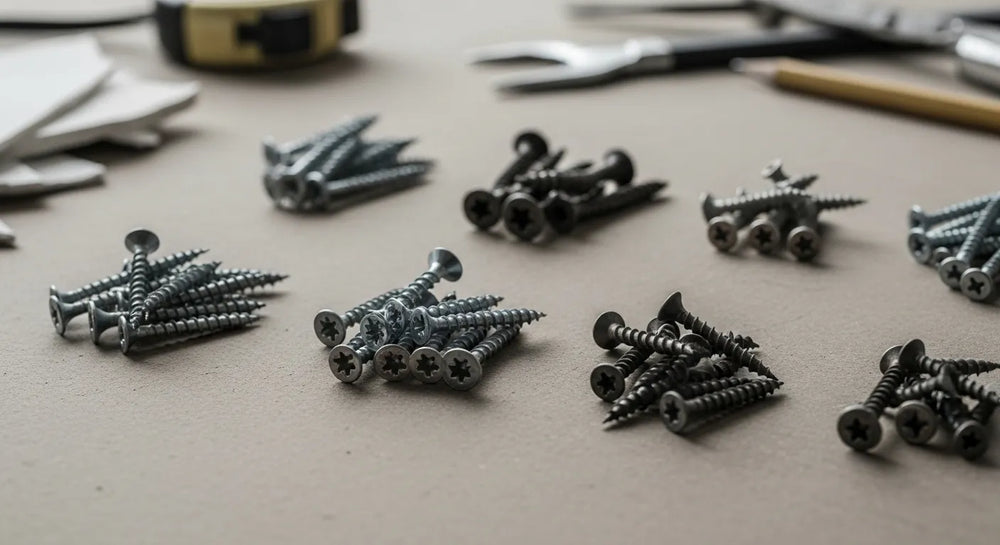
When considering what to use to screw into drywall, the answer almost always points to the aptly named "drywall screw." These fasteners are specifically engineered to address the unique challenges presented by gypsum board. They are distinct from wood screws or self-tapping metal screws in several key ways, designed to minimize damage to the drywall while providing a strong, lasting hold.
Drywall screws typically feature:
- Sharp, Fine or Coarse Threads: These threads are designed to grip securely into the gypsum core without stripping it, and to pull the screw head flush with the surface without tearing the paper.
- Bugle Head: This conical, trumpet-shaped head countersinks itself smoothly into the drywall surface without ripping the paper, creating a flush finish that is easy to mud and paint over. Unlike flat-head screws, which can crush the paper and weaken the connection, the bugle head distributes pressure evenly.
- Sharp Point: Allows for quick penetration into drywall and underlying studs without needing a pilot hole in most cases.
- Phosphate Coating: Most drywall screws are coated with a black phosphate finish, which offers mild corrosion resistance and helps the screw glide smoothly into the material. For applications requiring greater corrosion resistance, such as in humid environments, ceramic-coated or galvanized options are available.
- Specialized Drives: Phillips head drives are common, but newer designs often feature square (Robertson) or star (Torx) drives, which offer better torque transmission and reduce cam-out, improving installation efficiency.
Opting for these purpose-built fasteners from a network of verified U.S. manufacturers ensures that procurement managers and MRO buyers are sourcing products designed for optimal performance and durability. This commitment to industrial excellence aligns perfectly with our mission at Maden.co, where we democratize access to American manufacturing, making it easier for you to secure high-quality, specialized components.
Decoding Drywall Screw Types and Their Applications
The term "drywall screw" isn't monolithic; several variations are designed for specific applications, primarily based on the type of material they will anchor into: wood or metal studs. Understanding these distinctions is crucial for optimal performance and compliance.
Coarse Thread Drywall Screws: The Workhorse for Wood Studs
When asking what to use to screw into drywall and the underlying structure is wood, coarse thread drywall screws are your primary choice. Their aggressively spaced, sharp threads are designed to grab and hold firmly in the fibrous structure of wood studs. The wide threads effectively displace wood fibers, creating a strong mechanical bond that resists pull-out.
Key characteristics:
- Thread Pitch: Fewer threads per inch, providing a deeper bite into wood.
- Holding Power: Excellent in wood, reducing the risk of the screw backing out over time due to movement or vibration.
- Applications: Fastening drywall sheets to wooden wall studs or ceiling joists.
For a procurement manager overseeing a large residential or commercial build with wood framing, sourcing high-quality coarse thread drywall screws is paramount for project longevity and safety. These fasteners are the backbone of a securely installed drywall system. You can explore options like these high-quality 6 x 1-1/4 Coarse Thread Drywall Screws available through our platform, ensuring you get American-made reliability.
Fine Thread Drywall Screws: Precision for Metal Studs
For projects utilizing light-gauge metal studs (typically 20-25 gauge), fine thread drywall screws are the appropriate fastener. Unlike coarse threads, which would strip out metal, fine threads are designed to tap into the thin metal sheeting without tearing it.
Key characteristics:
- Thread Pitch: More threads per inch, allowing for a shallower, yet more numerous, grip in thin metal.
- Self-Tapping: The fine threads efficiently cut into the metal without the need for a pre-drilled pilot hole in most light-gauge applications.
- Reduced Stripping: Less prone to stripping out the metal stud compared to coarse threads.
- Applications: Attaching drywall sheets to metal framing in commercial buildings, office spaces, and modern residential constructions.
Design engineers specifying fasteners for structures with metal framing will appreciate the precision and reliability of fine thread screws. Their use ensures that the drywall is securely anchored, preventing movement and maintaining the aesthetic integrity of the finished surface. An excellent example of this precision engineering is showcased by the 6 x 1 Fine Thread Drywall Screw available on Maden.co, connecting you directly with the American manufacturers producing these essential components.
Self-Drilling Drywall Screws: For Heavier Gauge Metal
When working with heavier gauge metal studs (18 gauge or thicker), standard fine thread screws may struggle to penetrate without a pilot hole. This is where self-drilling drywall screws come into play. These screws feature a drill-bit-like point that drills its own pilot hole before the threads engage, streamlining the installation process and reducing the need for separate drilling steps.
Key characteristics:
- Drill Point: A specialized tip designed to cut through metal.
- Efficient Installation: Saves time and labor by combining drilling and fastening into one step.
- Applications: Ideal for commercial construction where robust metal framing is common, or for attaching denser gypsum products to metal.
Other Specialized Drywall Screws
While coarse and fine threads cover the majority of drywall applications, specialized screws exist for unique situations:
- High-Low Thread Screws: These feature alternating high and low threads, providing excellent grip in a wider range of materials, including some plastics and composite boards, in addition to drywall.
- Ceramic Coated or Galvanized Screws: Offer superior corrosion resistance for outdoor applications, bathrooms, kitchens, or any area with high humidity. While a standard phosphate coating suffices for most interior drywall, these specialized coatings extend the life of the fastener in challenging environments. For a versatile option that balances strength and utility, consider the specifications for the 8 x 4 Drywall Screw, which can be sourced from our verified U.S. manufacturers.
For procurement professionals, understanding these distinctions isn't just about making a purchase; it's about making a strategic decision that impacts the project's quality, durability, and compliance. Sourcing from our network of 800+ verified U.S. manufacturers on Maden.co means gaining access to this full spectrum of specialized fasteners, ensuring that you always have what you need for the job.
The Critical Role of Length and Gauge
Beyond thread type, the length and gauge (diameter) of a drywall screw are critical factors influencing its holding power and suitability for an application.
Screw Length: Ensuring Adequate Penetration
The general rule of thumb for drywall screw length is that the screw should penetrate the underlying stud (wood or metal) by at least 5/8 inch to 1 inch, after passing through the drywall itself.
- Standard 1/2-inch Drywall: For single layers of 1/2-inch drywall, 1-1/4 inch screws are commonly used when fastening to wood studs. This length provides sufficient penetration into the stud.
- 5/8-inch Drywall (Type X): For thicker 5/8-inch fire-rated drywall, 1-5/8 inch screws are typically required to ensure adequate embedment into the framing.
- Multiple Layers or Furring Strips: Projects requiring multiple layers of drywall or fastening through furring strips will necessitate longer screws, such as 2-inch or 3-inch options, to achieve the necessary stud penetration.
Choosing the correct length prevents "pop-outs," where the screw fails to fully engage the stud, leading to loose drywall sheets and unsightly blemishes as the screw head eventually pushes through the mud and paint. This seemingly minor detail is crucial for maintaining the quality standards expected by design engineers and facility managers.
Screw Gauge: Diameter and Strength
The gauge refers to the diameter of the screw shaft. Common drywall screw gauges are #6 and #8.
- #6 Gauge: This is the most common and versatile gauge for standard drywall applications. It provides sufficient strength for most wall and ceiling installations.
- #8 Gauge: A slightly thicker screw, providing increased shear strength and pull-out resistance. #8 gauge screws are often preferred for thicker drywall, heavier panels, or when attaching items directly to the drywall itself with appropriate anchors.
While drywall screws are primarily designed to hold the gypsum board to the framing, their selection also impacts how well the finished wall performs under stress. By providing access to American-made components in various lengths and gauges, Maden.co empowers buyers to make precise choices that enhance industrial excellence across their projects.
Installation Best Practices: Driving Success
Even with the correct screws, improper installation can undermine their effectiveness. Adhering to best practices ensures optimal performance and prevents common issues like stripping, tearing, and pop-outs.
- Use the Right Tools: A cordless drill or screw gun equipped with a clutch is essential. The clutch allows you to set the torque, preventing overtightening. A specialized drywall dimpler bit is highly recommended. This bit ensures the screw head is driven to just below the surface of the drywall, creating a shallow "dimple" without breaking the paper facing, which is crucial for a smooth finish and preventing screw pop-outs.
- Drive Perpendicularly: Always drive the screw straight into the drywall and stud. Angled screws can weaken the connection, tear the paper, and are more prone to failure.
- Correct Depth: The screw head should be slightly recessed below the paper surface, just enough to be covered by joint compound, but not so deep that it breaks the paper. Breaking the paper compromises the screw's holding power, as the paper provides significant tensile strength.
-
Optimal Spacing:
- Walls: Screws are typically spaced every 12 to 16 inches along studs.
- Ceilings: Due to gravity, screws on ceilings are often spaced closer, generally every 7 inches.
- Edges: Along edges and ends of drywall sheets, screws should be placed about 3/8 to 1/2 inch from the edge to prevent crumbling.
- Avoid Over-Driving: Overtightening can strip the screw's threads from the stud (especially in wood), tear the drywall paper, or create a large crater that requires excessive mud to fill. This weakens the hold and is a common cause of screw pop-outs.
- Addressing Mistakes: If a screw is stripped or overtightened, it's best to remove it and place a new screw about 1 to 2 inches away. Never leave a stripped or damaged screw, as it will not provide adequate holding power.
For MRO buyers focused on facility maintenance, understanding these detailed installation nuances is key to minimizing rework and extending the life of interior structures. Sourcing high-quality, consistent fasteners from verified U.S. manufacturers through platforms like Maden.co significantly reduces the variability that can lead to these common installation challenges, thereby improving overall operational efficiency and reducing procurement friction.
What If There's No Stud? Fastening into Drywall Alone
Sometimes, you need to hang an item on drywall where no stud is present. In these situations, a drywall screw alone is insufficient. The screw would simply pull out of the brittle gypsum. This is where various types of drywall anchors come into play, designed to expand or toggle behind the drywall to create a secure mounting point.
Choosing the right anchor depends largely on the weight of the item being hung. Here are the most common types:
-
Plastic Expansion Anchors:
- Mechanism: These are plastic sleeves inserted into a pre-drilled hole. As a screw is driven into them, the anchor expands, pressing against the inside surface of the drywall.
- Load Capacity: Best for lightweight items (e.g., small pictures, lightweight shelving, towel bars) up to 10-20 lbs.
- Pros: Inexpensive, easy to install.
- Cons: Limited weight capacity, can pull out if overloaded.
-
Self-Drilling (Threaded) Drywall Anchors:
- Mechanism: These anchors are made of metal or rigid plastic and have a sharp, coarse thread on the outside. They screw directly into the drywall (often with a Phillips head bit) without needing a pilot hole. Once fully inserted, a screw is driven into the anchor.
- Load Capacity: Good for medium-weight items (e.g., mirrors, small televisions, heavier shelving) up to 25-50 lbs, depending on the model.
- Pros: Very easy and fast to install, strong hold for their size.
- Cons: Not suitable for very heavy items.
-
Molly Bolts (Sleeve Anchors):
- Mechanism: These metal anchors require a pre-drilled hole. As a screw is tightened, the body of the molly bolt collapses behind the drywall, creating a strong grip.
- Load Capacity: Excellent for medium to heavy items (e.g., larger shelves, curtain rods, light fixtures) up to 25-75 lbs.
- Pros: Strong and reliable, can be removed and reused if the screw is taken out carefully.
- Cons: Requires a specific drill bit size, can be more challenging to install than self-drilling anchors.
-
Toggle Bolts/Snaptoggles:
- Mechanism: These consist of a metal wing (toggle) attached to a screw. The wing is folded and inserted into a pre-drilled hole, then springs open behind the drywall. The screw is then tightened, pulling the wing firmly against the back of the drywall. Snaptoggles feature a plastic strap that holds the toggle in place for easier installation.
- Load Capacity: The strongest of all drywall anchors, capable of supporting very heavy items (e.g., large flat-screen TVs, wall-mounted cabinets, grab bars) from 50-100 lbs or more, depending on drywall thickness and anchor size.
- Pros: Superior strength, highly reliable.
- Cons: Requires a larger drill hole, can be trickier to install.
For design engineers creating mounting specifications or MRO buyers outfitting commercial spaces, selecting the appropriate anchor is as critical as selecting the correct screw for studs. Ensuring the right American-made hardware is readily available helps maintain compliance and prevents costly failures, embodying our core value of industrial excellence. If you have specific sourcing questions about robust anchoring solutions or any other industrial component, our team is ready to help; you can easily Contact Us for expert assistance.
The Maden.co Advantage: Sourcing American-Made Fasteners and More
At Maden.co, we understand that procurement is far more than just purchasing; it's a strategic function that impacts every facet of a business, from project timelines and budget adherence to product quality and supply chain resilience. This is why we are dedicated to simplifying the sourcing of American-made industrial products, including all types of high-quality drywall screws and anchors. Our mission is to democratize access to American manufacturing, connecting industrial buyers with over 2.5 million American-made products from our network of 800+ verified U.S. manufacturers.
For procurement managers seeking reliability and reduced lead times, for MRO buyers requiring consistent quality for maintenance operations, or for design engineers specifying components with guaranteed provenance, Maden.co offers a distinct advantage:
- Unmatched Selection of U.S.-Made Products: We are committed to proving that American-made components are as accessible and convenient as any global alternative. Our extensive catalog ensures that you can find the exact coarse thread, fine thread, or specialized drywall screw you need, alongside a vast array of other industrial components, all manufactured in the USA. Our entire business model is built on this principle; you can learn more about our mission to champion American manufacturing here.
- Supply Chain Transparency and Resilience: By sourcing from our network of verified U.S. manufacturers, you gain unparalleled transparency into your supply chain. This not only reduces geopolitical risks and shipping delays but also supports local economies, embodying our core value of American Manufacturing Pride. With Maden.co, you're building a more robust and predictable supply chain.
- Digital Innovation for Seamless Procurement: Our platform is designed with customer empowerment in mind. We provide a digitally innovative marketplace that streamlines the procurement process, reducing friction and saving valuable time. For a procurement manager under pressure to source a specific fastener, or an MRO buyer facing an unexpected equipment breakdown, the ability to quickly find and finance a verified, U.S.-made part is a game-changer.
- Strategic Value Beyond Price: We focus on the strategic business value of our platform. Sourcing through Maden.co translates to improving Total Cost of Ownership (TCO) by minimizing the risks associated with quality inconsistencies, delays, and non-compliance. While the immediate cost of a single drywall screw might seem negligible, the cumulative impact of reliable, high-quality fasteners across large projects significantly impacts overall project success and profitability.
- Instant Financing at Checkout: A key differentiator for Maden.co is our "Instant Financing" option. This isn't just a payment method; it’s a strategic tool designed to empower businesses to manage cash flow effectively and make larger-volume purchases without tying up immediate capital. For large-scale projects or urgent bulk orders of fasteners, the ability to apply for Instant Financing directly at checkout provides crucial flexibility. You can apply for Instant Financing at checkout to streamline your capital-intensive projects, ensuring your operations never halt due to cash flow constraints.
Every purchase through Maden.co reinforces our vision: America's manufacturing revival is here. We are not just a marketplace; we are a strategic partner in building a more reliable, efficient, and resilient procurement process for your business.
Beyond Drywall: A Holistic Approach to Industrial Sourcing
While this guide has focused specifically on what to use to screw into drywall, the principles of selecting the right fastener, understanding material properties, and leveraging strategic sourcing extend across all industrial procurement needs. From specialized hex cap screws and precision machined components to electrical fittings and safety equipment, the attention to detail and commitment to quality remain paramount.
For design engineers, accessing a diverse catalog of U.S.-made components with detailed specifications can accelerate product development and ensure compliance with critical industry standards (e.g., DIN, NPT). For MRO buyers, the ability to quickly find and procure hard-to-find parts directly from verified manufacturers drastically reduces downtime and keeps operations running smoothly. And for business owners, establishing a resilient, transparent supply chain through American manufacturing contributes directly to long-term stability and competitive advantage.
Maden.co is your single source for all these needs. We bridge the gap between discerning industrial buyers and the robust capabilities of American manufacturers. Our platform empowers you to make informed decisions, secure high-quality products, and build a supply chain you can trust.
Are you a U.S. manufacturer producing high-quality industrial components? We invite you to join our growing network and become part of the American manufacturing revival. Register as a vendor and connect with thousands of industrial buyers across the nation.
Conclusion
Choosing the correct screw for drywall is far more critical than it might initially appear. It’s a decision that underpins the stability, safety, and longevity of every construction and renovation project. From selecting the right thread type for wood or metal studs to understanding the appropriate length and gauge, precision in fastener selection is a hallmark of industrial excellence. Missteps can lead to costly rework, compromised structural integrity, and ultimately, project delays that impact profitability and reputation.
By prioritizing purpose-built drywall screws and adhering to proven installation techniques, procurement managers, MRO buyers, and design engineers can significantly enhance the quality and efficiency of their operations. Sourcing these essential components from verified U.S. manufacturers further solidifies your supply chain, guaranteeing product consistency, reducing lead times, and bolstering economic resilience.
At Maden.co, we stand as America's premier B2B marketplace, committed to connecting you with the highest quality American-made products. We offer a comprehensive catalog of industrial supplies, including a wide array of drywall fasteners, ensuring you always have exactly what you need to drive your projects forward with confidence. We invite you to explore our extensive selection and experience the ease and strategic value of sourcing through a platform built on American Manufacturing Pride and Digital Innovation. Don't let fastener uncertainty compromise your projects. Discover the reliable, American-made solutions available on Maden.co today, and remember, you can apply for Instant Financing at checkout to streamline your capital-intensive projects. Your journey towards a more resilient and efficient procurement process begins here.
FAQ
Q1: Can I use wood screws instead of drywall screws for drywall installation?
A1: While wood screws might initially seem to work, they are not recommended for drywall. Wood screws have a different thread design and head shape that can easily tear the drywall paper, weaken the gypsum core, and don't countersink as cleanly as bugle-headed drywall screws. This can lead to screw pop-outs, damage to the drywall, and an unstable hold over time. Always use screws specifically designed for drywall.
Q2: How do I know whether to use coarse thread or fine thread drywall screws?
A2: The choice between coarse and fine thread drywall screws depends on the material of the underlying framing. Use coarse thread drywall screws when fastening drywall to wood studs or wood framing. Their aggressive threads grip firmly into wood fibers. Use fine thread drywall screws when fastening drywall to light-gauge metal studs (typically 20-25 gauge). Their finer threads are designed to tap into the metal efficiently without stripping it.
Q3: What should I do if I accidentally strip a drywall screw or over-drive it?
A3: If a drywall screw is stripped or over-driven (meaning the head has broken the paper facing or is too deeply recessed), it has lost its holding power. The best practice is to remove the faulty screw and drive a new screw approximately 1 to 2 inches away from the original spot. Do not attempt to reuse the stripped hole or leave a damaged screw, as it will not provide adequate support and can lead to future issues like screw pop-outs.
Q4: When do I need to use drywall anchors instead of just screws?
A4: You need to use drywall anchors when you are attaching an item to drywall where there is no underlying stud or solid backing. Drywall alone is not strong enough to hold anything beyond very lightweight items with just a screw. Anchors (such as plastic expansion anchors, self-drilling anchors, molly bolts, or toggle bolts) expand or grip the backside of the drywall to create a secure point, distributing the weight over a larger area. The type of anchor chosen depends on the weight of the item you intend to hang.


