
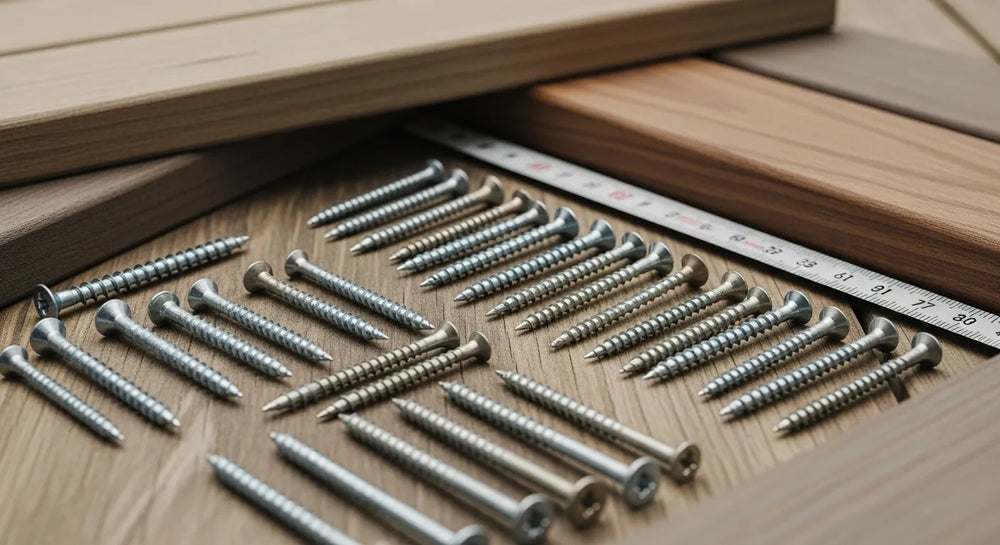
How Do You Put Drywall Screws In The Wall: Pro Fastening Techniques
Table of Contents
- Introduction
- Understanding Drywall and Fasteners: The Foundation of Wall Systems
- Types of Drywall Screws and Their Applications
- Essential Tools and Equipment for Drywall Screw Installation
- The Step-by-Step Installation Process for Drywall Screws
- Common Mistakes to Avoid During Drywall Screw Installation
- Advanced Techniques and Best Practices for Drywall Installation
- The Strategic Importance of Quality Fasteners in Industrial Procurement
- Sourcing U.S.-Made Fasteners for Reliability and Resilience with Maden.co
- Ensuring Project Success with Maden.co
- Conclusion
- FAQ
Introduction
In the grand blueprint of any construction or renovation project, from the smallest office fit-out to the largest industrial complex, certain components often go unnoticed despite their critical role. The drywall screw, for example, might seem unassuming, yet its proper installation is fundamental to the structural integrity, aesthetic finish, and long-term durability of a wall system. For procurement managers, MRO buyers, and design engineers, understanding the nuances of how these essential fasteners are correctly applied extends beyond mere installation; it directly impacts project timelines, material specifications, regulatory compliance, and overall structural integrity. A seemingly minor detail, improper drywall screw installation can lead to costly repairs, compromised safety, and significant project delays, underscoring the importance of precision, quality materials, and skilled application.
This comprehensive guide delves into the professional techniques for fastening drywall screws securely into walls, exploring everything from selecting the right screw type and preparing your workspace to executing flawless installation and avoiding common pitfalls. We'll examine why sourcing high-quality, U.S.-made fasteners is not just a preference but a strategic imperative for long-term reliability and supply chain resilience. At Maden.co, we are dedicated to democratizing access to American manufacturing, providing industrial buyers with a vast selection of over 2.5 million American-made products from our network of 800+ verified U.S. manufacturers. Our mission is to ensure that American-made components are as accessible and convenient as any global alternative, driving America's manufacturing revival. By the end of this article, you’ll possess a deeper understanding of drywall screw installation, enabling more informed procurement decisions and more successful project outcomes.
Understanding Drywall and Fasteners: The Foundation of Wall Systems
Before diving into the mechanics of screw installation, it's crucial to appreciate the material we're working with: drywall. Also known as plasterboard or gypsum board, drywall is a panel made of gypsum plaster pressed between two sheets of thick paper. It's widely used in construction for its ease of installation, fire resistance, soundproofing qualities, and smooth finish. However, its core structure—a relatively soft gypsum sandwiched between paper—means it requires specialized fasteners to ensure long-term stability without causing damage.
This is where drywall screws come into play. Unlike standard wood or metal screws, drywall screws are designed with a specific thread pattern and head shape to optimize their grip in gypsum and prevent stripping. Their bugle head design allows them to sink slightly below the surface of the drywall paper without tearing it, creating a small dimple that can be easily filled with joint compound for a seamless finish. The choice of screw, therefore, is not merely about fastening; it's about preserving the integrity of the drywall itself and facilitating a durable, professional finish. For a procurement manager overseeing large-scale commercial or residential developments, selecting fasteners that meet stringent quality and performance standards is paramount to project success and longevity.
Types of Drywall Screws and Their Applications
The world of drywall fasteners is more nuanced than it might initially appear, with specific types designed for different applications and materials. Understanding these distinctions is critical for ensuring the longevity and stability of any installed drywall.
Coarse-Thread Drywall Screws
These are the most common type, easily identifiable by their wide threads. Coarse-thread screws are specifically engineered for maximum grip in gypsum board and wood studs. The aggressive threading allows them to bite into the wood fibers effectively, providing superior holding power that resists pull-out. They are the go-to choice for attaching drywall to traditional wood framing. When working on projects that involve standard wood framing, ensuring a consistent supply of high-quality coarse-thread screws is essential. For instance, our marketplace offers robust solutions like the 6 x 1-1/4 coarse thread drywall screws, which are ideal for general-purpose drywall installations where reliable adhesion to wood studs is paramount. Similarly, for projects requiring longer fastening solutions, the 8 x 4 drywall screw provides excellent grip and stability for thicker drywall panels or where extra embedment is desired.
Fine-Thread Drywall Screws
In contrast to their coarse-thread counterparts, fine-thread drywall screws feature more numerous, shallower threads. These screws are specifically designed for attaching drywall to light-gauge metal studs, typically between 20 and 25 gauge. The finer threads create a more secure hold in the thin metal, preventing the screw from stripping out the material, which can be a common issue with coarse threads in metal. These are indispensable for commercial constructions and other applications utilizing metal framing. For procurement teams specifying materials for commercial builds with metal stud framing, our catalog includes high-quality options such as the 6 x 1 fine thread drywall screw, engineered for secure fastening into light-gauge metal.
Self-Tapping and Self-Drilling Drywall Screws
Some specialized drywall screws come with self-tapping or self-drilling points. Self-tapping screws create their own threads as they are driven into the material, reducing the need for pilot holes. Self-drilling screws go a step further, featuring a drill-bit-like tip that can bore through light-gauge metal studs without a separate pilot hole. These save significant time and effort in high-volume installations, where efficiency is paramount.
Length Considerations
The length of a drywall screw is dictated by the thickness of the drywall and the depth of penetration required into the framing material. As a general rule, the screw should penetrate at least 5/8 inch (16 mm) into wood studs and at least 3/8 inch (10 mm) into metal studs. Common lengths range from 1 inch to 4 inches, accommodating various drywall thicknesses (e.g., 1/2 inch, 5/8 inch) and double-layer applications. Choosing the correct length ensures adequate holding power without piercing through the back of the stud, potentially interfering with electrical wiring or plumbing. For an MRO buyer, having a ready supply of various lengths ensures flexibility for maintenance and repair tasks involving different wall constructions.
Understanding these distinctions is crucial for design engineers who specify materials for new construction or renovation projects, as well as for procurement managers tasked with ensuring the correct fasteners are on hand for every phase of a build. The strategic value of our platform lies in providing access to these specialized fasteners, ensuring compliance with project specifications and enhancing overall construction quality.
Essential Tools and Equipment for Drywall Screw Installation
Proper drywall screw installation relies heavily on having the right tools. Using appropriate equipment not only streamlines the process but also contributes significantly to the quality and durability of the finished wall. For businesses, investing in reliable, durable tools often translates into long-term savings and increased efficiency.
Power Drill or Screw Gun
While a standard power drill can be used, a dedicated screw gun (also known as a drywall screw gun) is the preferred tool for professional installation. Screw guns are designed to drive screws at a consistent depth, featuring an adjustable nose cone that automatically stops the screw when it reaches the desired depth, preventing over-driving or under-driving. This consistency is vital for a smooth finish and avoids damaging the drywall paper. If a screw gun isn't available, a variable-speed drill with a clutch setting can work, but it requires more user skill to prevent over-driving.
Drive Bits
The most common drywall screws feature a Phillips head recess, requiring a Phillips #2 drive bit. However, some manufacturers use square drive (Robertson) or Torx heads, which can offer better bit engagement and reduce cam-out (the bit slipping out of the screw head). It's crucial to match the bit type to the screw head to avoid stripping the screw.
Depth Setter (Clutch)
If using a standard power drill, a depth setter attachment is invaluable. This accessory fits over the drive bit and functions similarly to a screw gun's nose cone, allowing the screw to sink just below the surface of the drywall paper without tearing it. This accessory is a simple yet effective way to achieve consistent results and reduce the risk of damaging the drywall.
Stud Finder
A reliable stud finder is an absolute necessity. Drywall screws must be driven into the framing (wood or metal studs) to provide adequate support. A stud finder precisely locates these hidden structural elements, ensuring that screws hit their mark and contribute to the wall's stability. Modern stud finders can detect wood, metal, and even live electrical wires, adding an important layer of safety to the installation process.
Measuring Tape and Pencil
For accurate placement and spacing of drywall sheets and screws, a measuring tape and pencil are fundamental. Precise measurements ensure panels fit snugly and screws are consistently spaced according to building codes and best practices.
Utility Knife
A sharp utility knife is used for scoring and snapping drywall sheets to size. Having a fresh blade is crucial for clean cuts, minimizing waste and ensuring tight seams between panels.
Safety Glasses
Safety should always be a top priority. Driving screws can sometimes cause small fragments of drywall or metal to fly, and the risk of accidental slips means eye protection is non-negotiable.
For any MRO operation or construction firm, having a well-stocked toolkit with quality, durable tools is an investment that pays dividends in efficiency, safety, and the quality of the finished product.
The Step-by-Step Installation Process for Drywall Screws
Properly installing drywall screws is a systematic process that combines preparation, precision, and the right technique. Following these steps ensures a secure, durable, and aesthetically pleasing result. This isn't just about driving a screw; it's about building a robust wall system that meets industrial standards.
Step 1: Prepare the Workspace and Locate Studs
Before any screws are driven, the workspace must be clean and clear. Ensure adequate lighting and remove any obstacles. The most critical preparatory step is locating and marking the framing studs. Use a stud finder to identify the center of each vertical stud (wood or metal) behind where the drywall sheet will be placed. Once located, mark a light pencil line down the entire length of the stud or at the top and bottom plates. These lines will serve as your guide for screw placement.
- Tip for Professionals: For large projects, consider using laser levels to project stud lines across multiple panels, enhancing speed and accuracy.
Step 2: Position the Drywall Sheet
Carefully lift and position the drywall sheet against the framing. If installing horizontally, start with the top row, ensuring the sheet is snug against the ceiling (leaving a small 1/8 to 1/4 inch gap for expansion and caulk). If installing vertically, ensure edges align properly with the center of a stud or a seam. Use temporary bracing or have a second person assist with holding the sheet in place, especially for full-sized panels.
Step 3: Begin Driving Screws
Start by securing the drywall sheet with a few screws along the top edge into the studs to hold it firmly in place. Then, work your way across the sheet.
-
Screw Placement Strategy:
- Edges: Drive screws approximately 3/8 inch to 1/2 inch in from the edge of the drywall panel. Avoid placing screws too close to the edge, as this can cause the gypsum to crumble.
- Field (Middle of Panel): Screws in the body of the panel should be spaced approximately 12 to 16 inches apart along each stud. This spacing ensures consistent pressure and reduces the likelihood of bowing or cracking.
- Corners and Seams: At butt joints (where two sheets meet end-to-end) and tapered edges, screws should be staggered. Do not place screws directly opposite each other on adjacent sheets. Instead, offset them slightly to avoid splitting the stud or weakening the joint.
Step 4: Drive Screws to the Correct Depth
This is perhaps the most critical aspect of installation. Each screw head should create a slight dimple in the drywall paper, just breaking the surface without tearing the paper or stripping the screw head.
-
Using a Screw Gun: The adjustable nose cone of a screw gun will automatically set the depth. Simply press the gun firmly against the drywall, align the bit with the screw, and drive until the clutch engages.
-
Using a Power Drill with Depth Setter: Attach the depth setter to your drill. Drive the screw until the depth setter stops the bit, creating the perfect dimple.
-
Using a Power Drill without Depth Setter: This requires a delicate touch. Set your drill's clutch to a low setting. Drive the screw slowly, watching carefully as the head approaches the surface. Release the trigger the moment the screw head is flush with the paper and creates a slight dimple. Avoid applying too much pressure, which can cause the screw to spin freely and strip out the gypsum.
-
Why Dimpling Matters: The dimple provides a recess for joint compound, allowing for a smooth, undetectable finish once sanded and painted. If the paper is torn, the screw head can rust, bleed through the paint, and weaken the hold.
Step 5: Inspect and Correct
After driving all screws for a panel, quickly inspect your work.
- Check for Over-driven Screws: If a screw has torn through the paper, remove it and drive a new screw about an inch away. Do not try to repair the torn area with the existing screw.
- Check for Under-driven Screws: If a screw head is protruding, drive it in slightly further until it creates the proper dimple.
- Check for Missed Studs: If a screw spins freely, it likely missed the stud. Remove it and drive a new screw in the correct location.
Step 6: Repeat for Remaining Panels
Continue this process for all subsequent drywall panels, paying close attention to seams and corners. For an MRO buyer, understanding these techniques helps in quality control during renovations or new installations within a facility. The emphasis on precision and quality throughout the installation process mirrors our commitment at Maden.co to Industrial Excellence, ensuring every product we offer contributes to superior outcomes.
Common Mistakes to Avoid During Drywall Screw Installation
Even with the right tools and a clear understanding of the steps, certain pitfalls can compromise the integrity and finish of your drywall project. Avoiding these common mistakes is crucial for achieving professional results and ensuring the long-term durability of the installation. For procurement managers and business owners, recognizing these potential issues translates into fewer reworks and ultimately, better project economics.
1. Over-Driving Screws
This is perhaps the most common and damaging mistake. Over-driving occurs when a screw is driven too deep, tearing through the paper face of the drywall and breaking the gypsum core.
- Consequences: A torn paper face significantly reduces the screw's holding power, as the paper provides much of the tensile strength. It also makes it difficult to achieve a smooth finish, as the torn paper will be visible even after patching. Over-driven screws also create structural weak points and can lead to "popped" screws later as the drywall shifts.
- Prevention: Use a screw gun with an adjustable clutch or a depth-setting bit. If using a standard drill, practice on a scrap piece of drywall to get a feel for the right pressure and speed.
2. Under-Driving Screws
The opposite of over-driving, under-driving leaves the screw head protruding from the drywall surface.
- Consequences: Protruding screw heads will be visible through joint compound and paint, creating an uneven, unprofessional finish. Attempting to sand down a proud screw head is ineffective and can damage the paper.
- Prevention: Ensure screws are driven consistently to create that slight dimple. Inspect each screw after driving and correct any that are proud.
3. Missing the Stud
Sometimes, despite using a stud finder, a screw misses the framing stud and only penetrates the drywall itself.
- Consequences: A screw not anchored into a stud provides virtually no holding power. The drywall panel will not be securely fastened, leading to sagging, cracks, and instability.
- Prevention: Always mark your stud locations clearly. If a screw spins freely when driven, it has likely missed the stud. Remove it and redrive a new screw slightly away from the original hole, directly into the marked stud line.
4. Incorrect Screw Spacing
Placing screws too far apart compromises the rigidity of the drywall, while placing them too close together can weaken the gypsum core and the stud itself.
- Consequences: Inadequate spacing can lead to bowing or sagging drywall, especially in ceiling applications. Overly dense spacing can unnecessarily weaken the drywall or framing.
- Prevention: Adhere to recommended spacing guidelines: typically 12-16 inches in the field and 8 inches on edges. For a design engineer, adhering to these standards contributes to structural integrity and code compliance.
5. Using the Wrong Type of Screw
Using wood screws, deck screws, or standard machine screws for drywall is a common error.
- Consequences: These screws lack the bugle head and specific thread pattern of drywall screws. They are likely to tear the paper, not dimple correctly, or fail to hold securely in the gypsum and framing. Using coarse-thread screws in metal studs, or vice-versa, can lead to stripped material and weak connections.
- Prevention: Always use screws specifically designed for drywall. Ensure you have the correct thread type (coarse for wood, fine for light-gauge metal) and length for your application. This is where strategic procurement, focusing on product specifications, becomes invaluable. Our platform makes it easy to specify and source the right U.S.-made fasteners for your precise needs.
6. Poorly Maintained Tools
Dull drill bits or a malfunctioning screw gun can cause issues.
- Consequences: Stripped screw heads, damaged drywall, and inefficient work are common outcomes of using worn-out tools.
- Prevention: Regularly inspect and maintain your tools. Replace worn-out bits promptly. For MRO buyers, this emphasizes the importance of a robust tool maintenance and replacement program to sustain operational efficiency.
By being aware of these common mistakes and proactively implementing preventative measures, professionals can significantly enhance the quality, efficiency, and safety of their drywall installations. This attention to detail reflects the Industrial Excellence that Maden.co champions across all aspects of manufacturing and procurement.
Advanced Techniques and Best Practices for Drywall Installation
Beyond the fundamental steps, several advanced techniques and best practices can elevate drywall installation from acceptable to exceptional. These methods contribute to superior structural performance, enhanced aesthetic appeal, and long-term durability, which are critical considerations for industrial and commercial projects.
1. Adhesive Assistance
For added strength and reduced fastener count, consider using construction adhesive designed for drywall. Apply a serpentine bead of adhesive to the face of the studs before positioning the drywall panel. The adhesive provides continuous contact, minimizing potential for nail or screw pops and creating a much more rigid wall system. This technique is especially beneficial in high-traffic areas or for ceiling applications where preventing sag is paramount.
2. Double-Screwing (or Two-Fastener) System
In some high-performance applications, a "double-screwing" method is employed. This involves driving two screws side-by-side (about 2 inches apart) into each stud, spaced at intervals of 12 inches. This significantly increases the holding power and resistance to racking, often specified in areas requiring enhanced structural rigidity or in seismic zones. While it uses more fasteners, the added stability can justify the increased material cost in critical installations.
3. Resilient Channel Installation
For superior soundproofing, drywall can be installed on resilient channels. These thin metal strips are attached horizontally to the studs, and the drywall is then screwed into the channels. The channels create an air gap, decoupling the drywall from the framing and significantly reducing sound transmission. When using resilient channels, ensure the screws penetrate only the channel and not into the stud, which would bridge the gap and negate the soundproofing benefit. Procurement teams sourcing for sound-sensitive environments like offices or laboratories should consider this system.
4. Proper Corner and Edge Treatment
- Outside Corners: To avoid a cracked corner bead, ensure screws are driven close enough to the corner to hold the drywall firmly, but not so close that they cause the edge to crumble. Allow space for corner bead application and adequate mudding.
- Inside Corners: For inside corners, avoid driving screws directly into the corner stud on both adjacent panels. Instead, screw one panel firmly into the stud, and let the adjacent panel "float" in the corner, with its screws stopping about 8-10 inches from the corner. This allows for slight building movement without cracking the joint.
5. Consistent Joint Gaps
Maintain consistent, small gaps (typically 1/8 to 1/4 inch) between drywall panels and at corners. These small gaps are crucial for accommodating thermal expansion and contraction, preventing buckling, and providing enough space for joint compound to create a strong, seamless bond. For the most robust solutions, Maden.co offers high-quality U.S.-made drywall screws, such as the 6 x 1-1/4 coarse thread drywall screws that ensure panels are affixed securely, preventing movement that could compromise joint integrity.
6. Moisture-Resistant Drywall and Fasteners
In high-humidity areas like bathrooms, kitchens, or utility rooms, consider using moisture-resistant (greenboard or purple board) drywall. When working with these specialized panels, ensure your fasteners are also appropriate for the environment. Some screws come with enhanced corrosion resistance, which can be critical for the longevity of the installation in damp conditions.
7. Strategic Material Sourcing and Supply Chain Transparency
For design engineers and procurement managers, the quality of the fasteners themselves is a cornerstone of project success. Opting for consistently manufactured, U.S.-made drywall screws minimizes variability in material strength, thread consistency, and coating adherence. This strategic decision contributes to greater supply chain resilience, reduces the risk of project delays due to faulty components, and ensures compliance with building standards. Our platform, Maden.co, embodies this value by providing direct access to verified American manufacturers, simplifying the procurement process for critical components.
By incorporating these advanced techniques and adhering to best practices, professionals can ensure that their drywall installations are not only visually appealing but also structurally sound and durable for years to come.
The Strategic Importance of Quality Fasteners in Industrial Procurement
For procurement managers, MRO buyers, and business owners, the decision to source quality fasteners, particularly those manufactured in the U.S., transcends a simple cost calculation. It's a strategic choice that impacts total cost of ownership (TCO), supply chain resilience, regulatory compliance, and overall project success. The integrity of a wall system, after all, is only as strong as its weakest link, and often, that link is a fastener.
Reducing Total Cost of Ownership (TCO)
While premium U.S.-made fasteners might have a slightly higher upfront unit cost than some imported alternatives, their long-term value significantly reduces TCO. Inferior fasteners can lead to:
- Rework: Screws that strip easily, break, or fail to hold require removal and replacement, adding labor costs and extending project timelines.
- Premature Failure: Low-quality fasteners can lead to "popped" screws, sagging drywall, or even structural issues requiring extensive repairs years down the line. These repairs are far more expensive than the initial saving on cheap screws.
- Waste: Higher rates of defective fasteners lead to material waste, impacting budget and sustainability goals.
By investing in high-quality, consistently manufactured products, such as the diverse range of American-made drywall screws available on our platform, businesses minimize these hidden costs, ensuring projects are completed correctly the first time and endure over time.
Enhancing Supply Chain Resilience
In an era marked by unpredictable global events and logistical challenges, relying on a localized, transparent supply chain is more critical than ever. Sourcing fasteners from U.S. manufacturers mitigates risks associated with:
- Geopolitical Instability: Reduced reliance on distant suppliers lessens exposure to international trade disputes, tariffs, and political unrest.
- Shipping Delays: Shorter shipping distances and domestic logistics networks mean faster, more reliable delivery times, reducing lead times and the need for excessive inventory.
- Quality Control Issues: Direct relationships with U.S. manufacturers allow for better oversight of manufacturing processes and quality assurance, ensuring consistent product performance.
At Maden.co, our mission is to provide procurement managers with direct access to a robust network of verified U.S. manufacturers, bolstering supply chain resilience and predictability. This commitment underpins our vision of American manufacturing's revival.
Ensuring Compliance with Critical Industry Standards
Many industrial and commercial construction projects operate under strict building codes and industry standards. These regulations often specify fastener types, materials, and installation methods to ensure safety and structural integrity.
- Material Certifications: U.S. manufacturers are typically more transparent with material certifications and compliance documentation (e.g., meeting ASTM standards), simplifying the auditing process for procurement teams.
- Consistent Quality: The rigorous manufacturing standards prevalent in the U.S. ensure that fasteners consistently meet specified strength, corrosion resistance, and dimensional tolerances. This is paramount for projects where failure is not an option.
For a design engineer needing specific material certifications for a new prototype, or an MRO buyer facing an unexpected equipment breakdown, the ability to quickly find and finance a verified, U.S.-made part is a game-changer. We pride ourselves on the Digital Innovation that allows seamless access to such vital information.
Reducing Procurement Friction and Partnering with Verified Manufacturers
The traditional procurement process can be cumbersome, involving multiple quotes, vetting suppliers, and navigating complex logistics. Maden.co streamlines this process, acting as a strategic partner.
- Consolidated Sourcing: Our marketplace offers a centralized platform for sourcing millions of American-made products, reducing the time and effort spent searching for suppliers.
- Verified Network: We meticulously vet our 800+ U.S. manufacturers, ensuring buyers connect with reliable, high-quality producers. This trust eliminates a significant portion of the due diligence burden.
- Customer Empowerment: We empower our customers by providing transparent information, easy navigation, and efficient purchasing options, reflecting our core value of Customer Empowerment.
The strategic choice to prioritize quality, U.S.-made fasteners, facilitated by platforms like Maden.co, is not just about purchasing a product; it's about investing in the efficiency, reliability, and long-term success of every project.
Sourcing U.S.-Made Fasteners for Reliability and Resilience with Maden.co
In an increasingly complex global marketplace, the decision to source industrial components, including critical fasteners like drywall screws, from domestic manufacturers has become a cornerstone of strategic procurement. For businesses focused on long-term sustainability, reliability, and national economic impact, Maden.co stands as America's premier B2B marketplace for U.S.-manufactured products. We don't just facilitate transactions; we cultivate partnerships built on the values of American Manufacturing Pride, Digital Innovation, Supply Chain Transparency, and Industrial Excellence.
Our platform is engineered to address the specific challenges faced by procurement managers, MRO buyers, and design engineers. We understand the pressure to source compliant, high-quality components within tight deadlines and budgets, all while building robust, resilient supply chains.
Unparalleled Access to American Manufacturing
At Maden.co, our mission is to democratize access to American manufacturing. We connect industrial buyers with an extensive catalog of over 2.5 million American-made products, encompassing a vast array of fasteners, components, and industrial supplies. From the precise 6 x 1-1/4 coarse thread drywall screws vital for wood framing to the specialized 6 x 1 fine thread drywall screws for metal studs, and longer options like the 8 x 4 drywall screw for demanding applications, our platform simplifies the search for high-quality, domestically produced fasteners. Our network boasts over 800+ verified U.S. manufacturers, each committed to delivering the quality and consistency that industrial projects demand.
Streamlined Procurement, Enhanced Transparency
We believe that procurement friction should be a thing of the past. Our intuitive digital platform allows buyers to quickly locate, compare, and purchase industrial products, reducing the time and resources traditionally spent on vetting suppliers and navigating complex order processes. Every product on our site is proudly American-made, backed by the inherent quality and compliance that U.S. manufacturing represents. This level of transparency ensures that procurement teams can make informed decisions, confident in the origin and quality of their components.
Strategic Financial Flexibility: Instant Financing
A key differentiator that sets Maden.co apart is our "Instant Financing" option. We understand that large-volume purchases or unexpected equipment breakdowns can strain cash flow. Instant Financing isn't just a payment method; it's a strategic tool designed to empower businesses to manage capital effectively and seize opportunities for larger, more impactful purchases without immediate cash outlay. This feature is seamlessly integrated into the checkout process, allowing qualified businesses to apply quickly and secure financing for their critical procurement needs. This flexibility means projects can move forward without unnecessary delays, even when capital is temporarily tied up elsewhere.
Driving America's Manufacturing Revival
Our vision is to become the definitive platform that proves American-made components are as accessible and convenient as any global alternative. We are actively driving the manufacturing revival, not just by facilitating commerce, but by fostering growth and innovation within the U.S. industrial sector. When you source through Maden.co, you're not just buying a product; you're investing in the future of American jobs, technological advancement, and a stronger, more resilient domestic economy.
For those dedicated U.S. manufacturers seeking to expand their reach and connect with a vast network of industrial buyers, we invite you to register as a vendor and join the American manufacturing revival on our platform. Together, we can build a more robust and efficient supply chain for the nation.
Ensuring Project Success with Maden.co
Ultimately, the success of any construction or MRO project hinges on a multitude of factors, but none are more fundamental than the quality of materials and the reliability of their supply. From the initial design specifications developed by engineers to the final installation managed by skilled trades, every component, no matter how small, plays a pivotal role. The seemingly simple drywall screw, when correctly chosen and meticulously installed, underpins the stability and longevity of an entire wall system.
At Maden.co, we are committed to being more than just a marketplace; we are a strategic partner in building a more reliable and efficient procurement process for your business. Our expansive catalog of over 2.5 million American-made products, sourced from 800+ verified U.S. manufacturers, is meticulously curated to meet the stringent demands of industrial buyers. We understand that true value isn't just about price, but about the assurance of quality, the resilience of a transparent supply chain, and the confidence that every component contributes to your project's success. This is a core tenet of our Customer Empowerment value.
By leveraging our platform, you gain access to the precision, consistency, and compliance that only U.S. manufacturing can reliably offer. Whether you are stocking up on everyday essentials like drywall screws or searching for highly specialized components, we simplify the process, reduce procurement friction, and help you minimize the total cost of ownership over the lifespan of your projects. Our commitment to Industrial Excellence means that every product you find on Maden.co contributes to superior outcomes, from enhanced durability to streamlined installations.
For businesses seeking to optimize their operations, reduce risks, and champion American industry, Maden.co provides the comprehensive solution. If you have specific sourcing questions or need assistance navigating our extensive catalog, our expert team is always ready to help through our Contact Us page.
Conclusion
Mastering the art of fastening drywall screws is more than a mere technical skill; it's a critical component of ensuring the long-term integrity, safety, and aesthetic quality of any interior space. From understanding the nuanced differences between coarse and fine-thread screws to meticulously executing the installation process and avoiding common pitfalls, precision and quality are paramount. For procurement managers, MRO buyers, and design engineers, this technical knowledge forms the bedrock of informed decision-making, directly influencing the total cost of ownership and the resilience of their supply chains. The choice of fastener, and its proper application, fundamentally impacts everything from structural compliance to the final finish of a project.
At Maden.co, we are proud to stand at the forefront of America's manufacturing revival, offering an unparalleled platform where industrial buyers can access a vast network of verified U.S. manufacturers. Our commitment to providing over 2.5 million American-made products ensures that you have access to the highest quality components, fostering supply chain resilience and supporting domestic industry.
Don't let procurement challenges impede your progress. Elevate your projects with the reliability and excellence of American manufacturing. Explore our comprehensive catalog of U.S.-made industrial products today on Maden.co and experience the difference that quality and accessibility make. For capital-intensive projects, you can apply for Instant Financing at checkout to streamline your operations and manage cash flow effectively. Your next successful project begins with the right materials, sourced smarter, with Maden.co.
FAQ
Q1: What is the most common mistake when putting drywall screws in the wall?
The most common mistake is over-driving screws, which tears the paper face of the drywall and damages the gypsum core. This significantly reduces the screw's holding power and makes it difficult to achieve a smooth finish, potentially leading to "popped" screws or structural weaknesses over time. Using a screw gun with an adjustable depth setting or a depth setter bit on a regular drill is crucial to prevent this.
Q2: How do I know if I'm using the right type of drywall screw for my project?
The correct screw type depends on the framing material. For wood studs, use coarse-thread drywall screws for their superior grip in wood fibers. For light-gauge metal studs (typically 20-25 gauge), fine-thread drywall screws are essential, as their numerous, shallower threads create a more secure hold without stripping the thin metal. Always match the screw type to the framing material to ensure optimal holding power and prevent damage.
Q3: What is "Instant Financing" and how can it benefit my business when sourcing fasteners?
Instant Financing is a convenient feature available at checkout on Maden.co, allowing qualified businesses to manage cash flow effectively for larger-volume purchases. Instead of an upfront payment, you can apply for financing to cover the cost of essential fasteners and other industrial components. This acts as a strategic tool, enabling you to acquire necessary materials without tying up immediate capital, ensuring projects stay on schedule and within budget, especially for unexpected or large-scale procurement needs.
Q4: Why is sourcing U.S.-made drywall screws strategically important for procurement managers?
Sourcing U.S.-made drywall screws is strategically important because it enhances supply chain resilience by reducing reliance on volatile international logistics, ensures consistent product quality and compliance with stringent industry standards, and often leads to a lower total cost of ownership by minimizing rework and premature failures. Furthermore, it supports domestic manufacturing, contributing to job growth and economic stability, aligning with our mission at Maden.co to drive America's manufacturing revival.


