
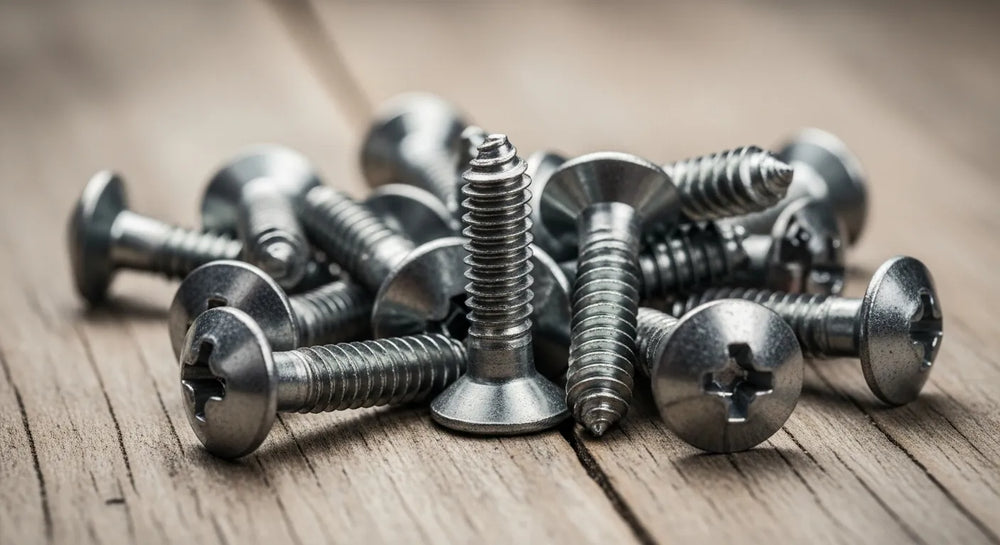
Determining Wood Screw Size: A Professional Guide
Table of Contents
- The Crucial Role of Fastener Selection in Industrial Applications
- Understanding Wood Screw Anatomy and Terminology
- Factors Influencing Wood Screw Size Selection
- Practical Steps for Determining the Right Wood Screw Size
- Advanced Considerations for Industrial and Professional Projects
- Streamlining Your Procurement of American-Made Fasteners with Maden.co
- Conclusion
- FAQ
Imagine a critical infrastructure project, a high-value furniture commission, or an essential MRO repair halted because a crucial fastener fails, splits the wood, or simply isn't strong enough to bear the load. Such scenarios aren't uncommon and often stem from a fundamental oversight: underestimating the complexity of selecting the correct wood screw. For procurement managers, MRO buyers, and design engineers, the seemingly simple task of choosing a wood screw holds significant implications for project longevity, structural integrity, and overall cost-efficiency. The wrong screw can lead to costly rework, material waste, compromised safety, and ultimately, damage to professional reputation.
This comprehensive guide aims to demystify the process of determining the appropriate wood screw size, transforming it from a guesswork endeavor into a precise, calculated decision. We will delve into the critical factors that dictate screw selection, including diameter (gauge), length, thread design, and material composition, alongside the environmental and structural demands of your application. Our objective is to equip you with the knowledge to make informed choices, ensuring that every project you undertake benefits from the foundational strength and reliability of correctly specified, high-quality fasteners. Ultimately, mastering wood screw selection is not just about avoiding failure; it's about building with confidence, enhancing durability, and championing the industrial excellence that defines American manufacturing.
The Crucial Role of Fastener Selection in Industrial Applications
In the professional realm, a wood screw is far more than a mere joining device; it is a critical component that bears loads, resists forces, and ensures the long-term stability of structures and assemblies. The precise selection of this seemingly minor part directly impacts everything from the structural integrity of a custom cabinet system in a commercial space to the durability of a heavy-duty packaging crate, or even specialized fixtures in manufacturing facilities. Overlooking the nuances of fastener specification can introduce points of weakness, accelerate material fatigue, and lead to premature failure, all of which translate into significant financial and operational setbacks for businesses.
For design engineers, the dimensions and material properties of a wood screw must align perfectly with load calculations and material stress tolerances to meet performance specifications. MRO buyers, on the front lines of equipment maintenance and repair, understand that a correctly specified screw can prevent recurring failures and extend the lifespan of critical assets, thereby reducing downtime and operational costs. Procurement managers, tasked with sourcing these components, face the challenge of balancing performance requirements with availability, cost-effectiveness, and supply chain reliability. Choosing a fastener that is too short, too thin, or made of an incompatible material can result in stripped holes, split wood, inadequate holding power, or corrosion, each carrying a cascade of negative consequences.
At Maden.co, we champion the principle that industrial excellence begins with precision. Our commitment to supply chain transparency and digital innovation is geared towards empowering our customers to make these critical decisions with confidence, providing access to a vast network of verified U.S. manufacturers. We believe that by democratizing access to high-quality American-made components, we fortify your projects and contribute to the broader resilience of the nation's industrial base.
The Cost of Error: Beyond the Immediate Fix
The true cost of incorrect fastener selection extends far beyond the price of a replacement screw. It encompasses:
- Rework and Labor: Disassembly, material repair or replacement, and reassembly are time-consuming and costly.
- Material Waste: Damaged wood or components due to splitting or stripping represent direct material losses.
- Project Delays: Even minor fastener issues can accumulate, pushing back project timelines and impacting delivery schedules, potentially incurring penalties or loss of future contracts.
- Safety Concerns: In structural or load-bearing applications, an improperly sized or specified screw can lead to catastrophic failure, endangering personnel and property.
- Reputation Damage: Repeated failures or substandard construction due to poor component selection can erode client trust and damage a company's professional standing.
This underscores why precision in fastener selection is not merely a technicality but a strategic imperative. It's about building with foresight, ensuring every component contributes positively to the long-term value and reliability of the final product.
Understanding Wood Screw Anatomy and Terminology
To accurately determine the size of a wood screw, one must first grasp its fundamental components and the terminology used to describe them. Each part of the screw plays a specific role in its performance and application.
Gauge (Diameter)
The gauge, or nominal diameter, refers to the thickness of the screw's shank, typically measured at its widest point (usually just below the head or at the threads). Wood screw gauges are designated by a numbering system, most commonly ranging from #0 (smallest) to #24 (largest) in the United States, with #6, #8, and #10 being very common for general carpentry.
- Standard Numbering System: As the number increases, so does the screw's diameter. For instance, a #8 screw is thicker than a #6 screw.
- Holding Power and Shear Strength: A thicker screw (higher gauge number) generally offers greater shear strength (resistance to breaking across the shank) and greater withdrawal resistance (resistance to being pulled out of the wood). This is crucial for applications where the fastener will experience significant load.
- Pilot Holes and Clearance Holes: The gauge dictates the size of the pilot hole (which allows the threads to engage without splitting the wood) and the clearance hole (which allows the shank to pass through the top material without binding). We will elaborate on these in later sections.
- Material Density: Denser hardwoods typically require a smaller gauge screw or a larger pilot hole for a given screw to prevent splitting, whereas softer woods can often accommodate a larger gauge without issues.
Length
The length of a wood screw is measured from the tip of the screw to the point where it would be flush with the surface of the material being fastened. For screws with countersinking heads (like flat heads), the length is measured to the top of the head. For screws with heads that sit proud (like round or pan heads), the length is measured to the underside of the head.
- General Rule of Thumb: A common guideline is that the screw should penetrate at least two-thirds of its total length into the base material, ensuring that at least half of the screw's length is embedded. Another rule suggests the screw should be at least twice the thickness of the material being fastened. For example, to fasten a 3/4-inch board, a screw of at least 1-1/2 inches is often recommended.
- Penetration Depth: Adequate penetration into the base material is critical for maximum holding power. Insufficient penetration leads to weak joints prone to failure.
- Avoiding Breakthrough: The screw must not be so long that it penetrates entirely through the base material, which can compromise aesthetics, weaken the joint, and potentially cause injury.
- Specific Joint Types: Different joint configurations (e.g., butt joints, lap joints) require careful consideration of both materials' thicknesses to ensure proper engagement and prevent over-penetration.
Thread Type and Pitch
Wood screws are characterized by coarse threads designed to grip wood fibers firmly.
- Coarse Threads: These wide, deep threads provide excellent holding power in fibrous materials like wood. Unlike machine screws with fine threads, wood screws create their own mating threads as they are driven.
-
Partial vs. Full Threads:
- Partially threaded screws have an unthreaded shank portion near the head. This unthreaded part allows the top piece of wood to be pulled tightly against the base material without being pushed away by the threads. This is often preferred for joinery where strong clamping force is desired.
- Fully threaded screws have threads running the entire length of the shank. While they offer maximum grip along their entire length, they can sometimes prevent the top piece from drawing as tightly to the base material as a partially threaded screw would. They are often used when fastening thin materials or when maximum withdrawal resistance is paramount.
- Self-Tapping Features: Some modern wood screws incorporate features like a Type 17 point (a small cutting flute at the tip) or serrated threads, designed to reduce the need for pre-drilling, minimize splitting, and make driving easier, especially in hardwoods.
- Impact on Withdrawal Resistance: The design of the threads significantly influences how much force is required to pull the screw out of the wood. Deeper, sharper threads generally offer superior withdrawal resistance.
Head Type
The screw's head is designed for specific functional and aesthetic purposes.
- Flat Head: Designed to be countersunk flush with or slightly below the surface of the wood, creating a smooth finish. Ideal for applications where a flat surface is required, such as hinges or where subsequent finishes will be applied. For general purpose fastening where a clean, flush finish is desired, consider the reliability of a high-quality Flat Slot Drive Brass Wood Screw from our extensive catalog.
- Round Head: Sits proud on the surface. Often used for decorative purposes or when the top material is too thin to countersink without compromising strength. A robust choice for surface-mounted components or decorative elements is a Round Slot Drive Brass Wood Screw, available through Maden.co.
- Oval Head: A decorative head that is partially countersunk, leaving a rounded, finished top exposed. It combines a clean look with some strength, commonly seen in visible hardware applications. For projects demanding both strength and a refined aesthetic, an Oval Slot Drive Silicon Bronze Wood Screw provides exceptional performance and appearance.
- Pan Head: Features a slightly rounded, low-profile top with vertical sides. It sits proud and offers a larger bearing surface than a round head, often used in metal-to-wood applications or when a broad clamping surface is needed.
- Truss Head: Has a very wide, low-profile dome. Used when a large bearing surface is required to prevent pull-through, especially with softer materials.
Drive Type
The drive type refers to the recess in the head of the screw, designed to accept a specific driver bit. The choice of drive type impacts torque transfer, cam-out prevention, and ease of installation.
- Slotted: The oldest and simplest drive type. Prone to cam-out (the driver slipping out of the slot) and less efficient for high-torque applications.
- Phillips: Cross-shaped recess. Designed to cam-out at a certain torque to prevent over-tightening, though this can also lead to stripping if not properly seated.
- Pozi: Similar to Phillips but with additional slots, offering better torque transfer and reduced cam-out.
- Torx (Star): Six-point star-shaped recess. Provides excellent torque transfer, virtually eliminates cam-out, and is highly favored for demanding applications and production environments.
- Square (Robertson): Square-shaped recess. Offers superior grip, easy one-handed driving, and minimal cam-out. A popular choice in woodworking and construction.
Material
The material of the wood screw is crucial for its strength, corrosion resistance, and compatibility with the environment and the wood species.
- Steel (Zinc-Plated, Black Oxide): Common for general-purpose indoor use. Zinc plating offers basic corrosion resistance, while black oxide provides a dark, somewhat protective finish. These are generally the strongest options but are susceptible to rust in damp or outdoor conditions.
- Stainless Steel (e.g., 304, 316): Highly resistant to rust and corrosion, making them ideal for outdoor, marine, or damp environments. 316 stainless steel offers superior corrosion resistance, particularly against saltwater. While softer than hardened steel, they maintain strength over time in harsh conditions.
- Brass: Softer and primarily used for decorative purposes or in applications where corrosion is a concern (though less robust than stainless steel). Often used with hardwoods to prevent staining.
- Bronze (e.g., Silicon Bronze): Offers excellent corrosion resistance, similar to or better than stainless steel in some marine environments, and is often chosen for its aesthetic appeal in high-end woodworking, boat building, and historical restorations.
Factors Influencing Wood Screw Size Selection
Beyond the basic anatomy, several critical factors must be considered when determining the appropriate wood screw size. These variables interact in complex ways, demanding a holistic approach to fastener selection.
Material Hardness and Type
The type and density of the wood you are fastening are paramount.
- Softwoods (Pine, Cedar, Fir): These woods are less dense and more prone to splitting. While they are easier to drive screws into, they offer less withdrawal resistance for a given screw size. Larger pilot holes or self-tapping screws are often beneficial to prevent splitting.
- Hardwoods (Oak, Maple, Cherry, Walnut): Dense and strong, hardwoods provide excellent screw-holding power but are much more difficult to drive into and are highly susceptible to splitting if pilot holes are not precisely sized. Pre-drilling is almost always mandatory.
- Engineered Wood Products (Plywood, MDF, Particleboard): These materials have specific characteristics. Plywood holds screws well due to its layered construction, but edges can delaminate. MDF and particleboard have poor screw-holding capabilities, especially on edges, and require specific screws (often coarse-threaded, self-tapping) and careful pilot hole sizing to prevent stripping and crumbling.
Joint Type and Load Requirements
The way the joint is designed and the forces it will encounter are crucial.
- Shear Loads: Forces acting perpendicular to the screw's axis, trying to cut or shear the screw. Here, the screw's diameter (gauge) is most critical, as a thicker screw has greater shear strength.
- Withdrawal Loads: Forces acting parallel to the screw's axis, trying to pull the screw out of the wood. This is where screw length and thread design are paramount. Longer screws with aggressive threads provide greater withdrawal resistance.
- Static vs. Dynamic Loads: Static loads are constant, while dynamic loads involve movement or vibration. Joints subject to dynamic loads or frequent stress reversals require stronger, more resilient fasteners and often, supplementary joining methods.
- Joint Reinforcement: In high-stress applications, screws may be used in conjunction with glue, dowels, or other mechanical fasteners to distribute loads and enhance joint strength.
Environmental Conditions
Where the fastened assembly will reside profoundly influences the screw's material.
- Indoor, Dry Conditions: Standard steel screws (zinc-plated or black oxide) are usually sufficient.
- Outdoor or Damp Environments: Applications exposed to rain, humidity, or moisture require corrosion-resistant materials like stainless steel (304 or 316) or silicon bronze.
- Marine Environments: Saltwater exposure demands the highest level of corrosion resistance, making 316 stainless steel or silicon bronze the preferred choices.
- Chemical Exposure: Certain chemicals or treated lumber (e.g., pressure-treated wood) can accelerate corrosion. Specific fastener materials compatible with these chemicals must be selected to prevent premature degradation. For example, some treated woods require hot-dipped galvanized or stainless steel fasteners to avoid corrosive reactions.
Aesthetics and Finish
Sometimes, the appearance of the fastener is as important as its function.
- Visibility of Fastener: If the screw heads will be visible, you might choose decorative heads (like oval or round) or opt for heads that can be hidden with wood plugs or fillers (like flat heads). Material choice (e.g., brass, bronze) can also contribute to the aesthetic.
- Flush Finish: For surfaces that need to be smooth (e.g., tabletops, cabinet interiors), countersunk flat head screws are essential.
- Fastener Color: For specific projects, the color of the screw (e.g., black oxide, bronze) might be chosen to blend in or stand out against the wood.
Tooling Availability
The tools you have on hand can influence the practical choice of drive type. While professionals typically have a wide array of bits, ensuring compatibility with available drivers prevents delays and fastener damage. Modern professional operations prioritize Torx or Square drives for their superior cam-out resistance and efficient torque transfer, especially for high-volume or high-stress applications.
Practical Steps for Determining the Right Wood Screw Size
With an understanding of screw anatomy and influencing factors, we can outline a systematic approach to selecting the appropriate wood screw.
Step 1: Assess Material Thickness and Type
Begin by identifying the thickness and species of both the piece being fastened (the top material) and the material it is being fastened to (the base material).
-
Determine Length:
- Rule of Thumb: A good starting point is to choose a screw length such that it penetrates the base material by at least half to two-thirds of its total length, but without exiting the far side.
-
Calculation Example: If you are fastening a 3/4-inch thick board to a 1.5-inch thick base:
- Required penetration into base: (0.5 to 0.66) * Total Length.
- Minimum screw length = (Thickness of Top Material) + (Minimum Penetration into Base Material).
- If aiming for 1 inch of penetration into the base for a strong joint: 0.75 inches (top) + 1 inch (base) = 1.75-inch screw. A 1-3/4 inch or 2-inch screw would be appropriate, ensuring it doesn't break through the base.
- End-Grain Fastening: When fastening into end-grain (the cut end of a board), the holding power is significantly reduced. In these cases, longer screws, larger gauges, or supplementary joinery methods (like glue, dowels, or pocket screws) are often necessary.
Step 2: Determine Required Holding Power (Gauge)
The screw's gauge (diameter) dictates its strength and resistance to pull-out.
-
Application-Specific Guidance:
- Light-Duty Applications (e.g., small decorative items, thin trim): #4 or #6 screws might suffice.
- General Cabinetry and Furniture Assembly (e.g., hinges, drawer slides, general joinery): #6 or #8 screws are common workhorses.
- Heavy-Duty Framing and Structural Components (e.g., decking, heavy shelving, large assemblies): #10, #12, or even larger screws may be required for increased shear strength and withdrawal resistance.
- Material Density: For very dense hardwoods, using a slightly smaller gauge screw or ensuring a perfectly sized pilot hole can prevent splitting. For softer woods, a larger gauge can provide more substantial holding power without issues.
- Reference Charts: For critical applications, consult engineering tables or manufacturer's data sheets that provide withdrawal resistance values for different screw gauges and wood species.
- Safety Factor: When in doubt about the exact load, it's generally safer to opt for a slightly larger gauge within reasonable limits, ensuring it doesn't compromise the wood's integrity.
Step 3: Account for Environmental Factors and Material Compatibility
Select the screw material and finish based on the operating environment.
- Indoor/Dry: Zinc-plated or black oxide steel.
- Outdoor/Damp: Stainless steel (304), galvanized, or silicon bronze.
- Marine/Saltwater/Corrosive Chemicals: 316 stainless steel or silicon bronze for superior resistance.
- Treated Lumber: Always use fasteners specifically rated for pressure-treated wood (e.g., hot-dipped galvanized, stainless steel, or screws with compatible coatings) to prevent chemical reactions that lead to rapid corrosion.
- Dissimilar Metals: Be mindful of galvanic corrosion if the screw is in contact with another metal in a wet environment. For example, brass screws in contact with aluminum can lead to corrosion over time.
Step 4: Select Head and Drive Type for Application and Aesthetics
Choose a head type that meets the functional and visual requirements of your project.
- Countersinking: If a flush surface is needed, choose a flat head screw and use a countersink bit to create a tapered recess for the head. For projects that prioritize a clean finish, the Flat Slot Drive Brass Wood Screw offers both reliability and a professional appearance.
- Surface-Mounted: For applications where the screw head can be visible or needs a larger bearing surface, consider round, pan, or truss heads. Our Round Slot Drive Brass Wood Screw provides a classic aesthetic coupled with robust fastening.
- Decorative: Oval heads, or materials like brass and silicon bronze, can be chosen for their aesthetic appeal. For premium, visually sensitive applications, an Oval Slot Drive Silicon Bronze Wood Screw delivers exceptional corrosion resistance and a distinguished look.
- Drive Type: For efficiency and cam-out prevention, especially in high-volume or demanding tasks, Torx or Square drives are generally preferred over Phillips or Slotted.
Step 5: Pre-Drilling Considerations
Pre-drilling is often the most critical step to prevent wood splitting and ensure optimal screw performance.
-
Pilot Hole: This is a small hole drilled into the wood to create a path for the screw.
- Diameter: The pilot hole should be slightly smaller than the root diameter (the diameter of the screw shank without the threads) of the screw. This allows the threads to cut into the wood and create a strong grip without forcing the wood apart.
- Length: The pilot hole should be drilled to the full depth of the screw's intended penetration into the base material.
- Necessity: Always pre-drill in hardwoods, near edges, or in any situation where splitting is a concern. Even in softwoods, pre-drilling can ease driving and improve holding power.
-
Clearance Hole: This hole is drilled in the top piece of wood being fastened.
- Diameter: It should be the same as or slightly larger than the shank diameter (the unthreaded part of the screw, or the overall diameter of the screw including threads if fully threaded) of the screw.
- Purpose: The clearance hole allows the unthreaded portion of the screw's shank to pass freely through the top material, preventing it from binding. This ensures that the threads only engage with the base material, effectively pulling the top piece tightly against the base as the screw is driven.
- Countersink Bit: If using flat head screws, a countersink bit is used after the pilot and clearance holes are drilled to create a tapered recess for the screw head, allowing it to sit flush.
Advanced Considerations for Industrial and Professional Projects
For professionals working on large-scale, high-stakes, or specialized projects, a deeper level of consideration for fastener selection is often required.
Engineering Specifications and Standards
Many industrial projects necessitate adherence to rigorous engineering specifications and industry standards.
- Load Calculations: Design engineers must often perform precise calculations to determine the exact shear and withdrawal loads a fastener will bear. This directly influences the required screw gauge, length, and material.
- Industry Standards: Compliance with standards from organizations like ASTM (American Society for Testing and Materials) or ANSI (American National Standards Institute) ensures that fasteners meet specific material, dimension, and performance criteria.
- Material Certifications: For critical applications, such as those in aerospace, medical devices, or structural engineering, fasteners may require material certifications that verify their composition, strength, and manufacturing processes. Sourcing from verified U.S. manufacturers that can provide these certifications is non-negotiable for maintaining project integrity and compliance.
Volume Procurement and Consistency
When procuring fasteners in large volumes, consistency in quality, dimensions, and performance across entire batches is paramount. Variations can lead to production inefficiencies, increased waste, and compromised final product quality. This is where the advantage of sourcing from trusted, verified manufacturers becomes apparent.
Supply Chain Resilience and "Made in America" Advantage
In an increasingly unpredictable global economy, a resilient supply chain is a strategic asset. Sourcing fasteners from domestic manufacturers offers numerous advantages:
- Reduced Lead Times: Shorter shipping distances and streamlined logistics translate to faster delivery and reduced project delays.
- Enhanced Quality Control: U.S. manufacturers often adhere to stringent quality control standards, resulting in more consistent and reliable products.
- Ethical Manufacturing Practices: Sourcing domestically supports fair labor practices and environmentally responsible manufacturing.
- Economic Impact: Investing in American-made products strengthens the domestic manufacturing base, creating jobs and fostering innovation.
At Maden.co, our mission is to democratize access to American manufacturing. We connect industrial buyers with over 2.5 million American-made products from our network of 800+ verified U.S. manufacturers. Our vision is to become the definitive platform that proves American-made components are as accessible and convenient as any global alternative, driving the manufacturing revival with our tagline: "America's manufacturing revival is here." To learn more about our commitment to this mission, we invite you to explore our About Us page.
Streamlining Your Procurement of American-Made Fasteners with Maden.co
The process of determining the right wood screw size, while technical, is made simpler when you have access to a reliable, comprehensive source for high-quality components. This is precisely where Maden.co excels as America's premier B2B marketplace for U.S.-manufactured products.
- Vast Catalog and Advanced Search Functionality: Our platform features an extensive catalog of over 2.5 million American-made products, including a wide array of fasteners across various types, materials, gauges, and lengths. Our intuitive search and filtering capabilities allow procurement managers and design engineers to quickly pinpoint the exact specifications required for their projects, whether it’s a standard #8 galvanized wood screw or a specialized silicon bronze fastener for a marine application. You can explore our full range of offerings by visiting our homepage.
- Verified U.S. Manufacturers: Every product on Maden.co comes from our network of 800+ verified U.S. manufacturers. This means you gain assurance of quality, adherence to American standards, and complete supply chain transparency—critical for projects demanding material certifications or specific compliance.
- Supply Chain Transparency and Digital Innovation: We leverage digital innovation to provide unparalleled transparency, allowing you to trace the origin of your components and understand their manufacturing journey. This empowers you to make informed decisions that enhance supply chain resilience and minimize risk.
- Customer Empowerment: We empower our customers with not just products, but also the information and tools needed for optimal procurement. For a procurement manager needing specific brass wood screws for a heritage restoration, a design engineer specifying silicon bronze wood screws for a marine application, or an MRO buyer facing an urgent need for specialized fasteners, the ability to quickly find and finance a verified, U.S.-made part is a game-changer.
- Instant Financing for Strategic Purchasing: We understand that large-volume or specialized industrial purchases can impact cash flow. That's why we offer Instant Financing as a key differentiator. This strategic tool allows businesses to manage capital effectively, enabling them to make necessary purchases without straining immediate resources. You can apply for Instant Financing at checkout to streamline your capital-intensive projects and ensure you always have access to the U.S.-made components you need.
- Partnering for Success: Maden.co is more than just a marketplace; we are a strategic partner in building a more reliable and efficient procurement process. Our commitment to American Manufacturing Pride means we are dedicated to fostering industrial excellence and driving the nation's manufacturing revival.
Are you a qualified U.S. manufacturer looking to expand your reach and connect with industrial buyers across the country? We invite you to register as a vendor and join our growing network, becoming a vital part of America's manufacturing revival. If you have specific sourcing questions, or need assistance navigating our catalog for specialized fasteners, our expert team is ready to help; please don't hesitate to contact us.
Conclusion
The accurate determination of wood screw size is a foundational element of successful industrial projects, impacting everything from structural integrity and material longevity to cost efficiency and safety. By meticulously considering gauge, length, thread type, head design, material, and the unique demands of your application and environment, professionals can ensure that every fastener contributes to a robust and reliable outcome. Precision in selection is not merely a best practice; it is an economic and operational imperative, reducing rework, minimizing material waste, and reinforcing trust in your projects.
At Maden.co, we are committed to simplifying this critical process by providing unparalleled access to a vast, verified selection of American-made components. Our platform stands as a testament to American Manufacturing Pride, combining digital innovation with industrial excellence to offer a transparent and efficient procurement experience. By choosing Maden.co, you're not just sourcing fasteners; you're investing in supply chain resilience, supporting domestic manufacturing, and leveraging the strategic advantages of high-quality U.S.-made products.
Equip your projects with the strength and reliability they deserve. We encourage you to explore the extensive catalog of U.S.-made fasteners on Maden.co today, where you can find everything from robust Round Slot Drive Brass Wood Screw to precision-engineered Flat Slot Drive Brass Wood Screw and specialized Oval Slot Drive Silicon Bronze Wood Screw. Remember, you can apply for Instant Financing at checkout to streamline your capital-intensive projects, ensuring your business always has access to the essential components it needs. America's manufacturing revival is here, and we invite you to be a part of it.
FAQ
Q1: What is the general rule of thumb for wood screw length?
A1: A widely accepted guideline is that the wood screw should penetrate the base material by at least half to two-thirds of its total length to ensure sufficient holding power. Another common rule suggests the screw's length should be at least twice the thickness of the material being fastened. For example, to fasten a 1-inch board to a base, a screw of at least 2 inches in length would be a good starting point, ensuring it doesn't break through the base.
Q2: Why is pre-drilling important for wood screws, especially in hardwoods?
A2: Pre-drilling is crucial for several reasons: it prevents the wood from splitting, especially in dense hardwoods or when fastening close to the edge of a board; it makes driving the screw easier, reducing the risk of stripping the screw head or cam-out; and it ensures that the screw's threads properly engage with the wood fibers, maximizing holding power. Without a pilot hole, the wedge action of the screw can force wood fibers apart, leading to unsightly and structurally weak splits.
Q3: How do I choose the right wood screw material for outdoor use?
A3: For outdoor applications, corrosion resistance is paramount. Zinc-plated steel screws offer basic protection for some outdoor uses, but hot-dipped galvanized steel, stainless steel (especially 304 or 316 grade), or silicon bronze are generally preferred. Stainless steel (316) and silicon bronze offer superior resistance to rust and corrosion, making them ideal for marine environments or areas with high humidity and saltwater exposure. Always ensure the fastener material is compatible with any treated lumber to prevent chemical reactions that cause rapid corrosion.
Q4: What is the difference between a pilot hole and a clearance hole?
A4: A pilot hole is drilled into the base material where the screw's threads will grip. Its diameter should be slightly smaller than the root diameter (the solid core) of the screw, allowing the threads to cut into the wood and create a strong, secure connection without splitting the material. A clearance hole is drilled through the top piece of wood being fastened. Its diameter should be the same as or slightly larger than the full shank diameter of the screw (including threads). The purpose of the clearance hole is to allow the screw's shank to pass freely through the top material, ensuring that the threads only engage with the base material, effectively pulling the two pieces tightly together.


