
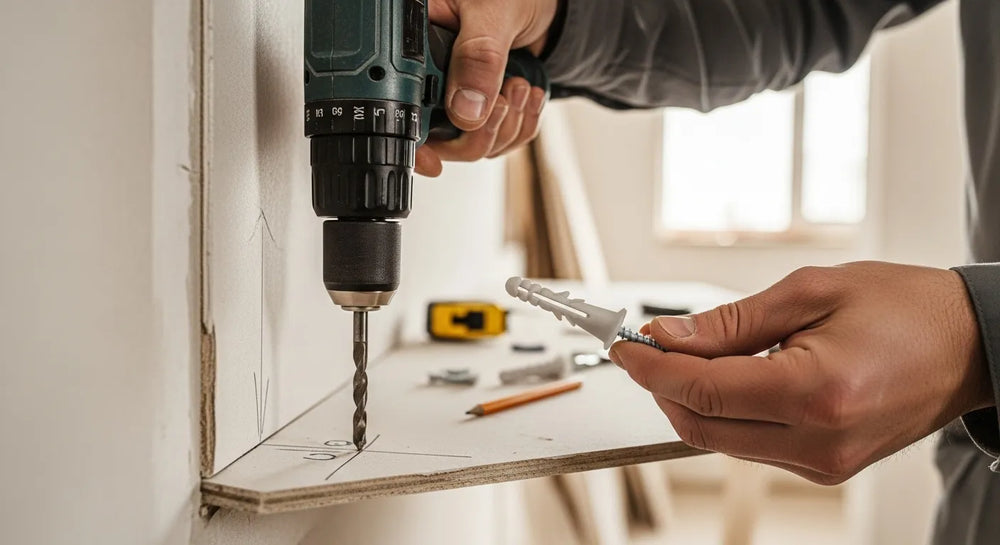
How to Screw into Wood with a Drill: Techniques for Durability
Table of Contents
- Understanding the Fundamentals: Wood & Fasteners
- Essential Tools for Precision Driving
- Mastering the Technique: How to Screw into Wood with a Drill
- Optimizing Your Procurement: The Maden.co Advantage for American-Made Fasteners
- Conclusion
- Frequently Asked Questions (FAQs)
In the demanding world of industrial manufacturing, MRO, and design engineering, the integrity of a simple wood joint can often dictate the success or failure of an entire project. A wobbly shelf, a splintered beam, or a fastener that fails under stress isn't just an inconvenience; it can lead to costly delays, material waste, and compromised structural integrity. The seemingly straightforward act of screwing into wood with a drill, when executed without precision and the right components, can quickly become a source of frustration and inefficiency. For a procurement manager overseeing a critical furniture assembly line, an MRO buyer replacing worn components on a wooden structure, or a design engineer prototyping a new product requiring robust wood joinery, mastery of this fundamental skill is non-negotiable. It's about more than just mechanical action; it’s about precision, understanding material science, and selecting the right, high-quality American-made components to ensure lasting durability and operational efficiency. This comprehensive guide will delve into the nuances of how to properly screw into wood with a drill, exploring everything from selecting the right fasteners to mastering drilling techniques, ensuring every connection you make is secure, reliable, and contributes to the overall success of your industrial projects.
Understanding the Fundamentals: Wood & Fasteners
Before any drilling commences, a foundational understanding of the materials at hand—the wood itself and the chosen fastener—is paramount. This knowledge forms the bedrock of a successful, durable connection.
The Nature of Wood: Hardwood, Softwood, and Engineered Lumber
Wood is a diverse material, and its characteristics directly influence how a screw interacts with it.
- Softwoods: Think pine, cedar, fir, and spruce. These woods are generally easier to penetrate, but they are also more prone to splitting if a pilot hole isn't used or if screws are overtightened. They have a more open grain structure.
- Hardwoods: Oak, maple, cherry, and walnut fall into this category. Hardwoods are dense and strong, offering excellent holding power. However, their density makes them resistant to screw penetration, making pilot holes absolutely essential to prevent splitting and to ease the driving process. Without a pilot hole, you risk snapping screws or burning out your drill's motor.
- Engineered Woods: Plywood, MDF (Medium-Density Fiberboard), particleboard, and OSB (Oriented Strand Board) are manufactured wood products. Each has unique properties. Plywood, with its layered construction, generally holds screws well, but the thinner plies can still split. MDF and particleboard are often very dense but have poor screw holding power in their edges and can easily strip out if screws are overtightened. Their composition also means they don't offer the same fiber grip as solid wood.
Understanding the specific wood you're working with will inform your choice of screw type, pilot hole size, and drilling technique.
Anatomy of a Screw: More Than Just a Point
A screw isn't just a simple threaded rod; each part is engineered for specific functions. Familiarity with these components helps in making informed selections.
- Head: The top part of the screw, designed to be driven by a specific driver bit. Common types include Phillips, Slot, Torx, Square, Hex, and combination heads. The head style also determines how the screw sits in the material (e.g., flat, round, oval, pan).
- Drive Type: Refers to the indentation on the screw head that accepts a screwdriver or drill bit. Choosing the correct drive type and bit is crucial to prevent cam-out (when the bit slips out of the screw head).
- Shank: The unthreaded portion of the screw directly beneath the head. In some wood screws, this smooth part allows the top piece of wood to be drawn tightly against the bottom piece without binding.
- Threads: The helical ridges that grip the wood fibers. The thread pitch (distance between threads) and form vary depending on the screw's intended use and the material it's designed to penetrate. Coarse threads are generally better for softwoods, while finer threads can be effective in hardwoods.
- Point: The tip of the screw. Sharp points aid in initial penetration, while self-tapping points can reduce the need for pilot holes in some softer materials.
Selecting the Right Screw for the Job: An Industrial Perspective
Choosing the correct screw is critical for the strength, longevity, and aesthetic of any project. The vast array of fasteners available can be overwhelming, but understanding the specific demands of your application simplifies the process. At Maden.co, we understand that procurement managers, MRO buyers, and design engineers require precise, reliable, and compliant components. Our extensive catalog of over 2.5 million American-made products from 800+ verified U.S. manufacturers is curated to meet these exacting standards.
Consider the material you are joining, the environment the joint will endure, and the desired finish. For traditional woodworking, cabinetry, or restoration projects where appearance and durability are equally important, specific types of screws excel. For instance, brass wood screws offer excellent corrosion resistance and an attractive finish, making them ideal for visible applications or historical reproductions. For projects demanding superior resistance to saltwater and harsh chemicals, such as marine applications or outdoor structures, silicon bronze fasteners provide unmatched longevity and performance.
- For traditional aesthetics and dependable performance in visible applications, especially where a distinct, classic finish is desired, a Round Slot Drive Brass Wood Screw offers a superb choice, marrying strength with visual appeal.
- When a flush, unobtrusive finish is paramount, particularly in high-end cabinetry, furniture, or fixtures, the precise engineering of a Flat Slot Drive Brass Wood Screw ensures a seamless integration, allowing for a smooth surface that can be painted or stained over.
- For the most demanding environments requiring exceptional corrosion resistance against saltwater, chemical exposure, or extreme weather, an Oval Slot Drive Silicon Bronze Wood Screw provides unmatched longevity and performance, making it the fastener of choice for marine construction, outdoor architectural elements, and specialized industrial applications.
Selecting a quality, American-made fastener not only ensures the physical integrity of your work but also supports robust supply chains and adherence to high manufacturing standards, a core value championed by Maden.co.
Essential Tools for Precision Driving
The success of screwing into wood with a drill hinges significantly on having the right tools and knowing how to use them effectively. Beyond just the drill itself, several other components play crucial roles.
The Drill: Your Primary Powerhouse
Your drill is the central instrument in this operation. Understanding its features is key to optimal performance.
-
Corded vs. Cordless:
- Cordless Drills: Offer unparalleled portability and convenience. Look for models with ample torque and battery life, especially for continuous industrial use. The voltage (e.g., 18V, 20V) indicates power, while ampere-hours (Ah) indicate battery runtime.
- Corded Drills: Provide consistent power without battery concerns, making them ideal for heavy-duty, prolonged tasks where an outlet is readily available.
- Clutch Settings (Torque Settings): This is perhaps the most critical feature for driving screws. The clutch allows you to set the maximum torque the drill will apply before it "slips," preventing you from overtightening screws, stripping screw heads, or damaging the workpiece. Always start with a lower clutch setting and increase it incrementally until the screw is driven firmly without stripping.
-
Speed Settings: Drills typically have multiple speed ranges (e.g., 1 or 2, sometimes more).
- Low Speed (High Torque): Ideal for driving larger screws, drilling through dense hardwoods, or when you need maximum control.
- High Speed (Lower Torque): Best for drilling smaller pilot holes and faster work in softer materials.
- Variable Speed Trigger: This allows you to control the rotational speed precisely. A light touch on the trigger provides slow, controlled starts, essential for accurate pilot holes and preventing cam-out when driving screws.
Drill Bits: The Unsung Heroes of Joinery
Just as crucial as the screw itself is the bit that prepares the wood and drives the fastener.
- Twist Drill Bits (Brad Point or Standard): Used for drilling pilot holes. Brad point bits are preferred for wood as their sharp tip prevents "walking" and creates a clean entry hole. The diameter of the pilot hole is critical and will be discussed in detail.
- Countersink Bits: These bits create a tapered recess around the pilot hole, allowing the screw head (especially flat or oval heads) to sit flush with or slightly below the surface of the wood. This is essential for a clean finish and to prevent snags. Some countersink bits also include a pilot hole drill bit, making it a two-in-one tool.
- Driver Bits: These are designed to engage with the screw head. Always match the driver bit type (Phillips, Slot, Torx, Square) and size precisely to the screw head to prevent cam-out and damage to the screw or bit. Keeping a set of high-quality, magnetic driver bits on hand is an investment in efficiency and frustration reduction.
Ancillary Tools for Enhanced Accuracy and Safety
While the drill and bits are primary, these additional tools ensure precision, safety, and a professional finish.
- Clamps: Essential for securely holding your workpiece in place, preventing movement during drilling and driving. This is particularly important for accuracy and safety.
- Measuring Tools: A tape measure, ruler, and marking pencil are indispensable for accurate screw placement.
- Safety Glasses: Non-negotiable. Wood chips, dust, and errant fasteners can cause serious eye injuries.
- Ear Protection: Recommended, especially for prolonged use of powerful drills.
- Dust Mask: Important when drilling or driving into materials that produce fine dust, such as MDF or treated lumber.
- Stud Finder (Optional): If screwing into existing structures, a stud finder helps locate framing members behind drywall.
By assembling the correct set of tools and understanding their proper application, you lay the groundwork for executing precise, durable wood joints, reducing project downtime and material waste—critical considerations for any procurement manager or MRO operation.
Mastering the Technique: How to Screw into Wood with a Drill
The process of screwing into wood with a drill is a sequence of precise steps, each contributing to the strength, durability, and aesthetic of the final joint. Skipping steps or rushing the process often leads to frustrating and costly errors.
Step 1: Meticulous Preparation and Safety Protocols
Proper preparation isn't just about setting up your tools; it's about creating a safe and efficient work environment.
- Safety First: Don your safety glasses before anything else. If necessary, use ear protection and a dust mask.
- Clear the Work Area: Ensure your workspace is free of clutter, tripping hazards, and anything that could interfere with the drilling process.
- Secure the Workpiece: This cannot be stressed enough. Use clamps to firmly hold the wood pieces together and to the workbench. A moving workpiece is a recipe for inaccurate holes, stripped screws, and potential injury.
- Mark Your Spots: Use a pencil to precisely mark the location for each screw. For critical applications, a center punch can create a small dimple that helps guide the drill bit exactly to your mark, preventing it from wandering (known as "walking").
Step 2: Selecting the Optimal Screw and Driver Bit
As discussed, the right fastener is key. Match the screw to the wood type, load requirements, and environmental conditions.
- Screw Length and Diameter: As a general rule of thumb for joining two pieces of wood, the screw should penetrate the bottom piece by at least half its thickness. The total length of the screw should be at least three times the thickness of the top piece of wood. The screw's diameter (gauge) should be appropriate for the anticipated load and the thickness of the wood; using too large a screw can easily split thinner stock.
- Driver Bit Match: This is crucial. Insert the correct driver bit (Phillips, Slot, Torx, Square, etc.) into your drill. Ensure it fits snugly into the screw head. A loose fit guarantees cam-out, stripping the screw head, and premature wear on your bit. If the bit is magnetic, that's an added advantage for holding the screw steady.
Step 3: The Critical Role of Pilot Holes
Drilling pilot holes is arguably the most vital step in preventing wood splitting and easing the screw driving process, especially in hardwoods. It's a non-negotiable best practice for professional-grade joinery.
-
Why Pilot Holes Are Essential:
- Prevent Splitting: By removing a small amount of wood where the screw will go, pilot holes relieve the pressure exerted by the screw's threads as it enters the material, significantly reducing the risk of splitting, particularly near edges or in dense woods.
- Ease Driving: A pilot hole creates a clear path, allowing the screw to drive in with less resistance. This reduces the strain on your drill and prevents screws from snapping.
- Accuracy: A well-drilled pilot hole ensures the screw follows a straight path, preventing it from veering off course.
-
Determining Pilot Hole Size:
- For the Screw's Shank: The pilot hole should be slightly smaller than the unthreaded shank of the screw (the smooth part just below the head). This allows the shank to pass through the top piece of wood without binding, ensuring the head pulls the pieces together tightly.
- For the Screw's Threads (Bottom Piece): For the threaded portion, the pilot hole should be slightly smaller than the screw's core diameter (the diameter of the metal rod before the threads). This allows the threads to bite firmly into the wood for maximum holding power. In practice, a single drill bit size often suffices for both, chosen to match the screw's core diameter or a bit smaller for hardwoods. When in doubt, perform a test on a scrap piece of the same wood.
-
Drilling Depth and Technique:
- Depth: Drill the pilot hole slightly deeper than the length of the screw's threaded portion that will penetrate the bottom piece of wood. An easy way to gauge depth is to wrap a piece of masking tape around your drill bit at the desired depth mark. Some drills also come with a depth stop attachment.
- Technique: Hold the drill firmly and perpendicular to the wood surface. Use a slow, controlled speed to start the hole, then increase speed once the bit has bitten. Maintain steady, even pressure. Avoid pushing too hard, which can overheat the bit or cause it to wander.
Step 4: Achieving a Flush Finish with Countersinking and Counterboring
For a professional appearance and to prevent surfaces from snagging, managing the screw head's protrusion is important.
-
When and Why:
- Countersinking: Creates a conical recess that allows flat-head or oval-head screws to sit flush with the surface. This is essential for a smooth finish that can be sanded, painted, or stained.
- Counterboring: Creates a wider, cylindrical hole that allows the entire screw head (and sometimes a washer) to sit below the surface. A plug of wood can then be inserted to completely conceal the screw, often used in fine woodworking or when deeper penetration is required.
- Using Countersink Bits: After drilling your pilot hole, use a countersink bit to create the appropriate recess. Adjust the depth until the screw head sits perfectly flush or slightly below the surface. Test on scrap material first to achieve the desired depth.
Step 5: Driving the Screw with Precision and Control
This is where the screw is finally set into place, and control is paramount to avoid stripping or overtightening.
- Set Drill Torque and Speed: Set your drill to a low-to-medium speed setting. Critically, set the clutch (torque setting) to a lower number initially. This prevents overtightening. You can always increase the setting if the screw isn't driving fully.
- Start Slowly and Apply Pressure: Place the screw tip into the pilot hole and the driver bit firmly into the screw head. With the drill perpendicular to the wood, start driving the screw slowly with light pressure. The slow start prevents cam-out and ensures the screw enters straight.
- Increase Speed and Maintain Pressure: Once the screw has bitten into the wood and is holding its line, you can gradually increase the drill speed. Continue to apply firm, steady, downward pressure, keeping the drill straight. Avoid wobbling, which can strip the screw head or enlarge the pilot hole.
- Stop at the Right Moment: As the screw head approaches the surface, slow down again. Allow the screw head to seat itself firmly without stripping the head or burying it too deeply. The clutch will engage (you'll hear a clicking sound) when the preset torque is reached, preventing overtightening. For non-clutch drills, you'll need to develop a feel for when to stop.
Step 6: Advanced Techniques for Challenging Scenarios
Even with best practices, some situations require specialized approaches.
- Driving Screws at an Angle (Toe-Nailing): Sometimes you need to join pieces where direct perpendicular driving isn't feasible. Toe-nailing involves driving screws at an angle. It requires careful pilot drilling and control to prevent splitting and ensure good grip.
- Using Screw Guides and Jigs: For highly repetitive tasks or intricate joinery, jigs and screw guides can ensure consistent angle and depth, significantly improving efficiency and quality in industrial settings.
- Dealing with Stripped Screws: If a screw head strips, stop immediately. Sometimes a larger driver bit or an impact driver can still catch. Otherwise, screw extractors are specialized bits designed to remove stripped or broken screws.
- Preventing Cam-Out: Beyond matching the driver bit, ensure consistent downward pressure and use a drill with a clutch. Torx (star drive) and Square (Robertson) drive screws are inherently more resistant to cam-out than Phillips or slot drives.
- Screwing into End Grain: This is notoriously difficult as end grain offers poor screw holding power and is highly prone to splitting. If unavoidable, use larger pilot holes, longer screws, and consider pre-drilling and filling with epoxy for added strength, or reinforce with brackets. Whenever possible, design joints to avoid screwing into end grain.
Mastering these techniques, coupled with the selection of high-quality, dependable American-made fasteners, transforms the act of screwing into wood from a simple task into a precise craft that ensures the longevity and structural integrity of all your projects.
Optimizing Your Procurement: The Maden.co Advantage for American-Made Fasteners
In the competitive landscape of industrial procurement, selecting the right components goes far beyond mere price. It encompasses quality, reliability, supply chain resilience, and a commitment to domestic manufacturing. At Maden.co, we embody these principles, offering a strategic advantage for procurement managers, MRO buyers, and design engineers.
Unwavering Commitment to American Manufacturing Pride
Our core mission at Maden.co is to democratize access to American manufacturing. We believe that sourcing U.S.-made products is not just a preference but a strategic imperative that strengthens our national industrial base. By connecting industrial buyers with over 2.5 million American-made products from our network of 800+ verified U.S. manufacturers, we are actively driving the manufacturing revival. Our vision is to become the definitive platform that proves American-made components are as accessible and convenient as any global alternative. This commitment is reflected in our tagline: "America's manufacturing revival is here." We operate on core values of American Manufacturing Pride, Digital Innovation, Supply Chain Transparency, Industrial Excellence, and Customer Empowerment. You can learn more about our mission and how we champion American manufacturing on our About Us page.
Digital Innovation and Supply Chain Transparency
In an era where supply chain disruptions are a constant threat, transparency and efficiency are paramount. Maden.co leverages digital innovation to provide an intuitive, user-friendly B2B marketplace. This platform offers unparalleled visibility into product specifications, availability, and lead times, helping you make informed procurement decisions. Our focus on supply chain transparency means you know exactly where your products come from—verified U.S. manufacturers—ensuring compliance with critical industry standards and eliminating uncertainty.
Enhancing Your Supply Chain Resilience and TCO
Sourcing through Maden.co is a strategic move to build a more resilient and efficient procurement process. By shortening supply lines and partnering with verified U.S. manufacturers, you significantly reduce lead times and mitigate the risks associated with geopolitical instability, tariffs, and distant logistics. This directly translates into an improved Total Cost of Ownership (TCO). Beyond the initial purchase price, the true cost includes shipping delays, quality control issues, and the administrative burden of dealing with complex international logistics. Maden.co minimizes these hidden costs, delivering tangible benefits to your bottom line. For instance, for a procurement manager under pressure to source a specific DIN 931 compliant hex cap screw for a critical assembly line, or a design engineer needing specific material certifications for a new prototype, or an MRO buyer facing an unexpected equipment breakdown, the ability to quickly find and finance a verified, U.S.-made part on Maden.co is a game-changer.
Customer Empowerment and Simplified Sourcing
Our platform is designed with industrial buyers in mind, offering a vast catalog of hard-to-find, U.S.-made components that might otherwise require extensive searching. We empower customers by streamlining the procurement process, reducing friction, and providing comprehensive product data. Whether you're searching for specific fasteners like a Round Slot Drive Brass Wood Screw for a heritage restoration, a Flat Slot Drive Brass Wood Screw for precision cabinetry, or an Oval Slot Drive Silicon Bronze Wood Screw for marine applications, our platform makes it accessible. If you have specific sourcing questions or need assistance navigating our extensive catalog, our dedicated team is ready to help; simply visit our Contact Us page.
Strategic Capital Management with Instant Financing
A key differentiator that further empowers our customers is our "Instant Financing" option. This feature is not merely a payment method; it's a strategic tool designed to help businesses manage cash flow effectively and facilitate larger-volume purchases without tying up immediate capital. For capital-intensive projects, where bulk orders of American-made fasteners or other industrial components are required, Instant Financing provides the flexibility needed to keep projects on schedule and within budget. You can apply for Instant Financing directly at checkout, simplifying your capital-intensive procurement.
For qualified U.S. manufacturers, Maden.co also offers an unparalleled opportunity to expand your market reach and connect with a broad base of industrial buyers. If you are a U.S. manufacturer committed to industrial excellence and seeking to expand your reach, we invite you to Register as a vendor and become a part of America's manufacturing revival.
Conclusion
Mastering how to screw into wood with a drill is a fundamental skill that underpins the quality and longevity of countless industrial, MRO, and design projects. From understanding the nuances of wood types and screw anatomy to executing precise pilot holes and controlling drill torque, each step contributes to a secure and reliable joint. The investment in proper technique and high-quality, American-made fasteners is an investment in durability, efficiency, and the overall success of your operations.
At Maden.co, we are dedicated to providing the essential components and the strategic advantages your business needs. By democratizing access to over 2.5 million American-made products from 800+ verified U.S. manufacturers, we empower procurement managers, MRO buyers, and design engineers to build more resilient supply chains, reduce TCO, and ensure compliance. Our commitment to American Manufacturing Pride, Digital Innovation, Supply Chain Transparency, Industrial Excellence, and Customer Empowerment positions us as your strategic partner in driving the American manufacturing revival.
We invite you to experience the Maden.co difference. Explore our extensive catalog of American-made industrial supplies and fasteners at Maden.co to find the precise components your projects demand, from specialized wood screws to critical machinery parts. Leverage our Instant Financing option at checkout to manage your capital effectively and streamline your large-volume purchases. Make the strategic choice for quality, reliability, and American excellence today.
Frequently Asked Questions (FAQs)
Q1: Why is it so important to drill a pilot hole before screwing into wood, especially hardwoods?
A1: Drilling a pilot hole is crucial for several reasons. It prevents the wood from splitting, which is particularly common in dense hardwoods or when screwing close to an edge. Pilot holes also make it easier to drive the screw, reducing the effort required and preventing the screw from snapping or the drill bit from stripping the screw head. Additionally, a pilot hole ensures the screw enters the wood straight and accurately, leading to a more secure and aesthetically pleasing joint.
Q2: How do I determine the correct size for a pilot hole?
A2: The correct pilot hole size depends on the screw's diameter and the type of wood. Generally, the pilot hole for the top piece of wood should match the diameter of the screw's unthreaded shank, allowing it to pass through freely. For the bottom piece of wood, the pilot hole should be slightly smaller than the screw's core diameter (the threaded part without the threads) so that the threads have enough material to bite into. A good practice is to hold the drill bit against the screw; the bit should be roughly the same width as the screw's core. Always test on a scrap piece of the same wood to ensure the screw drives in without excessive resistance but still holds firmly.
Q3: What does "torque setting" on a drill mean, and how does it help when screwing into wood?
A3: The torque setting, often indicated by numbered clutch settings on your drill, controls the maximum rotational force the drill will apply before the clutch disengages (you'll hear a clicking sound). This feature is invaluable for screwing into wood because it prevents overtightening. Overtightening can strip the screw head, damage the wood by creating a loose hole, or even cause the screw to snap. By setting the torque appropriately (starting low and increasing as needed), you ensure the screw is driven firmly to the desired depth without causing damage, leading to a more secure and professional finish.
Q4: How can sourcing through Maden.co benefit my industrial procurement process for fasteners and other components?
A4: Sourcing through Maden.co offers significant benefits for industrial procurement. Our platform democratizes access to over 2.5 million American-made products from 800+ verified U.S. manufacturers, enhancing your supply chain resilience by reducing lead times and mitigating risks associated with global logistics. This also leads to an improved Total Cost of Ownership (TCO) by reducing hidden costs like shipping delays and quality issues. Furthermore, we provide a streamlined, transparent digital marketplace that simplifies finding high-quality, compliant components, including specialized fasteners. A key differentiator is our Instant Financing option, available at checkout, which helps businesses manage cash flow for large-volume purchases, supporting your capital-intensive projects.


