
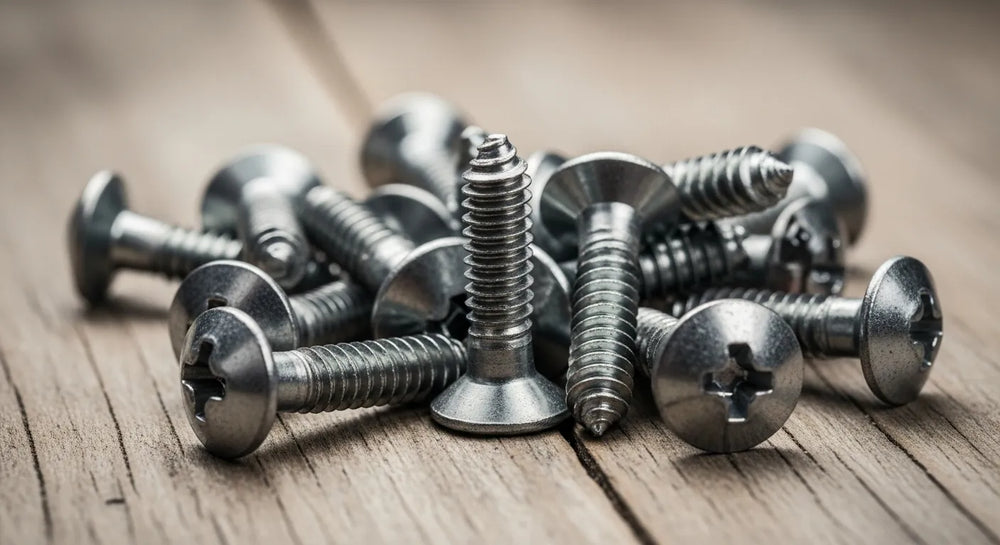
Do Sheet Metal Screws Always Need a Pilot Hole?
Table of Contents
- Introduction
- Understanding the Anatomy of Sheet Metal Screws
- The Pilot Hole Imperative: When and Why?
- When Pilot Holes Might Be Skipped (with Caveats)
- Precision Engineering: Sizing and Drilling Pilot Holes
- Specialized Screws and Their Pilot Hole Nuances
- Material-Specific Considerations
- Common Mistakes and Troubleshooting
- Optimizing Your Fastener Sourcing with Maden.co
- Conclusion
- Frequently Asked Questions (FAQ)
Introduction
In the intricate world of industrial assembly and manufacturing, where precision is not just a preference but a fundamental requirement, seemingly minor decisions can have profound impacts on structural integrity, project timelines, and ultimately, the Total Cost of Ownership (TCO). One such critical decision revolves around the simple question: "Do sheet metal screws always require a pilot hole?" For procurement managers seeking optimal material use, MRO buyers focused on robust repairs, and design engineers pushing the boundaries of component integration, a nuanced understanding of fasteners and their installation is indispensable. While the allure of time-saving methods often tempts omission, the truth is far more complex than a simple yes or no. The necessity of a pilot hole for sheet metal screws hinges on a delicate balance of material properties, screw design, application demands, and expected performance. This post will delve into these variables, providing a comprehensive guide to understanding when and why pilot holes are critical, when they might be circumvented, and how thoughtful sourcing strategies can elevate your manufacturing processes. Our aim is to equip you with the knowledge to make informed decisions that champion industrial excellence and ensure the longevity of your assemblies.
Understanding the Anatomy of Sheet Metal Screws
Before we tackle the pilot hole question directly, it's essential to establish a clear understanding of what sheet metal screws are, their various types, and how they function. These fasteners are a staple in countless industrial applications, from HVAC systems and automotive assembly to electronics enclosures and construction. Their versatility stems from their design, which allows them to create their own mating threads in the material they are driven into.
What Are Sheet Metal Screws?
At their core, sheet metal screws are a category of self-tapping fasteners characterized by their sharp, coarse threads and often a pointed tip. Unlike machine screws, which require a pre-tapped hole or a nut, sheet metal screws are designed to cut or form their own threads as they are driven into a substrate, primarily sheet metal, but also plastics, fiberglass, and even wood in some applications. This ability to create a secure, form-fitting thread in the parent material is what makes them so efficient for assembly, reducing the need for additional tapping processes.
Types of Sheet Metal Screws
The landscape of sheet metal screws is diverse, with designs tailored for specific material types and performance requirements. Understanding these distinctions is crucial when considering the need for a pilot hole.
-
Self-Tapping (Thread-Forming/Thread-Cutting) Screws: These are the most common type. They have sharp threads that, when driven into a pre-drilled or punched pilot hole, displace material to form a mating thread. They come in various point styles (Type A, B, AB) and thread designs.
- Thread-Forming Screws: These screws displace material around the pilot hole without removing it. They create a strong, clean thread. An example of advanced thread design that aids in efficient thread-forming and excellent pull-out resistance is the Hi-Lo Double Lead Thread Self-Tapping Sheet Metal Screw, available through our verified U.S. manufacturers.
- Thread-Cutting Screws: These screws feature cutting edges and flutes that remove material as they are driven, similar to a tap. This can reduce driving torque and minimize material stress.
- For general-purpose fastening in sheet metal, you might consider options like the Steel Zinc Plated Type A Pan Slot Drive Self-Tapping Sheet Metal Screw, a robust choice for many industrial applications. Similarly, for applications requiring a secure drive, the Steel Zinc Plated Type A Truss Square Drive Self-Tapping Sheet Metal Screw offers excellent performance.
- Self-Drilling Screws: A specialized subset, these screws incorporate a drill bit-like tip, allowing them to drill their own pilot hole and then tap and fasten in a single operation. This characteristic often leads to the assumption that no pilot hole is ever needed, but as we'll explore, this isn't always the case for all materials or thicknesses.
Understanding these foundational differences sets the stage for a deeper dive into the necessity and benefits of pilot holes.
The Pilot Hole Imperative: When and Why?
The central question, "Do sheet metal screws always require a pilot hole?" can largely be answered with a qualified "most often, yes, or it's highly recommended." While self-drilling screws offer an exception in specific contexts, the vast majority of sheet metal screw applications benefit significantly from, and often necessitate, a pre-drilled pilot hole. This decision is not arbitrary; it's rooted in the mechanics of fastening and the properties of the materials involved.
Defining a Pilot Hole
A pilot hole is a pre-drilled hole that serves as a guide for a screw. For sheet metal screws, its primary role is to create an initial pathway that is slightly smaller than the major diameter of the screw's threads but larger than its minor diameter (the core of the screw without the threads). This allows the screw to engage and form its threads properly without exerting excessive stress on the surrounding material or the fastener itself.
Factors Dictating Pilot Hole Necessity
Several critical factors influence whether a pilot hole is required and, if so, its optimal size. Ignoring these can lead to compromised joint strength, material damage, or fastener failure.
-
Material Type and Hardness:
- Harder Metals: When working with tougher materials like high-strength steel, stainless steel, or certain alloys, a pilot hole is almost always essential. These materials offer greater resistance to deformation, making it difficult for a screw to form threads without excessive force. Attempting to drive a screw into hard metal without a pilot can lead to stripped threads in the material, a broken screw, or damaged tools.
- Softer Metals: While softer metals like aluminum or thin gauge mild steel might seem more forgiving, they are prone to stripping if the pilot hole is too large or if no pilot is used, especially if the screw is over-driven. A correctly sized pilot hole helps prevent this, ensuring robust thread engagement.
- Plastics and Composites: For materials like plastics, fiberglass, or other composites, pilot holes are crucial not only for thread formation but also to prevent cracking, splitting, or delamination caused by the wedging action of the screw.
-
Material Gauge (Thickness):
- Thin Sheet Metal: For very thin sheet metal (e.g., 26 gauge or thinner), a pilot hole helps prevent distortion or buckling around the fastener. In some extremely thin, soft materials, a sharp-pointed self-tapping screw might sometimes be driven without a pilot, but this carries a significant risk of stripping the material and compromising the joint.
- Thicker Sheet Metal: As the thickness of the sheet metal increases, the resistance to thread formation also increases. For thicker gauges, a pilot hole becomes progressively more critical to ensure full thread engagement, reduce driving torque, and prevent screw breakage or material damage. Without a pilot, the screw will struggle to displace enough material to create threads, leading to weak connections.
-
Screw Type:
- Self-Tapping (Non-Drilling) Screws: These screws almost always require a pilot hole. Their design is focused on cutting or forming threads, not drilling through the material. This includes common types like our Steel Zinc Plated Type A Pan Slot Drive Self-Tapping Sheet Metal Screw and the Steel Zinc Plated Type A Truss Square Drive Self-Tapping Sheet Metal Screw.
- Self-Drilling Screws: As mentioned, these are designed to drill their own pilot hole. However, even with self-drilling screws, there are limitations. They are typically designed for specific material thicknesses and hardnesses. Attempting to use a self-drilling screw in material too thick or too hard for its drill point can lead to premature wear of the drill tip, screw breakage, or an improperly formed hole.
-
Application Requirements:
- Structural Integrity: In applications where the joint contributes to the structural integrity of the assembly, a properly sized pilot hole is non-negotiable. It ensures maximum thread engagement and pull-out resistance, leading to a stronger, more reliable connection.
- Aesthetic Finish: Omitting a pilot hole can lead to bulging, dimpling, or cracking around the fastener, compromising the aesthetic finish of the product.
- Vibration Resistance: For assemblies subjected to vibration, a precisely formed thread provides a tighter fit, which is crucial for maintaining joint integrity over time.
- Compliance and Standards: While there isn't a universal "pilot hole standard," adhering to best practices ensures compliance with broader quality and performance standards expected in industrial manufacturing. For a procurement manager under pressure to source a specific component or a design engineer needing material certifications, the ability to quickly find and finance a verified, U.S.-made part, ensuring compliance with critical industry standards, is a significant advantage.
-
Tooling and Installation Environment: The type of tools used and the control available during installation can also influence the decision. With precise torque control on power tools, there might be slightly more leeway, but even then, a pilot hole significantly reduces the risk of error.
Benefits of Using a Pilot Hole
The benefits of incorporating pilot holes into your fastening process far outweigh the perceived time savings of omitting them, especially in high-volume or high-stress industrial applications.
- Prevents Material Damage: The most immediate benefit is preventing issues like cracking, splitting, bulging, or delamination of the parent material. This is particularly vital for aesthetic components or materials sensitive to stress concentrations.
- Ensures Proper Thread Engagement: A pilot hole guides the screw, allowing its threads to properly form a secure, full mating thread within the material. This maximizes the screw's holding power and resistance to pull-out.
- Reduces Screw Breakage and Cam-Out: By reducing the initial resistance, pilot holes significantly lower the likelihood of the screw breaking during installation, especially for smaller diameter screws or those made from less ductile materials. It also reduces cam-out (when the driver slips out of the screw head), which can damage the screw head or the surrounding material. This translates to extended tool life and improved operational efficiency.
- Improves Fastener Alignment: A pilot hole ensures the screw is driven straight and accurately, preventing crooked fasteners that can weaken the joint or compromise the assembly's appearance. This precision is paramount for complex assemblies requiring tight tolerances.
- Enhanced Joint Strength and Durability: For MRO teams conducting repairs or design engineers developing new products, a strong, durable joint is non-negotiable. Pilot holes contribute directly to this by facilitating optimal thread formation and material integrity, leading to a connection that stands the test of time and operational stress.
- Consistency in Production: In manufacturing environments, repeatability and consistency are key. Using correctly sized pilot holes ensures predictable results across thousands of assemblies, minimizing rework and improving overall quality control.
When Pilot Holes Might Be Skipped (with Caveats)
While the general rule leans heavily towards using pilot holes, there are specific scenarios where they might be omitted or where a screw is designed to eliminate the need for a separate drilling step. However, each of these situations comes with important caveats.
The Role of Self-Drilling Screws
Self-drilling screws are engineered with a drill bit tip that allows them to pierce, drill, tap, and fasten in one continuous operation. This feature is their primary advantage, saving significant time in production by removing the need for pre-drilling.
- Mechanism: The tip of a self-drilling screw acts like a drill bit, creating its own hole. Once the hole is drilled, the threads engage and form in the material, securing the fastener.
-
Limitations: Despite their convenience, self-drilling screws are not a universal solution for skipping pilot holes.
- Material Thickness Capacity: Each self-drilling screw is designed for a specific range of material thicknesses. Exceeding this range can lead to the drill tip dulling or breaking before the threads can engage, or the screw may not fully seat.
- Material Hardness: While effective in many types of sheet metal, self-drilling screws can struggle with very hard or thick materials. The drill point may not be robust enough to penetrate, or the force required may cause screw breakage.
- Specific Designs for Specific Uses: There are different types of self-drilling screws (e.g., those for metal studs, those for heavier gauge steel). Using the wrong type for the application can lead to failure.
- Not a Universal Replacement: It's crucial to consult manufacturer specifications for self-drilling screws to understand their capabilities and limitations. They are excellent tools when used within their design parameters but should not be assumed to eliminate pilot holes for all fastening tasks.
Very Thin or Soft Materials
In rare instances involving extremely thin and soft sheet metal (e.g., aluminum foil-thin material or very soft plastics), a sharp-pointed self-tapping screw might be driven without a pilot hole.
- Still Risky: Even in these cases, the risk of material dimpling, distortion, or stripping the material due to insufficient thread engagement is high. The connection strength achieved would likely be minimal and unreliable for any critical application.
- Limited Application: This approach is generally unsuitable for industrial environments where durability, structural integrity, and consistency are paramount. For most professional applications, even in thin materials, a pilot hole provides a more reliable and higher-quality outcome.
The decision to skip a pilot hole, therefore, should always be approached with extreme caution and a thorough understanding of the specific fastener, material, and application requirements. When in doubt, a pilot hole is almost always the safer and more effective choice.
Precision Engineering: Sizing and Drilling Pilot Holes
When a pilot hole is determined to be necessary—which, as we've established, is most of the time—its correct sizing and precise drilling technique are paramount. An improperly sized pilot hole can negate its benefits, leading to issues as severe as if no pilot hole were used at all.
The Science of Pilot Hole Sizing
Determining the correct pilot hole diameter is a critical aspect of fastener engineering. The goal is to create an opening that allows the screw to be driven with reasonable torque while ensuring maximum thread engagement and preventing material damage.
- General Rule: The pilot hole should be slightly smaller than the minor diameter (the diameter of the screw's shank, excluding the threads) of the screw. This ensures that the screw threads have sufficient material to cut into and form a strong, secure connection. If the pilot hole is too large, the threads won't have enough material to grip, leading to a stripped hole and a weak joint. If it's too small, driving torque will be excessive, potentially causing the screw to break, cam-out, or deform the material.
-
Factors Influencing Size:
- Screw Diameter and Thread Pitch: These are the primary determinants. Coarser threads generally require a slightly larger pilot hole relative to the minor diameter to facilitate thread formation.
- Material Properties: The hardness and ductility of the parent material significantly affect pilot hole size. Harder, less ductile materials require a slightly larger pilot hole to reduce stress and prevent cracking. Softer, more ductile materials can accommodate a smaller pilot hole, allowing for greater thread engagement, but care must be taken to avoid over-tightening and stripping.
- Manufacturer Recommendations: Always refer to the screw manufacturer's specifications or charts when available. These recommendations are based on extensive testing and provide the most accurate guidance for optimal performance.
- Testing: For critical applications or new material combinations, conducting test installations on scrap material is invaluable. This allows you to fine-tune the pilot hole size for the best balance of driving torque and pull-out strength.
Drilling Techniques for Optimal Results
Even with the correct pilot hole size, poor drilling technique can compromise the integrity of the assembly.
- Correct Drill Bit Type: Use a high-quality drill bit designed for the material you are drilling. For metal, high-speed steel (HSS) bits are common, with titanium-coated or cobalt bits preferred for harder metals. Ensure the bit is sharp to create a clean, burr-free hole.
- Consistent Pressure and Appropriate Speed: Apply steady, consistent pressure during drilling. Too little pressure can cause the bit to "walk" or dull, while too much can cause overheating or bit breakage. Use the appropriate drill speed: generally, slower speeds for harder metals and larger bits, and faster speeds for softer metals and smaller bits. Excessive speed can generate heat, hardening the material or dulling the bit.
- Deburring: After drilling, especially in thicker metals, a burr (a raised edge) can form around the hole. This burr should be removed using a deburring tool or a larger drill bit to ensure the screw head sits flush and prevents damage to the mating surface or interference with the fastener's seating.
- Importance of Quality Tooling: Investing in quality drill bits and power tools with precise speed and torque control is crucial for consistent and reliable results in industrial settings. Cheap, dull bits or uncontrolled drilling can undermine even the most carefully planned pilot hole strategy.
For a procurement manager, MRO buyer, or design engineer, understanding these nuances isn't just about technical proficiency; it's about making choices that enhance product reliability, extend equipment lifespan, and ultimately, drive industrial excellence. Sourcing the right fasteners from verified U.S. manufacturers, like those found on Maden.co, complements this precision by ensuring you start with high-quality components.
Specialized Screws and Their Pilot Hole Nuances
The world of sheet metal screws is not monolithic. Specific designs, developed to address particular challenges, often have unique considerations regarding pilot holes. Understanding these specialized fasteners is key to optimizing performance and efficiency.
Hi-Lo Thread Screws
Hi-Lo screws are a prime example of innovative fastener design. They feature a unique double-lead thread pattern: a high, sharp thread and a low, blunt thread. This design offers several distinct advantages in various materials.
-
Benefits:
- Reduced Driving Torque: The dual thread design, particularly the sharp high thread, penetrates materials more easily, significantly reducing the torque required for installation. This minimizes operator fatigue and reduces the likelihood of cam-out.
- Increased Pull-Out Resistance: The high, sharp thread creates a deeper bite into the material, while the low thread adds stability, resulting in superior pull-out resistance compared to conventional screws.
- Less Material Displacement: Hi-Lo threads cause less material displacement, which is beneficial for brittle materials like plastics or for thin sheet metal where bulging is a concern.
- Pilot Hole Considerations: Due to their efficient thread-forming capabilities, Hi-Lo screws can often be used with pilot holes that are slightly larger than those required for standard screws, or even with no pilot hole in very specific, soft materials. However, for most industrial applications involving sheet metal, a pilot hole is still recommended to ensure optimal thread engagement and prevent material deformation. The exact size will depend on the material and thickness, but the goal remains the same: a balance between ease of driving and maximum holding power. For advanced fastening needs, explore our selection of Hi-Lo Double Lead Thread Self-Tapping Sheet Metal Screws from our network of verified U.S. manufacturers.
Type A, AB, B, BP Threads
Beyond Hi-Lo, various other thread types are commonly encountered in sheet metal screws, each with its own characteristics and pilot hole requirements.
- Type A: These screws feature a coarse thread and a sharp, gimlet point. They are generally suitable for fastening thin sheet metal and plastics. Due to their sharp point and coarse threads, they are effective at penetrating, but almost always require a pilot hole to ensure proper thread formation and prevent material deformation or stripping, especially in metals. You can find robust options like our Steel Zinc Plated Type A Pan Slot Drive Self-Tapping Sheet Metal Screw for your assembly needs.
- Type B: Characterized by a finer thread and a blunt point, Type B screws are designed for fastening into punched or drilled holes in heavier gauge sheet metal, non-ferrous castings, plastics, and composites. Their blunt point means they absolutely require a pilot hole, and sometimes a chamfered edge to aid entry, as they cannot initiate their own hole.
- Type AB: This type combines the sharp point of a Type A screw with the finer thread pitch of a Type B screw. This hybrid design allows for easier starting in punched or drilled holes, and provides greater resistance to pull-out than Type A screws in certain materials. While the sharp point aids initial engagement, a pilot hole is typically still necessary for secure and consistent fastening in sheet metal.
- Type BP: Similar to Type B, but with a conical, blunt point, often used in plastics to reduce stress. It also requires a pilot hole.
Each of these screw types, while designed for self-tapping, relies on the material's ability to accept thread formation. A precisely sized pilot hole significantly enhances this process, ensuring that the fastener performs as intended. Our platform at Maden.co connects you with a wide array of U.S.-made fasteners, including the Steel Zinc Plated Type A Truss Square Drive Self-Tapping Sheet Metal Screw, offering secure fastening solutions for various applications. Understanding these specific screw designs and their inherent pilot hole needs empowers procurement managers and design engineers to select the most appropriate fasteners, optimizing both assembly efficiency and the long-term integrity of their products.
Material-Specific Considerations
The interaction between the sheet metal screw and the parent material is a fundamental determinant of pilot hole necessity and size. Different materials behave uniquely under the stress of thread formation, requiring tailored approaches to fastening.
Steel and Stainless Steel
These are some of the most common materials in industrial applications, renowned for their strength and durability.
-
Pilot Holes Almost Always Recommended: For both carbon steel and stainless steel, pilot holes are almost always recommended, and often mandatory, to achieve strong, reliable joints. These metals, especially in thicker gauges or harder alloys, offer significant resistance to thread formation.
- Without a pilot hole, the screw is prone to breaking, stripping its own threads, or creating a weak connection due to insufficient thread engagement.
- For stainless steel, the material's work-hardening properties mean that forcing a screw without a pilot hole can make the material even harder, exacerbating the problem and potentially leading to galling (cold welding) between the screw and the base material.
- Hardness Affects Pilot Hole Size: The harder the steel, the more critical the pilot hole size becomes. A slightly larger pilot hole may be necessary for harder steels to reduce driving torque and prevent fastener breakage. Conversely, for very soft, thin steel, a smaller pilot might be used to maximize engagement, though careful torque control is crucial to prevent stripping.
Aluminum
Aluminum is softer and more ductile than steel, but it presents its own unique challenges for fastening.
- Prone to Stripping and Galling: While softer, aluminum is highly susceptible to thread stripping if the pilot hole is too large, or if the screw is over-tightened. It's also prone to galling, especially with stainless steel screws, where the two metals can seize together.
- Pilot Hole Crucial for Integrity: A precisely sized pilot hole is crucial for aluminum. It provides the necessary guidance and material for the screw to form strong threads without excessive deformation of the surrounding material. The ductile nature of aluminum means it can deform rather than cut, so a correctly sized pilot allows for optimal thread formation.
- Lubrication: In some cases, a small amount of lubricant on the screw can help prevent galling when fastening into aluminum, especially with stainless steel screws.
Plastics and Composites
These materials present a distinct set of challenges due to their often brittle nature and lower shear strength compared to metals.
- Pilot Holes Are Critical to Prevent Cracking: For most plastics (e.g., ABS, PVC, polycarbonate, nylon) and composites (e.g., fiberglass, carbon fiber), pilot holes are absolutely essential. The wedging action of a screw driven into an un-drilled hole can easily cause cracking, splitting, or stress fractures, particularly near edges or in areas subjected to dynamic loads.
- Ensuring Proper Thread Engagement: Plastics can deform significantly under pressure. A pilot hole ensures that the screw forms clean, robust threads, maximizing pull-out resistance and preventing loosening over time due to creep or vibration.
- Specialized Screws: It's worth noting that specialized screws for plastics often feature wider, coarser threads with a larger lead angle, designed to create strong threads in softer, more deformable materials while minimizing stress. Even with these specialized designs, a pilot hole remains vital.
Understanding the unique characteristics of each material and adapting pilot hole strategies accordingly is a hallmark of industrial excellence. Sourcing high-quality, U.S.-made fasteners tailored for these materials from platforms like Maden.co provides the foundational components for robust, long-lasting assemblies.
Common Mistakes and Troubleshooting
Even with the best intentions, errors can occur during the fastening process. Recognizing common mistakes related to pilot holes and knowing how to troubleshoot them can save valuable time and resources in industrial settings.
Stripped Threads
One of the most frequent and frustrating issues, stripped threads occur when the screw's threads fail to properly engage with the material, or when the material's threads are damaged.
-
Causes:
- No Pilot Hole: In materials where a pilot hole is needed, its absence can prevent thread formation entirely, leading to the screw simply spinning.
- Wrong Size Pilot Hole: A pilot hole that is too large means there isn't enough material for the screw threads to bite into, causing them to strip. Conversely, a pilot hole that is too small can lead to excessive driving torque, which may also strip the material's threads if the screw overpowers them.
- Over-tightening: Applying too much torque during installation can strip the newly formed threads in the parent material, especially in softer metals like aluminum or plastics.
-
Solutions:
- Proper Pilot Sizing: Always use the manufacturer's recommended pilot hole size or conduct tests to determine the optimal diameter for your specific material and screw combination.
- Torque Control: Use power tools with adjustable torque settings. For critical applications, consider using torque-limiting drivers or calibrating equipment regularly.
- Slow Down: Reduce driving speed as the screw approaches its fully seated position to prevent over-tightening.
Broken Screws
A snapped screw can halt production, requiring tedious extraction and rework.
-
Causes:
- No Pilot Hole or Pilot Too Small: Without an adequate pilot hole, the screw encounters excessive resistance, leading to torsional stress that can exceed its tensile strength.
- Excessive Force: Applying too much axial force while driving can cause the screw to buckle or snap.
- Hard Material: Attempting to drive a standard sheet metal screw into a material that is too hard for its design, especially without a pilot hole, significantly increases the risk of breakage.
- Poor Quality Screws: Inferior fasteners with inconsistent material properties or weak points are more prone to breaking.
-
Solutions:
- Correct Pilot Sizing: Ensure the pilot hole is appropriate for the screw and material.
- Controlled Driving: Use consistent, moderate pressure and appropriate driving speed.
- Select the Right Fastener: Choose screws made from appropriate materials and with suitable designs (e.g., self-drilling for specific applications, case-hardened screws for harder materials). Sourcing from verified U.S. manufacturers on Maden.co ensures you receive high-quality, dependable fasteners.
Material Deformation
Unsightly bulging, dimpling, or cracking around the fastener.
-
Causes:
- Incorrect Pilot Hole: A pilot hole that is too small, or the complete absence of one, forces the material to deform excessively as the screw forms its threads.
- Lack of Clamping: Insufficient clamping of the workpiece during fastening can allow the material to bulge or distort.
- Thin Material: Very thin materials are inherently more prone to deformation.
-
Solutions:
- Optimize Pilot Hole Size: Ensure the pilot hole allows for smooth thread formation without excessive material displacement.
- Proper Clamping: Securely clamp the workpiece to prevent movement and distribute stress.
- Consider Washers: Flat washers can help distribute the load and prevent dimpling around the screw head, especially in softer materials.
Misalignment
Screws that are driven crooked or off-center can lead to weakened joints, aesthetic flaws, and issues with mating components.
-
Causes:
- No Pilot Hole: Attempting to freehand-start a screw without a pilot hole makes it very difficult to ensure it enters the material perpendicularly.
- Inconsistent Drilling: An improperly drilled pilot hole (e.g., angled or off-center) will guide the screw incorrectly.
-
Solutions:
- Always Use a Pilot Hole: The pilot hole acts as a precise guide for the screw.
- Center Punch: Use a center punch to mark the exact drilling location before drilling the pilot hole, ensuring accuracy.
- Use a Drill Press: For critical applications, a drill press ensures perfectly perpendicular pilot holes, enhancing precision and repeatability.
Troubleshooting these common fastening issues often leads back to the initial decisions made regarding pilot holes and fastener selection. By understanding these interdependencies, procurement managers, MRO buyers, and design engineers can make proactive choices that enhance product quality and operational efficiency.
Optimizing Your Fastener Sourcing with Maden.co
The in-depth exploration of pilot holes for sheet metal screws underscores a fundamental truth in industrial manufacturing: precision, quality, and the right components are non-negotiable. For procurement managers juggling lead times and quality control, MRO buyers facing urgent equipment repairs, or design engineers specifying critical components, finding the exact, high-quality, U.S.-made fastener can often be a bottleneck. This is precisely where Maden.co steps in as a strategic partner.
Maden.co's Solution for Industrial Procurement
Our mission at Maden.co is to democratize access to American manufacturing. We achieve this by connecting industrial buyers like you with an unparalleled selection of over 2.5 million American-made products from our network of 800+ verified U.S. manufacturers. Our vision is to become the definitive platform that proves American-made components are as accessible and convenient as any global alternative, driving the manufacturing revival with our tagline: "America's manufacturing revival is here."
- Strategic Partnership for Supply Chain Resilience: In an era of unpredictable global supply chains, sourcing U.S.-made components is more than just a preference; it's a strategic imperative. By partnering with Maden.co, you enhance your supply chain resilience, reduce lead times, and gain greater transparency into your procurement process. This translates directly to improved Total Cost of Ownership (TCO) by mitigating risks of delays, quality issues, and unforeseen disruptions. Our entire business model is built on this principle; you can learn more about our commitment to championing American manufacturing on our About Us page.
- Industrial Excellence and Verified Quality: Our platform is founded on core values of American Manufacturing Pride, Digital Innovation, Supply Chain Transparency, Industrial Excellence, and Customer Empowerment. Every product listed on Maden.co comes from a verified U.S. manufacturer, giving you confidence in the quality, consistency, and compliance of your components. This commitment to industrial excellence ensures that when you specify a critical fastener, like a Hi-Lo double lead thread screw or a specific Type A pan slot drive screw, you're sourcing it from a trusted origin.
- Vast Selection, Reduced Procurement Friction: Imagine a single marketplace where you can find everything from standard self-tapping screws to specialized Hi-Lo designs, ensuring compliance with critical industry standards. Our comprehensive catalog reduces procurement friction, saving you invaluable time that would otherwise be spent sifting through multiple vendors or navigating complex international logistics. Whether you need the precision of a Hi-Lo Double Lead Thread Self-Tapping Sheet Metal Screw for a specialized application, or the reliability of a Steel Zinc Plated Type A Pan Slot Drive Self-Tapping Sheet Metal Screw for general assembly, our platform streamlines your search. For those requiring specific drive types like the Steel Zinc Plated Type A Truss Square Drive Self-Tapping Sheet Metal Screw, our robust search capabilities make finding the right part effortless.
- Empowering Businesses with Instant Financing: We understand that large-volume purchases or unforeseen MRO needs can strain cash flow. That's why Maden.co offers an "Instant Financing" option during checkout. This isn't just a payment method; it's a strategic tool designed to empower procurement managers and business owners to manage capital effectively and make larger, critical purchases without delay. You can apply for Instant Financing at checkout to streamline your capital-intensive projects, ensuring your operations never grind to a halt due to lack of immediate capital.
Join the American Manufacturing Revival
Maden.co is more than just a marketplace; it's a movement. We are dedicated to fostering a robust American manufacturing ecosystem.
- For Manufacturers: Are you a qualified U.S. manufacturer seeking to expand your market reach and connect directly with industrial buyers? We invite you to join our growing network. Register as a vendor and become a part of America's manufacturing revival.
- For Buyers: If you have specific sourcing questions, or require assistance navigating our extensive catalog, our expert team is ready to help you find the exact components you need, made right here in the USA. Contact Us for personalized support.
By choosing Maden.co, you're not just buying parts; you're investing in quality, reliability, and the future of American manufacturing.
Conclusion
The question of "do sheet metal screws always require a pilot hole" is seldom met with a simple "yes" or "no." As we've thoroughly explored, the decision is a nuanced one, heavily dependent on the type of screw, the material being fastened, its thickness, and the performance requirements of the final assembly. While self-drilling screws offer an exception in specific contexts, the overwhelming majority of industrial applications benefit immensely from, or critically necessitate, a precisely sized pilot hole. It is a fundamental practice that safeguards against material damage, ensures optimal thread engagement, prevents fastener breakage, and contributes directly to the overall strength, durability, and aesthetic quality of the assembled product.
For procurement managers, MRO buyers, and design engineers, embracing this level of precision and understanding is paramount to achieving industrial excellence. Making informed decisions about fastening isn't just about choosing a screw; it's about optimizing TCO, enhancing supply chain resilience, and ensuring the long-term integrity of your operations and products.
To navigate the complexities of fastener selection and procurement with confidence, we invite you to explore the vast catalog of U.S.-made fasteners at Maden.co. Our platform connects you with over 2.5 million verified American-made products, simplifying your search for high-quality components that meet your exact specifications. Furthermore, to support your critical projects and manage cash flow effectively, remember you can leverage our Instant Financing option directly at checkout to streamline your capital-intensive purchases. Join us in championing American manufacturing and build with unwavering reliability.
Frequently Asked Questions (FAQ)
1. What is the main difference between self-tapping and self-drilling screws regarding pilot holes?
Self-tapping screws are designed to cut or form their own threads in a material, but they typically require a pre-drilled pilot hole to initiate this process without damaging the material or the screw. Self-drilling screws, on the other hand, have a drill bit-like tip that allows them to drill their own pilot hole before tapping and fastening, usually eliminating the need for a separate drilling step, provided they are used within their specified material thickness and hardness limits.
2. How do I determine the correct pilot hole size for a sheet metal screw?
The correct pilot hole size is usually slightly smaller than the minor diameter (the core diameter) of the screw's threads. It depends on the screw's diameter and thread pitch, as well as the hardness and thickness of the material being fastened. Always consult the screw manufacturer's specifications or a pilot hole chart for precise recommendations. When in doubt for critical applications, it's advisable to conduct test installations on scrap material to find the optimal size that provides strong thread engagement with reasonable driving torque.
3. Can I use a self-tapping screw without a pilot hole in very thin sheet metal?
While it might seem possible in extremely thin or very soft materials, attempting to drive a self-tapping screw without a pilot hole carries significant risks. It can lead to material distortion (bulging or dimpling), stripped threads due to insufficient material engagement, or a weak, unreliable joint. For any application requiring durability and structural integrity, using a properly sized pilot hole is always the recommended best practice, even in thin materials, to ensure optimal performance and avoid costly rework.
4. Why is it critical for industrial applications to get pilot hole decisions right?
In industrial settings, getting pilot hole decisions right is critical for several reasons: it ensures maximum joint strength and pull-out resistance, prevents costly material damage (cracking, splitting, stripping), reduces fastener breakage, improves assembly consistency and efficiency, and contributes to the overall reliability and longevity of the final product. Incorrect pilot hole choices can lead to increased Total Cost of Ownership (TCO) through rework, warranty claims, and premature product failure, making it a key factor in achieving industrial excellence.


