
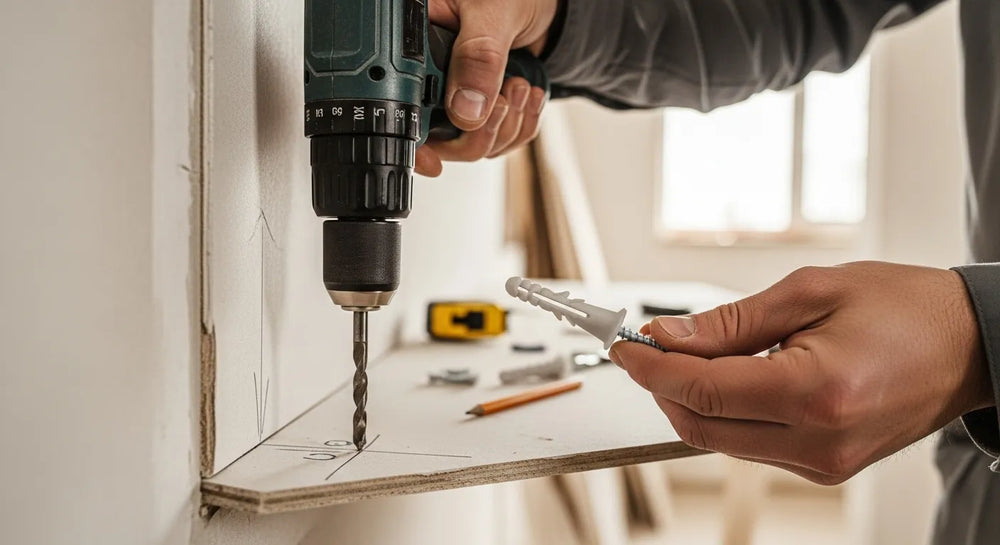
Drill Bit Size for Blue Drywall Anchors: A Pro Guide
Table of Contents
- Introduction
- What Exactly is a "Blue Drywall Anchor"?
- The Critical Measurement: Why Drill Bit Size is Paramount
- The Professional Standard: How to Determine the Correct Drill Bit
- Beyond the Standard: Other Anchors That Might Be Blue
- Professional Installation: From Pilot Hole to Secure Fixture
- The Strategic Advantage of Sourcing American-Made Components
- Conclusion: Precision and Partnership
- Frequently Asked Questions
Introduction
A maintenance supervisor is two hours into a critical overnight installation of new safety signage across a production facility. The project is on a tight deadline, but work grinds to a halt. The blue drywall anchors, procured from a new supplier to save a few dollars, are either cracking the wallboard or spinning uselessly in their holes. The drill bit size listed on the manifest doesn't match the anchors in the box. This scenario, a small detail derailing a major project, is an all-too-common reality in the world of MRO and industrial procurement. The humble drywall anchor becomes a significant point of failure, costing time, labor, and money.
This isn't just about hanging a picture frame; it's about the integrity of installations in commercial, industrial, and operational settings. Selecting the correct drill bit size for a blue drywall anchor is more than a simple measurement—it's the foundation of a secure and reliable fastening. This guide is designed for the professionals who can't afford that failure: the procurement managers, MRO buyers, and design engineers who understand that precision matters.
We will move beyond the simple answer to provide a comprehensive framework for selecting the right drill bit every time. We'll explore the different types of anchors commonly colored blue, detail the critical relationship between the anchor and the pilot hole, and outline a professional verification process. Furthermore, we'll discuss installation best practices and demonstrate how sourcing high-quality, American-made components from a trusted B2B marketplace like Maden.co is the ultimate strategy for eliminating these costly uncertainties and strengthening your supply chain.
What Exactly is a "Blue Drywall Anchor"?
In the industrial supply landscape, common trade terms can sometimes create confusion. "Blue drywall anchor" is a perfect example. While it most often refers to a specific type of anchor, the color blue is not a universal standard tied to a single size or function. For procurement professionals, understanding the nuances is key to ordering the correct component for the job.
The Common Candidate: The Ribbed or Conical Plastic Anchor
Most frequently, the term "blue drywall anchor" refers to a standard-duty ribbed or conical plastic anchor designed for use with a #6, #8, or #10 screw. These are some of the most ubiquitous fasteners used for light to medium-duty applications in drywall.
- Material: Typically made from plastic (polyethylene) or, for higher-quality versions, nylon. Nylon offers superior durability, temperature resistance, and long-term reliability compared to less robust plastics that can become brittle over time. This distinction is critical in commercial environments where fixtures are meant to be permanent and secure.
- Design: The anchor features a ribbed or finned exterior. These ribs are designed to bite into the surrounding drywall as the screw is driven in, creating friction and preventing the anchor from spinning in its hole. The anchor is split, allowing it to expand and create a secure wedge behind the wallboard.
- Application: Ideal for mounting items like smoke detectors, thermostats, small electrical conduits, lightweight shelving, and signage. Their holding power is dependent on the shear strength of the drywall itself.
For general-purpose use where consistency and reliability are essential, sourcing a product like a U.S.-manufactured Ribbed Plastic Anchor from a verified supplier ensures that the material specifications and dimensions are consistent from one batch to the next, a guarantee not always available with generic, bulk-packaged alternatives.
The Importance of Material Consistency
For an MRO buyer stocking a maintenance crib or a design engineer specifying components for a new product assembly, material consistency is non-negotiable. An anchor that works perfectly from one box might fail from the next if the polymer blend is inconsistent. This is a primary risk of relying on untraceable global supply chains. At Maden.co, our entire mission is built on promoting supply chain transparency. We connect you with over 800 verified U.S. manufacturers, ensuring that the components you receive meet the standards you expect, safeguarding the integrity of your work and the reputation of your business.
The Critical Measurement: Why Drill Bit Size is Paramount
The entire mechanical principle of a drywall anchor relies on a precise level of interference fit. The pilot hole must be large enough to allow the anchor to be installed without damage, yet small enough to ensure the anchor's ribs can engage firmly with the drywall. The expansion caused by the screw then locks it into place. An incorrect drill bit size completely invalidates this mechanism.
Consequence of a Drill Bit That Is Too Small
If the pilot hole is too small, the MRO technician will encounter immediate problems:
- Installation Failure: The anchor will not fit into the hole. Attempting to force it with a hammer can lead to the anchor collapsing, mushrooming at the head, or breaking entirely.
- Drywall Damage: The force required to hammer in a tight anchor can cause "blowout" on the back of the drywall, compromising its structural integrity. It can also create unsightly cracks or crushing on the visible surface, requiring cosmetic repair.
- Compromised Anchor: Even if the anchor is forced in, its body may be scraped, stripped, or stressed, creating a weak point that could lead to failure under load.
Consequence of a Drill Bit That Is Too Large
A pilot hole that is too large is arguably a more dangerous failure, as it can go unnoticed until it's too late.
- Anchor Spin: When the technician attempts to drive the screw, the entire anchor assembly will spin freely in the oversized hole. The ribs have nothing to grip, and the anchor cannot expand.
- Zero Holding Power: An anchor that spins has no load-bearing capacity. The screw may feel tight, but it is only engaged with the plastic of the anchor itself, not locked against the wall. Any weight applied to the fixture will cause it to pull out immediately.
- Project Delays and Rework: For a commercial contractor installing hundreds of fixtures, discovering that the wrong drill bit was used across the board can mean hours or even days of rework—drilling new holes, patching old ones, and incurring significant labor costs. This is a direct hit to the project's profitability and timeline.
This is where Total Cost of Ownership (TCO) becomes a critical metric. A slightly cheaper, poorly documented anchor that leads to installation failure and rework is infinitely more expensive than a properly specified, domestically produced component with clear instructions. Our goal is to empower our customers to make procurement decisions that enhance TCO, not just minimize upfront part cost.
The Professional Standard: How to Determine the Correct Drill Bit
For a standard blue conical anchor intended for a #8 screw, the most common drill bit size required is 3/16 inch. However, a professional never assumes. Verification is the key to repeatable, reliable results and is a core tenet of Industrial Excellence.
Method 1: Consult the Manufacturer's Technical Data (The Gold Standard)
The most reliable source of information is always the manufacturer. High-quality fasteners will come with packaging or an accompanying technical data sheet that explicitly states the required pilot hole diameter.
When sourcing through a platform like Maden.co, you gain access to a catalog of over 2.5 million American-made products, often with detailed specifications available directly on the product page. This digital innovation in the B2B space eliminates the guesswork. For example, the product details for a high-quality Medium Duty Nylon Wall Anchor for #8 Screws will confirm the use of a 3/16" drill bit, allowing a procurement manager to order both the anchors and the correct bits with complete confidence.
Method 2: Direct Measurement with Calipers
In situations where packaging is missing or you need to verify a bulk bin of anchors, a pair of digital or dial calipers is an essential tool.
- Identify the main body or shank of the anchor, below the collar or lip.
- Measure the diameter of the shank at its widest point, often across the tips of the ribs.
- This measurement is your required drill bit size. If the measurement is slightly under a standard fractional drill bit size (e.g., it measures 0.185 inches), you would use the corresponding bit, which is 3/16" (0.1875 inches).
This hands-on verification provides certainty and prevents costly errors.
Method 3: The Test Hole Technique
For critical applications or when using a new brand of anchors for the first time, the test hole method is a prudent final check.
- Find a scrap piece of the same drywall being used on the project.
- Drill a pilot hole using the drill bit size you believe to be correct.
- Attempt to install the anchor. It should require a gentle tap from a hammer or the handle of a screwdriver to seat fully. It should not slide in effortlessly, nor should it require excessive force.
- Drive in the corresponding screw. The anchor should expand and lock securely without spinning.
This simple, five-minute test can prevent hours of frustration and rework on the job site.
Beyond the Standard: Other Anchors That Might Be Blue
While the 3/16" drill bit is the answer for the most common blue anchor, procurement professionals must be aware of other anchor types that may come in a blue color, each with unique installation requirements. Mistaking one for another can lead to significant issues.
Self-Drilling Drywall Anchors
These innovative anchors are a game-changer for high-volume installations where speed and efficiency are paramount. Often made of nylon or a zinc alloy (ZAMAK), these anchors feature an aggressive, drill-like tip that bores its own perfectly sized hole in the drywall.
- Installation: No pre-drilling is required. The anchor is driven directly into the drywall with a Phillips head screwdriver or a screw gun set to a low torque.
- Benefits: Dramatically reduces installation time and eliminates the need to carry separate drill bits. This is a perfect example of a component that directly reduces labor costs.
For MRO managers looking to improve the efficiency of their maintenance teams, stocking a product like the U.S.-made Medium Duty Self-Drilling Drywall Anchor can provide a significant return on investment through saved labor hours.
Sleeve-Type Anchors and Toggles
Heavier-duty anchors, such as sleeve-style anchors or toggle bolts, might also be manufactured with blue plastic or rubber components. These are designed for much heavier loads and have completely different installation requirements.
- Sleeve-Type Anchors: These require a much larger pilot hole, often 1/2" or greater, to accommodate the entire sleeve mechanism.
- Toggle Bolts: These require a large hole to allow the spring-loaded "wings" to pass through the drywall before they expand in the cavity behind it.
It is crucial to never mistake a standard conical anchor for one of these heavy-duty types. Always refer to the product specifications to ensure you are using the correct fastener for the load requirements and drilling the appropriate-sized hole. If you have specific sourcing questions about finding the right heavy-duty anchor for your application, our team is ready to help.
Professional Installation: From Pilot Hole to Secure Fixture
Using the correct drill bit is the first and most critical step, but professional installation involves a complete process that ensures maximum holding power and a clean finish.
A Step-by-Step Guide for Flawless Installation
- Mark Your Location: Use a pencil to precisely mark the center of your desired mounting point. Use a stud finder to ensure you are not attempting to drill into a wall stud, ceiling joist, or fire block. If you hit wood, a standard wood screw is the correct fastener, not a drywall anchor.
- Drill the Pilot Hole: Mount the verified drill bit (e.g., 3/16") into your drill. Place the tip of the bit directly on your pencil mark. Drill straight into the wall, keeping the drill perfectly perpendicular (90 degrees) to the drywall surface. Avoid angling the drill, as this will create an elliptical hole that will not hold the anchor securely. Drill just deep enough to pass through the drywall.
- Clear the Debris: After drilling, a small amount of gypsum dust may remain in the hole. Gently blow it out or use a small brush to clear it. This ensures the anchor makes full contact with the interior of the hole.
- Insert the Anchor: Place the tip of the anchor into the pilot hole. It should be a snug fit. Gently tap the collar of the anchor with a rubber mallet or the plastic handle of a screwdriver until the collar is flush with the surface of the drywall.
- Set the Screw: Place your fixture over the anchor, insert the correct size screw through the fixture and into the anchor. Use a screwdriver (manual or electric on a low-torque setting) to drive the screw. You will feel resistance as the screw engages the anchor and causes it to expand.
- Tighten to Snug: Continue tightening until the screw is snug and the fixture is held firmly against the wall. Do not over-tighten. Over-tightening is a common mistake that can strip the anchor's grip inside the drywall or even break the anchor itself, rendering it useless.
The Strategic Advantage of Sourcing American-Made Components
The scenario of the failed anchor installation is a direct result of a breakdown in supply chain integrity. When you prioritize sourcing verified, American-made components, you are implementing a risk mitigation strategy for your entire operation. This aligns with our core belief at Maden.co: America's manufacturing revival is here, and it's built on a foundation of quality, transparency, and reliability.
Certainty in a World of Variables
When you source fasteners from our network of over 800 verified U.S. manufacturers, you gain certainty.
- Material Traceability: You know the nylon or plastic meets domestic quality standards.
- Dimensional Accuracy: A #8 anchor is a #8 anchor, and its specified 3/16" pilot hole is accurate, box after box, pallet after pallet.
- Compliance and Certification: For projects requiring specific standards, sourcing domestically simplifies the compliance process.
Our entire business model is built on the principle of strengthening domestic manufacturing. You can learn more about our mission to champion American manufacturing here. This commitment translates directly into a more resilient and predictable supply chain for your business. For the U.S. manufacturers who share this commitment to excellence, we invite you to join our growing marketplace. Register as a vendor and join the American manufacturing revival.
Enhancing Procurement with Modern Tools
In the B2B world, procurement is about more than just finding parts; it's about managing cash flow, meeting project deadlines, and optimizing operational budgets. For a project manager outfitting a new commercial building or an MRO buyer conducting a major stock-up, the ability to procure thousands of high-quality fasteners without disrupting operational capital is a significant advantage. This is where modern procurement tools become a strategic asset. We offer an Instant Financing option directly at checkout, transforming a simple transaction into a strategic financial tool. This allows businesses to acquire the necessary volume of components to see a project through to completion without capital constraints. You can apply for Instant Financing at checkout to streamline your capital-intensive projects.
Conclusion: Precision and Partnership
The correct drill bit for a common blue drywall anchor is, in most cases, 3/16 of an inch. But as we've seen, the professional answer is far more nuanced. It involves understanding the specific type of anchor, a commitment to verification, adherence to proper installation techniques, and—most importantly—a strategic approach to sourcing.
Choosing to work with high-quality, American-made components from a trusted marketplace is a decision that pays dividends in reliability, efficiency, and peace of mind. It eliminates the costly risks associated with inconsistent, poorly documented products and replaces them with the certainty of a transparent and resilient domestic supply chain. This is the essence of customer empowerment: providing the tools, the products, and the platform to build, maintain, and operate with confidence.
Don't let a one-cent fastener become a thousand-dollar problem. Explore the Maden.co catalog today to find the precise, U.S.-made anchors, fasteners, and MRO components your projects demand. Streamline your procurement process, manage your cash flow with financing at checkout, and build with the confidence that comes from using the best America has to offer.
Frequently Asked Questions
1. What is the most common drill bit size for a standard blue drywall anchor? The most common and widely accepted drill bit size for a standard blue ribbed or conical drywall anchor, typically designed for a #6 to #10 screw, is 3/16 inch. However, it is always best practice to verify this by checking the manufacturer's specifications on the packaging or measuring the anchor with calipers.
2. What happens if I use a drill bit that's too big for my anchor? Using a drill bit that is too large is a critical installation error. The anchor will fit loosely in the hole and will spin when you try to drive the screw. This prevents the anchor from expanding and locking into the drywall, resulting in zero holding power and a complete failure of the fastening.
3. Do I always need to drill a pilot hole for a drywall anchor? No. While traditional conical, ribbed, and sleeve-style anchors require a precisely drilled pilot hole, modern self-drilling anchors do not. These anchors have a drill point tip that bores its own hole as you drive it into the drywall, significantly speeding up the installation process for light and medium-duty applications.
4. Why should I choose U.S.-made anchors over cheaper alternatives? Choosing verified, U.S.-made anchors provides critical advantages for professional and industrial applications. You benefit from superior material consistency, accurate and reliable dimensional specifications, and clear technical data. This reduces the risk of installation failures, rework, and project delays, lowering the Total Cost of Ownership (TCO) and ensuring a more secure, reliable final product while supporting the domestic supply chain.


