
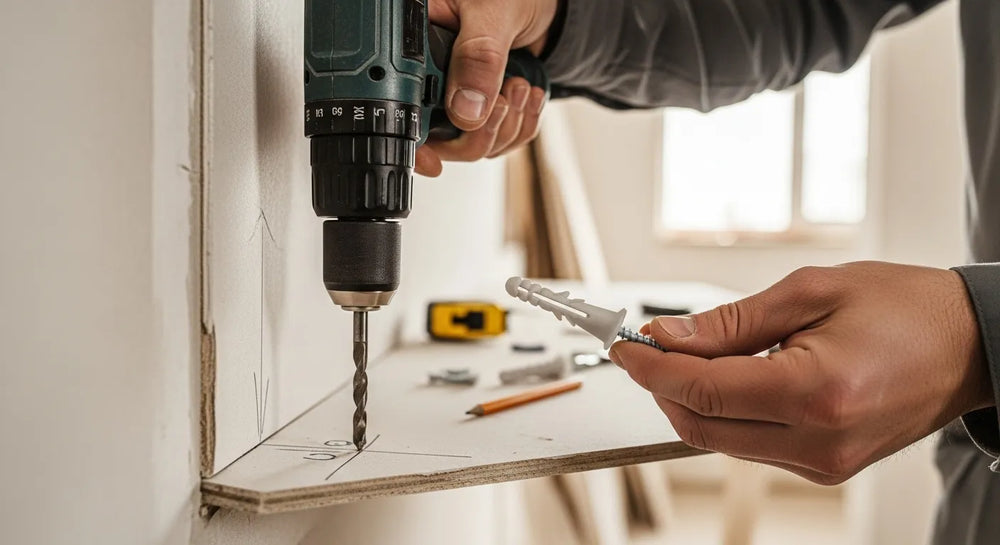
Drill Screws into Wood: Precision & Durability
Table of Contents
- Introduction
- The Foundation: Understanding Wood Types and Their Impact
- Anatomy of a Wood Screw: Beyond the Basics
- Essential Tools for Precision Fastening
- Step-by-Step Guide: How to Screw into Wood with a Drill Professionally
- Enhancing Durability and Performance Through Strategic Sourcing
- Common Mistakes and How to Avoid Them
- Conclusion
- Frequently Asked Questions (FAQ)
Introduction
In the demanding world of industrial operations, procurement, and engineering design, the seemingly simple act of screwing into wood can have profound implications. A fastener failure, whether due to improper technique or an unsuitable component, can cascade into costly project delays, equipment malfunction, or even structural compromise. For a design engineer finalizing critical prototypes, an MRO buyer dealing with an urgent repair, or a procurement manager ensuring long-term structural integrity, mastering this fundamental skill—and sourcing the right components—is non-negotiable. This isn't just about driving a screw; it's about embedding reliability, ensuring compliance, and building resilience into every project. This comprehensive guide delves into the professional techniques for screwing into wood with a drill, exploring everything from wood science and fastener metallurgy to strategic sourcing, ultimately proving that precision in fastening is a cornerstone of operational excellence.
The Foundation: Understanding Wood Types and Their Impact
Before reaching for the drill, a true professional understands the material at hand. Wood is not a monolithic substance; its characteristics vary dramatically, directly influencing the choice of fastener, drill bit, and technique required for optimal results.
Hardwood vs. Softwood: A Critical Distinction
The primary differentiator in wood types is density, which broadly categorizes them into hardwoods and softwoods.
- Hardwoods: Derived from deciduous trees (e.g., oak, maple, cherry, walnut), hardwoods are known for their dense cellular structure, strength, and durability. Their tight grain makes them resistant to splitting but also more challenging to penetrate. When working with hardwoods, the importance of a correctly sized pilot hole cannot be overstated. Without it, the immense friction and resistance can lead to screw breakage, wood splitting, or stripped screw heads. The density also means that screws bite more firmly, providing superior holding power once installed.
- Softwoods: Originating from coniferous trees (e.g., pine, cedar, fir), softwoods are generally less dense and easier to work with. While they are more forgiving in terms of penetration, their softer fibers are more prone to splitting if a pilot hole is too small or absent. Over-driving screws is also a common issue, as the threads can easily strip the wood, compromising the fastener's holding power. Softwoods are also more susceptible to movement due to moisture changes, which can loosen fasteners over time if not properly selected.
Engineered Wood Products (EWP)
Beyond natural lumber, modern construction and manufacturing frequently utilize engineered wood products, each presenting unique fastening challenges.
- Plywood: Composed of multiple thin layers (veneers) of wood glued together, with grains alternating directions for strength. Fastening into plywood generally offers good holding power, but care must be taken to avoid splitting the outer veneers, especially near edges. Pilot holes are recommended for smaller screws and critical applications.
- MDF (Medium-Density Fiberboard): Made from wood fibers highly compressed and bonded with resin. MDF is very dense and dimensionally stable but has poor screw retention along its edges and can swell if exposed to moisture. Special screws with coarser threads or pre-drilling and using inserts may be necessary for robust connections.
- Particle Board: Similar to MDF but made from larger wood particles. It's less dense and weaker than MDF, making it more prone to screw stripping and crumbling, particularly along edges. Fasteners designed for particle board, often with large threads and a strong bite, are crucial, along with precise pilot holes to avoid blow-out.
Treated Lumber and Specialty Woods
Certain applications demand specific wood treatments or unusual species, which introduce further considerations.
- Pressure-Treated Lumber: Often used for outdoor and structural applications, this wood is infused with chemicals to resist rot and insects. These chemicals can be corrosive to standard fasteners. Therefore, hot-dipped galvanized, stainless steel, or specifically coated fasteners are mandatory to prevent premature corrosion and ensure the longevity of the assembly.
- Exotic Woods: Some dense, oily, or acidic exotic woods (e.g., Ipe, Teak) can corrode fasteners or dull tools rapidly. Stainless steel screws are often preferred, and pre-drilling is almost always necessary due to their extreme density.
Understanding these material characteristics is the first step towards achieving Industrial Excellence in every fastening task.
Anatomy of a Wood Screw: Beyond the Basics
Selecting the correct wood screw for a given application is as critical as the technique used to drive it. The vast array of options available reflects the diverse demands of industrial and manufacturing environments. At Maden.co, we understand that every detail of a fastener contributes to the overall integrity and Total Cost of Ownership (TCO) of your projects.
Screw Materials and Their Applications
The material composition of a screw dictates its strength, corrosion resistance, and suitability for various environments.
- Brass: Valued for its aesthetic appeal and good corrosion resistance in many indoor environments, brass screws offer a classic, refined look. They are softer than steel, however, and require careful pilot hole drilling and controlled torque to prevent head stripping or screw shearing. For applications prioritizing appearance and moderate strength, such as cabinetry, furniture, or decorative hardware, a U.S.-made Round Slot Drive Brass Wood Screw can be an ideal choice, offering both functionality and a quality finish. Similarly, for flush-mounted components where a smooth surface is desired, a Flat Slot Drive Brass Wood Screw provides a reliable, aesthetically pleasing solution.
- Steel: The most common screw material, offering high strength. Steel screws are often coated (e.g., zinc-plated for basic corrosion resistance, black oxide for minimal glare and some protection) to prevent rust. They are the workhorse for general construction and industrial fastening where high shear and tensile strength are paramount.
- Stainless Steel: Offers superior corrosion resistance compared to plain or coated steel, making it indispensable for outdoor applications, marine environments, and situations involving moisture or corrosive chemicals. Stainless steel screws come in various grades (e.g., 304, 316), with 316 offering even higher resistance to saltwater.
- Silicon Bronze: A highly specialized alloy known for exceptional corrosion resistance, often surpassing even stainless steel in certain marine and chemically aggressive environments. Silicon bronze screws are incredibly durable and resistant to fatigue, making them ideal for high-performance applications where longevity and structural integrity in harsh conditions are paramount. For example, when securing critical components in marine construction or outdoor architectural features, an Oval Slot Drive Silicon Bronze Wood Screw provides unmatched reliability and resistance to degradation.
Head Types, Drive Types, and Thread Pitches
These features determine how a screw is driven, how it finishes, and its holding power.
-
Head Types:
- Flat Head: Designed to be countersunk flush with or below the surface of the wood, providing a smooth finish. Requires a countersink bit for proper installation.
- Round Head: Sits proud of the surface, offering a decorative look or providing extra bearing surface.
- Oval Head: A decorative variation of the flat head, with a rounded top that slightly protrudes when countersunk.
- Pan Head: A common choice for sheet metal and general purpose, with a slightly rounded top and flat underside.
- Hex Head: Used for heavy-duty applications, driven with a wrench or socket, providing high torque capabilities.
-
Drive Types: The recess in the screw head that accepts the driver bit.
- Slotted: Traditional, simple, but can be prone to cam-out (the driver slipping out). Often seen in historical restorations or decorative brass screws.
- Phillips: Cross-shaped recess, designed to reduce cam-out compared to slotted, but still possible with high torque.
- Pozi-drive: Similar to Phillips but with additional small indentations, providing better grip and reducing cam-out.
- Torx (Star Drive): Six-point star shape, offers excellent cam-out resistance and superior torque transfer. Widely used in deck screws and high-performance applications.
- Square (Robertson): Square recess, very good cam-out resistance, popular in Canada and with cabinetmakers.
-
Thread Pitches:
- Coarse Thread: Widely spaced, deep threads provide excellent grip in softwoods and particleboard, as they displace more material.
- Fine Thread: More threads per inch, shallower, better for hardwoods where they create less resistance and are less likely to split the wood. They also provide a stronger connection in very dense materials.
The Role of Shank and Tip Design
The unthreaded portion (shank) and the very end (tip) of the screw also play crucial roles.
-
Full Thread vs. Partial Thread:
- Full Thread: Threads extend the full length of the screw. Ideal for maximizing holding power in softer materials and for applications where clamping force isn't critical.
- Partial Thread: Features an unthreaded shank near the head. This shank pulls the two pieces of wood together, creating a stronger clamping force and preventing the upper piece from being "jacked away" by the threads. Essential for strong structural connections.
-
Tip Design:
- Sharp Point: Standard for most wood screws, requires a pilot hole.
- Self-Tapping (Type 17 Point): Features a cutting flute near the tip that helps clear chips and reduce resistance, often used in hardwoods or for self-drilling applications.
- Blunt/Gimlet Point: Less common for wood screws, usually found on machine screws.
By selecting the appropriate U.S.-made fastener, procurement managers and design engineers ensure not only immediate project success but also the long-term integrity and reliability that defines true Industrial Excellence. On Maden.co, our platform helps you efficiently navigate these specifications to find the exact component you need from our network of verified American manufacturers.
Essential Tools for Precision Fastening
The quality of your tools directly impacts the quality of your work. For professional-grade fastening into wood, selecting the right drill, bits, and accessories is as crucial as understanding the materials and fasteners themselves. Digital Innovation, one of our core values at Maden.co, extends to how professionals approach their craft, leveraging the best tools for the job.
Drill Types and Their Best Use Cases
The market offers various drill types, each with specific advantages.
- Corded Drills: Provide consistent power output without the need for battery charging. They are typically more powerful and lighter (due to no battery pack) than cordless drills of comparable output, making them ideal for stationary, high-volume work or applications requiring continuous high torque.
- Cordless Drills (Drill/Drivers): Offer unparalleled portability and flexibility, powered by rechargeable batteries (typically Li-ion). They come with adjustable clutch settings to prevent over-driving and stripping screws, as well as variable speed triggers for precise control. This versatility makes them the go-to choice for most general fastening tasks, maintenance, and field operations.
- Impact Drivers: Distinct from drill/drivers, impact drivers deliver rotational force combined with short, rapid blows (impacts) when resistance is encountered. This percussive action provides significantly more torque than a standard drill, making them exceptionally efficient for driving large, long, or stubborn screws into dense materials. However, their high torque can also lead to over-driving or snapping smaller screws if not used carefully, and they lack a clutch for fine torque control. Impact drivers are typically reserved for heavy-duty fastening where sheer driving power is needed.
For most wood screw applications, a quality cordless drill/driver with good clutch control is the best all-around choice. Its ability to drill pilot holes and then drive screws at controlled speeds makes it incredibly versatile.
Selecting the Right Drill Bits
The drill bit chosen for pilot holes is paramount. An incorrectly sized or poor-quality bit can lead to compromised screw holding, damaged wood, or broken fasteners.
- Twist Bits: Standard general-purpose bits, often made from high-speed steel (HSS). Suitable for most wood, metal, and plastic. For wood, they are effective for pilot holes but can sometimes splinter the wood upon exit.
- Brad Point Bits: Feature a sharp, centered point that helps to precisely position the drill hole and prevent "walking" on the wood surface. The spurs on the edges create a clean hole with minimal tear-out, making them ideal for woodworking where appearance matters.
- Countersink Bits: Essential for creating a conical recess for flat-head and oval-head screws, allowing them to sit flush with or slightly below the wood surface. Many countersink bits also include an adjustable collar that allows a pilot hole to be drilled simultaneously, ensuring perfect alignment.
- Auger Bits: Used for drilling large, deep holes in wood, characterized by their aggressive feed screw and large flutes for efficient chip removal. Not typically used for pilot holes for screws, but valuable for structural timber connections.
Driver Bits: Matching the Screw Head
A good driver bit ensures efficient torque transfer and prevents cam-out, which can damage the screw head and the bit itself.
- Proper Fit: The driver bit must precisely match the screw head type and size. A loose fit guarantees stripping. For example, a Phillips #2 bit will fit most common wood screws.
- Material Quality: Bits made from hardened steel (e.g., S2 steel) are more durable and resistant to wear and breakage. Magnetic bits can also be helpful for holding screws in place, especially in awkward positions.
- Specialty Bits: Torx bits and square drive bits (Robertson) offer superior cam-out resistance compared to Phillips or slotted, making them preferred for high-torque or repetitive driving tasks.
Safety Equipment
No discussion of tools is complete without emphasizing safety.
- Eye Protection: Always wear safety glasses to protect against flying wood chips, dust, or potential fastener breakage.
- Gloves: Can protect hands from splinters and provide a better grip, but avoid loose-fitting gloves that could get caught in rotating parts.
- Hearing Protection: Recommended when using loud tools, especially impact drivers, for extended periods.
By investing in quality tools and following safety protocols, professionals ensure not only their well-being but also the precision and integrity of their fastening operations. This commitment to quality aligns perfectly with our core value of Industrial Excellence.
Step-by-Step Guide: How to Screw into Wood with a Drill Professionally
Mastering the technique of driving screws into wood requires more than just pointing and squeezing the trigger. It demands a systematic approach, combining preparation, precision, and proper execution to ensure the integrity and longevity of your assembly. This professional guide will walk you through each critical stage.
1. Preparation and Planning
The foundation of any successful fastening task lies in thorough preparation.
- Assess the Material: Revisit your understanding of the wood type (hardwood, softwood, engineered wood, treated lumber) to anticipate its specific characteristics and challenges. This dictates the screw type, size, and pilot hole requirements.
- Determine Structural Needs: What is the load requirement? Is this a decorative connection or a structural one? This influences screw length, diameter, and material, as well as the number and spacing of fasteners.
- Select the Right Screw: Based on the wood type, structural demands, and environmental conditions, choose the appropriate U.S.-made screw in terms of material, length, diameter, head type, and drive type. Remember, a Round Slot Drive Brass Wood Screw might be perfect for an interior furniture piece, while an Oval Slot Drive Silicon Bronze Wood Screw is engineered for resilience in harsh marine environments.
- Mark Accurately: Use a pencil or an awl to precisely mark the location of each screw. Accuracy here prevents misplaced holes and ensures structural alignment.
- Clamp Your Workpiece (If Possible): Securely clamping the pieces to be joined prevents movement during drilling and driving, significantly enhancing precision and safety. Use clamps that won't mar the wood surface.
2. The Critical Pilot Hole
The pilot hole is arguably the most important step in securing wood screws, especially in hardwoods or near edges. Skipping this step is a leading cause of wood splitting and stripped fasteners.
-
Why Pilot Holes Are Indispensable:
- Prevents Splitting: By removing a small amount of wood where the screw will enter, a pilot hole relieves the stress that the screw's wedging action would otherwise place on the wood fibers, especially in dense woods or near edges.
- Ensures Straight Entry: A pilot hole guides the screw, ensuring it enters the wood straight and reduces the likelihood of it wandering off course.
- Reduces Driving Resistance: Less resistance means less chance of stripping the screw head, breaking the screw, or fatiguing your drill.
- Optimizes Holding Power: A correctly sized pilot hole allows the screw threads to create a strong, clean bite into the wood fibers, maximizing the fastener's grip without over-compressing or stripping the wood.
-
Crucial Rule: Pilot Hole Diameter Matching: This is where precision truly comes into play.
- For the Screw Shank: The pilot hole should be just slightly larger than the screw's unthreaded shank (the smooth part below the head, if present). This allows the shank to pass through freely, drawing the two pieces of wood tightly together.
- For the Screw Threads: The pilot hole's diameter for the threaded portion of the screw should be slightly smaller than the core diameter of the screw's threads (the metal shaft between the threads). This allows the threads to engage fully with the wood, cutting a path and providing maximum holding power.
- Rule of Thumb for Hardwoods: Generally, the pilot hole diameter should be around 75-90% of the screw's core thread diameter.
- Rule of Thumb for Softwoods: For softer woods, a pilot hole of about 60-70% of the screw's core thread diameter is often sufficient.
- Test on Scrap: Always test your pilot hole size on a piece of scrap wood of the same type and thickness. This allows you to verify that the screw drives in smoothly without excessive force and holds firmly without stripping.
-
Depth Considerations:
- The pilot hole should be as deep as the screw will penetrate into the receiving piece of wood. A depth stop on your drill or a piece of masking tape on the drill bit can help achieve consistent depth.
-
Using Countersink Bits for Flush Finishes:
- If using flat-head or oval-head screws (such as the Flat Slot Drive Brass Wood Screw), you must use a countersink bit after drilling the pilot hole. This creates the conical recess that allows the screw head to sit flush with or below the surface, essential for a professional finish and preventing snagging.
3. Driving the Screw: Technique Matters
With the pilot hole drilled and countersunk, it's time to drive the screw. Precision and control are key to avoiding stripped heads, damaged wood, or broken fasteners.
- Insert the Correct Driver Bit: Ensure your driver bit precisely matches the screw head (e.g., Phillips #2, Torx T25). A loose fit will lead to cam-out.
- Start Straight: Place the screw tip into the pilot hole and align the drill/driver perfectly perpendicular to the wood surface. Begin driving slowly to ensure the screw starts straight and bites cleanly. If the screw starts crooked, back it out and restart.
- Consistent Pressure and Speed: Apply steady, firm downward pressure on the drill/driver to keep the bit engaged with the screw head, but avoid excessive force that could push the screw off course. Use a medium speed for driving, increasing slightly once the screw is firmly engaged, but always maintaining control.
-
Avoiding Over-Driving and Stripping: As the screw approaches its final depth, reduce speed and pressure. Listen and feel for changes in resistance.
- Stripping the Screw Head: This occurs when the driver bit rounds out the recess in the screw head. Usually caused by insufficient downward pressure, incorrect bit size, or excessive torque.
- Stripping the Wood: This happens when the screw threads ream out the wood fibers, causing the screw to lose its grip and spin freely. This is common in softwoods if the pilot hole is too large or if the screw is over-driven.
- Using Clutch Settings: On a drill/driver, the clutch is a critical feature. Set it to a lower number for smaller screws or softer woods, and a higher number for larger screws or hardwoods. When the preset torque is reached, the clutch will slip, preventing over-driving and stripping. Experiment on scrap wood to find the optimal setting.
4. Advanced Considerations: Pre-drilling, Lubrication, and Specialized Fasteners
For particularly challenging applications, a few extra steps can significantly improve results.
- Pre-drilling Joined Pieces: When joining two pieces of wood, it's often beneficial to pre-drill the top piece with a diameter equal to the screw's shank, allowing it to pass through freely. Then, drill a pilot hole in the bottom piece of wood that matches the screw's core thread diameter. This ensures maximum clamping force between the two pieces.
- Lubrication: For very dense hardwoods, applying a small amount of wax (like paraffin wax or beeswax) or even a bar of soap to the screw threads before driving can significantly reduce friction, making the screw easier to drive and reducing the risk of splitting or breaking.
- Using Jigs and Guides: For repetitive tasks or when extreme precision is required (e.g., pocket hole joinery), specialized jigs and guides can ensure perfectly angled and consistent pilot holes.
By meticulously following these steps, you elevate the simple act of screwing into wood into a precise, professional operation that contributes to the overall integrity and longevity of your industrial components and structures.
Enhancing Durability and Performance Through Strategic Sourcing
The discussion on how to precisely screw into wood with a drill would be incomplete without addressing the critical role of sourcing the right fasteners. For procurement managers, MRO buyers, and design engineers, the choice of supplier is as impactful as the choice of screw. This is where Maden.co’s mission and values become indispensable.
The Maden.co Advantage: U.S.-Made for Industrial Excellence
At Maden.co, our mission is to democratize access to American manufacturing. We achieve this by connecting industrial buyers with over 2.5 million American-made products from our network of 800+ verified U.S. manufacturers. Our vision is to become the definitive platform that proves American-made components are as accessible and convenient as any global alternative, driving the manufacturing revival with our tagline: "America's manufacturing revival is here." Our commitment is rooted in core values like American Manufacturing Pride, Digital Innovation, Supply Chain Transparency, Industrial Excellence, and Customer Empowerment. You can learn more about our foundational principles and dedication to American industry on our About Us page.
- Supply Chain Resilience: In an era of unpredictable global supply chains, sourcing U.S.-made fasteners through Maden.co significantly enhances resilience. Reduced lead times, clearer communication, and fewer geopolitical risks translate directly into fewer project delays and more reliable operations.
- Quality Assurance & Compliance: American manufacturers adhere to stringent quality control standards and often lead in compliance with critical industry specifications (e.g., DIN, NPT). This ensures that the fasteners you procure meet exact engineering requirements, providing peace of mind for design engineers and preventing costly failures for MRO teams. When you select a Round Slot Drive Brass Wood Screw from our platform, you're not just getting a component; you're investing in verified quality.
- Reducing Total Cost of Ownership (TCO): While the upfront cost of a U.S.-made fastener might sometimes be perceived differently, the long-term benefits in durability, reliability, and consistent performance drastically reduce TCO. Fewer replacements, less downtime due to part failure, and adherence to project timelines all contribute to significant savings. Choosing a high-performance Oval Slot Drive Silicon Bronze Wood Screw may prevent future maintenance costs in corrosive environments.
Finding the Right Fastener on Maden.co
Our platform is engineered for efficiency, embodying our value of Digital Innovation to empower our customers.
- Vast, Searchable Catalog: Procurement managers, MRO buyers, and design engineers can navigate our extensive catalog of over 2.5 million products with ease. Our intuitive search and filtering capabilities allow you to quickly locate specific fasteners by material, size, head type, drive type, and even application, such as finding the perfect Flat Slot Drive Brass Wood Screw for a bespoke interior fixture.
- Verified U.S. Manufacturers: Every manufacturer in our network is verified as U.S.-based, ensuring adherence to our American Manufacturing Pride values and guaranteeing the origin of your components. This Supply Chain Transparency is a cornerstone of our commitment to you.
- Customer Empowerment: We put the power back in your hands, offering unparalleled access to the components you need to keep your operations running smoothly and efficiently. Our platform serves as your strategic partner in building a more reliable and efficient procurement process. We invite you to explore the depth and breadth of American manufacturing on the Maden.co Homepage today.
Streamlining Procurement: Instant Financing at Checkout
A key differentiator that sets Maden.co apart is our "Instant Financing" option. We recognize that industrial-scale purchases often require significant capital and careful cash flow management.
- Strategic Tool for Businesses: Instant Financing is not merely a payment method; it's a strategic tool designed to empower procurement managers and business owners. It allows you to make larger-volume purchases, seize opportunities, and ensure continuity in critical projects without tying up immediate working capital. This flexibility is crucial for maintaining operational agility and responding to urgent needs.
- Seamless Integration: The application for Instant Financing is available during the checkout process, making it a seamless and integrated part of your procurement workflow. This feature demonstrates our commitment to Customer Empowerment, providing solutions that support your financial and operational objectives.
By leveraging Maden.co's platform, you are not just buying parts; you are investing in American quality, supply chain resilience, and a partnership dedicated to your operational success.
Common Mistakes and How to Avoid Them
Even seasoned professionals can fall prey to common fastening errors. Being aware of these pitfalls and understanding how to circumvent them is key to maintaining Industrial Excellence.
-
1. Lack of Pilot Hole or Incorrect Pilot Hole Size:
- Mistake: Driving a screw without a pilot hole, or using one that's too small or too large.
- Consequence: Wood splitting (especially in hardwoods or near edges), stripped screw heads, broken screws, or compromised holding power (if the pilot hole is too large).
- Avoidance: Always drill a pilot hole. Test the pilot hole size on scrap wood, ensuring it's slightly larger than the screw's shank (for the top piece) and slightly smaller than the core thread diameter (for the receiving piece). Use a countersink bit for flush-fitting heads.
-
2. Over-Driving Screws:
- Mistake: Applying excessive torque, causing the screw head to strip, or the threads to ream out the wood.
- Consequence: Stripped screw heads are difficult to remove, and stripped wood significantly reduces holding power. Visible damage to the wood surface.
- Avoidance: Use a drill/driver with an adjustable clutch and set it to the appropriate torque for the material and screw size. For impact drivers, use variable speed triggers and exercise extreme caution as the screw approaches its final depth. Stop as soon as the screw head is flush or the desired depth is reached.
-
3. Using the Wrong Screw Type for the Wood/Application:
- Mistake: Using standard steel screws in treated lumber or outdoor applications, or a coarse-thread screw in dense hardwood.
- Consequence: Premature corrosion and structural failure, or splitting of the wood and poor holding power, respectively.
- Avoidance: Carefully consider the wood type, environmental exposure, and structural demands. For treated lumber, marine, or exterior use, always opt for hot-dipped galvanized, stainless steel, or silicon bronze screws (like our U.S.-made Oval Slot Drive Silicon Bronze Wood Screw). Match thread pitch to wood density (finer for hardwoods, coarser for softwoods).
-
4. Ignoring Corrosion Factors:
- Mistake: Assuming all fasteners are suitable for all environments.
- Consequence: Fastener degradation, staining of wood, and eventual structural failure in corrosive environments (e.g., outdoor, marine, chemical exposure).
- Avoidance: Pay close attention to the screw material. Brass offers good indoor protection, stainless steel for outdoor/moisture, and silicon bronze for the harshest conditions. Never mix incompatible metals, which can lead to galvanic corrosion. Sourcing through Maden.co allows you to filter and find fasteners made specifically for demanding environments from verified U.S. manufacturers.
By consciously addressing these common mistakes, procurement managers, MRO buyers, and design engineers can ensure that their fastening projects are not only successful in the short term but also durable and reliable for the long haul.
Conclusion
Mastering the art of screwing into wood with a drill is far more than a basic skill; it is a critical component of Industrial Excellence, impacting everything from project timelines to the longevity of your assets. By understanding wood characteristics, meticulously selecting the correct U.S.-made fasteners, utilizing appropriate tools with precision, and diligently following best practices for pilot holes and driving techniques, professionals can ensure robust and reliable assemblies.
This meticulous approach, combined with strategic sourcing, elevates operational integrity. At Maden.co, we are proud to be your strategic partner in this endeavor, empowering you with unparalleled access to over 2.5 million American-made products from our network of 800+ verified U.S. manufacturers. Our commitment to American Manufacturing Pride, Digital Innovation, Supply Chain Transparency, Industrial Excellence, and Customer Empowerment means you're not just finding parts; you're building a more resilient, efficient, and higher-quality supply chain.
We invite you to explore the vast catalog of U.S.-made fasteners and components available on Maden.co. Elevate your procurement process, enhance your project durability, and become part of America's manufacturing revival. For seamless capital management, remember you can apply for Instant Financing at checkout to streamline your larger-volume purchases and critical projects. Are you a qualified U.S. manufacturer? Register as a vendor and join our growing network, contributing to the resurgence of American industry. If you have specific sourcing questions or need tailored assistance, our dedicated team is ready to help; please don't hesitate to contact us.
Frequently Asked Questions (FAQ)
Q1: Why is a pilot hole so important when screwing into wood?
A1: A pilot hole is crucial for several reasons: it prevents the wood from splitting, especially in hardwoods or near edges; it guides the screw for straight entry, ensuring proper alignment; and it reduces driving resistance, preventing stripped screw heads or broken screws. Correctly sizing the pilot hole also optimizes the screw's holding power.
Q2: How do I choose the right screw material for my project?
A2: The choice of screw material depends on the wood type, the environment, and structural demands. Brass is good for indoor aesthetics and moderate corrosion. Stainless steel is essential for outdoor or moisture-prone environments. Silicon bronze (available for specialized applications on Maden.co) offers superior corrosion resistance for marine or chemically aggressive conditions. Standard steel screws are suitable for general indoor use, often with coatings for some protection.
Q3: Can I use an impact driver for all wood screw applications?
A3: While impact drivers provide immense torque and are excellent for driving large or long screws into dense materials, they should be used with caution for all wood screw applications. Their lack of a clutch mechanism means they can easily over-drive or strip smaller screws, or even snap them. For precise work, delicate materials, or smaller screws, a drill/driver with adjustable clutch settings is generally a safer and more appropriate choice.
Q4: What are the benefits of sourcing U.S.-made wood screws through Maden.co?
A4: Sourcing U.S.-made wood screws through Maden.co offers significant benefits, including enhanced supply chain resilience, guaranteed quality assurance and compliance with industry standards, and a reduction in your Total Cost of Ownership due to the durability and reliability of American manufacturing. Our platform provides access to over 2.5 million products from 800+ verified U.S. manufacturers, supporting the American manufacturing revival and ensuring you receive high-quality, dependable components.


