
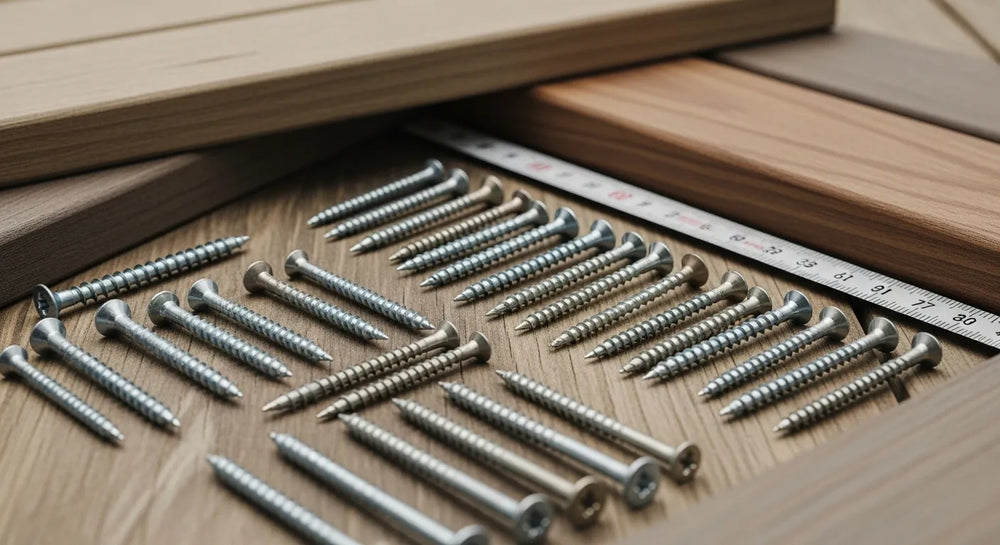
Drilling Perfect Pilot Holes for Wood Screws
Table of Contents
- Introduction
- The Anatomy of a Wood Screw: More Than Just a Fastener
- Why Pilot Holes Are Indispensable for Wood Applications
- Types of Pilot Holes: Tailoring to the Screw's Function
- Choosing the Right Drill Bit: Precision in Every Turn
- Sizing the Pilot Hole Correctly: The Art and Science of Matching
- Step-by-Step Guide to Drilling Perfect Pilot Holes
- Special Considerations for Diverse Applications
- Advanced Techniques and Tools for Precision Drilling
- The Maden.co Advantage: Sourcing Quality American-Made Fasteners for Precision Projects
- Conclusion
- FAQ
Introduction
Imagine the frustration: a critical assembly project stalls because a screw splits the wood, or a fastener refuses to seat properly, stripping its head under the strain. For procurement managers, MRO buyers, and design engineers, such seemingly minor issues can cascade into significant delays, material waste, and compromised structural integrity. The precision with which components are joined dictates not only the aesthetic quality but, more importantly, the long-term durability and performance of any wood-based assembly. Whether you're working with hardwoods in a complex furniture design, softwoods for a robust packaging solution, or specialized marine-grade lumber, the fundamental technique of preparing a proper pilot hole for screws is paramount. Without this crucial step, you risk undermining the strength of your materials, wasting valuable fasteners, and ultimately compromising the overall quality of your output. This comprehensive guide will delve into the science and art of drilling perfect pilot holes, ensuring every screw you drive achieves optimal grip, prevents material damage, and contributes to a resilient, high-quality finished product. We will cover everything from understanding screw anatomy to selecting the right drill bits, mastering drilling techniques, and critically, how Maden.co empowers you to source the precision-engineered, U.S.-made fasteners that make all the difference.
The Anatomy of a Wood Screw: More Than Just a Fastener
Before we delve into the mechanics of drilling, understanding the distinct parts of a wood screw is crucial. Each element plays a role in how the screw interacts with wood and, consequently, how pilot holes must be prepared.
- Head: This is the top part of the screw, designed to be driven by a screwdriver or drill bit. Heads come in various styles (e.g., flat, round, oval, pan, hex) and dictate whether the screw will sit flush with the surface, protrude for decorative effect, or be recessed.
- Shank (Unthreaded Portion): Immediately below the head, some screws feature a smooth, unthreaded portion called the shank. This part is designed to pass freely through the top workpiece (the part being fastened) without gripping it. This allows the head to pull the top piece tightly against the bottom piece, creating a strong joint.
- Threaded Portion: The helical ridge that wraps around the screw shaft, designed to cut into and grip the wood fibers. The threads are what provide the holding power.
- Core Diameter (Root Diameter): The diameter of the screw shaft under the threads. This is a critical measurement for determining the size of the pilot hole for the threaded portion.
- Major Diameter: The total diameter of the screw including the threads. This is relevant for sizing the clearance hole for the shank and the opening for the head.
- Point: The tip of the screw. Some screws have sharp points to aid in starting, while others are blunter. Self-tapping screws often have specialized points.
Understanding these components allows for precise pilot hole drilling. For instance, a Round Slot Drive Brass Wood Screw, often chosen for its aesthetic appeal and corrosion resistance, requires a specific approach to ensure its distinctive head sits correctly without damaging the surrounding wood. Similarly, a Flat Slot Drive Brass Wood Screw demands careful countersinking for a flush finish, highlighting the nuanced requirements across different screw types.
Why Pilot Holes Are Indispensable for Wood Applications
Skipping the pilot hole might seem like a time-saver, but it's a false economy that can lead to significant structural and aesthetic problems. For industrial buyers focused on reliability and longevity, understanding the benefits of pilot holes is fundamental to quality control.
Preventing Wood Splitting and Cracking
Wood is anisotropic, meaning its properties vary with direction. It's strongest along the grain but weakest across it. When a screw is driven into wood without a pilot hole, its threads act like a wedge, forcing wood fibers apart. This internal pressure, especially near the ends or edges of a workpiece, or in hardwoods, can easily cause the wood to split. A pilot hole provides a clear path for the screw, guiding it through the fibers rather than tearing them apart, thus preserving the material's integrity.
Ensuring Optimal Screw Grip and Holding Power
A properly sized pilot hole allows the screw threads to engage fully with the wood fibers without having to overcome excessive resistance. If the pilot hole is too small, the screw can become extremely difficult to drive, potentially stripping its head or breaking. If it's too large, the threads won't have enough material to bite into, resulting in poor holding power. The perfect pilot hole ensures the threads achieve maximum engagement, creating a stronger, more reliable joint.
Facilitating Easier and Straighter Screw Driving
Driving a screw into a pre-drilled pilot hole is considerably easier and allows for greater control. The pilot hole acts as a guide, helping to keep the screw straight as it penetrates the wood. This prevents screws from wandering off-course, which is particularly important for precise assemblies or when working with expensive, pre-finished materials where even minor deviations are unacceptable.
Achieving a Professional and Aesthetic Finish
For design engineers, the visual appeal and consistent finish of a product are critical. Pilot holes, especially when combined with countersinking or counterboring, allow screw heads to sit flush with or below the surface of the wood. This not only creates a clean, professional look but also prevents snagging and provides a smoother surface, which is vital for consumer products or industrial applications where safety and operational efficiency are paramount.
Reducing Fastener Breakage and Stripping
When a screw encounters too much resistance without a pilot hole, the torsional stress on the screw can be immense. This can lead to the screw head stripping (especially with softer drive types) or, in extreme cases, the screw shaft breaking. Pilot holes significantly reduce this stress, extending the life of your fasteners and preventing frustrating rework. For procurement managers sourcing high-volume fasteners, minimizing breakage translates directly to cost savings and improved material utilization.
Types of Pilot Holes: Tailoring to the Screw's Function
Not all pilot holes are created equal. The type of pilot hole depends on the screw's design and its intended function within the assembly. Precision in this step is a hallmark of Industrial Excellence, one of our core values at Maden.co.
1. The Thread Pilot Hole (The "Pilot" Hole Proper)
This is the most fundamental type of pilot hole. Its diameter matches the core diameter (root diameter) of the screw's threaded portion. Its purpose is to create a channel for the screw's threads, allowing them to cut into the wood without forcing the fibers apart excessively. This prevents splitting and ensures the threads have ample material to grip for maximum holding power.
- When to Use: Always, for any screw being driven into wood, especially near edges, in hardwoods, or when precise control is needed.
- Sizing: The drill bit diameter should be equal to or slightly smaller than the core diameter of the screw. A good rule of thumb is to hold the screw in front of the drill bit; the threads should be visible outside the bit, but the core should be completely hidden.
2. The Shank Clearance Hole
For screws with an unthreaded shank, a clearance hole is drilled in the top piece of wood (the piece that will be pulled down onto the bottom piece). This hole is slightly larger than the major diameter of the screw's shank, allowing the shank to pass freely through without engaging the wood.
- When to Use: When you want the screw's head to pull two pieces of wood tightly together. Without a clearance hole, the shank could grip the top piece, preventing the screw head from fully seating and creating a loose joint.
- Sizing: The drill bit diameter should be slightly larger than the major diameter of the screw's shank.
3. Countersink or Counterbore
These additional steps prepare the surface of the wood to accept the screw head for a flush or recessed finish.
- Countersink: A conical recess that allows flat-head or oval-head screws to sit flush with the wood surface. This is achieved with a countersink bit, which typically has an angled cutting edge.
- Counterbore: A cylindrical, flat-bottomed recess that allows round-head, pan-head, or hex-head screws to sit below the surface. This is often done to hide screw heads using plugs or filler, commonly used in furniture making or applications where a smooth, unobstructed surface is required. A standard drill bit, matching the head's diameter, is used to drill the counterbore to the desired depth, followed by a thread pilot hole at its center.
For complex assemblies, understanding when to combine these pilot hole types is crucial. For example, a Oval Slot Drive Silicon Bronze Wood Screw, often used in marine or outdoor applications for its superior corrosion resistance and distinctive head, would typically require both a thread pilot hole and a countersink for a refined finish.
Choosing the Right Drill Bit: Precision in Every Turn
The success of a pilot hole hinges significantly on the drill bit used. For procurement managers and MRO buyers, selecting the correct bit material and type for the application is as important as the fastener itself.
Types of Drill Bits for Wood
- Twist Bits: The most common type, versatile for general-purpose drilling in wood. They have a pointed tip and two helical flutes that clear chips. Available in various materials and sizes.
- Brad-Point Bits: Specifically designed for wood, these bits feature a sharp, central spur (brad point) that precisely locates the hole and prevents the bit from wandering. They also have cutting spurs on the outside edge that shear wood fibers cleanly, resulting in a much cleaner hole than a standard twist bit. Ideal for visible holes or fine woodworking.
- Countersink Bits: Used to create the conical recess for flat-head and oval-head screws. Many come as a combination bit that drills the pilot hole, clearance hole, and countersink in one step, ensuring perfect alignment.
- Spade Bits (Paddle Bits): Used for drilling larger diameter holes (typically >1/4 inch) quickly. They are less precise than brad-point bits but are effective for rougher work where speed is prioritized.
- Forstner Bits: Produce very clean, flat-bottomed holes with precise diameters. Excellent for counterboring, drilling overlapping holes, or creating pockets.
Drill Bit Materials
The material of the drill bit impacts its durability, sharpness retention, and suitability for different wood types.
- High-Speed Steel (HSS): A good all-around choice for drilling in most wood types. HSS bits retain their hardness at higher temperatures, making them suitable for prolonged use.
- Black Oxide Coated HSS: Offers improved lubricity and corrosion resistance over standard HSS, slightly extending bit life.
- Titanium Nitride (TiN) Coated HSS: Provides a harder surface, reducing friction and increasing durability, especially in harder woods.
- Cobalt (HSS-Co): More heat-resistant and abrasion-resistant than standard HSS, making them excellent for very hard or abrasive woods.
- Carbide-Tipped: The hardest and most durable bits, designed for demanding applications, particularly in highly abrasive materials or where extreme longevity is required. While often overkill for softwoods, they are invaluable for exotic hardwoods or materials with dense grain.
For MRO buyers managing tool inventories, investing in quality, American-made drill bits ensures consistent performance and reduces the frequency of replacement, aligning with our value of Industrial Excellence.
Sizing the Pilot Hole Correctly: The Art and Science of Matching
The most critical step in drilling pilot holes is getting the size right. This isn't a "one-size-fits-all" scenario; it depends on the screw's dimensions and the wood's density.
Matching Drill Bit to Screw Dimensions
-
For the Thread Pilot Hole:
- Rule of Thumb: The drill bit diameter should match the core diameter (root diameter) of the screw. This allows the threads to cut into the wood firmly without splitting it.
- Visual Check: Hold the screw in front of various drill bits. The correct bit should hide the screw's core but allow the threads to be visible on either side.
- Precision Measurement: For critical applications, use a caliper to measure the core diameter of your screw. Then select a drill bit of that exact size or one that is 1/64" to 1/32" smaller for very hard woods to ensure maximum thread engagement.
- Screw Gauges: Many manufacturers provide screw gauge cards or charts that recommend pilot hole sizes for common screw gauges.
-
For the Shank Clearance Hole:
- The drill bit diameter should be slightly larger than the major diameter of the screw's unthreaded shank. This ensures the shank passes freely.
- Again, a visual check or caliper measurement of the shank diameter is helpful.
Hardwood vs. Softwood Considerations
The density of the wood is a significant factor in pilot hole sizing.
- Hardwoods (e.g., Oak, Maple, Cherry, Walnut): These dense woods are prone to splitting and exert more resistance on the screw. Pilot holes for hardwoods should generally be closer to the screw's core diameter, or even slightly larger than what would be used for softwoods, to reduce resistance and prevent stripping or breakage.
- Softwoods (e.g., Pine, Fir, Cedar): These woods are less dense and more forgiving. Pilot holes can be slightly smaller than the core diameter, allowing the threads to bite more aggressively for greater holding power. However, care must still be taken to avoid splitting, especially near edges or ends.
- Engineered Wood Products (e.g., Plywood, MDF, Particleboard): These materials have their own unique characteristics. Plywood typically behaves more like solid wood, but MDF and particleboard are very dense and prone to stripping if the pilot hole is too large or if screws are overtightened. Generally, for MDF, use a pilot hole slightly smaller than the screw's core diameter for optimal grip, and avoid over-tightening.
Practical Scenario: For a procurement manager needing to source specific Round Slot Drive Brass Wood Screws for a new line of hardwood cabinetry, understanding the precise pilot hole requirements for brass screws in dense oak is crucial. A design engineer prototyping a new outdoor structure with treated lumber and needing Oval Slot Drive Silicon Bronze Wood Screws must account for the wood's moisture content and potential for expansion/contraction when determining pilot hole sizes. Our platform at Maden.co provides access to detailed specifications for over 2.5 million American-made products, helping buyers make informed decisions for precision applications.
Step-by-Step Guide to Drilling Perfect Pilot Holes
Achieving consistently perfect pilot holes requires a systematic approach.
1. Mark Your Spot Accurately
- Precision is Key: Use a pencil, awl, or automatic center punch to mark the exact center point for each screw. For critical alignments, a ruler, square, or template is indispensable. For design engineers, precise marking ensures the aesthetic and structural integrity of their blueprints translate to the finished product.
2. Select the Correct Drill Bit(s)
- Based on the screw's dimensions (core diameter, shank diameter) and the wood type (hardwood, softwood), select the appropriate drill bit(s). If using a countersink or counterbore, have those bits ready as well.
- Remember to consider the material of your fastener. For instance, a softer metal like brass, found in a Flat Slot Drive Brass Wood Screw, will be more prone to damage if forced into an undersized pilot hole.
3. Set the Drill Depth
- Prevent Over-Drilling: You only need the pilot hole to be as deep as the threaded portion of the screw will penetrate. Over-drilling wastes time, can weaken the material, and might cause unsightly exit wounds.
-
Methods for Setting Depth:
- Tape Flag: Wrap a piece of masking tape around the drill bit at the desired depth. Stop drilling when the tape touches the wood surface.
- Drill Stop Collar: A small collar that clamps onto the drill bit, preventing it from penetrating beyond a set depth. This is the most consistent method for repetitive tasks.
- Depth Gauge: Some drills have built-in depth gauges.
- Eye-Ball Method (Least Accurate): For experienced users, but prone to inconsistencies.
4. Position and Secure Your Workpiece
- Stability is Safety: Always secure your workpiece firmly with clamps, a vice, or by other means. This prevents the wood from shifting during drilling, which can lead to inaccurate holes, damage to the workpiece, or injury.
5. Drill the Pilot Hole
- Start Slow, Center Accurately: Begin drilling slowly, ensuring the drill bit's point is precisely centered on your mark.
- Maintain Straightness: Keep the drill perfectly perpendicular to the wood surface. Use a drill press for ultimate precision, or a drill guide for handheld drills. For handheld drilling, observe the bit from two perpendicular angles to confirm straightness.
- Apply Consistent Pressure: Allow the drill bit to do the work. Don't force it, but apply enough steady pressure to ensure continuous cutting. Excessive pressure can heat the bit, burn the wood, or even stall the drill.
- Clear Chips Frequently: Periodically withdraw the drill bit from the hole, especially in deeper holes, to clear wood chips. This prevents clogging, reduces heat buildup, and allows for cleaner cutting.
- Finish Cleanly: As the bit exits the bottom of the wood, reduce pressure to prevent tear-out. If possible, place a scrap piece of wood underneath your workpiece to serve as a backer board, providing support and minimizing splintering.
6. Drill Clearance Holes and Countersinks/Counterbores (If Needed)
- Once the thread pilot hole is complete, switch to the appropriate drill bit for the clearance hole and drill the top piece to the correct depth.
- Finally, use a countersink bit to create the recess for flat or oval head screws, or a larger drill bit for counterboring, ensuring the head sits as desired.
Special Considerations for Diverse Applications
The world of wood fastening is incredibly diverse, and precision drilling adapts to these variations.
Driving Screws Without Stripping
Even with a perfect pilot hole, improper driving can lead to stripped screw heads or damaged wood.
- Choose the Right Driver: Use the correct size and type of screwdriver bit (Phillips, Torx, Square, Slot) that precisely fits the screw head.
- Match Driver to Screw: For slot drive screws, like a Round Slot Drive Brass Wood Screw, ensure the driver fits snugly into the slot, spanning its full width and depth to prevent cam-out.
- Control Torque: For power tools, especially impact drivers, set the clutch or torque settings appropriately for the screw size and wood density. Start with a lower setting and increase if necessary. Over-driving is a common cause of stripped heads and damaged wood.
- Lubrication: For very hard woods or long screws, a small amount of wax (like paraffin or beeswax) or even soap on the screw threads can significantly reduce friction and make driving easier, preventing stripping.
Working with Different Wood Types
- Exotic Hardwoods: These often have very dense grain and can be prone to burning the drill bit. Use sharp, high-quality bits (e.g., cobalt or carbide-tipped), clear chips frequently, and consider slightly larger pilot holes.
- Pressure-Treated Wood: Contains chemicals that can corrode some fasteners. Always use corrosion-resistant fasteners like galvanized, stainless steel, or silicon bronze, such as an Oval Slot Drive Silicon Bronze Wood Screw. Pilot holes are especially important as treated wood can be very dense and prone to splitting.
- Plywood and Veneered Panels: When drilling through veneer, use a brad-point bit for a clean entry hole to prevent chipping the veneer. When drilling through the edges of plywood, treat it like hardwood and ensure proper pilot hole sizing.
Fastener Materials and Their Interaction with Wood
The material of your screw also influences drilling requirements.
- Steel Screws: Common and strong, typically requiring standard pilot hole practices.
- Brass Screws: Softer than steel, brass screws (like those found on Maden.co, such as our Flat Slot Drive Brass Wood Screw) are more susceptible to stripping or shearing if forced. Precise pilot holes and careful driving are essential. They offer good corrosion resistance and aesthetic appeal.
- Silicon Bronze Screws: Highly corrosion-resistant, making them ideal for marine or outdoor applications. Similar to brass, they are softer than steel and require careful handling with appropriately sized pilot holes.
Advanced Techniques and Tools for Precision Drilling
For those operating in industrial or high-volume settings, certain tools and techniques can elevate precision and efficiency.
Drill Presses
A drill press provides unparalleled accuracy and repeatability for drilling perpendicular holes. It removes the human element of holding the drill straight, ensuring consistently plumb holes. This is invaluable for manufacturing where precision is non-negotiable.
Drill Guides and Jigs
These accessories help maintain the drill's perpendicularity when using a handheld drill. They are portable alternatives to a drill press for on-site work or larger assemblies that cannot be moved. Custom jigs can be fabricated for repetitive, complex drilling patterns.
Self-Centering Drill Bits
Also known as Vix bits, these specialty bits are designed to perfectly center a pilot hole for screw hardware, such as hinges. They have a conical guide that fits into the screw hole of the hardware, ensuring the pilot hole is exactly in the middle.
Screw-Driving Lubricants
Beyond wax or soap, specialized screw lubricants are available that reduce friction and heat, making driving easier and reducing the risk of stripping or splitting. This is particularly beneficial for long screws in dense hardwoods.
The Maden.co Advantage: Sourcing Quality American-Made Fasteners for Precision Projects
Achieving flawless results with pilot holes is only half the equation; the other half is using fasteners that are designed and manufactured to the highest standards. For a procurement manager under pressure to source a specific DIN or NPT compliant fastener, a design engineer needing specific material certifications for a new prototype, or an MRO buyer facing an unexpected equipment breakdown, the ability to quickly find and finance a verified, U.S.-made part is a game-changer. This is precisely where Maden.co empowers businesses.
At Maden.co, our mission is to democratize access to American manufacturing. We connect industrial buyers with over 2.5 million American-made products from our network of 800+ verified U.S. manufacturers. Our vision is to become the definitive platform that proves American-made components are as accessible and convenient as any global alternative, driving the manufacturing revival with our tagline: "America's manufacturing revival is here." You can learn more about our commitment to these values by visiting our About Us page.
When you invest time in drilling perfect pilot holes, you need the confidence that your fasteners will perform as expected. Sourcing through Maden.co ensures:
- Supply Chain Resilience: By choosing U.S.-made fasteners, you reduce reliance on complex global supply chains, mitigating risks of delays and shortages. This enhances your operational stability, a critical factor for MRO buyers.
- Uncompromised Quality: Our network of verified American manufacturers adheres to stringent quality controls and material standards, ensuring consistent performance, reliability, and often, superior durability. This commitment aligns with our core value of Industrial Excellence.
- Reduced Total Cost of Ownership (TCO): While the initial price might sometimes differ from offshore alternatives, the long-term value of American-made components—through reduced failure rates, fewer replacements, minimized rework, and reliable lead times—often results in a lower TCO.
- Access to Specialized Fasteners: Whether you require specific thread types, unique head designs, or particular material compositions for harsh environments, our vast catalog includes an extensive range of U.S.-made fasteners. For instance, for projects demanding both aesthetic appeal and corrosion resistance, such as those involving boat building or outdoor furniture, a Round Slot Drive Brass Wood Screw offers superior performance and a classic finish. Achieving a perfectly flush surface often requires a Flat Slot Drive Brass Wood Screw combined with accurate countersinking. And for extreme environments where superior corrosion resistance is paramount, consider fasteners like an Oval Slot Drive Silicon Bronze Wood Screw, which offers exceptional durability in marine and outdoor applications.
- Streamlined Procurement: Our digital platform simplifies the sourcing process, making it easy for procurement managers to find, compare, and order the exact components they need, fostering Digital Innovation and Customer Empowerment.
- Instant Financing at Checkout: We understand that large-volume purchases or critical projects require flexible capital management. That's why we offer Instant Financing during the checkout process. This strategic tool allows businesses to manage cash flow effectively and make larger-volume purchases without immediate upfront capital, ensuring your projects stay on track.
Our commitment to American Manufacturing Pride means we are always expanding our network. If you are a U.S. manufacturer producing high-quality fasteners or other industrial components, we invite you to register as a vendor and join us in driving America's manufacturing revival.
Conclusion
The art and science of drilling perfect pilot holes for wood screws is far more than a simple preliminary step—it is a foundational practice for ensuring the structural integrity, aesthetic appeal, and long-term durability of any wood-based assembly. From preventing unsightly splits and stripped screws to maximizing the holding power of your fasteners, precision in pilot hole creation safeguards your materials and enhances the quality of your finished products. By understanding screw anatomy, selecting the correct drill bits, accurately sizing holes for diverse wood types, and employing meticulous drilling techniques, businesses can significantly reduce waste, improve efficiency, and elevate the standard of their output.
However, the finest drilling technique is only as effective as the fasteners it prepares for. At Maden.co, we stand as your strategic partner, connecting you with an unparalleled selection of verified, U.S.-made industrial fasteners and components. We champion American Manufacturing Pride and empower industrial buyers with supply chain transparency, ensuring you access the quality and reliability necessary for your most demanding projects. Don't compromise on the quality of your materials or the precision of your work. Explore the vast catalog of American-made components on Maden.co today and discover how our commitment to Industrial Excellence and Customer Empowerment can transform your procurement process. Should your project require unique specifications or if you have specific sourcing questions about hard-to-find components, our team is ready to provide expert guidance. Don't hesitate to contact us for tailored support. Take advantage of our Instant Financing option at checkout to streamline capital-intensive projects and ensure your business always has access to the best America has to offer.
FAQ
Q1: Why can't I just drive screws directly into wood without drilling a pilot hole?
A1: Driving screws directly into wood, especially hardwoods or near edges, can cause the wood to split or crack due to the wedging action of the screw threads. It also makes the screw harder to drive, increasing the risk of stripping the screw head, and can result in a less secure or crooked fastening. Pilot holes prevent these issues, ensuring a clean, strong, and professional joint.
Q2: How do I know what size drill bit to use for a pilot hole?
A2: For the "thread pilot hole," the drill bit diameter should match the core diameter (root diameter) of the screw's threaded shaft. A good visual check is to hold the screw in front of the drill bit; the bit should hide the screw's core but allow the threads to be visible. For "clearance holes" in the top piece of wood, the drill bit should be slightly larger than the screw's unthreaded shank to allow it to pass freely. Always consider the wood type: for hardwoods, you might use a slightly larger pilot hole than for softwoods to prevent splitting.
Q3: What is the difference between countersinking and counterboring?
A3: Countersinking creates a conical (V-shaped) recess that allows flat-head or oval-head screws to sit flush with the wood surface. Counterboring creates a cylindrical, flat-bottomed recess that allows screws with flat-bottomed heads (like round, pan, or hex heads) to sit below the surface. Counterbores are often used when you intend to hide the screw head with a plug or filler for a completely smooth finish.
Q4: How does Maden.co help with sourcing fasteners related to this topic?
A4: Maden.co, as America's premier B2B marketplace, provides industrial buyers with access to over 2.5 million American-made products, including a vast selection of high-quality wood screws from verified U.S. manufacturers. This ensures you can find the precise fasteners needed for your projects, such as specialized brass or silicon bronze screws, that complement accurate pilot drilling. Our platform enhances supply chain resilience, reduces Total Cost of Ownership (TCO) through reliable, high-quality products, and offers Instant Financing at checkout to support your procurement needs effectively.


