
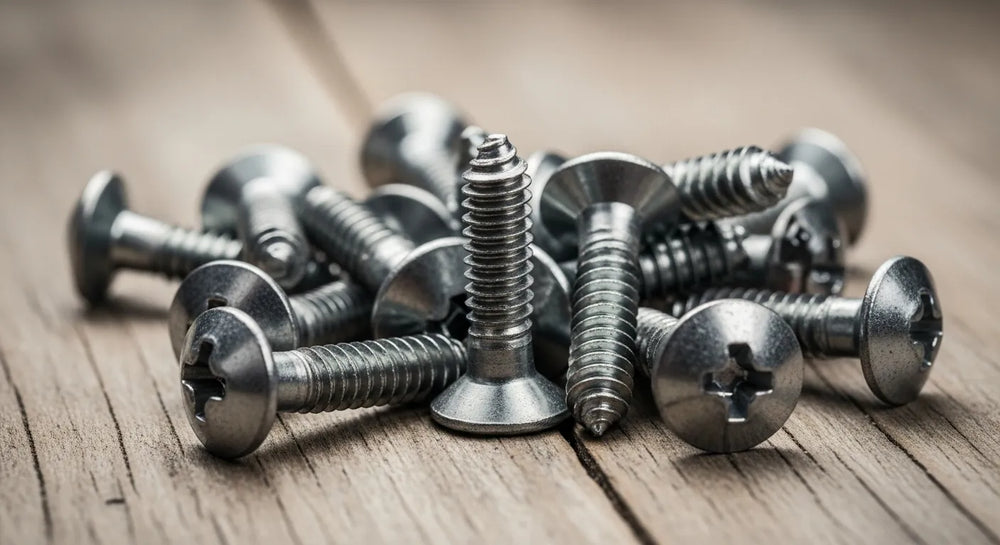
Drywall Ceiling Screws: Calculating Count & Ensuring Quality
Table of Contents
- Introduction
- Understanding Drywall Ceiling Installation Challenges
- Factors Influencing Drywall Ceiling Screw Count
- Standard Spacing Guidelines for Drywall Ceilings
- Calculating Screw Requirements: A Step-by-Step Guide
- The Right Screw for the Job: Material and Type Considerations
- Beyond the Count: Best Practices for Drywall Ceiling Screw Installation
- The Strategic Advantage of Quality U.S.-Made Fasteners
- Procurement Excellence with Maden.co
- Conclusion
- FAQ
Imagine a procurement manager on a tight deadline, overseeing a large-scale commercial build-out. Every structural component, down to the smallest fastener, must meet rigorous standards and be readily available to avoid costly delays. When it comes to drywall ceilings, the seemingly simple question of "how many screws" quickly unfolds into a complex matrix of safety, durability, and compliance. The integrity of a ceiling directly impacts occupant safety and a building’s long-term value, making the choice and quantity of each screw a critical decision, not just a matter of guesswork.
Introduction
In the intricate world of construction and MRO, precision in planning and execution is paramount. For ceiling installations, this precision extends to the often-underestimated drywall screw. Unlike wall applications, gravity exerts constant downward pressure on ceiling drywall, making proper fastening crucial to prevent sagging, cracking, and potential failures. Understanding the correct number of screws, their type, and the best installation practices isn't merely about adherence to blueprints; it's about ensuring structural integrity, safety, and the longevity of the entire assembly. This deep dive will explore the critical factors influencing drywall ceiling screw counts, provide practical calculation methods, detail the types of screws best suited for the job, and highlight the strategic advantages of sourcing high-quality, American-made fasteners. This is precisely where Maden.co steps in – an industrial marketplace dedicated to connecting buyers with high-quality, American-made products that meet the stringent demands of modern construction. We believe that securing your projects with the right components, sourced transparently and efficiently, is key to operational excellence.
Understanding Drywall Ceiling Installation Challenges
Installing drywall on a ceiling presents unique challenges compared to vertical wall applications. The primary antagonist here is gravity. Without sufficient and correctly placed fasteners, ceiling drywall is highly susceptible to sagging over time, leading to unsightly aesthetics and potential structural issues. This susceptibility is amplified by factors like humidity fluctuations, structural movement, and even the weight of insulation or other utilities in the plenum space above.
Why Ceilings Demand More Rigor
- Gravity's Constant Pull: Unlike walls where gravity helps hold the drywall against the studs, on ceilings, it constantly tries to pull the sheets down. This necessitates closer screw spacing and precise installation to maintain rigidity.
- Sag Prevention: Sagging is the most common issue with improperly fastened ceiling drywall. It can lead to cracks, loose joints, and eventually, failure of the entire panel. Proper screw density is the first line of defense against this.
- Fire Rating Requirements: Many commercial and multi-family residential buildings have specific fire rating requirements for ceilings. These ratings often mandate specific drywall thicknesses and, crucially, screw patterns and types to ensure the assembly performs as intended during a fire event.
- Aesthetic Impact: A perfectly flat, smooth ceiling is a hallmark of quality construction. Unevenly spaced or improperly driven screws can create visible imperfections, compromise the finish, and necessitate costly rework.
- Load Bearing (Indirectly): While drywall itself isn't load-bearing in the structural sense, the fasteners ensure it remains securely attached to the structural framing, supporting its own weight and sometimes that of light fixtures or access panels.
The increased stress on ceiling fasteners means that the "how many screws" question is not just about meeting minimum code, but about exceeding it for enhanced durability and long-term performance. This approach minimizes future maintenance and ensures the project's reputation for quality endures.
Factors Influencing Drywall Ceiling Screw Count
Determining the precise number of screws needed for a drywall ceiling is not a one-size-fits-all calculation. Several critical factors come into play, each impacting the density and pattern of fasteners required. Overlooking any of these can compromise the integrity of the installation.
Drywall Thickness and Type
The thickness of the drywall sheet is a primary determinant.
- 1/2-inch Drywall: This is a common choice for ceilings due to its lighter weight and ease of handling. However, its flexibility also means it's more prone to sagging if not adequately supported. Therefore, it typically requires a denser screw pattern, often with screws spaced 7 inches on center (o.c.) along all framing members and perimeter edges.
- 5/8-inch Drywall (Type X): Thicker and heavier, 5/8-inch drywall offers superior rigidity and often provides enhanced fire resistance. Its increased stiffness makes it less susceptible to sagging, potentially allowing for slightly wider screw spacing in some applications (though 7 inches o.c. remains a best practice for ceilings without adhesive). The added weight of 5/8-inch board means that while it resists sag better, the fasteners must be capable of bearing that increased load, making screw quality even more paramount.
- Specialty Drywall: Acoustic, moisture-resistant, or impact-resistant drywall might have different densities or installation recommendations. Always consult the manufacturer's guidelines for such specialized products.
Framing Type and Spacing
The material and spacing of the ceiling joists or furring channels significantly influence screw count.
- Wood Framing (Joists): Typically spaced 16 or 24 inches on center. If joists are 24 inches o.c., the drywall spans a greater distance, demanding closer screw spacing along each joist to prevent sag in the unsupported areas between fasteners. With 16-inch o.c. joists, the overall support is better, but a 7-inch o.c. screw pattern is still recommended for ceilings.
- Metal Framing (Furring Channels/Cold-Formed Steel): Often used in commercial construction. Metal framing requires fine-thread drywall screws for proper grip. Spacing guidelines are similar to wood, but the specific fasteners are different.
- Furring Strips: Sometimes, furring strips (wood or metal) are installed perpendicular to the main joists to create a level surface or accommodate specific ceiling designs. Screws would then attach the drywall to these strips.
Screw Spacing Guidelines
The standard spacing for drywall screws varies based on the application. For ceilings, due to the constant pull of gravity, tighter spacing is crucial.
- Ceilings (Standard Practice): For 1/2-inch or 5/8-inch drywall on ceilings without adhesive, the widely accepted best practice is to place screws 7 inches on center along all framing members and around the perimeter of each sheet. This denser pattern is vital for preventing sag.
- Perimeter Screws: Screws should be placed approximately 3/8 to 1/2 inch from the edge of the drywall sheet and then every 7 inches along the perimeter.
- Field Screws: Within the main body of the drywall sheet, screws should be consistently spaced 7 inches on center along each joist or framing member.
Fire Codes and Building Regulations
Local building codes and specific project specifications, particularly for fire-rated assemblies, may mandate stricter screw spacing or specific screw types. For example, a Type X (fire-resistant) drywall assembly often requires precise screw patterns and sometimes double-layer applications to achieve the required fire resistance rating. Always consult local codes and project blueprints. Compliance is not just about passing inspection; it's about ensuring safety and liability protection.
By carefully considering each of these factors, procurement managers, MRO buyers, and design engineers can move beyond simple estimations to precise calculations, ensuring a robust and compliant ceiling installation. The quality of these fasteners, of course, is equally important, a topic we will delve into next.
Standard Spacing Guidelines for Drywall Ceilings
Adhering to industry-standard screw spacing guidelines for drywall ceilings is paramount for preventing costly failures, ensuring longevity, and meeting safety regulations. While walls often allow for more forgiving spacing, ceilings require a more rigorous approach due to the persistent downward pull of gravity.
General Principles for Ceiling Screw Spacing
The overarching principle for ceiling drywall is to maximize support and minimize the potential for sag. This translates to a denser screw pattern than typically used for vertical wall applications.
- 7 Inches on Center (O.C.): This is the benchmark for single-layer gypsum board applied to ceiling framing without adhesive. This means a screw should be placed every 7 inches along each framing member (joist, truss, furring channel) that the drywall sheet crosses, as well as along all four perimeter edges of each sheet.
- Edge Distance: Screws should be placed approximately 3/8 to 1/2 inch from the cut or tapered edge of the drywall sheet. This ensures the screw bites into the framing without tearing through the gypsum core.
- Staggering: While not strictly a spacing rule, staggering screws on adjacent sheets or alternating screw lines can help distribute stress more evenly across the framing, though a consistent 7-inch pattern is often sufficient.
- Double Screwing (Optional but Recommended for High-Performance): For an even more robust ceiling, some professionals utilize a "double-screwing" method. This involves placing pairs of screws 2 to 2.5 inches apart, with each pair spaced 12 inches on center along the framing. This effectively creates a denser hold (similar to 6-inch spacing) but with fewer individual dimples to fill, improving both strength and finishing efficiency.
Specific Considerations by Drywall Type and Framing
1/2-inch Drywall on Ceilings
Due to its relative flexibility and lighter weight, 1/2-inch drywall is more susceptible to sagging. Therefore, the 7-inch o.c. rule is particularly critical.
- Wood Framing (16 or 24 inches O.C.): Whether your ceiling joists are 16 or 24 inches on center, screws should still be driven every 7 inches along each joist the drywall sheet covers.
- Perimeter: Maintain a 7-inch o.c. spacing around the entire perimeter of each sheet, ensuring proper edge support.
5/8-inch Drywall on Ceilings (Type X, Fire-Rated, or High-Performance)
5/8-inch drywall provides greater rigidity and improved resistance to sag, especially Type X which is denser. While its inherent stiffness helps, the 7-inch o.c. spacing is still highly recommended for ceilings, especially where fire ratings or enhanced durability are required.
- Increased Weight: Remember that 5/8-inch drywall is significantly heavier. This means that while it resists sag better, the fasteners themselves must be robust and properly seated to support the increased dead load. The quality of the screw becomes even more critical here.
- Double Layer Applications: For high-performance ceilings (e.g., soundproofing, higher fire ratings), two layers of drywall may be specified. The first layer might be installed with wider spacing (e.g., 12 inches o.c.), but the second layer should follow a tighter 7-inch o.c. pattern, ensuring screws penetrate into the framing through both layers. This type of application significantly increases the total screw count and requires longer screws, which we'll discuss in the next section.
Adhering to these standard spacing guidelines is a foundational step in ensuring the success and longevity of any drywall ceiling project. It translates directly into safer, more durable, and aesthetically pleasing results, minimizing the need for future repairs and upholding the quality of the installation.
Calculating Screw Requirements: A Step-by-Step Guide
Accurately calculating the number of screws needed for a drywall ceiling is crucial for efficient procurement, preventing shortages that cause project delays, and avoiding over-ordering that leads to wasted material. This guide provides a systematic approach to estimation.
Step 1: Measure the Ceiling Area
First, determine the total square footage of the ceiling you need to cover.
- Measure the length and width of each room or section.
- Multiply length by width to get the square footage.
-
Example: A room is 20 feet long by 15 feet wide.
20 ft * 15 ft = 300 sq ft
Step 2: Determine Drywall Sheet Dimensions and Quantity
Standard drywall sheets typically come in 4x8 foot (32 sq ft) or 4x12 foot (48 sq ft) sizes.
- Divide your total ceiling area by the square footage of your chosen sheet size to find the approximate number of sheets.
- Always add 10-15% for waste due to cuts, damage, and layout optimization.
-
Example (using 4x8 ft sheets):
300 sq ft / 32 sq ft/sheet = 9.375 sheets- Round up to 10 sheets.
- Add 10% waste:
10 sheets * 1.10 = 11 sheets total
Step 3: Calculate Screws Per Sheet Based on 7-Inch Spacing
As established, the best practice for ceiling drywall is to use 7-inch on-center (o.c.) spacing along all framing members and around the perimeter.
Let's calculate for a 4x8 foot drywall sheet (32 sq ft), assuming framing at 24 inches on center (common for ceilings):
- Length of Sheet: 8 feet = 96 inches
- Width of Sheet: 4 feet = 48 inches
-
Screws Along Framing Members (Field Screws):
- For a 4-foot wide sheet, with framing at 24 inches o.c., the sheet will span across three framing members (one at each edge, and one in the center).
- Number of screws per framing member (along 8 ft length):
96 inches / 7 inches/screw = ~13.7 screws. Round up to 14 screws per joist. - Total field screws:
3 joists * 14 screws/joist = 42 screws
-
Screws Along Perimeter (Edge Screws):
-
Two 8-foot edges (already covered by field screws if the sheet lands perfectly on a joist at the edge). For clarity, we'll calculate perimeter screws for areas not directly over a joist.
-
The two 4-foot edges will need perimeter screws.
-
Number of screws per 4-foot edge:
48 inches / 7 inches/screw = ~6.8 screws. Round up to 7 screws. -
Total perimeter screws for the two shorter edges (assuming corners are shared):
7 screws * 2 edges = 14 screws -
Refined approach for perimeter screws: For 7-inch spacing all around the perimeter and in the field:
- Along the 8-foot edges: 14 screws each = 28 screws (accounting for overlaps at corners).
- Along the 4-foot edges: 7 screws each = 14 screws (adjusting for corners already counted).
- Total perimeter roughly:
2 * (96/7) + 2 * (48/7 - 2) = 28 + 10 = 38 screws(this is a more standard way to count distinct perimeter screws).
-
Revised Total Screws Per 4x8 Sheet (using a consistent 7-inch grid):
- Imagine a grid of screws. Across 4 feet (48 inches), you'd have approximately
48/7 = 7lines of screws. - Along 8 feet (96 inches), you'd have
96/7 = 14screws in each line. - So,
7 rows * 14 screws/row = 98 screws per 4x8 sheet. This is a robust estimate for ceilings.
- Imagine a grid of screws. Across 4 feet (48 inches), you'd have approximately
-
Let's use the 98 screws per 4x8 sheet as a conservative and safe estimate for ceiling installations using a 7-inch o.c. pattern.
Step 4: Calculate Total Screw Count
Multiply the number of sheets by the screws per sheet.
-
Example (using 11 sheets and 98 screws/sheet):
11 sheets * 98 screws/sheet = 1078 screws
Step 5: Add a Waste Factor
It's always wise to add a waste factor to your screw count for dropped screws, bent heads, or misfires. A 10-15% buffer is standard.
-
Example:
1078 screws * 1.10 (10% waste) = 1185.8 screws. - Round up to the nearest whole number and then to the nearest standard box size. For this example, you would likely need to purchase a box of 1200 or 1500 screws.
Summary of Calculation for 300 sq ft ceiling using 4x8 sheets:
- Total Area: 300 sq ft
- Sheets Needed (4x8): 11 (including waste)
- Screws Per 4x8 Sheet (7" o.c. grid): 98 screws
- Total Screws:
11 sheets * 98 screws/sheet = 1078 screws - With 10% waste:
~1186 screws(buy a box of 1200-1500)
This meticulous approach ensures that procurement managers have the right quantities on hand, minimizing project interruptions and optimizing costs. But the number of screws is only half the battle; the type and quality of screw are equally, if not more, important.
The Right Screw for the Job: Material and Type Considerations
Selecting the correct drywall screw is as crucial as calculating the right quantity. Using the wrong type can compromise the entire ceiling installation, leading to structural failures, costly repairs, and potential safety hazards. From thread patterns to material composition, each detail plays a vital role. At Maden.co, we understand that industrial excellence begins with precision-matched components.
Understanding Drywall Screw Types
Drywall screws are specifically designed for gypsum board, featuring distinct characteristics that differentiate them from general-purpose screws.
- Bugle Head: This is the most common head type. Its conical shape allows it to countersink cleanly into the drywall surface without tearing the paper, creating a slight dimple that can be easily filled with joint compound for a smooth finish.
-
Coarse Thread (W-type): These screws have widely spaced threads, designed to grip effectively into wood framing (joists, studs, furring strips). The coarse threads create strong holding power in the softer wood fibers, preventing pull-out.
- For standard wood framing, our 6 x 1-1/4 coarse thread drywall screws provide exceptional grip and stability, ideal for securely fastening 1/2-inch drywall to wood.
-
Fine Thread (S-type): Featuring more numerous and finer threads, these screws are engineered for fastening drywall to metal framing (light-gauge steel studs or furring channels). The finer threads are essential for cutting into and holding securely within the harder, thinner metal without stripping the hole.
- When dealing with metal studs or channels, a fine thread screw is essential for optimal performance. Consider our 6 x 1 fine thread drywall screws for precise and secure attachment.
- Hi-Low Thread: These screws combine both high and low threads for increased grip in various materials, including some composite boards or denser wood. While not as common for standard drywall, they have niche applications.
Length Considerations for Various Drywall Thicknesses and Framing
The length of the screw must be sufficient to penetrate the drywall and engage adequately with the framing material. A general rule of thumb is that the screw should penetrate the framing by at least 5/8 inch (16mm) for wood and 3/8 inch (10mm) for metal.
-
For 1/2-inch Drywall:
- Single layer to wood: 1-1/4 inch (32mm) screws are typically used. This length provides approximately 3/4 inch of penetration into a standard wood joist.
- Single layer to metal: 1-inch (25mm) screws are often sufficient, ensuring proper grip in the thinner gauge steel.
-
For 5/8-inch Drywall:
- Single layer to wood: 1-5/8 inch (41mm) screws are commonly specified, allowing for ample penetration into the wood framing.
- Single layer to metal: 1-1/4 inch (32mm) screws are usually adequate for strong engagement.
-
For Double-Layer Drywall: When two layers of drywall are applied for enhanced soundproofing, fire rating, or rigidity (e.g., two 1/2-inch layers for a total of 1 inch), significantly longer screws are required.
- For two 1/2-inch layers to wood: 2-inch (51mm) screws.
- For two 5/8-inch layers to wood: 2-1/2 inch (64mm) screws.
- Specialized Applications: For heavy-duty applications, such as securing multiple layers of drywall, thicker furring strips, or when dealing with irregular framing, a longer, more robust screw is essential. For scenarios demanding maximum holding power and versatility, the robust 8 x 4 drywall screw offers unparalleled performance, ensuring deep and secure engagement even in challenging conditions.
Material Quality and U.S. Manufacturing Importance
Beyond type and length, the quality of the screw's material and manufacturing process is paramount.
- Hardened Steel: Drywall screws are typically made from hardened steel to prevent shearing or stripping during installation.
- Corrosion Resistance: Black phosphate coating is common, offering some corrosion resistance, but for high-humidity environments (e.g., bathrooms, basements), specialized corrosion-resistant screws (like galvanized or ceramic-coated) may be necessary.
- Consistency and Reliability: Off-spec or poorly manufactured screws can lead to a host of problems: stripped heads, broken shafts, or inadequate holding power. This translates directly to project delays, increased labor costs, and compromised safety.
At Maden.co, we are committed to providing only high-quality, American-made fasteners. Sourcing from our network of verified U.S. manufacturers ensures that every screw meets stringent quality standards, providing the reliability and performance your projects demand. This commitment to industrial excellence and American Manufacturing Pride underpins our entire value proposition.
Beyond the Count: Best Practices for Drywall Ceiling Screw Installation
While knowing how many and what type of screws to use is fundamental, the success of a drywall ceiling installation ultimately hinges on proper technique. Even the highest quality screws can fail if installed incorrectly, leading to a host of problems from visible blemishes to structural weaknesses. Adhering to best practices ensures a durable, aesthetically pleasing, and compliant ceiling.
Proper Depth and Driving Technique
This is perhaps the most critical aspect of screw installation.
- Dimpling, Not Tearing: The screw head should create a slight dimple in the drywall surface, just deep enough for the head to sit flush or slightly below the paper. This dimple is then easily concealed with joint compound. The paper surface, however, must remain intact; breaking the paper dramatically reduces the screw's holding power and increases the risk of pull-through.
- Avoid Over-Driving: Over-driving (driving the screw too deep) breaks the paper face and compresses the gypsum core, severely weakening the screw's grip. The screw essentially loses its purchase, and the panel can pull away from the framing. Over-driven screws must be removed, and a new screw installed a few inches away.
- Avoid Under-Driving: Under-driving leaves the screw head proud of the surface, creating bumps that will show through the finished ceiling. These must be driven in further or removed and reinstalled.
- Use a Drywall Dimpler Bit: Many installers use specialized drywall dimpler bits or clutch-setting drills. These tools are designed to automatically stop driving the screw once the head reaches the correct depth, preventing over-driving. This is a small investment that yields significant returns in quality and efficiency.
- Consistent Torque: Using a drill with adjustable clutch settings helps maintain consistent torque, ensuring each screw is driven to the perfect depth without damaging the drywall.
Framing Preparation and Layout
Before any drywall sheets go up, proper framing preparation is essential.
- Level and True Framing: Ensure all ceiling joists or furring channels are level, straight, and properly aligned. Any warps or bows in the framing will translate directly into an uneven ceiling surface, no matter how carefully the drywall is installed. Shimming or planing may be necessary.
- Marking Layout: Clearly mark the centerlines of all framing members on the drywall sheets or on the ceiling perimeter before lifting. This ensures screws consistently hit the framing, avoiding "shiners" (screws that miss the framing).
- Adhesive (Optional but Recommended): Applying a bead of construction adhesive to the framing members before installing the drywall can significantly enhance the bond, reduce the number of screws required (though 7-inch o.c. spacing is still recommended for ceilings without adhesive, with adhesive it may allow for slightly wider spacing like 12 inches on center along joists for single-layer applications, always refer to local codes and adhesive manufacturer guidelines), and help prevent squeaks and nail pops (though screws are less prone to popping than nails). If using adhesive, ensure it is compatible with drywall and the framing material.
Avoiding Common Installation Mistakes
- Missing the Framing: This leads to "shiners" – screws that only penetrate the drywall and offer no support. Each shiner must be removed, and a new screw installed nearby that hits the framing.
- Placing Screws Too Close to the Edge: Screws placed too close to the drywall edge (closer than 3/8 to 1/2 inch) can cause the gypsum core to crumble, leading to screw pull-through.
- Inconsistent Spacing: Irregular screw spacing can lead to uneven support, increasing the risk of sagging in areas with wider gaps between fasteners. Consistency is key.
- Using the Wrong Screw Type: As discussed, using coarse-thread screws in metal framing or fine-thread in wood will result in inadequate holding power and potential failure.
- Ignoring Fire Codes: For fire-rated assemblies, specific screw patterns and types are often mandatory. Deviating from these can invalidate the fire rating and pose significant safety and compliance risks.
By emphasizing these installation best practices alongside correct screw count and type, procurement managers and project leads can ensure their drywall ceiling projects achieve the highest standards of durability, safety, and finish quality. Investing in quality fasteners and skilled installation techniques ultimately protects the project's long-term value.
The Strategic Advantage of Quality U.S.-Made Fasteners
In an increasingly complex global supply chain, the decision to source fasteners for critical applications like drywall ceilings extends beyond mere cost. It becomes a strategic choice impacting project timelines, compliance, overall quality, and economic resilience. At Maden.co, we champion the profound advantages of specifying and procuring high-quality, U.S.-made fasteners.
Enhancing Supply Chain Resilience
Reliance on international supply chains can introduce volatility: geopolitical instability, trade disputes, natural disasters, and unexpected shipping delays can disrupt projects and escalate costs. Sourcing domestically from verified U.S. manufacturers mitigates these risks substantially.
- Reduced Lead Times: Shorter shipping distances and fewer logistical hurdles mean faster delivery and better predictability for your procurement schedule.
- Greater Transparency: Direct relationships with U.S. manufacturers provide clearer visibility into production processes, quality control, and ethical practices.
- Inventory Control: More predictable lead times enable businesses to optimize their inventory levels, reducing the need for costly safety stock and improving cash flow management.
Ensuring Compliance with Critical Industry Standards
U.S. manufacturing operates under rigorous standards and regulations. When you procure American-made fasteners, you gain confidence that they adhere to specific quality, material, and performance benchmarks.
- Consistent Quality: U.S. manufacturers are held to high standards, resulting in consistent product quality that reduces the risk of defects and failures on the job site.
- Material Traceability: Knowing the origin and material composition of your fasteners is crucial for compliance with project specifications, environmental regulations, and safety standards. This is particularly vital for components that must meet specific material properties or certifications, such as those governed by DIN (Deutsches Institut für Normung) or NPT (National Pipe Taper) standards, even if directly applied to other types of components, the principle of certified quality applies across the board for fasteners.
- Reduced Risk: Eliminating uncertainty about product specifications and material authenticity lowers the risk of non-compliance issues, rejections, and legal liabilities.
Improving Total Cost of Ownership (TCO)
While the initial unit cost of a U.S.-made fastener might sometimes appear higher than an imported alternative, a holistic view of Total Cost of Ownership often reveals significant long-term savings.
- Reduced Rework: High-quality fasteners mean fewer stripped heads, fewer pull-outs, and fewer failures, drastically cutting down on labor costs associated with rework.
- Extended Lifespan: Superior materials and manufacturing translate to a longer lifespan for the fastener and, by extension, the entire assembly, reducing maintenance and replacement costs over the building's lifecycle.
- Minimized Project Delays: Avoiding disruptions due to faulty materials or supply chain breakdowns keeps projects on schedule, preventing expensive penalties and resource idleness.
- Insurance and Liability: Reliable components reduce the likelihood of structural failures, which can have massive implications for insurance claims and legal liability.
Supporting American Manufacturing and Economic Growth
Beyond the direct business benefits, choosing U.S.-made fasteners contributes to a broader vision.
- Job Creation: Every purchase supports American jobs, from manufacturing and logistics to R&D and quality control.
- Innovation: Investment in domestic manufacturing fosters innovation and technological advancement within the U.S. industrial sector.
- Community Impact: Strengthening local economies creates a virtuous cycle of prosperity and stability.
At Maden.co, our mission is to democratize access to American manufacturing, connecting industrial buyers with over 2.5 million American-made products from our network of 800+ verified U.S. manufacturers. Our vision is to become the definitive platform that proves American-made components are as accessible and convenient as any global alternative, driving the manufacturing revival with our tagline: "America's manufacturing revival is here." We embody our core values of American Manufacturing Pride, Digital Innovation, Supply Chain Transparency, Industrial Excellence, and Customer Empowerment in every interaction, ensuring our partners benefit from the strategic advantages of domestic sourcing.
Procurement Excellence with Maden.co
For procurement managers, MRO buyers, and design engineers, efficiency and reliability in sourcing are non-negotiable. Maden.co is purpose-built to transform industrial procurement, particularly for U.S.-made components. We streamline the often-complex process of finding, verifying, and purchasing the exact parts you need, ensuring your projects stay on track and within budget.
Democratizing Access to American Manufacturing
Finding specialized, high-quality American-made components can be a daunting task, often requiring extensive research and navigating fragmented supplier networks. We simplify this. Our platform offers unprecedented access to a vast, curated catalog of over 2.5 million American-made products from more than 800 verified U.S. manufacturers. From the smallest fasteners for a drywall ceiling to complex industrial machinery parts, our comprehensive selection is designed to meet diverse industrial needs. Our digital innovation ensures that the components driving America's manufacturing revival are just a click away.
Partnering with Verified U.S. Manufacturers
Trust and transparency are at the core of our operations. Every manufacturer on Maden.co undergoes a rigorous verification process, ensuring that the products listed are genuinely American-made and meet our high standards for quality and industrial excellence. This commitment to supply chain transparency means you can purchase with confidence, knowing you're investing in reliable components and supporting American jobs. For those who supply these critical components, we invite you to be part of our mission: Are you a U.S. manufacturer looking to expand your reach and contribute to the American manufacturing revival? We invite you to register as a vendor on our platform and connect with buyers who prioritize American-made quality.
Reducing Procurement Friction
Our intuitive platform is designed to minimize the time and effort typically associated with industrial sourcing.
- Advanced Search & Filtering: Quickly locate specific products by type, material, dimension, or industry standard, dramatically cutting down research time.
- Consolidated Sourcing: Instead of managing multiple vendors and disparate catalogs, Maden.co provides a single, unified marketplace for all your American-made industrial needs.
- Real-time Availability: Gain visibility into product availability, helping you plan projects more effectively and mitigate supply chain disruptions.
- Streamlined Checkout: Our efficient purchasing process means less administrative burden and more time focused on strategic tasks.
Strategic Cash Flow Management with Instant Financing
Recognizing the capital-intensive nature of many industrial projects, we offer "Instant Financing" as a key differentiator. This isn't just a payment option; it's a strategic tool designed to empower businesses by optimizing cash flow and facilitating larger, more critical purchases.
- Flexible Procurement: Instant Financing allows you to acquire the necessary components without immediately tying up working capital, preserving liquidity for other operational needs.
- Seize Opportunities: Make larger-volume purchases, take advantage of bulk pricing, or quickly secure critical components even when immediate capital is constrained. This responsiveness enhances your supply chain resilience and competitive edge.
- Seamless Integration: You can apply for Instant Financing directly at checkout, making the process quick, convenient, and fully integrated into your procurement workflow. It simplifies budgeting for extensive projects, providing the financial agility needed in today's dynamic industrial landscape.
Maden.co is more than just a marketplace; we are a strategic partner in building a more reliable, efficient, and resilient procurement process. We empower our customers to make informed decisions, access superior American-made products, and manage their finances strategically. If you have specific questions about bulk orders, custom sourcing, or technical specifications, our expert team is ready to assist you, ensuring you leverage our platform to its fullest potential. Explore our extensive catalog and discover the definitive platform for American manufacturing. Visit Maden.co today.
Conclusion
The seemingly straightforward question of "how many screws in a drywall ceiling" unveils a critical discussion about the precision, quality, and strategic sourcing required for successful construction and MRO projects. From meticulous screw count calculations and understanding optimal spacing to selecting the correct screw type and length, every decision directly impacts safety, durability, and the long-term value of an installation. Prioritizing best practices in installation, such as proper driving depth and framing preparation, further solidifies the integrity of the ceiling.
Moreover, the choice to procure high-quality, U.S.-made fasteners offers a distinct strategic advantage. It translates into enhanced supply chain resilience, guaranteed compliance with stringent industry standards, and improved Total Cost of Ownership through reduced rework and extended product lifespan. This commitment to domestic manufacturing also proudly supports American jobs and fuels our nation's industrial revival.
At Maden.co, we are dedicated to making this strategic advantage accessible to every procurement manager, MRO buyer, and design engineer. Our platform provides unparalleled access to over 2.5 million American-made products from 800+ verified U.S. manufacturers, ensuring you can find the exact, high-quality components you need with complete transparency and efficiency. Empower your projects with the reliability and precision that only U.S.-made fasteners can offer. We invite you to explore our comprehensive catalog and experience a new standard in industrial procurement. You can apply for Instant Financing at checkout to streamline your capital-intensive projects, ensuring you always have access to the best American-made products without compromising cash flow.
FAQ
How much screw penetration is required into the framing for ceiling drywall?
For wood framing, drywall screws should penetrate at least 5/8 inch (16mm) into the joist or furring strip. For metal framing, a penetration of at least 3/8 inch (10mm) is typically sufficient. This ensures adequate holding power to prevent pull-out and maintain the ceiling's integrity against gravity.
Can I use the same screw spacing for walls and ceilings?
No, ceiling drywall typically requires a denser screw pattern than wall drywall due to the constant downward pull of gravity. While walls often use 12 inches on center spacing, ceilings generally require screws to be placed 7 inches on center along all framing members and around the perimeter to prevent sagging and ensure long-term stability.
What happens if I over-drive a drywall screw on a ceiling?
Over-driving a drywall screw causes the screw head to break through the paper face of the gypsum board and compress the core. This significantly weakens the screw's holding power, making it susceptible to pull-out and compromising the integrity of the installation. Over-driven screws must be removed, and new screws installed a few inches away.
Is it worth the investment to use U.S.-made drywall screws over imported ones?
Absolutely. Investing in U.S.-made drywall screws offers significant strategic advantages, including enhanced supply chain resilience, consistent adherence to high-quality standards, and improved material traceability. While the initial cost might sometimes differ, these factors collectively contribute to a lower Total Cost of Ownership by reducing rework, minimizing project delays, and ensuring compliance, all while supporting American manufacturing and job creation.


