
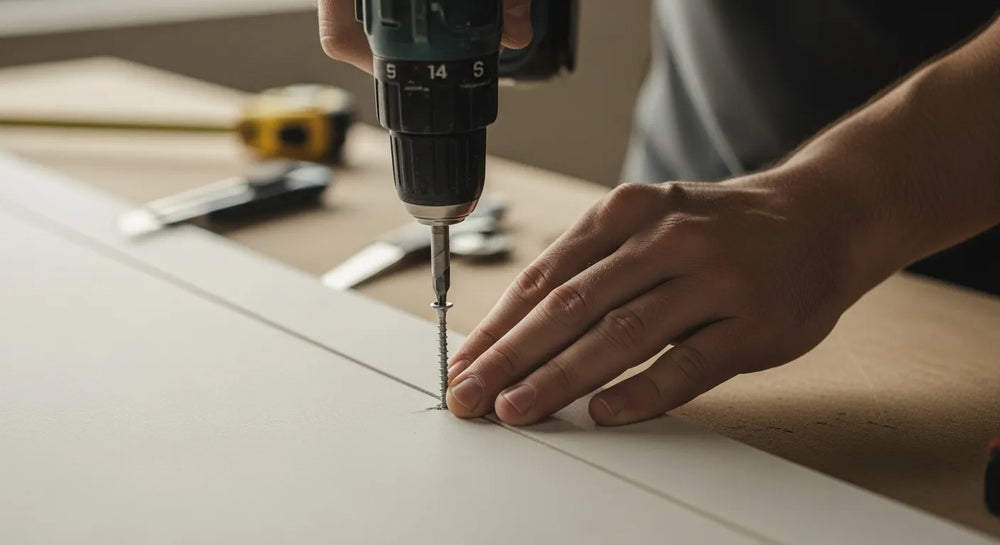
Will Drywall Screws Work in Wood? The Right Fastener Choice
Table of Contents
- Introduction
- Understanding Fastener Fundamentals: Drywall Screws vs. Wood Screws
- The Science of Connection: How Fasteners Interact with Wood
- The Risks and Limitations of Using Drywall Screws in Wood
- When Drywall Screws Might Be Acceptable (Temporary, Non-Structural)
- The Superiority of Dedicated Wood Screws for Wood Applications
- Navigating Procurement: Sourcing the Right Fasteners for Your Projects
- Strategic Sourcing for Industrial Excellence: Beyond the Screw
- Conclusion
- Frequently Asked Questions (FAQ)
Imagine a critical project delayed, not by a major component failure, but by a fastener that snapped, stripped, or simply couldn't hold. For procurement managers, MRO buyers, and design engineers, such seemingly minor issues can cascade into significant cost overruns, extended timelines, and compromised structural integrity. The temptation to use an easily accessible fastener for an unintended application, like a drywall screw in wood, often arises in the heat of a project. But what are the real implications? Is it a quick fix or a ticking time bomb for your operations?
At Maden.co, we understand that precision and reliability in every component, down to the smallest fastener, are paramount. Our mission is to democratize access to American manufacturing, ensuring that industrial buyers can connect with over 2.5 million American-made products from our network of 800+ verified U.S. manufacturers. This commitment to industrial excellence and supply chain transparency drives us to provide authoritative guidance on every aspect of your procurement process. This post will dissect the fundamental differences between drywall screws and wood screws, explore the science behind their interaction with timber, and outline the critical risks and limitations of misapplication. By understanding these nuances, you can make informed decisions that safeguard your projects, enhance durability, and ultimately, contribute to a more resilient and efficient supply chain.
Introduction
In the intricate world of construction and industrial assembly, the choice of fastener can be as critical as the primary materials it joins. A common question that frequently surfaces, particularly in situations demanding a quick fix or when specific fasteners are scarce, is whether drywall screws, designed for gypsum board, can effectively be used in wood. The answer, while nuanced, leans heavily towards caution. While a drywall screw might temporarily secure two pieces of wood, relying on it for anything beyond the most superficial, non-structural, or short-term applications can lead to significant problems, impacting both safety and the longevity of your work. This article will delve into the distinct design philosophies of drywall screws and wood screws, examine their performance characteristics when applied to timber, highlight the inherent risks of misapplication, and underscore the strategic advantages of choosing the correct, high-quality, American-made fastener for every job. Our goal is to empower you with the knowledge to make informed decisions that uphold the highest standards of industrial excellence and ensure project success.
Understanding Fastener Fundamentals: Drywall Screws vs. Wood Screws
The distinction between a drywall screw and a wood screw isn't merely aesthetic; it's a testament to highly specialized engineering designed for vastly different material properties and application requirements. To truly understand if drywall screws will work in wood, we must first appreciate the fundamental design principles behind each.
The Core Question: Can Drywall Screws Be Used in Wood?
The short answer is: yes, they can physically penetrate and hold wood, especially softer varieties, for brief periods or in very light-duty, temporary applications. However, the critical caveat is that they are not designed for wood and their performance, durability, and safety when used in timber are significantly inferior to dedicated wood screws. This distinction is crucial for procurement managers focused on total cost of ownership (TCO), MRO buyers needing reliable repairs, and design engineers ensuring structural integrity.
Drywall Screw Anatomy: Design for Gypsum Board
Drywall screws are purpose-built for attaching gypsum wallboard to wood or metal studs. Their design is optimized for rapid penetration into drywall and a strong grip on the underlying substrate, with minimal damage to the paper face of the drywall.
- Material: Typically manufactured from hardened, heat-treated steel, often to a very high Rockwell hardness. This makes them extremely brittle. This brittleness is advantageous for driving through drywall without bending, but a significant liability when subjected to the shear forces and flexing inherent in wood applications.
-
Threads:
- Coarse Thread (W-type): The most common for wood studs. These threads are widely spaced and aggressive, designed for quick engagement and strong grip in the relatively soft fibers of wood studs. An example of this type of fastener, ideal for its intended drywall application, is the 6 x 1-1/4 Coarse Thread Drywall Screw available on Maden.co.
- Fine Thread (S-type): Designed for attaching drywall to metal studs, these threads are tighter and sharper, providing better grip in harder, thinner metal. We also provide high-quality fine thread options for specific applications, such as this 6 x 1 Fine Thread Drywall Screw. While not suitable for wood, it showcases the precision in American manufacturing that we champion.
- Head Type: Primarily feature a bugle head. This conical shape helps the screw self-countersink into the drywall surface, creating a smooth finish that can be easily spackled over. The bugle head distributes pressure over a wider area, preventing the screw from tearing through the paper face of the gypsum. This design, however, offers less clamping force on wood compared to a flat-bottomed wood screw head.
- Drive Type: Most commonly Phillips head, though some modern versions may feature square or Torx drives for improved cam-out resistance.
- Coating: Often black phosphate coated for corrosion resistance, particularly against the alkaline compounds in drywall mud. This coating provides minimal protection against moisture and environmental exposure, making them unsuitable for outdoor wood applications. For a versatile, high-quality option for its intended use, consider an 8 x 4 Drywall Screw from our extensive selection of American-made fasteners.
Wood Screw Anatomy: Designed for Timber
Wood screws, in contrast, are engineered from the ground up to create robust, long-lasting connections in various types of wood. Their design prioritizes maximum holding power, shear strength, and resistance to environmental factors.
- Material: Typically made from softer, more ductile steel than drywall screws, allowing them to flex rather than snap under stress. This ductility significantly increases their shear strength, making them far more resistant to lateral forces that could cause a drywall screw to fracture. They can also be found in stainless steel for superior corrosion resistance.
- Threads: Characterized by deeper, sharper threads with a wider pitch (distance between threads) than many drywall screws. These threads are designed to cut into and grip the wood fibers securely, maximizing withdrawal resistance. Many wood screws also feature a smooth shank section near the head, allowing the screw to pull the upper piece of wood tightly against the lower piece without stripping the threads in the upper piece.
- Head Type: Come in a variety of head types, including flat (countersunk), round, and washer heads. Flat heads are designed to sit flush or below the surface, while washer heads provide a broader clamping surface for improved holding power. These designs are optimized for securing wood components firmly together.
- Drive Type: Common drives include Phillips, Square (Robertson), and Torx (Star) drives, with Square and Torx offering superior torque transfer and reduced cam-out, improving installation efficiency.
- Coatings: Available with various coatings, including galvanized (zinc-plated) for rust resistance in outdoor applications, ceramic coatings for enhanced corrosion and lubricity, and stainless steel for ultimate protection in corrosive environments.
The Science of Connection: How Fasteners Interact with Wood
The efficacy of any fastener in wood is determined by how its physical characteristics interact with the inherent properties of timber. This interaction dictates the strength, durability, and reliability of the joint.
Wood Properties: Grain Direction, Density, Moisture Content
Wood is an anisotropic material, meaning its properties vary depending on the direction of measurement. Its cellular structure, grain pattern, density, and moisture content all play critical roles in how a screw performs.
- Grain Direction: Screws driven perpendicular to the grain (across the end of a board) have significantly less holding power than those driven into the face or edge of a board (with the grain). This is because cross-grain driving primarily engages end-grain fibers, which are weaker and prone to splitting.
- Density: Denser woods offer greater screw holding power due to their more compact fiber structure. However, denser woods also require more driving torque and are more susceptible to splitting if pilot holes are not used, or if the screw's threads are too aggressive.
- Moisture Content: Wood expands and contracts with changes in moisture. Fasteners must be able to accommodate these movements without loosening or causing the wood to split. Screws used in wood with high moisture content can lose holding power as the wood dries and shrinks.
Withdrawal Resistance: Holding Power
Withdrawal resistance refers to the force required to pull a screw straight out of the wood. This is primarily determined by the screw's thread design and the density of the wood. Wood screws, with their deeper, coarser, and often tapered threads, are engineered to maximize the engagement with wood fibers, creating a powerful mechanical lock. Drywall screws, while having aggressive threads for quick penetration, often lack the depth and form to create the same robust engagement, especially as wood expands and contracts. Their brittle material also makes them prone to breaking before reaching their full withdrawal potential if stressed.
Shear Strength: Resistance to Lateral Forces
Shear strength is the ability of a screw to resist forces acting perpendicular to its axis, attempting to cut or bend it. This is where the material composition of a screw becomes paramount. Wood applications, particularly in structural or load-bearing contexts, frequently experience significant shear forces.
- Drywall Screws: Being made of hard, brittle steel, drywall screws have very low shear strength. Under lateral stress, they are highly prone to snapping cleanly in two, leading to immediate joint failure. This is why a design engineer would never specify them for load-bearing connections.
- Wood Screws: Made from more ductile steel, wood screws are designed to bend slightly under shear stress before fracturing. This flexibility provides a crucial safety margin and ensures the integrity of the joint under fluctuating loads. For any application requiring robust, long-term connections, the superior shear strength of a dedicated wood screw is non-negotiable.
Torque and Drive-in Performance
The ease and effectiveness of driving a screw are influenced by its design. Drywall screws are engineered for speed, often featuring self-tapping points. However, their aggressive threads and brittle nature can make them prone to stripping the screw head (cam-out) or snapping if too much torque is applied, especially in denser woods. Wood screws, while sometimes requiring pilot holes in harder woods, are designed to drive smoothly without stripping or fracturing, ensuring a secure installation that can withstand the test of time.
The Risks and Limitations of Using Drywall Screws in Wood
While the immediate convenience of a drywall screw might be tempting, the long-term consequences in wood applications can range from minor annoyances to catastrophic failures. For a procurement manager, understanding these risks is crucial for making decisions that prevent costly rework and safeguard reputation.
Brittle Nature and Snapping
The most significant drawback of drywall screws in wood is their inherent brittleness. The hardened steel, while excellent for penetrating gypsum board and resisting bending during initial drive, offers very little resilience. Wood, unlike drywall, is a dynamic material that moves, expands, and contracts with changes in temperature and humidity. When a drywall screw is subjected to these natural movements, or to lateral (shear) forces, it is highly susceptible to snapping. This sudden, brittle fracture leads to immediate joint failure, potentially compromising structural integrity or causing parts to detach unexpectedly.
- Scenario: An MRO buyer needs to quickly repair a wooden pallet or reinforce a wooden crate. Using drywall screws, while fast, risks the fasteners snapping under the dynamic loads of transport or handling, leading to damaged goods or injuries.
Poor Holding Power and Stripping
While drywall screws have aggressive threads, their shallower depth and coarser pitch (especially W-type) are optimized for the relatively soft, fibrous nature of wood studs behind drywall. In direct wood-to-wood applications, especially with denser woods, these threads may not grip effectively. The result is often:
- Stripping: The screw spins freely in the hole, failing to create a secure connection. This can occur during installation if too much torque is applied, or over time as wood moves.
- Reduced Withdrawal Resistance: The screw can be pulled out of the wood with relatively little force, making the joint weak and unreliable. This is particularly problematic in applications experiencing tension or pull-out forces.
Lack of Shear Strength: Structural Compromise
As discussed, the brittle material of drywall screws gives them very low shear strength. This makes them profoundly unsuitable for any application where the joint will bear weight or be subjected to sideways forces. Using them in structural wood applications, such as framing, furniture, or decking, is a critical safety hazard. The joint will simply not withstand the forces it is designed for, leading to dangerous failures.
Corrosion Issues in Outdoor or Moist Environments
The common black phosphate coating on drywall screws provides minimal protection against moisture and the elements. When exposed to outdoor conditions, high humidity, or even damp indoor environments, drywall screws will rust quickly. This corrosion not only weakens the screw structurally but can also stain the surrounding wood, creating unsightly and damaging results. Dedicated wood screws, often galvanized, ceramic-coated, or made of stainless steel, are specifically designed to resist corrosion and maintain integrity in such environments.
Aesthetics and Finish Quality
The bugle head of a drywall screw is designed to countersink cleanly into gypsum board. However, when used in wood, especially hardwoods, it often crushes the wood fibers around the head, creating an unsightly crater rather than a clean, flush finish. Furthermore, the brittle nature of the screw makes it prone to breaking off just below the surface during installation, making removal or repair extremely difficult.
Real-world Scenarios: When it Might (Briefly) Work vs. When it Fails
- Temporary Fixtures (Minimal Load): A design engineer might temporarily secure a lightweight template or jig to a workbench for a few hours. This might hold, but is not advisable for anything permanent.
- Non-Structural Shims/Spacers: Lightly tacking a shim in place where it will later be held by another, stronger fastener.
-
Utter Failure Scenarios:
- Decking/Outdoor Structures: Drywall screws will rust, snap, and fail, making the structure unsafe.
- Furniture Assembly: Joints will loosen, screws will strip, or snap, leading to wobbly or collapsing furniture.
- Framing/Load-Bearing Walls: A direct safety hazard due to lack of shear strength and brittleness.
For a procurement manager under pressure to source a specific, high-performance fastener that adheres to critical industry standards, or an MRO buyer facing an unexpected equipment breakdown, the ability to quickly find and finance a verified, U.S.-made part is a game-changer. Our platform, Maden.co, offers transparency and access to components that mitigate these risks, ensuring that the right fastener is always within reach.
When Drywall Screws Might Be Acceptable (Temporary, Non-Structural)
While the preceding section outlined significant drawbacks, there are extremely limited scenarios where a drywall screw might be used in wood, acknowledging that these are always compromises and never ideal. These situations typically involve minimal stress, temporary duration, and absolute non-structural applications.
Light-duty, Temporary Fixtures
In instances where a very lightweight item needs to be secured to a piece of wood for a very short duration, and absolutely no significant load or movement will be applied, a drywall screw might suffice. For example, temporarily tacking a thin piece of trim in place while adhesive sets, or securing a piece of plastic sheeting that will soon be removed. Even in these cases, a dedicated wood screw would still be preferable for ease of use and reliability.
Pilot Holes for Guiding Other Fasteners
Sometimes, a drywall screw, with its sharp point and aggressive threads, can be used to create a pilot hole in soft wood as a precursor for a larger, dedicated wood screw or bolt. This is not using the drywall screw as a fastener itself, but as a rudimentary drilling tool to prevent splitting. However, even for this purpose, a proper drill bit would be far more effective and less prone to breaking.
Very Soft Woods (with caveats)
In extremely soft woods like pine or balsa, a drywall screw might penetrate and hold without immediately snapping or stripping, provided very little torque is applied and no significant forces will act on the joint. However, the holding power will still be inferior to a wood screw, and the material's brittleness remains a weakness. This is generally only applicable for hobbyist projects or very delicate, non-functional assemblies.
Scenario Example: Prototyping a Light Fixture
Consider a design engineer creating a quick, non-load-bearing prototype for a decorative light fixture. They might use a drywall screw to temporarily hold two small, thin pieces of wood together, not for structural integrity, but to test an alignment or visual aesthetic. The understanding here is that the drywall screw will be replaced with the correct, permanent fastener in the final product. This illustrates a use case driven by immediate convenience in a low-stakes, temporary setting, not long-term performance.
It is crucial to reiterate that these are exceptions that prove the rule. The risks associated with using drywall screws in wood almost always outweigh the perceived convenience, particularly in industrial, commercial, or structural applications where reliability and safety are paramount. For any project demanding durability, strength, or longevity, the only responsible choice is a fastener specifically designed for wood.
The Superiority of Dedicated Wood Screws for Wood Applications
Understanding the limitations of drywall screws in wood naturally leads to appreciating the robust advantages of dedicated wood screws. These fasteners are engineered to excel in timber, providing superior performance across every critical metric. For businesses committed to industrial excellence and ensuring the longevity of their assets, the investment in the correct wood screw is a strategic decision that pays dividends in reliability and reduced TCO.
Enhanced Holding Power and Durability
Wood screws boast deeper, sharper threads and often a tapered shank, specifically designed to cut into and grip wood fibers firmly. This design maximizes both withdrawal resistance and torque retention, ensuring that joints remain tight and secure over time, even as wood naturally expands and contracts. Their ductile steel composition allows them to flex rather than snap, contributing to long-term durability and resistance to loosening.
Greater Shear Resistance for Structural Integrity
The ductile material of wood screws provides significantly higher shear strength compared to brittle drywall screws. This means they can withstand substantial lateral forces without fracturing, making them indispensable for structural applications where integrity is critical. From framing to heavy-duty furniture, the ability of a wood screw to resist shear ensures the safety and stability of the entire assembly. For any design engineer or MRO buyer, specifying fasteners that meet these robust shear requirements is non-negotiable for project success and operational safety.
Improved Driveability and Reduced Stripping
Many modern wood screws feature specialized points (like Type 17 or cutting tips) and thread designs that reduce the need for pilot holes and minimize splitting, even in harder woods. Their stronger heads and drive types (e.g., Torx or Square) offer superior torque transfer, reducing cam-out and making installation more efficient and less prone to stripping. This translates to faster assembly times, less material waste, and reduced frustration for workers on the shop floor.
Corrosion Resistance for Longevity
Wood screws are available with a wide array of coatings and material compositions (e.g., stainless steel, hot-dip galvanized, ceramic-coated) specifically formulated to resist corrosion in various environments. Whether it's an outdoor deck exposed to the elements, a marine application, or an interior project in a high-humidity area, there's a wood screw engineered to maintain its integrity and prevent unsightly staining or structural degradation due to rust. This commitment to longevity directly impacts the maintenance schedule and lifecycle cost of any wooden structure.
Application-Specific Designs
The market offers a vast array of specialized wood screws tailored for specific applications:
- Decking Screws: Designed to resist corrosion and handle the expansion/contraction of outdoor lumber.
- Cabinet Screws: Feature specific head types and thread forms for precise cabinet assembly without splitting.
- Pocket Hole Screws: Optimized for angled joints in furniture construction.
- Lag Screws: Heavy-duty fasteners for structural connections.
This specialization ensures that for every unique wood application, there is an optimally designed fastener to achieve the best possible outcome in terms of strength, durability, and aesthetics.
Navigating Procurement: Sourcing the Right Fasteners for Your Projects
For procurement managers, MRO buyers, and design engineers, the challenge extends beyond simply knowing which fastener to use; it's about efficiently sourcing the right product, ensuring its quality, and managing its acquisition within budget and timeline constraints. This is where a strategic procurement partner like Maden.co becomes invaluable.
The Importance of Specification: DIN, NPT, and Other Standards
In industrial procurement, adherence to precise specifications is not just a preference, it's a mandate for safety, compatibility, and performance. Standards like DIN (Deutsches Institut für Normung) for German industrial norms, or NPT (National Pipe Taper) for pipe threads, ensure that components meet rigorous quality and dimensional criteria. When sourcing fasteners, understanding and specifying these standards, along with material certifications (e.g., ASTM, ISO), guarantees that you receive parts that integrate seamlessly and perform reliably within your systems. These specifications are crucial for avoiding costly errors and ensuring regulatory compliance.
Supply Chain Resilience and the Value of U.S.-Made
Recent global events have underscored the critical importance of supply chain resilience. Relying on complex, international supply chains can introduce vulnerabilities like extended lead times, shipping delays, quality control issues, and geopolitical risks. Sourcing American-made products significantly enhances supply chain stability by:
- Reducing Lead Times: Shorter distances mean faster delivery.
- Ensuring Quality Control: U.S. manufacturers adhere to stringent quality standards.
- Minimizing Geopolitical Risks: Fewer international dependencies.
- Supporting Domestic Economy: Investing in American jobs and innovation.
At Maden.co, we passionately believe in the strength of American manufacturing. Our platform embodies American Manufacturing Pride, connecting you directly with the high-quality, reliable components you need.
Maden.co's Role in Streamlining Procurement
Our mission is to democratize access to American manufacturing, driving the manufacturing revival with our tagline: "America's manufacturing revival is here." We achieve this by connecting industrial buyers with an expansive network of verified U.S. manufacturers.
- Connecting with Verified U.S. Manufacturers: We rigorously vet our network of 800+ manufacturers, ensuring they meet our standards for quality, reliability, and adherence to U.S. manufacturing practices. This provides procurement managers with peace of mind, knowing they are partnering with trusted suppliers. If you are a qualified U.S. manufacturer looking to expand your reach, we invite you to Register as a vendor and join the American manufacturing revival through our platform.
- Access to 2.5+ Million Products: Our vast catalog includes everything from general hardware to highly specialized industrial components, offering unparalleled choice for every procurement need. Whether you require a specific type of wood screw, a standard machine screw, or a specialized drywall fastener, our platform can guide you. For applications where a coarse thread drywall screw is the correct choice, you can find detailed specifications and availability for the 6 x 1-1/4 Coarse Thread Drywall Screws directly on our site. Similarly, for general purpose drywall needs, our selection includes reliable options like the 8 x 4 Drywall Screw, and for fine thread applications, the 6 x 1 Fine Thread Drywall Screw exemplifies the quality available.
- Emphasis on Quality, Compliance, and Transparency: We champion Industrial Excellence and Supply Chain Transparency. Every product listed on Maden.co is backed by the reputation of its American manufacturer, often including access to certifications and detailed specifications. This level of transparency enables informed decision-making and ensures compliance with critical industry standards. To learn more about our commitment to these values, explore our story on the About Us page.
- Reducing Procurement Friction: Our Digital Innovation simplifies the buying process. From intuitive search functions to streamlined ordering, we aim to reduce the time and effort procurement professionals spend on sourcing, allowing them to focus on strategic initiatives.
We understand the complex demands placed on procurement professionals. Our entire platform is built around Customer Empowerment, providing the tools and resources to make your job easier and more effective. If you have specific sourcing questions or need assistance navigating our extensive catalog, our dedicated team is ready to help; you can reach out via our Contact Us page.
Strategic Sourcing for Industrial Excellence: Beyond the Screw
The decision of whether drywall screws will work in wood extends far beyond a simple yes or no; it delves into the realm of strategic sourcing, total cost of ownership, and the very foundation of industrial excellence. For businesses striving for efficiency, resilience, and superior product quality, every procurement choice is a strategic one.
Total Cost of Ownership (TCO) in Fastener Selection
The initial price of a fastener is often a misleading metric. True value is captured in its Total Cost of Ownership (TCO), which includes not just the purchase price, but also:
- Installation Costs: Time and labor, potential for stripping or breakage.
- Performance Costs: Failures, rework, warranty claims, lost production time due to component malfunction.
- Maintenance Costs: Replacing corroded or failed fasteners.
- Safety Costs: The human and financial cost of accidents caused by fastener failure.
A seemingly cheaper, inappropriate fastener, like a drywall screw in wood, might save pennies upfront but can lead to significant expenditures down the line in terms of repairs, replacements, and reputational damage. Investing in the correct, high-quality wood screw, even if slightly more expensive initially, dramatically reduces these downstream costs, proving to be the more economical choice in the long run. This perspective aligns perfectly with Maden.co's focus on providing components that deliver long-term value and reliability.
The Impact of Fastener Choice on Project Timelines and Rework
In manufacturing and construction, time is money. Using the wrong fastener can introduce a myriad of delays:
- Slower Installation: Incorrect screws may require more effort to drive, or lead to frequent stripping, slowing down assembly.
- Rework: Failed joints or broken fasteners necessitate dismantling and reassembly, wasting labor and materials.
- Inspections and Quality Control: Projects using substandard fasteners may require more rigorous (and costly) inspections to ensure compliance and safety, assuming they even pass.
By consistently choosing the right fastener, procurement managers can streamline operations, minimize downtime, and ensure projects stay on schedule and within budget. This emphasis on efficiency and ease of use is central to the value proposition we offer at Maden.co, America's premier B2B marketplace for U.S.-manufactured products. You can explore our extensive range of high-quality, American-made industrial supplies and components by visiting our homepage.
Empowering Procurement Managers with Digital Tools
The modern procurement landscape demands efficiency and accessibility. Digital platforms like Maden.co empower procurement managers with:
- Vast Catalogs at Their Fingertips: Instant access to millions of products, reducing time spent searching.
- Transparent Product Information: Detailed specifications, certifications, and manufacturer data for informed decisions.
- Streamlined Ordering: Automated processes that reduce administrative overhead.
- Supply Chain Visibility: Direct connections to verified U.S. manufacturers for enhanced transparency and control.
Our Digital Innovation focuses on creating a seamless and powerful user experience, making it easier than ever to source American-made excellence.
Instant Financing: A Strategic Advantage for Bulk Orders
Managing cash flow is a constant challenge for businesses, especially when undertaking capital-intensive projects or making large-volume purchases. A key differentiator on our platform is our "Instant Financing" option, available during the checkout process. This isn't just a payment method; it's a strategic tool designed to empower procurement managers and business owners to:
- Optimize Cash Flow: Defer immediate payment, freeing up capital for other operational needs.
- Facilitate Larger Orders: Make bulk purchases of critical components without straining working capital.
- Seize Opportunities: React quickly to advantageous pricing or immediate project requirements.
For example, an MRO buyer needing to stock up on a diverse range of high-quality wood screws for ongoing maintenance across multiple facilities can leverage Instant Financing to secure the necessary inventory without immediate financial strain. Similarly, a business owner preparing for a large production run can acquire all required fasteners and components upfront, ensuring smooth operations. You can apply for Instant Financing at checkout to streamline your capital-intensive projects and maintain financial flexibility.
Becoming a Verified Maden.co Manufacturer
Our commitment to American manufacturing extends to fostering growth for U.S. producers. If you are a manufacturer of high-quality industrial products, we invite you to join our growing network. Partnering with Maden.co means gaining access to a vast network of industrial buyers, enhancing your market reach, and contributing to the resurgence of American manufacturing. We believe in providing a platform where American-made components are as accessible and convenient as any global alternative, reinforcing our vision for the future of U.S. industry. Qualified U.S. manufacturers can Register as a vendor and join the American manufacturing revival today.
Conclusion
The question of "will drywall screws work in wood" might seem simple, but as we've explored, the answer is complex and carries significant implications for project reliability, safety, and cost. While a drywall screw might offer a fleeting moment of convenience, its fundamental design for gypsum board makes it a poor, often dangerous, substitute for a dedicated wood screw in timber applications. The brittle nature, low shear strength, inadequate holding power, and poor corrosion resistance of drywall screws inevitably lead to compromised integrity, rework, and increased total cost of ownership. For professionals entrusted with the integrity of industrial projects, the choice of fastener is a critical decision demanding careful consideration.
At Maden.co, we champion the principles of American Manufacturing Pride, Digital Innovation, Supply Chain Transparency, Industrial Excellence, and Customer Empowerment. We are dedicated to providing procurement managers, MRO buyers, and design engineers with direct access to the highest quality, U.S.-made components. Our platform simplifies the sourcing process, offering over 2.5 million products from 800+ verified American manufacturers, ensuring that you can always find the right fastener for the job – be it a specialized wood screw, a high-strength bolt, or the correct drywall screw for its intended purpose.
Don't let a seemingly small component undermine the success of your critical projects. Make the strategic choice to prioritize quality, reliability, and the resilience of a robust American supply chain. We invite you to explore our extensive catalog of American-made products today. Discover how partnering with Maden.co can enhance your procurement processes, improve total cost of ownership, and ensure the lasting success of your operations. When you're ready to make a significant purchase, remember that you can apply for Instant Financing at checkout to streamline your capital-intensive projects. America's manufacturing revival is here, and we're building it together, one reliable connection at a time.
Frequently Asked Questions (FAQ)
Q1: What is the primary reason drywall screws are not recommended for wood applications?
A1: The primary reason is their material composition and design. Drywall screws are made of hardened, brittle steel, which gives them very low shear strength. This means they are highly prone to snapping under the lateral (sideways) forces commonly experienced in wood joints. Additionally, their thread design and bugle head are optimized for gypsum board, leading to poor holding power and potential splitting or crushing of wood fibers.
Q2: Can drywall screws cause damage to wood?
A2: Yes, they can. The aggressive threads, combined with the screw's brittle nature and bugle head, can cause wood to split, especially in denser hardwoods or when driven too close to an edge. The bugle head often crushes wood fibers rather than countersinking cleanly, creating unsightly and structurally weaker depressions.
Q3: What are the key advantages of using a dedicated wood screw over a drywall screw for wood projects?
A3: Dedicated wood screws offer several key advantages: superior shear strength (due to more ductile material), higher withdrawal resistance (deeper, coarser threads designed for wood), better corrosion resistance (various coatings or stainless steel options), and application-specific designs (different head types, shank designs, and points for optimal performance in wood). These features ensure a stronger, more durable, and safer joint.
Q4: How does Maden.co help procurement managers find the right fasteners for their projects?
A4: Maden.co streamlines procurement by providing access to over 2.5 million American-made products from 800+ verified U.S. manufacturers. We emphasize supply chain transparency, allowing buyers to find high-quality components that adhere to industry standards. Our platform's digital innovation and focus on industrial excellence help procurement managers efficiently source the correct fasteners, reducing friction and ensuring long-term project success, with options like Instant Financing for strategic purchasing.


