
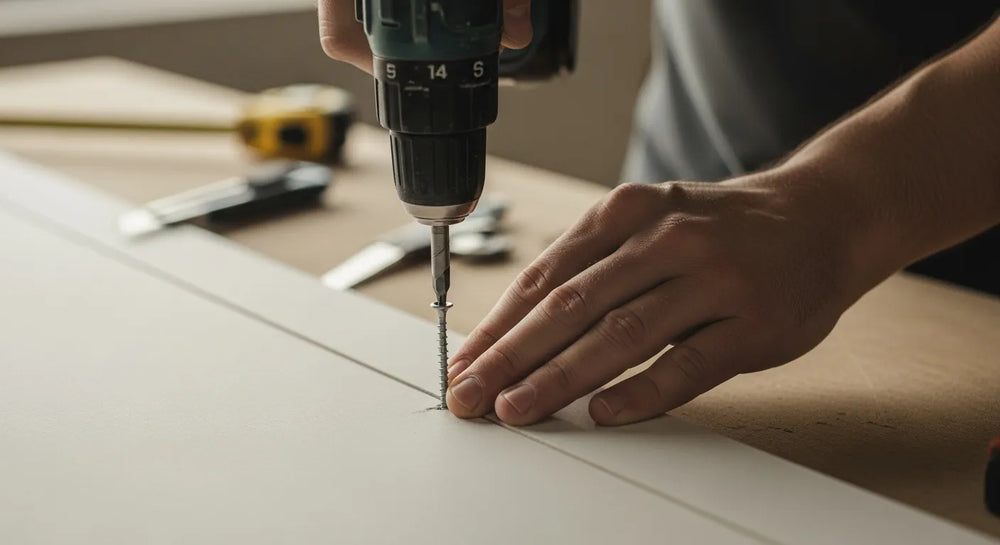
Drywall Screw Edge Distance: Preventing Cracks, Ensuring Stability
Table of Contents
- Introduction
- Why Drywall Screw Edge Distance Matters: Beyond Aesthetics
- The Golden Rule: Recommended Drywall Screw Edge Distances
- Factors Influencing Optimal Edge Placement
- Common Issues from Incorrect Edge Placement and How to Avoid Them
- Best Practices for Flawless Drywall Installation
- The Maden.co Advantage: Sourcing American-Made Drywall Screws for Reliability
- Streamlining Your Procurement with Maden.co's Digital Tools
- Conclusion
- FAQ
Introduction
Imagine a project manager overseeing a critical build, only to discover unsightly cracks marring newly installed drywall – a common and frustrating setback that often traces back to a seemingly minor detail: the placement of drywall screws. Such flaws not only compromise the aesthetic appeal of a structure but also signal underlying issues with structural integrity, leading to costly reworks, extended timelines, and a blow to overall project profitability. The seemingly simple act of fastening drywall is, in fact, a nuanced craft where precision is paramount.
This article delves into one of the most fundamental yet frequently overlooked aspects of drywall installation: how close to the edge drywall screws should be placed. We will explore the critical reasons why this seemingly small detail can have monumental impacts on a project's success, examining the recommended distances, the myriad factors that influence optimal placement, and the common pitfalls to avoid. Our aim is to provide procurement managers, MRO buyers, design engineers, and business owners with the authoritative insights needed to ensure flawless, durable drywall installations. Ultimately, understanding and implementing best practices for drywall screw edge distance, coupled with the strategic selection of high-quality, U.S.-made fasteners, is fundamental to achieving robust, aesthetically pleasing, and long-lasting results, thereby enhancing project efficiency and reducing long-term operational costs.
Why Drywall Screw Edge Distance Matters: Beyond Aesthetics
The correct placement of drywall screws, particularly their distance from the panel's edge, is far more critical than just avoiding visible blemishes. It underpins the entire integrity and longevity of a drywall installation. Ignoring this fundamental principle can lead to a cascade of problems that are both expensive and time-consuming to rectify.
Structural Integrity and Material Preservation
The primary function of a drywall screw is to securely fasten the gypsum panel to the framing beneath. When screws are placed too close to the edge, they risk "blowing out" the delicate gypsum core and paper facing, compromising the material's ability to hold the fastener firmly. This creates a weak point where the screw can easily pull through, leading to:
- Panel Sagging: Especially prevalent in ceilings or where panels bear significant stress.
- Reduced Shear Strength: The drywall's ability to resist lateral forces is diminished, making it more susceptible to damage from impacts or building movement.
- Compromised Fire Rating: For Type X drywall, correct fastening is essential to maintain its fire-resistant properties. Blowouts can create pathways for fire spread.
Professional Finish and Reduced Rework
The goal of any drywall installation is a smooth, monolithic surface ready for paint or other finishes. Incorrect screw placement directly undermines this goal:
- Visible Cracks: Screws too close to the edge, or driven at an incorrect angle, often cause cracks that propagate from the screw head outwards. These are notoriously difficult to conceal, even with multiple layers of joint compound.
- "Screw Pops": While often attributed to framing movement, screw pops can also result from a weak grip on the gypsum due to improper edge placement, allowing the panel to flex and push the screw head outward over time.
- Increased Finishing Time and Material Waste: Each crack or pop requires additional patching, sanding, and potentially re-priming and repainting. This translates directly into higher labor costs, increased consumption of finishing materials, and extended project timelines, impacting the overall Total Cost of Ownership (TCO).
Long-Term Durability and Cost Implications
Investing in a robust drywall installation from the outset pays dividends in the long run. By adhering to proper edge distance guidelines:
- Enhanced Longevity: The installed drywall will better withstand the normal stresses of building occupancy, reducing the need for premature repairs or replacement.
- Reduced Maintenance: Fewer cracks, pops, and structural issues mean less ongoing maintenance, freeing up valuable MRO budgets for other critical areas.
- Reputation and Client Satisfaction: A high-quality finish reflects positively on the contractors and the procurement choices made, contributing to a strong business reputation. Conversely, recurring issues stemming from poor installation can severely damage client trust and lead to costly disputes.
For a business owner, these are not just aesthetic concerns but tangible financial and operational risks. Prioritizing meticulous installation practices and ensuring the procurement of reliable, U.S.-made components is a strategic investment in project success and lasting asset value.
The Golden Rule: Recommended Drywall Screw Edge Distances
Establishing the correct distance for drywall screws from the edge of the panel is a foundational principle in achieving a robust and stable installation. While specific recommendations can vary slightly based on regional building codes, drywall type, and manufacturer guidelines, a generally accepted "golden rule" provides a reliable benchmark for professionals.
Standard Recommendations for Drywall Screw Placement
The most common recommendation for the distance from a drywall screw to the edge of the panel is 3/8 to 1/2 inch (approximately 9.5 mm to 12.7 mm).
-
Why this range? This specific distance strikes a critical balance:
- Maximizing Material Integrity: Placing the screw further than 1/2 inch from the edge can waste valuable space on the stud, potentially leading to less secure fastening, especially if the stud is narrow or crooked. More importantly, it can cause the unsupported edge of the drywall to flex or vibrate, contributing to cracks along seams.
- Preventing Edge Blowouts: Placing the screw closer than 3/8 inch significantly increases the risk of the gypsum core crumbling, tearing the paper face, and creating an ineffective anchor point. This phenomenon, known as a "blowout," severely weakens the fastening and can lead to immediate cracks or screw pops later on.
Specific Considerations for Different Edges
- Factory Edges (Tapered Edges): These are the long, slightly recessed edges designed for easy taping and mudding. Screws along these edges should still adhere to the 3/8 to 1/2-inch rule, ensuring they penetrate the framing adequately without weakening the tapered profile.
- Cut Edges (Butt Joints): These are the non-tapered ends of the drywall sheet, typically requiring more careful handling. When creating butt joints, it's crucial to maintain the 3/8 to 1/2-inch distance. Due to the lack of taper, these joints often require more mud and careful feathering, making any edge damage from screw placement even more problematic to conceal.
- Outside Corners and Trim: When installing drywall near outside corners, where metal or vinyl corner bead will be applied, the edge distance rule remains. The corner bead itself will be fastened with its own screws or nails, but the drywall panel beneath needs its own secure fastening to the framing, maintaining the recommended distance from its raw edge to prevent crumbling under the corner bead.
- Ceilings vs. Walls: While the edge distance rule remains consistent, screws on ceilings often need to be spaced more closely (e.g., every 7 inches on edges, 12 inches in the field) to counteract gravity and prevent sagging. This makes adherence to precise edge distance even more critical, as minor blowouts on a ceiling are more prone to cause issues.
By consistently applying this golden rule, procurement managers can ensure that project specifications align with best practices, while MRO buyers and design engineers can better troubleshoot installation challenges and specify the correct quality of fasteners.
Factors Influencing Optimal Edge Placement
While the 3/8 to 1/2-inch rule provides a strong foundation, several variables can influence the practical application and success of drywall screw edge placement. Understanding these factors is crucial for ensuring a durable and compliant installation.
Drywall Sheet Type and Thickness
The composition and dimensions of the drywall panel itself play a significant role in how close screws can be placed to the edge.
- Standard Gypsum Board (1/2" and 5/8"): These are the most common thicknesses. The 3/8" to 1/2" rule is primarily based on their properties.
- Type X (Fire-Rated) Drywall: Denser and typically 5/8" thick, Type X offers enhanced fire resistance. While its core is more robust, the paper facing can still tear if screws are too close to the edge. Adhering to the standard distance is still critical to maintain the panel's fire-rated integrity, as a blowout could compromise its resistance.
- Moisture-Resistant (Green Board) and Abuse-Resistant Panels: These specialized boards might have different core compositions or facings. Always consult manufacturer specifications, but generally, the standard edge distance applies to prevent compromising their specialized properties.
- Impact of Thickness: Thicker drywall (5/8") generally provides a bit more "meat" for the screw to grip compared to 1/2", potentially offering a slight margin of error. However, strict adherence to the recommended distance is always the safest approach to avoid edge crumbling regardless of thickness.
Framing Material and Condition
The material and condition of the underlying framing determine how effectively a screw can bite and hold, which indirectly impacts edge placement tolerance.
-
Wood Studs:
- Softwood vs. Hardwood: Softer woods (like pine) are more forgiving if a screw is slightly off-center, but also less resistant to screw pull-out if the edge is compromised. Harder woods (like oak) offer superior holding power but can be more prone to splitting if a screw is too close to the edge without proper alignment.
- Moisture Content: Wet or warped studs can cause future movement, leading to screw pops or stress on drywall edges. Ensure framing is dry and straight.
- Stud Width: Standard 1.5-inch wide studs are ideal. Narrower blocking or furring strips leave less room for error in edge placement.
-
Metal Studs:
- Gauge: Lighter gauge metal studs (e.g., 25-gauge) are more prone to flexing or deformation if screws are driven too aggressively or too close to a flange edge. Heavier gauges offer more rigidity.
- Screw Type Compatibility: Metal studs require fine-thread, self-tapping drywall screws. These screws are designed to cut their own threads without splitting the metal, but careful driving is still necessary to avoid "spinning out" or damaging the stud flange.
Regardless of material, ensuring the framing is plumb, level, and securely anchored is fundamental. A solid backing minimizes movement, which is critical for maintaining the integrity of drywall edges.
Drywall Screw Type and Length
The choice of screw itself is paramount. Not all drywall screws are created equal, and their design directly impacts effective edge placement.
- Coarse Thread Drywall Screws: These screws feature widely spaced threads designed to bite aggressively into wood studs. Their strong grip minimizes the chance of screws backing out, but if driven too close to a drywall edge, they can exert more outward pressure, increasing the risk of crumbling. For a high-strength solution suitable for wood framing, you can find detailed specifications for 6 x 1-1/4 Coarse Thread Drywall Screws here. When using such screws, maintaining the 3/8" to 1/2" edge distance is particularly important to leverage their gripping power without causing material damage.
- Fine Thread Drywall Screws: Engineered for metal studs, these screws have finer, sharper threads that efficiently tap into the steel without stripping. They reduce friction during driving, making them less likely to cause blowouts compared to coarse threads if driven slightly too close to an edge, but the general 3/8" to 1/2" rule still applies for optimal panel integrity. For your metal framing projects, consider the robust design of the 6 x 1 Fine Thread Drywall Screw, engineered for secure, lasting connections.
- Length: Drywall screws should penetrate the framing by at least 5/8 to 3/4 inch. For 1/2-inch drywall on wood studs, a 1-1/4 inch screw is standard. For 5/8-inch drywall, 1-5/8 inch screws are typical. Insufficient penetration leads to weak fastening and screw pops, while excessively long screws are rarely necessary and can hit obstructions. The right length ensures maximum holding power without unnecessary stress on the drywall edge.
- Head Type (Bugle Head): Modern drywall screws almost universally feature a bugle head. This conical shape helps the screw self-countersink without tearing the paper facing, allowing for a flush finish that is easily mudded over. This design minimizes concentrated pressure at the screw head, which helps prevent edge damage. For projects requiring robust fastening and secure edge integration, consider sourcing 8 x 4 Drywall Screws from our marketplace, designed for superior holding power and consistent performance.
Installation Techniques and Tools
Even with the right screws and materials, poor technique can undermine the best intentions.
- Proper Torque and Depth Setting: The goal is to drive the screw until the head is just below the surface of the paper, creating a slight dimple, without breaking the paper facing or over-driving into the gypsum. A screw gun with an adjustable clutch or depth-setting nose is indispensable for consistent, damage-free fastening. Over-driving is a primary cause of blowouts, especially near edges.
- Hand Placement: When fastening, supporting the drywall panel firmly against the framing with one hand while driving the screw with the other can prevent panel movement and ensure a clean, precise entry, especially near edges.
- Angle of Drive: Screws should always be driven perpendicular to the drywall surface. Angled screws reduce holding power and increase the risk of edge damage.
Environmental Factors
Environmental conditions during and after installation can place stress on drywall and its fasteners.
- Temperature and Humidity Fluctuations: Significant changes can cause lumber to expand and contract, putting pressure on screws and leading to movement that can manifest as pops or cracks, particularly around weakly fastened edges.
- Building Movement: Settling, seismic activity, or heavy foot traffic can all exert forces on drywall. Robust fastening, including correct edge distance, helps the assembly better withstand these stresses.
By meticulously considering all these factors, procurement managers can specify the correct American-made components, and project teams can execute installations that stand the test of time, free from premature failures and costly repairs. At Maden.co, we emphasize Industrial Excellence in every product, understanding that the quality of each component, like a drywall screw, contributes to the overall success and longevity of your projects.
Common Issues from Incorrect Edge Placement and How to Avoid Them
The consequences of failing to adhere to optimal drywall screw edge distance are varied and can compromise both the structural integrity and aesthetic quality of an installation. Understanding these common issues and implementing preventative measures is crucial for any project manager, MRO buyer, or design engineer.
Crumbling Edges and Blowouts
Issue: This is the most direct and immediate result of placing screws too close to the edge. The delicate gypsum core, especially near the tapered or cut edges, simply crumbles under the pressure of the screw, leading to a "blowout." The screw loses its grip, and the paper facing is torn.
Impact:
- Weak Fastening: The screw is no longer effectively securing the drywall to the stud.
- Visible Damage: Even with multiple layers of joint compound, these areas are prone to showing through as an unsightly flaw.
- Increased Rework: Requires patching with setting-type compound, more sanding, and potentially re-screwing, adding significant labor and material costs.
Avoidance:
- Strict Adherence to Distance: Always measure and mark screw placement 3/8 to 1/2 inch from the edge. Use a chalk line or measuring tape for consistency.
- Controlled Driving: Use a screw gun with a clutch or depth-setting nose to prevent over-driving. Stop when the screw head is just below the surface, creating a slight dimple without tearing the paper.
- Proper Backing: Ensure there's a solid, stable stud or joist directly behind the screw's intended location.
Popped Screws
Issue: Screw heads that protrude through the finished surface, creating small bumps or cracks. While often linked to framing movement or moisture fluctuations, improper edge placement can be a significant contributing factor. If a screw is placed too close to the edge and doesn't have sufficient gypsum to grip, or if the edge is compromised by a blowout, the screw's holding power is weakened. Over time, any slight movement of the framing or stress on the panel can cause the screw to pull through the compromised gypsum, resulting in a pop.
Impact:
- Aesthetic Flaws: Highly visible and challenging to permanently fix without addressing the underlying issue.
- Recurring Problem: If the cause isn't resolved, screw pops will reappear even after repair.
- Requires Extensive Rework: Involves scraping, re-securing (often with a new screw next to the old one), re-mudding, and re-finishing.
Avoidance:
- Optimal Edge Distance: As established, this is foundational to strong fastening.
- Adequate Screw Penetration: Ensure screws penetrate the framing by at least 5/8 to 3/4 inch.
- Stable Framing: Install drywall only on dry, stable, and properly aligned framing. Allow lumber to acclimate to ambient conditions.
- Controlled Driving Depth: Prevent over-driving, which damages the gypsum and weakens the screw's hold.
Cracked Drywall (Beyond Screw Locations)
Issue: Cracks appearing in the drywall surface, often originating from corners, door frames, or along seams. While sometimes caused by structural shifting, cracks can also be exacerbated by incorrectly placed screws near panel edges or corners. Over-tightening or placing screws too close to a stress point (like a cut corner) can create an initial stress riser in the gypsum that propagates into a larger crack over time.
Impact:
- Compromised Aesthetics: Clearly visible, distracting, and detract from the professional finish.
- Structural Weakness: Large cracks can indicate underlying instability or inadequate fastening.
- Difficult Repairs: May require cutting out and patching sections of drywall, not just mudding over.
Avoidance:
- Maintain Edge Distance at All Corners and Cuts: Be especially diligent when cutting around openings or creating interior corners.
- Use a Depth-Setting Screw Gun: Avoid over-tightening. The dimple should be just enough to conceal the screw head, not to crush the gypsum.
- Stagger Joints: On walls and ceilings, avoid continuous vertical or horizontal seams. Staggering ensures that stress is distributed more evenly across the framing, reducing the likelihood of cracks propagating along a single weak line.
- Relief Cuts: When cutting drywall around openings like windows or doors, ensure that all corners are cut to a square or slightly rounded shape, avoiding stress points that radiate from sharp interior angles.
By proactively addressing these common pitfalls with meticulous attention to detail during installation and by sourcing premium, U.S.-made drywall screws that offer consistent quality and performance, businesses can significantly reduce project downtime, labor costs, and the frustration of costly reworks. Our commitment at Maden.co is to empower Customer Empowerment by providing the reliable components and knowledge necessary for these critical outcomes.
Best Practices for Flawless Drywall Installation
Achieving a flawless drywall installation goes beyond merely attaching panels to studs. It requires a systematic approach, combining precision in fastening with an understanding of material behavior and sound construction principles. Implementing these best practices ensures not only aesthetic excellence but also long-term structural integrity.
Measure and Mark for Consistent Placement
Consistency is key to preventing issues. Before driving the first screw, take the time to accurately mark your fastening points.
- Chalk Lines: For horizontal runs across studs, use a chalk line to snap guide marks on the drywall surface, indicating the center of each stud. This ensures every screw hits its target accurately.
- Edge Markings: Lightly mark the 3/8 to 1/2-inch line along all edges where screws will be placed. This visual guide drastically reduces the chance of accidental blowouts.
- Spacing: Follow recommended spacing: typically 12-16 inches apart along studs in the field of the panel, and often 7 inches apart along the edges, particularly for ceilings or high-stress areas. Double-check local building codes as requirements can vary.
Stagger Joints Effectively
Never allow vertical or horizontal drywall seams to align on consecutive panels. This creates a continuous weak point that is highly susceptible to cracking due to building movement.
- Walls: Stagger vertical butt joints from one course of drywall to the next. For example, if the first sheet ends at stud A, the next sheet above it should end at stud B.
- Ceilings: Similarly, stagger end joints between rows of drywall.
- Benefits: Staggering distributes stress across multiple framing members, significantly reducing the risk of cracks and enhancing the overall rigidity of the wall or ceiling assembly.
Start from the Center, Work Outwards
This technique helps to flatten the drywall panel firmly against the framing, preventing humps or bows that could lead to screw pops or uneven surfaces.
- Process: Begin by driving screws in the center of the drywall sheet, moving outwards towards the edges. This presses the panel tightly against the studs, ensuring a secure fit before the edges are fastened.
- Benefit: Reduces internal stress within the panel, creating a more stable foundation for finishing.
Utilize the Right Tools with Precision
The quality of your tools and how you use them profoundly impacts the success of your installation.
- Depth-Setting Screw Gun: This is arguably the most important tool for drywall installation. It prevents over-driving screws, which is a leading cause of paper tears, blowouts, and weakened gypsum. The clutch or nosepiece automatically stops the screw when the head is just below the surface, creating a perfect dimple for mudding.
- Measuring Tapes and Levels: Essential for accurate marking, plumb lines, and ensuring panels are installed straight.
- Utility Knives with Sharp Blades: For clean, precise cuts. Dull blades tear paper and create ragged edges that are harder to finish and more prone to damage when screws are driven nearby.
Consider Using Adhesives Strategically
For specific applications, especially ceilings or walls where maximum rigidity is desired, using a construction adhesive in conjunction with screws can offer superior results.
- Benefits: Adhesives create a stronger bond between the drywall and the framing, reducing the number of screws required (and thus reducing potential screw pops) and enhancing the overall shear strength of the assembly. This also means less reliance on each individual screw's grip, subtly reducing the risk associated with edge placement, though proper screw discipline remains critical.
- Application: Apply a continuous bead of adhesive along the face of the studs or joists before fastening the drywall.
Quality Control and Inspection
Even with the best practices, mistakes can happen. A thorough inspection process during and after installation is vital.
- Before Mudding: Carefully inspect every screw head. Ensure they are all dimpled slightly below the surface, with no torn paper or proud heads. Rectify any issues before applying joint compound.
- After Priming: Priming often reveals imperfections that were not visible before. Address any screw pops, cracks, or uneven areas before the final paint coat.
By focusing on these best practices and ensuring the procurement of high-quality, reliable, U.S.-made drywall screws, project managers and construction teams can achieve installations that are not only visually impeccable but also incredibly durable and long-lasting.
The Maden.co Advantage: Sourcing American-Made Drywall Screws for Reliability
In the meticulous world of industrial procurement and MRO, the provenance and quality of components like drywall screws are not mere details but strategic considerations that impact project timelines, long-term durability, and overall profitability. At Maden.co, we understand these imperatives deeply. Our mission is to democratize access to American manufacturing, actively connecting industrial buyers with an expansive network of over 2.5 million American-made products from our 800+ verified U.S. manufacturers. This commitment extends directly to essential fasteners like drywall screws, where consistent quality and supply chain resilience are paramount.
Why U.S.-Made Drywall Screws Are a Strategic Choice
Choosing U.S.-made drywall screws through Maden.co offers distinct advantages that resonate with our core values of American Manufacturing Pride, Digital Innovation, Supply Chain Transparency, Industrial Excellence, and Customer Empowerment.
- Consistent Quality and Adherence to Standards: U.S. manufacturers operate under stringent quality control standards, often exceeding international benchmarks. This means when you source drywall screws from our marketplace, you're investing in fasteners made with precise thread profiles, optimal metallurgy, and durable coatings. This consistent quality significantly reduces the risk of stripping, breaking, or premature failure, ensuring that each screw contributes effectively to the overall integrity of your drywall installation. This reliability directly impacts the success of maintaining optimal edge distance, as a well-formed screw is less likely to cause blowouts or damage the gypsum board.
- Material Purity and Performance: American-made screws often specify high-grade steel alloys with consistent tempering, leading to predictable performance characteristics. Coatings for corrosion resistance, such as phosphate or ceramic, are applied with greater consistency, offering superior protection in various environmental conditions. This attention to detail translates into fasteners that hold better, last longer, and perform reliably even when driven close to a drywall edge.
- Supply Chain Resilience and Faster Lead Times: The global supply chain has proven its vulnerability repeatedly. Sourcing U.S.-made products mitigates risks associated with geopolitical instability, customs delays, and unpredictable shipping costs. With Maden.co, you connect directly with domestic manufacturers, often resulting in shorter lead times, greater inventory availability, and a more robust supply chain for critical components. This ensures that a project is never stalled waiting for essential fasteners.
- Support for American Economy: Every purchase of a U.S.-made product through Maden.co contributes directly to American jobs, innovation, and economic growth. This alignment with our vision – to become the definitive platform that proves American-made components are as accessible and convenient as any global alternative – is not just patriotic; it's a sound business decision that strengthens the entire industrial ecosystem.
How Maden.co Simplifies Your Procurement Process
We’ve built Maden.co to be more than just a marketplace; it's a strategic partner in fostering a more reliable and efficient procurement process.
- Vast, Curated Catalog: Our platform provides unparalleled access to a diverse range of U.S.-manufactured industrial components, including a comprehensive selection of drywall screws for every application, from coarse-thread options ideal for wood framing, like the 6 x 1-1/4 Coarse Thread Drywall Screws, to fine-thread solutions for metal studs, such as the 6 x 1 Fine Thread Drywall Screw. You can explore our extensive catalog of U.S.-manufactured products to find exactly what your project demands.
- Verified Manufacturers: We meticulously vet all our 800+ manufacturers, ensuring you're connecting with trusted, high-quality American producers. This transparency reduces procurement friction and gives you confidence in every purchase.
- Improved Total Cost of Ownership (TCO): By providing direct access to quality U.S.-made products, Maden.co helps businesses reduce the hidden costs associated with low-quality overseas components – fewer failures, less rework, and more predictable project outcomes all contribute to a lower TCO. For heavy-duty applications demanding superior strength and reliability, our marketplace features robust options like the 8 x 4 Drywall Screw, designed to meet rigorous industrial demands.
- Digital Innovation: Our user-friendly platform streamlines the sourcing process for procurement managers, MRO buyers, and design engineers. From detailed product specifications to easy reordering, we leverage digital tools to enhance efficiency.
- Strategic Sourcing Scenarios: For a procurement manager under pressure to source a specific coarse thread drywall screw for a large residential project, or an MRO buyer needing fine thread screws for a rapid commercial fit-out, Maden.co provides immediate access to verified, U.S.-made options, often critical for meeting compliance with specific industry standards or project requirements.
"America's manufacturing revival is here," and Maden.co is at its forefront, providing the essential infrastructure and commitment to quality that empowers businesses to build stronger, more resilient projects. If you are a qualified U.S. manufacturer looking to expand your reach, we invite you to register as a vendor and join the American manufacturing revival on our platform. To learn more about our mission to champion American manufacturing, you can find further details here.
Streamlining Your Procurement with Maden.co's Digital Tools
In today's fast-paced industrial landscape, efficiency in procurement is not just a convenience; it's a competitive advantage. Maden.co is meticulously designed to meet the sophisticated needs of procurement managers, MRO buyers, and design engineers, providing a robust digital platform that simplifies the sourcing of critical U.S.-made components. Our goal is to transform complex procurement challenges into streamlined, transparent, and highly effective processes.
Effortless Product Discovery and Specification
Our user-friendly interface allows you to quickly navigate a vast catalog of over 2.5 million American-made products. Whether you're searching for specific fasteners, industrial machinery parts, or raw materials, our powerful search and filtering capabilities ensure you can pinpoint the exact component your project requires. For a design engineer needing specific material certifications for a new prototype, or an MRO buyer facing an unexpected equipment breakdown and needing a verified, U.S.-made part immediately, the ability to quickly find and compare options is a game-changer. Our platform provides detailed specifications, often including material data sheets and compliance information, to ensure you can make informed decisions with confidence. This level of detail and accessibility reduces procurement friction and saves invaluable time, allowing your team to focus on core operations rather than exhaustive sourcing efforts.
Instant Financing: A Strategic Tool for Business Growth
A key differentiator that sets Maden.co apart is our innovative "Instant Financing" option. We recognize that managing cash flow effectively and facilitating larger volume purchases are critical for businesses, particularly for capital-intensive projects or when scaling operations.
- Empowering Capital-Intensive Projects: Instant Financing is not merely a payment method; it's a strategic tool designed to empower your business. It allows you to acquire the necessary components – whether a bulk order of 8 x 4 Drywall Screws for a new construction phase or a specialized industrial part – without immediately tying up significant working capital. This flexibility enables you to maintain liquidity, seize growth opportunities, and ensure project continuity.
- Seamless Integration at Checkout: The process is designed for maximum convenience. When you are ready to complete your purchase on Maden.co, the option to apply for Instant Financing is available directly at checkout. This integration ensures a smooth and rapid transaction, minimizing delays and accelerating your project timelines.
- Streamlining Large-Volume Orders: For procurement managers needing to stock up on high-demand items or fulfill large project requirements, Instant Financing can be an invaluable asset. It allows for larger, more efficient purchases, often leading to better unit pricing and reduced shipping costs over time, further enhancing your Total Cost of Ownership.
We encourage our valued customers to leverage this powerful feature. You can apply for Instant Financing at checkout to streamline your capital-intensive projects and ensure you always have the necessary inventory of high-quality, U.S.-made components. This strategic financing option, combined with our commitment to transparency and efficiency, underscores our dedication to Customer Empowerment.
Enhanced Communication and Support
Should you have unique sourcing requirements, require assistance with a specific order, or need expert advice on product specifications, our dedicated team is readily available. We believe in proactive support and clear communication to foster successful partnerships. If you have specific sourcing questions or need personalized guidance, our team is ready to help; simply contact us directly. We are here to ensure your experience on Maden.co is seamless, efficient, and ultimately, contributes to the successful execution of your projects.
Conclusion
The seemingly minor detail of how close to the edge drywall screws are placed holds profound implications for the success and longevity of any construction or renovation project. We've established that strict adherence to the 3/8 to 1/2-inch rule is not merely an aesthetic concern but a critical factor in preventing costly structural compromises, unsightly flaws, and frustrating rework. From understanding the nuanced impact of drywall type and framing material to mastering installation techniques and selecting the right screw, precision at every step is key to avoiding crumbling edges, screw pops, and widespread cracking.
Beyond meticulous execution, the quality and provenance of your materials are indispensable. By choosing high-quality, U.S.-made drywall screws, you invest in components that meet rigorous standards, ensuring consistent performance and contributing to the overall resilience of your supply chain. At Maden.co, we are proud to be at the forefront of "America's manufacturing revival," connecting industrial buyers like you with over 2.5 million American-made products from our network of 800+ verified U.S. manufacturers. Our platform embodies our values of American Manufacturing Pride, Digital Innovation, and Industrial Excellence, making it easier than ever to access the reliable components your projects demand.
Don't let the crucial details undermine your next build. Empower your projects with the precision of proper installation techniques and the superior quality of American-made components. We invite you to explore the extensive catalog on Maden.co and discover the difference that quality and strategic sourcing can make. Streamline your procurement process, enhance your project's durability, and take advantage of our convenient Instant Financing option at checkout to manage your capital effectively. Visit Maden.co today to discover the right U.S.-manufactured products to elevate your projects and build with confidence.
FAQ
Q1: What is the ideal distance for drywall screws from the edge?
A1: The generally accepted ideal distance for drywall screws from the edge of the panel is between 3/8 to 1/2 inch (approximately 9.5 mm to 12.7 mm). This distance provides optimal grip into the gypsum core and prevents crumbling or blowouts while ensuring secure fastening to the underlying framing.
Q2: What happens if drywall screws are too close to the edge?
A2: If drywall screws are placed too close to the edge (typically less than 3/8 inch), they can cause the gypsum core and paper facing to crumble or tear, a phenomenon known as a "blowout." This significantly weakens the screw's holding power, leading to loose panels, visible cracks around the screw head, and an increased risk of screw pops and overall structural instability in the long term.
Q3: Are there different edge distance rules for ceilings versus walls?
A3: The fundamental 3/8 to 1/2 inch edge distance rule remains consistent for both ceilings and walls. However, screws on ceilings are often spaced more closely (e.g., every 7 inches along edges) compared to walls (typically every 12-16 inches) to counteract gravity and prevent sagging. This increased density of screws makes precise edge placement even more critical on ceilings.
Q4: How does screw type (coarse vs. fine thread) affect edge placement?
A4: While the general 3/8 to 1/2 inch edge distance applies to both, coarse thread drywall screws, designed for wood studs, have more aggressive threads that can exert greater outward pressure and are slightly more prone to causing blowouts if driven too close to the edge. Fine thread drywall screws, designed for metal studs, have finer threads that cut more smoothly into metal without as much outward force, potentially being slightly more forgiving if marginally off, but still requiring adherence to the recommended edge distance for optimal panel integrity.


