
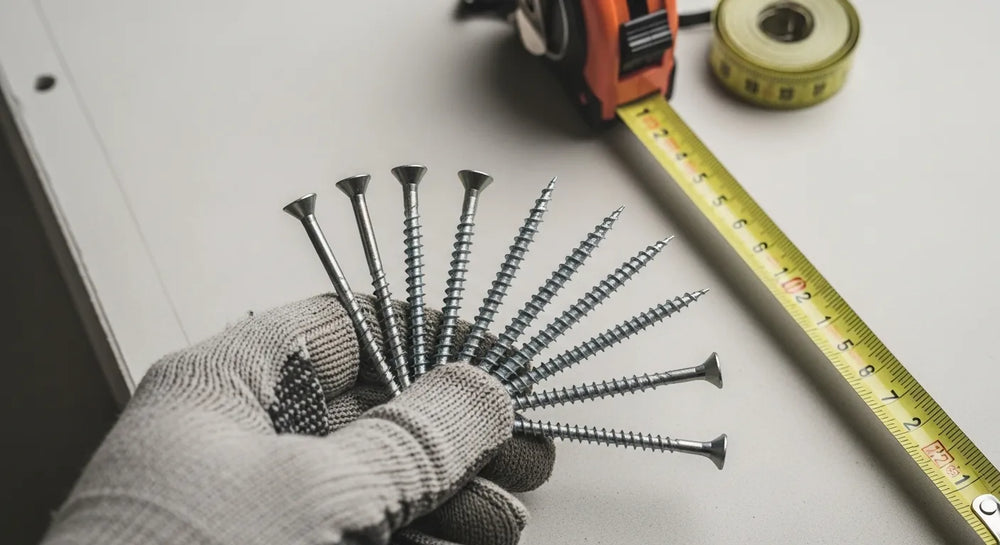
Drywall Screw Spacing: A Professional's Guide to Secure Installation
Table of Contents
- Introduction
- The Foundation of Fastening: Understanding Drywall and Its Needs
- The Science of Screw Spacing: Industry Standards and Best Practices
- Achieving Industrial Excellence: Techniques for Precision Fastening
- The Strategic Advantage of Sourcing U.S.-Made Drywall Screws
- Optimizing Your Procurement Strategy with Maden.co
- Conclusion
- Frequently Asked Questions (FAQ)
Imagine the frustration of a finished construction project, only for unsightly cracks and "nail pops" to appear months later, necessitating costly repairs and eroding client trust. This common scenario often traces back to one overlooked detail: improper drywall screw spacing. Far from being a minor aesthetic concern, the precise placement of fasteners is a fundamental aspect of drywall installation, directly impacting structural integrity, longevity, and overall project quality. For procurement managers, MRO buyers, design engineers, and business owners, understanding and adhering to industry best practices for drywall fastening is not just about compliance; it's about minimizing risk, enhancing durability, and safeguarding your investment.
This comprehensive guide will delve into the critical importance of correct drywall screw spacing, exploring the technical standards, best practices, and the strategic advantages of sourcing high-quality, American-made fasteners. We will uncover how precision in this seemingly small detail can lead to significant long-term savings and superior outcomes for any construction or renovation project. Ultimately, mastering drywall screw spacing, coupled with a commitment to procuring top-tier components, forms the bedrock of a resilient and efficient build.
Introduction
In the demanding world of construction and facility management, every detail contributes to the overarching success and longevity of a project. While the vast panels of drywall may dominate the visual landscape of an interior, their stability and finish are entirely reliant on a network of small but mighty fasteners: drywall screws. A common pitfall for even experienced teams is underestimating the science behind their placement. Skimping on screw count or misjudging optimal spacing isn't merely a cosmetic oversight; it can lead to compromised structural integrity, premature wear and tear, and a cascading series of costly issues down the line. From irritating "nail pops" that mar a pristine finish to outright structural instability under stress, the consequences of improper fastening are both immediate and enduring.
This article aims to demystify the essential guidelines for how far apart screws should be in drywall, providing a robust framework for professional installation. We will explore the critical standards, the factors that influence them, and the proven techniques to ensure a flawless, durable finish. Furthermore, we'll highlight the undeniable strategic advantage of integrating high-quality, U.S.-manufactured fasteners into your procurement strategy – a commitment that resonates deeply with our mission at Maden.co. By understanding these principles and prioritizing the right materials, businesses can significantly enhance project reliability, reduce rework, and elevate the standard of their completed work, truly underpinning the "America's manufacturing revival is here" ethos.
The Foundation of Fastening: Understanding Drywall and Its Needs
Drywall, a ubiquitous material in modern construction, is primarily composed of gypsum plaster pressed between two sheets of paper. Its widespread use stems from its ease of installation, fire resistance, and smooth finish. However, its inherent characteristics—specifically, its relative brittleness and the necessity for uniform support—make the method of its attachment paramount. The goal of fastening drywall is to secure it firmly to the framing members (studs or joists) without damaging the material itself, allowing it to withstand everyday stresses, temperature fluctuations, and the forces of settling.
Why Precision Fastening is Non-Negotiable
The integrity of a drywall installation is directly proportional to the quality and placement of its fasteners. When screws are improperly spaced, the drywall panels can experience several critical failures:
- Sagging and Warping: Insufficient support, especially in ceilings, leads to panels drooping between studs, creating an uneven surface and eventually cracking.
- Nail Pops and Screw Tears: Excessive movement or insufficient fastening can cause the gypsum core to pull away from the screw head, resulting in visible protrusions or tears in the paper facing. This is a common and unsightly issue that demands costly rework.
- Reduced Fire Resistance: Drywall contributes significantly to a building's fire rating. If panels are not securely fastened, gaps can form, compromising the compartmentalization and allowing fire to spread more rapidly.
- Cracking and Joint Failure: Panels that are not uniformly supported are more susceptible to stress fractures, particularly at seams and corners, undermining the finish and structural stability.
- Increased Vibrations and Sound Transmission: Loosely fastened drywall can amplify vibrations and contribute to poor sound insulation, impacting the comfort and functionality of a space.
The Right Tool for the Job: Drywall Screws
While nails were once common, modern construction overwhelmingly favors drywall screws due to their superior holding power, resistance to "nail pops," and ease of removal for adjustments. However, not all screws are created equal, and selecting the correct type is as crucial as their spacing.
- Coarse Thread Screws: These are designed for fastening drywall to wood studs. Their aggressive threads grip the wood fibers effectively, providing excellent holding power. For heavy-duty applications or thicker drywall panels that demand robust attachment to wooden framing, considering a high-strength option like the 6 x 1-1/4 Coarse Thread Drywall Screws ensures superior holding power and reduces the risk of pull-through, a critical factor for long-term structural integrity.
- Fine Thread Screws: These screws are specifically engineered for attaching drywall to metal studs. Their finer threads are designed to tap into and hold firmly within the thinner gauge steel of metal framing without stripping out the pilot hole. When working with metal framing, the precision and secure grip offered by a specialized product such as the 6 x 1 Fine Thread Drywall Screw are indispensable for preventing callbacks and ensuring a durable finish.
- Bugle Head: Most drywall screws feature a bugle-shaped head. This design allows the screw to sink flush with or slightly below the drywall surface without tearing the paper, creating a smooth depression ready for joint compound.
- Length: Screw length depends on the drywall thickness. Generally, screws should penetrate the framing by at least 5/8 inch. For standard 1/2-inch drywall, 1-1/4 inch screws are common. For thicker 5/8-inch fire-rated drywall, longer screws (e.g., 1-5/8 inch) are necessary to ensure adequate penetration. For projects requiring a versatile, all-around fastener that delivers reliable performance, particularly for standard 1/2-inch drywall applications, the 8 x 4 Drywall Screw is an excellent choice, engineered for consistent depth and strong hold.
At Maden.co, we understand that selecting the precise fastener for each application is paramount. Our mission is to democratize access to American manufacturing, ensuring that industrial buyers, like those sourcing drywall screws, can easily find and procure the exact U.S.-made components they need, precisely when they need them.
The Science of Screw Spacing: Industry Standards and Best Practices
The question of "how far apart should screws be in drywall" is not arbitrary; it's governed by established industry standards designed to guarantee maximum stability and performance. While specific codes may vary slightly by region or project type, the underlying principles remain consistent.
Standard Spacing Requirements
The general rule of thumb for drywall screw spacing differentiates between walls and ceilings, reflecting the differing gravitational stresses each surface endures.
Walls
- Standard Spacing (Field Screws): For standard 1/2-inch or 5/8-inch drywall on walls, screws should typically be spaced 12 to 16 inches apart in the field of the panel, meaning within the main body of the sheet away from the edges. When the drywall runs perpendicular to studs, these screws anchor into each stud. If the drywall runs parallel to studs, they still follow the stud lines.
- Edge Fastening: Along the edges of the drywall panel where it meets a stud, and especially at butt joints (where two non-tapered ends meet), screws should be placed closer together. A common recommendation is 7 to 8 inches apart along these edges, or even as close as 5 to 7 inches where particular strength is needed, such as at external corners. These edge screws are crucial for preventing edge curling and ensuring a tight, flush seam for finishing.
- Corners and Intersections: At corners and where drywall panels meet perpendicular walls, it's essential to secure the drywall to the framing. Screws should be placed every 7 to 8 inches along the stud at the corner, staggered to avoid splitting the wood and provide comprehensive support.
Ceilings
Ceilings are subjected to constant downward gravitational pull, necessitating more rigorous fastening schedules to prevent sagging.
- Standard Spacing (Field Screws): For ceilings, screws are generally spaced 7 to 8 inches apart in the field of the panel, following the framing members. Some codes may even specify 6 inches, particularly for single-layer applications or heavier drywall. This tighter spacing distributes the load more effectively across the panel.
- Edge Fastening: Similar to walls, edges of ceiling panels require closer spacing, typically 5 to 7 inches apart, to prevent edge drooping and ensure a secure connection to joists or furring strips.
Double-Layer Drywall
For applications requiring enhanced soundproofing or fire resistance, double-layer drywall is often used.
- First Layer: The first layer is typically fastened with standard spacing (12-16 inches for walls, 7-8 inches for ceilings).
- Second Layer: The second layer is then screwed into the framing, not just into the first layer. Screws for the second layer are typically longer (e.g., 1-5/8 inch or 1-7/8 inch) and follow a similar spacing pattern to a single layer, ensuring they fully penetrate both layers of drywall and into the framing by at least 5/8 inch. Often, the joints of the second layer are offset from the first to improve strength and fire resistance.
Factors Influencing Spacing Decisions
While general guidelines exist, several factors can necessitate adjustments to standard screw spacing:
- Drywall Thickness: Thicker drywall (e.g., 5/8-inch Type X fire-rated) is heavier and requires more robust fastening than standard 1/2-inch drywall, potentially leading to slightly tighter spacing on ceilings.
- Framing Material: The type of framing (wood vs. metal studs) dictates the type of screw (coarse vs. fine thread) but generally doesn't alter spacing significantly, assuming proper screw selection. However, thinner gauge metal studs might require more careful screw application to avoid stripping.
- Structural Load: In areas subject to higher stress or potential impact, such as utility rooms or high-traffic corridors, slightly tighter spacing can add an extra layer of durability.
- Fire-Rated Assemblies: Specific fire-rated wall and ceiling assemblies have stringent fastening requirements outlined in building codes and manufacturer specifications. These often call for increased screw density to maintain the assembly's integrity during a fire.
- Moisture-Resistant Drywall: Green board or cement board used in high-moisture areas (bathrooms, kitchens) may have specific fastening requirements due to their increased weight and density.
- Acoustical Drywall: Specialized sound-dampening drywall often has different mass and density characteristics, which may influence recommended fastener spacing.
It is always crucial to consult local building codes and the specific manufacturer's instructions for the drywall product being used, as these supersede general guidelines.
Consequences of Incorrect Spacing Revisited
Understanding the "why" behind these rules reinforces their importance:
- Screws Too Far Apart: This is the most common error, leading directly to sagging, cracking, and "nail pops" as the drywall struggles to support its own weight and withstand minor structural movements. It also compromises the drywall's ability to act as a shear wall element, which is critical in resisting lateral forces in seismic zones.
- Screws Too Close Together: While less common, excessively close spacing can weaken the gypsum core, making it more susceptible to crushing and screw pull-through. It also unnecessarily increases material costs and labor time without providing significant additional structural benefit beyond the recommended spacing.
For a procurement manager under pressure to source a specific DIN 931 compliant hex cap screw, a design engineer needing specific material certifications for a new prototype, or an MRO buyer facing an unexpected equipment breakdown, the ability to quickly find and finance a verified, U.S.-made part is a game-changer. The same principle applies to drywall screws: the small upfront effort of precise planning and sourcing superior fasteners prevents immense downstream costs and headaches.
Achieving Industrial Excellence: Techniques for Precision Fastening
Beyond knowing how far apart screws should be, how they are installed is equally vital. Even perfectly spaced screws will fail if not properly driven.
Essential Tools and Techniques
- Drywall Screw Gun: This specialized tool is indispensable. It features an adjustable clutch and depth-setting nosepiece that drives the screw to the perfect depth without tearing the paper facing or stripping the screw head.
- Marking Guidelines: For consistent spacing, it's highly recommended to snap chalk lines or lightly pencil mark the stud locations on the drywall panel. This ensures screws are driven directly into the center of the framing member, maximizing holding power.
- Proper Screw Penetration: The screw head should sit slightly below the surface of the drywall, creating a shallow "dimple" that can be easily covered with joint compound. It should not break the paper facing, which significantly weakens its hold, nor should it protrude above the surface.
-
Avoiding "Fisheyes" and "Blowouts":
- Fisheyes: Occur when the screw head tears the paper facing but does not fully embed into the gypsum, leaving a loose flap of paper. This is usually due to an improper depth setting or driving the screw at an angle.
- Blowouts: Happen when the screw is driven too deep, shattering the gypsum core around the screw head. This severely compromises the holding power and requires repair or replacement of the section.
- Perpendicular Drive: Always drive screws perpendicular to the drywall surface and into the framing. Angled screws reduce holding power and can easily miss the stud or joist.
-
Edge and Corner Best Practices:
- Minimum Distance from Edge: Screws should be placed at least 3/8 inch from the edge of the drywall panel. Closer than this risks cracking or crumbling the edge of the gypsum.
- Staggering: At butt joints or corners, stagger the screws slightly on either side of the joint line. This distributes the stress and prevents a single line of weakness.
- Adjacency to Opening: Around window and door openings, ensure screws are placed along all framing members adjacent to the opening, paying particular attention to corners where stress concentrations are highest.
By meticulously following these techniques and integrating them with correct screw spacing, professionals can achieve an industrially excellent finish that stands the test of time.
The Strategic Advantage of Sourcing U.S.-Made Drywall Screws
The choice of fastener might seem a minor detail in the grand scheme of a construction project, but its impact on quality, durability, and project timelines is profound. At Maden.co, we champion the strategic value of sourcing U.S.-made industrial components, and drywall screws are no exception.
Why American Manufacturing Matters
- Unwavering Quality Control: American manufacturers adhere to stringent quality control standards and often surpass minimum industry specifications. This commitment ensures that fasteners possess consistent tensile strength, proper threading, and durable coatings, reducing the likelihood of defects, breakage, or premature failure on the job site. This translates directly into less rework and higher customer satisfaction.
- Resilient Supply Chains: Reliance on overseas suppliers can introduce volatility, unexpected delays, and opaque sourcing challenges. By choosing U.S.-made drywall screws, businesses benefit from shorter lead times, greater predictability, and reduced logistical complexities. This supply chain resilience is critical for maintaining project schedules and avoiding costly downtime.
- Supporting the Domestic Economy: Every U.S.-made product purchased directly supports American jobs, fosters innovation, and strengthens the national manufacturing base. This commitment aligns with our core value of American Manufacturing Pride and our vision to drive the "America's manufacturing revival is here." You can learn more about our mission to champion American manufacturing here: About Us.
- Transparency and Traceability: Sourcing through a platform like Maden.co provides unparalleled transparency. We connect buyers directly with over 800+ verified U.S. manufacturers, giving you confidence in the origin and quality of your components, from individual 6 x 1-1/4 Coarse Thread Drywall Screws to bulk orders of 8 x 4 Drywall Screws.
Total Cost of Ownership (TCO) Beyond the Sticker Price
The true cost of a drywall screw extends far beyond its initial purchase price. Investing in higher-quality, U.S.-made fasteners, despite a potentially higher per-unit cost than some imported alternatives, often results in a significantly lower Total Cost of Ownership (TCO).
Consider these factors:
- Reduced Rework: Inferior screws are prone to stripping, breaking, or causing "nail pops." Each instance requires labor to repair, materials to fix, and time that delays project completion. High-quality fasteners minimize these issues.
- Enhanced Durability: A superior screw ensures a more stable and long-lasting drywall installation, reducing the need for future repairs or maintenance calls, particularly for issues like sagging or cracking.
- Increased Productivity: Reliable screws mean fewer interruptions on the job site. Crews spend less time dealing with defective fasteners and more time on productive installation, directly impacting labor efficiency.
- Reputation and Client Trust: A finish marred by fastener failures erodes client confidence and can jeopardize future contracts. Quality fasteners contribute to a professional, durable outcome that enhances your business's reputation.
- Compliance and Safety: For fire-rated assemblies or specialized applications, using verified, high-quality fasteners ensures compliance with critical safety and building standards, mitigating legal and safety risks.
For any MRO buyer tasked with maintaining facilities, a design engineer specifying materials for a new build, or a business owner overseeing multiple construction projects, the strategic value of prioritizing robust, U.S.-made fasteners, such as our range of drywall screws like the 6 x 1 Fine Thread Drywall Screw, is undeniable. It's an investment in the integrity and future success of every project.
Optimizing Your Procurement Strategy with Maden.co
In a landscape where reliable sourcing and efficient procurement are paramount, Maden.co stands as America's premier B2B marketplace for U.S.-manufactured products. Our platform is designed to streamline the sourcing process for industrial buyers, fostering supply chain transparency and customer empowerment. We believe that digital innovation is key to driving industrial excellence.
Access to a Vast Network of Verified Manufacturers
At Maden.co, we connect you with a comprehensive network of over 800+ verified U.S. manufacturers offering more than 2.5 million American-made products. Whether you're searching for specific drywall screws, custom components, or general MRO supplies, our platform simplifies discovery and procurement. Our core values of Digital Innovation and Supply Chain Transparency mean you can trust the origin and quality of every product you source.
Streamlined Sourcing and Reduced Procurement Friction
Navigating complex supply chains can be a significant drain on resources. Maden.co's intuitive interface and powerful search capabilities allow you to filter products by specifications, materials, certifications, and more, significantly reducing the time and effort traditionally associated with sourcing industrial components. This efficiency directly contributes to a reduction in procurement friction, freeing up your team to focus on core operational tasks. You can begin exploring our vast catalog of U.S.-made products by visiting our main homepage: Maden.co.
Strategic Financing for Growth: Instant Financing
A key differentiator and a significant strategic tool for businesses on our platform is our "Instant Financing" option. We understand that large-volume purchases or unexpected equipment needs can impact cash flow. Instant Financing is designed to empower procurement managers and business owners to manage capital effectively and make necessary, larger-volume purchases without immediate strain on liquidity. This feature allows for greater flexibility in project planning and execution. You can apply for Instant Financing at checkout to streamline your capital-intensive projects and ensure your operations never slow down due to capital constraints.
Partnering with Verified U.S. Manufacturers
Every manufacturer on the Maden.co platform is rigorously verified, ensuring that you are partnering with reputable, high-quality American producers. This provides peace of mind, knowing that the products you receive meet industry standards and contribute to the integrity of your projects.
Are you a U.S. manufacturer producing high-quality drywall screws or other industrial components, and looking to expand your reach to a dedicated network of industrial buyers? We invite you to register as a vendor and join the American manufacturing revival: Register as a vendor.
We are committed to being your strategic partner in building a more reliable and efficient procurement process. If you have specific sourcing questions about drywall fasteners, require assistance with a large order, or need help navigating our platform, our expert team is ready to help: Contact Us.
Conclusion
The seemingly simple act of installing drywall is underpinned by precise technical requirements, none more critical than correct screw spacing. Adhering to industry standards for how far apart screws should be in drywall—typically 12-16 inches for walls and a more conservative 7-8 inches for ceilings, with tighter spacing at edges—is fundamental to achieving a durable, aesthetically pleasing, and structurally sound finish. This attention to detail prevents costly issues like sagging, cracking, and "nail pops," safeguarding project integrity and your business's reputation.
Furthermore, the choice of fastener plays an equally vital role. By prioritizing high-quality, U.S.-made drywall screws, businesses not only ensure consistent performance and reliability but also gain the advantages of a resilient supply chain and transparent sourcing. This strategic procurement decision, aligned with the values of American Manufacturing Pride and Industrial Excellence, contributes significantly to a lower Total Cost of Ownership and elevates the standard of every build.
Don't let overlooked details compromise your projects. Secure your next build with confidence by choosing top-tier, U.S.-made drywall screws and other industrial components. Explore the extensive catalog of American-made products available on Maden.co today, where our mission is to connect you with over 2.5 million parts from verified U.S. manufacturers. Empower your procurement process and manage your project finances efficiently by leveraging our Instant Financing option, available at checkout. Your commitment to quality and American manufacturing is the cornerstone of the revival—and we're here to help you build it.
Frequently Asked Questions (FAQ)
Q1: What is the primary difference in drywall screw spacing for walls versus ceilings?
A1: The main difference stems from gravity. Ceilings require tighter screw spacing (typically 7-8 inches apart) because they constantly bear their own weight against gravity, which can cause sagging if not adequately supported. Walls, conversely, usually require screws spaced 12-16 inches apart in the field, as they primarily resist lateral forces and are less prone to sagging. Edges and joints for both walls and ceilings generally require closer spacing.
Q2: Can I use nails instead of screws for drywall installation?
A2: While nails were historically used, modern construction overwhelmingly favors drywall screws. Screws offer superior holding power, significantly reduce the incidence of "nail pops" (where the fastener head protrudes due to movement), and create a much more secure and durable installation. Using nails is generally not recommended for professional, high-quality drywall installations today.
Q3: How do I know if I'm using the right type of drywall screw for my project?
A3: The correct type of drywall screw primarily depends on the framing material. Coarse thread screws are designed for wood studs, providing a strong grip into the wood fibers. Fine thread screws are specifically designed for metal studs, tapping efficiently into the thinner gauge steel. Additionally, screw length should be chosen to ensure it penetrates the framing by at least 5/8 inch after passing through the drywall panel(s). Always check the drywall manufacturer's recommendations and local building codes.
Q4: What are "nail pops" and how can correct screw spacing prevent them?
A4: "Nail pops" (or screw pops) are unsightly protrusions of fastener heads through the finished drywall surface. They occur when the drywall moves relative to the framing, or when the fastener's holding power is compromised. Incorrect screw spacing—especially screws placed too far apart—is a leading cause, as it allows the drywall panels to flex and move excessively. Correct, consistent screw spacing, coupled with using the right type of screw and driving it to the proper depth, distributes stress evenly across the panel, significantly reducing movement and preventing pops.


