
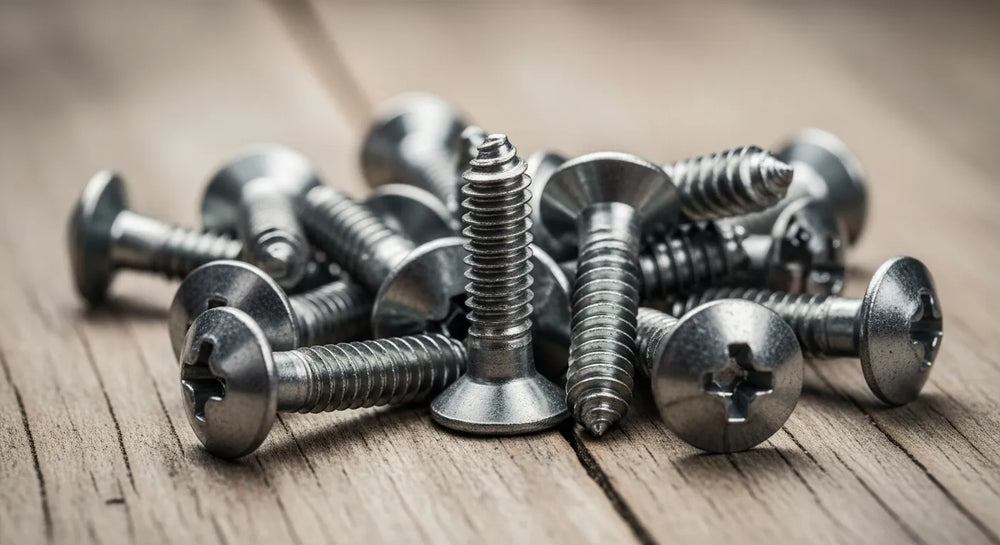
Effective Methods to Cover Screw Holes in Metal
Table of Contents
- Introduction
- Understanding the "Why": Reasons to Cover Screw Holes in Metal
- Assessing the Damage: Types of Screw Holes and Their Challenges
- Fundamental Principles of Hole Coverage
- Method 1: Mechanical Plugs and Caps
- Method 2: Fasteners as Plugs (When Appropriate)
- Method 3: Metal Patching and Welding
- Method 4: Fillers and Epoxies (Chemical Solutions)
- Method 5: Specialized Fasteners and Repair Kits
- The Procurement Perspective: Sourcing American-Made Solutions for Hole Coverage
- Strategic Sourcing on Maden.co for Hole Coverage Components
- Seamless Procurement with Maden.co's Instant Financing
- Ensuring Long-Term Performance and Aesthetics
- Conclusion
- Frequently Asked Questions
Imagine a critical production line component where an unused screw hole, seemingly minor, becomes a major vulnerability. It could harbor contaminants, initiate corrosion, or compromise structural integrity. For procurement managers, MRO buyers, and design engineers, addressing these seemingly small details is paramount to maintaining operational excellence and ensuring the longevity of industrial assets. Neglecting such an issue can lead to costly downtime, product recalls, or even safety hazards. The challenge lies not just in covering the hole, but in doing so effectively, durably, and in a manner that aligns with stringent industrial standards. This post aims to provide a comprehensive guide to covering screw holes in metal, delving into various methods, their applications, and the critical considerations for industrial environments, emphasizing how strategic sourcing of American-made components supports these efforts. We will explore practical solutions, from mechanical plugs to advanced welding techniques, and discuss how choosing the right approach can significantly impact product performance, compliance, and overall supply chain resilience.
Introduction
In industrial manufacturing, the precision of design and the integrity of materials are non-negotiable. Whether it’s due to design modifications, component upgrades, or simply the re-purposing of equipment, encountering unwanted or obsolete screw holes in metal surfaces is a common occurrence. These aren't just cosmetic blemishes; they present genuine engineering and operational challenges. An open hole can invite moisture, dust, chemicals, and other contaminants, leading to accelerated corrosion, compromised seal integrity, or reduced structural strength. For industries ranging from automotive and aerospace to heavy machinery and electronics, understanding how to effectively and appropriately cover these holes is crucial for maintaining performance, aesthetics, and regulatory compliance. This comprehensive guide will navigate the complexities of covering screw holes in metal, offering practical, industry-grade solutions. We will explore various techniques, from simple mechanical plugs to advanced welding, and provide insights into selecting the optimal method based on application, material, environmental factors, and long-term performance requirements. Furthermore, we will highlight the strategic advantages of sourcing high-quality, American-made components for these tasks, ensuring reliability and bolstering supply chain resilience through platforms like Maden.co.
Understanding the "Why": Reasons to Cover Screw Holes in Metal
The decision to cover a screw hole in a metal component or structure extends far beyond mere aesthetics. In industrial contexts, each open hole presents a potential vulnerability that can impact performance, safety, and longevity. Recognizing these underlying reasons is the first step toward selecting the most appropriate and effective covering method.
Aesthetics and Finish Quality
While often perceived as secondary in industrial applications, the aesthetic appeal and finish quality of a product or component can be vital. Exposed holes, particularly on visible surfaces, can detract from the perceived quality of machinery, equipment, or finished goods. A clean, uniform surface reflects meticulous engineering and attention to detail. For products destined for consumer-facing markets or those where a premium finish signifies quality, covering holes seamlessly is essential. This can involve matching texture, color, and sheen to the surrounding metal, creating an integrated look that enhances the overall professional appearance.
Corrosion Prevention and Material Integrity
Perhaps the most critical reason for covering screw holes in metal is to prevent corrosion. Metal surfaces, especially those exposed to moisture, chemicals, or harsh environments, are susceptible to oxidation. An open screw hole creates an internal cavity where moisture and contaminants can collect and stagnate, accelerating the corrosion process from within. This localized corrosion can weaken the surrounding metal, compromise structural integrity, and lead to premature component failure. By covering and sealing these holes, we effectively protect the internal structure from environmental degradation, thereby preserving the material's integrity and extending its operational lifespan.
Structural Strength and Load Bearing
Even seemingly small holes can significantly impact the structural strength of a metal component, especially if they are in stress-critical areas. Every hole reduces the cross-sectional area of the material, which can lower its resistance to bending, tension, or shear forces. While a single unused screw hole might not immediately cause catastrophic failure, it can create stress concentrations, acting as a nucleation point for cracks under cyclic loading or vibration. Covering these holes, especially with methods that restore material continuity like welding or specialized inserts, helps to mitigate these stress risers and maintain the intended load-bearing capacity of the structure.
Sealing and Environmental Protection
Many industrial applications require components to be sealed against the ingress of dust, liquids, gases, or electromagnetic interference (EMI). An open screw hole provides an unintended pathway for these elements to enter or exit, compromising the integrity of the enclosure or system. For instance, in sensitive electronic equipment, dust and moisture can cause short circuits or component damage. In pressure vessels or vacuum systems, an unsealed hole can lead to leaks, affecting efficiency and safety. Covering holes with appropriate sealing solutions, such as gaskets, sealants, or welded patches, ensures that the component maintains its intended environmental protection.
Safety and Preventing Snags
In operational environments, exposed holes can pose safety risks. Sharp edges or protruding remnants of stripped threads can snag clothing, cables, or even skin, leading to injuries or operational disruptions. In machinery with moving parts, open holes might inadvertently trap debris or small tools, potentially causing jams or damage. Covering these holes creates a smooth, safe surface, minimizing hazards and promoting a safer working environment for maintenance personnel and operators.
Preparation for Future Modifications or Coatings
Sometimes, holes are covered not for permanent removal but for temporary purposes, or as preparation for subsequent processes. For example, if a component is destined for powder coating, electroplating, or painting, open holes can lead to uneven finishes, trapping of chemicals, or coating defects. Covering these holes temporarily or permanently ensures a uniform surface, optimizing the quality of subsequent treatments. Similarly, if a design anticipates future modifications, temporary plugs can maintain integrity until the next stage of assembly.
For all these critical reasons, the careful consideration and execution of hole-covering techniques are not merely an afterthought but a fundamental aspect of industrial excellence. Sourcing the right materials and components for these tasks, particularly those that meet high standards of quality and reliability, is a strategic imperative. This is where the value of U.S.-made products becomes evident, providing the assurance needed for these critical applications.
Assessing the Damage: Types of Screw Holes and Their Challenges
Before selecting a method to cover a screw hole, it's crucial to accurately assess the nature of the hole itself. Not all screw holes are created equal, and their characteristics dictate the most effective and durable covering solution. Understanding the nuances of different hole types and the challenges they present is foundational to successful repair or modification.
Small, Cosmetic Holes
These are typically holes made for small fasteners that are no longer needed, or pilot holes that were drilled incorrectly. They are often shallow, clean, and primarily pose an aesthetic challenge, though environmental ingress can still be a concern.
- Challenges: Achieving a flush, aesthetically pleasing finish that blends seamlessly with the surrounding material. Preventing minor corrosion or dust accumulation.
- Considerations: Material match, paintability, and ease of application.
Through-Holes
Through-holes penetrate the entire thickness of the metal, creating a direct path from one side to the other. These are common for fasteners that require a nut or a deep thread engagement.
- Challenges: Ensuring a complete seal against liquids, gases, or contaminants. Restoring structural integrity if the hole is load-bearing. Preventing internal corrosion.
- Considerations: The need for back-side access, sealing properties of the cover, and potential for pressure differentials across the hole.
Stripped Threads and Oversized Holes
These occur when a fastener has been overtightened, cross-threaded, or repeatedly removed and reinserted, damaging the internal threads of a tapped hole. The result is an enlarged, irregular hole that can no longer properly secure a fastener.
- Challenges: The hole is often no longer round or has a significantly larger diameter than intended. The surrounding material may also be weakened.
- Considerations: Whether the hole needs to be re-threaded (e.g., with an insert), or permanently filled. Solutions must accommodate the increased diameter and potentially irregular shape.
Corroded or Irregular Holes
Holes that have been exposed to harsh environments or neglect may exhibit signs of corrosion, pitting, or irregular shapes due to material degradation. This can compromise the surface quality and structural integrity around the hole.
- Challenges: Preparing the surface for repair (cleaning, rust removal). Ensuring good adhesion or weld penetration on compromised material. The need to restore surrounding material integrity.
- Considerations: Thorough surface preparation is essential. The chosen method must be compatible with the corroded material and effectively seal against future degradation.
Holes in Thin vs. Thick Metal
The thickness of the metal sheet or plate significantly influences the choice of covering method.
-
Thin Metal (e.g., sheet metal for enclosures):
- Challenges: Risk of warping or distortion during welding. Limited material for tapping or strong mechanical plugs. Ease of punching out or expanding existing holes.
- Considerations: Lightweight solutions, adhesive patches, or specialized sheet metal plugs. For a robust yet clean finish in sheet metal, for example, a Steel Zinc Plated Type A Pan Slot Drive Self-Tapping Sheet Metal Screw might be considered as a filler if the diameter is appropriate and a flush head is acceptable.
-
Thick Metal (e.g., structural components, heavy machinery):
- Challenges: Requires robust solutions that match the strength and durability of the parent material. Welding might require pre-heating and specific weld procedures.
- Considerations: Welding, threaded inserts, or heavy-duty mechanical plugs. The goal is often to restore significant structural integrity.
Holes in Different Metal Types
The specific type of metal (e.g., carbon steel, stainless steel, aluminum, brass, copper, specialized alloys) dictates material compatibility, welding techniques, and corrosion resistance requirements.
- Challenges: Different metals have varying welding properties, thermal expansion rates, and chemical resistances. Galvanic corrosion can occur if dissimilar metals are used in close contact without proper insulation.
- Considerations: Selecting a filling material or plug that is compatible with the parent metal, both physically and chemically. For instance, an Hi-Lo Double Lead Thread Self-Tapping Sheet Metal Screw made from a specific material might be suitable for thin steel, but entirely inappropriate for aluminum without proper insulation or material matching. Similarly, for general-purpose filling in sheet metal where a robust, secure fit is needed, a Steel Zinc Plated Type A Truss Square Drive Self-Tapping Sheet Metal Screw can be a practical choice, assuming material compatibility is considered.
By meticulously evaluating these characteristics, procurement managers and design engineers can make informed decisions, ensuring that the chosen hole-covering method is not only effective in the short term but also durable, compliant, and cost-efficient over the operational life of the component. This systematic approach is a hallmark of industrial excellence, a core value we champion at Maden.co.
Fundamental Principles of Hole Coverage
Regardless of the specific method chosen to cover screw holes in metal, several fundamental principles underpin successful and durable results in an industrial setting. Adhering to these principles ensures not just a temporary fix, but a long-lasting solution that maintains the integrity and performance of the component.
Material Compatibility
This is perhaps the most critical principle. The material used to cover the hole must be compatible with the parent metal. Incompatibility can lead to galvanic corrosion, differential thermal expansion, or poor adhesion.
-
Considerations:
- Corrosion Resistance: Ensure the covering material offers similar or superior corrosion resistance to the base metal, especially in challenging environments.
- Thermal Expansion: Matching coefficients of thermal expansion minimizes stress and cracking when temperatures fluctuate.
- Mechanical Properties: The covering material should ideally match the hardness, strength, and ductility of the parent metal to prevent premature failure.
Surface Preparation
Proper surface preparation is non-negotiable for almost all hole-covering methods, particularly those involving adhesives, welding, or fillers. A clean, properly conditioned surface ensures maximum adhesion, weld penetration, and overall integrity.
-
Steps typically include:
- Cleaning: Removing all grease, oil, dirt, paint, and previous sealant residues. Solvents, degreasers, or abrasive cleaning (sanding, wire brushing) may be necessary.
- Deburring: Removing any sharp edges or burrs around the hole, which can compromise seals, create stress points, or hinder flush application.
- Roughening (for adhesives/fillers): Creating a slightly textured surface can significantly improve mechanical keying for adhesives and fillers.
- Rust and Scale Removal: Thoroughly removing any rust, scale, or corrosion products to expose clean, bare metal.
Adhesion and Bonding Mechanisms
Understanding how the covering material adheres to the parent metal is key to selecting the right method.
- Mechanical Bonding: Physical interlocking, as seen with threaded inserts, press-fit plugs, or roughened surfaces for adhesives.
- Chemical Bonding: Covalent or ionic bonds formed by epoxies, structural adhesives, or chemical welding (e.g., with certain metal fillers).
- Metallurgical Bonding: Atomic-level fusion, characteristic of welding, brazing, and soldering, creating a continuous material.
Mechanical Fastening vs. Chemical Bonding
The choice between mechanical and chemical methods depends on the required strength, permanence, and ease of removal.
- Mechanical Fastening: Involves physical components like plugs, caps, or threaded inserts. These are often removable, allow for quick installation, and can provide significant structural integrity if designed correctly. They are excellent for temporary fixes or when future access might be required.
- Chemical Bonding: Utilizes adhesives, epoxies, or fillers that cure and create a strong bond. These offer excellent sealing properties and can create a very smooth, flush finish. They are often more permanent and require cure time but may not offer the same structural strength as metallurgical bonds.
Durability and Longevity Considerations
The chosen method must meet the long-term durability requirements of the application, taking into account environmental factors and operational stresses.
- Environmental Exposure: Will the cover be exposed to UV, extreme temperatures, moisture, chemicals, or abrasive conditions?
- Mechanical Stress: Will the area experience vibration, impact, or cyclic loading? The cover must be able to withstand these forces without failing.
- Maintenance and Inspection: How will the cover affect future maintenance, inspection, or disassembly? Is removability a factor?
- Compliance: Does the method meet specific industry standards (e.g., for food contact, medical devices, explosion-proof enclosures)?
By rigorously applying these fundamental principles, procurement managers and design engineers can move beyond simply "patching" a hole to implementing a robust, engineered solution that upholds the highest standards of industrial excellence. This is precisely the kind of thoughtful, value-driven approach that Maden.co supports by providing access to verified, high-quality American-made components.
Method 1: Mechanical Plugs and Caps
Mechanical plugs and caps offer a straightforward, often non-permanent, and versatile solution for covering screw holes in metal. These components are designed for ease of installation and removal, making them ideal for applications where future access might be required or where a quick, clean finish is desired without extensive surface preparation or specialized tools.
Description
Mechanical plugs and caps encompass a wide variety of designs, materials, and sizes. They typically work on a friction-fit, snap-in, or threaded principle.
- Push-in Plugs: Often made of plastic (e.g., nylon, polyethylene) or rubber, these plugs have flexible fins or barbs that compress upon insertion into the hole and expand to create a secure fit. They are excellent for sealing against dust and moisture.
- Snap-in Caps: Similar to push-in plugs, these often have a domed or flat head and flexible legs that snap into place, covering the hole and providing a finished appearance.
- Threaded Plugs: These are metal or plastic plugs with external threads that screw into a pre-tapped hole. They provide a more secure and often pressure-tight seal, commonly used in hydraulic or pneumatic systems.
- Grommets: While primarily used to protect wires passing through holes, some grommet designs can also function as effective plugs, especially those with a solid center.
- Expansion Plugs: These plugs expand in diameter once inserted into a hole, creating a very tight, often permanent, seal. They are used for sealing fluid passages or for structural reinforcement.
Pros
- Easy Installation: Most mechanical plugs require minimal tools (sometimes just a hammer or hand pressure) and no cure time.
- Removable: Many designs allow for easy removal, which is beneficial for maintenance, inspection, or future modifications.
- Versatile Materials: Available in a broad range of materials, including various plastics, rubbers (neoprene, silicone), and metals (steel, aluminum, brass), allowing for compatibility with different environments and chemical exposures.
- Cost-Effective: Generally inexpensive, especially for high-volume applications.
- Good for Non-Structural Applications: Excellent for cosmetic finishes, dust caps, or light sealing.
Cons
- Limited Structural Contribution: Mechanical plugs rarely add significant structural strength to the parent material.
- Not Always Flush: Some designs may protrude slightly from the surface, which might be undesirable for certain aesthetic or functional requirements.
- Temperature Limitations: Plastic and rubber plugs have temperature limits and can degrade under harsh conditions or UV exposure over time.
- Pressure Limitations: Most standard plugs are not suitable for high-pressure sealing unless specifically designed for it (e.g., threaded pipe plugs).
Applications
- Equipment Panels and Enclosures: Covering unused knockouts or mounting holes in control panels, junction boxes, and electronic enclosures.
- Automotive Interiors: Used for trim panels, dashboards, and seating components.
- Furniture and Fixtures: Concealing assembly holes in metal furniture.
- Machinery Guards: Filling holes in protective covers to prevent debris ingress.
- Hydraulic/Pneumatic Systems: Threaded plugs used for sealing unused ports or test points.
When selecting mechanical plugs, consider the hole diameter, material thickness, environmental conditions, and the desired aesthetic. For robust industrial applications, selecting plugs made from durable, high-quality materials is essential. At Maden.co, we offer a wide array of U.S.-manufactured components, including various hardware and fastening solutions that can often serve as or complement mechanical hole-covering strategies. For example, while not a plug, a specific type of fastener such as a Steel Zinc Plated Type A Pan Slot Drive Self-Tapping Sheet Metal Screw might be chosen for a sheet metal application where an existing hole needs to be filled and a low-profile head is acceptable. This demonstrates the versatility available when sourcing from our extensive network of verified American manufacturers.
Method 2: Fasteners as Plugs (When Appropriate)
In certain industrial scenarios, particularly where standardization, aesthetics, or minimal structural contribution is acceptable, existing fasteners can be strategically utilized as a method to "plug" or cover unused screw holes. This approach leverages readily available components and can be particularly efficient in environments that already use a wide variety of fastening hardware.
Description
This method involves using a standard screw, bolt, or even a specialized self-tapping fastener not for its primary function of joining components, but purely to fill an existing hole. The fastener is chosen to match the thread type and diameter of the hole, or to create its own thread in an untapped hole, and then secured in place. The head of the fastener then serves as the cover for the hole.
Pros
- Standardization: Utilizes common inventory, reducing the need for specialized plugs or materials.
- Aesthetic Integration: If many fasteners are already visible on the component, an additional fastener acting as a plug can blend in seamlessly.
- Some Structural Integrity: While not its primary purpose here, a properly installed fastener does add a degree of structural integrity compared to a simple plastic cap.
- Removable: Easily removable for future access or modification.
- Cost-Effective: Especially if using fasteners already in stock or readily available.
Cons
- Requires Tapped Hole (or Self-Tapping): If the hole is not already tapped, a tapping operation might be necessary, adding an extra step. Self-tapping screws mitigate this but require specific hole sizing.
- Not Always Flush: The head of the fastener will protrude unless a flush-mount type (e.g., flat head, countersunk) is used, which might require countersinking the hole.
- Potential for Loosening: Like any fastener, it can loosen over time due to vibration unless a thread-locking compound or washer is used.
- Limited Sealing: While it fills the hole, a standard fastener doesn't typically provide a perfect seal against liquids or gases without additional sealing washers or compounds.
Applications
- Redundant Mounting Points: Covering holes from previously used mounting brackets or accessory installations.
- Aesthetic Cover-ups: On machinery panels or frames where a fastener head is acceptable and blends with the overall design.
- Temporary Fillers: Holding a place for a future component or to maintain cleanliness during assembly stages.
Maden.co Connection (Integrating Product Links)
For procurement managers and design engineers seeking robust, American-made fasteners that can serve both their primary fastening functions and as effective hole-covering solutions, Maden.co offers an extensive catalog. Our platform ensures access to high-quality components from verified U.S. manufacturers.
For instance, to secure a thin metal panel and later cover an unused hole, a specialized Hi-Lo Double Lead Thread Self-Tapping Sheet Metal Screw might be used if the hole is appropriately sized. The unique thread design of Hi-Lo screws provides strong engagement in thin sheet metal, making them an excellent choice where a secure fit is crucial even if the hole's primary function changes.
Or, in applications requiring a secure yet flush finish for a previously used fastening point, a Steel Zinc Plated Type A Pan Slot Drive Self-Tapping Sheet Metal Screw could be selected to fill the void aesthetically and functionally. The pan head offers a low profile, and the zinc plating provides corrosion resistance, ensuring durability in various industrial settings.
For robust, general-purpose hole filling in sheet metal where a truss head is desired for its larger bearing surface, a Steel Zinc Plated Type A Truss Square Drive Self-Tapping Sheet Metal Screw offers a reliable option. The square drive ensures higher torque transmission, reducing cam-out and facilitating secure installation.
Leveraging Maden.co means more than just finding a part; it means partnering with a platform dedicated to Industrial Excellence and Supply Chain Transparency. We connect you directly with U.S. manufacturers, ensuring that every component, whether for fastening or hole-filling, meets stringent quality standards.
Method 3: Metal Patching and Welding
When structural integrity, permanent sealing, or a completely seamless finish is paramount, metal patching and welding techniques are the preferred solutions for covering screw holes in metal. These methods effectively restore the material continuity of the parent metal, making the hole virtually disappear.
Description
- Welding: This is the most permanent and structurally sound method. It involves fusing a patch of metal, or simply filling the hole directly, using heat to melt the parent metal and a filler material (if necessary), creating a homogeneous bond. Common welding processes include MIG (Gas Metal Arc Welding), TIG (Gas Tungsten Arc Welding), and Resistance Welding. The choice depends on the metal type, thickness, and desired finish.
- Brazing/Soldering: These are joining processes where a filler metal is melted and flows into the joint, bonding to the parent metals without melting them. Brazing uses higher temperatures than soldering and provides a stronger joint. While not as strong as welding, they can offer excellent sealing and good aesthetics.
- Metal Patches: A small piece of metal, cut to size, is physically attached over or within the hole. This patch can be welded, brazed, riveted, or bonded with a structural adhesive. Welding a patch into place is often a precursor to grinding and finishing for a seamless repair.
Pros
- Permanent and Structural: Welding fully restores the material's strength and continuity, making it ideal for load-bearing components.
- Seamless Finish: Once ground down and polished, a welded repair can be virtually invisible, offering superior aesthetics.
- Excellent Sealing: Provides an impermeable barrier against liquids, gases, and contaminants.
- High Durability: The repair will generally match the strength and corrosion resistance of the parent metal.
- Versatile for Complex Damage: Effective for irregular, corroded, or oversized holes that other methods cannot address.
Cons
- Requires Specialized Skills and Equipment: Welding, brazing, and soldering demand trained operators and specific equipment, which can be a significant investment.
- Heat Distortion: The heat from welding can cause warping or distortion, especially in thin metals. Careful technique, fixturing, and post-weld treatment are often required.
- Material Compatibility: Filler material must be carefully selected to match the parent metal. Dissimilar metals can be challenging to weld.
- Surface Preparation Intensive: Requires thorough cleaning and sometimes beveling for proper weld penetration.
- Post-Processing: Often requires grinding, sanding, and potentially heat treatment or painting to achieve the desired finish and relieve stress.
Applications
- Structural Repairs: Fixing holes in chassis, frames, pressure vessels, and load-bearing components.
- High-Pressure Systems: Sealing holes in pipes, tanks, and hydraulic systems where leaks are unacceptable.
- Visible Surfaces Requiring Flawless Finish: Automotive body panels, architectural metalwork, and precision machinery where aesthetics are critical.
- Restoring Corroded Areas: Cutting out corroded sections around a hole and welding in a fresh patch.
While Maden.co does not provide welding services or equipment, we are instrumental in ensuring that the materials and components requiring such expert repairs are of the highest U.S.-made quality. Choosing robust, American-manufactured metals and parts in the first place reduces the likelihood of premature wear and the need for extensive repairs like welding. For the procurement manager who understands the total cost of ownership, investing in quality components through our platform means fewer repairs, less downtime, and greater operational efficiency. This aligns with our core value of Industrial Excellence, driving the American manufacturing revival.
Method 4: Fillers and Epoxies (Chemical Solutions)
For non-structural applications where aesthetics, sealing, and ease of application are priorities, chemical solutions such as metal-filled epoxies and industrial-grade fillers offer a convenient and effective way to cover screw holes in metal. These methods are particularly popular for cosmetic repairs and sealing against environmental ingress in non-load-bearing areas.
Description
- Metal-Filled Epoxies: These are two-part epoxy resins blended with fine metal powders (e.g., steel, aluminum, bronze). When mixed, they create a very hard, durable compound that can be applied like a putty, then cures to a metal-like consistency. They can often be drilled, tapped, sanded, and painted after curing.
- Industrial Fillers and Putties: Similar to epoxies, but may include various resins (polyester, acrylic) and other reinforcing agents. These are formulated for specific applications, such as automotive body repair or filling voids in castings. They are designed for ease of application, good adhesion, and a smooth finish.
Pros
- Easy to Apply: Most fillers and epoxies are user-friendly, requiring basic mixing and application tools. No welding expertise or specialized machinery is needed.
- Versatile: Can conform to irregular hole shapes and can be used on various metal types.
- Good for Cosmetic Fixes: Excellent for achieving a smooth, paintable surface that blends seamlessly with the surrounding metal.
- Excellent Sealing: Effectively seals holes against moisture, dust, and many chemicals.
- No Heat Distortion: As they are cold-applied, there is no risk of warping or distorting the parent metal.
Cons
- Not Structural: Fillers and epoxies generally do not restore the structural strength of the parent metal. They are suitable for non-load-bearing applications.
- Cure Time Required: Most epoxies and fillers require a specific cure time, which can range from minutes to hours, before they can be further processed or put into service.
- Temperature and Chemical Limitations: Their performance can be affected by extreme temperatures or prolonged exposure to aggressive chemicals.
- Potential for Shrinkage or Cracking: Lower quality or improperly mixed fillers can sometimes shrink, crack, or delaminate over time.
- Surface Preparation is Key: Good adhesion relies heavily on meticulous surface preparation (cleaning, degreasing, roughening).
Applications
- Automotive Body Repair: Filling small holes, dents, and imperfections in vehicle panels.
- Equipment Enclosures: Sealing unused conduit entries or mounting holes in non-critical electronic or electrical enclosures.
- Aesthetic Paneling: Achieving a smooth finish on visible metal surfaces where fasteners have been removed.
- Non-Structural Component Repair: Filling casting voids or repairing minor surface damage on machinery parts.
- Prototyping: Temporarily filling holes during design iterations.
When considering fillers and epoxies, the quality of the product is paramount. Sourcing industrial-grade, U.S.-made adhesives and sealants through Maden.co ensures you are obtaining materials known for their reliability and performance. While we focus on discrete components, the broader ecosystem of industrial supplies, including robust chemical solutions, benefits immensely from the availability of high-quality, domestically manufactured options. This commitment to American Manufacturing Pride ensures that every component, from the smallest fastener to the most advanced adhesive, contributes to the overall integrity and success of your projects.
Method 5: Specialized Fasteners and Repair Kits
Beyond simply covering a hole, sometimes the objective is to repair a damaged hole or repurpose it for a new fastening requirement. In such cases, specialized fasteners and repair kits offer targeted, engineered solutions that restore or enhance the functionality of the hole.
Description
- Thread Repair Inserts (e.g., Helicoil, Keensert): These kits are designed to repair stripped threads in a tapped hole. They involve drilling out the damaged threads, tapping the hole to a larger size, and then installing a coiled wire insert or a solid bushing that provides new, strong threads of the original size.
- Oversized Screws: For slightly stripped holes where a full thread repair is overkill, an oversized self-tapping screw (often with a larger diameter or coarser thread pitch than the original) can sometimes be used to cut new threads and gain purchase.
- Blind Rivets: While primarily used for joining, blind rivets can effectively fill through-holes in sheet metal, providing a sealed and aesthetically clean finish on one side, especially when access to the back is limited.
- Sealing Washers and Gaskets: When a fastener must remain in place, but a better seal around the hole is needed, specialized sealing washers (e.g., bonded washers with a rubber insert) or gaskets can be used under the fastener head to prevent ingress.
- Expanding Anchors/Fasteners: These are fasteners that expand within a hole once installed, providing a secure grip, often used in hollow sections or where a strong, internal grip is needed.
Pros
- Targeted Solutions: Specifically designed to address problems like stripped threads or to provide new fastening points.
- Restores Functionality: Can make a damaged hole usable again, often with stronger threads than the original.
- Versatile for Various Materials: Thread repair inserts are available for a wide range of metals, including aluminum, steel, and cast iron.
- Strong and Durable: Properly installed inserts or specialized fasteners can create very robust connections.
- Can Improve Aesthetics: Some systems provide a clean finish, and the repair itself can be neatly executed.
Cons
- Requires Specific Tools: Installation often necessitates special drills, taps, and insertion tools unique to the repair system.
- Not a "Cover" in the Traditional Sense: Many of these are repairs or re-purposing tools rather than simple hole covers, though they effectively address the issue of an unwanted or damaged hole.
- Increased Hole Size: Thread repair involves enlarging the hole, which might be a concern in very thin materials or where material removal is critical.
- Can Be Time-Consuming: The repair process requires multiple steps and precision.
Applications
- Repairing Stripped Threads: In machinery, engine blocks, or equipment housings where replacing the entire component is impractical or costly.
- Re-using Existing Mounting Points: Adapting an existing hole for a new size of fastener or attachment.
- Securing Components in Thin Materials: Blind rivets for covering holes in aerospace panels, automotive chassis, or appliance casings where a strong, one-sided attachment is required.
- Maintaining Seals around Fasteners: In water-tight enclosures or fluid systems where fasteners pass through.
For design engineers and MRO buyers, the ability to quickly source high-quality thread repair kits, specialized fasteners, and sealing solutions is critical for maintaining equipment and preventing costly replacements. At Maden.co, our commitment to Digital Innovation ensures that our platform provides an efficient and transparent way to find these specialized, American-made components. Whether you need an industrial-grade self-tapping screw for a specific application or are looking for a complete repair solution, our extensive catalog from over 800+ verified U.S. manufacturers makes the search effortless. If you have specific sourcing questions, our team is ready to help you navigate our vast selection and ensure you find the perfect component for your industrial needs.
The Procurement Perspective: Sourcing American-Made Solutions for Hole Coverage
For procurement managers, MRO buyers, and design engineers, the choice of how to cover screw holes in metal is never just a technical one; it's a strategic decision with far-reaching implications for supply chain resilience, quality assurance, and total cost of ownership (TCO). In this context, sourcing American-made solutions becomes a distinct advantage, aligning with critical business objectives.
The Challenge of Component Sourcing
The industrial landscape often presents procurement professionals with a complex challenge: finding precise, high-quality components for repair, modification, or new builds, often under tight deadlines. This complexity is compounded by global supply chain volatility, inconsistent quality from overseas suppliers, and the difficulty in verifying material specifications and manufacturing processes. When dealing with something as seemingly minor as covering a screw hole, the wrong choice—a low-quality plug that fails, an incompatible adhesive that delaminates, or a fastener that strips—can lead to disproportionately high costs in rework, downtime, and reputational damage.
Maden.co's Solution: Democratizing Access to American Manufacturing
At Maden.co, our mission is to democratize access to American manufacturing, addressing these very challenges head-on. We achieve this by connecting industrial buyers with over 2.5 million American-made products from our network of 800+ verified U.S. manufacturers. Our vision is to become the definitive platform that proves American-made components are as accessible and convenient as any global alternative, driving the manufacturing revival with our tagline: "America's manufacturing revival is here."
Benefits of Sourcing Through Maden.co for Hole Coverage Components:
- Supply Chain Resilience: Relying on U.S. manufacturers significantly reduces exposure to geopolitical risks, shipping delays, and tariffs inherent in global supply chains. This ensures a more stable and predictable flow of essential components, from specialized fasteners to industrial adhesives, crucial for agile operations.
- Quality Assurance and Compliance: American manufacturers adhere to some of the world's most rigorous quality standards, including DIN, NPT, ASTM, and others. When you source through Maden.co, you gain confidence that components for covering screw holes—whether they are mechanical plugs, specific self-tapping screws, or materials for welding—meet or exceed critical industry specifications, ensuring long-term performance and regulatory compliance. This commitment to Industrial Excellence is a cornerstone of our platform.
- Improved Total Cost of Ownership (TCO): While the initial unit cost of an American-made product might sometimes be perceived as higher, the TCO tells a different story. Reduced lead times, minimized rework due to quality issues, lower logistics costs, and the enhanced longevity of superior components all contribute to significant long-term savings. For a procurement manager under pressure to source a specific component for covering a critical hole, the ability to quickly find and finance a verified, U.S.-made part is a game-changer that prevents costly delays and failures.
- Digital Innovation and Procurement Friction Reduction: Our platform is built on Digital Innovation, offering an intuitive, user-friendly experience that simplifies the often-complex procurement process. Our extensive, searchable catalog ensures that design engineers can quickly find specific material certifications, and MRO buyers can rapidly locate replacements for unexpected equipment breakdowns, drastically reducing procurement friction.
- Customer Empowerment: We empower our customers by providing unparalleled access to a vast network of U.S. manufacturers, giving them control over their supply chain decisions. This transparency and direct access foster better communication and collaboration, ensuring that the right solution for covering any metal hole is always within reach. You can learn more about our mission to champion American manufacturing here.
Partnering for the Future
By integrating Maden.co into your procurement strategy, you're not just buying a part; you're investing in a strategic partnership that enhances your operational efficiency, strengthens your supply chain, and contributes to the vital revitalization of American manufacturing. This extends to every detail, including how you address unwanted screw holes in your valuable metal assets.
Are you a U.S. manufacturer producing innovative solutions for industrial applications, including specialized fasteners, plugs, or repair kits that can address these specific challenges? We invite you to register as a vendor and join the American manufacturing revival to connect with buyers who prioritize quality and domestic sourcing.
Strategic Sourcing on Maden.co for Hole Coverage Components
Finding the right solution to cover screw holes in metal is a nuanced process that demands precise material specifications, reliable quality, and efficient delivery. Maden.co excels in streamlining this strategic sourcing for industrial buyers, ensuring that every component procured contributes to robust and resilient operations.
Our platform is engineered to address the specific needs of procurement managers, MRO buyers, and design engineers. When faced with an unwanted screw hole, the choice isn't just about "filling" it; it's about selecting a solution that matches the application's material, environmental exposure, structural requirements, and aesthetic demands. This often means delving into detailed product specifications for fasteners, plugs, or repair materials.
At Maden.co, our extensive catalog is meticulously curated, featuring over 2.5 million American-made products. This vast selection ensures that whether you need a specific grade of stainless steel plug, a high-temperature epoxy, or a specialized self-tapping screw with a unique head type and finish, you can find it. We emphasize the ease of finding components that align with specific material requirements, such as a particular alloy for corrosion resistance, a certain hardness for durability, or a specific coating for chemical protection. Our verified network of 800+ U.S. manufacturers provides transparent access to detailed product data, material certifications, and compliance information, which is critical for making informed decisions in industrial procurement.
We believe that American-made components are not just alternatives; they are superior choices that offer unparalleled value. Our vision is to become the definitive platform that proves American-made components are as accessible and convenient as any global alternative, fostering a manufacturing revival rooted in quality and reliability. By utilizing Maden.co, you streamline your search for the precise components needed to cover screw holes effectively, reducing the risk of material incompatibility or premature failure.
Seamless Procurement with Maden.co's Instant Financing
Beyond connecting you with an unparalleled selection of American-made products, Maden.co understands that efficient procurement also hinges on flexible financial solutions. This is particularly true for larger-volume purchases or when managing capital-intensive projects. Our Instant Financing option is a key differentiator, designed to empower businesses to maintain healthy cash flow while securing the high-quality components they need.
For procurement managers and business owners, the ability to make strategic purchases without immediate upfront capital expenditure can be transformative. Instant Financing allows you to acquire the necessary components—whether it's a large order of specialized fasteners for an assembly line modification or a bulk purchase of industrial-grade plugs for multiple repair projects—while deferring payment. This strategic tool helps optimize working capital, enabling you to allocate resources more effectively across various operational needs. It minimizes procurement friction and ensures that projects can move forward without financial bottlenecks. You can apply for Instant Financing at checkout to streamline your capital-intensive projects, ensuring your operations remain agile and well-equipped. This feature is seamlessly integrated into our checkout process, making it straightforward to apply and receive approval, further simplifying your procurement journey on Maden.co.
Ensuring Long-Term Performance and Aesthetics
The ultimate goal of covering screw holes in metal in an industrial context is not just to conceal them, but to ensure that the component or structure continues to perform reliably, safely, and aesthetically for its intended lifespan. This requires a holistic approach, where the initial choice of method and material has long-term implications.
Proper selection of the covering method—be it a mechanical plug, a specialty fastener, a chemical filler, or a welded patch—is paramount. This decision must be guided by the principles of material compatibility, environmental exposure, structural demands, and the desired level of permanence. An ill-suited solution can lead to premature failure, requiring costly rework, or even compromising the entire system. For example, a non-corrosion-resistant plug in a humid environment will eventually fail, exposing the hole to degradation.
Maintenance considerations are also critical. While some solutions, like welding, are virtually maintenance-free once properly applied, others, like certain mechanical plugs or chemical fillers, may require periodic inspection for signs of wear, degradation, or delamination. Understanding these requirements helps define the total cost of ownership over the life of the component.
Ultimately, addressing screw holes effectively contributes directly to the overall lifespan of equipment and structures. By preventing corrosion, restoring structural integrity, maintaining seals, and improving safety, these seemingly small repairs enhance the durability and reliability of industrial assets. Furthermore, a clean, professional finish—achieved through careful hole covering—reflects positively on the quality of the manufactured product or maintained machinery, contributing to brand perception and customer satisfaction. The strategic choice to source high-quality, American-made components through platforms like Maden.co underpins this entire process, providing the foundation for long-term success and operational excellence.
Conclusion
Effectively covering screw holes in metal is a critical aspect of industrial maintenance, design, and manufacturing, impacting everything from structural integrity and corrosion prevention to aesthetic quality and operational safety. As we have explored, the optimal solution is rarely a one-size-fits-all answer, but rather a carefully considered choice based on the type of hole, the parent metal, environmental conditions, and the required performance characteristics. From versatile mechanical plugs and strategic fastener utilization to robust welding techniques and efficient chemical fillers, each method offers distinct advantages when applied appropriately.
For procurement managers, MRO buyers, and design engineers, the ability to access a reliable source of high-quality, American-made components is paramount to making these critical decisions. Maden.co stands at the forefront of this need, acting as America's premier B2B marketplace for U.S.-manufactured products. Our commitment to American Manufacturing Pride, Digital Innovation, Supply Chain Transparency, Industrial Excellence, and Customer Empowerment ensures that you can find the precise components you need to address every screw hole challenge with confidence.
By choosing Maden.co, you are not just making a purchase; you are investing in supply chain resilience, superior quality, and a streamlined procurement process that ultimately lowers your Total Cost of Ownership. Whether you require a specialized self-tapping screw to effectively fill a void, a robust plug for an enclosure, or materials that support advanced repair techniques, our platform connects you directly with the verified U.S. manufacturers who deliver excellence.
Don't let overlooked details compromise your operational efficiency or product integrity. Start your journey towards a more resilient and efficient supply chain by exploring the vast selection of American-made products on Maden.co. Leverage our intuitive search tools and remember that for larger or capital-intensive projects, you can apply for Instant Financing at checkout to ensure your critical initiatives are always fully supported. America's manufacturing revival is here, and we invite you to be a part of it.
Frequently Asked Questions
Q1: What is the most durable way to cover a screw hole in metal for structural applications?
For applications requiring maximum durability and structural integrity, welding is generally the most effective method. Welding fuses a metal patch or fills the hole directly with filler material, creating a metallurgical bond that restores the continuity and strength of the parent metal. This is ideal for load-bearing components or when a seamless, permanent repair is needed.
Q2: Can I use a simple plastic plug for any screw hole in metal?
While simple plastic plugs are cost-effective and easy to install, they are generally suitable only for cosmetic purposes or light sealing against dust and moisture in non-structural applications. They have limitations regarding temperature resistance, chemical exposure, and often do not provide a flush finish. For industrial environments, it's crucial to match the plug's material and design to the specific environmental and functional requirements.
Q3: How do I cover a stripped screw hole in metal without welding?
For stripped screw holes, thread repair inserts (such as Helicoil or Keensert kits) are an excellent non-welding solution. These kits involve drilling out the damaged threads, tapping the hole to a larger size, and then inserting a new, strong threaded insert of the original fastener size. This restores the hole's ability to securely hold a fastener, often with threads that are stronger than the original. Metal-filled epoxies can also be used for non-structural, cosmetic repairs.
Q4: What factors should I consider when choosing a method to cover screw holes in metal?
Several key factors should guide your decision:
- Hole Type and Size: Is it a small cosmetic hole, a through-hole, or a stripped/irregular hole?
- Metal Type and Thickness: Different metals and thicknesses require specific compatibility and techniques.
- Application Environment: Will the cover be exposed to moisture, chemicals, temperature extremes, or vibration?
- Structural Requirements: Does the cover need to restore structural strength, or is it purely cosmetic?
- Desired Permanence and Removability: Is a permanent fix required, or might future access be necessary?
- Aesthetics: Does the final appearance need to be seamless or is a visible cover acceptable?
- Cost and Resources: What are the associated costs for materials, tools, and labor?


