
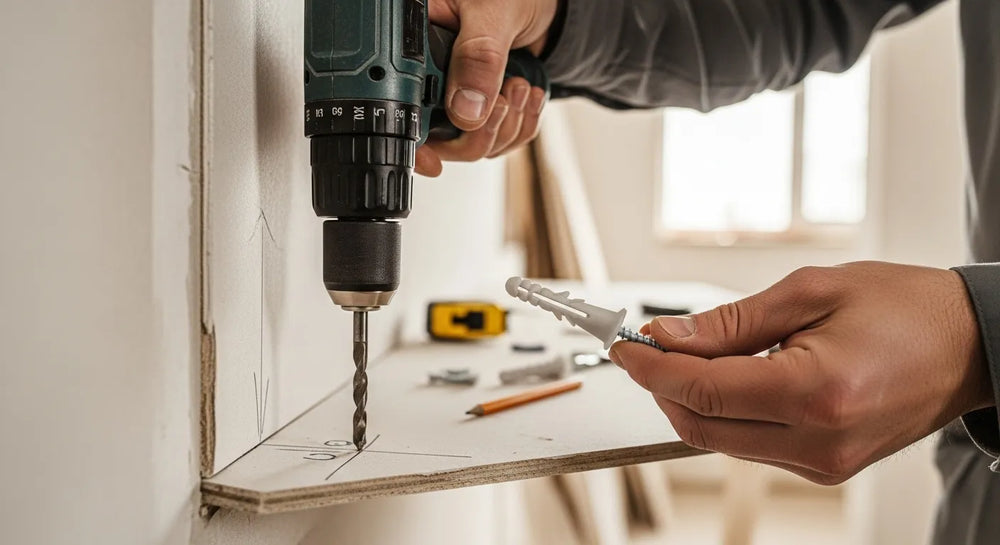
How to Screw Corrugated Metal: Best Practices for Secure Fastening
Table of Contents
- Introduction
- The Versatility and Challenges of Corrugated Metal
- Understanding Fastener Fundamentals for Corrugated Metal
- Key Factors in Choosing the Right Fastener
- Essential Techniques for Screwing Corrugated Metal
- Sourcing Excellence: Why U.S.-Made Fasteners Matter
- Streamlining Procurement with Maden.co
- Conclusion
- FAQ
Industrial facilities, agricultural structures, and modern architectural designs frequently rely on corrugated metal for its strength, durability, and aesthetic versatility. From robust roofing systems to resilient siding and efficient internal partitions, its application is widespread. Yet, the long-term performance and structural integrity of any corrugated metal installation hinge entirely on one critical factor: the quality and proper installation of its fasteners. An improperly secured panel can lead to leaks, structural weakness, premature corrosion, and ultimately, costly repairs and operational downtime.
For a procurement manager tasked with sourcing components for a new industrial build, an MRO buyer replacing deteriorated panels on existing infrastructure, or a design engineer specifying materials for a complex project, understanding the nuances of how to screw corrugated metal is paramount. It’s not merely about driving a screw into metal; it involves a strategic selection of fastener type, material, coating, and the application of precise installation techniques. This comprehensive guide will delve into the best practices for fastening corrugated metal, empowering you to make informed decisions that enhance durability, ensure compliance, and optimize the total cost of ownership for your projects. We will explore the characteristics of effective fasteners, essential installation methods, and highlight how sourcing high-quality, U.S.-made components can be a cornerstone of robust construction and maintenance strategies.
Introduction
Imagine a critical infrastructure project facing delays and budget overruns, not because of structural design flaws, but due to widespread fastener failures on its corrugated metal cladding. This common scenario underscores a fundamental truth in industrial procurement and construction: the smallest components often bear the largest responsibility for long-term project success. Corrugated metal, with its distinctive profile and inherent strength, offers exceptional value across a myriad of applications, from warehouses and factories to agricultural buildings and architectural façades. However, its effectiveness is directly proportional to the integrity of its fastening system. Incorrect fastener selection or installation can compromise weatherproofing, structural stability, and even the aesthetic appeal of an entire structure, leading to significant financial and operational consequences.
This article aims to serve as an authoritative resource for procurement managers, MRO buyers, design engineers, and business owners who demand excellence and reliability in their industrial applications. We will meticulously break down the essential principles of how to screw corrugated metal, covering everything from understanding fastener mechanics and material science to mastering installation techniques. Our goal is to provide actionable insights that not only prevent common pitfalls but also elevate the overall quality and longevity of your corrugated metal installations. By focusing on precision, quality, and the strategic advantages of sourcing U.S.-manufactured components, we aim to equip you with the knowledge to make procurement decisions that are both efficient and resilient.
The Versatility and Challenges of Corrugated Metal
Corrugated metal stands as a testament to practical engineering, offering a unique blend of strength, lightweight properties, and a distinct aesthetic. Its widespread adoption in industrial, commercial, and agricultural sectors is no accident. However, its optimal performance is heavily reliant on understanding both its benefits and the specific challenges it presents during installation, particularly concerning fastening.
Common Applications and Properties
Corrugated metal’s applications are diverse, driven by its inherent advantages:
- Roofing and Siding: Perhaps its most recognized use, providing durable, weather-resistant envelopes for buildings. Its corrugations add rigidity, allowing for wider spans between supports and improving resistance to wind and snow loads.
- Fencing and Partitions: Used for robust perimeter fencing in industrial sites or as internal partitions in warehouses, offering security and defined spaces.
- Industrial Cladding: Protecting sensitive equipment or creating resilient exteriors for manufacturing plants, often in harsh environments.
- Agricultural Buildings: Providing cost-effective and long-lasting shelters for livestock, machinery, and storage, capable of withstanding various weather conditions.
The material’s strength-to-weight ratio is impressive, making it relatively easy to handle and install while offering significant structural integrity. Modern corrugated metals are also treated for enhanced corrosion resistance, often with galvanized or pre-painted finishes, extending their lifespan and reducing maintenance needs.
Fastening Challenges Unique to Corrugated Metal
Despite its robustness, working with corrugated metal introduces several fastening challenges that require careful consideration:
- Preventing Leaks: The most critical challenge, especially for roofing. Each screw penetration creates a potential entry point for water. Effective sealing is paramount.
- Thermal Expansion and Contraction: Metal expands and contracts significantly with temperature fluctuations. Fasteners must accommodate this movement without loosening, backing out, or causing material fatigue around the penetration point.
- Material Compatibility: Directly screwing dissimilar metals can lead to galvanic corrosion, prematurely degrading both the fastener and the corrugated sheet.
- Wind Uplift and Shear Forces: For exterior applications, fasteners must be strong enough to resist severe wind loads, which can exert significant uplift and shear forces on the panels.
- Consistent Drive Depth: Over-tightening can crush the corrugations, strip threads, or damage sealing washers, while under-tightening leaves the fastener loose and susceptible to leaks or pull-out.
Addressing these challenges effectively requires a strategic approach to fastener selection and installation. Leveraging high-quality, U.S.-manufactured components specifically designed for these demanding conditions is where the procurement process truly adds value. At Maden.co, we understand these complexities and prioritize democratizing access to the American-made fasteners that solve them, ensuring your projects are built to last. You can learn more about our mission to champion American manufacturing here: About Us.
Understanding Fastener Fundamentals for Corrugated Metal
The foundation of a durable corrugated metal installation lies in selecting the correct fasteners. This involves understanding the various types of screws, their materials, and the critical role of washers and coatings. For procurement managers and design engineers, making an informed choice here directly impacts structural integrity, longevity, and long-term maintenance costs.
Types of Screws for Corrugated Metal
The market offers a range of screws, each designed for specific applications and substrate types. For corrugated metal, self-drilling and self-tapping screws are overwhelmingly preferred due to their efficiency and ease of installation.
-
Self-Drilling/Self-Tapping Screws: These are the workhorses for corrugated metal. They feature a drill point that eliminates the need for pre-drilling (in most applications), followed by threads that tap into the metal as the screw is driven. This significantly reduces installation time and labor costs. They are available in various drive types (hex, Phillips, square) and head styles (hex washer, pan, truss).
- For applications requiring a high-strength connection into thicker gauges or specific materials, a specialized option like the Hi-Lo Double Lead Thread Self-Tapping Sheet Metal Screw offers enhanced thread engagement and pull-out resistance, making it an excellent choice for demanding projects where maximum securement is critical.
- For general sheet metal fastening, a reliable choice is the Steel Zinc Plated Type A Pan Slot Drive Self-Tapping Sheet Metal Screw. Its pan head provides a clean finish, and the zinc plating offers a degree of corrosion resistance suitable for many interior and some exterior applications.
- When a broader bearing surface is required to prevent pull-through, especially with softer or thinner sheet metal, the Steel Zinc Plated Type A Truss Square Drive Self-Tapping Sheet Metal Screw is an ideal solution. The truss head distributes the load more effectively, and the square drive offers better cam-out resistance during installation.
-
Wood Screws vs. Metal Screws: It's crucial to use fasteners designed for the specific substrate. Metal screws typically have finer threads and hardened tips for penetrating metal, while wood screws have coarser threads for gripping wood fibers. Hybrid options, like self-drilling metal screws with coarser threads at the tip, are designed for fastening metal to wood.
-
Roofing Screws with Washers: These are a specialized category of self-drilling screws featuring an integrated washer, typically made of EPDM rubber or neoprene. The washer compresses upon installation, creating a watertight seal around the screw penetration, which is absolutely critical for preventing leaks in roofing applications.
Material Considerations
The material of the fastener is as important as its design, especially in outdoor or corrosive environments.
- Carbon Steel: The most common and economical choice. However, it requires a protective coating to prevent rust. Zinc plating is standard, but for enhanced durability, galvanization or specialized coatings are preferred.
- Stainless Steel (304 & 316): Offers superior corrosion resistance without the need for additional coatings. Stainless steel 304 is suitable for most exterior applications, while 316 provides enhanced resistance to saltwater and harsh chemicals, making it ideal for coastal regions or industrial facilities exposed to corrosive agents. However, stainless steel is softer than hardened carbon steel, meaning it has lower shear strength and may not be suitable for structural applications or very thick metal substrates.
- Aluminum: Lightweight and corrosion-resistant, aluminum screws are typically used for fastening aluminum corrugated panels to prevent galvanic corrosion, though they are less common and generally have lower strength.
Washer Types for Sealing
Washers are integral to preventing leaks and distributing load, particularly for roofing and siding.
- EPDM (Ethylene Propylene Diene Monomer) Washers: Highly durable, UV-resistant, and flexible, EPDM washers create an excellent seal against water ingress. They are designed to withstand thermal expansion and contraction cycles without cracking or losing their sealing properties.
- Neoprene Washers: Similar to EPDM, neoprene also provides a good seal and resilience. Both EPDM and neoprene washers are designed to compress without extruding excessively from under the screw head, maintaining an effective seal.
Coatings and Finishes
Coatings protect the fastener material from environmental degradation and can also contribute to the overall aesthetic.
- Galvanization: A process where a protective zinc coating is applied to steel, offering excellent corrosion resistance, especially in outdoor environments. Hot-dip galvanization provides a thicker, more durable layer of zinc than electro-galvanization.
- Zinc Plating: A thinner zinc coating applied electrochemically, providing good corrosion resistance for interior or moderately exposed applications. It's often used for components like the Steel Zinc Plated Type A Pan Slot Drive Self-Tapping Sheet Metal Screw where a clean finish and some protection are needed.
- Ceramic Coatings: Advanced coatings offering superior corrosion resistance and sometimes color matching, often used for premium roofing screws. These coatings can provide protection levels comparable to or exceeding galvanization.
- Painted Heads: Many roofing screws come with painted heads to match the color of the corrugated panels, providing a seamless and professional finish.
Choosing the right combination of screw type, material, washer, and coating is a critical step in ensuring the long-term success of any corrugated metal project. For a design engineer needing specific material certifications for a new prototype, or an MRO buyer facing an unexpected equipment breakdown, the ability to quickly find and finance a verified, U.S.-made part is a game-changer. At Maden.co, we connect industrial buyers with over 2.5 million American-made products from our network of 800+ verified U.S. manufacturers, ensuring that quality and reliability are always within reach. You can explore the Maden.co marketplace today to find the precise components for your next project.
Key Factors in Choosing the Right Fastener
The selection of fasteners for corrugated metal is a meticulous process that goes beyond simply picking a screw off the shelf. It requires a comprehensive evaluation of several interconnected factors to ensure optimal performance, longevity, and structural integrity. For procurement professionals, understanding these considerations is crucial for strategic sourcing and improving the total cost of ownership (TCO) for their organizations.
Material Compatibility: Preventing Galvanic Corrosion
One of the most critical considerations is avoiding galvanic corrosion, an electrochemical process that occurs when two dissimilar metals are in electrical contact in the presence of an electrolyte (like moisture). This can rapidly degrade the less noble metal.
- Rule of Thumb: Fasten steel corrugated panels with steel fasteners, and aluminum panels with aluminum fasteners or specially coated steel fasteners that provide an insulating barrier.
- Stainless Steel to Carbon Steel: While stainless steel is corrosion-resistant, using stainless steel fasteners with galvanized or bare carbon steel panels can still induce galvanic corrosion on the carbon steel if moisture is present. Specialized isolation washers or coatings may be required.
Gauge and Profile of Corrugated Metal
The thickness (gauge) and profile (size and shape of corrugations) of the metal panels directly influence the required screw length, thread type, and drilling capacity.
- Screw Length: The screw must be long enough to penetrate the corrugated sheet, pass through the sealing washer, and adequately engage with the underlying substrate (purlin or framing). A common guideline is to ensure at least 1 inch (25mm) of thread engagement in wood substrates and at least three full threads engagement in metal substrates.
- Thread Type: Fine threads are generally better for metal-to-metal connections, while coarser threads excel in wood substrates. Self-drilling screws are graded by their drill point for specific metal thickness capacities.
- Washer Size: The washer should be large enough to effectively seal the hole without being so large that it interferes with adjacent corrugations or fasteners.
Substrate Material: Anchoring to the Structure
The material to which the corrugated panels are being fastened – be it wood purlins, steel framing, or concrete – dictates the appropriate fastener type and drill point.
- Wood Substrates: Screws designed for wood will have sharper points and coarser threads for optimal grip. The Hi-Lo Double Lead Thread Self-Tapping Sheet Metal Screw with its aggressive thread profile, for instance, can offer superior engagement in wood substructures when fastening metal.
- Steel Substrates: Self-drilling screws are categorized by their drill point numbers (#1 through #5), indicating the maximum steel thickness they can effectively drill through. For structural steel, higher drill point numbers and hardened screws are essential.
- Concrete Substrates: Requires specialized masonry anchors or concrete screws, often pre-drilled, to secure battens or furring strips to which the corrugated metal is then attached.
Environmental Conditions: Durability Against the Elements
The environmental exposure of the structure is a primary driver for fastener material and coating selection.
- Outdoor Exposure: Requires fasteners with robust corrosion resistance. Galvanized or stainless steel fasteners are standard. Pre-painted heads are beneficial for UV resistance and aesthetics.
- Coastal Regions: High salt spray demands superior corrosion resistance, making Stainless Steel 316 an ideal, though more expensive, choice. Specialized marine-grade coatings may also be considered.
- Industrial Environments: Exposure to chemicals, fumes, or extreme temperatures necessitates fasteners that can withstand specific corrosive agents or thermal cycling.
- Wind and Snow Loads: Areas prone to high winds or heavy snow require fasteners with excellent pull-out and shear strength, often necessitating a higher density of fasteners and potentially larger diameter screws.
Load Requirements: Structural Integrity
Understanding the anticipated loads on the corrugated panels is critical for ensuring adequate fastening.
- Wind Uplift: Design codes specify minimum fastener patterns and pull-out strengths to resist wind lifting the panels. This often means more fasteners per panel and greater engagement with the substrate.
- Snow Loads: The weight of snow can exert significant downward pressure. Fasteners must have sufficient shear strength to prevent panels from sliding or buckling.
- Seismic Activity: In earthquake-prone zones, fasteners may need to accommodate greater movement and cyclic loading without failure.
Aesthetic Considerations: The Finished Look
While structural integrity is paramount, the visual outcome also plays a role, especially in architectural or public-facing structures.
- Color Matching: Screws with factory-painted heads that match the corrugated panels create a cleaner, more integrated appearance.
- Head Style: Different head styles (hex washer, pan head, truss head) offer varying levels of protrusion and load distribution. For example, the Steel Zinc Plated Type A Truss Square Drive Self-Tapping Sheet Metal Screw with its wide, flat head provides a discreet profile while maximizing bearing surface.
For a procurement manager under pressure to source a specific DIN 931 compliant hex cap screw, a design engineer needing specific material certifications for a new prototype, or an MRO buyer facing an unexpected equipment breakdown, the ability to quickly find and finance a verified, U.S.-made part is a game-changer. Our mission at Maden.co is to democratize access to American manufacturing, ensuring industrial buyers can easily connect with the 2.5 million+ American-made products from our network of 800+ verified U.S. manufacturers. This focus on industrial excellence and supply chain transparency ensures that you can always procure the right fastener for the job, built to the highest standards.
Essential Techniques for Screwing Corrugated Metal
Beyond selecting the right fastener, proper installation techniques are crucial for ensuring the longevity, weatherproofing, and structural integrity of corrugated metal panels. Even the highest quality U.S.-made screws can fail if installed incorrectly. This section outlines the essential steps and best practices for securing corrugated metal.
Pre-Drilling: When and Why It’s Necessary
While self-drilling screws are designed to eliminate the need for pre-drilling in most scenarios, there are specific situations where it remains a best practice or even a necessity:
- Thick Gauge Metal Substrates: When fastening into steel purlins or framing that exceeds the drilling capacity of the self-drilling screw.
- Hard or Brittle Substrates: Materials like hardened steel or certain treated woods might benefit from a pilot hole to prevent screw breakage or splitting.
- Close to Edges: Pre-drilling can prevent material distortion or splitting when fastening very close to the edge of a panel or substrate.
- Precision Alignment: For highly visible installations or when precise fastener placement is critical, a small pilot hole can guide the screw accurately.
- Larger Diameter Screws: Very large diameter self-drilling screws may still benefit from a pilot hole to ease installation and prevent over-torquing.
When pre-drilling, always use a drill bit that is slightly smaller than the minor diameter of the screw threads, or the diameter recommended by the fastener manufacturer. For roofing and siding, ensure the pre-drilled hole in the corrugated metal is slightly oversized to allow for thermal movement without binding the screw.
Screw Placement: On the Rib or in the Valley?
The choice of where to place the screw on the corrugated profile is critical and depends heavily on the application:
-
On the Rib (Crest Fastening):
- Primary for Roofing: Fastening on the rib is generally preferred for roofing applications because it allows water to drain freely in the valleys, minimizing water ponding around the fastener and reducing the risk of leaks. The washer sits on the raised rib, creating an effective seal.
- Requires Stronger Washers: The washer must be able to withstand the compression without deforming excessively and maintain its seal against the rib.
- Better Wind Uplift Resistance: Fastening on the rib provides superior resistance to wind uplift because the screw pulls directly against the strongest part of the panel and the underlying support structure.
-
In the Valley (Valley Fastening):
- Primary for Siding: Often preferred for vertical siding panels. Fastening in the valley allows the screw head to be less conspicuous and less prone to being snagged. It can also provide a tighter seal against the substrate if properly executed.
- Increased Leak Risk for Roofing: For roofing, valley fastening is generally discouraged due to the increased risk of water pooling around the screw head and washer, potentially leading to leaks over time, especially if the seal deteriorates.
- Requires Careful Driving: It's easier to over-tighten and deform the panel when fastening in the valley, which can compromise its structural integrity and cause dimpling.
Regardless of placement, always ensure fasteners are driven perpendicular to the surface of the corrugated metal for optimal sealing and engagement.
Proper Drive Depth: Avoiding Over-Tightening or Under-Tightening
This is perhaps the most common installation error with corrugated metal and has significant consequences:
-
Over-tightening:
- Damage to Washer: Crushes and deforms the EPDM or neoprene washer, reducing its sealing effectiveness and lifespan. The rubber can extrude out from under the screw head, creating an uneven seal.
- Stripped Threads: Damages the threads in the substrate, significantly reducing pull-out strength.
- Panel Distortion: Dents or deforms the corrugated panel, compromising its structural integrity and aesthetic.
- Increased Thermal Stress: Restricts the panel's ability to expand and contract, leading to stress fractures around the fastener hole.
-
Under-tightening:
- Inadequate Seal: The washer does not compress sufficiently to create a watertight seal, leading to leaks.
- Loose Panels: Allows panels to rattle in the wind, increasing noise and accelerating wear on both the fastener and the panel.
- Reduced Pull-out Strength: The fastener does not achieve full engagement, making it susceptible to pull-out under load.
The Golden Rule: Drive the screw until the washer is visibly compressed and seals against the panel, but stop before the rubber starts to squeeze out excessively or the panel begins to deform. The washer should be snug, creating a watertight gasket. Using screw guns with adjustable clutches or depth-sensing nosepieces is highly recommended for consistent results.
Sealant Application: An Extra Layer of Protection
While integral washers provide the primary seal, supplementary sealants can offer an extra layer of protection in critical areas or demanding environments:
- Lap Joints: Where corrugated panels overlap horizontally or vertically, a bead of high-quality sealant (e.g., silicone or butyl mastic tape) between the lapped sections can prevent wind-driven rain or capillary action from drawing water into the structure.
- Flashings and Trims: Sealants are essential where corrugated metal meets flashings, trims, or other building components to ensure a continuous waterproof barrier.
- Problematic Areas: For repairs or in areas exposed to extreme weather, a small dab of sealant under the washer before driving the screw can enhance the seal, although this should not be a substitute for proper washer compression.
Always use sealants compatible with both the corrugated metal and the fastener materials to prevent degradation.
Lapping and Overlapping: Correct Panel Alignment
Proper overlapping of corrugated panels is fundamental to water management and structural integrity:
- Horizontal Overlap: For roofing, panels should always overlap sufficiently (typically at least one full corrugation, often 6-12 inches depending on pitch and code) to prevent water from entering. Fasten through both layers of the overlap.
- Vertical Overlap (Side Lap): Panels should overlap by at least one full corrugation. Ensure that fasteners penetrate both layers of the overlap to create a secure, weatherproof connection.
- Start at the Bottom: Always start installing panels from the bottom edge of a roof or wall and work upwards, allowing upper panels to shed water over lower panels.
Tools and Equipment: Precision and Efficiency
Using the right tools not only makes the job easier but also ensures consistent, high-quality installation:
- Impact Drivers/Screw Guns: Essential for quickly and efficiently driving self-drilling screws.
- Adjustable Clutch/Depth-Sensing Nosepiece: Crucial for achieving the correct drive depth and preventing over-tightening. This is a non-negotiable tool for professional corrugated metal installation.
- Nut Setters (Magnetic): For hex head screws, a magnetic nut setter securely holds the screw, preventing drops and ensuring straight driving.
- Appropriate Drill Bits: For pre-drilling or if using non-self-drilling screws.
- Safety Gear: Gloves, eye protection, and appropriate fall protection for roofing work are paramount.
Adhering to these essential techniques, coupled with the use of high-quality, American-made fasteners, ensures that your corrugated metal installations will perform reliably for decades. For qualified U.S. manufacturers looking to supply industrial-grade fasteners that meet these rigorous standards, we invite you to Register as a vendor and join the American manufacturing revival on Maden.co.
Sourcing Excellence: Why U.S.-Made Fasteners Matter
In today's complex global supply chain, the choice of where to source industrial components carries significant weight. For procurement managers, MRO buyers, and design engineers, prioritizing U.S.-made fasteners for corrugated metal projects is not just a matter of patriotism; it's a strategic decision rooted in quality assurance, supply chain resilience, and long-term economic benefit.
Quality and Durability: Adherence to Standards
American manufacturing is synonymous with stringent quality control and adherence to established industry standards. When you source U.S.-made fasteners, you gain:
- Consistent Material Properties: Manufacturers adhere to precise metallurgical specifications, ensuring the fasteners have the expected strength, hardness, and corrosion resistance. This is critical for meeting performance requirements like pull-out and shear strength.
- Precision Engineering: Dimensions, thread profiles, and drill points are manufactured to tight tolerances, ensuring proper fit, easy installation, and optimal engagement with substrates. This includes compliance with critical industry standards such as DIN (Deutsches Institut für Normung) or NPT (National Pipe Taper) threads, which are vital for interchangeability and performance in specialized applications.
- Robust Coatings: U.S. manufacturers often utilize advanced and consistently applied coatings, such as high-grade galvanization or specialized polymer coatings, which provide superior, lasting protection against environmental degradation.
- Reduced Failure Rates: Higher quality components translate to fewer manufacturing defects, leading to lower failure rates during installation and throughout the product's lifecycle.
Supply Chain Resilience: Reducing Risk and Friction
The recent disruptions to global supply chains have starkly highlighted the vulnerabilities of relying solely on overseas sourcing. U.S.-made fasteners offer tangible advantages:
- Shorter Lead Times: Proximity to manufacturing facilities means faster delivery, reducing project delays and allowing for more agile inventory management.
- Reduced Shipping Costs and Complexity: Eliminates lengthy international shipping, customs processes, and associated logistical challenges, simplifying procurement.
- Geopolitical Stability: Insulates businesses from international trade disputes, tariffs, and geopolitical unrest that can impact component availability and pricing.
- Enhanced Visibility and Traceability: Easier to trace the origin of components, ensuring authenticity and compliance with specifications. This supply chain transparency is a core value at Maden.co.
Total Cost of Ownership (TCO): Long-Term Savings
While U.S.-made fasteners might sometimes have a higher upfront cost than their internationally sourced counterparts, their long-term value often results in a lower TCO:
- Fewer Replacements: Superior durability means fasteners last longer, reducing the need for premature replacements and associated labor costs.
- Reduced Maintenance: A secure, leak-proof installation minimizes the need for ongoing repairs related to fastener failure, saving on MRO expenses.
- Avoided Project Delays: Reliable component availability prevents costly project delays caused by out-of-spec or missing parts.
- Improved Structural Longevity: Quality fasteners contribute to the overall durability of the structure, extending its useful life and deferring major renovations.
Compliance and Certifications: Meeting Project Specifications
Many industrial and commercial projects require strict adherence to building codes, safety regulations, and specific material certifications.
- Easier Compliance: U.S. manufacturers are well-versed in domestic regulatory requirements (e.g., ASTM, ANSI, federal standards), making it easier to procure compliant materials.
- Reliable Documentation: Access to readily available material safety data sheets (MSDS), test reports, and certifications simplifies the documentation process for project managers and inspectors.
- Performance Guarantees: Reputable U.S. manufacturers often stand by their products with robust warranties and technical support.
American Manufacturing Pride and Customer Empowerment
Choosing U.S.-made fasteners also aligns with a broader commitment to supporting domestic industries and fostering economic growth within the nation. At Maden.co, our vision is to become the definitive platform that proves American-made components are as accessible and convenient as any global alternative, driving the manufacturing revival with our tagline: "America's manufacturing revival is here." Our core values of American Manufacturing Pride, Digital Innovation, Supply Chain Transparency, Industrial Excellence, and Customer Empowerment are woven into everything we do. By sourcing through our platform, you are directly contributing to the strength and innovation of the U.S. manufacturing sector.
For an MRO buyer needing specific gauge fasteners for a critical repair, or a procurement manager seeking certified components for a large-scale construction project, Maden.co offers unparalleled access to verified U.S. manufacturers. We provide a streamlined, transparent, and efficient pathway to procurement excellence, ensuring that you can confidently specify and acquire the highest quality American-made fasteners for all your corrugated metal needs.
Streamlining Procurement with Maden.co
The complexities of industrial procurement, particularly when sourcing specialized components like those required for corrugated metal installations, can be daunting. From verifying supplier credentials to navigating lead times and managing cash flow, procurement managers and business owners face numerous hurdles. Maden.co is purpose-built to address these challenges, transforming the way industrial buyers access American manufacturing excellence.
A Vast Catalog of U.S.-Made Components
At the heart of Maden.co's value proposition is our unparalleled selection. We offer direct access to over 2.5 million American-made products from our extensive network of 800+ verified U.S. manufacturers. This means that whether you are searching for standard Steel Zinc Plated Type A Pan Slot Drive Self-Tapping Sheet Metal Screw or highly specialized Hi-Lo Double Lead Thread Self-Tapping Sheet Metal Screw with specific coatings, our platform makes finding the exact component you need both efficient and reliable. Our commitment to Digital Innovation ensures that our marketplace is easy to navigate, with powerful search filters and detailed product specifications.
Ease of Finding Hard-to-Find Parts
For design engineers working on innovative projects or MRO buyers needing to quickly replace an obsolete part, the ability to rapidly locate hard-to-find, U.S.-made components is invaluable. Our platform aggregates offerings from a diverse range of American manufacturers, often presenting solutions that might otherwise require extensive individual supplier searches. This significantly reduces procurement friction and accelerates project timelines. When you're looking for specialized fasteners like the Steel Zinc Plated Type A Truss Square Drive Self-Tapping Sheet Metal Screw for unique load distribution, our comprehensive catalog ensures you can find precisely what you need.
Instant Financing: A Strategic Tool for Business
Understanding that managing cash flow is paramount for businesses of all sizes, Maden.co offers a key differentiator: Instant Financing. This isn't just a payment option; it's a strategic tool designed to empower procurement managers and business owners to make larger-volume purchases, manage capital-intensive projects more effectively, and maintain healthy cash flow.
When you're equipping a large construction project or stocking your MRO inventory with critical fasteners, the ability to finance your purchase at the point of sale can be a game-changer. It allows for immediate acquisition of necessary components without tying up immediate working capital, ensuring that projects stay on schedule and operational continuity is maintained. This feature streamlines the procurement process, providing financial flexibility that supports growth and efficiency. You can apply for Instant Financing at checkout to streamline your capital-intensive projects, making bulk purchases of high-quality, U.S.-made fasteners more accessible than ever before.
Customer Empowerment and Digital Innovation
At Maden.co, we believe in empowering our customers. Our platform is built on principles of Supply Chain Transparency and Industrial Excellence, providing you with detailed product information, clear supplier profiles, and a seamless purchasing experience. We constantly leverage Digital Innovation to enhance our marketplace, ensuring it remains at the forefront of B2B e-commerce.
Should you have any specific sourcing questions, or require assistance navigating our extensive catalog, our dedicated team is ready to help. We are committed to providing exceptional service and supporting your procurement needs every step of the way. If you have specific sourcing questions, our team is ready to help: Contact Us.
Maden.co is more than just a marketplace; we are a strategic partner in building a more reliable, efficient, and resilient procurement process. By connecting you with the best of American manufacturing, we are not just selling products; we are helping to drive the manufacturing revival, one quality fastener at a time.
Conclusion
Securing corrugated metal panels effectively is a nuanced process that demands a comprehensive understanding of fastener mechanics, material science, and precise installation techniques. From selecting the appropriate self-drilling screw with the right material and coating to mastering the art of proper drive depth and understanding thermal expansion, every detail contributes to the long-term integrity and performance of the structure. The seemingly small decision of which fastener to use can have profound impacts on the structural longevity, weatherproofing, and overall total cost of ownership for industrial, commercial, and agricultural projects.
For procurement managers, MRO buyers, and design engineers, making informed choices means prioritizing quality, reliability, and supply chain resilience. This often leads back to the enduring value of U.S.-manufactured components. By choosing American-made fasteners, businesses invest in consistent quality, adherence to stringent industry standards, reduced lead times, and a more secure supply chain, all of which ultimately contribute to superior project outcomes and enhanced operational efficiency.
At Maden.co, we are committed to democratizing access to this unparalleled quality. Our marketplace connects industrial buyers with an extensive catalog of over 2.5 million American-made products from 800+ verified U.S. manufacturers. We provide the tools and resources, including critical product specifications and the strategic financial flexibility of Instant Financing at checkout, to streamline your procurement process and empower your projects with the best the American manufacturing revival has to offer.
Don't compromise on the foundation of your corrugated metal installations. Explore our extensive catalog today to discover the robust, American-made fasteners your projects demand. Leverage our Instant Financing option at checkout to efficiently manage your capital-intensive purchases, ensuring your projects are built to last with the highest quality components available. The strength and resilience of your next structure start here.
FAQ
Q1: What is the best type of screw for corrugated metal roofing?
A1: For corrugated metal roofing, the best screws are typically self-drilling, hex-head fasteners with an integrated EPDM (Ethylene Propylene Diene Monomer) or neoprene washer. These screws should be made of galvanized or stainless steel (depending on environmental conditions) and often feature painted heads to match the roof color. The self-drilling tip eliminates the need for pre-drilling in most cases, and the washer creates a crucial watertight seal, preventing leaks around the penetration point.
Q2: Should screws for corrugated metal be placed on the rib or in the valley?
A2: For corrugated metal roofing, screws should generally be placed on the rib (crest fastening). This allows water to drain freely in the valleys, minimizing water pooling around the fastener and reducing the risk of leaks. For corrugated metal siding, screws are often placed in the valley (valley fastening), as it can provide a less conspicuous appearance and a tighter seal against the substrate, though careful driving is needed to avoid deforming the panel.
Q3: How do I prevent leaks when screwing corrugated metal?
A3: Preventing leaks primarily involves three key practices:
- Using the Correct Fastener: Always use screws with an integrated EPDM or neoprene washer specifically designed for roofing/siding.
- Proper Drive Depth: Drive the screw until the washer is compressed and seals against the panel, but stop before over-tightening which can damage the washer or strip threads. Use a screw gun with an adjustable clutch or depth-sensing nosepiece for consistency.
- Correct Placement: For roofing, fasten on the high rib to allow for optimal water runoff. Ensure all fasteners are driven perpendicular to the surface. Additionally, apply appropriate sealants at lap joints and flashing connections for an extra layer of protection.
Q4: What's the importance of screw material and coating for outdoor corrugated metal applications?
A4: The material and coating of outdoor corrugated metal screws are critical for long-term durability and preventing corrosion. Carbon steel screws must be protected by coatings like galvanization (hot-dip preferred for superior resistance) or high-grade zinc plating to prevent rust. For more corrosive environments, such as coastal areas with salt spray or industrial sites with chemical exposure, stainless steel screws (especially 316-grade) offer inherent corrosion resistance. Choosing the right material and coating prevents premature fastener failure, maintains the structural integrity of the installation, and significantly contributes to a lower total cost of ownership by reducing maintenance and replacement needs.


