
Ensuring Stability: What Holds Screws in Drywall Effectively
Table of Contents
- Introduction
- Understanding Drywall: The Foundation of Fastening
- The Anatomy of a Drywall Screw: Designed for Purpose
- When Drywall Alone Isn't Enough: The World of Anchors
- Choosing the Right Fastener System: A Procurement Perspective
- Installation Best Practices for Lasting Security
- Beyond the Basics: Specialized Drywall Applications
- The Maden.co Advantage: Sourcing American-Made Fasteners for Industrial Excellence
- Conclusion
- FAQ
In the demanding world of industrial procurement and MRO, few frustrations compare to the unexpected failure of a seemingly simple component. Imagine a maintenance team struggling with shelving instability in a crucial storage area, or a design engineer needing to mount sensitive equipment to an interior wall, only to find the standard fasteners inadequate. The integrity of your infrastructure, the efficiency of your operations, and the safety of your personnel often hinge on the unseen strength of these connections. The common challenge: understanding "what holds screws in drywall" effectively, especially when the stakes are high, and relying on readily available, unverified solutions simply isn’t an option.
This isn't merely about attaching a picture frame; it's about securing heavy equipment, ensuring compliance with safety standards, and maintaining the structural integrity of a commercial or industrial space. The seemingly simple act of driving a screw into drywall becomes a complex exercise in material science, load bearing, and strategic sourcing. For procurement managers and MRO buyers, the choice of fastener impacts not just immediate project success but also long-term maintenance costs, operational downtime, and overall supply chain resilience.
This comprehensive guide will delve deep into the mechanics of drywall fastening, moving beyond common misconceptions to provide a robust understanding of the various methods and materials involved. We will explore the inherent properties of drywall, the specific design considerations of screws optimized for this material, and the diverse array of anchors and fastening systems available for enhanced load bearing. Crucially, we will examine this topic through the lens of industrial excellence and supply chain transparency, emphasizing the strategic value of sourcing high-quality, verified U.S.-made components. Our aim is to equip you with the knowledge to make informed decisions, mitigate risks, and ensure that every connection you specify is engineered for lasting stability and performance.
Introduction
In the intricate landscape of industrial operations, where precision and reliability are paramount, the seemingly mundane task of securing items to drywall can present unforeseen challenges. A faulty connection can lead to operational disruptions, safety hazards, and costly repairs, underlining the critical importance of understanding the underlying principles of effective fastening. It's not enough to simply drive a screw into the wall; the intelligent selection and application of fastening solutions are essential for the longevity and integrity of any installation, from shelving units in a warehouse to complex control panels in a facility.
This guide is designed to demystify the science behind securing objects in drywall, offering a detailed exploration of the materials, methods, and strategic considerations that dictate successful fastening. We will dissect the composition of drywall itself, analyze the specialized design of screws engineered for gypsum, and comprehensively cover the spectrum of anchors that bolster load-bearing capabilities. Furthermore, we will integrate practical insights into best practices for installation and highlight the unique advantages of procuring high-quality, American-made fastening solutions. Our objective is to empower procurement managers, MRO buyers, design engineers, and business owners with the authoritative knowledge needed to navigate these critical choices, ensuring every attachment is not just functional, but enduringly secure.
Understanding Drywall: The Foundation of Fastening
To truly understand what holds screws in drywall, we must first appreciate the material itself. Drywall, also known as plasterboard or gypsum board, is a fundamental component in modern construction, forming the interior walls and ceilings of countless commercial and industrial buildings. Its widespread use stems from its relative affordability, ease of installation, fire resistance, and smooth finish. However, these advantages come with a specific structural characteristic: drywall is inherently brittle and has limited direct holding power.
The Composition of Drywall
Drywall panels typically consist of a core of gypsum plaster pressed between two sheets of heavy paper. Gypsum, a soft sulfate mineral, provides the bulk and fire resistance. The paper facing contributes to the panel’s surface finish and offers some tensile strength, but it is not designed to bear significant load on its own. Standard drywall panels range in thickness, most commonly 1/2 inch (12.7 mm) or 5/8 inch (15.9 mm), with thicker panels offering slightly better screw retention due to increased material for threads to engage.
The Challenge of Direct Fastening
When a screw is driven directly into drywall without hitting a stud, its holding power is derived solely from the gypsum core and the paper facing. The screw threads cut into the soft gypsum, creating a friction fit. The paper facing helps to prevent the screw head from pulling through the gypsum, distributing some of the load. However, this method is highly susceptible to pull-out, especially under dynamic loads, vibrations, or when attempting to support substantial weight. The gypsum can crumble, and the paper can tear, leading to fastener failure. This inherent fragility is precisely why specialized screws and a variety of anchors have been developed, each designed to counteract drywall's limitations and provide a more robust connection. For items requiring stable attachment, understanding these limitations is the first step toward selecting the appropriate solution.
The Anatomy of a Drywall Screw: Designed for Purpose
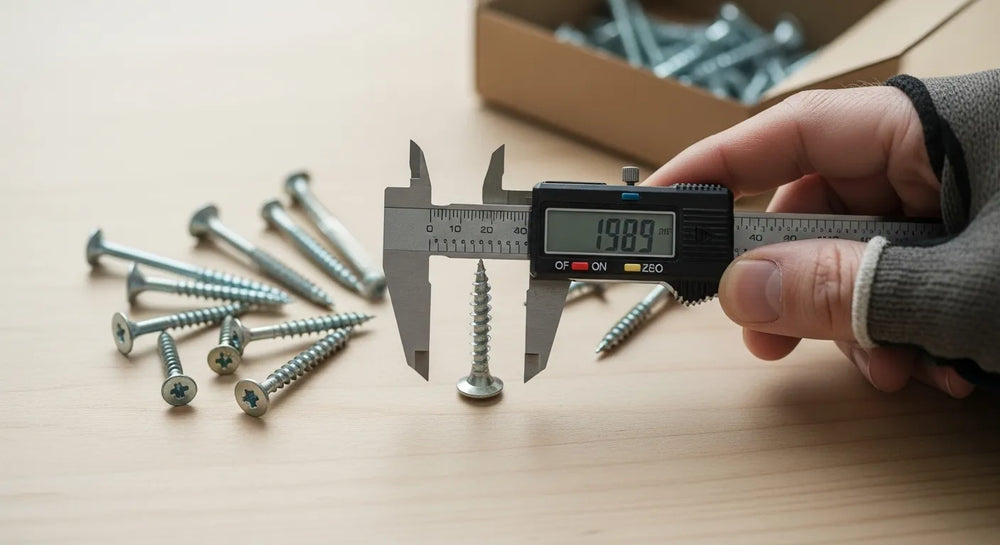
Given drywall's unique properties, standard wood or machine screws are generally unsuitable. Specialized drywall screws are engineered to optimize retention in the soft gypsum core, providing a foundational level of security for lighter loads.
Key Characteristics of Drywall Screws
- Thread Design: Drywall screws feature coarse, sharp threads that are widely spaced. This design allows them to cut aggressively into the gypsum, creating a strong grip as they advance. Unlike fine threads, which might strip out the soft gypsum, coarse threads displace more material, maximizing the contact area and frictional resistance.
- Point Type: Most drywall screws have a sharp, self-tapping point that eliminates the need for pre-drilling in most drywall applications. This design enhances installation efficiency, a critical factor in large-scale commercial projects.
- Head Style: Drywall screws typically have a bugle head, which is designed to countersink cleanly into the drywall surface without tearing the paper facing excessively. The conical shape helps to spread the load over a slightly larger area, reducing the risk of pull-through.
- Material and Coating: Drywall screws are commonly made from hardened steel to prevent breakage during installation. They are often coated with a black phosphate finish, which offers some corrosion resistance and helps the screw bite into the material more effectively. Zinc coatings are also common, providing enhanced corrosion protection for environments with higher humidity.
Coarse Thread vs. Fine Thread Drywall Screws
While most general-purpose drywall screws are coarse-threaded, understanding the distinction is vital for specific applications:
- Coarse Thread Drywall Screws: These are the most common type, ideal for fastening drywall to wood studs. Their aggressive threads provide excellent grip in the soft wood fibers, making them suitable for many interior wall applications. For robust general-purpose fastening, consider options like these 6 x 1 1/4 Coarse Thread Drywall Screws, which provide reliable hold for everyday tasks.
- Fine Thread Drywall Screws: These screws feature finer, closer-spaced threads. They are specifically designed for fastening drywall to metal studs, which are commonly used in commercial construction. The fine threads are better suited to bite into and hold within the thinner gauge of metal, where coarse threads might strip out. When working with metal framing, a product like the 6 x 1 Fine Thread Drywall Screw ensures a secure and durable connection.
Choosing the correct screw type significantly impacts the integrity and longevity of the installation. For a project requiring a larger diameter and length for enhanced holding power in certain applications, the 8 x 4 Drywall Screw represents a robust choice for heavier-duty fastening requirements.
For applications where the load is minimal (e.g., small wall decorations, light fixtures) and direct attachment to a stud is not possible, a drywall screw might suffice. However, for anything with significant weight or requiring long-term structural integrity, relying solely on a drywall screw's direct hold is precarious. This brings us to the crucial role of drywall anchors.
When Drywall Alone Isn't Enough: The World of Anchors
For any application exceeding the minimal load capacity of a drywall screw directly into gypsum, a drywall anchor becomes indispensable. Anchors are specifically designed to expand, toggle, or spread behind the drywall, distributing the load over a larger area and creating a much stronger mechanical connection. The selection of the correct anchor is a critical decision for procurement managers and design engineers, directly influencing the safety, stability, and longevity of the mounted object.
Types of Drywall Anchors and Their Applications
-
Plastic Expansion Anchors (Conical or Ribbed):
- Mechanism: These are simple, inexpensive anchors that are inserted into a pre-drilled hole. As a screw is driven into the anchor, it expands, pressing against the inside of the drywall. Some variations have ribs or wings to prevent rotation.
- Best For: Light-duty applications (e.g., small shelves, towel racks, lightweight picture frames).
- Limitations: Limited pull-out strength; can still pull through if overloaded. Not suitable for dynamic loads or frequent adjustments.
-
Self-Drilling (Threaded) Drywall Anchors:
- Mechanism: Made of plastic or metal, these anchors have a sharp, self-tapping point and coarse external threads. They are screwed directly into the drywall (often with a Phillips head or hex driver) without the need for pre-drilling. Once fully inserted, a screw is then driven into the anchor.
- Best For: Medium-light duty applications. They are quick to install and offer better holding power than basic plastic expansion anchors. Ideal for securing small to medium-sized mirrors, light fixtures, or lightweight cabinets.
- Advantages: Speed of installation, relatively good holding power for their size.
- Disadvantage: Can still damage drywall if overtightened or removed carelessly.
-
Molly Bolts (Sleeve Anchors):
- Mechanism: Molly bolts are metal anchors that use an expansion mechanism. They consist of a screw, a threaded sleeve, and collapsible wings. After drilling a hole and inserting the molly bolt, tightening the screw causes the sleeve to expand and the wings to flare out behind the drywall, creating a robust clamp.
- Best For: Medium to heavy-duty applications, such as mounting televisions, heavier shelving, curtain rods, or handrails.
- Advantages: Excellent pull-out strength and shear strength for their size. Can be removed and reinserted if the screw is taken out, allowing for adjustments. Available in various lengths for different drywall thicknesses.
-
Toggle Bolts:
- Mechanism: Toggle bolts are among the strongest drywall anchors. They feature a spring-loaded wing assembly that passes through a pre-drilled hole. Once through the drywall, the wings spring open, and the bolt is tightened, pulling the wings flush against the back surface of the drywall.
- Best For: Heavy-duty applications, including mounting large flat-screen TVs, wall-mounted cabinetry, grab bars, and anything requiring maximum security in hollow walls.
- Advantages: Superior holding power by distributing the load over a wide area behind the drywall.
- Limitations: Requires a larger pre-drilled hole, and the wing mechanism must be fully retrieved if the object is removed (unless a specialized "strap-toggle" or "snaptoggle" is used, which leaves a permanent plastic strap but allows the bolt to be removed).
-
Snaptoggle / Strap Toggles:
- Mechanism: These are advanced versions of toggle bolts, often featuring a rigid plastic strap and a metal channel or bar. The strap is pushed through a hole, the channel flips open behind the wall, and the strap is pulled tight to secure the channel against the wall. The excess strap is then snapped off, and a machine screw is threaded into the channel.
- Best For: Very heavy-duty applications where maximum strength and reliability are critical. They are often preferred for commercial installations due to their ease of installation and high load ratings.
- Advantages: Easier to install than traditional toggle bolts, very high shear and tensile strength, and the bolt can be removed without losing the anchor inside the wall.
Strategic Selection for Industrial Applications
For procurement managers and design engineers, the selection process is not just about raw load capacity. It involves:
- Load Type: Is the load static or dynamic? Will it experience vibration or impact?
- Drywall Thickness: Matching the anchor length to the drywall thickness is crucial for proper expansion or toggling.
- Installation Environment: Consider humidity, temperature, and potential for chemical exposure which might necessitate specific material coatings or anchor types.
- Compliance: Ensuring chosen fasteners meet relevant industry standards for safety and structural integrity.
- Repairability/Reusability: The ease with which an anchor can be removed or an item re-mounted can be a factor in MRO planning.
By understanding the strengths and limitations of each anchor type, industrial buyers can make informed decisions that prevent costly failures and ensure project success.
Choosing the Right Fastener System: A Procurement Perspective
Selecting the appropriate drywall fastening system extends far beyond simply matching weight limits. For procurement managers, MRO buyers, and design engineers, it's a strategic decision that impacts project timelines, safety compliance, long-term costs, and overall operational efficiency. Making the right choice involves a holistic assessment of product quality, supply chain reliability, and the foundational support provided by expert sourcing.
Factors Beyond Load Capacity
While load capacity is a primary concern, a truly strategic procurement approach considers several other critical factors:
- Material Quality and Durability: Inferior materials can lead to premature failure, especially in dynamic or harsh industrial environments. High-grade steel, appropriate coatings (e.g., zinc plating for corrosion resistance, or specialized finishes for specific chemical exposures), and robust plastic polymers are essential. Sourcing from verified U.S. manufacturers often provides an inherent assurance of material quality and adherence to strict manufacturing standards.
- Compliance with Industry Standards: Many industrial applications require fasteners to meet specific standards such as DIN, NPT, or ASTM. Ensuring compliance is not just about avoiding penalties; it's about guaranteeing performance and safety. A platform like Maden.co emphasizes Industrial Excellence by connecting buyers with products that meet these rigorous requirements.
- Ease and Speed of Installation: For large-scale projects or urgent MRO repairs, efficient installation translates directly to cost savings and reduced downtime. Anchors that are intuitive to install and minimize installation errors contribute significantly to project efficiency.
- Supplier Reliability and Lead Times: A robust supply chain is non-negotiable. Unexpected delays or inconsistent product availability can cripple projects. Partnering with suppliers who offer transparent lead times and consistent product quality is paramount. This aligns with Maden.co’s commitment to Supply Chain Transparency.
- Total Cost of Ownership (TCO): The cheapest fastener is rarely the most cost-effective in the long run. Accounting for installation labor, potential rework, replacement costs, and the cost of failure (e.g., damaged equipment, safety incidents) provides a more accurate TCO. Investing in quality, reliable fasteners from the outset often leads to significant savings.
- Environmental and Safety Considerations: Are there specific environmental regulations to consider (e.g., lead-free, REACH compliant)? What are the safety implications of the chosen fastener in terms of fire resistance or resistance to seismic activity?
The Maden.co Advantage: Sourcing American-Made Fasteners
At Maden.co, our mission is to democratize access to American manufacturing, simplifying the procurement process for industrial buyers. We understand that finding the right U.S.-made components, especially specialized fasteners, can be a time-consuming challenge. That's why we connect industrial buyers with over 2.5 million American-made products from our network of 800+ verified U.S. manufacturers. Our vision is to become the definitive platform that proves American-made components are as accessible and convenient as any global alternative, driving the manufacturing revival with our tagline: "America's manufacturing revival is here."
For a procurement manager under pressure to source a specific DIN 931 compliant hex cap screw, a design engineer needing specific material certifications for a new prototype, or an MRO buyer facing an unexpected equipment breakdown, the ability to quickly find and finance a verified, U.S.-made part is a game-changer. Our platform significantly reduces procurement friction, offering:
- Verified Quality: Every product on Maden.co comes from a U.S.-based manufacturer, upholding the highest standards of American quality and craftsmanship. This reduces the risk associated with unknown origins and inconsistent material specifications.
- Supply Chain Resilience: Sourcing domestically reduces reliance on extended global supply chains, mitigating risks from geopolitical events, shipping delays, and tariffs. This strengthens your operational continuity and provides greater predictability.
- Digital Innovation and Customer Empowerment: Our user-friendly digital marketplace, built on principles of Digital Innovation, streamlines the search and purchase process, putting you in control. For example, whether you need 6 x 1 1/4 Coarse Thread Drywall Screws for a woodworking project, an 8 x 4 Drywall Screw for a more substantial installation, or 6 x 1 Fine Thread Drywall Screws for metal stud work, our extensive catalog makes finding the precise component straightforward.
- Instant Financing at Checkout: A key differentiator for Maden.co is our instant financing option, available directly at checkout. This isn't just a payment method; it's a strategic financial tool. It allows procurement managers and business owners to manage cash flow effectively, make larger-volume purchases without upfront capital strain, and respond swiftly to urgent needs without compromising budget cycles. You can apply for Instant Financing at checkout to streamline your capital-intensive projects and maintain operational fluidity.
By partnering with Maden.co, you're not just buying fasteners; you're investing in a more reliable, efficient, and resilient procurement process, all while contributing to the strength of American manufacturing. Our entire business model is built on this principle; you can learn more about our mission to champion American manufacturing here: About Us.
Are you a qualified U.S. manufacturer looking to expand your reach? Register as a vendor and join the American manufacturing revival: Vendor Registration.
Installation Best Practices for Lasting Security
Even the highest quality fasteners can fail if installed incorrectly. Adhering to best practices for installation is crucial for maximizing the holding power of any drywall fastening system and ensuring the longevity and safety of the mounted object.
Pre-Installation Checks and Preparations
- Locate Studs (When Possible): Always attempt to fasten heavy items directly into wall studs. Studs (vertical wooden or metal framing members behind the drywall) offer the most robust anchor point. Use a reliable stud finder to locate them accurately. Even if only one side of an object can be secured to a stud, it significantly enhances stability.
- Verify Drywall Condition: Inspect the drywall for damage, moisture, or previous fastener holes that could compromise its integrity. Fastening into damaged or saturated drywall will severely reduce holding power.
- Choose the Right Drill Bit: For anchors requiring a pre-drilled hole, use the exact size recommended by the anchor manufacturer. Too small a hole can cause the drywall to crumble during insertion; too large, and the anchor won't grip properly.
- Clean the Hole: After drilling, remove any dust or debris from the hole to ensure the anchor can expand or toggle freely and make full contact with the drywall.
Proper Anchor and Screw Installation
-
For Expansion Anchors (Plastic or Metal Self-Drilling):
- If pre-drilling is required, drill slowly to avoid tearing the paper facing.
- Insert the anchor flush with the wall surface. Do not countersink it beyond the paper.
- For self-drilling anchors, apply firm, even pressure and drive it straight into the drywall until its flange is flush. Avoid overtightening, as this can strip the gypsum.
- Insert the screw into the anchor. Tighten it until snug, but again, avoid overtightening which can strip the anchor itself or damage the drywall around it.
-
For Molly Bolts:
- Drill the specified hole size.
- Insert the molly bolt, ensuring the flange is flush with the wall.
- Tap it gently if needed to secure the anti-rotation tabs.
- Turn the screw clockwise. As it tightens, the molly bolt will expand behind the wall. Continue tightening until you feel firm resistance, indicating the wings have fully expanded and are pulling tightly against the backside of the drywall. Do not overtighten, as this can crush the drywall.
-
For Toggle Bolts (Traditional and Snaptoggle):
- Traditional Toggle: Drill the larger required hole. Squeeze the wings together and push them through the hole. Once through, the wings will spring open. Pull the bolt back slightly to seat the wings against the inside of the drywall, then tighten the bolt until the object is secure. Remember, if you remove the bolt, you lose the toggle inside the wall.
- Snaptoggle/Strap Toggle: Drill the specified hole. Push the metal channel through the hole. Pull the plastic straps firmly until the channel is snug against the back of the drywall. Slide the plastic flange along the straps until it's flush with the wall, then snap off the excess straps. Insert the machine screw into the threaded channel and tighten. This method allows for screw removal without losing the anchor.
Avoiding Common Installation Errors
- Overtightening: This is one of the most common mistakes, leading to stripped threads, crushed drywall, or fractured anchors. Always tighten until snug, then stop.
- Incorrect Hole Size: As mentioned, this compromises the anchor's ability to grip or expand properly.
- Ignoring Studs: If a stud is present, always prioritize fastening to it. It’s the most reliable connection.
- Not Considering Drywall Thickness: Using an anchor too short for thick drywall, or too long, can prevent proper engagement.
- Poor Pilot Hole Placement: If a pilot hole is off-center, it can lead to angled screws or compromised anchor expansion.
By meticulously following these guidelines, industrial teams can ensure that their drywall fastening solutions perform as intended, providing the secure and stable connections necessary for safe and efficient operations.
Beyond the Basics: Specialized Drywall Applications
While standard drywall fastening addresses a wide range of needs, certain industrial or commercial applications demand specialized considerations and advanced techniques. Understanding these nuances is key for design engineers and MRO teams responsible for critical infrastructure.
Heavy-Duty and Commercial Installations
When dealing with very heavy loads, vibration-prone equipment, or applications where structural failure could have severe consequences, simply using a large toggle bolt might not be sufficient.
- Blocking and Backing: The most robust solution for heavy loads on drywall involves adding "blocking" or "backing" behind the drywall. This typically means installing additional wood or metal framing members between existing studs before the drywall is installed. These provide solid material to screw into, making the drywall merely a surface finish. For existing walls, strategic cuts in the drywall can be made to insert blocking, which is then patched. This is often necessary for mounting large commercial displays, heavy machinery panels, or medical equipment.
- Through-Bolting with Backing Plates: For extremely heavy loads or applications requiring seismic resistance, through-bolting can be employed. This involves drilling all the way through the drywall and any existing cavity, often through a stud, and using a bolt with a large washer or backing plate on the opposite side of the wall. This distributes the load over an even wider area and provides a direct, mechanical connection through the entire wall assembly.
- Integrated Wall Systems: In some commercial and industrial settings, walls are designed from the outset with integrated fastening systems. These might include metal channels, unistrut systems, or reinforced panels specifically designed to accept heavy loads, bypassing the limitations of standard drywall entirely.
Considerations for High-Traffic or Dynamic Environments
- Vibration Resistance: In manufacturing plants or areas with heavy machinery, constant vibration can loosen fasteners over time. Using thread-locking compounds, lock washers, or self-locking fasteners in conjunction with appropriate anchors can enhance vibration resistance. Toggle bolts or snaptoggles, with their broad clamping force, generally perform better than simple expansion anchors in such environments.
- Fire Resistance Ratings: In commercial buildings, fire safety is paramount. Ensure that any chosen fastening system does not compromise the fire rating of the drywall assembly. Some anchors are made from fire-rated materials, or their installation methods are designed not to create pathways for fire.
- Moisture and Chemical Resistance: In areas like wash-down bays, laboratories, or food processing facilities, fasteners must resist moisture, humidity, or chemical exposure. Stainless steel anchors or those with specialized corrosion-resistant coatings are essential. The material composition and coatings of fasteners, like those found on Maden.co, are crucial considerations for long-term performance in these demanding conditions.
- Acoustical Performance: When mounting items in acoustically sensitive areas (e.g., control rooms, testing facilities), ensure that the fastening method does not create sound bridges or compromise the sound-dampening properties of the wall assembly.
By delving into these specialized applications, design engineers and procurement professionals can move beyond generic solutions, specifying fasteners and installation methods that meet the rigorous demands of their industrial environments. This proactive approach ensures not only immediate project success but also the long-term integrity and safety of the entire facility. If you have specific sourcing questions about specialized fasteners or require technical assistance, our team is ready to help; reach out to us at Contact Us.
The Maden.co Advantage: Sourcing American-Made Fasteners for Industrial Excellence
In an era defined by supply chain volatility and the critical need for reliable, high-performance components, the strategic importance of sourcing decisions cannot be overstated. At Maden.co, we stand as America's premier B2B marketplace for U.S.-manufactured products, dedicated to empowering procurement managers, MRO buyers, design engineers, and business owners with unparalleled access to industrial excellence. Our commitment goes beyond mere transactions; it's about fostering American Manufacturing Pride and building a resilient, transparent supply chain that serves the backbone of American industry.
When you're evaluating what holds screws in drywall for a critical application, the choice of fastener is a reflection of your commitment to quality and operational integrity. Sourcing through Maden.co offers distinct advantages that translate directly into tangible business outcomes:
- Unwavering Quality and Compliance: Every product available on our platform, from standard drywall screws to specialized anchors and industrial hardware, originates from a network of over 800+ verified U.S. manufacturers. This means you gain access to components manufactured under stringent American quality control standards, ensuring material integrity, precise dimensions, and compliance with vital industry specifications like DIN or NPT. This eliminates the uncertainty often associated with global sourcing and supports your commitment to Industrial Excellence.
- Enhanced Supply Chain Resilience: The past few years have underscored the vulnerabilities of extended global supply chains. By choosing U.S.-made fasteners through Maden.co, you significantly reduce lead times, mitigate risks from international shipping delays, geopolitical tensions, and tariffs. This strategic decision strengthens your operational continuity, improves forecasting accuracy, and directly contributes to a more predictable and robust supply chain—a cornerstone of our commitment to Supply Chain Transparency.
- Reduced Total Cost of Ownership (TCO): While the initial unit price of an imported item might appear lower, the true cost often hides in extended lead times, quality control issues, communication hurdles, and potential project delays. Sourcing high-quality, American-made products from Maden.co inherently reduces these hidden costs. Fewer defects, faster delivery, and reliable performance mean less rework, fewer operational interruptions, and a longer lifespan for your installations, ultimately improving your TCO.
- Digital Innovation for Seamless Procurement: Our platform is built on principles of Digital Innovation, designed to make the procurement process as efficient and frictionless as possible. With a catalog of over 2.5 million products, including specific fasteners like the 6 x 1 1/4 Coarse Thread Drywall Screws for general applications, the 8 x 4 Drywall Screw for more robust needs, or the 6 x 1 Fine Thread Drywall Screw for metal stud work, you can quickly find, specify, and acquire the precise components you need. This digital-first approach empowers our customers.
- Strategic Financial Flexibility with Instant Financing: We understand that capital management is crucial for industrial buyers. That's why Maden.co offers "Instant Financing" directly at checkout. This powerful tool allows you to manage cash flow effectively, make larger-volume purchases without immediate capital outlay, and seize opportunities without budgetary constraints. It's a strategic advantage for handling capital-intensive projects or responding to unforeseen operational needs. You can apply for Instant Financing at checkout to streamline your capital-intensive projects and ensure your operations remain fluid and responsive.
Maden.co is more than just a marketplace; we are a strategic partner in your success, dedicated to providing the resources and solutions that drive the manufacturing revival. We believe that American-made components are not just a choice, but a superior, accessible, and convenient alternative that propels your business forward. Our tagline, "America's manufacturing revival is here," reflects this unwavering commitment. Explore our extensive catalog today to experience the unparalleled value of American manufacturing. Begin your search for high-quality, reliable components at Maden.co.
Conclusion
Understanding what truly holds screws in drywall is a fundamental aspect of intelligent procurement and meticulous project management in industrial and commercial settings. It transcends the basic act of fastening, touching upon critical considerations of material science, structural integrity, long-term durability, and supply chain resilience. From the nuanced design of specialized drywall screws to the advanced engineering of various anchors, each component plays a vital role in ensuring the safety and stability of your installations.
The choices made at the procurement stage directly influence project outcomes, operational efficiency, and the total cost of ownership. By prioritizing high-quality, verified components and adhering to best installation practices, businesses can significantly mitigate risks, reduce downtime, and achieve lasting reliability.
At Maden.co, we are committed to empowering American industries by providing unparalleled access to the finest U.S.-made products. Our platform is designed to connect you with over 2.5 million American-made components from more than 800 verified manufacturers, ensuring that every fastener, anchor, and industrial part you source meets the highest standards of quality and performance. We believe that choosing American-made is not just a preference, but a strategic imperative that strengthens your operations and contributes to the nation's manufacturing resurgence.
Don't let inadequate fastening compromise your projects or your reputation. Explore the comprehensive catalog of American-made drywall screws, anchors, and industrial hardware at Maden.co today. Leverage our Digital Innovation and secure your next critical project with confidence. Remember, for those larger orders or to optimize your cash flow, our "Instant Financing" option is readily available at checkout, providing the flexibility you need to keep your operations moving forward. Discover the definitive source for American manufacturing excellence, and drive your projects towards enduring success.
FAQ
Q1: What is the primary difference between coarse thread and fine thread drywall screws, and when should each be used?
A1: Coarse thread drywall screws have wider, more aggressive threads designed to grip effectively in wood studs, which are common in residential construction. Fine thread drywall screws have closer-spaced threads, optimized for biting into and holding securely in lighter gauge metal studs, frequently used in commercial and industrial construction. Choosing the correct thread type for your stud material is crucial for maximum holding power and to prevent stripping.
Q2: How can I determine the appropriate type of drywall anchor for a specific load?
A2: The selection of a drywall anchor depends heavily on the weight of the object, the type of load (static or dynamic), and the thickness of the drywall. For light loads (under 10-15 lbs), plastic expansion or self-drilling anchors may suffice. For medium loads (15-50 lbs), molly bolts or stronger self-drilling metal anchors are typically recommended. For heavy loads (50 lbs and above), toggle bolts or snaptoggles offer superior holding power by distributing weight over a larger area behind the drywall. Always consult the manufacturer's load ratings and consider adding blocking or through-bolting for critical, very heavy installations.
Q3: What are the risks of using standard wood screws or nails in drywall without an anchor?
A3: Using standard wood screws or nails directly in drywall without an anchor is generally not recommended for anything beyond very light, temporary items. Drywall's gypsum core is soft and brittle, and its paper facing has limited tear strength. Wood screws or nails will quickly pull out or strip the gypsum, leading to instability, damage to the wall, and potential failure of the mounted object. Drywall is not designed to provide significant direct holding power; specialized screws and anchors are engineered to address this limitation.
Q4: Why is sourcing U.S.-made drywall fasteners important for industrial procurement?
A4: Sourcing U.S.-made drywall fasteners, like those found on Maden.co, offers several strategic advantages for industrial procurement. It ensures adherence to stringent American quality control standards, resulting in more reliable and durable components. It significantly enhances supply chain resilience by reducing dependence on extended global logistics, mitigating risks from shipping delays or geopolitical issues. Furthermore, it supports local manufacturing, contributes to a robust domestic economy, and often provides better transparency regarding material origins and compliance with industry-specific standards, ultimately improving the total cost of ownership.


