
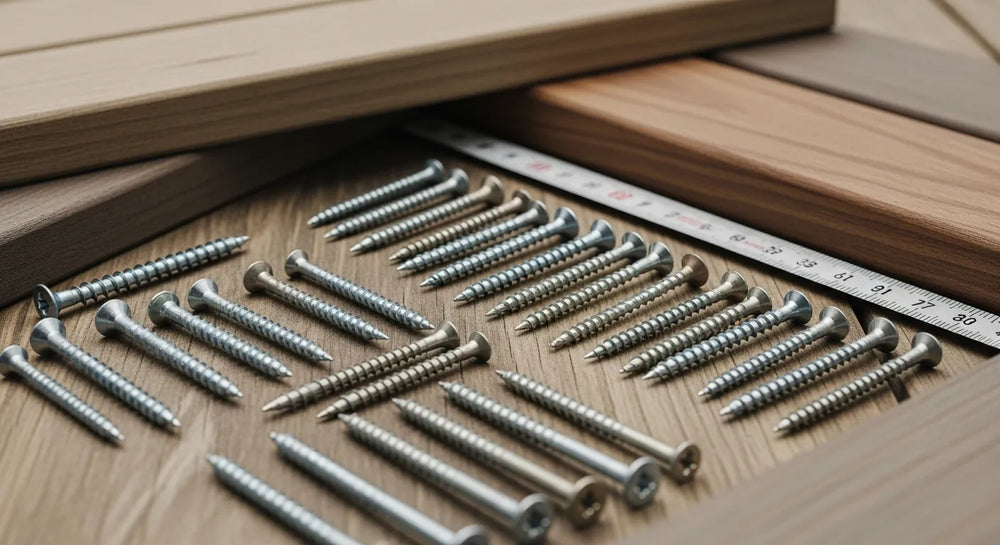
What Size Drill Bit for Drywall Screw: Precision & Performance for American Craftsmanship
Table of Contents
- Introduction
- Understanding Drywall Screws: More Than Just a Fastener
- The Crucial Role of Pilot Holes
- Determining the Correct Drill Bit Size for Drywall Screws
- Drill Bit Types for Drywall Applications
- Beyond the Bit: Best Practices for Drywall Fastening
- The Strategic Advantage of Sourcing American-Made Drywall Screws through Maden.co
- Procurement in Practice: Real-World Scenarios with Maden.co
- Becoming a Valued Maden.co Partner
- Conclusion
- FAQ
Introduction
In the intricate world of industrial procurement, MRO operations, and design engineering, even the smallest detail can have monumental implications. A seemingly minor miscalculation, such as selecting the wrong drill bit for a common fastener like a drywall screw, can ripple through a project, leading to compromised structural integrity, material waste, delayed schedules, and ultimately, increased costs. The quest for efficiency and reliability often hinges on mastering these fundamental principles, ensuring that every component, every tool, and every process aligns with the highest standards. Our mission at Maden.co is to empower American industries with the resources and knowledge needed to excel, making precision not just an aspiration but a standard practice.
This comprehensive guide will demystify the critical process of selecting the correct drill bit size for drywall screws. We will explore the various types of drywall screws, the essential role of pilot holes, the factors influencing drill bit selection, and best practices for fastening. Beyond the technical specifics, we will highlight the strategic advantages of sourcing high-quality, American-made components through a transparent and efficient marketplace like Maden.co. By understanding these nuances, procurement managers, MRO buyers, and design engineers can significantly enhance project outcomes, optimize material usage, and contribute to the robust future of American manufacturing.
Understanding Drywall Screws: More Than Just a Fastener
Drywall screws are ubiquitous in construction and maintenance, designed specifically for attaching gypsum board to framing materials, whether wood or metal. While their appearance might seem uniform, these fasteners are engineered with distinct characteristics that optimize their performance for specific applications. Their widespread use underscores the critical importance of understanding their design and the proper methods for their installation.
Key Characteristics of Drywall Screws
To appreciate the necessity of the correct drill bit size, it’s vital to understand the design elements that make drywall screws unique:
- Material and Coating: Typically manufactured from hardened steel, drywall screws are designed for strength and resistance to shearing. They often feature a phosphate coating that provides corrosion resistance and helps the screw easily penetrate drywall and framing without damaging the paper face of the gypsum board. This coating also makes them receptive to joint compound and paint.
-
Thread Types:
- Coarse-Thread Drywall Screws: These are the most common type, featuring aggressive threads widely spaced. They are designed to bite firmly into wood studs, providing superior holding power in timber framing. Their robust threads effectively displace wood fibers, creating a strong mechanical lock. For projects requiring reliable fastening into wood, exploring options like our 6 x 1-1/4 Coarse Thread Drywall Screws ensures you are selecting a component engineered for consistent performance.
- Fine-Thread Drywall Screws: With finer, more closely spaced threads, these screws are specifically designed for fastening drywall to metal studs. The finer threads are ideal for tapping into thin-gauge steel, preventing stripping and ensuring a secure connection without deforming the metal. When securing drywall to metal, precision in fastener selection is paramount, making options like our 6 x 1 Fine Thread Drywall Screw an optimal choice for maintaining structural integrity.
- Self-Tapping/Self-Drilling Screws: Some specialized drywall screws incorporate a drill point that eliminates the need for a pilot hole in certain applications, particularly in light-gauge metal studs. These are highly efficient but require careful consideration of material thickness to prevent stripping.
-
Head Types:
- Bugle Head: This is the most prevalent head type for drywall screws. Its conical shape acts like a countersink, allowing the screw head to self-embed into the drywall surface without tearing the paper. This creates a flush finish, essential for smooth plastering and painting.
- Pan Head/Wafer Head: Less common for drywall itself, these heads are sometimes used for attaching metal tracks or accessories to framing, where a larger bearing surface is desired.
- Lengths and Gauges: Drywall screws come in various lengths, typically ranging from 1 inch to 4 inches, to accommodate different drywall thicknesses (e.g., 1/2 inch, 5/8 inch) and ensuring adequate penetration into the framing material. The gauge refers to the screw's diameter, with common sizes being #6, #8, and #10. A higher gauge number indicates a thicker screw. The specific length and gauge required will depend entirely on the project's structural demands and the materials being joined. For instance, a robust option like our 8 x 4 Drywall Screw offers extended length and increased diameter for demanding applications where enhanced holding power is critical.
Why U.S.-Made Quality Matters for Drywall Screws
For industrial buyers, the origin of a component is more than just a label; it's a testament to quality, consistency, and supply chain resilience. At Maden.co, our unwavering commitment is to democratize access to American manufacturing, connecting industrial buyers with over 2.5 million American-made products from our network of 800+ verified U.S. manufacturers. This commitment extends to every fastener in our catalog, including drywall screws.
Sourcing U.S.-made drywall screws offers tangible benefits:
- Consistency and Reliability: American manufacturers adhere to stringent quality control standards, ensuring that each screw meets exact specifications for hardness, thread profile, and coating. This consistency is vital for maintaining project schedules and avoiding costly rework due.
- Compliance with Standards: U.S.-made fasteners are manufactured to meet or exceed relevant American industry standards, providing assurance of structural integrity and safety. For design engineers, knowing that components comply with critical industry specifications (e.g., DIN, NPT standards for other components) is non-negotiable.
- Supply Chain Transparency and Resilience: Partnering with verified U.S. manufacturers mitigates risks associated with global supply chain disruptions, fluctuating international tariffs, and unpredictable lead times. Our vision is to become the definitive platform that proves American-made components are as accessible and convenient as any global alternative, driving the manufacturing revival with our tagline: "America's manufacturing revival is here." This focus on American Manufacturing Pride is at the core of our operations, enhancing supply chain resilience and predictability for our customers.
The Crucial Role of Pilot Holes
The necessity of a pilot hole for a drywall screw is not always straightforward and depends heavily on the materials involved, the screw's design, and the desired outcome. Understanding when and why to drill a pilot hole is fundamental to achieving a secure, damage-free, and efficient fastening process.
When Are Pilot Holes Necessary?
Pilot holes serve several critical functions, primarily aimed at preventing material damage and optimizing screw performance:
- Preventing Material Splitting: In dense materials like hardwoods, plywood, or structural timbers, driving a screw directly can cause the wood fibers to split, weakening the connection and potentially damaging the material. A pilot hole creates a clear path for the screw's shank, allowing the threads to engage without forcing the material apart. This is particularly crucial when fastening near edges or in delicate applications.
- Facilitating Easier Driving: For longer or thicker screws, or when fastening into tough materials, a pilot hole reduces the resistance encountered by the screw. This not only makes driving easier but also reduces the strain on your power tools and minimizes the risk of stripping the screw head or snapping the screw itself.
- Achieving a Flush Finish: In applications where a perfectly flush screw head is desired, a pilot hole can help guide the screw precisely. When combined with countersinking (or the self-countersinking action of a bugle head screw), this ensures the screw head sits neatly below the surface, preparing it for finishing.
- Fastening into Metal: While fine-thread drywall screws are designed for metal studs, very thick or high-gauge metal might still benefit from a pilot hole, especially if the screw is not self-drilling. This prevents excessive wear on the screw tip and ensures proper thread engagement.
When Are Pilot Holes Not Necessary?
Conversely, there are situations where a pilot hole is either unnecessary or counterproductive:
- Self-Drilling/Self-Tapping Screws: Many modern fasteners, including some drywall screws, are designed with specialized tips that function like a drill bit, creating their own pilot hole as they are driven. For lighter gauge materials, especially metal studs, these screws can often be used without a pre-drilled pilot hole. However, always verify the screw's specifications and the material thickness.
- Thin Drywall into Softwood Studs: In typical drywall installations where gypsum board (usually 1/2" or 5/8" thick) is being attached to common softwood framing (e.g., pine, spruce), a pilot hole is generally not required. The coarse threads of standard drywall screws are designed to penetrate softwood efficiently without splitting, and the bugle head ensures a clean countersink.
- Preventing Stripping: A pilot hole that is too large can prevent the screw threads from properly engaging with the material, leading to stripping. This is particularly problematic in softer woods or when using fine-thread screws in thin metal.
Risks of Incorrect Pilot Hole Size
The Goldilocks principle applies perfectly here: the pilot hole must be just right.
-
Pilot Hole Too Small:
- Material Splitting: The most common issue, especially in wood.
- Screw Breakage: Excessive resistance can snap the screw shank.
- Stripped Screw Heads: The driver camming out due to high resistance.
- Difficulty Driving: Requiring excessive force or higher torque settings, leading to imprecise installation.
-
Pilot Hole Too Large:
- Stripped Threads: The screw's threads cannot properly bite into the material, resulting in a loose or ineffective connection.
- Reduced Holding Power: A weak connection compromises the structural integrity of the assembly.
- Wobbling or Misalignment: Without proper guidance, the screw might not drive straight.
The careful selection and use of pilot holes are not merely procedural steps; they are critical elements of Industrial Excellence, ensuring that every fastening operation is performed with precision and integrity.
Determining the Correct Drill Bit Size for Drywall Screws
The cornerstone of successful drywall fastening lies in selecting the perfectly sized drill bit for your pilot hole. This seemingly small decision has profound implications for the structural integrity of your project, the lifespan of your materials, and the efficiency of your operations. The goal is simple: create a hole that allows the screw's shank to pass through freely, while leaving sufficient material for the threads to grip firmly.
The General Rule of Thumb
The fundamental principle for selecting a pilot drill bit size is to match the diameter of the drill bit to the diameter of the screw's shank (the smooth, unthreaded part of the screw, or the core diameter of the screw if it's threaded all the way), excluding the threads. The threads are what grip the material, and the pilot hole should not pre-cut their path entirely.
Factors Influencing Drill Bit Choice
While the general rule provides a starting point, several critical factors refine the selection process:
-
Screw Gauge (Diameter): Drywall screws are most commonly available in #6, #8, and #10 gauges. Each gauge corresponds to a specific nominal diameter. While there can be slight variations, here are approximate guidelines:
- #6 Drywall Screw: Has a nominal diameter of about 0.138 inches (approximately 3.5mm). For these, a drill bit around 3/32 inch (0.09375 inches) or 7/64 inch (0.109375 inches) is often appropriate, depending on the material. For instance, when working with standard wood studs, a 6 x 1-1/4 Coarse Thread Drywall Screws might ideally pair with a 3/32" pilot hole in harder woods to prevent splitting.
- #8 Drywall Screw: Has a nominal diameter of about 0.164 inches (approximately 4.2mm). A drill bit around 7/64 inch to 1/8 inch (0.125 inches) is commonly used. For a robust fastener like the 8 x 4 Drywall Screw, which is designed for heavier duty applications, a 1/8" pilot in wood would be a common and effective choice.
- #10 Drywall Screw: Has a nominal diameter of about 0.190 inches (approximately 4.8mm). For these larger screws, a drill bit around 9/64 inch (0.140625 inches) or 5/32 inch (0.15625 inches) is generally recommended.
Crucial Note: These are guidelines. Always measure the shank of your specific screw with calipers if precision is paramount, and ideally, perform a test on a scrap piece of the material you're working with. -
Material Being Fastened Into: This is perhaps the most significant variable after screw gauge. The density and composition of the material dictate how much resistance the screw will encounter and how susceptible it is to splitting or stripping.
- Softwoods (Pine, Spruce, Fir): Generally less prone to splitting. A pilot hole matching the screw's shank diameter, or even slightly smaller, typically works well to ensure maximum thread engagement without splitting. Often, a pilot hole isn't required when fastening standard drywall to softwood studs.
- Hardwoods (Oak, Maple, Cherry): Highly dense and very prone to splitting. A pilot hole is almost always necessary and should be precisely matched to the screw's shank diameter, or even slightly larger, to minimize splitting risk. In some cases, a two-stage drilling process (drilling a wider hole for the unthreaded shank near the surface and a smaller pilot hole for the threads deeper in) can be beneficial.
- Plywood/OSB: Depending on the grade and density, these engineered wood products can vary. Thinner panels into framing usually don't require pilot holes. Thicker, denser panels or fastening near edges might benefit from a pilot hole to prevent delamination or splitting.
- Light-Gauge Metal Studs: Fine-thread drywall screws are designed to tap into thin steel. A pilot hole is generally not needed for typical light-gauge (20-25 gauge) metal studs, as the screw's self-tapping capability is sufficient. However, for thicker gauge metal (e.g., 18 gauge or heavier), a pilot hole sized to the screw's core diameter will prevent stripping and ease driving.
- Plastics/Composites: These materials vary widely. Softer plastics might not need pilot holes, but harder or brittle plastics will almost certainly require them to prevent cracking. The pilot hole size for plastics often needs to be slightly larger than the screw's shank to avoid excessive friction and heat buildup during driving.
-
Screw Type (Coarse vs. Fine Thread):
- Coarse-Thread Drywall Screws: Designed for wood, their aggressive threads demand a pilot hole that primarily accommodates the shank. The threads will do the work of biting into the wood.
- Fine-Thread Drywall Screws: Designed for metal. If a pilot hole is deemed necessary for thicker metal, it should be sized closer to the root diameter of the threads (the solid core of the screw), as the fine threads need to cut into the metal efficiently. For example, when using a 6 x 1 Fine Thread Drywall Screw into a particularly rigid metal frame, a carefully sized pilot can make a difference.
Practical Application: Testing and Verification
Given the variables, the most reliable method for determining the optimal drill bit size is through practical testing.
-
Scrap Material Test: Always begin by testing on a piece of scrap material identical to your project material.
- Drill a pilot hole with a chosen bit.
- Drive the screw into the pilot hole.
- Assess the result: Does the screw drive easily? Does it feel secure? Is there any splitting or stripping?
- Adjust bit size as necessary. If the screw is hard to drive or splits the material, try a slightly larger bit. If it feels loose or strips easily, try a slightly smaller bit (but ensure it's not too small to cause splitting).
Procurement managers overseeing large-scale installations must ensure that the fasteners sourced from platforms like Maden.co are paired with the correct tooling. This due diligence reduces material waste and labor costs, directly impacting the Total Cost of Ownership (TCO) for a project.
Drill Bit Types for Drywall Applications
The effectiveness of a pilot hole also hinges on the type and quality of the drill bit itself. Using the right bit for the job ensures clean holes, extends tool life, and improves overall efficiency.
-
Twist Bits (HSS, Black Oxide, Titanium Nitride):
- High-Speed Steel (HSS): These are the most common and versatile drill bits, suitable for drilling into wood, plastics, and softer metals. They are a good all-around choice for pilot holes in drywall applications.
- Black Oxide Coated: HSS bits with a black oxide coating offer increased durability, corrosion resistance, and some lubricity, reducing friction and heat build-up. They are a step up from basic HSS.
- Titanium Nitride (TiN) Coated: These bits are even harder and more durable, making them excellent for drilling into harder woods and metals. Their increased hardness allows them to maintain a sharp edge longer, ideal for repetitive tasks in industrial settings.
- Masonry Bits: While drywall screws primarily go into studs, sometimes you might need to fasten into concrete block or brick behind the drywall. Masonry bits, typically with a carbide tip, are essential for these applications. They are designed to pulverize hard, abrasive materials.
- Carbide-Tipped Bits: These bits feature a very hard carbide cutting edge brazed onto a steel shank. They are highly durable and excel at drilling into tough materials, including some metals and hardwoods, where standard HSS bits might quickly dull.
- Importance of Sharp Bits: Regardless of the type, a sharp drill bit is paramount. A dull bit will generate excessive heat, work slower, create rougher holes, and put undue stress on your drill and the material. Regularly inspecting and replacing or sharpening bits is a simple maintenance practice that significantly impacts project quality and efficiency.
Beyond the Bit: Best Practices for Drywall Fastening
Selecting the correct drill bit is a foundational step, but optimal drywall fastening encompasses a range of best practices that contribute to a professional finish and long-lasting integrity.
Using a Drywall Dimpler/Driver Bit
One of the most valuable tools for drywall installation is a specialized driver bit known as a "dimpler" or "drywall driver bit."
- Function: These bits are designed with a depth stop collar that allows the screw to be driven to the perfect depth: just below the paper surface of the drywall, creating a shallow "dimple" without tearing the paper.
-
Benefits:
- Prevents Tear-Out: Overdriving screws can tear the paper facing, significantly weakening the attachment point and creating aesthetic blemishes that are difficult to repair.
- Ensures Flush Setting: The dimple provides an ideal recess for joint compound, allowing for a perfectly smooth, level finish.
- Consistent Results: Maintains uniform screw depth across an entire project, critical for large-scale commercial applications.
Drill Speed and Torque Settings
Proper drill operation is as important as the bit itself.
- Variable Speed Drills: Utilize a drill with variable speed control. Start at a low speed to engage the screw and prevent it from "walking" across the surface. Once engaged, increase the speed to drive the screw smoothly and efficiently.
- Torque Settings (Clutch): For cordless drills, the torque setting (clutch) is invaluable. Setting the clutch to a lower torque value allows the drill to slip when it meets resistance, preventing over-tightening and stripping of screws, especially critical for drywall where consistency is key. Experiment on scrap material to find the optimal setting for your specific screws and materials.
Proper Technique
- Straight Driving: Always hold the drill perpendicular to the surface of the drywall. Driving screws at an angle weakens the connection and can lead to uneven surfaces.
- Steady Pressure: Apply consistent, firm pressure directly in line with the screw. This helps keep the bit engaged with the screw head and prevents cam-out.
- One Hand on Drill, One on Drywall: For stability, especially on larger sheets, one hand guides the drill while the other applies pressure to the drywall around the screw location.
Preventing Stripping
Stripped screws are a common frustration in drywall installation, wasting material and time.
- Correct Pilot Hole: As discussed, the right pilot hole prevents over-tightening leading to stripping.
- Proper Driver Bit: Use the correct driver bit (Phillips #2 for most drywall screws) that fits snugly into the screw head. Worn or ill-fitting bits are a primary cause of cam-out and stripping.
- Controlled Speed and Torque: Avoid high-speed driving with excessive torque. Let the screw do its job at a controlled pace.
Mastering these techniques, combined with sourcing the highest quality U.S.-made fasteners, exemplifies the Industrial Excellence that Maden.co champions.
The Strategic Advantage of Sourcing American-Made Drywall Screws through Maden.co
In an increasingly complex global marketplace, the strategic procurement of industrial components has never been more critical. For procurement managers, MRO buyers, and design engineers, the choice of where and how to source materials directly impacts project timelines, quality control, cost management, and ultimately, the resilience of their operations. Maden.co stands as a testament to the power of American Manufacturing Pride, offering a definitive solution for those seeking unparalleled value and reliability.
Building Supply Chain Resilience
Recent global events have underscored the fragility of extended supply chains. Relying heavily on overseas suppliers can lead to:
- Unpredictable Lead Times: Disruptions in international shipping, customs delays, or geopolitical tensions can halt projects indefinitely.
- Quality Control Issues: Variations in manufacturing standards or inconsistent material specifications from unverified international sources can lead to product failure and costly rework.
- Price Volatility: Currency fluctuations, tariffs, and unforeseen global events can drastically impact the cost of imported goods.
By sourcing American-made drywall screws and other industrial components through Maden.co, businesses significantly enhance their supply chain resilience. Our platform connects you directly with a network of over 800 verified U.S. manufacturers, ensuring shorter lead times, greater predictability, and a more robust supply chain that is less susceptible to external shocks. This alignment with domestic production reinforces the stability needed for long-term project planning and execution.
Uncompromised Quality and Compliance
American manufacturers are synonymous with rigorous quality control and adherence to precise technical standards. When you procure through Maden.co:
- Assured Specifications: You gain confidence that fasteners like our 6 x 1-1/4 Coarse Thread Drywall Screws or 8 x 4 Drywall Screw meet exact material compositions, thread tolerances, and performance criteria. This is vital for applications demanding specific load-bearing capacities or material certifications.
- Regulatory Compliance: U.S.-made products are manufactured under the umbrella of American regulatory standards, providing assurance of safety and performance, which is paramount for compliance with building codes and industry regulations.
- Reduced Risk of Failure: High-quality fasteners reduce the risk of on-site failures, rework, and associated liabilities, improving project outcomes and ensuring structural longevity. This dedication to Industrial Excellence defines our marketplace.
Digital Innovation for Procurement Efficiency
Maden.co is more than just a marketplace; it's a platform built on Digital Innovation designed to simplify and streamline industrial procurement.
- Vast, Searchable Catalog: With over 2.5 million American-made products, our intuitive platform allows buyers to quickly locate specific fasteners, tools, and components with detailed specifications, saving invaluable time that would otherwise be spent sifting through multiple vendors or catalogs.
- Reduced Procurement Friction: Our streamlined ordering process, clear product information, and transparent vendor relationships minimize the administrative burden associated with sourcing, allowing procurement teams to focus on strategic initiatives rather than transactional headaches.
- Access to Hard-to-Find Components: For specialized projects or legacy equipment maintenance, finding specific U.S.-made components can be a challenge. Maden.co's extensive network often holds the key to sourcing these critical, hard-to-find parts.
- Customer Empowerment: We believe in empowering our customers with choice and control. Our platform provides the tools and transparency needed to make informed purchasing decisions, enhancing overall operational efficiency. Learn more about our mission and values on our About Us page.
Strategic Financial Solutions
Recognizing that large-volume purchases or capital-intensive projects require flexible financial solutions, Maden.co offers a key differentiator: Instant Financing. This option, available during the checkout process, allows businesses to manage cash flow effectively and make larger-volume purchases without immediate upfront capital. It's not just a payment method; it's a strategic tool that enables procurement managers to secure necessary materials promptly, maintain project momentum, and optimize working capital.
By choosing Maden.co for your industrial sourcing needs, you're not just buying a product; you're investing in a more resilient, efficient, and strategically sound future for your business and contributing directly to "America's manufacturing revival is here." Explore our full range of offerings by visiting our homepage.
Procurement in Practice: Real-World Scenarios with Maden.co
The theoretical benefits of precise tool selection and strategic sourcing truly materialize when applied to real-world industrial challenges. Maden.co is built to provide practical solutions that directly impact the daily operations of procurement managers, MRO buyers, and design engineers.
For the Procurement Manager: Large-Scale Commercial Construction
Imagine a procurement manager tasked with sourcing materials for a new commercial office complex. The project requires tens of thousands of drywall screws to attach gypsum board to extensive wood framing, with strict deadlines and rigorous quality specifications. The pressure is immense to avoid delays and ensure every fastener meets building code requirements.
The procurement manager faces the challenge of finding a reliable supplier for consistent, high-quality coarse-thread drywall screws. Without Maden.co, this might involve vetting multiple international vendors, navigating complex logistics, and risking inconsistent product quality that could lead to costly re-work or inspection failures.
Leveraging Maden.co, this manager can quickly navigate our extensive catalog to find bulk quantities of 6 x 1-1/4 Coarse Thread Drywall Screws from verified U.S. manufacturers. The assurance of American-made quality means consistent thread engagement, optimal head design, and reliable performance, reducing on-site installation issues. Furthermore, by utilizing our Instant Financing option at checkout, the manager can secure the substantial volume needed without straining immediate cash flow, thus streamlining capital-intensive projects and ensuring continuous material supply. This strategic approach minimizes procurement friction and safeguards project timelines.
For the MRO Buyer: Facilities Renovation and Maintenance
Consider an MRO buyer responsible for the ongoing maintenance and renovation of a large industrial facility. An unexpected equipment breakdown necessitates rapid replacement of a section of drywall and underlying metal framing. The exact 6 x 1 Fine Thread Drywall Screw is required to ensure compatibility with existing metal studs and to maintain the fire rating of the assembly. Downtime is expensive, and waiting for international shipments is not an option.
Before Maden.co, the MRO buyer might scramble through local distributors, facing limited stock or uncertain lead times for specialized U.S.-made components. The urgency of the repair could lead to compromising on quality with inferior alternatives.
Through Maden.co, the buyer can swiftly search for the precise fine-thread drywall screws needed, confident that they are sourcing from verified U.S. manufacturers. The ability to quickly locate and procure the exact component prevents costly downtime, ensures the integrity of the repair, and aligns with the facility's adherence to stringent safety and operational standards. This access to a vast catalog of hard-to-find, U.S.-made components is a game-changer for maintaining operational continuity.
For the Design Engineer: New Modular Building Systems
A design engineer is developing a cutting-edge modular building system, specifying every component from the ground up to optimize structural performance and ease of assembly. The internal wall panels must be robustly attached to a unique light-gauge steel frame, requiring an 8 x 4 Drywall Screw that can reliably penetrate the steel while providing superior holding power. Material certifications and compliance with specific ASTM standards are non-negotiable for system approval.
Traditionally, the design engineer might spend countless hours cross-referencing datasheets from various suppliers, often with limited transparency regarding manufacturing origin or material traceability. Ensuring that every fastener meets the exact performance characteristics required for a new, innovative system can be a daunting task.
Maden.co provides direct access to detailed specifications and material certifications from verified U.S. manufacturers. The engineer can confidently specify and procure the exact 8x4 drywall screw, knowing its quality, dimensions, and performance characteristics are guaranteed. This partnership with Maden.co from the design phase ensures that every component contributes to the overall integrity and compliance of the modular system, fostering Digital Innovation in construction.
In each scenario, Maden.co serves as a strategic partner, simplifying procurement friction, enhancing supply chain resilience, and empowering businesses with the resources to achieve Industrial Excellence.
Becoming a Valued Maden.co Partner
At Maden.co, our mission to drive "America's manufacturing revival is here" is a collective effort. While we empower buyers to source the best American-made products, we are equally dedicated to expanding our network of exceptional U.S. manufacturers. If you are a qualified American manufacturer producing high-quality industrial components, we invite you to join our growing ecosystem. Partner with us to reach a broader industrial customer base, streamline your sales process, and contribute to the strength of the domestic supply chain. Register as a vendor and become a part of something bigger – a movement that champions American ingenuity and craftsmanship. You can register as a vendor and connect with procurement managers, MRO buyers, and design engineers nationwide.
Conclusion
The seemingly simple act of selecting "what size drill bit for drywall screw" is, in reality, a decision with far-reaching implications for project success, material longevity, and operational efficiency. Precision in this choice prevents material damage, ensures secure fastening, and contributes to the overall quality of any construction or maintenance endeavor. By understanding the nuances of drywall screw types, the critical role of pilot holes, and best practices for installation, industrial professionals can significantly elevate their work.
Beyond the technical specifics, the strategic value of sourcing high-quality, American-made components cannot be overstated. Maden.co is dedicated to democratizing access to this quality, connecting industrial buyers with a vast catalog of over 2.5 million products from 800+ verified U.S. manufacturers. Our platform embodies American Manufacturing Pride, Digital Innovation, Supply Chain Transparency, Industrial Excellence, and Customer Empowerment, ensuring that every purchase contributes to a more resilient and efficient future for American industry.
We invite you to experience the Maden.co difference. Explore our extensive catalog of American-made industrial components, including a full range of fasteners, and streamline your procurement process. For capital-intensive projects or larger volume orders, remember that you can apply for Instant Financing at checkout to manage cash flow effectively and ensure your projects proceed without interruption. Start building a stronger, more reliable supply chain today. If you have specific sourcing questions or need assistance, our team is ready to help. Please don't hesitate to contact us.
FAQ
Q1: Why can't I just guess the drill bit size for a drywall screw? A1: Guessing the drill bit size can lead to significant problems. If the bit is too small, it can cause the material (especially wood) to split, the screw to break, or the screw head to strip due to excessive resistance. If the bit is too large, the screw's threads won't properly grip the material, resulting in a loose, insecure connection that compromises structural integrity. Precision ensures optimal holding power, prevents damage, and maintains project quality.
Q2: Do all drywall screws need pilot holes? A2: Not all drywall screws require pilot holes. Standard coarse-thread drywall screws typically do not need pilot holes when fastening common drywall into softwood studs. Many self-drilling or self-tapping screws are also designed to create their own holes in light-gauge metal without a pilot. However, pilot holes are almost always necessary when working with hardwoods, dense engineered wood products, or thicker metal studs to prevent splitting, ease driving, and ensure a secure connection. Always test on a scrap piece of material if unsure.
Q3: How does the material I'm fastening into affect the drill bit size? A3: The material's density and composition are critical factors. For instance, when fastening into dense hardwoods, a pilot hole matching the screw's shank diameter is crucial to prevent splitting. In softer woods, a slightly smaller pilot hole might be acceptable to ensure maximum thread engagement. For metal, the gauge (thickness) of the steel dictates whether a pilot hole is needed, and if so, its size relative to the screw's core diameter. Always consider the material's resistance to penetration and its susceptibility to damage.
Q4: What's the benefit of using U.S.-made drywall screws from Maden.co? A4: Sourcing U.S.-made drywall screws through Maden.co offers several strategic advantages. It ensures consistent, high-quality products that meet rigorous American industry standards, reducing the risk of failures and rework. It enhances supply chain resilience by shortening lead times and mitigating risks associated with international logistics. Furthermore, it supports American manufacturing, promoting Industrial Excellence and Digital Innovation while providing you with transparent access to a vast network of verified domestic suppliers. This approach contributes to a more predictable and efficient procurement process, ultimately improving your project's Total Cost of Ownership.


