
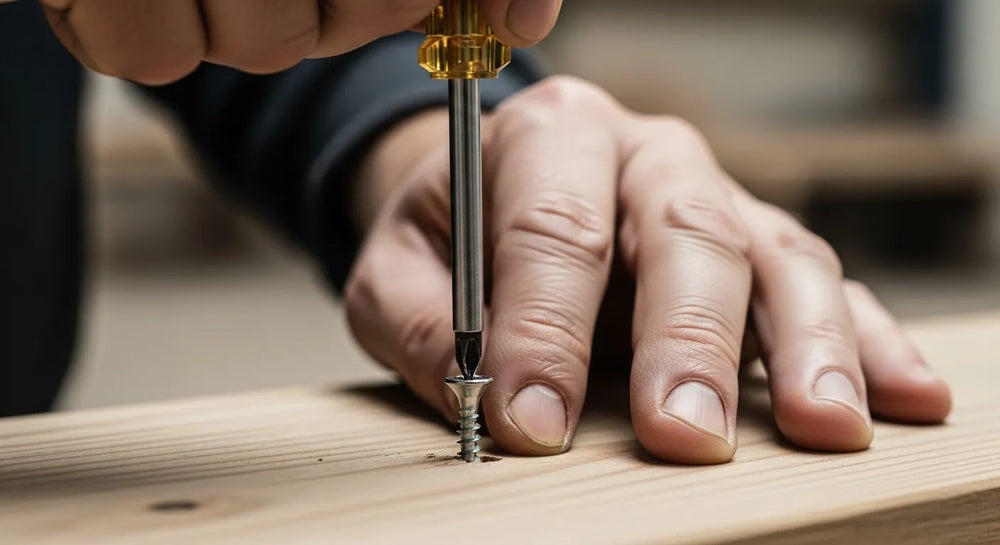
Extracting Broken Screws From Wood Safely
Table of Contents
- Introduction
- Understanding Why Screws Break or Strip
- Preventive Measures: The Best "Extraction" is No Extraction
- Assessing the Damage: What Kind of Broken Screw Are You Dealing With?
- Tools and Materials You'll Need
- Step-by-Step Extraction Methods
- Post-Extraction: Repairing the Damage and Moving Forward
- The Maden.co Advantage: Preventing Future Headaches
- Conclusion
- FAQ
Few moments are as frustrating in manufacturing, MRO, or design as when a critical project grinds to a halt due to a stubbornly stripped or, worse, a completely broken screw lodged in wood. This seemingly minor setback can escalate into significant delays, material damage, and unexpected costs if not handled correctly. Whether you're a seasoned procurement manager overseeing facility maintenance, a design engineer prototyping a new wooden jig, or a business owner tackling an essential repair, encountering a broken fastener is a universal challenge. This comprehensive guide provides authoritative, step-by-step methods for safely extracting broken screws from wood, minimizing further damage, and ensuring your projects stay on track. We'll delve into various techniques, from simple manual approaches to more specialized tool-driven solutions, and emphasize the critical role of high-quality, American-made fasteners in preventing these issues from arising in the first place. Mastering these extraction techniques is essential, but ultimately, our goal at Maden.co is to empower you to source components that drastically reduce the chances of encountering such problems.
Introduction
Imagine a production line held up, not by a major equipment failure, but by a small, unassuming screw that has snapped off flush with a crucial wooden jig. The frustration is palpable, and the clock is ticking. This scenario isn't just a nuisance; it represents lost productivity, potential rework, and an immediate demand for a precise solution. The purpose of this blog post is to equip you with the knowledge and practical methods required to effectively remove broken or stripped screws from wood, addressing common challenges encountered by professionals in various industrial and manufacturing settings. We aim to transform a potential crisis into a manageable task, ensuring that your valuable materials and components remain intact. By understanding the root causes and employing the right techniques and tools, you can swiftly overcome these obstacles. Ultimately, a proactive approach that prioritizes quality components from the outset, readily available through platforms like Maden.co, remains the most effective strategy for operational continuity and project success.
Understanding Why Screws Break or Strip
Before diving into extraction methods, it’s crucial to understand why screws fail. This insight not only helps in preventing future occurrences but also guides the choice of extraction technique. At Maden.co, our commitment to Industrial Excellence means we understand that the longevity and performance of a fastener are paramount.
Material Fatigue and Quality Deficiencies
One of the most common reasons for screw failure is simply poor material quality. Screws made from substandard alloys or those with manufacturing defects are inherently weaker and more prone to shearing or stripping under stress. Micro-fractures, inconsistent tempering, or improper thread rolling can all compromise a screw's integrity. When procuring fasteners, the origin and manufacturing standards are critical. Our mission at Maden.co is to democratize access to American manufacturing, connecting industrial buyers with products from over 800+ verified U.S. manufacturers who adhere to stringent quality control, ensuring the components you receive meet the highest standards.
Improper Pilot Hole Sizing
A pilot hole that is too small for the screw's diameter will create excessive friction and stress on the screw's shank, often leading to snapping. Conversely, a pilot hole that is too large reduces the thread's grip, causing it to spin freely and strip the wood, or worse, not hold at all, and then potentially snap when attempting to extract or re-fasten. Precision in drilling pilot holes is as critical as the quality of the fastener itself.
Over-Torquing and Excessive Force
Applying too much rotational force during installation is a frequent culprit. Power tools, especially impact drivers, can easily over-torque screws, leading to either a stripped head where the driver bit can no longer engage, or a completely sheared shank. Even manual screwdrivers can cause stripping if excessive force is applied without proper alignment.
Corrosion and Environmental Factors
For screws exposed to moisture, chemicals, or fluctuating temperatures, corrosion can weaken the metal over time. Rust, for example, not only degrades the screw material but also bonds it to the wood fibers, making extraction incredibly difficult and increasing the likelihood of breakage during removal attempts. Selecting the correct material for the operating environment, such as stainless steel or silicon bronze, is vital for long-term integrity. For a robust solution in demanding environments, consider the excellent corrosion resistance of an Oval Slot Drive Silicon Bronze Wood Screw from our marketplace.
Incorrect Drive Type or Bit
Using the wrong size or type of screwdriver bit for a screw head is a recipe for stripping. A bit that doesn't fit snugly into the screw head will "cam out," damaging the drive recesses and making it impossible to apply torque. This is particularly common with older slot-drive screws or worn Phillips head screws. Proper tool selection, coupled with high-quality, precisely manufactured fasteners, minimizes this risk.
By understanding these factors, procurement managers, MRO buyers, and design engineers can make more informed decisions when specifying and purchasing fasteners. Sourcing through Maden.co means partnering with manufacturers who prioritize these details, significantly reducing the chances of premature screw failure.
Preventive Measures: The Best "Extraction" is No Extraction
The most effective strategy against broken or stripped screws is prevention. Proactive measures, starting with the procurement process, can save significant time, money, and frustration down the line. At Maden.co, we champion this philosophy by providing unparalleled access to high-quality American-made components.
Choosing the Right Screw for the Job
The specific application dictates the screw's material, length, gauge, and head type. A common mistake is using a general-purpose screw for a specialized task.
- Material: For outdoor applications or environments with moisture, corrosion-resistant materials like stainless steel or silicon bronze are essential. For interior structural applications, hardened steel screws might be appropriate.
- Length: The screw should be long enough to penetrate the receiving material adequately for strong holding power but not so long that it pokes through or causes structural damage.
- Gauge (Diameter): A thicker gauge screw generally offers greater shear strength. However, it requires a larger pilot hole, which needs to be precisely drilled to prevent the wood from splitting or the screw from snapping.
- Head Type: Different head types (flat, round, oval, hex) are designed for specific finishes and load distributions. For example, a Round Slot Drive Brass Wood Screw might be chosen for its aesthetic and traditional finish in fine woodworking applications, while a flat head screw offers a flush finish.
Maden.co's extensive catalog allows procurement managers and design engineers to filter by material, size, head type, and more, ensuring you find the exact specifications you need from verified U.S. manufacturers.
The Importance of Pilot Holes
Properly sized pilot holes are non-negotiable for successful screw installation, especially in hardwoods or near wood edges.
- Shank Diameter: The pilot hole for the unthreaded shank portion of the screw should match the shank's diameter to allow it to pass freely, preventing stress on the screw.
- Thread Diameter: The pilot hole for the threaded portion should be slightly smaller than the screw's thread diameter to allow the threads to bite firmly into the wood without excessive friction.
- Depth: The pilot hole should be as deep as the screw's threaded length.
Failure to drill pilot holes, or drilling them incorrectly, is a leading cause of snapped screws.
Master Proper Driving Technique
Even with the right screw and pilot hole, improper driving can lead to failure.
- Low Speed: For power drills, a lower RPM setting provides more control and reduces the risk of stripping or snapping.
- Consistent Pressure: Apply steady, firm, downward pressure to keep the driver bit engaged with the screw head.
- Correct Bit: Always use the appropriate size and type of bit (e.g., Phillips #2 for a #2 Phillips head screw). Worn bits should be replaced. For instances where standard fasteners are no longer an option, but you still require a secure connection, consider the robust design and precision manufacturing found in our Flat Slot Drive Brass Wood Screw, ensuring reliable performance in future projects.
Lubrication for Hardwoods
For very dense hardwoods, a little lubrication can significantly reduce friction. Rubbing the screw threads with wax (paraffin or beeswax) or even a bar of soap can make driving easier and reduce the chance of snapping, particularly with delicate brass or bronze screws.
Investing in Quality Tools
Just as important as quality fasteners are quality tools. Using worn-out or ill-fitting screwdriver bits or drills with excessive run-out can quickly lead to stripped heads. Investing in professional-grade tools and regularly inspecting their condition is a small cost compared to the downtime and material waste from a failed fastener. While Maden.co focuses on components, we understand that Industrial Excellence extends to the tools used, much like the components we supply.
By emphasizing these preventive measures, procurement managers and engineers can significantly reduce operational friction and enhance the overall reliability of their projects. Our commitment to American Manufacturing Pride means we believe in providing the best materials from the start, ensuring long-lasting performance.
Assessing the Damage: What Kind of Broken Screw Are You Dealing With?
Before attempting any extraction, a thorough assessment of the screw's condition and its position within the wood is crucial. The type of damage will dictate the most effective removal strategy. This assessment mirrors the precision required in specifying components on Maden.co, where every detail matters for a successful outcome.
Stripped Head (but still protruding)
This is perhaps the least severe scenario. The screw's head is still above the surface of the wood, but the drive recesses (Phillips, flat, Torx, etc.) are rounded out or damaged, preventing any driver bit from gaining purchase. The threads of the screw are likely still intact within the wood, and the primary challenge is to create a new way to apply rotational force.
Sheared Head (shaft still in wood, flush or recessed)
This is a more challenging situation. The head of the screw has completely snapped off, leaving the shank embedded in the wood, either flush with the surface or slightly below it. There's no part of the head remaining to grip or engage with a tool. The challenge here is to create a new point of engagement on the exposed shank or to drill into the shank itself.
Partially Extracted (broken but can still be gripped)
In some cases, a screw might break but leave enough of its head or shank protruding to be grasped by a pair of pliers or vice grips. This scenario, while still requiring careful handling, often offers the simplest extraction path, as a direct grip on the metal is possible.
Stuck vs. Seized
It’s also important to distinguish between a screw that is merely stuck due to friction or thread engagement, and one that is seized due to corrosion, wood expansion, or some form of chemical bonding. A seized screw will require more aggressive methods, potentially involving penetrating oils or even heat.
This initial assessment is vital. Just as a detailed product description on Maden.co helps buyers select the right part for specific scenarios, a clear understanding of the broken screw's condition will inform your choice of tools and techniques, maximizing your chances of a successful and damage-free extraction.
Tools and Materials You'll Need
Successfully extracting a broken screw often depends on having the right tools at hand. A well-stocked toolkit can mean the difference between a quick fix and a frustrating ordeal. Prioritizing quality tools is an extension of Maden.co's value of Industrial Excellence.
Essential Hand Tools
- Pliers (Locking, Needle-Nose, Diagonal Cutters): Locking pliers (like Vise-Grips) are invaluable for gripping a screw head or exposed shank firmly. Needle-nose pliers can reach into tight spaces, and diagonal cutters might be used to snip off small protrusions or score a new grip point.
- Vice Grips: Excellent for applying maximum clamping force to a protruding screw head or shank.
- Hammer: For light tapping, setting punches, or working with chisels.
- Chisel: A sharp wood chisel can be used to create relief around a screw or, very carefully, to try and rotate a protruding shank.
- Punch (Center Punch or Pin Punch): Useful for marking pilot holes or tapping against a screw's edge to encourage rotation.
- Screwdriver Set (various sizes and types): Even if the screw head is stripped, sometimes a slightly larger, perfectly fitting screwdriver can still get a grip.
Drilling Tools
- Electric Drill (Corded or Cordless): Essential for drilling pilot holes for extractors, using left-hand drill bits, or even drilling out the screw entirely. A drill with adjustable clutch settings is highly recommended for control.
-
Drill Bits (Wood, Metal, Left-Hand):
- Wood bits: For creating pilot holes for new screws or for drilling around a broken screw.
- Metal bits (cobalt or titanium-coated HSS): Necessary for drilling into the hardened steel of a broken screw itself.
- Left-hand drill bits: Designed to cut in a counter-clockwise direction. Sometimes, as they drill into a broken screw, they can catch and spin the screw out without needing an extractor.
- Screw Extractor Kit: These kits typically include a drill bit (often left-handed) to create a pilot hole in the broken screw, and a tapered, reverse-threaded extractor bit that bites into the pilot hole, allowing you to twist the screw out.
- Dremel Tool or Rotary Tool: With appropriate attachments (grinding stones, cut-off wheels), a Dremel can be used to cut a new slot into a stripped screw head or grind down a protruding part.
- Oscillating Multi-Tool: Equipped with a metal cutting blade, this tool can be used to carefully cut a slot in a stripped screw head flush with the wood surface.
Lubricants and Chemical Aids
- Penetrating Oil (e.g., WD-40, PB Blaster): Essential for seized or corroded screws. Apply generously and allow significant time (hours, even overnight) for it to seep into the threads and break down rust or friction.
Safety Gear
- Safety Glasses/Goggles: Absolutely critical when drilling, chiseling, or using rotary tools to protect against flying debris.
- Work Gloves: Protect your hands from slips, splinters, and sharp edges.
Repair Materials
- Wood Filler: For patching small holes or imperfections after extraction.
- Wood Plugs/Dowels: For filling larger holes created by more aggressive extraction methods.
- Wood Glue: To secure dowels or strengthen repaired areas.
While Maden.co specializes in supplying over 2.5 million American-made products from our network of 800+ verified U.S. manufacturers, ensuring you have the right components, we also recognize the importance of quality tools to install and maintain them. Sourcing reliable equipment, much like sourcing reliable parts from Maden.co, contributes to overall operational efficiency and safety. If you have specific sourcing questions about tools or components, our team is ready to help; feel free to contact us.
Step-by-Step Extraction Methods
With the right tools and a clear assessment of the damage, you're ready to tackle the extraction. Remember to prioritize safety and patience throughout the process.
Method 1: For Stripped Heads (Protruding)
This method applies when the screw head is still visible above the wood surface, but your driver bit can no longer get a grip.
1. The Rubber Band or Steel Wool Trick
- How: Place a wide, thick rubber band or a piece of steel wool over the stripped screw head. Insert your screwdriver bit (one size larger if possible) into the screw head, pressing firmly through the rubber band/steel wool. The material will fill the stripped recesses, providing temporary grip.
- When: Best for slightly stripped screws that aren't overly tight.
- Caution: May not work for severely stripped heads or very tight screws.
2. Pliers or Vice Grips
- How: If enough of the screw head or shank is protruding, firmly grasp it with locking pliers (Vise-Grips) or needle-nose pliers. Twist counter-clockwise slowly and steadily.
- When: Highly effective for screws with exposed heads or shanks, even if stripped.
- Caution: Can damage the surrounding wood if the pliers slip or if too much force is applied.
3. Creating a New Slot
- How: Use a rotary tool (like a Dremel) with a thin cut-off wheel or a hacksaw blade to carefully cut a new, deeper slot across the stripped screw head. Once a clean slot is created, use a flat-head screwdriver that fits snugly into the new slot to turn the screw counter-clockwise.
- When: Excellent for screws with mostly intact heads but severely stripped drive recesses.
- Caution: Requires a steady hand and protective eyewear. Be careful not to cut into the surrounding wood.
Method 2: For Sheared Heads (Flush or Slightly Recessed)
This is a more challenging situation, as there's no immediate point of engagement. These methods often involve drilling. The precision required here mirrors the precision in manufacturing. Our network of 800+ verified U.S. manufacturers provides components that meet exacting standards, minimizing the likelihood of these issues with quality materials.
1. Screw Extractor Kit
This is often the go-to solution for broken screws flush with the surface.
- Step 1: Create a Pilot Hole: Using the drill bit provided in the extractor kit (or a suitable metal drill bit, often left-handed), drill a perfectly centered pilot hole into the center of the broken screw's shank. Start with a slow speed and firm pressure. The size of this pilot hole is crucial; it needs to be deep enough for the extractor to bite, but not so deep that it compromises the screw's integrity further.
- Step 2: Insert the Extractor: Select the correct size extractor bit from the kit. Insert it into the drilled pilot hole.
- Step 3: Extract the Screw: Using a hand drill on a low-speed reverse setting, or a tap wrench, slowly turn the extractor counter-clockwise. The reverse threads of the extractor will bite into the screw's metal, gradually backing it out.
- When: Most effective for screws that have snapped off flush or slightly below the surface.
- Caution: If the pilot hole is not centered or too large, the extractor may strip inside the broken screw, making the situation worse. Always use safety glasses. For robust components that meet exacting standards, our Oval Slot Drive Silicon Bronze Wood Screw provides an example of the quality available through our platform.
2. Left-Hand Drill Bits
- How: Select a left-hand drill bit slightly smaller than the broken screw's diameter. Attach it to your drill and set the drill to the reverse (counter-clockwise) setting. Carefully and slowly drill into the center of the broken screw. Sometimes, as the bit drills, its counter-clockwise rotation will cause it to bind with the broken screw, effectively unscrewing it.
- When: A good first attempt before using a dedicated extractor, especially if the screw isn't too tightly seized.
- Caution: If the screw is very tight, the bit might just drill through without catching.
3. Chisel and Hammer (for partially exposed shank)
- How: If a small part of the screw's shank is exposed (even if the head is gone), carefully place the tip of a small, sharp wood chisel against the edge of the shank. Angle the chisel slightly so that a light tap with a hammer will apply rotational force in the counter-clockwise direction. Work around the screw, tapping gently to encourage rotation.
- When: For screws with a small amount of exposed shank, or if other methods have failed and you need to create a purchase point.
- Caution: High risk of damaging the surrounding wood. Use only for very small, controlled taps.
4. Drilling Around the Screw (Last Resort)
- How: If all else fails, and the screw is truly seized, you can drill a series of small holes around the broken screw to essentially remove the wood surrounding it. This will create a larger cavity, allowing you to extract the screw with pliers, or simply remove the entire plug of wood containing the screw.
- When: Only when other methods have failed and the cosmetic impact of a larger repair is acceptable.
- Caution: This method will leave a larger hole that will need significant patching.
Method 3: For Deeply Recessed or Stubborn Screws
These methods are for the most challenging extractions, often when corrosion or extreme tightness is a factor.
1. Heat Application (Use with Extreme Caution)
- How: Gently heat the exposed part of the screw with a soldering iron. The heat can cause the screw to expand slightly, breaking the bond with the wood or any corrosion. As it cools, it contracts, which can further loosen its grip. Immediately after heating, try one of the other extraction methods.
- When: Only for metal screws, and only when desperate.
- Caution: High risk of scorching or igniting the wood. Use a heat shield and ensure good ventilation. Do not use near flammable materials. This method is generally not recommended for valuable or sensitive wood.
2. Chemical Aids: Penetrating Oils
- How: For deeply seized or corroded screws, penetrating oil is a must. Apply a generous amount directly onto and around the broken screw. Allow it to soak for several hours, or even overnight. Reapply if necessary. The oil will work its way into the threads, dissolving rust and reducing friction.
- When: Essential for corroded or extremely tight screws.
- Caution: Some penetrating oils can stain or soften certain types of wood. Test in an inconspicuous area if concerned.
3. Wood Plug Cutter
- How: Use a specialized wood plug cutter bit (a hollow, cylindrical bit) that is slightly larger than the broken screw. Drill around the broken screw, creating a clean plug of wood that contains the screw. Once the plug is removed, you'll be left with a perfectly circular hole ready for a matching wood plug or dowel.
- When: Ideal for screws that are completely stuck, or when you need a clean, repairable hole.
- Caution: Requires a steady drill and a good quality plug cutter to ensure a clean cut.
Successfully removing a broken screw from wood requires patience, the right tools, and a systematic approach. While these methods are effective, our focus at Maden.co is on empowering you to choose components that minimize the need for such interventions.
Post-Extraction: Repairing the Damage and Moving Forward
Once the offending screw has been successfully removed, the job isn't quite finished. The next crucial step is to repair any damage to the wood and prepare the surface for a new fastener or to restore its original integrity. This repair process mirrors Maden.co's commitment to quality and lasting solutions in your supply chain.
Filling the Hole
The method for filling the hole depends on its size and whether a new screw will be driven into the same spot.
- Small Holes/Surface Imperfections: For minor damage or stripped pilot holes where the screw was removed without much collateral damage, a good quality wood filler can suffice. Choose a filler that matches the wood's color or can be painted/stained.
-
Larger Holes/Screw Extractor Cavities: If you had to drill a larger hole or use a plug cutter, simple wood filler may not provide sufficient strength for a new screw. In these cases:
- Wood Dowel/Plug: Cut a section of a hardwood dowel that matches the diameter of the hole. Apply wood glue to the dowel and tap it firmly into the hole. Once dry, saw or sand the dowel flush with the surface. This creates a solid base that can be drilled and screwed into again.
- Toothpicks/Wooden Matchsticks (for stripped pilot holes): For a slightly stripped pilot hole that needs to be reused with the same screw, fill the hole with wood glue and then pack it tightly with wooden toothpicks or matchsticks. Let it dry completely, then trim flush and redrill a smaller pilot hole. This effectively "fills out" the hole, allowing the screw threads to bite again.
Redrilling for a New Screw
If you intend to drive a new screw into the same location, proper preparation is key to avoid a repeat failure.
- New Pilot Hole: After filling the original hole (especially with a dowel), you must drill a new pilot hole. Ensure it's centered, straight, and correctly sized for the new screw you'll be using. Refer back to the section on pilot hole sizing to prevent future issues.
- Offsetting the New Screw: If the wood structure allows and aesthetic impact is minimal, it might be safer to drill a new pilot hole slightly offset from the original damaged area, especially if the wood around the old hole is compromised.
Reinforcement and Finishing
- Wood Glue: Always use a strong wood glue when inserting dowels or plugs to ensure maximum strength and adhesion.
- Sanding and Finishing: Once repairs are dry and flush, sand the area smooth. Apply any necessary stains, paints, or sealants to match the surrounding wood.
This stage is about restoring integrity, both structurally and aesthetically. Similarly, Maden.co restores integrity and resilience to your supply chain by providing immediate and transparent access to reliable, U.S.-made components. Our entire business model is built on this principle; you can learn more about our mission to champion American manufacturing on our About Us page.
The Maden.co Advantage: Preventing Future Headaches
While knowing how to get a broken screw out of wood is an indispensable skill, the ultimate goal for any procurement manager, MRO buyer, or design engineer is to prevent such issues from arising altogether. This is where Maden.co, America's premier B2B marketplace for U.S.-manufactured products, offers a decisive strategic advantage.
Uncompromising Quality Assurance
At Maden.co, we stand for American Manufacturing Pride. Every single product on our platform is U.S.-made, coming from our network of over 800+ verified domestic manufacturers. This isn't just a label; it's a guarantee of stringent quality control, adherence to industry standards (like DIN, NPT, and specific material certifications), and consistent material composition. Sourcing from our platform means significantly reducing your risk of encountering the substandard fasteners that so often lead to stripped heads or snapped shanks. Our commitment to Industrial Excellence ensures that the components you purchase are built to perform and last.
A Vast and Transparent Selection
Imagine needing a specific brass wood screw for a historical restoration project or a flat slot drive screw for a custom cabinetry application. Our marketplace features over 2.5 million American-made products, providing an unparalleled selection. For a procurement manager under pressure to source a specific DIN 931 compliant hex cap screw, a design engineer needing specific material certifications for a new prototype, or an MRO buyer facing an unexpected equipment breakdown, the ability to quickly find and finance a verified, U.S.-made part is a game-changer. Our Digital Innovation ensures that this extensive catalog is easily searchable, with detailed specifications and transparent sourcing information, drastically reducing procurement friction.
Enhancing Supply Chain Resilience
The past few years have highlighted the vulnerabilities of global supply chains. Sourcing through Maden.co offers unparalleled supply chain resilience. By connecting directly with U.S. manufacturers, you benefit from:
- Shorter Lead Times: Reduced shipping distances and complex logistics mean faster delivery.
- Reduced Geopolitical Risk: Less exposure to international trade disruptions, tariffs, and customs delays.
- Improved Communication: Direct access to U.S.-based manufacturers for clear, real-time communication. Our vision is to become the definitive platform that proves American-made components are as accessible and convenient as any global alternative, driving the manufacturing revival with our tagline: "America's manufacturing revival is here."
Customer Empowerment and Strategic Financing
We believe in Customer Empowerment through innovative solutions. Beyond simply offering a product catalog, we provide tools that streamline your procurement process. A key differentiator is our Instant Financing option, available directly at checkout. This feature is not just a payment method; it's a strategic tool for businesses. It allows procurement managers and business owners to manage cash flow effectively, make larger-volume purchases without immediate capital strain, and respond swiftly to urgent needs. This capability ensures that critical projects can move forward without financial bottlenecks, enhancing your operational flexibility.
Are you a U.S. manufacturer producing high-quality fasteners or other industrial components? Register as a vendor and join the American manufacturing revival. Partner with us to showcase your American-made excellence to a vast network of industrial buyers.
Why American-Made Matters for Fasteners
Choosing American-made fasteners through Maden.co is a decision that impacts far more than just your immediate project. It ensures:
- Consistency and Reliability: Adherence to strict U.S. engineering standards guarantees consistent quality and material composition, minimizing manufacturing defects.
- Accountability: Direct relationships with domestic manufacturers provide clear lines of accountability for product performance and specifications.
- Economic Impact: Every purchase supports American jobs, innovation, and the revitalization of our nation's industrial base.
By leveraging the Maden.co platform, you're not just buying a product; you're investing in a more reliable, efficient, and resilient procurement process, underpinned by the unmatched quality of American manufacturing.
Conclusion
Encountering a broken or stripped screw in wood can be a significant disruption, but with the right knowledge and tools, it's a challenge that can be overcome efficiently and effectively. We've explored various techniques, from basic manual methods for protruding screws to more advanced drilling and extraction for deeply embedded fasteners, alongside critical post-extraction repair strategies. Ultimately, while mastering these remedial skills is valuable, the most impactful solution lies in prevention.
The prevalence of broken screws often traces back to the quality of the fastener itself, the precision of installation, and the appropriateness of the component for its application. This is precisely where Maden.co makes a definitive difference. By connecting industrial buyers with over 2.5 million American-made products from our network of 800+ verified U.S. manufacturers, we empower you to source components that adhere to the highest standards of Industrial Excellence. Our platform is built on values of American Manufacturing Pride, Digital Innovation, Supply Chain Transparency, and Customer Empowerment, all designed to ensure your projects run smoothly from start to finish.
Don't let subpar components jeopardize your critical operations or design integrity. Explore the vast selection of American-made industrial components on Maden.co today and experience the difference that quality makes. For those strategic, capital-intensive projects, you can apply for Instant Financing at checkout to streamline your purchases and maintain optimal cash flow. Choose Maden.co as your strategic partner in building a more reliable and efficient procurement process, where American quality is always within reach. America's manufacturing revival is here, and we invite you to be a part of it.
FAQ
Q1: How can I prevent screws from breaking or stripping in the first place?
A1: Prevention is multifaceted: always use the correct screw type, size, and material for your application, drill properly sized pilot holes, use the right driver bit, and apply appropriate torque and pressure. Sourcing high-quality, American-made fasteners from verified manufacturers, like those found on Maden.co, significantly reduces the inherent risk of material failure.
Q2: What's the best method for a screw with a completely sheared head flush with the wood surface?
A2: For a completely sheared head, a screw extractor kit is typically the most effective method. This involves drilling a small, centered pilot hole into the broken screw's shank with a specialized drill bit, then inserting a reverse-threaded extractor bit to grip and twist the screw out counter-clockwise.
Q3: Can I reuse the hole after removing a broken screw?
A3: It depends on the extent of the damage. For minor damage or stripped pilot holes, filling the hole tightly with wooden toothpicks and wood glue, letting it dry, and then redrilling a new pilot hole can work. For larger holes or significant damage, it's best to insert a wooden dowel or plug with wood glue, then drill a new pilot hole into the solid wood dowel once dry.
Q4: Why should I choose American-made fasteners over imported alternatives?
A4: Choosing American-made fasteners ensures higher and more consistent quality due to strict U.S. manufacturing standards, better material traceability, and reduced risk of defects. This leads to increased project reliability and longevity. Additionally, sourcing domestically through platforms like Maden.co strengthens your supply chain resilience, reduces lead times, and supports the American economy and workforce.


