
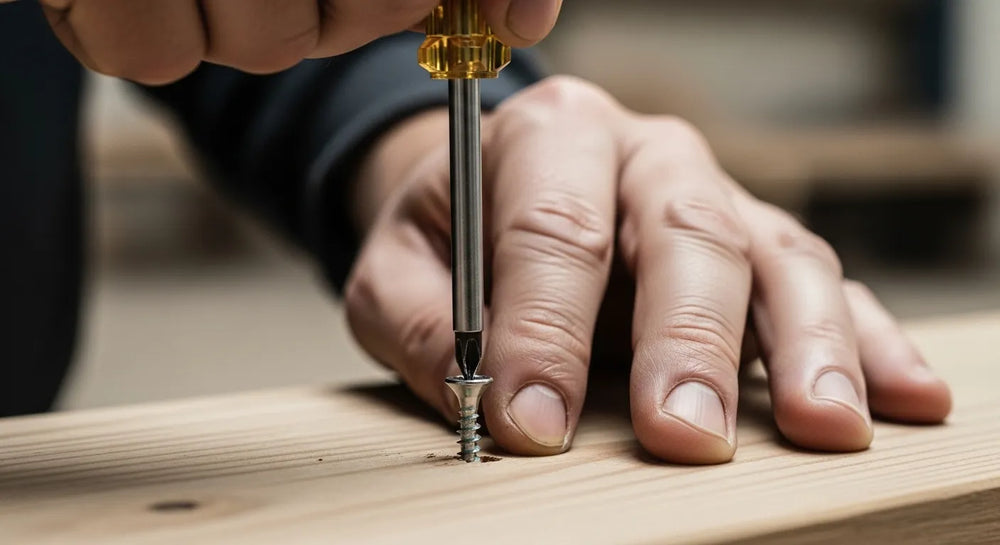
Precision & Durability: How to Screw a Hook into Wood for Industrial Applications
Table of Contents
- Introduction
- Understanding the "Why": More Than Just a Hook
- Choosing the Right Hardware: Beyond the Basic Hook
- Preparing Your Workpiece: The Foundation of Success
- The Step-by-Step Process: How to Screw a Hook into Wood Flawlessly
- Advanced Considerations for Industrial and Heavy-Duty Applications
- The Maden.co Advantage: Sourcing with Confidence
- Ensuring Supply Chain Resilience with American-Made Components
- Procurement Best Practices for Hooks and Fasteners
- Conclusion
- FAQ
Introduction
In the intricate world of industrial operations, where precision and reliability are paramount, even the seemingly simple task of "how to screw a hook into wood" carries significant weight. What might appear as a basic handyman skill often translates into critical decisions for procurement managers, MRO buyers, and design engineers. A poorly installed hook, or one made from inferior materials, isn't just an inconvenience; it can lead to compromised safety, operational downtime, or the failure of critical infrastructure. Consider a busy manufacturing facility where an overhead hoist relies on robust anchoring points, or a warehouse where heavy-duty storage solutions depend on unyielding fasteners. The integrity of these systems begins with the fundamentals.
This comprehensive guide goes beyond rudimentary instructions, delving into the material science, best practices, and strategic considerations essential for securely fastening hooks into wood across various industrial and commercial settings. We will explore the types of hooks and fasteners, the critical role of material selection, the precise techniques for installation, and how sourcing the right, U.S.-made components can significantly enhance the durability, safety, and overall efficiency of your operations. Our aim is to equip you with the knowledge to ensure every installation is not merely functional, but a testament to industrial excellence and long-term reliability.
Understanding the "Why": More Than Just a Hook
For the industrial buyer or engineer, a hook is never just a hook. It's a load-bearing component, a safety critical element, or a structural support integral to a larger system. The decision of how to install it and what to use can have ripple effects throughout an entire operation. Missteps can lead to material fatigue, premature failure, or even catastrophic accidents, emphasizing the need for meticulous planning and execution.
The Role of Hooks in Industrial Settings
Hooks serve a myriad of functions across diverse industrial landscapes:
- Manufacturing Facilities: Supporting overhead cabling, holding tools at workstations, securing temporary signage, or providing attachment points for safety equipment.
- Warehousing and Logistics: Suspending heavy tarpaulins, organizing lifting slings, or creating modular storage solutions.
- Construction Sites: Anchoring guide wires, holding scaffold components, or managing heavy-duty electrical cords.
- MRO Operations: Providing reliable hanging points for maintenance tools, spare parts, or safety lockout/tagout devices.
- Design Engineering: Specifying precise attachment methods for new product designs, jigs, or fixtures where secure anchoring into wooden frames or supports is required.
Each of these applications demands not just a strong hook, but a strong connection to its wooden substrate, engineered for the specific stresses and environmental conditions it will encounter.
Choosing the Right Hardware: Beyond the Basic Hook
The market offers a vast array of hooks, each designed for specific purposes and load requirements. Selecting the correct hook involves considering its shape, material composition, and intended load. Equally important, and often overlooked, is the choice of the appropriate wood screw, which forms the crucial link between the hook and the wood.
Types of Hooks and Their Applications
- Cup Hooks: Typically lighter duty, ideal for hanging smaller items like light tools, cables, or decorative elements. Often made of brass, steel, or zinc-plated steel.
- Shoulder Hooks: Similar to cup hooks but with a more defined shoulder, offering slightly more support and preventing items from sliding off easily. Used in workshops for hand tools.
- Utility Hooks (J-Hooks, S-Hooks): Heavier duty, designed for general-purpose hanging. J-hooks are often wall-mounted, while S-hooks are versatile for suspending items from existing rails or beams. Materials range from galvanized steel to stainless steel for corrosion resistance.
- Ceiling Hooks/Plant Hooks: Specifically designed for overhead installations, often featuring a deeper thread or a broader base for increased pull-out resistance. Essential for hanging lighting fixtures or suspended equipment in facility management.
- Eye Hooks/Screw Eyes: Not strictly a hook for hanging, but critical for creating attachment points, running wires, or securing ropes. Their enclosed loop provides a secure, permanent connection.
Material Matters: Durability and Environment
The material of the hook and its corresponding screw is paramount, particularly in industrial environments.
- Brass: Excellent corrosion resistance, aesthetic appeal, non-magnetic. Ideal for applications where rust is a concern or where a specific finish is desired, though typically not for extreme heavy loads unless specifically engineered.
- Steel (Zinc-Plated/Galvanized): High strength, good general corrosion resistance from plating. Suitable for most indoor industrial applications.
- Stainless Steel (304, 316): Superior corrosion resistance, especially 316 in marine or chemical environments. Essential for outdoor use, wash-down areas, or facilities with specific hygiene requirements.
- Silicon Bronze: Offers a unique combination of strength, ductility, and excellent corrosion resistance, especially in marine and harsh outdoor environments, making it a premium choice for long-term durability.
The Crucial Role of Wood Screws
The type of wood screw chosen directly impacts the hook's load capacity and the integrity of the entire installation. For robust, long-lasting performance in wood, dedicated wood screws are superior to general-purpose screws. They feature a tapered shank that allows for deeper penetration and stronger grip, with coarser threads designed to bite securely into wood fibers.
At Maden.co, we understand the critical importance of selecting the right fastener for the job. Our platform connects industrial buyers with a vast array of high-quality, American-made components. For instance, when aesthetics and corrosion resistance are key, a Round Slot Drive Brass Wood Screw offers both visual appeal and dependable performance. For applications requiring a flush finish and strong pull-out resistance, particularly in joinery or where parts need to mate precisely, a Flat Slot Drive Brass Wood Screw provides a clean and secure fit. And when facing exceptionally harsh outdoor conditions or demanding structural integrity, an Oval Slot Drive Silicon Bronze Wood Screw stands out for its superior strength and resilience. These examples represent the kind of specific, high-quality fasteners that are readily available to enhance the durability and longevity of your projects.
Preparing Your Workpiece: The Foundation of Success
The wood itself plays a pivotal role in the success of your hook installation. Understanding its characteristics and preparing it correctly will prevent common failures like splitting, weakening, and premature pull-out.
Wood Types and Their Characteristics
- Softwoods (Pine, Fir, Spruce): Generally easier to drill into but more prone to splitting, especially near edges or ends. They offer less pull-out resistance than hardwoods. Pilot holes are critical to prevent splitting and ensure thread engagement.
- Hardwoods (Oak, Maple, Cherry): Denser and stronger, offering excellent pull-out resistance. However, they are much harder to drive screws into and are highly susceptible to splitting without proper pilot holes.
- Engineered Wood Products (Plywood, MDF, Particle Board): These materials have varying densities and compositions. Plywood generally holds screws well, especially when screwing into the face. MDF and particle board are more prone to stripping out if overloaded or if pilot holes are too large. Special fasteners for engineered woods might be necessary for very heavy loads.
- Pressure-Treated Wood: Contains chemicals that can be corrosive to certain metals. Always use corrosion-resistant fasteners like hot-dip galvanized or stainless steel with pressure-treated lumber to prevent premature fastener failure.
Grain Direction and Structural Integrity
Screwing with the grain (parallel to the wood fibers) provides less holding power and increases the risk of splitting. Screwing across the grain (perpendicular to the wood fibers) offers superior holding power and significantly reduces the risk of splitting, particularly when pilot holes are used correctly. Avoid screwing too close to the edge or end of a wooden board, as these areas are most vulnerable to splitting. For maximum strength, aim to center your hook installation in the thickest part of the wood.
Locating Studs and Reinforcement
For heavy-duty applications, or when fastening into drywall-backed walls, always locate a wooden stud behind the wall surface. This provides a solid, structural anchor point far superior to drywall alone. Stud finders are invaluable tools for this task. In situations where a stud is not available or insufficient, consider adding blocking or backing plates to distribute the load across a larger area of the wood, significantly enhancing the hook's load-bearing capacity. This is especially important for MRO buyers specifying solutions for facility maintenance or design engineers ensuring structural integrity.
The Step-by-Step Process: How to Screw a Hook into Wood Flawlessly
Executing the installation with precision is key to ensuring the hook performs reliably and safely. This detailed process ensures a secure, long-lasting attachment.
Gathering Your Tools
Before you begin, assemble the necessary tools:
- Safety Glasses: Non-negotiable for eye protection.
- Power Drill/Driver: Cordless is convenient, but a corded drill offers consistent power for hardwoods.
- Drill Bits: A selection of twist drill bits for pilot holes.
- Screwdriver: Manual or power driver with appropriate bit (slot, Phillips, Torx, etc.) to match your chosen screw.
- Measuring Tape/Ruler: For accurate placement.
- Pencil or Awl: For marking the spot.
- Level: To ensure straight, plumb, or level installations.
- Optional: Countersink Bit: If using flat-head screws that require a flush finish.
- Optional: Lubricant (wax, soap): For easier driving into hardwoods.
Marking the Spot
Accuracy begins with precise marking. Use a pencil or an awl to clearly indicate the exact center point where the hook's screw shaft will enter the wood. For multiple hooks, use a measuring tape and level to ensure consistent spacing and alignment. This level of detail is critical in industrial environments where aesthetic consistency or functional alignment impacts overall operational flow.
Pilot Holes: Why They're Non-Negotiable
A pilot hole is the single most important step for a successful, durable screw installation into wood. It serves several critical functions:
- Prevents Splitting: By pre-drilling a path, you reduce the wedging action of the screw, preventing the wood from splitting, especially in hardwoods or near edges.
- Ensures Proper Thread Engagement: The pilot hole allows the screw threads to bite cleanly into the wood, creating a strong, consistent hold. Without it, threads can strip out the wood, leading to a weak connection.
- Reduces Driving Force: A pilot hole makes it significantly easier to drive the screw, reducing the risk of stripping the screw head or over-tightening.
- Optimizes Pull-Out Resistance: A correctly sized pilot hole maximizes the screw's ability to resist being pulled out of the wood under load.
Sizing Your Pilot Hole: The Golden Rule
The diameter of the pilot hole is crucial. It should be:
- Slightly smaller than the screw's minor diameter (the diameter of the screw shaft between the threads): This allows the threads to cut into the wood for maximum grip.
- Slightly larger than the screw's root diameter (the diameter of the screw's core shaft): This prevents the screw from binding and minimizes friction during driving.
A good rule of thumb is to hold the drill bit up to the screw; the bit should be roughly the same diameter as the screw's shaft (not including the threads). For softer woods, a slightly smaller bit can be used. For hardwoods, a slightly larger bit is often necessary to prevent stripping the screw head or breaking the screw. Always test on a scrap piece of the same wood if possible.
Pilot Hole Depth
The pilot hole should be as deep as the threaded portion of the screw, or slightly deeper, to ensure the entire screw can be driven without encountering resistance from the un-drilled wood. Mark your drill bit with tape to indicate the desired depth.
Driving the Screw: Techniques for Various Hooks
Once the pilot hole is drilled, the screw can be driven.
-
For Hooks with Integrated Screws (e.g., Eye Hooks, Cup Hooks):
- Start by hand-threading the hook into the pilot hole until it catches.
- For easier turning, insert a screwdriver, bolt, or even another hook through the eye/cup to gain leverage.
- Slowly twist the hook, ensuring it goes in straight.
- Stop when the base of the hook is snug against the wood. Over-tightening can strip the wood or deform the hook.
-
For Hooks Fastened with Separate Wood Screws:
- Position the hook bracket over the pilot hole.
- Insert the chosen wood screw (e.g., a high-quality Flat Slot Drive Brass Wood Screw for a clean finish) into the hook's mounting hole and align it with the pilot hole.
- Using a hand screwdriver or a power drill on a low-torque setting, slowly drive the screw.
- Ensure the screw goes in straight. If using a power drill, stop just before the screw is fully seated and finish by hand to avoid over-tightening and stripping the wood or the screw head. The goal is snug, not strained.
Finishing Touches and Testing
After installation, give the hook a firm but controlled tug to test its stability. It should feel solid with no wobble. For critical industrial applications, consider a load test with a fraction of the maximum intended load to verify its integrity before full operational use. For specialized fasteners, such as an Oval Slot Drive Silicon Bronze Wood Screw used in marine environments, a regular inspection schedule for corrosion or fatigue is also a best practice.
Advanced Considerations for Industrial and Heavy-Duty Applications
While the basic steps apply, industrial contexts demand a deeper understanding of material science, load dynamics, and compliance.
Beyond Basic Hooks: Eye Bolts, Lag Screws, and Specialty Fasteners
For truly heavy loads or where specific types of anchoring are needed, consider alternatives to standard wood screws:
- Lag Screws (Lag Bolts): These are heavy-duty screws with a hexagonal head, designed for structural connections in wood. They require larger pilot holes and are driven with a wrench or socket. Ideal for securing ledger boards, heavy machinery, or structural elements where a hook's pull-out resistance is critical.
- Eye Bolts/Lag Eye Screws: Similar to lag screws but with an integral eye, providing a stronger, more robust attachment point than a standard eye hook. Essential for lifting points, rigging, or securing heavy cables.
- Through-Bolting: For maximum strength, especially when attaching to a structural beam or post, through-bolting with washers and nuts on the opposite side provides superior pull-out and shear resistance, distributing the load more effectively.
Material Compatibility and Environmental Factors
- Corrosion: In high-humidity, outdoor, or chemical environments, material selection is paramount. Using stainless steel (316 for enhanced resistance) or silicon bronze fasteners prevents rust and maintains structural integrity. Galvanic corrosion can occur when dissimilar metals are in contact in the presence of an electrolyte; be mindful of the materials of the hook, screw, and any washers.
- Vibration: In manufacturing environments, constant vibration can loosen fasteners over time. Consider using thread-locking compounds or self-locking nuts/washers for through-bolted applications to maintain tightness.
- Temperature Extremes: Extreme temperature fluctuations can cause wood to expand and contract, potentially loosening fasteners. Selecting materials with appropriate thermal expansion properties and ensuring proper installation can mitigate these effects.
Load Distribution and Reinforcement
For very heavy loads, a single hook into wood may not suffice. Strategies for load distribution include:
- Backer Boards/Plates: Fastening a hook to a thicker piece of wood (a backer board) which is then securely attached to the main structure (e.g., studs) helps distribute the load over a larger area, reducing stress on a single point.
- Multiple Fasteners: Using multiple screws for a single hook (if the design allows) significantly increases its holding power.
- Angled Screws: Driving screws at opposing angles (toe-nailing) can increase resistance to pull-out, though this is generally more applicable to framing than single hook installations.
Compliance and Standards
In industrial procurement, compliance with specific industry standards (e.g., DIN, NPT, ASME) is non-negotiable. Our platform, Maden.co, offers products that adhere to these critical benchmarks, ensuring that design engineers can specify components with confidence, and procurement managers can source parts that meet rigorous safety and performance criteria. The peace of mind that comes from knowing your fasteners meet or exceed industry expectations is invaluable.
The Maden.co Advantage: Sourcing with Confidence
For procurement managers, MRO buyers, and design engineers, the ability to quickly and reliably source high-quality, American-made components is a strategic advantage. At Maden.co, our mission is to democratize access to American manufacturing, making it as convenient and accessible as any global alternative.
We understand the pressures: the need for reliable supply chains, the imperative for quality, and the drive to support domestic industry. This is why we've built a robust marketplace connecting industrial buyers with over 2.5 million American-made products from our network of 800+ verified U.S. manufacturers. Whether you're searching for specific fasteners like the Round Slot Drive Brass Wood Screw, or a hard-to-find component for a critical repair, our platform simplifies the sourcing process.
Driving American Manufacturing Revival
Our vision is clear: to become the definitive platform that proves American-made components are not only accessible but also the superior choice for industrial applications. With our tagline, "America's manufacturing revival is here," we embody our core values of American Manufacturing Pride, Digital Innovation, Supply Chain Transparency, Industrial Excellence, and Customer Empowerment. We believe that by providing efficient access to domestic products, we contribute directly to strengthening the U.S. industrial base and securing more resilient supply chains for businesses nationwide. You can learn more about our commitment to this mission on our About Us page.
Enhancing Your Procurement Process
Sourcing through Maden.co offers tangible benefits that directly impact your bottom line:
- Improved Total Cost of Ownership (TCO): By reducing lead times, minimizing shipping costs, and ensuring higher quality, U.S.-made products often result in a lower TCO over the lifecycle of your operations.
- Enhanced Supply Chain Resilience: Reliance on domestic suppliers reduces vulnerability to geopolitical instability, international shipping delays, and customs complications.
- Reduced Procurement Friction: Our intuitive platform and extensive catalog streamline the search and acquisition process, saving valuable time for procurement teams.
- Access to Verified U.S. Manufacturers: We partner only with verified manufacturers, ensuring that you receive products that meet stringent quality standards and compliance requirements.
Strategic Capital Management with Instant Financing
A key differentiator for our platform is our "Instant Financing" option. We recognize that industrial projects often involve significant capital outlay. This feature is not just a payment method; it's a strategic tool designed to empower procurement managers and business owners to manage cash flow effectively and make larger-volume purchases without immediate strain on working capital. Whether you're outfitting a new production line or replenishing a large MRO inventory, this option provides the flexibility needed to keep your projects on track and your operations running smoothly. You can apply for Instant Financing at checkout to streamline your capital-intensive projects, ensuring you always have access to the U.S.-made components you need, precisely when you need them.
Ensuring Supply Chain Resilience with American-Made Components
The past few years have underscored the critical importance of supply chain resilience. Relying heavily on global supply chains can introduce vulnerabilities ranging from unpredictable lead times and escalating shipping costs to quality control challenges and ethical concerns. By prioritizing American-made components, businesses can significantly mitigate these risks.
The Value of Domestic Sourcing
Choosing U.S.-manufactured products means:
- Shorter Lead Times: Less time in transit, quicker turnaround from order to delivery.
- Reduced Shipping Costs and Complexity: Eliminating international freight, customs duties, and the associated logistical headaches.
- Higher Quality Assurance: U.S. manufacturers often adhere to stricter quality control standards and labor practices.
- Easier Communication and Accountability: Direct access to manufacturers for support, customization, and problem resolution.
- Support for the National Economy: Investing in domestic manufacturing helps create jobs, foster innovation, and strengthen the industrial base of the United States.
At Maden.co, we are dedicated to facilitating this shift towards a more resilient domestic supply chain. Every product on our marketplace, from the simplest fastener like a Flat Slot Drive Brass Wood Screw to complex machined parts, is sourced from verified American manufacturers. This commitment not only benefits individual businesses by providing reliable supply but also contributes to the broader objective of strengthening America's manufacturing capabilities.
Procurement Best Practices for Hooks and Fasteners
Effective procurement of industrial fasteners and hooks goes beyond simply finding the cheapest option. It involves strategic thinking, supplier consolidation, and leveraging digital tools.
Inventory Management and Standardization
Maintaining an optimized inventory of frequently used hooks and fasteners is crucial for MRO operations and production lines. Standardize on specific sizes, materials, and types where possible to reduce complexity and allow for bulk purchasing. A well-managed inventory prevents stockouts, reduces emergency orders, and ensures that the right component is always on hand, whether it's an Oval Slot Drive Silicon Bronze Wood Screw for a marine application or a standard utility hook for tool storage.
Supplier Consolidation
Working with fewer, trusted suppliers simplifies the procurement process, potentially leading to better pricing, stronger relationships, and more consistent quality. Maden.co acts as a powerful tool for supplier consolidation, offering access to thousands of American-made products from numerous verified manufacturers, all through a single, streamlined platform. This reduces the administrative burden of managing multiple vendor relationships and purchase orders.
Leveraging Digital Marketplaces for Efficiency
Modern procurement demands digital solutions. Platforms like Maden.co offer:
- Extensive Catalogs: Access to a vast range of products, making it easier to find exact specifications.
- Transparent Pricing and Availability: Real-time data to inform purchasing decisions.
- Streamlined Ordering: Automated processes reduce errors and speed up order fulfillment.
- Verified Suppliers: Confidence in the quality and origin of components.
For U.S. manufacturers, partnering with Maden.co means gaining access to a vast network of industrial buyers actively seeking American-made products. If you are a qualified U.S. manufacturer looking to expand your market reach, we invite you to Register as a vendor and become a part of America's manufacturing revival.
Conclusion
Mastering the art of how to screw a hook into wood, especially in an industrial context, involves more than just a power drill and a steady hand. It demands a thoughtful approach to material selection, precise execution of installation techniques, and a strategic understanding of supply chain implications. For procurement managers, MRO buyers, and design engineers, every fastener and component choice impacts safety, efficiency, and long-term operational costs.
At Maden.co, we are committed to empowering American businesses by democratizing access to the highest quality, U.S.-manufactured products. By choosing American-made components, you're not just buying a part; you're investing in supply chain resilience, superior quality, and the vitality of domestic industry. We stand as your strategic partner, offering not only a vast catalog of verified products but also innovative solutions like Instant Financing to support your critical projects.
Don't let inadequate components or inefficient sourcing undermine your operations. Explore the comprehensive catalog of American-made products available on Maden.co today. Find the exact specifications you need, ensure compliance with industry standards, and leverage our Instant Financing option at checkout to streamline your capital expenditures. Should you have specific sourcing questions or need assistance, our team is ready to help; feel free to Contact Us. Discover the difference that quality, precision, and American manufacturing pride can make for your business.
FAQ
Q1: What is the most common mistake when screwing a hook into wood, and how can it be avoided in industrial settings?
A1: The most common mistake is failing to drill a proper pilot hole, leading to wood splitting, stripped screw heads, or weak connections. In industrial settings, this can compromise safety and structural integrity. To avoid this, always drill a pilot hole with a drill bit that matches the screw's core diameter, and ensure the pilot hole depth is equal to or greater than the screw's threaded length. For hardwoods, consider slightly larger pilot holes and even a lubricant like wax or soap on the screw threads.
Q2: How do I determine the appropriate size of a hook and screw for a specific load capacity?
A2: Determining load capacity involves several factors: the hook's material and design, the screw's diameter and length, the type and density of the wood, and whether it's anchored into a stud or blocking. Always consult the manufacturer's load rating for the hook and screw. For critical industrial applications, assume a significant safety factor (e.g., 4:1 or 5:1) and consider professional engineering assessment. Longer, thicker screws provide greater pull-out resistance, especially in dense hardwoods.
Q3: What fasteners should I use for outdoor or corrosive industrial environments?
A3: For outdoor exposure, high humidity, or chemical environments, corrosion resistance is paramount. Stainless steel (specifically 316-grade for enhanced resistance to chlorides) and silicon bronze are excellent choices for fasteners and hooks. Hot-dip galvanized steel is also a good option for general outdoor use, particularly with pressure-treated lumber, as zinc coatings resist corrosion. Always ensure the hook and screw materials are compatible to prevent galvanic corrosion.
Q4: Can I use a power drill to drive a hook screw, or is hand-driving always preferred?
A4: A power drill can be used to drive most wood screws, significantly speeding up the process. However, it requires careful control to prevent over-tightening, stripping the screw head, or stripping the wood fibers of the pilot hole. Use a power drill on a low-torque setting, and if possible, finish the final turns by hand. For cup hooks or eye hooks with integrated threads, a power drill can twist them in quickly, but constant vigilance is needed to ensure they remain straight and do not over-tighten, potentially weakening the connection or damaging the hook.


