
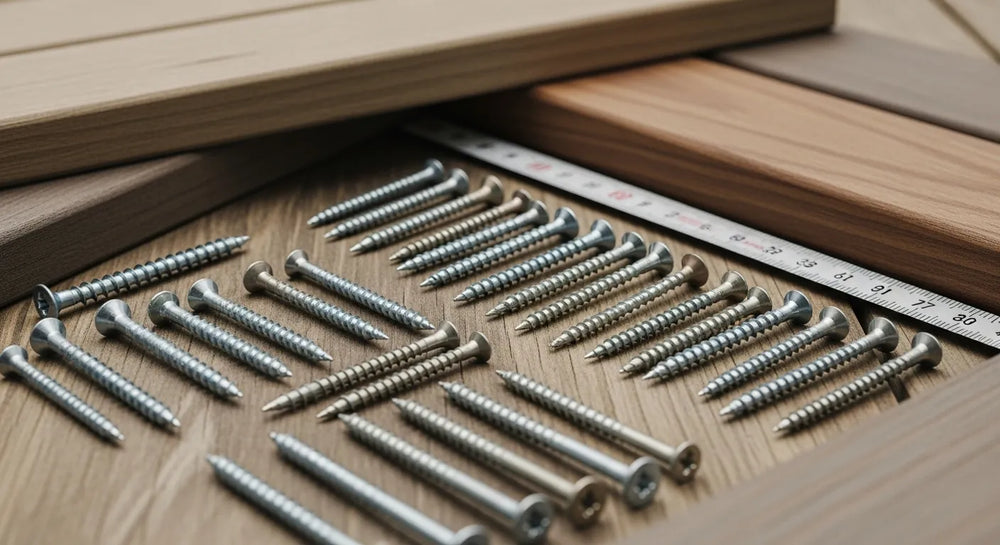
Galvanized Screws in Pressure-Treated Wood: A Guide for Durable Construction
Table of Contents
- Introduction
- The Core Challenge: Pressure-Treated Wood and Fasteners
- Understanding Galvanization: Hot-Dip vs. Electro-Galvanized
- The Chemical Reaction: Why It Matters
- Navigating ACQ and CA-Treated Lumber: What You Need to Know
- Best Practices for Fastener Selection in Pressure-Treated Wood
- Beyond Galvanized: Exploring Superior Alternatives
- The Long-Term Value of Quality Fasteners
- Sourcing American-Made Excellence: Maden.co's Commitment
- Simplifying Procurement with Digital Innovation
- Conclusion
- FAQ
Imagine a critical infrastructure project, a robust decking installation, or an essential MRO repair where structural integrity is paramount. The long-term success of such an endeavor often hinges on seemingly minor details, like the choice of fasteners. A misstep here, particularly when working with pressure-treated lumber, can lead to premature material failure, costly repairs, and even safety hazards. For procurement managers, MRO buyers, and design engineers, understanding the intricate relationship between fasteners and modern building materials is not just good practice—it's foundational to industrial excellence and supply chain resilience. The question, "can you use galvanized screws in pressure treated wood?" isn't simple, but its answer holds the key to lasting quality and avoiding significant project setbacks.
Introduction
In the evolving landscape of construction and manufacturing, the push for enhanced material longevity and environmental responsibility has led to widespread adoption of pressure-treated wood. This lumber, imbued with powerful preservatives to resist rot, decay, and insect infestation, is an invaluable asset for outdoor structures and components exposed to harsh conditions. However, its chemical composition introduces a critical challenge for traditional metallic fasteners. The chemicals that make pressure-treated wood so durable can also accelerate the corrosion of certain metals, turning what should be a robust connection into a weak point. This guide will meticulously explore the science behind this interaction, differentiate between various types of galvanized coatings, and provide definitive recommendations for selecting the right fasteners for pressure-treated wood. Our goal is to equip you with the knowledge to make informed decisions that enhance project longevity, improve total cost of ownership, and reinforce the reliability of your supply chain by leveraging quality, American-made components. At Maden.co, we believe that understanding these material interactions is crucial for building a resilient future, grounded in the unmatched quality of U.S. manufacturing.
The Core Challenge: Pressure-Treated Wood and Fasteners
Pressure-treated wood is lumber that has been saturated with chemical preservatives, typically under high pressure, to make it resistant to biological degradation. Historically, Chromated Copper Arsenate (CCA) was the primary treatment, but environmental concerns led to its phase-out for residential use. Today, Alkaline Copper Quaternary (ACQ), Copper Azole (CA), and Micronized Copper Azole (MCA) are common alternatives. The common thread among these modern treatments is a higher concentration of copper.
Copper, while an excellent biocide, is also a relatively noble metal, meaning it is less prone to corrosion. When dissimilar metals are in contact in the presence of an electrolyte (like moisture), an electrochemical reaction known as galvanic corrosion can occur. The less noble metal (the anode) corrodes preferentially to the more noble metal (the cathode). In the case of pressure-treated wood, the copper compounds within the wood act as the cathode, while common fastener materials like steel or zinc coatings act as the anode, significantly accelerating their corrosion rate compared to untreated wood environments. This accelerated degradation compromises the structural integrity of the connection, leading to fastener failure, wood staining, and ultimately, project failure.
For a procurement manager overseeing a critical outdoor build, a design engineer specifying materials for a new product line, or an MRO buyer dealing with an urgent repair, selecting the correct fastener is not just a preference, but a non-negotiable requirement for safety and durability. Overlooking this detail can transform a seemingly minor cost-saving into a colossal expense down the line, eroding the long-term value of an investment.
Understanding Galvanization: Hot-Dip vs. Electro-Galvanized
Galvanization is a process that applies a protective zinc coating to steel or iron to prevent rust and corrosion. Zinc acts as a sacrificial layer, corroding before the steel substrate, thereby extending the life of the fastener. However, not all galvanized coatings are created equal, and this distinction is crucial when dealing with pressure-treated wood.
Electro-Galvanized (EG) Fasteners
Electro-galvanizing involves electroplating a thin layer of zinc onto the steel. This process typically results in a very thin, smooth, and aesthetically pleasing coating. While electro-galvanized fasteners offer a degree of corrosion resistance for indoor or very mild outdoor applications, their zinc layer is significantly thinner than that achieved through hot-dip galvanization.
- Coating Thickness: Generally very thin (e.g., 0.2 to 0.5 mils).
- Durability: Provides limited protection against corrosion, especially in moist or chemically aggressive environments.
- Suitability for Pressure-Treated Wood: Not recommended. The thin zinc layer rapidly corrodes when in contact with the copper compounds in pressure-treated wood, leading to premature fastener failure. Even light moisture can accelerate this process. For any application involving treated lumber, particularly outdoors, electro-galvanized fasteners will not provide adequate long-term protection.
Hot-Dip Galvanized (HDG) Fasteners
Hot-dip galvanizing involves submerging the steel fastener into a bath of molten zinc. This process creates a metallurgically bonded coating that is significantly thicker and more robust than electro-galvanized coatings.
- Coating Thickness: Significantly thicker (e.g., 1.7 to 4.0 mils for fasteners, per ASTM A153 Class C, which is the standard for fasteners). This standard specifically addresses fasteners intended for outdoor use and direct exposure to environmental elements, including those that might interact with treated wood.
- Durability: Offers superior corrosion resistance, making it suitable for many outdoor and industrial applications. The thicker zinc layer provides a more substantial sacrificial barrier.
- Suitability for Pressure-Treated Wood: Generally acceptable for many applications, but with important caveats. While the thicker zinc layer of HDG fasteners provides better resistance against the corrosive elements in treated wood compared to EG fasteners, it is still zinc in contact with copper. Over time, especially in very wet conditions, coastal areas, or ground contact, even HDG fasteners can experience accelerated corrosion. It is absolutely critical to verify that the HDG fasteners meet or exceed standards specifically recommended for contact with modern pressure-treated lumber (e.g., ASTM A153 Class C). Always check the lumber manufacturer's recommendations, as different treated wood formulations may have varying levels of corrosivity.
The distinction between these two galvanization methods is paramount. Using an electro-galvanized screw where a hot-dip galvanized screw is required is a common mistake that can have disastrous long-term consequences for structural integrity and project lifespan. Sourcing fasteners from trusted manufacturers ensures that these critical specifications are met, providing confidence in the materials being used.
The Chemical Reaction: Why It Matters
The primary reason for concern when using galvanized fasteners with pressure-treated wood lies in the principles of galvanic corrosion. As mentioned, modern wood preservatives, such as ACQ, CA, and MCA, contain higher concentrations of copper. When a galvanized fastener (zinc-coated steel) is embedded in moisture-laden, copper-rich wood, an electrochemical cell is formed.
- Anode: Zinc (from the galvanized coating)
- Cathode: Copper (from the wood preservative)
- Electrolyte: Moisture within the wood
Because zinc is less noble than copper, the zinc coating preferentially corrodes. This means the zinc sacrifices itself to protect the steel core. While this is the intended function of galvanization, the accelerated presence of copper in treated wood drastically speeds up this sacrificial process. The zinc coating is consumed much faster than it would be in untreated wood or in typical atmospheric exposure.
This accelerated corrosion leads to several undesirable outcomes:
- Loss of Fastener Strength: As the zinc coating is consumed, the underlying steel is exposed to moisture and oxygen, leading to rust. Rust is weaker and more brittle than steel, compromising the shear and tensile strength of the fastener.
- Structural Failure: A weakened fastener can no longer adequately hold the wooden components together, leading to loosening, warping, and eventual structural failure of the assembly.
- Unsightly Staining: The corrosion products (zinc oxides, iron oxides) can leach into the surrounding wood, causing dark, unsightly stains that detract from the aesthetic appeal of the structure.
- Reduced Lifespan: The overall lifespan of the structure is dramatically reduced, leading to costly premature repairs, replacements, or complete reconstruction.
Understanding this galvanic reaction is essential for every professional involved in procurement and design. It underscores why the upfront cost of a superior fastener is a negligible investment compared to the long-term costs of failure and replacement.
Navigating ACQ and CA-Treated Lumber: What You Need to Know
The transition from CCA to ACQ, CA, and MCA lumber treatments significantly altered the requirements for fasteners. While CCA also contained copper, the presence of chromium and arsenic in CCA provided some passivation (a protective film) that somewhat mitigated corrosion. Modern treatments, particularly ACQ (Alkaline Copper Quaternary) and CA (Copper Azole), rely primarily on higher concentrations of copper to provide fungicidal and insecticidal protection.
- ACQ (Alkaline Copper Quaternary): Known for its relatively high copper content and alkaline pH. This combination makes it more corrosive to standard metals, including inadequately galvanized fasteners, compared to CCA. Fasteners used with ACQ lumber must offer superior corrosion resistance.
- CA (Copper Azole): Also features copper as the primary preservative, often at slightly lower concentrations than ACQ, but still significantly higher than what was present in CCA formulations. While possibly slightly less aggressive than ACQ, CA-treated wood still demands fasteners with enhanced corrosion protection.
- MCA (Micronized Copper Azole): Uses micronized copper particles, which are physically embedded in the wood structure rather than being fully dissolved. This can result in less free copper ions available for galvanic reactions, potentially making MCA slightly less corrosive than ACQ or CA, but robust corrosion-resistant fasteners are still imperative.
For all these modern copper-based treatments, the rule of thumb is clear: do not use electro-galvanized fasteners. For hot-dip galvanized fasteners, ensure they are rated for direct contact with ACQ/CA/MCA treated lumber, typically meeting or exceeding ASTM A153 Class C. However, for maximum longevity and peace of mind, especially in critical or exposed applications, alternative fastener materials often present a more reliable solution.
When sourcing for projects that will utilize these modern treated lumbers, it's critical to engage with suppliers who understand these nuances. Our mission at Maden.co is to connect industrial buyers with verified U.S. manufacturers who adhere to stringent industry standards, ensuring the products you procure are not just "American-made," but also engineered for industrial excellence and long-term performance.
Best Practices for Fastener Selection in Pressure-Treated Wood
Selecting the right fastener for pressure-treated wood involves more than just picking galvanized screws; it requires a strategic approach that considers the type of wood treatment, environmental conditions, and desired lifespan of the project.
- Always Consult the Lumber Manufacturer's Recommendations: This is the golden rule. Every manufacturer of pressure-treated lumber provides guidelines for compatible fasteners. These guidelines are based on the specific chemical formulation and concentration used in their treatment process. Adhering to these recommendations is paramount for warranty compliance and structural integrity.
-
Understand the Environment:
- Dry, Indoor Use: While treated wood is rarely used indoors, if it is, and conditions remain consistently dry, corrosion risk is minimized. However, still exercise caution.
- Exterior, Above Ground, Covered: For applications like porch ceilings or covered eaves, the risk is lower than exposed applications, but moisture can still be a factor. Hot-dip galvanized fasteners might suffice, but higher-grade options are safer.
- Exterior, Above Ground, Exposed: Decks, fences, railings, and pergolas are constantly exposed to rain, humidity, and temperature fluctuations. This environment demands fasteners with robust corrosion resistance, making HDG a minimum, and stainless steel or specialty coatings preferable.
- Ground Contact or Freshwater Immersion: Extremely aggressive environments. For docks, retaining walls, or posts in direct ground contact, hot-dip galvanized fasteners may not offer sufficient long-term protection. Stainless steel (specifically 316 for enhanced corrosion resistance) or fasteners with highly specialized coatings are typically required.
- Saltwater Exposure: For marine applications, only stainless steel (preferably 316) should be considered, as even HDG will quickly succumb to salt corrosion compounded by treated wood chemicals.
- Specify Coating Standards: For hot-dip galvanized fasteners, always specify that they meet ASTM A153 (for hardware and fasteners) or ASTM A653 with a G185 coating designation (for sheet products, though fasteners usually fall under A153). Class C or D for A153 is generally recommended for treated lumber. These standards ensure a minimum zinc coating thickness that provides adequate protection.
- Consider Fastener Design: The design of the fastener itself also plays a role. Screws, with their greater withdrawal resistance and clamping force, are often preferred over nails for structural applications in treated wood. Look for features like self-drilling points, specialized threads for better grip, and larger heads for increased bearing surface.
- Avoid Mixed Metals: Whenever possible, avoid combining different types of metals in a single assembly, especially in treated wood. If you must, ensure that the metals are as close as possible on the galvanic series, or provide insulation between them.
For procurement managers under pressure to source a specific, compliant fastener, or a design engineer needing specific material certifications, the ability to quickly find and finance a verified, U.S.-made part is a game-changer. Our platform, Maden.co, offers a vast catalog of over 2.5 million American-made products from 800+ verified U.S. manufacturers, ensuring you can find fasteners that meet the most stringent specifications for durability and compliance.
Beyond Galvanized: Exploring Superior Alternatives
While hot-dip galvanized fasteners can be acceptable for many applications with pressure-treated wood, especially when meeting specific ASTM standards, there are situations where superior alternatives offer enhanced longevity, performance, and peace of mind. These alternatives are particularly valuable in harsh environments, structural applications, or wherever long-term maintenance-free performance is prioritized.
Stainless Steel Fasteners
Stainless steel is widely regarded as the ultimate choice for fasteners in contact with pressure-treated wood, particularly in exposed outdoor or corrosive environments. Its corrosion resistance comes from a passive chromium oxide layer that forms on its surface, which is self-repairing and highly resistant to chemical attack, including the copper in treated lumber.
- Stainless Steel 304: A general-purpose stainless steel, good for most outdoor applications, including many with treated wood, especially away from harsh coastal or heavily chlorinated environments.
- Stainless Steel 316: Known as "marine grade" stainless steel, 316 contains molybdenum, which significantly enhances its resistance to chlorides (like salt spray) and other highly corrosive agents. For coastal areas, saltwater immersion, or extremely aggressive treated wood applications, 316 is the preferred choice.
While stainless steel fasteners represent a higher upfront cost, their unparalleled corrosion resistance translates into significant long-term savings by eliminating the need for premature replacements and repairs. They ensure the structural integrity and aesthetic appeal of your project for decades.
Specialty Coated Fasteners
Many manufacturers now produce fasteners with proprietary coatings specifically engineered for compatibility with modern pressure-treated lumber. These coatings often involve ceramic, polymer, or multi-layer systems that create a robust barrier between the steel substrate and the corrosive wood chemicals.
- Ceramic Coatings: Offer excellent abrasion resistance and a tough, durable finish that can withstand harsh conditions.
- Polymer Coatings: Provide a flexible and impenetrable barrier, often incorporating rust inhibitors for added protection.
- Multi-layer Systems: Combine various materials and processes to achieve superior corrosion resistance, often outperforming even heavy-duty galvanization.
When considering specialty coated fasteners, it is crucial to verify that they are explicitly rated for use with the specific type of pressure-treated lumber you are using (e.g., ACQ-compatible, CA-compatible) and that they meet relevant industry standards for corrosion resistance. Reputable American manufacturers stand by their products with clear specifications and testing data.
For specialized applications where unique material properties are required, exploring alternatives like brass or silicon bronze can also be highly beneficial. For instance, round slot drive brass wood screws offer excellent corrosion resistance and an aesthetic appeal for visible applications where a warm metallic finish is desired. Similarly, flat slot drive brass wood screws provide a flush finish while still delivering robust performance against corrosion. For the most demanding environments, such as marine applications or situations requiring exceptional longevity, oval slot drive silicon bronze wood screws are a premium choice, offering superior corrosion resistance even in very harsh conditions, making them an excellent long-term investment.
The Long-Term Value of Quality Fasteners
The decision to invest in high-quality, appropriate fasteners for pressure-treated wood extends far beyond the immediate project budget. It directly impacts the Total Cost of Ownership (TCO), operational efficiency, and overall reputation of any business involved in construction, manufacturing, or maintenance.
- Reduced Maintenance and Repair Costs: Fastener failure leads to structural degradation, requiring costly repairs, material replacement, and labor. Inferior fasteners can turn a 20-year deck into a 5-year liability. High-quality fasteners, while potentially more expensive upfront, drastically reduce these recurring costs over the lifespan of the asset.
- Enhanced Structural Integrity and Safety: The primary function of a fastener is to create a strong, lasting connection. When fasteners corrode, the structural integrity is compromised, posing safety risks. This is especially critical in public infrastructure, commercial buildings, or heavy-duty machinery. Proper fastener selection ensures the safety and reliability of your products and projects.
- Protection Against Liability: Using the correct, specified fasteners can protect businesses from potential liability issues stemming from structural failures or property damage. Adhering to industry standards and manufacturer recommendations is a key defense.
- Reputation and Customer Satisfaction: For manufacturers and contractors, delivering a durable, long-lasting product or structure enhances reputation and builds customer trust. Conversely, failures due to poor material choices can severely damage a brand.
- Sustainable Practices: Replacing corroded fasteners and damaged wood prematurely generates waste and consumes resources. Investing in durable components upfront aligns with sustainable manufacturing and construction practices, reducing environmental impact over the long term.
For procurement managers seeking to optimize TCO, design engineers aiming for product excellence, and MRO buyers tasked with maintaining critical infrastructure, the strategic value of sourcing superior, American-made fasteners cannot be overstated. It's an investment in resilience, reliability, and sustained operational success.
Sourcing American-Made Excellence: Maden.co's Commitment
At Maden.co, our mission is to democratize access to American manufacturing, making it simpler, faster, and more transparent for industrial buyers to connect with the nation’s premier suppliers. We understand the critical importance of quality, compliance, and supply chain resilience, especially when complex material interactions, like those with pressure-treated wood, are at play.
Our platform connects procurement managers, MRO buyers, and design engineers with over 2.5 million American-made products from our network of 800+ verified U.S. manufacturers. This extensive network ensures access to a broad spectrum of fasteners, from hot-dip galvanized options meeting stringent ASTM standards to a wide array of stainless steel, brass, silicon bronze, and specialty-coated fasteners designed for the most demanding applications. Our vision is to become the definitive platform that proves American-made components are as accessible and convenient as any global alternative, driving the manufacturing revival with our tagline: "America's manufacturing revival is here."
Our core values guide every aspect of our operations:
- American Manufacturing Pride: We champion the ingenuity, quality, and reliability inherent in products manufactured right here in the U.S.
- Digital Innovation: We leverage cutting-edge technology to streamline the procurement process, making sourcing efficient and transparent.
- Supply Chain Transparency: We believe in clear visibility, connecting buyers directly to the source of their products, enhancing trust and accountability.
- Industrial Excellence: We are committed to fostering and promoting the highest standards of quality and performance across all industrial sectors.
- Customer Empowerment: We provide the tools, information, and access buyers need to make confident, strategic procurement decisions.
By choosing Maden.co, you're not just buying a product; you're investing in a robust, transparent, and resilient supply chain. You're supporting American jobs, ensuring unparalleled quality, and mitigating the risks associated with global supply chain disruptions. Whether you need a standard hex cap screw or a specialized fastener for treated lumber, you can trust that our platform offers solutions built for industrial excellence. Are you a U.S. manufacturer? Register as a vendor and join the American manufacturing revival, bringing your quality products directly to a vast network of industrial buyers. Learn more about our mission and values on our About Us page.
Simplifying Procurement with Digital Innovation
In today's fast-paced industrial environment, efficiency in procurement is not merely a convenience—it's a competitive advantage. At Maden.co, we are revolutionizing how businesses acquire critical components by providing a digital marketplace that is both powerful and user-friendly. We understand that procurement managers are constantly looking for ways to save time, reduce risk, and gain access to high-quality, hard-to-find components, and our platform is designed to deliver precisely that.
Our digital platform simplifies the search for specific fasteners, allowing you to filter by material, coating, size, standard (e.g., DIN, NPT), and application. This streamlined process dramatically reduces procurement friction, allowing your team to focus on strategic initiatives rather than exhaustive searching. We enable you to confidently source components that ensure compliance with critical industry standards, which is vital for both product performance and regulatory adherence.
One of our key differentiators, and a powerful strategic tool for businesses, is our Instant Financing option. This feature is seamlessly integrated into the checkout process, allowing procurement managers and business owners to manage cash flow effectively and make larger-volume purchases without immediate capital strain. Instead of viewing financing as merely a payment method, consider it a strategic lever that unlocks access to necessary inventory, enabling you to capitalize on opportunities, manage inventory levels, and ensure project continuity. You can apply for Instant Financing at checkout to streamline your capital-intensive projects, ensuring that you can always access the American-made quality you need, when you need it.
We don't just facilitate transactions; we forge partnerships. Our commitment to Digital Innovation means we continuously enhance our platform to serve you better, making American manufacturing more accessible and convenient than ever before. If you have specific sourcing questions or require assistance finding the perfect fastener solution, our dedicated team is ready to help through our Contact Us page.
Conclusion
The question of whether you can use galvanized screws in pressure-treated wood is layered with technical nuance, but the fundamental answer is clear: while hot-dip galvanized fasteners can be acceptable under specific conditions, understanding the chemical interactions and considering superior alternatives like stainless steel, specialty coated fasteners, brass, or silicon bronze, is paramount for long-term durability and structural integrity. Electro-galvanized fasteners should be avoided entirely. Choosing the right fastener is not a shortcut; it's a strategic investment in the longevity, safety, and performance of your projects and products, directly impacting your Total Cost of Ownership.
For industrial buyers, the path to procurement excellence involves not just knowing what to buy, but where to source it confidently. Maden.co stands as America's premier B2B marketplace, dedicated to connecting you with over 2.5 million American-made products from 800+ verified U.S. manufacturers. We champion American Manufacturing Pride, drive Digital Innovation, ensure Supply Chain Transparency, uphold Industrial Excellence, and empower our Customers. We make it easy to find high-quality, compliant fasteners, ensuring your projects are built to last and your supply chain remains resilient.
Don't compromise on quality or risk premature failure. Explore our extensive catalog today to find the precise, American-made fasteners that meet your most stringent requirements. Take advantage of our Instant Financing option at checkout to manage your cash flow effectively and ensure your critical projects never face delays due to sourcing challenges. Join the American manufacturing revival and build with confidence, knowing you've partnered with excellence.
FAQ
Q1: Can I use any galvanized screw with pressure-treated wood?
A1: No. You absolutely cannot use any galvanized screw. Electro-galvanized (EG) screws have a very thin zinc coating and will corrode rapidly in contact with modern pressure-treated wood. Only hot-dip galvanized (HDG) screws, specifically rated for ACQ/CA/MCA treated lumber and meeting standards like ASTM A153 Class C, should be considered. Always verify the lumber manufacturer's recommendations.
Q2: Why do galvanized screws corrode faster in pressure-treated wood?
A2: Modern pressure-treated wood formulations (like ACQ, CA, MCA) contain higher concentrations of copper. When a zinc-coated (galvanized) fastener comes into contact with copper in the presence of moisture, a galvanic reaction occurs. Zinc is less noble than copper, so it acts as a sacrificial anode and corrodes at an accelerated rate to protect the steel core, leading to premature fastener failure.
Q3: What are the best alternatives to galvanized screws for pressure-treated wood?
A3: For superior longevity and corrosion resistance, stainless steel fasteners (particularly 304 or 316 grade) are the best choice, especially in exposed, wet, or marine environments. Specialty coated fasteners, engineered specifically for treated lumber (e.g., ceramic or polymer coatings), also offer excellent protection. Additionally, materials like silicon bronze, as seen in our oval slot drive silicon bronze wood screws, provide exceptional resistance for demanding applications.
Q4: How can Maden.co help me source the right fasteners for pressure-treated wood?
A4: Maden.co offers a vast catalog of over 2.5 million American-made products from 800+ verified U.S. manufacturers, including a wide array of fasteners specifically designed for compatibility with pressure-treated lumber. Our platform allows you to filter by material (e.g., hot-dip galvanized, stainless steel, brass, silicon bronze), coating, and specific standards to ensure you find the exact, compliant fastener you need. Additionally, our Instant Financing option at checkout helps manage procurement costs for large orders.


