
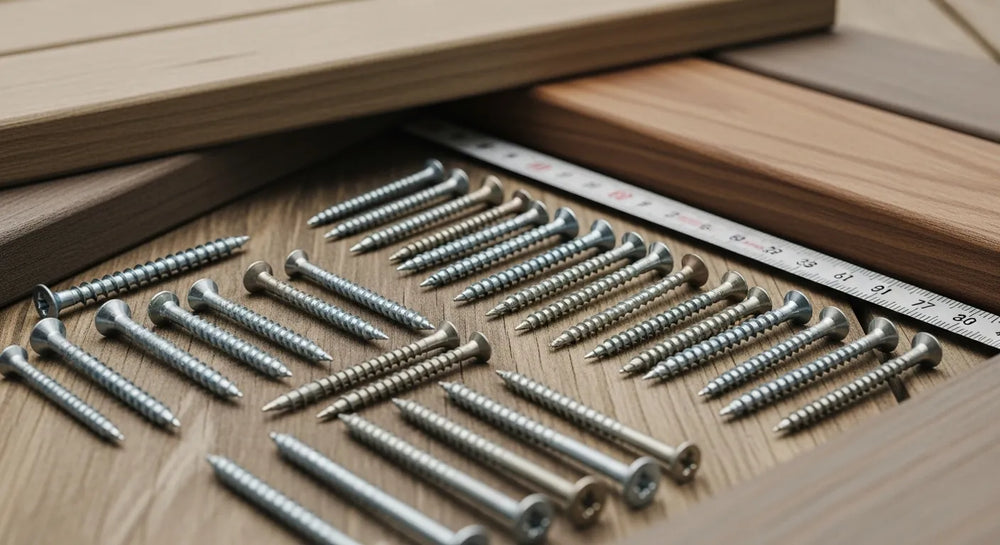
Predrilling Wood Screws: Enhancing Strength and Preventing Damage
Table of Contents
- Introduction
- The Fundamental Interaction: Wood, Screws, and the Risk of Damage
- Why Predrill? The Core Benefits for Industrial Excellence
- When Predrilling is Essential: Scenarios Demanding Precision
- When Predrilling Might Be Optional (with Caveats)
- The Science of Pilot Holes: Sizing and Depth for Optimal Performance
- Tools and Techniques for Professional Predrilling
- Strategic Sourcing and the Role of Maden.co in American Manufacturing Revival
- Conclusion
- FAQ
In the realm of industrial assembly and precision manufacturing, a seemingly minor decision can profoundly impact project integrity, material longevity, and overall operational efficiency. Consider the countless hours lost to cracked wood, stripped screw heads, or weakened joints—problems that often trace back to a single oversight: the absence of a properly sized pilot hole. For procurement managers specifying materials, MRO buyers maintaining critical equipment, or design engineers developing new products, understanding the nuances of fastening is not merely a woodworking skill; it is a critical component of ensuring structural reliability and minimizing costly rework. This post aims to demystify the practice of predrilling wood screws, exploring its essential benefits, the science behind optimal pilot hole sizing, and the critical role it plays in achieving robust, professional-grade assemblies. We will delve into why this often-debated step is, more often than not, a non-negotiable part of quality craftsmanship, underscoring its value in projects where American-made precision components are paramount.
Introduction
Imagine the frustration of a project stalled because a vital component splits during assembly, or a connection fails prematurely due to improper fastening. These scenarios are not uncommon in industrial settings, where the strength and durability of a joint are paramount. The question of "should you predrill wood screws" is a fundamental one, often sparking debate between those who prioritize speed and those who insist on meticulous precision. While some might view predrilling as an unnecessary extra step, its strategic application can be the difference between a structurally sound, long-lasting assembly and one prone to failure.
This article will systematically unpack the advantages of predrilling, delving into the mechanics of how screws interact with wood and the diverse factors that influence the need for pilot holes. We will guide you through the process of determining the correct drill bit size, explore various wood types, and highlight the specific scenarios where predrilling transitions from a recommendation to an absolute necessity. Our aim is to equip procurement managers, design engineers, and business owners with the knowledge to make informed decisions that enhance product quality, improve operational efficiency, and ultimately, strengthen the overall integrity of their American-made projects. The main message is clear: mastering the art of predrilling wood screws is a foundational skill that protects materials, optimizes fastener performance, and ensures the enduring reliability of every connection.
The Fundamental Interaction: Wood, Screws, and the Risk of Damage
Understanding why predrilling is often necessary begins with a look at the materials themselves. Wood is an organic, anisotropic material, meaning its properties vary depending on the direction of the grain. This inherent characteristic makes it susceptible to splitting, especially when subjected to the disruptive forces of a screw being driven into it.
Wood Grain and Density: A Primer
- Longitudinal Grain (Parallel to Fibers): This is the strongest direction of wood, where fibers run continuously. Screws driven parallel to the grain (into the end of a board) are generally less secure due to fewer fibers gripping the threads and a higher risk of splitting, especially if unpredrilled.
- Perpendicular Grain (Across Fibers): Driving a screw across the grain typically yields a stronger connection because the threads engage more wood fibers. However, this direction is still prone to splitting, particularly near edges or in dense hardwoods.
-
Density: Wood density is a primary indicator of its hardness and resistance to penetration.
- Softwoods (e.g., Pine, Cedar): Generally easier to work with, but can still split. Their fibers are more forgiving, making predrilling sometimes seem optional for smaller screws, though still advisable for larger ones or critical applications.
- Hardwoods (e.g., Oak, Maple, Hickory): These woods are dense and tough. Their tightly packed fibers offer significant resistance, making them highly susceptible to splitting without a pilot hole. Driving an unpredrilled screw into hardwood is a recipe for cracked material and potential fastener damage.
- Engineered Wood Products (e.g., Plywood, MDF, Particleboard): These materials, composed of layers or compressed wood fibers and adhesives, generally exhibit more uniform properties than solid wood. They are less prone to splitting in the traditional sense but can still suffer from material blowout or stripped holes if not treated appropriately, especially when using larger fasteners.
How Screws Work: Displacement vs. Cutting
A wood screw primarily creates its own threads by displacing wood fibers as it's driven. Some modern screws feature cutting tips or specialized thread designs to reduce this displacement, but the fundamental action involves pushing wood aside.
- Displacement: When a screw enters wood, it shoves wood fibers outwards. If these fibers have nowhere to go, or if the wood's tensile strength is exceeded, the wood splits. This is particularly true near edges or in brittle materials.
- Thread Engagement: For a screw to hold securely, its threads must properly engage the wood fibers. A pilot hole ensures that the wood isn't overstressed, allowing the threads to cut cleanly and maximize holding power. Without a pilot hole, the excessive pressure can damage the wood fibers, leading to a weaker, less reliable connection.
For a design engineer specifying fasteners for robust cabinetry or a procurement manager sourcing specialized components for furniture manufacturing, ensuring optimal thread engagement is critical. Quality, U.S.-made fasteners, such as our Round Slot Drive Brass Wood Screw, are designed to exacting standards, and predrilling ensures these standards translate into superior performance in the final product.
Why Predrill? The Core Benefits for Industrial Excellence
The decision to predrill is a strategic one, offering a multitude of benefits that extend beyond simply preventing damage. It directly contributes to industrial excellence, material integrity, and the long-term reliability of manufactured goods.
1. Preventing Splitting and Cracking: Protecting Your Investment
This is perhaps the most immediate and obvious benefit. Every material in a production line represents an investment, and material waste due to splitting is a direct hit to the bottom line. Predrilling creates a clear path, relieving the internal stress that would otherwise cause wood to crack, especially in:
- Hardwoods: The dense structure of hardwoods like oak, maple, or walnut offers significant resistance, making splitting almost inevitable without a pilot hole.
- Thin Stock: Materials with a small cross-section are inherently weaker and more susceptible to splitting.
- Near Edges or Ends: These areas have less surrounding material to absorb the stress of a driving screw, making them highly vulnerable.
- Brittle or Aged Woods: Some exotic woods or older, drier timbers can be particularly prone to cracking.
For a business owner focused on profitability and minimizing waste, predrilling is a simple, cost-effective preventative measure.
2. Ensuring Proper Engagement and Driving: Efficiency and Fastener Longevity
- Easier Insertion: A pilot hole significantly reduces the torque required to drive a screw. This translates to less strain on power tools, extended battery life, and reduced operator fatigue in assembly lines.
- Reduced Cam-Out: When a screw is difficult to drive, the driver bit can slip out of the screw head, damaging both the screw head (cam-out) and the surrounding material. A pilot hole prevents this, ensuring a clean, efficient drive, particularly with traditional fasteners like our Flat Slot Drive Brass Wood Screw, which require precise tool engagement.
- Protecting Fasteners: Excessive force to drive an unpredrilled screw can lead to stripped heads, bent shanks, or even sheared screws, rendering the fastener useless and causing project delays. Predrilling protects the integrity of the fastener itself.
3. Achieving Stronger, More Reliable Joints: The Foundation of Durability
A well-sized pilot hole allows the screw threads to fully engage the wood fibers without crushing or tearing them excessively. This maximizes the surface area of contact between the threads and the wood, resulting in:
- Optimal Holding Power: The screw's threads can grip the wood firmly and consistently along their entire length.
- Consistent Joint Strength: Eliminates weak spots caused by localized crushing or splitting.
- Long-Term Durability: Joints are less likely to loosen or fail over time due to material fatigue around the fastener.
For an MRO buyer sourcing fasteners for critical machinery maintenance or a procurement manager needing components for durable goods, the strength of each joint contributes directly to the overall lifespan and performance of the final product.
4. Aesthetics and Finish Quality: The Mark of Craftsmanship
In applications where appearance matters—such as high-end furniture, architectural millwork, or consumer electronics—predrilling is essential for a clean, professional finish.
- Flush Seating: A pilot hole, often combined with a countersink, ensures screw heads sit flush with or slightly below the material surface, preventing unsightly protrusions.
- Preventing Surface Damage: Without a pilot hole, the aggressive action of a screw can mar the surface of the wood, creating splinters, dimples, or an uneven finish around the screw head.
- Controlling Penetration: Pilot holes provide a clear target, ensuring screws are driven precisely where intended, contributing to the overall visual appeal and structural consistency.
When Predrilling is Essential: Scenarios Demanding Precision
While the benefits are widespread, certain scenarios elevate predrilling from a best practice to an absolute requirement. Ignoring it in these situations almost guarantees issues.
Hardwoods and Dense Materials
As previously discussed, hardwoods are the prime candidates for predrilling. Their tightly packed cellular structure offers immense resistance, and attempting to drive a screw without a pilot hole invariably leads to splitting, particularly with larger screws. This applies to exotic woods as well, which can often be even denser and more brittle than common domestic hardwoods.
Near Edges, Ends, or Corners
Anywhere the screw is close to the edge, end, or corner of a piece of wood, the risk of splitting skyrockets. There simply isn't enough material to absorb the outward pressure created by the screw. Predrilling here is not optional; it's a necessity to preserve the material's integrity. For specialized marine applications or outdoor furniture requiring superior corrosion resistance, such as those that might use our Oval Slot Drive Silicon Bronze Wood Screw, predrilling is crucial to prevent damage to the workpiece and ensure the fastener performs as intended.
Thin Stock or Small Components
When working with thin panels, narrow battens, or small wooden components, the material's limited cross-section makes it highly vulnerable. A screw driven without a pilot hole can easily blow out the side of the wood or cause a significant crack.
Large Diameter and Long Screws
The larger the diameter of the screw, the more wood it displaces, and thus, the greater the stress it places on the surrounding material. Longer screws also mean more thread engagement, increasing the potential for cumulative stress. For these reasons, predrilling is highly recommended for any screw with a significant diameter or length.
Critical Structural Applications
In any application where the strength and stability of the joint are paramount—from load-bearing assemblies in construction to critical connections in industrial machinery—predrilling is a non-negotiable step. It contributes to the predictable performance and long-term reliability required for such applications, aligning with our core value of Industrial Excellence.
Fine Woodworking and High-Value Projects
When aesthetic perfection and absolute precision are required, such as in custom cabinetry, musical instruments, or high-end furniture, predrilling is an integral part of the craftsmanship. It prevents unsightly blemishes, ensures flush finishes, and ultimately upholds the quality and value of the finished product.
When Predrilling Might Be Optional (with Caveats)
While the general rule of thumb favors predrilling, there are specific situations where it might be omitted without immediate catastrophic failure, though it often remains the safer, more professional choice.
Softwoods with Small Screws
For very small diameter screws driven into the face of a softer wood (like pine or spruce) and not near an edge, it's possible to skip predrilling. However, even here, the risk of splitting, especially if the wood grain is inconsistent or if excessive force is used, still exists.
Self-Drilling or Pilot-Point Screws
Some modern fasteners are engineered with specialized tips designed to cut their own pilot hole, or at least minimize displacement. While these can often be driven without a separate predrilling step, it's crucial to understand their limitations. They may still struggle in very dense hardwoods or near edges, and the quality of the "self-drilled" hole might not always match the precision of a properly predrilled one, potentially compromising ultimate holding power in critical applications.
Composite Materials or Plywood
These materials, due to their engineered structure, are generally less prone to traditional splitting than solid wood. However, for larger screws, a pilot hole is still advisable to prevent material blowout on the backside or to ensure the screw drives straight and securely without stripping the material.
Even in these "optional" scenarios, a procurement manager or design engineer committed to optimal performance and zero defects will often default to predrilling. The slight time investment is a minimal cost compared to the potential for material waste, project delays, or compromised structural integrity.
The Science of Pilot Holes: Sizing and Depth for Optimal Performance
The effectiveness of predrilling hinges entirely on using the correct drill bit size and depth. An improperly sized pilot hole can be as detrimental as no pilot hole at all.
Understanding Screw Anatomy
To select the correct pilot hole size, one must understand the parts of a wood screw:
- Head: The part that transmits torque from the driver and applies clamping force.
- Shank (Unthreaded Portion): The smooth part of the screw beneath the head.
- Major Diameter: The full diameter of the screw, including the threads.
- Root Diameter: The diameter of the screw's core, beneath the threads.
Two Types of Holes for Optimal Fastening
For a truly professional and robust joint, especially when joining two pieces of wood, two distinct holes are often required:
-
Shank Hole (Clearance Hole):
- Purpose: This hole is drilled through the first piece of wood (the piece being fastened down) and is designed to be slightly larger than the screw's major diameter (the outside diameter of the threads).
- Function: It allows the screw's shank to pass through freely without engaging the threads in the top piece. This is critical because it allows the screw to pull the two pieces of wood tightly together, creating a strong, clamping force. If the threads engage in both pieces, the screw will only hold the top piece to the bottom piece at a fixed distance, rather than drawing them together firmly.
- Sizing: The shank hole should match or be just slightly larger than the screw's major diameter.
-
Pilot Hole (Thread Hole):
- Purpose: This hole is drilled into the second piece of wood (the receiving piece) where the screw threads will engage.
- Function: It creates a path for the screw's core while allowing the threads to cut into the wood fibers and establish a strong grip.
-
Sizing: This is the most critical size. The pilot hole diameter should be approximately the same as the screw's root diameter.
- Too Small: If the pilot hole is too small, the screw will still displace too much wood, leading to splitting, excessive driving torque, or stripped screw heads.
- Too Large: If the pilot hole is too large, the threads won't have enough material to grip, resulting in a weak, easily stripped connection.
- Material Consideration: For hardwoods, the pilot hole might need to be slightly larger (closer to the major diameter) than for softwoods (closer to the root diameter) due to the wood's density. However, the ideal is always to match the root diameter closely. Experimentation with scrap wood is always recommended.
Depth of the Pilot Hole
The pilot hole should extend to the full depth that the screw threads will penetrate the receiving material. If the pilot hole is too shallow, the tip of the screw will encounter solid wood, leading to splitting or incomplete driving. Using a depth stop or marking the drill bit with tape is crucial for consistency.
For an industrial operation demanding precision and repeatability, such as an assembly plant producing American-made machinery, specifying the correct pilot hole dimensions for each fastener type is a foundational aspect of quality control and adherence to design specifications. This level of detail aligns with Maden.co’s commitment to Industrial Excellence and supply chain transparency, ensuring that when you procure fasteners through our platform, you also have access to the knowledge to utilize them optimally.
Tools and Techniques for Professional Predrilling
Achieving perfect pilot holes consistently requires the right tools and proper technique.
Drill Bits: Choosing the Right Type
- Twist Bits: Common general-purpose drill bits, suitable for most predrilling tasks. High-speed steel (HSS) bits are durable and widely available.
- Brad-Point Bits: Feature a sharp, central point that prevents walking (skating across the surface) and two spurs that cut clean-edged holes. Ideal for precision work in wood.
- Countersink Bits: These bits are designed to create a conical recess for the screw head, allowing it to sit flush with or slightly below the surface. They are often used in conjunction with a pilot hole.
- Combined Pilot/Countersink Bits: An efficient solution that drills the pilot hole, shank hole (if applicable), and countersink in a single operation. These are excellent for streamlining repetitive tasks in manufacturing.
Drilling Techniques for Accuracy
- Straight and Perpendicular: Always aim to drill perfectly straight and perpendicular to the surface. Any deviation can lead to screws emerging at an angle, weakening the joint, or causing surface damage. A drill press offers the highest level of accuracy for this.
- Using a Depth Stop: To ensure consistent pilot hole depth, use a drill bit stop collar or wrap a piece of masking tape around the drill bit to mark the desired depth.
- Clearing Chips: Periodically withdraw the drill bit from the hole to clear wood chips, especially in deeper holes. This prevents clogging and ensures a cleaner cut.
- Speed and Pressure: Use appropriate drill speed and gentle, consistent pressure. Too much speed can burn the wood; too much pressure can splinter it.
- Clamping: Always secure the workpiece firmly with clamps to prevent movement during drilling, which can lead to inaccuracies or injury.
For a design engineer specifying assembly processes or an MRO buyer responsible for tools, having the right predrilling equipment and understanding its proper use is critical for maintaining consistency and quality across all projects.
Strategic Sourcing and the Role of Maden.co in American Manufacturing Revival
The decision of whether and how to predrill wood screws is one example of the detailed considerations that procurement managers and design engineers face daily. Beyond the technique itself, the quality of the fasteners being used is paramount. This is where Maden.co steps in as a strategic partner, democratizing access to the vast landscape of American manufacturing.
At Maden.co, our mission is to simplify industrial procurement by connecting buyers directly with over 2.5 million American-made products from our network of 800+ verified U.S. manufacturers. We believe that America's manufacturing revival is here, and our platform is designed to make U.S.-made components as accessible and convenient as any global alternative. This commitment resonates with our core values of American Manufacturing Pride, Digital Innovation, Supply Chain Transparency, Industrial Excellence, and Customer Empowerment.
For a procurement manager under pressure to source a specific, high-quality fastener for a new product line, a design engineer needing material certifications for a critical prototype, or an MRO buyer facing an unexpected equipment breakdown, the ability to quickly find and finance a verified, U.S.-made part is a game-changer. Sourcing through Maden.co delivers tangible benefits:
- Improved Total Cost of Ownership (TCO): By reducing lead times, minimizing shipping costs and delays, and ensuring consistent quality, Maden.co helps lower the overall cost of acquiring and using components. Our platform helps you make informed choices that avoid hidden costs associated with unreliable sourcing.
- Enhanced Supply Chain Resilience: Direct access to a wide network of U.S. manufacturers mitigates risks associated with global supply chain disruptions, ensuring you have a robust and dependable source for critical components. This transparency is a cornerstone of our service; you can learn more about our mission to champion American manufacturing here: About Us.
- Reduced Procurement Friction: Our intuitive digital marketplace streamlines the entire purchasing process, from discovery to delivery. For those requiring specific fasteners, such as our traditional Oval Slot Drive Silicon Bronze Wood Screw, the ease of finding and ordering high-quality U.S.-made options saves invaluable time.
- Access to Verified Quality: Every manufacturer on Maden.co is verified, ensuring adherence to rigorous U.S. manufacturing standards and providing the confidence that your components meet the highest benchmarks for performance and durability. This commitment to quality supports critical industry standards, even if not explicitly DIN or NPT for wood screws, but through general material and production integrity.
Furthermore, we understand that large-volume purchases or capital-intensive projects require flexible financial solutions. That's why we offer Instant Financing during the checkout process. This strategic tool empowers businesses to manage cash flow effectively, enabling larger orders and ensuring projects stay on schedule without immediate upfront capital strain. It's not just a payment option; it's a strategic lever for business growth and operational fluidity.
Are you a U.S. manufacturer? If so, we invite you to join our growing network and become a part of America's manufacturing revival. By registering as a vendor, you can connect directly with industrial buyers seeking high-quality, American-made products: Register as a vendor and join the American manufacturing revival.
For any specific sourcing questions or to explore how Maden.co can optimize your procurement strategy, our expert team is ready to help: Contact Us. Discover the full scope of American manufacturing possibilities and begin your journey towards a more resilient and efficient supply chain by visiting our homepage: Maden.co.
Conclusion
The question "should you predrill wood screws?" is less about a simple yes or no, and more about a strategic evaluation of materials, applications, and desired outcomes. As we've explored, predrilling is a vital practice that dramatically reduces the risk of material damage, ensures optimal fastener performance, and contributes to the overall strength and aesthetic quality of an assembly. It is a foundational step towards achieving industrial excellence and extending the lifespan of products, particularly when working with dense woods, thin stock, or in critical structural applications.
For procurement managers, MRO buyers, and design engineers dedicated to upholding the highest standards of quality and efficiency, incorporating proper predrilling techniques is an investment that pays dividends in reduced waste, enhanced reliability, and superior end products. This attention to detail, combined with the strategic sourcing of high-quality, American-made components, forms the bedrock of robust and resilient manufacturing. We champion this dedication at Maden.co, providing a seamless platform where industrial buyers can access an unparalleled selection of verified U.S. manufactured goods. We invite you to explore our extensive catalog and leverage our Instant Financing option at checkout to streamline your capital-intensive projects and secure the precision components that drive your success.
FAQ
Q1: Is predrilling always necessary for every wood screw?
A1: While not strictly necessary for every single screw in every scenario (e.g., small screws into very soft woods not near an edge), it is almost always the best practice. Predrilling significantly reduces the risk of splitting, ensures optimal thread engagement, and provides a cleaner, stronger, and more reliable joint. For hardwoods, thin stock, or critical applications, it is essential.
Q2: How do I determine the correct drill bit size for a pilot hole?
A2: For the pilot hole (where the threads engage), the drill bit should match the root diameter (the core diameter underneath the threads) of the screw. For the shank hole (through the top piece of wood), the drill bit should be slightly larger than the screw's major diameter (the full diameter including threads). Always test on a scrap piece of the same material to confirm optimal sizing.
Q3: What happens if I use a pilot hole that's too small or too large?
A3: If the pilot hole is too small, the screw will still displace too much wood, leading to splitting, excessive driving torque, stripped screw heads, or broken fasteners. If it's too large, the screw threads won't have enough wood to grip, resulting in a weak connection that can easily strip out and lose its holding power.
Q4: Can self-drilling screws eliminate the need for predrilling?
A4: Self-drilling screws are designed to create their own pilot holes to some extent, and can often be used without predrilling, especially in softer woods or less critical applications. However, they may still struggle in very dense hardwoods, near edges, or in situations requiring maximum holding power. For the strongest, most reliable joints, particularly with high-quality traditional wood screws, a properly sized predrilled pilot hole remains the superior method.


